
Shortlist Playbook: Matching MF-4.2K+8KWh and MF-6.2K+10KWh to Your Load Profile
Answer first: The MF-4.2K+8KWh and MF-6.2K+10KWh are two all-in-one battery energy storage systems from Guangdong Yeyanghong Energy Technology Co., Ltd. (Yeyanghong Energy). The documented specifications show the same LiFePO4 battery type, the same 180V~270V output voltage range, the same 0~55°C charging temperature limit and the same IP21/IP55/IP65/IP66/IP67 protection options. The decisive difference in the provided data is the capacity pairing: 4.2K with 8KWh versus 6.2K with 10KWh. A buyer should therefore use voltage, charging temperature and IP rating as go/no-go gates applied to both models, then use the load profile to choose between them.
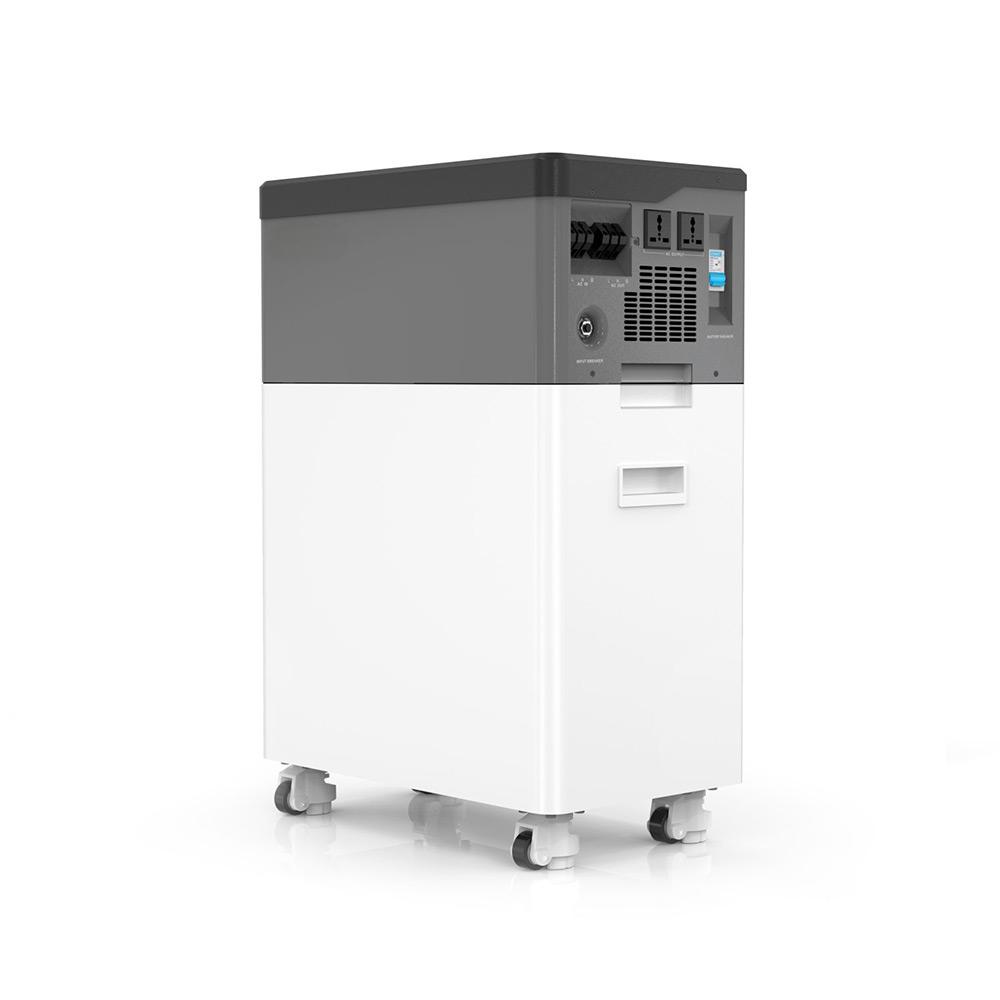
MF-4.2K+8KWh all-in-one energy storage system, shown in an IP21 EU-standard configuration. Source: Yeyanghong Energy product image.
Hybrid inverter and storage shortlists often start with a familiar question: which model is better? For this pair, the more useful question is narrower: which model is documented to fit the load profile without crossing a shared limit? The two systems belong to the same Battery Energy Storage System line, use the same battery chemistry and publish the same electrical and environmental screening fields. That makes the selection exercise less about ranking and more about matching.
This playbook is deliberately limited to the stated configurations. It does not assume a continuous output rating beyond the model designation, does not infer performance from the battery chemistry, and does not add cycle life, efficiency, warranty or certification claims that are absent from the provided data. Those missing fields matter, and they are treated later as verification items rather than selection shortcuts.
The two-model baseline: what is documented and what is shared
Both models are listed as Battery Energy Storage System units with LiFePO4 batteries and aluminium alloy construction. The published specification fields are identical except for the capacity pairing in the model name. That is the first fact a shortlist should record, because it prevents a buyer from treating shared specifications as differentiators.
| Documented field | MF-4.2K+8KWh | MF-6.2K+10KWh | Shortlist implication |
|---|---|---|---|
| Product class | Battery Energy Storage System | Battery Energy Storage System | Same product family; compare within the family. |
| Battery type | LiFePO4 | LiFePO4 | Same chemistry; chemistry does not separate the models. |
| Output voltage range | 180V~270V | 180V~270V | Shared electrical window; use as a project gate, not a ranking field. |
| Charging temperature | 0~55°C | 0~55°C | Shared charging window; use as a project gate, not a ranking field. |
| Protection degree options | IP21, IP55, IP65, IP66, IP67 | IP21, IP55, IP65, IP66, IP67 | Same listed options; the ordered configuration determines the actual rating. |
| Material | Aluminium alloy | Aluminium alloy | No documented material difference. |
| Capacity pairing in model name | 4.2K + 8KWh | 6.2K + 10KWh | The only documented capacity-level difference in this comparison. |
The table produces an important conclusion: a side-by-side specification review will not tell a buyer which unit is more resilient, more efficient or more suitable for high-temperature sites. The provided data does not support those distinctions. What it does support is a screening sequence based on project conditions and load, followed by a clear step-up or no-go decision.
First gate: the 180V~270V output voltage range
The published output voltage range is 180V~270V for both models. In a shortlist, this field should be checked against the project electrical design before any capacity comparison. If the intended system architecture requires an output voltage window outside 180V~270V, both models fail the same gate. If the project falls inside the window, the gate is passed equally and should not be used to prefer one model over the other.
Two cautions are necessary. First, the provided specification labels this as an output voltage range; it does not separately state a continuous output current, surge rating or phase configuration for these two models. Second, the model names use a K value, but the dataset does not publish a separate continuous AC output rating. For this playbook, the K value is treated as the model's capacity class for first-pass load screening, not as a guaranteed continuous rating. Final engineering should verify the load-side assumptions with the supplier.
Voltage gate rule: If the project design falls within 180V~270V, both models remain on the shortlist. If it falls outside, both are screened out. Do not choose the larger model to solve a voltage-window mismatch; the larger model publishes the same window.
Second gate: the 0~55°C charging temperature limit
Both models publish a charging temperature limit of 0~55°C. This is a charging limit, not a general operating temperature claim. The provided data does not state a separate discharge temperature range for either model, so a buyer should not assume one. It also does not state whether the limit refers to ambient air temperature, cell temperature or another measurement point. Those details require confirmation.
For shortlisting, the charging window is still useful as an immediate go/no-go field. If the project's charging environment is expected to fall below 0°C or above 55°C, neither model is documented for charging in that condition. If the charging environment stays inside 0~55°C, both pass equally. Temperature therefore does not choose between the 4.2K+8KWh and the 6.2K+10KWh; it only determines whether either model should remain on the list.
This is a common point of confusion in storage procurement. A buyer may see two models with the same temperature figure and assume the figure is irrelevant. In practice, it is a shared boundary condition. The correct use is to remove both models when the site cannot satisfy it, not to award points to one model for publishing the same number.
Third gate: protection level from IP21 to IP67
The specification lists IP21, IP55, IP65, IP66 and IP67 as protection degree options for both models. These are listed options, not a statement that one enclosure simultaneously carries every rating. The ordered configuration determines the actual protection degree. A buyer should match the required protection level to the installation environment and then confirm the ordered variant.
Because both models list the same set of IP options, protection level does not separate them. It separates configurations within each model. An indoor clean-room or sheltered electrical area may call for a lower listed option such as IP21, while a more exposed location may call for a higher listed option. The exact selection depends on the project's environmental requirements, mounting location and electrical design. What matters for this shortlist is that the same IP options are available on both models, so a project that requires IP65, IP66 or IP67 does not automatically eliminate the smaller capacity unit.
The documented differentiator: 4.2K+8KWh versus 6.2K+10KWh
After the shared gates, the remaining documented difference is capacity. The MF-4.2K+8KWh pairs a 4.2K class with 8KWh. The MF-6.2K+10KWh pairs a 6.2K class with 10KWh. For first-pass screening, those pairings can be converted into simple load-profile tests, provided the reader remembers that the K value is a model class and the KWh value is nameplate energy, not guaranteed usable energy.
| Capacity field | MF-4.2K+8KWh | MF-6.2K+10KWh | How to use it |
|---|---|---|---|
| Model class | 4.2K | 6.2K | First-pass power screen; verify continuous and surge duty separately. |
| Nameplate energy | 8KWh | 10KWh | First-pass energy screen; usable energy will be lower after depth of discharge and conversion losses. |
| Nameplate energy-to-power ratio | 8 ÷ 4.2 = 1.90 h | 10 ÷ 6.2 = 1.61 h | Arithmetic only; not a guaranteed runtime. |
| First-pass load fit | Peak load up to 4.2K class and nightly energy up to 8KWh nameplate | Peak load up to 6.2K class and nightly energy up to 10KWh nameplate | Use both conditions; passing one but failing the other is still a no-go. |
| Step-up trigger | Peak above 4.2K class or energy above 8KWh nameplate | Peak above 6.2K class or energy above 10KWh nameplate | Move to a larger model or re-scope the load. |
The ratio row is included because buyers often compare storage by hours alone. It should not be read as a runtime guarantee. A 4.2K+8KWh unit has a higher nameplate energy-to-power ratio than the 6.2K+10KWh unit, but that does not mean it will run longer in every project. The actual backup duration depends on load behaviour, usable energy, conversion losses and the system's control strategy, none of which are quantified in the provided specification for these two models.
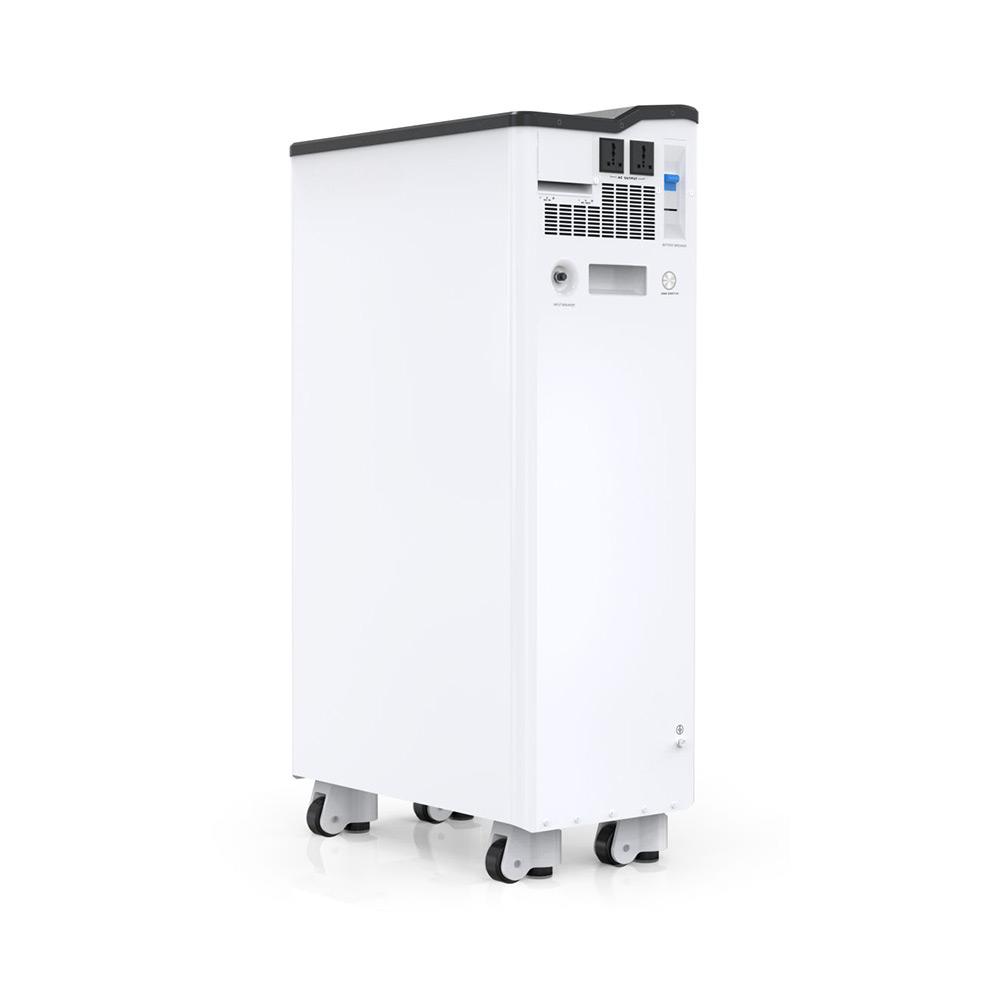
MF-6.2K all-in-one energy storage series. The 10KWh configuration is the model compared in this shortlist. Source: Yeyanghong Energy product image.
Load-profile matching in four steps
The shortlist becomes practical when the buyer converts the project brief into four screening values: peak load, nightly energy, charging environment and required protection degree. The sequence below applies the documented fields in the order that removes the most uncertainty first.
Step 1: Establish the peak load class
List the loads that must operate together during backup. Separate continuous loads from short-duration loads such as motor starts, but do not assume a surge capability that is not published. Use the resulting peak to test the model class: 4.2K or 6.2K. If the peak exceeds 4.2K but remains within 6.2K, the MF-4.2K+8KWh is screened out on the documented class and the MF-6.2K+10KWh remains. If the peak exceeds 6.2K, both models are screened out.
Step 2: Establish the nightly energy need
Calculate the energy the project expects to draw from the battery during the backup period. Compare that figure with the nameplate energy: 8KWh or 10KWh. If the need exceeds 8KWh but remains within 10KWh, the MF-4.2K+8KWh is screened out on nameplate energy and the MF-6.2K+10KWh remains. If the need exceeds 10KWh, both models are screened out. Do not treat nameplate energy as fully usable energy; the specification does not state depth of discharge or conversion efficiency for these models.
Step 3: Apply the charging temperature gate
Check whether the project's charging environment stays within 0~55°C. If it does not, both models fail the same documented charging limit. If it does, both pass. This step should be completed before any preference for the larger capacity unit is expressed, because the larger unit does not publish a wider charging window.
Step 4: Apply the protection-level gate
Define the required IP protection for the installation and confirm that the ordered configuration can provide it. Both models list IP21, IP55, IP65, IP66 and IP67 as options. If the required level is among those listed, both models remain eligible from a protection standpoint. If the required level is outside the listed options, neither model should be specified without further verification.
Worked shortlist examples
The following examples use only the documented capacity classes and nameplate energy. They are screening examples, not performance predictions.
Example A: peak 3.8K, nightly 6KWh
The peak is within the 4.2K class and the nightly energy is within the 8KWh nameplate. Both models pass the power and energy screens. The MF-4.2K+8KWh is the smaller documented match; the MF-6.2K+10KWh also passes but carries more capacity class and nameplate energy. Because cost, footprint and weight are not provided, this playbook does not claim that the larger model is better or worse. The decision should go to the project's headroom requirement and the missing verification items.
Example B: peak 5.4K, nightly 9KWh
The peak exceeds the 4.2K class, so the MF-4.2K+8KWh is screened out on power. The nightly energy also exceeds 8KWh nameplate, so it fails on energy as well. The MF-6.2K+10KWh passes both first-pass screens: 5.4K is within the 6.2K class and 9KWh is within the 10KWh nameplate. Subject to the shared voltage, temperature and IP gates, the 6.2K+10KWh is the only model in this pair that remains.
Example C: peak 7.0K, nightly 9.5KWh
The peak exceeds the 6.2K class, so both models are screened out even though the nightly energy is within the 10KWh nameplate. This example shows why power and energy must be tested separately. A buyer who looks only at energy could wrongly retain the larger model. The documented class limit says otherwise.
Decision matrix for the two-model shortlist
| Screening question | MF-4.2K+8KWh | MF-6.2K+10KWh | Decision consequence |
|---|---|---|---|
| Is the output voltage range suitable? | 180V~270V | 180V~270V | Both pass or both fail together. |
| Is the charging environment within 0~55°C? | Yes / No | Yes / No | Both pass or both fail together. |
| Is the required IP level listed? | IP21/55/65/66/67 | IP21/55/65/66/67 | Both pass or both fail together. |
| Is peak load within the model class? | Up to 4.2K class | Up to 6.2K class | This is where the models separate. |
| Is nightly energy within nameplate energy? | Up to 8KWh | Up to 10KWh | This is where the models separate. |
| What if peak is above 6.2K or energy above 10KWh? | No-go | No-go | Both are outside the documented pair; re-scope or move to a larger model. |
The matrix makes the logic auditable. A reviewer can see whether a model was removed for a shared project condition or for a capacity reason. That distinction matters in procurement because it prevents a larger model from being selected to solve a voltage, temperature or IP mismatch that it does not actually solve.
What the shared specifications do not tell you
The most important limitation is also the simplest: the provided data does not include cycle life, warranty terms, round-trip efficiency, depth of discharge, surge rating, dimensions, weight or a certification list for the MF-4.2K+8KWh and MF-6.2K+10KWh. Those fields are not part of this shortlist and should not be inferred from the LiFePO4 battery type or from other products in the portfolio.
This limitation affects the final award. The four documented gates are enough to remove a model that does not fit the project, but they are not enough to declare a winner on lifetime cost, installation footprint or serviceability. A buyer who needs those comparisons should request the missing documents and verify them against the project requirements. The absence of that data is a reason to pause, not a reason to fill the gap with assumptions.
A second limitation is that the shared 180V~270V output voltage range and 0~55°C charging limit are not performance differentiators. They are boundary conditions. If a project fails either condition, both models should be removed. If a project passes both, the buyer still has to compare capacity. Treating a shared specification as a competitive advantage would distort the shortlist.
All-in-one storage versus a separate hybrid inverter and battery
A traditional separate-component approach pairs a hybrid inverter with a separately selected battery. That approach can offer more granular choice because the inverter and battery can be sized independently. The all-in-one format fixes the kW and kWh pairing in the model name, which simplifies the shortlist but reduces independent sizing flexibility within the pair. For the two models here, the buyer cannot independently upsize the power class without also moving to the larger energy pairing.
The trade-off is real but should not be exaggerated. The all-in-one format reduces the number of interfaces a buyer has to match, while the separate-component format gives more freedom to optimize each part. This article does not quantify installation time, cost or efficiency for either approach because the provided data does not support those comparisons. The practical conclusion is narrower: if the load profile fits one of the fixed pairings, the all-in-one shortlist is straightforward; if it does not, a separate hybrid inverter and battery selection may offer more sizing room.
Market context and application fit
Grand View Research valued the global solar hybrid inverter market at USD 10.7 billion in 2024. That figure describes the scale of the hybrid and storage category, not the relative merit of these two models. At project level, the documented fields still decide the shortlist. A large market does not make a 4.2K+8KWh unit suitable for a 6K load, and it does not make a 6.2K+10KWh unit necessary when a smaller pairing already passes every gate.
Both models list hospitals and schools, construction and real estate, household and outdoor consumer, and military and remote off-grid scenarios among their applicable industries. That breadth is useful for orientation, but it does not replace the load profile. A hospital project and a household project can both appear in the same applicability list while having very different peak loads, nightly energy needs and charging environments. The industry label should open the shortlist; the four gates should close it.
Future outlook
All-in-one storage formats are likely to keep expanding the number of fixed kW/kWh pairings available to buyers. If that happens, the shortlist method in this article becomes more useful, not less: screen on shared electrical and environmental limits first, then match capacity to the load profile, then verify the missing lifetime and compliance data. No forecast is implied beyond the documented direction of the product category.
For Yeyanghong Energy, the two models sit within a broader portfolio that also includes on-grid, off-grid and micro-inverter products, stacked home storage, wall-mounted and floor-standing batteries, and PCBA. That portfolio breadth may help a buyer stay within one supplier relationship, but it does not change the model-level comparison. The MF-4.2K+8KWh and MF-6.2K+10KWh should still be selected or rejected on their own documented fields.
Frequently asked questions
What is the main documented difference between the MF-4.2K+8KWh and MF-6.2K+10KWh?
The main documented difference is the capacity pairing. The MF-4.2K+8KWh pairs a 4.2K class with 8KWh, while the MF-6.2K+10KWh pairs a 6.2K class with 10KWh. Both publish the same LiFePO4 battery type, 180V~270V output voltage range, 0~55°C charging temperature and IP21/IP55/IP65/IP66/IP67 protection options.
Do both models have the same output voltage range?
Yes. The provided specification lists 180V~270V for both models. Because the value is shared, it should be used as a project gate rather than a reason to prefer one model over the other.
What charging temperature is documented for these models?
Both models list a charging temperature of 0~55°C. The provided data does not state a separate discharge temperature range, so that field should be verified separately if the project requires it.
Do the two models offer the same IP protection options?
Yes. Both list IP21, IP55, IP65, IP66 and IP67 as protection degree options. The ordered configuration determines the actual rating, so the buyer should confirm the selected variant rather than assume every rating applies at once.
How do I match a load profile to the 4.2K+8KWh versus the 6.2K+10KWh?
Test power and energy separately. If peak load is within the 4.2K class and nightly energy is within the 8KWh nameplate, the MF-4.2K+8KWh remains eligible. If peak load is above 4.2K but within 6.2K, or nightly energy is above 8KWh but within 10KWh, the MF-6.2K+10KWh is the remaining option. If peak load exceeds 6.2K or nightly energy exceeds 10KWh, both models are outside the documented pair.
What should I do if my load profile exceeds both models?
Both models should be removed from the shortlist. The documented pair does not cover a peak above the 6.2K class or a nightly energy need above the 10KWh nameplate. The project should be re-scoped or matched to a larger model in the portfolio.
Are cycle life and warranty documented for these two models?
No. The provided specifications for the MF-4.2K+8KWh and MF-6.2K+10KWh do not state cycle life, warranty, efficiency, depth of discharge, surge rating, dimensions or weight. Those items require separate verification before a final award.
Does this shortlist apply to micro inverter or on-grid inverter projects?
The models discussed here are Battery Energy Storage System units. A micro inverter, on-grid inverter or off-grid inverter project may use a different architecture and should be shortlisted against its own documented requirements. The same discipline of screening shared limits before comparing capacity still applies.
Decision summary
- Use 180V~270V as the first shared gate. If the project falls outside it, both models are no-go.
- Use 0~55°C as the charging temperature gate. If the charging environment falls outside it, both models are no-go.
- Use the listed IP21/IP55/IP65/IP66/IP67 options to confirm the ordered protection level. The shared options do not separate the models.
- Use the 4.2K/8KWh and 6.2K/10KWh pairings to test peak load and nightly energy separately.
- Choose the smaller model only when it passes every gate and the project does not require verified headroom for future loads.
- Do not make a final award on the four documented gates alone. Request cycle life, warranty, efficiency, depth of discharge, surge rating and certification documents before commitment.
For buyers who need the full product context, Yeyanghong Energy provides a downloadable brochure at this link. The brochure is a reference document; the model-level shortlist should still follow the documented gates above.
¿Tiene preguntas o necesita más detalles?
Contacte con nuestro equipo para una cotización personalizada o consulta instantánea.
Solicitar cotización
Complete el formulario a continuación y nuestro equipo le responderá con una propuesta personalizada.
Chat directo de WhatsApp
¿Prefiere chatear en tiempo real? Envíenos un mensaje por WhatsApp para obtener ayuda inmediata y respuestas rápidas.
- Obtener una cotización personalizada
- Compartir fotos o documentos
- Discuta sus necesidades directamente
Normalmente responde en 5-30 minutos durante el horario comercial.