
Shortlist: Carbon Steel Hex Bolts for Petrochemical, Wind and Coastal Projects
Shortlist: Carbon Steel Hex Bolts for Petrochemical, Wind and Coastal Projects
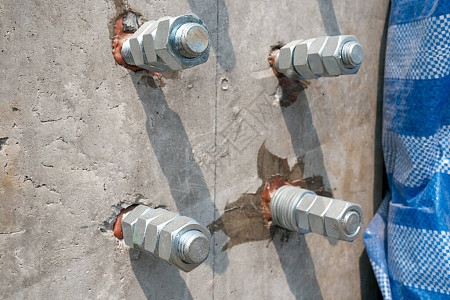
A carbon steel hex bolt is never specified by strength class alone. In petrochemical, wind power and coastal construction, three constraints act at the same time — mechanical grade, corrosion protection, and documented compliance — and a bolt that satisfies one can still be rejected on the other two.
That is why procurement teams increasingly ask for a shortlist rather than a single part number. A specification that is correct for a sheltered factory frame, typically a zinc plated Grade 8.8 hex bolt, is often the wrong choice for an exposed coastal steel structure, where coating thickness rather than tensile class becomes the deciding variable. The same logic runs in reverse for high-vibration equipment, where grade and preload control matter more than an extra micrometre of coating.
Market data supports how central this product family is. Strategic Market Research valued the global hex bolts market at USD 19.67 billion in 2025, and Dataintelo reported that carbon steel accounted for 44.8% of global hex nut and bolt market share in the same year. Carbon steel is therefore the default material class for most industrial fastening, which makes the selection criteria — not the material choice — the real source of project risk.
This shortlist is organised around one documented product family: the Hex Bolt (product ID 7337) from YUETONG FASTENER, the export-facing identity of HEBEI YUETONG FASTENERS MANUFACTURING CO., LTD., a fastener manufacturer established in 2017 in Yongnian District, Handan, Hebei — China's largest standard parts production base. The configurations, certificate numbers and application conditions referenced below come from that company's published product and compliance records. The decision criteria are written so they apply to any equivalent supplier's product.
The Problem: Three Environments, Three Different Failure Modes
Petrochemical, wind power and coastal projects do not stress a fastener in the same way, and treating them as one category is the most common specification error.
- Petrochemical projects combine explosion hazardous areas, high and low temperature cycling, and vibration load conditions. Here the fastener must hold preload under thermal movement while its coating survives a chemically active atmosphere.
- Wind power installations apply alternating vibration loads over long service life, often in open-air and high-wind exposure, with seismic resistance requirements in certain regions. Fatigue behaviour and locking integrity dominate.
- Coastal and salt spray environments attack the surface first. Coastal salt spray corrosion reduces the effective section of a fastener long before its tensile capacity is reached, so coating system selection outranks grade selection.
The documented failure modes for hex bolts in these conditions are consistent: thread stripping, fracture and deformation. High-frequency vibration, excessive installation torque and long-term heavy-load tension are the recognised triggers. Each of those triggers is controlled by a different part of the specification — thread fit and grade, tightening torque and preload, and the locking method chosen for the joint.
Screen 1 — Grade, Standard and Dimensional Range
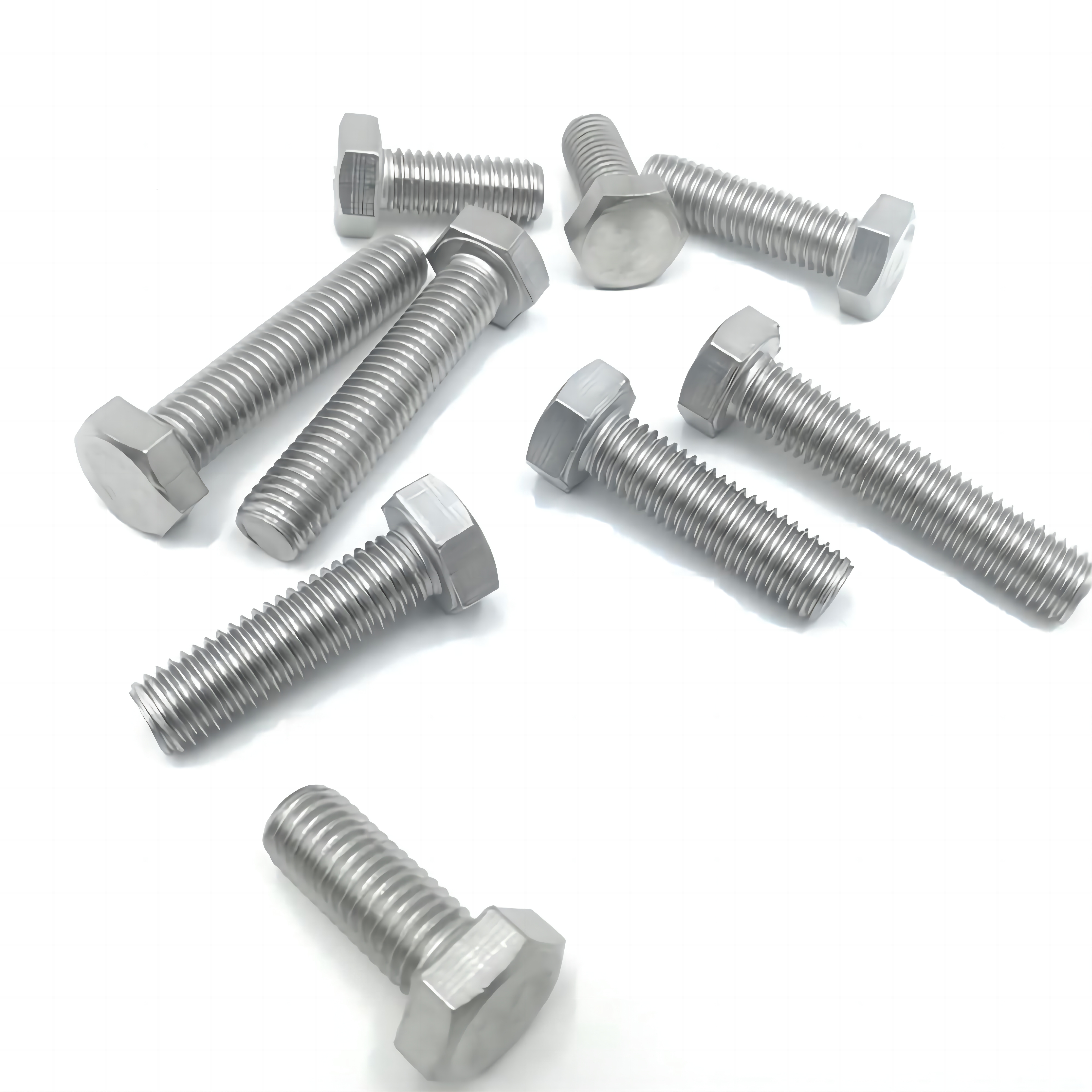
The Hex Bolt 7337 covers size M3–M36, with commonly stocked metric sizes including M6, M8, M10 and M12 alongside imperial sizes such as 1/4", 5/16", 3/8", 1/2" and 5/8". Lengths run from 16 mm to 200 mm, with both coarse and fine thread pitch available. Grades cover 4.8, 8.8, 10.9 and 12.9; stainless options A2-70 and A4-80 also exist within the same product family for applications where carbon steel is not the right material class.
Standards coverage is the first practical filter for international projects. The product conforms to GB/T, DIN, ISO and ASTM manufacturing standards, specifically DIN 931, DIN 933, GB 5782, GB 5783 and ASME/ANSI B18.2.1. For full-thread hex bolts, DIN 933 and ISO 4017 are the primary standards, with ISO 4017 acting as the international successor to DIN 933 — a distinction worth checking when a project specification cites one and the supplier ships to the other. Custom sizes and specifications are supported, which matters for retrofit and legacy equipment where the original standard is no longer current.
Screen 2 — Coating Thickness Against Corrosion Exposure
Coating is the variable most often under-specified in coastal and outdoor work, because the difference between plating types is measurable rather than qualitative. Zinc plating typically provides a coating thickness of 5–12 μm, whereas hot-dip galvanizing provides 45–85 μm. That roughly four-to-seventeen-fold difference in sacrificial layer is the main reason the two finishes are not interchangeable in salt spray exposure.
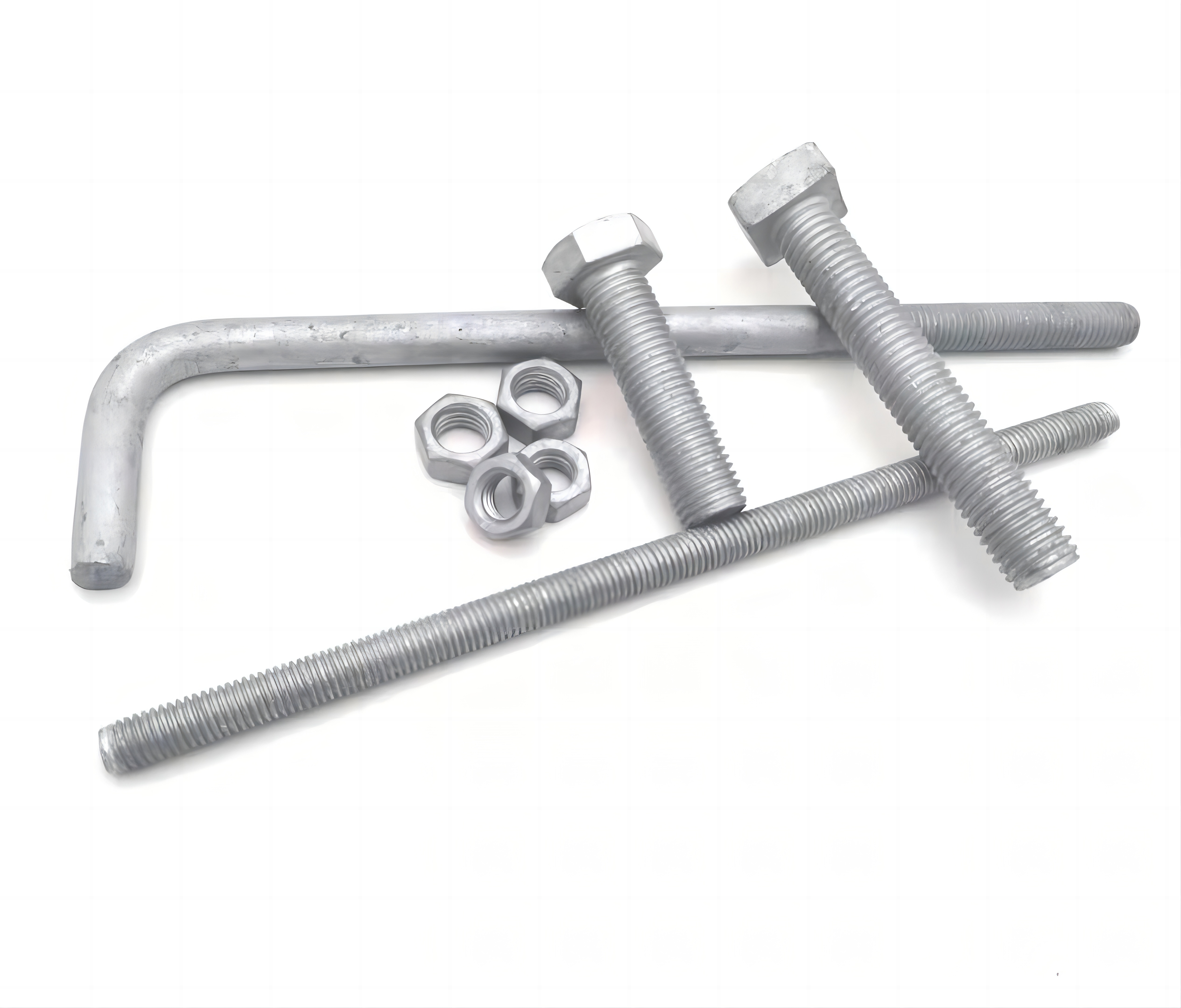
Available surface finishes on the Hex Bolt 7337 include black oxide, zinc plated, hot-dip galvanized, Dacromet, mechanical galvanized and PTFE coating. In practice, the finish choice should be read backwards from the environment: sheltered indoor service tolerates a thin electroplated zinc layer; open-air and coastal steel structures generally require hot-dip galvanizing or an equivalent barrier coating; high-temperature and chemically exposed petrochemical joints usually need a coating selected for temperature stability rather than for maximum thickness.
The Shortlist: Five Carbon Steel Hex Bolt Configurations
The table below is a shortlist of configurations, not a ranking of brands. Each row represents a distinct combination of grade, coating and standard that a specifier can issue as a scoped line item, together with the documented boundary that limits it.
| Configuration | Grade | Coating | Standards referenced | Best-fit exposure | Documented boundary |
|---|---|---|---|---|---|
| 1. Standard metric hex bolt (full thread) | 8.8 | Zinc plated (5–12 μm) | DIN 933 / ISO 4017 equivalent | Indoor and sheltered outdoor connections, general machinery | Thin sacrificial layer; not a substitute for HDG in continuous chloride exposure |
| 2. High-strength hex bolt with barrier coating | 10.9 / 12.9 | Dacromet, mechanical galvanized, PTFE | DIN, ISO, ASTM (incl. ASME/ANSI B18.2.1) | Petrochemical, high and low temperature, vibration load | High-strength grades require controlled tightening and coating selection that accounts for embrittlement risk |
| 3. Hot-dip galvanized hex bolt | 8.8 / 10.9 | Hot-dip galvanized (45–85 μm) | DIN, ISO, ASTM | Coastal salt spray, outdoor steel structures, bridge and curtain wall | Thicker coating affects thread fit and requires matched nuts; coating can be damaged in handling |
| 4. Embedded anchor hex bolt | 4.8 / 8.8 | Zinc plated or hot-dip galvanized | GB/T, DIN, ISO | Equipment foundations, column bases, seismic zones | Performance depends on concrete and embedment design, not on the bolt alone |
| 5. Custom / non-standard hex bolt | As specified | Per project requirement | Custom size and specification | Retrofit, legacy equipment, non-standard joints | Longer production lead time and a higher minimum order quantity than standard stock |
How to read configuration 2 and 3 together
Configurations 2 and 3 are the pair most often confused. Both address aggressive environments, but they solve different problems. Configuration 2 targets mechanical integrity under temperature and vibration, and the coating exists mainly to keep the joint stable rather than to maximise sacrificial thickness. Configuration 3 targets surface loss, and its 45–85 μm layer is what buys service life in salt spray. A coastal wind foundation may genuinely need both characteristics, which is why the specification should state the environment, not just the finish name.
Certification Evidence Behind the Shortlist
For a shortlist to be defensible in a tender, each line item needs a document trail. The Hex Bolt 7337 and the manufacturing entity behind it hold the following current certificates, as published in the supplier's compliance records.
| Certificate | Number | Issuer | Scope / standard | Validity |
|---|---|---|---|---|
| ISO 9001 Quality Management System | 29024Q12949-09R1M | ZhongTai Union Certification Co., LTD | GB/T 19001-2016 / ISO 9001:2015; production of fasteners (nuts) and sales of fasteners including export business | Issued 2021-09-14, valid to 2027-09-13 |
| ISO 14001 Environmental Management System | 29025E12097-12R0M | ZhongTai Union Certification Co., LTD | GB/T 24001-2016 / ISO 14001:2015 | 2025-12-18 to 2028-12-17 |
| ISO 45001 Occupational Health and Safety | 29025S12024-12R0M | ZhongTai Union Certification Co., LTD | GB/T 45001-2020 / ISO 45001:2018 | 2025-12-18 to 2028-12-17 |
| IATF 16949:2016 | 2600920/R0M | Beijing Zhong An Zhi Huan Certification Center Co., Ltd | Manufacture of fasteners (nuts, bolts); excludes product design under Clause 8.3 | 2026-05-07 to 2029-05-06 |
| ISO 14067 Carbon Footprint | 33925CFMS00020R0S | ZQHX Certification Center Co., Ltd | T/CCAA 39-2022 & ISO 14067:2018; processing and sales of fasteners (high-strength steel bolts, nuts) | 2025-12-08 to 2028-12-07 |
| ECM Type-Approved Attestation | No. 3N230331.HYFUC49 | Ente Certificazione Macchine Srl | EN ISO 10683:2018, EN ISO 16047:2005+A1:2012, EN ISO 4753:2011; EU market | 2023-04-03 to 2028-03-30 |
| Alibaba Gold-Plus Supplier Assessment | 491647039 P+T | Alibaba.com, on-site assessment by SGS | Factory supplier capability assessment for fasteners, including hex bolts | 2026-06-23 to 2027-06-22 |
Reading the certificate scope matters as much as reading the certificate number. The IATF 16949:2016 certificate covers the manufacture of fasteners (nuts, bolts) but explicitly excludes product design under Clause 8.3. The ECM attestation is a voluntary type-approved attestation listing specific standards and covering the products named in its annex, and it applies to the EU market. The ISO 45001 and ISO 14001 scopes are worded around the production of fasteners (nuts) and the sale of fasteners including export business.
A specifier should verify that the scope, the market and the validity window of each document actually match the project being supplied — not simply that a certificate exists.
Technical Notes: Vibration, Temperature and Seismic Service
Once grade and coating are fixed, the remaining risk is installation behaviour. Proper bolt selection and installation can significantly reduce the risk of self-loosening: correct thread fit, sufficient preload and controlled tightening torque help maintain reliable clamping force during long-term service. For equipment or steel structures subject to continuous vibration, suitable locking methods — lock nuts, locking washers or thread-locking solutions — should be selected according to the operating conditions.
The supporting quality chain behind the shortlist is documented as raw material incoming inspection, in-process patrol inspection, finished product tensile load test and pre-shipment inspection, with third-party SGS testing available. Torque, hardness and fatigue resistance are tested before delivery. For vibrating working conditions, seismic high-strength bolts are the specified choice. This is the point at which a shortlist converts into a purchase order: the coating protects the surface, but preload and locking protect the joint.
Application Mapping
Petrochemical projects
Petrochemical service combines explosion hazardous areas, high and low temperature cycling and vibration load. Configuration 2 on the shortlist is the natural starting point, with the coating chosen for temperature stability. Where the joint also sees sustained outdoor exposure at a coastal site, a barrier coating rather than plain electroplated zinc is the safer specification.
Wind power
Wind installations run under alternating vibration load and permanent installation modes, with seismic resistance requirements in certain regions. Grade selection and locking method carry most of the risk here, because fatigue behaviour rather than surface loss usually governs service life. The documented 15,000-piece supply case for an engineering contractor, applied to steel structure splicing and mechanical equipment fixing across a 10–15 year service life, recorded stable fastening strength, vibration-resistant and non-loosening behaviour, and zero quality faults with successful project acceptance. That is the pattern a wind or heavy-structure buyer is trying to reproduce.
Coastal and salt spray environments
Coastal salt spray corrosion is the dominant mechanism, so configuration 3 — hot-dip galvanized at 45–85 μm — is the reference point, and any substitution toward electroplated zinc should be justified rather than assumed. Where a coastal asset also carries vibration, the specification must satisfy both coating thickness and locking requirements simultaneously.
Market Trend Context
Three data points shape how this shortlist is likely to evolve.
- Market size: Strategic Market Research valued the global hex bolts market at USD 19.67 billion in 2025. A separate Dataintelo report places the combined hex nut and bolt market at USD 8.4 billion. The gap is a product-scope difference rather than a direct contradiction, and it is a useful reminder that market figures should be read together with their definition of scope.
- Trade volume: Global export value for HS Code 731815 (other screws and bolts) was USD 26.35 billion in 2023, a 3.65% decline from the previous year — a sign of a consolidating rather than an expanding trade picture, which tends to shift buyer attention toward supplier reliability and documentation quality.
- Supply concentration: China's Yongnian District is the country's largest fastener production base, and Hebei Yuetong Fasteners Manufacturing Co., Ltd. is recorded as a top-three exporter within that hub as of 2023. The practical implication for overseas buyers is that lead-time and documentation performance in this product category is concentrated in a small number of regional exporters.
Where the Shortlist Stops: Limits and Trade-offs
A shortlist that does not state its boundaries is not a shortlist, it is marketing. Four limits are worth stating plainly.
- Coating thickness versus thread fit. Hot-dip galvanizing at 45–85 μm protects better than electroplated zinc at 5–12 μm, but a thicker coating changes the effective dimensions of the thread. Matched nuts and appropriate handling are required, and the trade-off is real rather than theoretical.
- Carbon steel has an environmental ceiling. For permanently immersed or severely chloride-loaded service, stainless options such as A2-70 and A4-80 exist within the same product family precisely because a coated carbon steel bolt is not always the right answer.
- Certification scope is narrower than certification headlines. The IATF 16949:2016 certificate excludes product design under Clause 8.3, and the ECM attestation is market-specific to the EU. Buyers who treat all certificates as interchangeable will overstate what has actually been verified.
- Procurement parameters are finite. Standard products carry a minimum order of 500 sets with 3–7 days lead time for in-stock items; non-standard customized products carry a minimum of 3,000 sets with 12–20 days production lead time. Monthly capacity is documented at 1,500 tons. Projects that need non-standard geometry on a compressed schedule should plan against those figures rather than assume them away.
Procurement Checklist for Specifiers
- State the environment first: coastal salt spray, vibration load, temperature range, hazardous area.
- Fix the standard and its successor equivalent: DIN 933, ISO 4017, GB 5782 or GB 5783, ASME/ANSI B18.2.1.
- Choose grade from the load case, not from habit: 4.8 to 12.9 are all available, with A2-70 and A4-80 for stainless alternatives.
- Choose coating from the corrosion exposure: 5–12 μm zinc plating or 45–85 μm hot-dip galvanizing, with Dacromet, mechanical galvanizing and PTFE as additional options.
- Confirm the locking method for vibrating joints before ordering, not on site.
- Verify certificate scope, market and validity date for each document cited.
- Check lead time and minimum order quantity against the project schedule, especially for customized sizes.
- Request material certificates and test reports as part of the engineering order documentation.
Future Outlook
Carbon steel is likely to remain the dominant material class for hex bolts, given its 44.8% share of the global hex nut and bolt market in 2025, but the basis on which it is selected is shifting. Coating thickness, thread-fit compatibility and locking method are becoming specification line items rather than afterthoughts, and carbon footprint documentation — the kind represented by the ISO 14067 certificate held for this product family — is moving from a differentiator into a tender requirement in EU-facing projects.
The other direction of change is scope literacy. As buyers learn to read the difference between a manufacturer's quality management certificate, a product-specific attestation and a supplier capability assessment, shortlists will be built from verified evidence rather than from headline claims. For specifiers working on petrochemical, wind and coastal projects, that is the more durable competitive advantage.
FAQ
Can carbon steel hex bolts loosen under continuous vibration?
Yes. Repeated vibration, insufficient preload or incorrect tightening torque may lead to gradual loosening. The risk can be reduced through correct thread fit, sufficient preload and controlled tightening torque, plus a suitable locking method — lock nuts, locking washers or thread-locking solutions — selected according to the operating conditions. For long-term heavy-load tension, the recognised risks are thread stripping, deformation and fracture.
For coastal salt spray exposure, how do zinc plating and hot-dip galvanizing differ?
They differ mainly in coating thickness. Zinc plating typically provides 5–12 μm, while hot-dip galvanizing provides 45–85 μm. The thicker galvanized layer creates a larger sacrificial barrier and is generally the preferred finish for coastal and outdoor steel structures, whereas electroplated zinc is more commonly used in sheltered or indoor service. The thicker coating also affects thread fit and requires matched nuts.
What does the ECM Type-Approved Attestation cover for hex bolts, and which market does it apply to?
The Hex Bolt (product ID 7337) is covered by the ECM Type-Approved Attestation with certificate number No. 3N230331.HYFUC49, issued by Ente Certificazione Macchine Srl. The applicable standards are EN ISO 10683:2018, EN ISO 16047:2005+A1:2012 and EN ISO 4753:2011. The attestation is voluntary and type-approved, covers the products listed in its annex, applies mainly to the EU market, and is valid from 2023-04-03 to 2028-03-30.
Does IATF 16949 certification cover product design for hex bolts?
No. The IATF 16949:2016 certificate (number 2600920/R0M, issued by Beijing Zhong An Zhi Huan Certification Center Co., Ltd.) covers the manufacture of fasteners (nuts, bolts) and excludes product design under Clause 8.3. It is valid from 2026-05-07 to 2029-05-06 and applies globally. Buyers requiring designed-to-order solutions should confirm how that scope boundary affects their project.
What sizes, grades and finishes are available for carbon steel hex bolts?
The Hex Bolt 7337 covers M3–M36, with commonly referenced sizes including M6, M8, M10, M12 and imperial sizes such as 1/4", 5/16", 3/8", 1/2" and 5/8". Lengths range from 16 mm to 200 mm with coarse or fine thread pitch. Grades are 4.8, 8.8, 10.9 and 12.9, with A2-70 and A4-80 stainless steel also available. Surface finishes include black oxide, zinc plated, hot-dip galvanized, Dacromet, mechanical galvanized and PTFE coating, and custom sizes and specifications are supported.
What lead times and minimum order quantities apply to carbon steel hex bolts?
Documented figures are 3–7 days for in-stock standard products and 12–20 days for customized orders, with expedited delivery negotiable. Minimum order quantity is 500 sets for standard products and 3,000 sets for non-standard customized products. Monthly production capacity is 1,500 tons. These figures are relevant when a project schedule assumes a customized geometry without allowing for the longer production window.
Reference material. Product documentation, certification records and application notes for the Hex Bolt 7337, including the ISO 9001, ISO 14001, ISO 45001, IATF 16949 and ISO 14067 certificates and the ECM Type-Approved Attestation, are published by HEBEI YUETONG FASTENERS MANUFACTURING CO., LTD. The company's downloadable product brochure is available here: YUETONG FASTENER product brochure (PDF). Company background is also published at www.ytfasteners.com.