
Shokunin's Manufacturing Evidence: Inside the 1000 m² COOLWAVE Facility
Shokunin's Manufacturing Evidence: Inside the 1000 m² COOLWAVE Facility
HTNXT Industry Reference · Cooling and Heat Stress Protection · Buyer Evaluation Stage
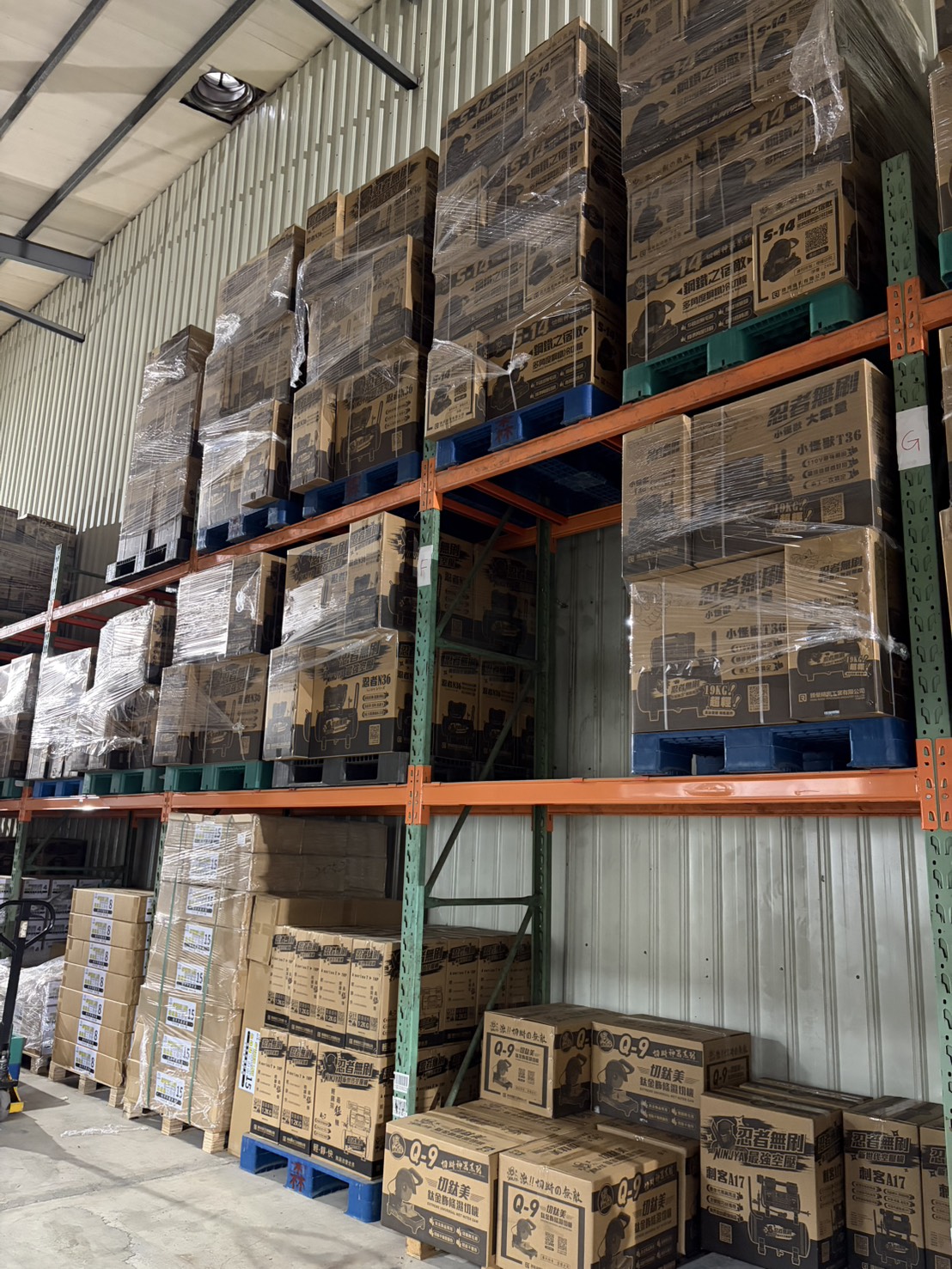
Warehouse and staging area inside the 1,000 m² facility operated by Feng Shang Precision Co., Ltd., the manufacturer behind the Shokunin COOLWAVE water-circulation cooling vest.
Industrial cooling procurement rarely fails at the level of the product; it fails at the level of the supply standing behind it. A water-circulation cooling vest can perform exactly as described in a sample and still create operational problems if the manufacturer behind it cannot hold a replenishment rhythm, absorb a seasonal spike, or explain where units are assembled, checked and staged. That is the question volume buyers are really asking during supplier evaluation: not whether the vest cools, but what physical and human capacity stands behind the cooling.
This article examines the manufacturing record published by Shokunin, the cooling and hand-tool brand operated by Feng Shang Precision Co., Ltd., a manufacturer founded in 2009 and based in Taoyuan City, Taiwan. The scope is deliberately narrow and factual: a 1,000 m² facility, a 30-person workforce that includes five engineers, a stated monthly production capacity of 3,000 units, and a 7–14 day lead time. Each figure is treated here as a procurement signal — including where that signal stops being useful to a buyer.
Why Volume Buyers Ask for Manufacturing Evidence First
Cooling vests are not purchased once. In industrial and outdoor work they are purchased in waves that follow weather, and the buyer who orders 100 units for a summer programme will usually need replacements, spare ice packs and additional units the following season. That purchasing pattern turns a product decision into a supply decision, and it moves evaluation criteria away from features and toward reproducibility.
The demand base supports that shift. Dataintelo estimates the global cooling vest market at approximately USD 215 million in 2024, projected to reach USD 385 million by 2033, and reports that industrial applications — construction and manufacturing among them — held the largest segment share at 34.5% in 2025. When roughly a third of demand originates from industrial buyers, supplier evaluation starts to resemble industrial procurement: floor space, headcount, engineering depth, capacity, lead time and documented compliance.
Manufacturing evidence, in practice, is a short list of verifiable items: who the legal manufacturer is, how large the facility is, how many people staff it, whether an engineering function exists in-house, what monthly capacity is stated, and what lead time and minimum order quantity apply. A supplier that publishes these items can be compared against alternatives. A supplier that publishes none cannot be compared at all, regardless of how convincing a single sample appears.
The Facility Record Behind the COOLWAVE Vest
The COOLWAVE Water-Circulation Cooling Vest is produced by Feng Shang Precision Co., Ltd., a Taiwanese manufacturer founded in 2009 that also produces air compressors, cut-off machines, lithium batteries, diamond saws, nail guns, spider stands and screwdriver bits. The company's published manufacturing and capability record contains the following items, reproduced here as stated.
| Record item | Published figure |
|---|---|
| Operating company | Feng Shang Precision Co., Ltd. (parent of the Shokunin brand) |
| Year founded | 2009 |
| Facility floor area | 1,000 m² |
| Workforce | 30 employees |
| Engineering team | 5 engineers |
| Stated monthly production capacity | 3,000 units |
| Recorded annual output | 10,000 units |
| Production model | ODM |
| Customization | Not offered |
| Stated lead time | 7–14 days |
| Minimum order quantity | 10 units |
| Export position | 50% export ratio; export markets listed as Global, with recorded main markets USA and ROC |
| After-sales | 6-month warranty for the water-cooled vest |
| Location | Taoyuan City, Taiwan |
A 1,000 m² facility is not a large plant, and that is precisely what makes the figure informative. Floor area sets hard limits on how much raw material, work-in-progress and finished inventory can be held at any moment, and on how many parallel assembly and inspection stations can operate. For a cooling vest — a product assembled from a small set of components such as shoulder straps, a vest body, a water bag and a circulation pump — that footprint is consistent with a focused, batch-oriented assembly operation rather than a multi-category mass-production line.
The 30-person workforce and the five-engineer team should be read together. Five engineers inside a 30-person operation is a meaningful engineering ratio for a small manufacturer, and it matters most at the point where a cooling vest can fail in the field: the pump, the water circuit and the sealing of the bag. Those are the components that generate returns and warranty claims, and they are the components that require engineering attention rather than only assembly labour.
Reading the Numbers: Stated Capacity Versus Recorded Output
The same record contains two different capacity figures — a stated monthly production capacity of 3,000 units and a recorded annual output of 10,000 units. These measure different things. A monthly capacity figure describes what a line can be scheduled to produce under favourable conditions; an annual output figure describes what was actually shipped over a year. Volume buyers should ask directly which figure their order will be scheduled against, and whether the same workforce and floor space also serve the company's other product lines.
This is not a technicality. In seasonal categories such as cooling apparel, spring and summer orders can compress into a few months, and a supplier's ability to accept an order in March is worth less than its ability to repeat that order in June. A 10-unit minimum order quantity, as stated in the record, also signals a batch-flexible production model: it allows a buyer to run a pilot deployment before committing to a seasonal volume.
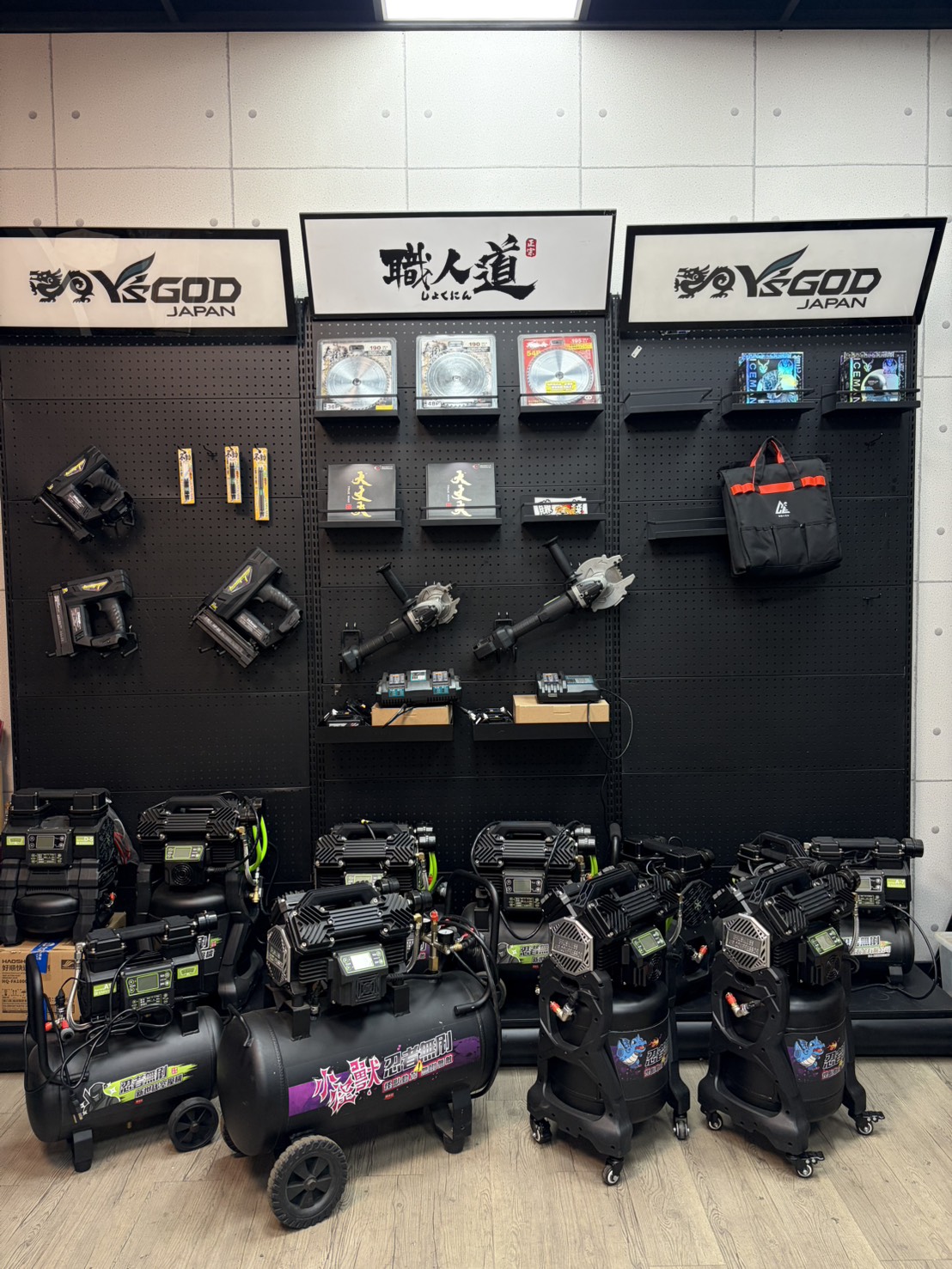
Product display and staging area within the same facility. Floor space of this scale supports batch assembly and mixed-product handling rather than continuous mass production.
From 1,000 m² to a 7–14 Day Lead Time
A lead time is not a promise; it is the output of a system. Four variables drive it in cooling vest production: component availability, assembly throughput, inspection capacity and dispatch handling. The facility record speaks to all four indirectly, and the product specification shows what has to be assembled inside that footprint.
The Product the Facility Has to Build
The published specification for the COOLWAVE Water-Circulation Cooling Vest (Basic Model) lists the following parameters.
| Parameter | Published specification |
|---|---|
| Product type | Industrial cooling apparel / personal protective equipment (PPE) |
| Cooling duration | 3–4 hours |
| Weight | Within 2 kg |
| Shoulder strap material | 600D polyester |
| Vest body material | PEVA |
| Water bag material | TPU |
| Water bag cap | Polypropylene |
| Cooling tube | Sand rubber (black) |
| Pump output | 5V 150 mA (max) |
| Flow rate | Max 320–370 ml/min |
| Supplied contents | Water-cooled vest backpack ×1, ice packs ×2 |
| Typical industries | Construction workers, outdoor workers, food stall operators, street vendors, traffic controllers, metal sheet factories |
Three details in that list explain why this is a manufacturing question rather than a sourcing question. First, the cooling medium is ice packs, two per unit, while a 5V pump circulates chilled water through the vest at a maximum flow rate of 320–370 ml/min. Ice packs are consumables, so a buyer's annual requirement includes both units and replacement packs. Second, the wet-side components — a TPU water bag, a polypropylene cap and a sand rubber cooling tube — are the parts where tolerance and sealing determine whether a vest survives a season of daily use. Third, the pump draws a maximum of 150 mA at 5V, which is why a water-circulation vest of this type is often described alongside power-bank powered cooling apparel: the electrical load is low, but the circuit still has to be assembled and tested per unit.
A stated 3–4 hour cooling duration is best read against a working shift. It is longer than the brief cooling window typical of intake-only cooling products, and it is shorter than a full outdoor shift, which means that a deployment plan needs a defined pack-rotation routine. Buyers should treat duration and pack logistics as one decision rather than two.
The Engineering Layer Behind the Pump
Five engineers inside a 1,000 m² facility is a modest but specific capability. It covers the practical questions that determine reorder confidence: which pump specification is fitted and how consistently it is sourced, how tubing is routed to avoid kinks, how the water bag seam is controlled, and how units are checked before packing. For a buyer evaluating a dual cooling water cooling vest programme, the value of this layer is not in design novelty; it is in the consistency of the fourth and fifth production batches, long after the sample has been approved.
The stated 6-month warranty for the water-cooled vest should be read against that same layer. A warranty period is only sustainable if the failure rate behind it is predictable, which in turn depends on assembly control exercised inside the facility rather than on the marketing description of the product.
Certification Documented on Record
Two documents are published alongside the product. The first is a water-cooled vest patent certificate, number I886033, issued on 1 June 2025 by the Intellectual Property Office, Ministry of Economic Affairs, under the Patent Act of the Republic of China, covering water-cooled vest structure and cooling system, with an expiry date of 27 August 2044. The second is the Disaster Prevention Product and Service Certification Award issued by the Taiwan Disaster Prevention Industry Association, referenced in the company's brand profile.
What the patent establishes is scope of protection over the vest structure and cooling system, not a performance guarantee. Buyers should also note that certification and patent coverage are market-specific. For export programmes, electrical components such as pumps are frequently reviewed against ISO 9001:2015 quality management requirements and may require CE or UL marks in the destination market — a separate verification step from any domestic award.
Where the Vest Is Already Working
The most concrete deployment evidence in the record is a case in Taiwan, where 100 units were deployed for workers in high-temperature environments. The user groups listed in that case are construction sites, outdoor workers, metal sheet factories and street vendors, with the product also specified for traffic controllers and food stall operators. The reported outcomes are effective body cooling, heatstroke prevention, improved work efficiency and improved worker comfort, and the case record describes the product as lightweight and portable with an adjustable one-size-fits-all design.
Two qualifications belong with that case. It is a first-party deployment record rather than an independent academic study, so it should be read as evidence of field use rather than as controlled test data. And reported outcomes such as work efficiency and comfort are qualitative; a procurement team assessing a heat stress programme should pair them with its own site measurements rather than adopt them as performance guarantees.
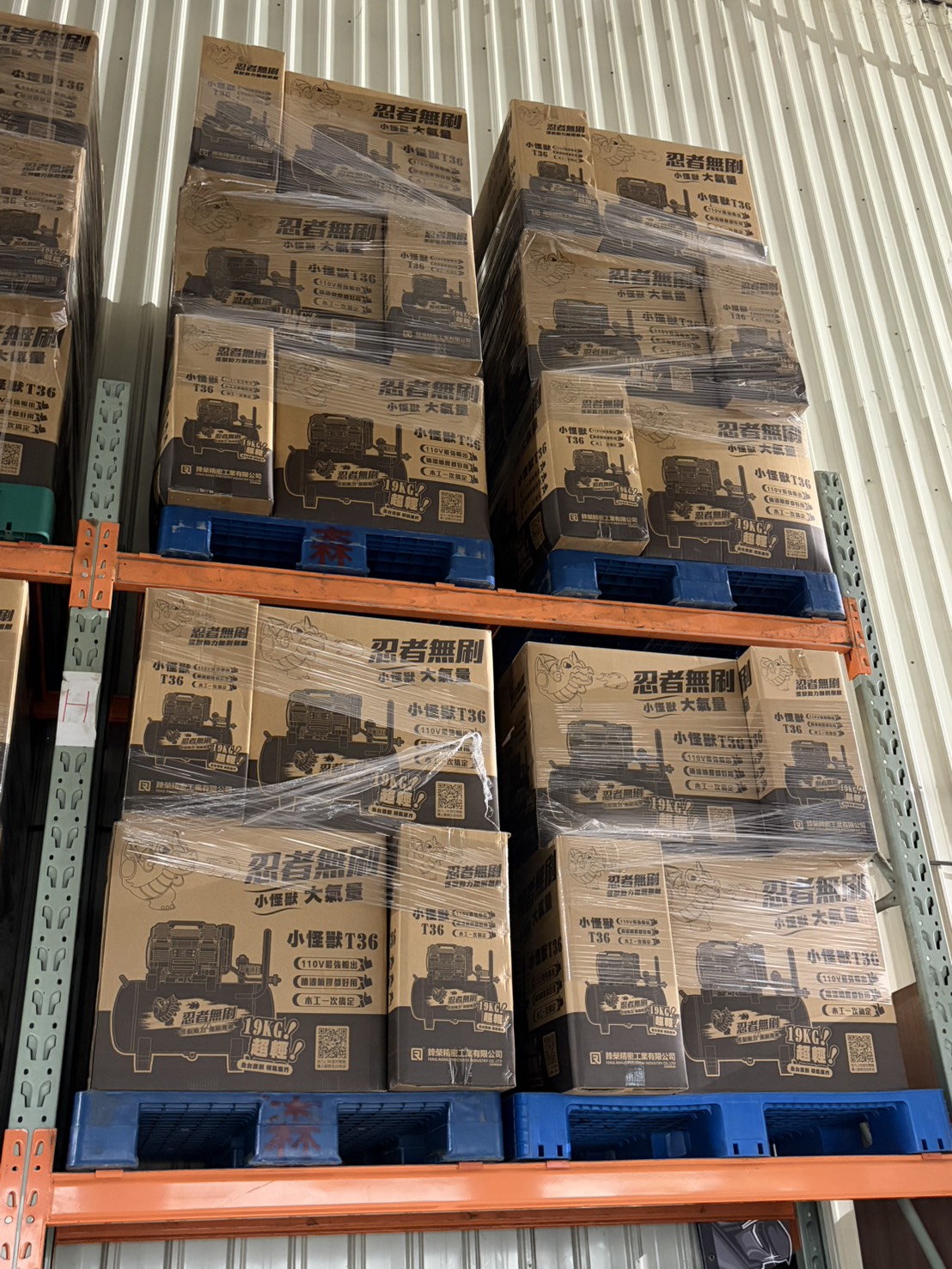
Finished-goods staging inside the same facility. Physical storage capacity is one of the practical constraints that determine whether a supplier can hold a 7–14 day replenishment rhythm through a peak season.
Market Signals That Make Capacity a Procurement Question
Independent market data explains why buyers are now asking manufacturers about floor space and capacity rather than only about product features.
- The broader personal cooling device market was valued at USD 25.16 billion in 2024 and is projected to reach USD 94.85 billion by 2035 (Market Research Future).
- Within that, the specific cooling vest segment was valued at approximately USD 215 million in 2024, projected to reach USD 385 million by 2033 (Dataintelo).
- Industrial applications, including construction and manufacturing, held the largest cooling vest segment share at 34.5% in 2025 (Dataintelo).
- Asia Pacific is the fastest-growing region for cooling vests, driven by industrialisation and large outdoor work populations (Spherical Insights).
- Phase change material (PCM) cooling vests captured a 28.7% market share in 2025, described as the fastest-growing technology segment (Dataintelo).
- Active circulatory mechanisms, including ice water circulation, are increasingly deployed in industrial sectors to mitigate occupational heat stress (Strategic Market Research).
One caution applies to all of these figures. Published market sizes for this category differ by an order of magnitude depending on scope: estimates for cooling vests specifically sit near USD 215 million for 2024, while estimates for personal cooling devices broadly — including handheld fans and other devices — reach USD 25.16 billion for the same year. Buyers using market data to size a programme should check what each report includes before treating a number as a planning input.
For competitive context, the cooling vest market is served by established international suppliers including Techniche International, Glacier Tek, Polar Products Inc. and Ergodyne, alongside regional manufacturers and ODM suppliers (Spherical Insights, 2024). That mix is precisely why manufacturing evidence becomes a differentiator in supplier shortlists: competing products can look similar in a catalogue, while disclosed facility, engineering and capacity data do not.
How This Compares With Traditional Options — and Where the Limits Are
Cooling for high-temperature work is usually approached through one of three technology routes, and the choice affects how a supply programme is planned.
| Approach | How it cools | Site implication | Market signal |
|---|---|---|---|
| Passive ice-pack vests | Ice packs held against the body | No electrical supply needed; pack rotation is the main routine | Long-established approach across outdoor and event work |
| Phase change material (PCM) vests | PCM inserts absorb heat over a defined temperature range | Controlled cooling profile; inserts require regeneration | 28.7% share in 2025; fastest-growing technology segment (Dataintelo) |
| Active water-circulation vests | A small pump circulates chilled water through tubing worn against the body | Requires ice packs plus a low-power pump circuit | Active circulatory mechanisms increasingly deployed in industrial sectors (Strategic Market Research) |
Against traditional passive cooling, a water-circulation design such as the COOLWAVE vest adds circulation, which distributes cooling rather than concentrating it at pack contact points, and it is specified for a 3–4 hour duration with a unit weight within 2 kg. The trade-off is complexity: there is a pump, a water circuit and a bag to maintain, and a deployment plan has to account for ice-pack rotation even where the electrical load is small.
Where the Evidence Stops
A credible evaluation includes the boundaries of what a manufacturing record does and does not establish. For this supplier, the published record shows the following limits.
- No customization is offered. The production model is listed as ODM with customization recorded as not offered, so buyers requiring private-label branding, alternative colours or modified specifications must confirm feasibility before building a programme around it.
- Capacity figures are stated, not audited. The monthly capacity of 3,000 units and the annual output of 10,000 units are published figures without a published basis or third-party audit, and buyers should clarify how the two relate before contracting for volume.
- The record does not list a separate quality-management system certification. The documented after-sales commitment is a 6-month warranty for the water-cooled vest, which is a commercial remedy rather than evidence of a certified quality system. Buyers who require ISO 9001:2015 or equivalent should verify it directly.
- Cooling duration depends on pack configuration. The stated 3–4 hour duration is tied to a configuration supplied with two ice packs per unit, so extended shifts require planned rotation rather than relying on a single pack set.
- Patent coverage is market-specific. Certificate I886033 was issued under the Patent Act of the Republic of China; it does not by itself satisfy electrical compliance requirements in export markets.
- Lead time conditions are not separated. The 7–14 day lead time is published as a single figure, without distinguishing first orders from repeat orders or peak-season conditions.
What to Verify Before Committing Volume
The practical value of facility evidence lies in the questions it makes possible. A buyer moving from sample approval to a seasonal order can put the following points in writing.
- Confirm how much of the 1,000 m² and how many of the 30 staff are dedicated to cooling vest assembly during the buyer's delivery window, and how capacity is shared with the company's other product lines.
- Confirm whether the 3,000-unit monthly capacity or the 10,000-unit annual output governs order scheduling, and request the basis for whichever figure applies.
- Confirm what the 7–14 day lead time covers — first orders, repeat orders, or both — and at what order size it holds.
- Confirm in writing that the 10-unit minimum order quantity applies to the buyer's configuration, and use it for a pilot deployment before committing to seasonal volume.
- Confirm the scope of the 6-month warranty: which components are covered, and how replacement ice packs are supplied.
- Request the patent certificate and disaster prevention certification documents, and separate them from any market-specific electrical compliance requirements in the destination country.
- Ask for a reference structure for the Taiwan deployment of 100 units, including user groups and usage period, to test whether the field conditions match the buyer's own sites.
Future Outlook
Two trends are likely to push manufacturing disclosure further into the centre of cooling apparel procurement. The first is regional growth: Asia Pacific is identified as the fastest-growing cooling vest region, driven by industrialisation and large outdoor work populations (Spherical Insights), and capacity questions originate where industrial demand is expanding fastest. The second is technology mix. PCM vests already hold 28.7% of the market and are the fastest-growing technology segment (Dataintelo), while active circulatory mechanisms continue to spread through industrial sectors (Strategic Market Research) — meaning buyers will increasingly compare not just products but the production systems capable of delivering them reliably at seasonal scale.
For a manufacturer of this size, the consequence is straightforward. Disclosing a 1,000 m² facility, 30 staff, five engineers, a 3,000-unit monthly capacity and a 7–14 day lead time does not by itself win an order, but it converts an unverifiable claim into a set of checkable conditions — and in a category where demand arrives in compressed seasonal waves, checkable conditions are what allow a buyer to plan a programme instead of a single purchase.
FAQ
Where is the Shokunin COOLWAVE water-circulation cooling vest manufactured?
The vest is produced by Feng Shang Precision Co., Ltd., a Taiwanese manufacturer founded in 2009 and based in Taoyuan City, Taiwan, which operates the Shokunin brand. The company's published record lists a 1,000 m² facility and a 30-person workforce, and its product range also includes air compressors, cut-off machines, lithium batteries, diamond saws, nail guns, spider stands and screwdriver bits.
How large is the production facility, and how many people work in it?
The facility is recorded at 1,000 m² and staffed by 30 employees, of whom five are engineers. The floor area constrains how much material, work-in-progress and finished stock can be held at once, while the engineering team covers the components most likely to generate field failures in a pump-driven cooling vest: the pump, the water circuit and the bag sealing.
What production capacity and lead time are on record for cooling vest orders?
The published capability record states a monthly production capacity of 3,000 units and an annual output of 10,000 units, with a lead time of 7–14 days and a minimum order quantity of 10 units under an ODM production model. Because the record does not define the basis for the two capacity figures, buyers should confirm which one governs scheduling of their order and whether the lead time applies to first orders, repeat orders, or both.
Does the manufacturer offer OEM or ODM customization on the cooling vest?
The production model is listed as ODM, with customization recorded as not offered. Buyers who require private-label branding, alternative colours, or modified specifications should therefore treat customization as unconfirmed and verify feasibility directly before planning a programme that depends on it.
How long does the COOLWAVE vest cool, and what determines that duration?
The published specification states a cooling duration of 3–4 hours, a unit weight within 2 kg, a 5V 150 mA (max) pump and a maximum flow rate of 320–370 ml/min, with each unit supplied with two ice packs. The ice packs provide the cooling capacity and the pump circulates chilled water through the vest, so actual duration in the field depends on the pack configuration and on the rotation routine defined for the worksite.
Which industries and work environments use the vest?
The applicable industries listed in the specification are construction workers, outdoor workers, food stall operators, street vendors, traffic controllers and metal sheet factories. A recorded case in Taiwan deployed 100 units for workers in high-temperature environments across construction sites, outdoor work, metal sheet factories and street vendor settings, reporting effective body cooling, heatstroke prevention, improved work efficiency and improved worker comfort.
What certifications are documented for the water-cooled vest?
Two documents are documented in the record: a water-cooled vest patent certificate, number I886033, issued on 1 June 2025 by the Intellectual Property Office, Ministry of Economic Affairs, under the Patent Act of the Republic of China, covering water-cooled vest structure and cooling system and valid to 27 August 2044; and a Disaster Prevention Product and Service Certification Award issued by the Taiwan Disaster Prevention Industry Association. Neither substitutes for market-specific electrical compliance requirements, such as ISO 9001:2015 quality management considerations or CE and UL marks, where they apply in the destination market.
A downloadable company brochure with the manufacturer's published product and capability information is available at Feng Shang Precision company brochure. Further manufacturer information is published at fstool.com.tw.