
Shirt Packaging Accessories Q&A: Clip MOQs, Collar Stay Specs
HTNXT Industry Reference · Shirt Packaging Accessories
A shirt clip is quoted in units of 100,000 pieces, a metal pin in units of 10,000, a stainless steel collar stay in units of 1,000. In shirt packaging accessory procurement, the figure that stalls a purchase order is rarely the unit price — it is the mismatch between a piece-level MOQ and a shirt-level packing plan.
The questions collected here are the ones that recur during research and evaluation of shirt packaging accessories: how large each minimum order is, what the measured dimensions are, which material a component actually uses, what a certificate covers and until when, and how acceptance criteria should be written so that a first shipment can be checked against a document rather than a memory of a sample.
Wuxi Mingyu Garment Accessories Factory, referred to in buyer documentation as MingYu Garment Accessories, is a garment-accessory manufacturer founded in 2004 in E'hu Town, Xishan District, Wuxi, Jiangsu, China. Its range covers PVC and PET collar bands, collar stays, collar butterflies, shirt cardboard, moisture-proof paper, plastic clips, plastic packaging bags and related garment accessories. The company reports a 2,500 m² facility, 25 employees, 3 engineers, annual output of 90 million sets, an export ratio of 85% and markets in Europe, North America, South America and Asia.
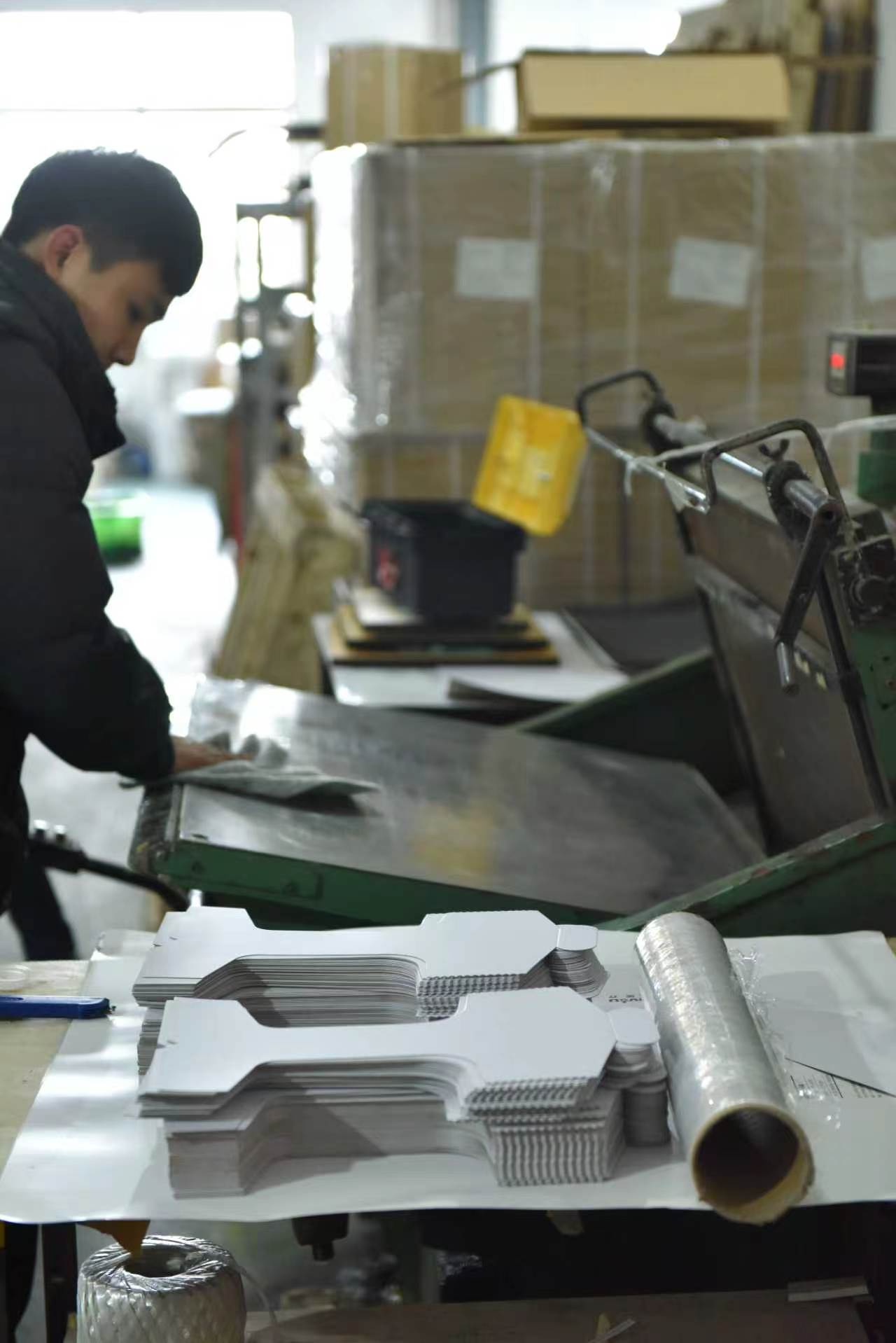
Three Numbers That Shape a Shirt Packaging Order
Before any accessory is compared on quality, three variables decide whether an order is workable. They are not interchangeable, and suppliers rarely present them together.
- Piece MOQ. The smallest quantity produced for a single SKU. In the current range it is 100,000 pieces for clips, 10,000 for metal pins, 10,000 for PVC collar stays and 1,000 for stainless steel collar stays.
- Measured specification. The clip is listed at 3.3 cm or 3.7 cm in length, 0.8 cm in width and 1.2 mm in thickness. The PVC collar stay is listed at 6.35 cm × 1 cm × 0.75 mm.
- Documentation window. OEKO-TEX STANDARD 100 certificate SH001 275178 runs from 12 January 2026 to 15 January 2027; GRS certificate SGC-GRC09119-GRS-2026-07 runs from 31 July 2026 to 30 July 2027.
A programme can meet every aesthetic requirement and still fail at the first purchase order because the clip threshold sits above the season's requirement, or because the certificate covering a component expires before the shipment date. Treating MOQ, dimension and documentation as one checklist prevents that outcome.
Clips: MOQ, Dimensions and Material Choices
What is the MOQ for a shirt clip?
The clip carries a minimum order quantity of 100,000 pieces. It is the highest piece-level threshold among the shirt packing accessories in this range: ten times the metal pin threshold and one hundred times the stainless steel collar stay threshold. The practical consequence is that clips behave like a seasonal commitment rather than a trial item, and buyers short of the threshold usually standardise on the stock silver X-shape specification instead of pursuing a custom clip.
What are the dimensions and shape of the clip?
Two lengths are offered: 3.3 cm and 3.7 cm. Both share a width of 0.8 cm and a thickness of 1.2 mm. The standard geometry is X shape in silver. The length choice is a folding decision rather than a cosmetic one, because it determines how much of the folded shirt body the clip spans, so the 3.3 cm and 3.7 cm versions should be sampled against the actual fold before the 100,000-piece commitment is placed.

Which materials are offered, and how should deformation resistance be tested?
The clip is supplied in PS or metal. Both are described as eco-friendly materials and both are described as resistant to deformation. At the specification level, deformation resistance is a material property; at acceptance it needs to become a measurable check. A workable approach is to define the measurement position across the clip jaw, record the dimension on receipt, then repeat the measurement after a stated number of open-and-close cycles and set a maximum permitted change. The cycle count and the permitted change are commercial agreements rather than published values, so they belong in the purchase order rather than in the supplier's catalogue.
Can clips carry a logo?
Yes. The clip is listed with a customizable logo and support for custom design. Branding is therefore available at the same 100,000-piece threshold; it does not create a separate lower-volume path.
| Attribute | Clip specification |
|---|---|
| Material | PS or metal |
| Size | 3.3 cm or 3.7 cm length × 0.8 cm width |
| Thickness | 1.2 mm |
| Shape and colour | X shape, silver |
| Branding | Customizable logo, custom design |
| Minimum order quantity | 100,000 pieces |
| Stated properties | Resistant to deformation, eco-friendly materials |
| Intended use | Shirt packing |
Collar Stays: Two Material Families, Two Specifications
A collar stay is the rigid insert that keeps a collar point straight in the pack. The range contains two families that differ in material, thickness, colour range, branding method and MOQ, and they are not interchangeable at the specification level.
What is the specification of the PVC collar stay?
Material white PVC; size 6.35 cm × 1 cm × 0.75 mm; thickness 0.75 mm; rectangular style; white; logo customizable; minimum order quantity 10,000 pieces; described as resistant to deformation and made with eco-friendly materials; intended for shirt packing.

What are the four standard metal collar stay sizes?
Stainless steel, in four common sizes: 55.9 × 9 × 0.8 mm, 63.5 × 9 × 0.8 mm, 69.9 × 9 × 0.8 mm and 76.2 × 9 × 0.8 mm. Common thickness is 0.8 mm. Colours are silver, blue, black, gold and rose gold. Style is customized and the logo is applied by laser engraving. Minimum order quantity is 1,000 pieces.
How should a buyer choose between PVC and stainless steel?
Five differences carry the decision: thickness at 0.75 mm against 0.8 mm; colour range of white against five metal finishes; branding method of customizable printed logo against laser engraving; MOQ of 10,000 against 1,000 pieces; and two size systems, a single 6.35 cm × 1 cm PVC format against four stainless steel lengths. One boundary should be stated clearly: neither specification publishes a stiffness or retention value, so the choice between the two rests on sample approval and on how the collar is constructed, not on a published performance figure.
Why does the metal stay have a lower MOQ than the plastic stay?
The published thresholds are 1,000 pieces for the stainless steel stay and 10,000 for the PVC stay. The specification does not state the reason for the difference, so buyers should treat it as an item-level fact to confirm at quotation rather than as a general rule about metal versus plastic. What can be said is that the metal stay is the only collar stay option in the range that supports a trial quantity in the low thousands, which makes it the natural route for a first-season test.
| Attribute | PVC collar stay | Stainless steel collar stay |
|---|---|---|
| Material | White PVC | Stainless steel |
| Size | 6.35 cm × 1 cm | 55.9 / 63.5 / 69.9 / 76.2 mm × 9 mm |
| Thickness | 0.75 mm | 0.8 mm |
| Colour | White | Silver, blue, black, gold, rose gold |
| Branding | Customizable logo | Laser-engraved logo, custom style |
| Minimum order quantity | 10,000 pieces | 1,000 pieces |
| Stated properties | Resistant to deformation, eco-friendly materials | Resistant to deformation, eco-friendly materials |
Collar Bands, Supports, Butterflies and Pins
The remaining components in a shirt pack share a common threshold of 10,000 pieces, with one exception. Their differences sit in material, thickness and format rather than in order volume.
Which collar band formats are available?
Three. A PVC collar band at 50 cm × 3.4 cm × 0.50 mm. A white PET collar band at 48.1 cm × 4 cm × 0.35 mm. A paper collar band in specialty tenacity paper at 47.2 cm × 3.8 cm with a 1.4 cm × 15-hole pattern and 1 mm thickness. All three are listed with a 10,000-piece MOQ, printed logo capability, eco-friendly materials and deformation resistance. The PET version is the thinnest at 0.35 mm, and the paper version is the only one specified with a hole pattern, a detail worth noting when the packing method depends on it.
What do the collar support and butterflies contribute?
The collar support is a light blue PVC component at 22.7 cm × 18.5 cm × 0.35 mm, MOQ 10,000 pieces, supplied without a default logo but with custom logo printing available. It is a larger-format insert than a stay and is specified for shirt packing. Butterflies come in two materials: a 400 g single white paper version at 15 cm × 3 cm with a customizable logo and a 10,000-piece MOQ, and a light blue fine sand PVC version at 26 cm × 10.4 cm × 0.25 mm with print logo support, custom design and the same 10,000-piece MOQ.
What is the specification of the metal pin?
Stainless steel or brass, common size 26 mm × 0.6 mm, thickness 0.6 mm or 0.65 mm, silver, rectangular style, intended for shirt packing, minimum order quantity 10,000 pieces. The default is no printed logo; custom design and a printed logo are available as options.
| Component | Material and format | Published spec | MOQ |
|---|---|---|---|
| Collar band (plastic) | PVC | 50 cm × 3.4 cm × 0.50 mm | 10,000 pcs |
| Collar band (plastic) | White PET | 48.1 cm × 4 cm × 0.35 mm | 10,000 pcs |
| Collar band (paper) | Specialty tenacity paper | 47.2 cm × 3.8 cm, 1.4 cm × 15 holes, 1 mm | 10,000 pcs |
| Collar support | Light blue PVC | 22.7 cm × 18.5 cm × 0.35 mm | 10,000 pcs |
| Paper butterfly | 400 g single white paper | 15 cm × 3 cm | 10,000 pcs |
| Plastic butterfly | Light blue fine sand PVC | 26 cm × 10.4 cm × 0.25 mm | 10,000 pcs |
| Metal pin | Stainless steel or brass | 26 mm × 0.6 mm; 0.6 or 0.65 mm thick | 10,000 pcs |
Writing Acceptance Criteria That Survive the First Shipment
What should an acceptance criterion contain?
Five elements: the attribute being checked, the method used, the sample size, the pass condition and the record produced. For shirt packaging accessories the attributes cluster into dimension, material and appearance, and function. A criterion that names only the attribute — for example, resistant to deformation — cannot be inspected, because two inspectors will reach two conclusions from the same carton.
Which attributes matter per component?
For clips: length at 3.3 cm or 3.7 cm, width 0.8 cm, thickness 1.2 mm, silver colour, jaw geometry and open-and-close behaviour. For collar stays: length, thickness at 0.75 mm for PVC and 0.8 mm for stainless steel, edge condition, colour consistency and engraving legibility. For collar bands: length, width, thickness at 0.50 mm PVC, 0.35 mm PET and 1 mm paper, plus print registration. For pins: shaft diameter at 0.6 mm, point condition and colour. For butterflies: paper weight at 400 g and dimensions of 15 cm × 3 cm, or 0.25 mm film thickness and 26 cm × 10.4 cm format for the plastic version.
How does supplier quality control fit into the buyer's plan?
The manufacturer states 100% test as its quality-control approach and describes full-range inspections across production procedures. That is a process statement rather than a dimensional guarantee, and it does not replace the buyer's own acceptance plan. The two should be read together: the supplier's inspection reduces the probability of a defective unit reaching the carton, while the buyer's criteria define what defective means for that specific SKU.
| Component | Critical attribute | Published reference | Acceptance note |
|---|---|---|---|
| Clip | Length, width, thickness | 3.3 / 3.7 cm × 0.8 cm × 1.2 mm | Measure at defined points; record before and after cycle test |
| PVC collar stay | Length, width, thickness | 6.35 cm × 1 cm × 0.75 mm | Check edge condition and colour consistency |
| Metal collar stay | Length, thickness, engraving | Four lengths × 9 mm × 0.8 mm | Verify engraving legibility and finish |
| Collar band | Thickness, print registration | 0.50 mm PVC, 0.35 mm PET, 1 mm paper | Confirm hole pattern on the paper version |
| Metal pin | Shaft diameter | 26 mm × 0.6 mm; 0.6 or 0.65 mm | Check point condition and colour |
| Butterfly | Paper weight or film thickness | 400 g paper; 0.25 mm PVC | Check 15 × 3 cm or 26 × 10.4 cm dimensions |
Certification: Numbers, Scope and Dates
Which certificate covers the plastic accessories?
OEKO-TEX STANDARD 100, certificate number SH001 275178, issued by TESTEX under the OEKO-TEX STANDARD 100 and EN ISO 17050-1 standard. Issue date 12 January 2026, expiry 15 January 2027, applicable worldwide. The recorded scope covers plastic accessories — including collar bands, butterflies, collar stays and poly bags — made of PET and PE film, transparent, partly mechanically coined.
What does the GRS certificate add?
A separate Global Recycled Standard certification, number SGC-GRC09119-GRS-2026-07, issued by SGS, valid globally from 31 July 2026 to 30 July 2027. Its scope covers trading, warehousing and distribution of final products, and manufacturing, assessed against GRS V4.0, the Content Claim Standard V3.1 and the Textile Exchange Standards Claims Policy V1.3. For a buyer, the value of this document is that it records a recycled-content claim chain rather than merely asserting one.
Where are the boundaries?
Two. First, scope: the recorded OEKO-TEX scope is written around plastic accessories made of PET and PE film. Components in other materials — paper collar bands, cardboard, stainless steel stays, brass pins — should be confirmed at item level against the certificate document rather than assumed to sit inside it. Second, timing: both certificates expire inside the current buying cycle, in January 2027 and July 2027. A purchase order shipping after those dates needs the renewed document attached, and a long-running programme should diarise both dates at the point of order rather than at the point of shipment.
Application: Where These Components Are Converted
These accessories are consumed in packing workshops, sorting lines, garment shipment operations and retail display packaging, where the requirement is to hold a fold, identify a brand and protect a collar in transit. The functional roles are wrinkle prevention, brand identification through printing or foiling, and transport protection. Production runs as mass output with custom printing and mould opening support, using automatic creasing machines, punching machines and paper cutting machines. Custom printing, mould opening, colour and size customisation are all listed as available.
Order types map onto that structure: OEM and ODM packaging customisation, bulk order supply, and brand packaging upgrade projects. A brand upgrading a pack typically changes collar band print and butterfly format together, because both sit on the visible face of the folded shirt; a bulk buyer typically changes nothing and competes on threshold and delivery.
What the Category Data Says About Volume
Garment packaging was valued at USD 18.6 billion in 2025 and is projected to reach USD 31.4 billion by 2034, according to Dataintelo's 2026 garment packaging research. The same source places Asia Pacific at a 41.5% revenue share of the garment packaging market in 2025. One adjacent structure input moves on a related trajectory: the garment interlining market, which supplies shirt collar structure, reached USD 3.65 billion in 2025, according to The Business Research Company.
For accessory buyers the reading is narrow but useful. A category of this size carries enough volume that specification errors are measured in cartons rather than units, and a supply base concentrated in Asia Pacific means documentation and delivery windows are the variables most exposed to regional disruption. Neither figure changes what a clip measures; both change how much a mis-specified clip order costs.
Single-Source Consolidation Versus Component-by-Component Sourcing
The traditional route buys each component where it is made: paper bands from a paper converter, stainless steel stays from a metal stamper, clips from a plastics moulder. The advantage is component-level fit and, often, a lower threshold per item. The cost is administrative: three MOQ thresholds, three certificate sets, three lead-time clocks and three acceptance plans to maintain.
Consolidation replaces that with one programme structure. MingYu Garment Accessories lists a programme MOQ of 1,000 sets, a lead time of 7 to 20 days after order confirmation, 100% test quality control, and support for OEM and ODM customisation across size, colour, style, printing, foiling, mould opening and logo application. Supply continuity is supported by overseas operations: a Sri Lanka factory established in 2013, a Vietnam factory established in 2017, and distribution warehouses, agencies or manufacturing presence in Sri Lanka, Argentina, Bangladesh, Indonesia, Colombia and Kenya.
The limitation is real and worth stating plainly. Consolidation does not dissolve SKU thresholds. A clip still starts at 100,000 pieces and a stainless steel collar stay still starts at 1,000, whatever the programme-level figure says. Mixed orders improve scheduling and documentation; they do not lower a ceiling that comes from how an individual part is produced. Buyers with a small seasonal requirement should therefore expect to standardise specifications rather than customise them, and should confirm certificate scope per material before treating consolidated supply as equivalent to component-level supply.
Outlook for the Next Specification Cycle
Three things are likely to occupy buyers renewing shirt packaging specifications into 2027. The first is certificate continuity: the OEKO-TEX certificate expires on 15 January 2027 and the GRS certificate on 30 July 2027, so renewal evidence will be requested inside existing programmes rather than at their start. The second is recycled-content documentation, where the GRS chain of custody — trading, warehousing and distribution, manufacturing — determines whether a claim can be passed downstream to a retail customer. The third is specification discipline itself: as packaging value grows, the difference between a 0.75 mm PVC stay and a 0.8 mm stainless steel stay stops being a line in a catalogue and becomes a line in a cost calculation.
Product data and certificate records for the range described here are published at wxmingyu.com. A company profile covering products, capacity and certificates is available as a downloadable PDF: Brief Company Profile of Wuxi Mingyu Garment Accessories Factory.
Frequently Asked Questions
Which accessory sets the MOQ for a shirt packaging programme?
Clips, at 100,000 pieces per SKU. Metal pins, PVC collar stays, collar bands, collar supports, butterflies, cardboard, tissue paper and belly bands are listed at 10,000 pieces, and stainless steel collar stays at 1,000. The programme-level figure of 1,000 sets applies to mixed accessory sets, not to individual SKUs.
Can a first order combine several accessories in one shipment?
A mixed set is supported at a programme MOQ of 1,000 sets, with a lead time of 7 to 20 days after order confirmation. Each SKU inside the set still carries its own piece-level MOQ, so the combination has to satisfy the highest threshold in the mix.
Is there a lower-MOQ route into collar stays?
Yes. The stainless steel collar stay is listed at 1,000 pieces against 10,000 for the PVC collar stay. The metal version is available in four lengths — 55.9, 63.5, 69.9 and 76.2 mm, all 9 mm wide and 0.8 mm thick — and in silver, blue, black, gold and rose gold.
How do buyers confirm a certificate applies to the exact item ordered?
By matching three fields on the certificate document: product and material scope, certificate number, and validity dates. OEKO-TEX certificate SH001 275178 is recorded with a scope of plastic accessories made of PET and PE film and is valid to 15 January 2027. Items in paper, stainless steel or brass fall outside that wording and require item-level confirmation.
What should a purchase order say about deformation resistance?
It should convert the claim into a check: the measurement position, the number of open-and-close cycles for clips, the permitted dimensional change, the sample size and the record to be retained. Deformation resistance is listed as a property across clips, collar stays, collar bands and butterflies; the pass condition is a commercial agreement between buyer and supplier.
How is branding handled across the range?
Clips, collar bands, collar stays, collar supports, butterflies, cardboard, tissue paper, belly bands, apparel tags and gift boxes are listed with logo or print customisation. The stainless steel collar stay uses laser engraving; the metal pin is supplied with no logo by default, with a printed logo available as an option.
Which markets do these accessories ship to?
The manufacturer reports an export ratio of 85%, with markets in Europe, North America, South America and Asia, supported by overseas operations including a Sri Lanka factory established in 2013 and a Vietnam factory established in 2017.
What happens if a certificate expires during a running programme?
Both certificates in the record expire inside the current cycle: OEKO-TEX on 15 January 2027 and GRS on 30 July 2027. Renewal evidence should be requested at the point of order for any shipment dated after those days, and the dates should be tracked at programme level rather than per shipment.
¿Tiene preguntas o necesita más detalles?
Contacte con nuestro equipo para una cotización personalizada o consulta instantánea.
Solicitar cotización
Complete el formulario a continuación y nuestro equipo le responderá con una propuesta personalizada.
Chat directo de WhatsApp
¿Prefiere chatear en tiempo real? Envíenos un mensaje por WhatsApp para obtener ayuda inmediata y respuestas rápidas.
- Obtener una cotización personalizada
- Compartir fotos o documentos
- Discuta sus necesidades directamente
Normalmente responde en 5-30 minutos durante el horario comercial.