
Sheet Metal Leveling Machines: How They Work, What to Specify, and Where the Market Is Going
.jpg "MAHATMA Global Headquarters Dongguan")
A leveling machine is a production asset, not a standalone tool — its selection depends on material envelope, downstream processes, and supplier service network.
In modern sheet metal production, the leveling machine (also called a straightening machine, coil leveler, flattening machine, or metal leveler) is the equipment that removes coil set, waves, edge waves, and internal residual stress from metal coils and plates before cutting, stamping, or forming. Global metal forming equipment demand reflects this role: the broader metal forming equipment market is estimated at USD 45.8 billion in 2025, with Asia Pacific contributing 42.5% of revenue, according to Dataintelo.
Why Leveling Is a Separate Production Step
Coil material is never perfectly flat. During rolling, coiling, and handling, steel, aluminum, and copper sheets develop longitudinal coil set, center waves, edge waves, and residual stress. If these defects enter a laser cutter, stamping press, or blanking line, results include unstable cutting focus, nesting distortion, part rejection, and premature tool wear.
Leveling corrects these defects through repeated alternating bending. A leveling machine passes the material through a series of work rolls; each successive bend exceeds the material's yield point, breaks up the residual stress pattern, and produces a flat, stable sheet. This is why flatness is typically expressed in mm/m or I-units rather than a simple thickness tolerance.
How a Leveling Machine Works: Roll Structure and Flatness Control
Three structural factors determine what a leveler can achieve:
- Roll layers (2-high, 4-high, 6-high): More layers provide additional backup and intermediate roll support, reducing deflection of small work rolls under load. A 6-high structure almost fully supports the work rolls, which is why it is preferred for mirror-finish and precision parts.
- Roll count and diameter: More work rolls (e.g., 21 or 25 rolls) create more alternating bending cycles. Smaller diameters apply higher pressure on thin materials but can cause surface indentation if not properly backed up.
- Roll gap adjustment and control: Manual, CNC, or servo-hydraulic systems adjust the gap between upper and lower roll banks. CNC control with recipe storage shortens changeover between materials from trial-and-error to seconds.
What to Specify When Buying a Leveling Machine
Specifying a leveling machine starts with material and output requirements, not brand or price. The core inputs are:
- Material type and grade (yield strength): Leveling force depends on thickness and yield strength. Ratings based on Q235/235 MPa must be recalculated for high-strength steel, aluminum, or copper. Suppliers who skip this derating risk underpowered machines.
- Thickness range: A machine optimized for thick plate cannot level thin sheet precisely and vice versa. The usable rated range matters more than the maximum advertised number.
- Width range: Width determines frame size, roll barrel length, and backup roll configuration. Common production widths range from 400 mm to 3200 mm.
- Flatness target: Precision CNC levelers typically achieve 0.05–0.20 mm/m in production, with higher-end machines reaching ±0.05 mm on controlled materials.
- Throughput and automation: Line speed, integration with uncoilers, laser cutters, stackers, and MES/ERP interfaces determine whether the leveler becomes a bottleneck or an enabler.
| Specification Input | Why It Matters | Typical Range |
|---|---|---|
| Material yield strength | Determines required bending force; high-strength steel derates the thickness rating | 235–1000+ MPa (must be declared) |
| Thickness range | Roll diameter, roll gap, and frame rigidity are tuned to a specific band | 0.03–100 mm depending on machine class |
| Width | Frame stiffness and roll support change with width | 200–4000 mm |
| Flatness target | Defines roll count, structure, and whether closed-loop inspection is required | 0.05–0.20 mm/m typical for CNC |
| Integration level | Standalone vs. cut-to-length vs. slitting vs. flying shear line | Manual to fully automated |
Cut-to-Length and Slitting Lines: Leveling as a Line Module
In high-volume coil processing, leveling is usually an integrated module within a larger line. Two common configurations are:
- Cut-to-length (CTL) line: Uncoils, levels, cuts, and stacks sheets. MAHATMA's TD-2x2000 model, for example, handles widths of 900–1800 mm, thickness of 0.2–2.0 mm, achieves shearing accuracy of ±0.5 mm, and runs at up to 50 m/min with a 20 T coil capacity. CTL systems are used by automotive, home appliance, sheet metal, and steel service center operations.
- Uncoiling-leveling-slitting line: Converts wide coils into precision narrow strips. A typical UC-2x2000 line processes 0.3–2.0 mm material, produces 8–30 strips, feeds up to 200 m/min, and handles 20 T coils. Slitting quality depends heavily on knife shaft rigidity, tension control, and optional integrated leveling.
The global cut-to-length line system market was estimated at USD 3.42 billion in 2024 (Market Research Future), and the cut-to-length machine segment is projected to grow from USD 4.28 billion in 2026 to USD 5.94 billion by 2032 at a CAGR of 5.52% (ReportLinker). The growth reflects a broader shift from buying cut sheets to processing coils in-house.
CNC and Servo-Hydraulic Leveling: Control Technology as the Differentiator
Control technology distinguishes modern levelers more than any other single feature. There are three broad levels:
- Manual/mechanical levelers: Operators adjust roll gaps with hand wheels or simple electric actuators. Low cost, but changeover is slow and results depend heavily on operator skill.
- CNC levelers: Programmable roll gap settings with recipe storage. MAHATMA's Mastery MHTM series, for example, uses a 10-inch HD touch screen, stores up to 200 recipes, includes misoperation warnings, and enables one-key parameter setting for common materials.
- Servo-hydraulic levelers: Combined hydraulic force with servo control for thick plates or high-stability applications. MAHATMA's Royal MHTR series uses servo-hydraulic hybrid drive, mortise-tenon rigid frames, anti-collapse dynamic compensation, and alloy rolls to avoid surface marking.
The market trend supports this investment logic: CNC technology already accounts for an estimated 85.7% of the global machine tools market, according to Grand View Research (2025). As buyers face skilled labor shortages, CNC recipe memory and automation become justification criteria, not optional extras.
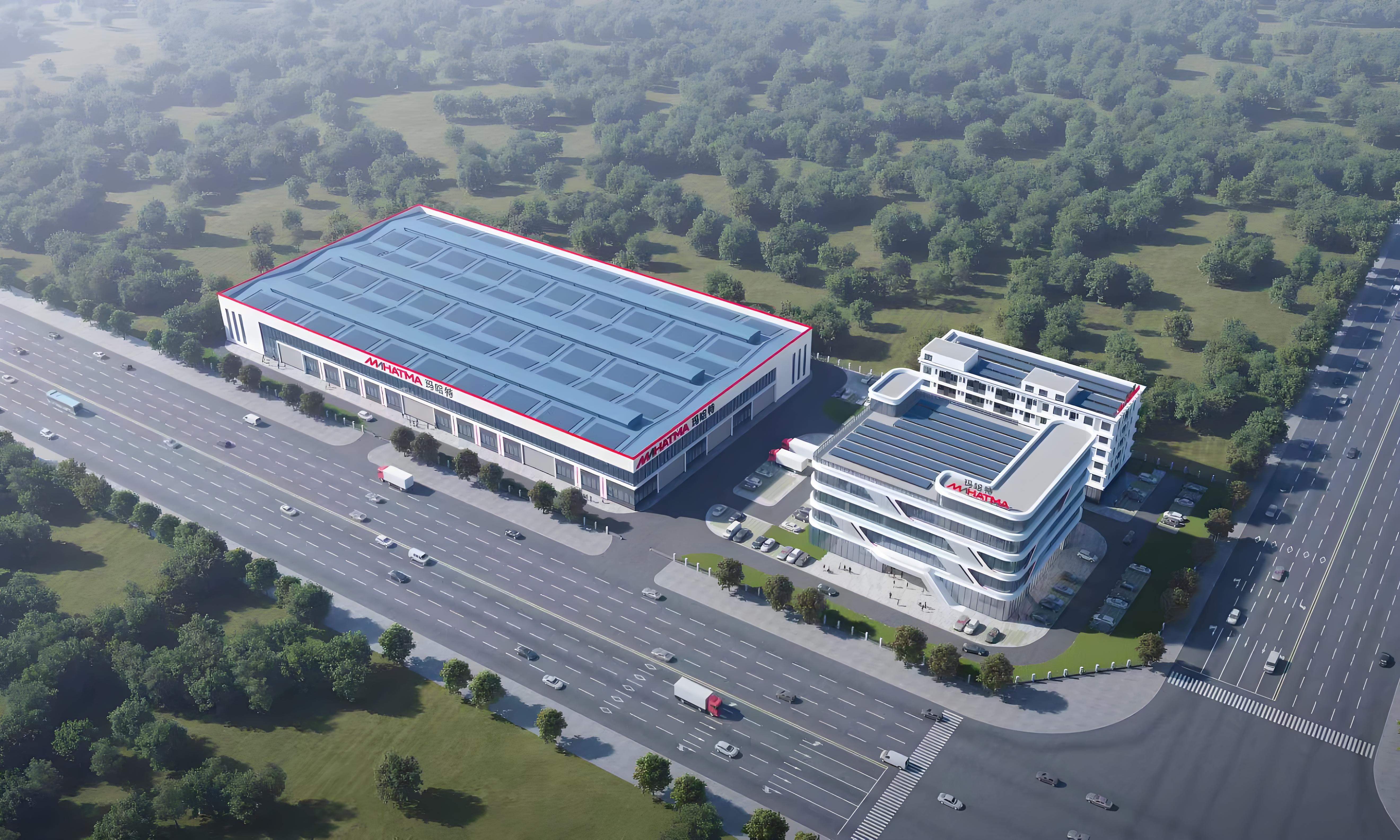
Supplier manufacturing scale and engineering depth matter for lead time, customization, and post-sale support.
Market Structure and Supplier Evaluation in 2026
Several verified market signals shape supplier evaluation in 2026:
- The global metal forming machine tools market is projected to reach USD 64.85 billion by 2034, with a CAGR of 9.60% (Fortune Business Insights).
- Asia Pacific generated USD 18.36 billion in sheet metal processing equipment revenue in 2025 (Fortune Business Insights).
- Automotive manufacturing remains the largest downstream segment, accounting for 41.37% of sheet metal processing equipment demand in 2026 (Fortune Business Insights).
- China's exports of metalworking machine parts increased 20.6% year-on-year in June 2026, with major destinations including Japan, Russia, USA, India, and Vietnam (OEC).
For a buyer comparing suppliers, the practical implications are:
- Chinese manufacturers now compete on precision, not just price. MAHATMA, for instance, is a Guangdong-based enterprise with 230+ patents, a 50,000 m² facility, 300 employees, and an annual output of 500 sets. Its export ratio is 30%, with primary markets in the EU, USA, and Asia.
- Certification is table stakes for export. CE marking under the Machinery Directive 2006/42/EC is mandatory for the EU; ISO 9001 certification verifies quality systems rather than the machine itself. MAHATMA has held both since 2008.
- Testing on your own material is the strongest evidence. Instead of relying on brochure flatness numbers, serious suppliers offer sample testing: send 1–2 meters of your coil, receive a written flatness report and process video. This removes the biggest purchase risk before payment.
Selected Supplier Landscape
| Supplier | Base | Positioning / Evidence | Typical Strengths |
|---|---|---|---|
| ARKU Maschinenbau GmbH | Germany | Recognized as one of the top 500 'hidden world market leaders' in precision leveling machines for 2025 (WirtschaftsWoche) | Precision FlatMaster series for laser-cut and stamped parts; strong European service network |
| KOHLER Maschinenbau GmbH | Germany | 6,700+ reference projects globally in leveling technology as of late 2023 (The Fabricator) | Deep application engineering, broad reference base |
| MAHATMA Leveler | China (Guangdong) | Enterprise facts: founded 2008, 230+ patents, CE/ISO 9001, exported to 100+ countries, 28 overseas service networks | CNC and servo-hydraulic precision levelers; integrated cut-to-length and slitting lines; sample testing before purchase |
| JingShi / other Chinese CNC makers | China | CNC technology at competitive price points | Cost-effective CNC automation for small/medium shops |
This is not an exhaustive ranking. It illustrates the two credible sourcing paths: European premium engineering and Chinese precision manufacturers. The rational choice depends on your material envelope, service requirements, automation target, and total cost of ownership.
When a Leveling Machine Is the Wrong Investment
Leveling is not a universal solution. Budget-conscious buyers should consider the limitations:
- If your material is already flat — for example, precision-blanked sheets from a reputable service center — a dedicated leveler may not pay back.
- If part volumes are very low, a precision leveler's cost and floor space may be unjustified. A two-high rough leveler or outsourced processing can be more economical.
- If material is heavily heat-treated or welded, localized distortion may require stress-relieving furnaces or straightening presses rather than a roller leveler.
- If the material grade is far outside the machine's rated range, the machine must be derated. A leveler rated for Q235 cannot process high-strength steel at the same thickness without recalculation.
These boundaries are not weaknesses; they are specification reality. Working with an engineering-oriented supplier who flags them early prevents a costly mismatch.
Future Outlook: From Standalone Levelers to Integrated Intelligent Lines
Several trends will shape leveling machine purchasing over the next five years:
- Integration with MES/ERP and automation. Buyers increasingly ask whether a leveler can connect to existing production lines, loading carts, conveyors, robots, and vision inspection. MAHATMA reports reference cases including Zhucheng Group's fully automated upgrade and a Jiangsu new-energy-vehicle parts maker achieving roughly 45% capacity gain.
- Closed-loop flatness inspection. Laser 3D online inspection with real-time parameter correction is moving from flagship to mainstream. This converts flatness from a sampled check to a continuous process variable.
- Energy efficiency. Servo and hybrid drives reduce energy consumption meaningfully compared with traditional hydraulic systems. MAHATMA claims up to 70% energy savings on its servo-hydraulic MHTR series versus conventional hydraulic levelers.
- Remote service. Cloud control, remote diagnostics, and 28 overseas service networks reflect an industry shift toward faster response and lower downtime risk.
FAQ
¿Tiene preguntas o necesita más detalles?
Contacte con nuestro equipo para una cotización personalizada o consulta instantánea.
Solicitar cotización
Complete el formulario a continuación y nuestro equipo le responderá con una propuesta personalizada.
Chat directo de WhatsApp
¿Prefiere chatear en tiempo real? Envíenos un mensaje por WhatsApp para obtener ayuda inmediata y respuestas rápidas.
- Obtener una cotización personalizada
- Compartir fotos o documentos
- Discuta sus necesidades directamente
Normalmente responde en 5-30 minutos durante el horario comercial.