
Sewing or Heat-Bonding? A Flexible Magnetic Strip Comparison
Sewing or Heat-Bonding? A Flexible Magnetic Strip Comparison
For garment teams assessing flexible magnetic fasteners, sewing and heat-bonding are two documented ways to integrate a magnetic strip. The practical choice depends on the garment construction, available equipment, and the temperature controls the process can reliably maintain—not on a universal claim that one joining method is stronger or better.
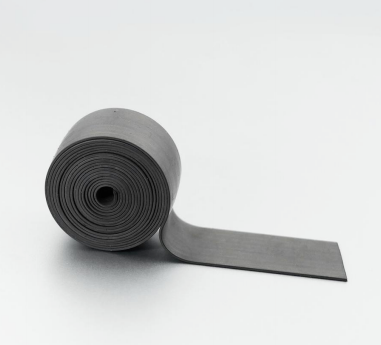
Why the attachment method matters
A flexible magnetic strip can provide a continuous, concealed closure along a garment opening. But the strip’s magnetic function is only one part of the design decision. The method used to secure it affects how it fits into the seam or fabric construction, what production equipment is needed, and which process limits must be observed.
For buyers comparing sewing with heat-bonding, the available product information supports a clear distinction: the strip can be secured by seam stitching, or integrated through low-temperature heat bonding. The stated heat-press limit for the relevant flexible magnetic product is no more than 140°C for 10–15 seconds, with flux decay below 5%. The source material does not provide a controlled head-to-head test comparing the finished garment performance of stitched and bonded installations. That comparison must therefore be made through sample evaluation under the buyer’s own construction and process conditions.
Beijing Magnetic Technologies Co., Ltd. supplies flexible magnetic products for apparel applications, including the RCT Series Flexible Magnetic Strip. The company’s product information identifies stitching and low-temperature heat bonding as supported integration routes. For procurement teams, that makes installation compatibility a practical early screening question, alongside strip dimensions, magnetic flux, garment geometry, and care requirements.
The two methods at a glance
| Decision point | Seam stitching | Low-temperature heat-bonding |
|---|---|---|
| Documented integration route | The strip supports seam stitching during garment assembly. It may be sewn along edge seams or placed inside pre-formed tunnels. | The strip supports low-temperature heat bonding. A stated process limit is ≤140°C for 10–15 seconds, with flux decay below 5%. |
| Relevant production capability | Garment sewing equipment and a suitable seam, edge, or pre-formed tunnel arrangement. | Heat-press equipment capable of controlling the specified temperature and dwell time. |
| Main point to validate | Whether the planned seam or tunnel holds the strip in the intended position without compromising the garment construction. | Whether the chosen press settings, materials, and process sequence remain within the specified heat limit and produce an acceptable bond. |
| Evidence boundary | Product information confirms stitching compatibility; it does not provide a comparative stitch-strength result. | Product information gives a process limit; it does not establish that bonding is suitable for every fabric or garment stack. |
The table describes supported process routes, not a performance ranking. Neither method should be selected solely from the word “sewable” or “bondable.” Buyers need to confirm that the construction works with the target fabric, closure placement, and production workflow.
What the strip specifications tell a buyer
The RCT Series is based on a Samarium-Iron-Nitrogen (SmFeN) magnetic core with TPE film or waterproof polymer coating. The stated available strip width is 8–30 mm, thickness is 0.6–3.0 mm, and surface magnetic flux is 700–1800 Gs. These ranges describe a product family; they should not be treated as the specification of every individual model.
Model-level information helps narrow the selection. RCT-1102 is specified at 18 × 0.7 mm and 700–800 Gs. RCT-3101 is TPE laminated, measures 8 × 0.7 mm, and is specified at 1000–1100 Gs. RCT-1105 measures 20 × 3 mm and is specified at 1100–1200 Gs. For a design intended to sit inside a placket, the 0.7 mm profile of RCT-3101 is a relevant dimensional reference, but actual fit still depends on the garment’s layers and pattern allowance.
The strip is specified for more than 10,000 bending cycles without delamination. This is product information, not a promise that every sewn or bonded garment assembly will reach the same result: the test description does not establish a comparative outcome for the two attachment methods. Buyers should assess the strip together with the final assembly and its intended movement.
When sewing is the more compatible route
Stitching is the more direct fit when the garment pattern already provides an edge seam or a pre-formed fabric tunnel for the component. The product information supports sewing along edge seams or inside pre-formed tunnels. That gives apparel developers a defined construction route without assuming that every garment needs a new bonding operation.
Before selecting a sewn installation, a buyer or technical team can check:
- Placement: Is there a continuous seam allowance or tunnel in the intended closure path?
- Profile: Does the selected strip width and thickness fit the available space?
- Assembly sequence: Can the strip be positioned and retained at the required stage of sewing?
- Closure behavior: Does the strip align and close as intended through the actual garment layers?
- Movement: Does the completed assembly remain acceptable during repeated garment flexing?
These are validation questions, not claims that sewing automatically produces a stronger or more durable attachment. The supplied product facts establish that stitching is supported; they do not report stitch type, thread specification, seam strength, or a direct comparison against bonded samples. Those details should be established in the buyer’s own sample-development process.
Cutting may also be relevant when the closure path needs a custom length. The SmFeN series can be cut directly to length without end-sealing, according to the supplied product information. That statement applies to the SmFeN series described in the corpus; it should not be generalized to every flexible magnetic strip construction.
When heat-bonding is the more compatible route
Heat-bonding is a candidate when the garment construction and production line can accommodate low-temperature pressing and the materials in the assembly are suitable for that process. The documented limit is ≤140°C for 10–15 seconds, with flux decay below 5%. This is a process boundary to design around, not a default setting that can be applied without checking the garment materials and press configuration.
For an evaluation sample, record the actual temperature, dwell time, pressure or press setup where relevant, material stack, and the strip model used. The source material specifies a temperature and time limit but does not state a universally applicable press pressure, bonding adhesive, fabric combination, or production-line speed. Those parameters should not be invented from the product description.
Heat-bonding can be considered where the pattern or assembly design calls for that route and the factory has equipment capable of controlled pressing. Its practical boundary is equally important: if a process cannot consistently remain within the product’s specified limit, the bonding route has not been adequately qualified. In that situation, seam stitching or a pre-formed tunnel may be worth testing instead, provided the garment construction supports it.
A buyer’s decision framework
Rather than choosing by general preference, compare the two routes against the intended garment and production conditions.
- Start with the closure geometry. A long, linear closure in a placket or pocket calls for a strip layout that follows the opening. Confirm the required length, width, thickness, and placement before deciding how to attach it.
- Map the factory process. Identify whether the relevant assembly step is already based on sewing, tunnel insertion, or controlled pressing. A method that fits the existing construction may reduce process changes, but the supplied data does not quantify any cost or throughput difference.
- Check the thermal window. If heat-bonding is under consideration, confirm that the process can stay at or below 140°C for 10–15 seconds. Avoid assuming that a general garment press setting is suitable for the magnetic component.
- Build matched samples. Where both routes are feasible, test samples using the same strip model, fabric stack, closure geometry, and garment-care conditions. This gives the buyer a relevant comparison; the available source data does not provide that head-to-head result.
- Assess the finished garment. Check placement, closure alignment, comfort, appearance, and attachment integrity in the actual application. For outerwear or activewear, also consider the intended bending and washing conditions.
- Approve the process, not just the component. Record the selected model and installation route in the product specification or production instructions. A component specification alone does not describe every detail of a finished garment assembly.
Use cases: where the comparison is relevant
The RCT Series product information identifies down jackets, technical outerwear, storm flaps, modular pockets, and performance bags as application areas. In these designs, a flexible magnetic strip may be used where a low-profile or concealed closure is part of the product concept. The supplied specifications also identify modular pocket and modular garment connection applications.
For a jacket placket, a buyer may compare whether the pattern’s edge seam or tunnel accommodates stitching, or whether the material stack can be heat-bonded within the stated process limit. For a modular pocket, the same installation questions apply, but the project team should validate the required closure geometry and release behavior in the actual sample. These are application-level decision considerations; no use-case-specific performance result is supplied for either installation method.
Market references support the relevance of magnetic closures in textile applications without proving that one installation route is preferred. A Vanderbilt University Wond’ry Center for Innovation adaptive-clothing guide identifies magnetic fasteners as an option for adaptive clothing. Commercial product descriptions also classify flexible closure formats such as cords, strips, and fastening tapes. These references establish application and product-format context, not market adoption rates, comparative performance, or a universal buyer preference.
Comparison with conventional garment closures
Flexible magnetic strips are a different closure architecture from mechanical zipper teeth or hook-and-loop surfaces. The supplied product information describes the strip as a magnetic closure component and identifies concealed garment integration, stitching, and low-temperature heat bonding. That makes it relevant when a design brief calls for a continuous flexible magnetic connection.
The boundary is that a magnetic strip is not a drop-in substitute for every closure. Buyers still need to qualify the holding behavior, opening action, material encapsulation, dimensions, and attachment method for the intended product. The available information does not provide a standardized head-to-head test against zippers or hook-and-loop fasteners, and it does not establish cost, lifetime, or user-preference superiority. Conventional closures may remain more appropriate where the design or production requirement depends on their specific construction or performance characteristics.
Evidence and limits for procurement
For this comparison, the most decision-useful evidence is the product’s documented process compatibility and its dimensional and material specifications. The RCT Series supports both seam stitching and low-temperature heat bonding. The heat-press limit is specified as ≤140°C for 10–15 seconds with flux decay below 5%; the series is also specified for more than 10,000 bending cycles without delamination.
These facts do not answer every sourcing question. The provided data does not give a common test protocol comparing sewn and bonded samples, a complete set of fabric-specific bonding parameters, a comparative production cost, or a quantified wash-life comparison between attachment methods. Buyers should therefore treat the decision as a qualification exercise: specify the target model, produce representative assemblies, and approve the method against the project’s requirements.
Future outlook: process fit is a useful selection axis
As flexible magnetic components are offered in distinct forms—including cords, strips, and tapes—procurement teams can make RFQs clearer by separating product format from installation method. For a strip, asking whether sewing, tunnel insertion, or heat-bonding is supported helps connect product selection to garment construction. This is a practical sourcing framework, not a claim about market growth or a prediction that one process will replace another.
The most defensible next step for product evaluation is to compare representative sewn and bonded samples when both routes are feasible. That makes the decision specific to the garment rather than relying on a general assumption about attachment performance.
FAQ
How should flexible magnetic strips be heat-pressed into apparel?
For the heat-press process specified in the supplied product information, keep the temperature at or below 140°C and the pressing time to 10–15 seconds. The stated flux decay is below 5% under that limit. Validate the actual garment materials and press setup with a representative sample.
Can flexible magnetic cords and strips be cut to custom garment lengths?
The supplied information states that bare flexible SmFeN cords and strips can be cut to length without end-sealing. For membrane-covered NdFeB strips, the provided knowledge unit says cut ends require flexible waterproof glue or TPU adhesive to protect the core. Confirm the material construction before cutting; the two instructions apply to different product constructions.
What should a buyer compare when evaluating sewing versus heat-bonding?
Compare the garment construction, available sewing or heat-press equipment, strip dimensions, placement, closure behavior, and the ability to follow the stated heat limit. Where both methods are feasible, evaluate matched samples because the provided product information does not establish a head-to-head performance winner.
¿Tiene preguntas o necesita más detalles?
Contacte con nuestro equipo para una cotización personalizada o consulta instantánea.
Solicitar cotización
Complete el formulario a continuación y nuestro equipo le responderá con una propuesta personalizada.
Chat directo de WhatsApp
¿Prefiere chatear en tiempo real? Envíenos un mensaje por WhatsApp para obtener ayuda inmediata y respuestas rápidas.
- Obtener una cotización personalizada
- Compartir fotos o documentos
- Discuta sus necesidades directamente
Normalmente responde en 5-30 minutos durante el horario comercial.