
Seven WODE MCPCB Builds, Matched to Design Needs
Seven WODE MCPCB Builds, Matched to Design Needs
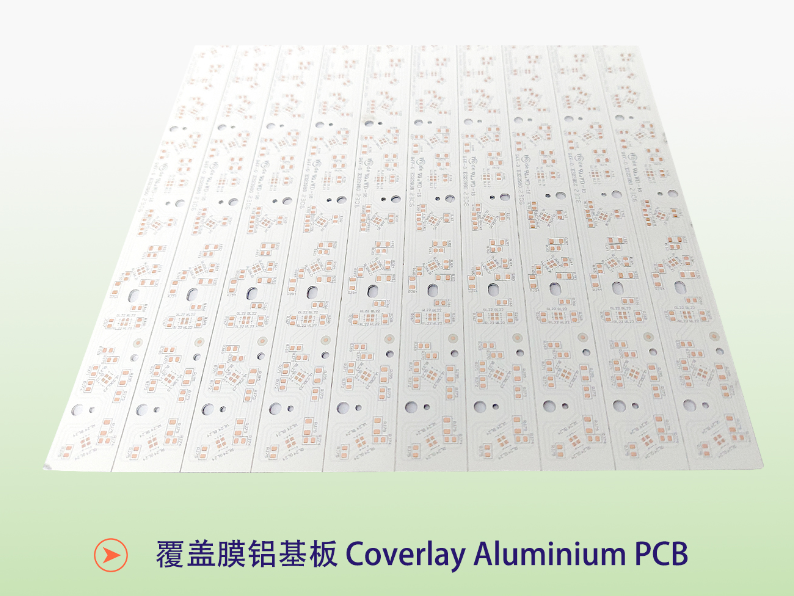
Choosing an MCPCB begins with the design requirement, not a generic claim that one construction is suitable for every lighting or electrical application. WODE’s published product information describes seven distinct options: Coverlay MCPCB, High Voltage MCPCB, MCPCB for Road lighting, MCPCB for Motor lighting, Thermoelectric Separated Cu based PCB, Double sided MPCB, and Ceramic based PCB. Their documented differences include substrate material, layer count, copper thickness, board thickness, panel dimensions, solder-mask details, surface finish, and stated application.
This shortlist maps those records to early buyer questions. It does not establish performance beyond the published specifications, certify an application, or rank the products by quality. The useful first step is to match the candidate board’s documented construction to the project drawing and operating requirements, then confirm any details that are not specified before ordering.
Start with the construction and the application
WODE Circuit Technology (Zhuhai) Co., Ltd. develops and produces PCB and FPC products, including rigid MCPCB. In the records covered here, the product names indicate intended application categories, while the listed parameters describe particular board constructions. Neither an application label nor a shared thickness value is evidence that two products have identical electrical, thermal, mechanical, or environmental performance.
For example, several aluminum-based lighting boards are listed as single-sided, with 1 oz copper and an overall thickness of 1.6 mm ±10%. That common thickness and copper value can make those fields easy to scan, but the boards still differ in material grade where specified, panel size, solder-mask color, silkscreen, finish, and named application. The thermoelectric separated copper-based board and the double-sided aluminum-based board have different copper-layer specifications and thickness tolerances. Ceramic-based PCB is identified for ultraviolet phototherapy, but the available record does not provide comparable dimensional or copper parameters.
The shortlist therefore works as a specification map, not a substitute for a drawing review. “High Voltage” is the product name, not a stated voltage rating: the available product record gives construction details but no rated voltage, dielectric strength, clearance, creepage, or test result. Those design-critical values must be established separately for the intended assembly.
At-a-glance shortlist
| WODE product | Published construction and specification | Stated application or useful screening point |
|---|---|---|
| Coverlay MCPCB | Single-sided aluminum; 1 oz copper; 1.6 mm ±10%; 208.00 × 225.00 mm panel; white coverlay; black silkscreen; HASL-LF. | Listed for lighting. Confirm the coverlay construction and finish against the approved design documents. |
| High Voltage MCPCB | Single-sided aluminum-based board; 1 oz copper; 1.6 mm ±10%; 243.00 × 243.00 mm panel; white solder mask. | Listed for lighting. The product name does not specify a voltage rating or insulation performance. |
| MCPCB for Road lighting | Single-sided Al1060; 1 oz copper; 1.6 mm ±10%; 208.00 × 225.00 mm, 2-up; white mask; black silkscreen; HASL-LF. | Explicitly listed for road lighting. Check panelization and the required board-level dimensions. |
| MCPCB for Motor lighting | Single-sided Al5052; 1 oz copper; 1.6 mm ±10%; 243.00 × 243.00 mm panel; matt black mask; white silkscreen; HASL. | Explicitly listed for motor lighting. Confirm material, finish, and color requirements. |
| Thermoelectric Separated Cu based PCB | Double-sided, copper-based with thermoelectric separation; 35 μm copper; 1.6 mm ±0.16; 133.80 × 120.00 mm, 4-up; white mask; black silkscreen; OSP. | Listed for lighting. Verify the separation structure and its correspondence to the project design. |
| Double sided MPCB | Double-sided aluminum-based Al5; 70/70 μm copper; 1.6 mm ±0.16; 217.54 × 197.80 mm, 56-up; HASL-LF; black silkscreen on both sides. | Listed for home applications. Confirm the exact Al5 material designation and panel-to-unit mapping. |
| Ceramic based PCB | Ceramic construction; the available record does not state thickness, copper foil, panel size, or finish. | Designed for ultraviolet phototherapy. Obtain the missing construction details needed for the specific design. |
The table reflects the supplied product records. Where a parameter is absent, it is not implied by another product’s specification. In particular, the names “MCPCB” and “MPCB” should be read in the context of these listed board products; they do not establish that the product is a miniature circuit breaker or provide circuit-breaker characteristics.
Lighting boards: compare the details that separate the options
Coverlay MCPCB: a documented coverlay construction
The Coverlay Aluminium PCB is a single-sided aluminum board intended for lighting. Its published specification lists 1 oz copper, overall thickness of 1.6 mm ±10%, and a 208.00 × 225.00 mm panel. The solder mask is specified as white coverlay, the silkscreen as black, and the surface finish as HASL-LF. This combination gives a buyer a concrete starting point when a design calls for a coverlay-named aluminum MCPCB and these panel and finish details are relevant.
The record does not state a thermal-conductivity value, dielectric strength, operating-temperature range, or a comparison with a conventional solder mask. Do not infer those properties from the word “coverlay.” For procurement, define what the drawing means by the coverlay layer and verify that the delivered construction, color, thickness, and finish match the agreed specification.
Road lighting: Al1060 and 2-up panel information
WODE’s MCPCB for Road lighting is listed as a single-sided Al1060 board, with 1 oz copper and overall thickness of 1.6 mm ±10%. The published panel measures 208.00 × 225.00 mm and is delivered as 2-up. It has a white solder mask, black silkscreen, and HASL-LF finish.
For a road-lighting buyer, the application label identifies the intended product category, while the material and panel data help check whether the part belongs in the project’s shortlist. The 2-up panel information matters when reviewing supplied panel format; it is not, by itself, a board outline or a guarantee of assembly yield. Confirm the individual board outline, tooling features, orientation, and quantity per panel on the production drawing or approved order documents.
Motor lighting: a different aluminum grade and finish
The MCPCB for Motor lighting is listed as a single-sided Al5052 board. Its specification includes 1 oz copper, 1.6 mm ±10% overall thickness, and a 243.00 × 243.00 mm panel. The solder mask is matt black, the silkscreen is white, and the surface finish is HASL.
Compared with the road-lighting listing, the visible selection distinctions are Al5052 rather than Al1060, a larger stated panel format, a matt black rather than white mask, white rather than black silkscreen, and HASL rather than HASL-LF. These are documented construction and ordering differences; they do not establish which board performs better in a particular luminaire. Confirm that the grade, panel, color, and finish align with the actual design and assembly process.
High Voltage MCPCB: treat the name as a category, not a rating
The High Voltage MCPCB is described as a single-sided aluminum-based board with 1 oz copper, 1.6 mm ±10% overall thickness, a 243.00 × 243.00 mm panel, and white solder mask. The product is intended for lighting. The available record does not specify an aluminum grade, surface finish, rated working voltage, dielectric test value, or creepage and clearance dimensions.
That distinction is important at the evaluation stage. A buyer should not use the product name as evidence that a given electrical design meets a voltage or insulation requirement. Before treating it as a candidate for a high-voltage assembly, align the board drawing and electrical requirements, then request the relevant product-specific construction information and test or acceptance documentation. The required limits must come from the project and applicable product requirements, not be inferred from the family name.
Alternative constructions: copper-based, double-sided, and ceramic
Thermoelectric Separated Cu based PCB
This product is described as a double-sided copper-based substrate with thermoelectric separation, intended for lighting. Its published details are 35 μm copper foil, 1.6 mm ±0.16 overall thickness, and a 133.80 × 120.00 mm panel supplied as 4-up. It has a white solder mask, black silkscreen, and OSP surface finish.
Those data distinguish it from the 1 oz aluminum lighting boards and provide measurable points for drawing and incoming inspection review. The label “thermoelectric separated” identifies the construction category, but the supplied record does not state a thermal-performance value or a test method. Buyers should confirm that the specified separation structure matches the design, and should request any thermal, electrical, or material evidence required for their application rather than treating copper content as a performance result.
Double sided MPCB
The Double sided MPCB is identified as an aluminum-based Al5 board intended for home applications. The record lists copper foil of 70/70 μm, thickness of 1.6 mm ±0.16, panel size of 217.54 × 197.80 mm, and 56 units per panel. Its surface finish is HASL-LF and its silkscreen is black on both sides.
Its double-sided structure and stated 70/70 μm copper specification make it a different construction choice from the single-sided examples. However, the published data do not describe circuit interconnection details, layer stack-up beyond the stated sides, thermal performance, or exact single-board dimensions. For a home-application design, compare the production drawing with the required layer arrangement and confirm how the 56-up panel relates to the order quantity and acceptance inspection.
Ceramic based PCB
The Ceramic based PCB is made from ceramic material and is designed for ultraviolet phototherapy scenarios. This is a clearly stated application association, but the available record provides no copper thickness, layer count, dimensions, tolerance, solder mask, or finish. It therefore cannot be compared quantitatively with the aluminum and copper-based options using the listed specifications alone.
For early discovery, the product belongs on the shortlist when the intended application is ultraviolet phototherapy and ceramic construction is relevant to the design. For an engineering or purchasing decision, obtain the drawing and the missing construction parameters, then check them against the project’s requirements. The application label is not evidence of certification, phototherapy performance, or suitability for other medical or ultraviolet uses.
How to turn the shortlist into an order specification
A useful purchase specification converts each shortlisted family into verifiable line items. Start with the exact WODE product name and approved drawing revision. Record material and grade where supplied—such as Al1060 for the road-lighting board, Al5052 for the motor-lighting board, Al5 for the Double sided MPCB, and copper-based or ceramic construction for the respective options. If a grade or construction detail is not specified, request confirmation rather than filling the gap by analogy.
- Fix the construction: identify single-sided or double-sided structure, copper thickness, the required base material, and any coverlay or thermoelectric separation detail. The supplied records distinguish 1 oz copper, 70/70 μm, and 35 μm; do not treat these as interchangeable descriptions.
- Set dimensions and tolerances: state the board outline, overall thickness, allowable tolerance, and panel format separately. The listed products include both 1.6 mm ±10% and 1.6 mm ±0.16 mm. Keep the tolerance paired with the correct product and parameter.
- Specify finish and appearance: identify HASL, HASL-LF, or OSP as applicable, and state mask and silkscreen colors. The records assign HASL-LF to Coverlay, road lighting, and Double sided MPCB; HASL to motor lighting; and OSP to the thermoelectric separated copper-based board. The High Voltage MCPCB record gives a white mask but does not state its finish.
- Define the panel-to-unit relationship: verify the panel size, number of units per panel where stated, and individual board geometry on the approved drawing. A panel size or “2-up,” “4-up,” or “56-up” description should not replace the unit outline and fabrication details.
- Agree acceptance evidence in writing: identify which drawing revision and specification govern inspection, what dimensions and visual features will be checked, how finish and material will be identified, and what records accompany delivery. The published product descriptions provide specification values, not a complete WODE inspection plan or universal acceptance standard.
These are buyer-side checkpoints for forming an unambiguous purchase and acceptance specification. They should not be presented as WODE’s formal purchasing terms: the supplied product information does not state MOQ, price, payment terms, Incoterms, lead time, tooling charges, sampling terms, or a company-wide acceptance procedure. Confirm any such commercial and quality terms in the applicable quotation, order confirmation, drawing, and written quality documents before committing.
Certification and compliance: verify scope at the right level
WODE’s supplied company information states that it has passed ISO9001, ISO14001, and IATF16949 certifications, and that its products comply with UL, RoHS, and REACH standards. These are company-level statements in the available corpus; they do not, by themselves, identify the certificate scope, validity, issuing body, applicable site, or coverage of each MCPCB model.
For an evaluation, request the relevant current documents and check that the legal entity, site, product or material scope, and validity match the purchasing requirement. Treat management-system certifications separately from product approvals and material-compliance declarations. If the project requires UL-related evidence or RoHS or REACH documentation for a particular construction, confirm that the applicable document covers the actual product configuration and intended market. Do not assume every finish, substrate, or product family has identical certification coverage.
WODE Circuit Technology (Zhuhai) Co., Ltd. identifies its business as PCB and FPC development and production and lists rigid MCPCB among its products. The company information also gives a 15-engineer R&D team and more than 40 patented technologies. These facts provide company context, but they do not replace SKU-level drawings, test evidence, or order-specific acceptance terms.
Decision rule: shortlist by documented fit, then close the gaps
For a lighting design seeking a single-sided aluminum board with a stated 1 oz copper and a 1.6 mm ±10% thickness, compare Coverlay, road-lighting, motor-lighting, and High Voltage MCPCB by their distinct application labels and documented details. Use Al1060 only where the road-lighting record names it, and Al5052 only where the motor-lighting record names it. The High Voltage MCPCB listing does not name a specific grade or provide a voltage rating.
For a design that specifies a double-sided construction, the records identify two different candidates: Double sided MPCB, an Al5 aluminum-based option with 70/70 μm copper and a home-application label; and Thermoelectric Separated Cu based PCB, a copper-based lighting option with 35 μm copper and OSP finish. Their constructions and stated applications differ, so choose between them only after matching the design’s actual layer, material, dimensional, and finish requirements. Ceramic based PCB is a separate shortlist entry for ultraviolet phototherapy, with additional specifications to be confirmed.
The practical boundary is straightforward: published product data can support an initial shortlist, but cannot answer every project qualification question. The most defensible next step is to align the chosen product record with the project drawing, confirm missing electrical and material details, and document the applicable purchasing and acceptance criteria for the specific order.
Frequently asked questions
Which WODE MCPCB options are listed for lighting applications?
The supplied product records list Coverlay MCPCB, High Voltage MCPCB, MCPCB for Road lighting, MCPCB for Motor lighting, and Thermoelectric Separated Cu based PCB for lighting-related applications. Ceramic based PCB is identified for ultraviolet phototherapy, while Double sided MPCB is listed for home applications. Application labels do not establish performance or qualification for a particular design.
What is the published difference between the road- and motor-lighting boards?
The road-lighting board is listed as Al1060, with a 208.00 × 225.00 mm panel supplied 2-up, white mask, black silkscreen, and HASL-LF finish. The motor-lighting board is listed as Al5052, with a 243.00 × 243.00 mm panel, matt black mask, white silkscreen, and HASL finish. Both are single-sided, have 1 oz copper, and are specified at 1.6 mm ±10% overall thickness.
Does the High Voltage MCPCB specification state its voltage rating?
No. The supplied listing describes a single-sided aluminum-based board with 1 oz copper, 1.6 mm ±10% thickness, a 243.00 × 243.00 mm panel, and white solder mask. It does not state a rated voltage, dielectric strength, creepage or clearance value, or test result. Those details need product-specific confirmation.
What should be checked before accepting an MCPCB order?
Compare the delivered configuration with the order’s approved product name, drawing revision, material, layer structure, copper thickness, board thickness and tolerance, panel dimensions, finish, mask, and silkscreen requirements. Agree in writing which documents and inspection criteria govern acceptance. The published product records do not provide a complete company-wide acceptance procedure or commercial purchasing terms.
Company information and product details are available from WODE Circuit Technology (Zhuhai) Co., Ltd..
¿Tiene preguntas o necesita más detalles?
Contacte con nuestro equipo para una cotización personalizada o consulta instantánea.
Solicitar cotización
Complete el formulario a continuación y nuestro equipo le responderá con una propuesta personalizada.
Chat directo de WhatsApp
¿Prefiere chatear en tiempo real? Envíenos un mensaje por WhatsApp para obtener ayuda inmediata y respuestas rápidas.
- Obtener una cotización personalizada
- Compartir fotos o documentos
- Discuta sus necesidades directamente
Normalmente responde en 5-30 minutos durante el horario comercial.