
Semiconductor Precursor RCFD Machines: Capability Verification for Buyers Moving from Evaluation to Execution
When a semiconductor precursor project moves from vendor shortlisting to equipment execution, the decisive question is no longer whether a machine can react, crystallize, filter, and dry in one vessel. The decisive question is whether the supplier can verify that capability against the specific precursor chemistry, containment class, pressure code, and production scale required by the buyer.
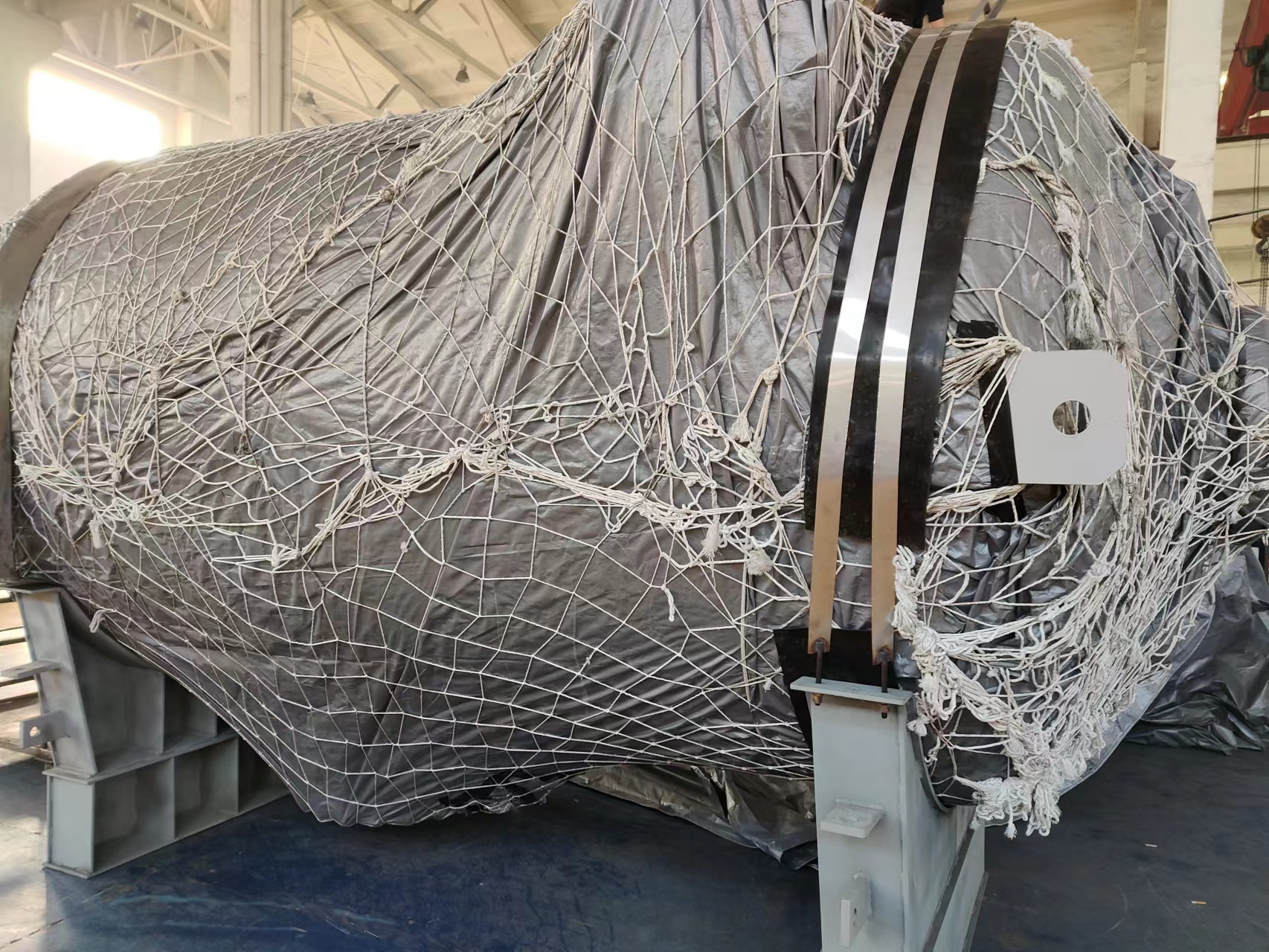
Integrated filter-dryer installations in pharmaceutical and high-purity chemical plants require verified process capability, not just equipment specifications.
Why capability verification matters at the Evaluation-to-Execution stage
Most buyers reaching the execution stage have already confirmed that a semiconductor precursor reacting-crystallizing-filtering-drying machine can consolidate multiple unit operations. What remains difficult to assess is whether a specific manufacturer has the engineering depth to handle the constraints that usually accompany high-purity precursor production: pressure vessel certification, explosion-proof operation, corrosion-resistant contact surfaces, automation interlocks, and repeatable batch quality.
Wuxi Zhanghua Pharm & Chem Equipment Co., Ltd., a pharmaceutical and chemical equipment manufacturer founded in 1976 in Wuxi, Jiangsu, China, provides integrated reaction, crystallization, filtration, and drying solutions for pharmaceutical, fine chemical, pesticide, new energy, and new material industries. The company operates 11 workshops covering 14,000 square meters, backed by a 25,000-square-meter factory, and employs 96 staff including a 20-engineer R&D team. Its production capacity reaches approximately 1,000 units per year, with about 30% of output exported to markets including the Middle East, South America, Europe, North America, Asia Pacific, and Belt and Road countries.
For buyers evaluating such a supplier, the real procurement evidence lies in five areas: certified pressure equipment capability, material and containment engineering, process integration scope, manufacturing precision, and documented production support. Each of these is verifiable from the company's existing certifications, product range, and operational history.
What a semiconductor precursor RCFD machine must deliver
A reacting-crystallizing-filtering-drying (RCFD) machine combines multiple process steps that are conventionally performed in separate equipment. In semiconductor precursor production—where materials such as high-purity metal organic compounds, lithium salts, and specialty electronic chemicals are synthesized—the integrated approach reduces product transfer, minimizes contamination risk, shortens batch time, and improves yield consistency.
From a procurement perspective, the machine must be judged on four linked capabilities:
- Reaction and crystallization control: precise temperature, agitation, and vacuum control to produce consistent crystal size and purity.
- Filtration performance: effective separation of mother liquor from crystalline solids with minimal product loss.
- Vacuum drying: removal of residual solvent at temperatures low enough to protect heat-sensitive or toxic materials.
- Containment and safety: sealed operation to handle toxic, stimulating, corrosive, or flammable materials without operator exposure.
These requirements align with the process equipment portfolio of Wuxi Zhanghua, which includes agitated nutsche filter dryers, filter dryers, nutsche filters, vacuum dryers, double cone dryers, conical screw vacuum dryers, paddle dryers, nauta conical dryers, reactors, crystallizers, drying ovens, film evaporators, and skid-mounted integrated systems.
Certification evidence: the first execution checkpoint
For pressure-bearing filtration and drying equipment, certification is not a formality. It determines whether the equipment can be legally installed and operated in the buyer's jurisdiction. At the Evaluation-to-Execution stage, buyers should request certificates at the same level of detail as the actual delivered vessel.
Wuxi Zhanghua holds several verifiable certifications covering key jurisdictions:
| Certification | Certificate / Standard | Scope | Issued by |
|---|---|---|---|
| ASME | ASME Boiler and Pressure Vessel Code (BPVC), U-Stamp, no. 60130 | Manufacture of pressure vessels at the approved location | ASME |
| PED CE | PED 2014/68/EU, EU Type Examination, no. 556/5/2018 | DN500 Filtering, Washing and Drying Machine | TI |
| PED | PED 2014/68/EU, no. CE-0062-PED-G-ZPE 001-26-CHN | DN850 Filter (Pressure Equipment) | BV |
| ATEX | EN ISO 80079-36:2016 and EN ISO 80079-37:2016, no. BVI 22 ATEX 0072 X | Agitated Nutsche Filter (DN2300), Ex Marking II 2/3 G Ex h IIB T3 Gb/Gc | BV |
| CE (Machinery) | Machinery Directive 2006/42/EC, no. IPC/ER/MD-24/108 | 25L Rotary Single Cone Vacuum Dryer (Model ZH-MD-25) | BV |
| MOM | Singapore MOM, no. INS/ER/PE-21/030 | 200L Knock Out Pot, compliant with ASME Section VIII Div.1 and Singapore MOM | BV |
This combination covers U.S. pressure vessel requirements, EU pressure equipment and explosion safety requirements, and Singapore regulatory approval. For semiconductor precursor applications involving flammable solvents or toxic intermediates, the ATEX marking on an agitated nutsche filter is particularly relevant because it documents formal assessment of explosive atmosphere risk, not just a design intention.
Material and containment engineering for corrosive and toxic chemistries
Semiconductor precursors and their intermediate streams can be corrosive, toxic, or both. Equipment in contact with these materials must therefore be specified beyond standard stainless steel.
Wuxi Zhanghua's process equipment is available in SS304, SS316L, titanium, Hastelloy, and PTFE-lined configurations. The availability of titanium and Hastelloy is significant for precursor processes that handle halide-containing chemicals or strong acids. PTFE lining addresses cases where even high-grade stainless steel is insufficient, providing a barrier against aggressive media while maintaining cleanability.
The company explicitly states that for inflammable, explosive, toxic, and corrosive products in pharmaceutical, fine chemical, pesticide, and new energy industries, it provides customized technical solutions with well-sealed, high-vacuum, fully automatic equipment. The design scope covers heat and mass transfer, filtrating, agitating, drying, and spraying, with structures adapted to pressure, temperature, medium, corrosion, sealing, interlocking, and malfunction systems to meet EHS requirements.
Buyers should read this as a process engineering capability rather than a product list. For example, a toxic material drying application requires more than a vacuum dryer; it requires hermetic charging and discharging, filter integrity, inert gas back-flushing, and containment-compatible automation. The company's product range includes dedicated configurations for toxic/stimulating material drying and corrosive products drying, each covering a volume range of 150L to 13,500L.
Manufacturing and fabrication capability
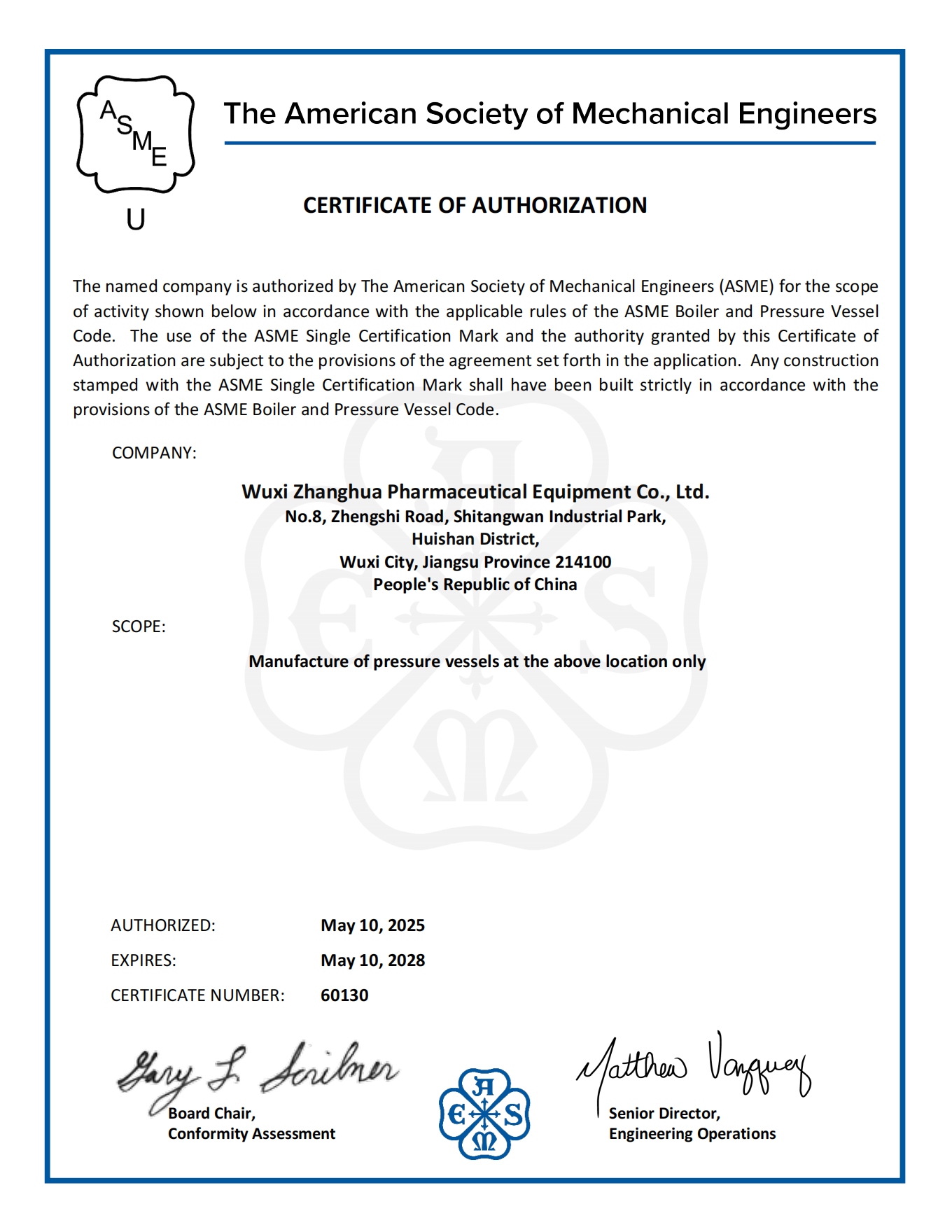
ASME certification is a verifiable baseline for pressure vessel fabrication in semiconductor precursor and high-purity chemical applications.
For large-diameter filter dryers, the limiting factor is often the manufacturer's machining capacity. Wuxi Zhanghua is equipped with large CNC vertical lathes and boring machines that allow customization of agitated nutsche filter dryers with diameter exceeding four meters. The company also uses imported welding robots, which improve welding accuracy, appearance, quality, and overall equipment safety.
These production capabilities translate into practical specification ranges for buyers:
| Product type | Model range | Key parameters | Materials |
|---|---|---|---|
| Agitated Nutsche Filter Dryer (ANFD) | φ800–φ4600 | Capacity 0.6–30 m³; filter area 0.5–16 m²; agitator travel 250–550 mm; motor 4–75 kW | SS304, SS316L, Titanium, Hastelloy, PTFE lining |
| Nutsche Filter | φ1000–φ5000 | Capacity 1.2–36.5 m³; filter area 0.8–19.5 m²; agitator travel 300–600 mm; motor 5.5–75 kW | SS304, SS316L, Titanium, Hastelloy, PTFE lining |
| Vacuum Dryer / Conical Vacuum Dryer | 150L–13,500L | Loading volume 50–70%; agitator speed 5–30 rpm; internal roughness Ra ≤0.4–0.6 μm; ExdIIBT4 optional | SS304, SS316L, Titanium, Hastelloy, PTFE lining |
| Double Cone Dryer | 20L–10,000L | Charging coefficient 0.4–0.6; roughness Ra ≤0.6 μm; speed 4–10 r/min; motor 1.5–15 kW | SS304, SS316L, Titanium, Hastelloy, PTFE lining |
| Conical Screw Vacuum Dryer | 150L–13,500L | Loading volume 50–70%; agitator speed 5–30 rpm; roughness Ra ≤0.4–0.6 μm | SS304, SS316L, Titanium, Hastelloy, PTFE lining |
| Paddle Dryer | ZPG-500–ZPG-6000 | Working volume 300L–3600L; heating area 3.2–16.5 m²; mixing speed 8–18 rpm; motor 4–22 kW | SS304, SS316L, Titanium, Hastelloy, PTFE lining |
| Nauta Conical Dryer | 150L–13,500L | Loading volume 50–70%; agitator speed 5–30 rpm; roughness Ra ≤0.4–0.6 μm | SS304, SS316L, Titanium, Hastelloy, PTFE lining |
| Film Evaporator | 1–20 m² | Processing capacity 50–5000 L/h; scraper speed 30–120 r/min; cylinder diameter Φ200–Φ1000 mm | SS304, SS316L, Titanium, Hastelloy, PTFE lining |
| Reactor | DFG50–DFG3000 | Internal tank diameter 400–3000 mm; jacket diameter 500–3200 mm; motor 0.6–37 kW; blending speed 50–100 rpm | SS304, SS316L, Titanium, Hastelloy, PTFE lining |
| Crystallizer | 30L–32,000L | Internal tank diameter 400–3000 mm; motor 0.55–37 kW; blending speed 50–120 rpm | SS304, SS316L, Titanium, Hastelloy, PTFE lining |
| Drying Oven | ZDF-6–ZDF-30 | Number of trays 16–60; evaporation area 5–18 m²; steam pressure 0.2–0.6 MPa; max temperature 80°C | SS304, SS316L, Titanium, Hastelloy |
| Skid-mounted RCFD production systems | SKS-50 / SKS-5000 | Skid length 1000–10,000 mm; width 1000–3200 mm; height 1000–4000 mm; weight 3–50t | SS304, SS316L, Titanium, Hastelloy, PTFE lining |
The drying equipment family also includes dedicated models for heat-sensitive material drying, toxic stimulating material drying, and corrosive products drying, all rated 150L–13,500L with applicable code GB or ASME.
From single machines to integrated production systems
A capability-oriented buyer will not stop at individual equipment. The more demanding question is whether the supplier can deliver a complete process line—including reactors, crystallizers, filter dryers, solvent recovery, and controls—with engineering responsibility.
Wuxi Zhanghua's skid-mounted reacting-crystallizing-filtering-drying production systems (model SKS-50/SKS-5000) address this requirement. Skid dimensions range from 1,000 mm to 10,000 mm in length, 1,000 mm to 3,200 mm in width, and 1,000 mm to 4,000 mm in height, with total skid weight from 3 to 50 tonnes. These systems are manufactured to GB or ASME codes and can be assembled from the same material set used across the company's equipment line.
For a semiconductor precursor manufacturer, skid-mounted execution offers several practical advantages: reduced on-site installation time, factory-tested process skids, standardized interconnecting piping, and a single supplier accountable for process integration. The RCFD general process production line and pilot production line are both within the company's stated scope, which means buyers can specify a pilot-scale unit first and scale up to production capacity without changing equipment philosophy.
Application scenarios in high-growth sectors
The capability to integrate reaction, crystallization, filtration, and drying is relevant beyond semiconductor precursors. Wuxi Zhanghua positions its process equipment for pharmaceutical industry, fine chemical industry, new energy and new materials industry, and pesticide manufacturing. Within these sectors, the same RCFD platform can be applied to:
- Antibiotic wet cake drying, including penicillin and cephalosporin API processing
- HPAPI and highly toxic API containment drying
- High-nickel ternary cathode precursor (NCM precursor) filtration and drying
- Lithium carbonate (Li₂CO₃) processing
- Lithium borohydride handling for energy storage applications
- Electronic chemical filtration and solvent removal, such as LiPF₆ solvent removal
- Chemical intermediate drying, resin wet cake drying, and pesticide wet cake drying
- API solvent exchange drying and crystalline API material processing
- Black mass filtration for battery recycling
These applications share common process demands: controlled crystal formation, efficient solid-liquid separation, low-temperature solvent removal, and containment of sensitive or hazardous material. The equipment's available surface roughness of Ra ≤0.4–0.6 μm on vacuum dryers and mixer-dryers supports cleanability requirements for pharmaceutical and electronic chemical applications.
Market context: The global semiconductor precursor market was valued at approximately USD 1.95 billion in 2025 and is projected to reach USD 3.89 billion by 2034 with a CAGR of 10.0%, according to Intel Market Research. The high-nickel ternary cathode materials (NCM) market, another downstream application of RCFD equipment, was valued at USD 18.6 billion in 2025 according to Dataintelo. For buyers, this growth translates into increasing demand for production equipment that can maintain purity and batch consistency at larger scales.
Engineering team and process design support
The depth of a supplier's engineering team is often the most accurate predictor of successful equipment execution. Wuxi Zhanghua's technical team includes engineers in quality assurance, process, equipment, welding, and electrics. Most team members have more than ten years of working and engineering project experience.
For buyers, this multidisciplinary composition matters because a semiconductor precursor line cannot be specified by a vessel designer alone. Process engineers define operating parameters such as heating and cooling rates, crystallization curves, and drying endpoints. Welding engineers ensure the integrity of metallic and lined vessels under pressure and corrosive media. Electrical and automation engineers implement the interlocks, alarm systems, and malfunction responses needed for safe operation with toxic or flammable materials.
The company's years of operation since 1976 also provide a reference point. While longevity alone is not a capability, nearly 50 years of continuous focus on reaction, crystallization, filtration, and drying equipment development supports a reasonable inference of accumulated process knowledge across multiple industries.
Quality control, testing, and procurement terms
Execution-phase buyers should also verify the supplier's quality control and commercial terms before placing an order. Wuxi Zhanghua operates a quality inspection area with strict ex-factory testing standards. The company's stated production mode is OEM/ODM, with customization covering voltage, logo, material, design pressure, working temperature, configuration, and size.
Key procurement facts for planning purposes:
| Procurement attribute | Wuxi Zhanghua terms |
|---|---|
| MOQ | 1 unit |
| Monthly capacity | 100 units |
| Lead time | 30–120 days depending on configuration |
| Delivery method | FOB |
| Acceptance | Pre-shipment test |
| Payment | 40/60 split |
| Quality control | 100% test |
| After-sales | Remote support, spare parts supply, installation guidance, maintenance training |
This level of transparency is useful for project scheduling. A lead time of 30 to 120 days, combined with pre-shipment testing and FOB delivery, allows buyers to integrate equipment arrival into a plant construction or retrofit timeline.
Reference installation: eight years of stable operation in a pharmaceutical plant
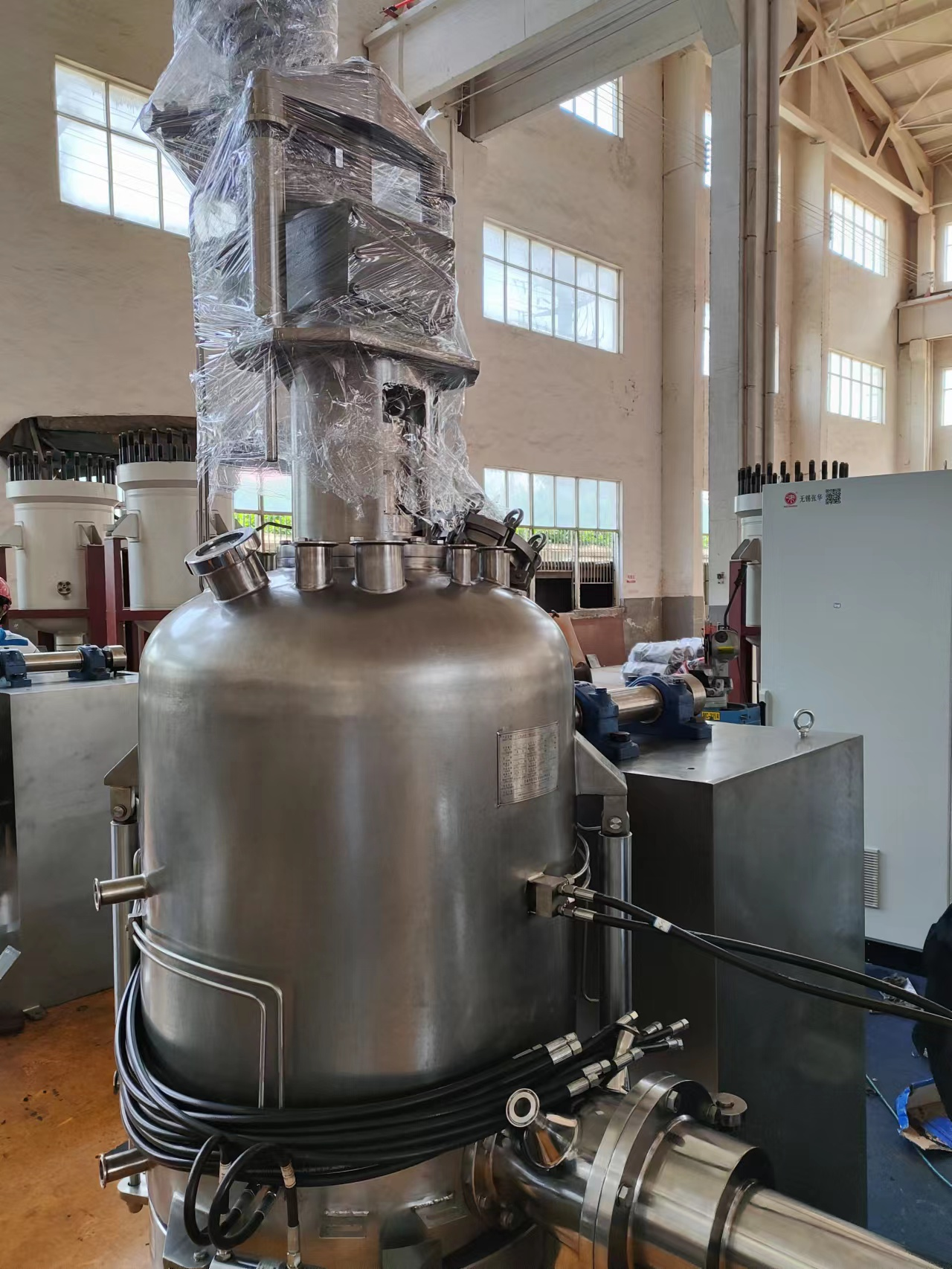
A documented pharmaceutical plant reference shows eight years of stable operation for storage, filtering, washing, and drying of semi-finished drugs.
A documented reference case involving a pharmaceutical plant in Singapore provides operational evidence for Wuxi Zhanghua equipment. The customer used 10 units for storing, filtering, washing, drying, and other processing of semi-finished drugs. The equipment has been in operation for eight years with stable operation. The highlight of the case is GMP-compliant design, fully automated control, and high-purity processing.
For buyers at the execution stage, this reference is useful in three ways. First, it demonstrates sustained performance in a regulated pharmaceutical environment over a multi-year operating period. Second, it involves the product categories most relevant to RCFD execution: filter dryers, agitated nutsche filter dryers, nutsche filters, and reactors. Third, the eight-year duration indicates that the equipment was not only accepted at commissioning but continued to meet production requirements under routine pharmaceutical operation.
It should be noted that the reference is in pharmaceutical semi-finished drug processing, not semiconductor precursor manufacturing. Buyers in the semiconductor field should therefore treat this as evidence of general process equipment reliability and containment design, not as a direct semiconductor precursor qualification. Process validation for a specific precursor chemistry should be conducted through pilot testing using the buyer's actual material.
Comparison with traditional multi-equipment processing
Traditional processing of high-purity solids typically uses separate reactors, centrifuges or filter presses, and tray dryers. Material is transferred between vessels multiple times, creating risks of contamination, product loss, operator exposure, and batch inconsistency.
Compared with this conventional approach, a well-executed RCFD machine offers measurable structural advantages:
- Fewer transfers: reaction, crystallization, filtration, washing, and drying in one vessel reduce the number of product handling steps.
- Closed processing: the same sealed vessel minimizes exposure to toxic or stimulating intermediates.
- Faster batch cycles: washing and drying occur without waiting for cake discharge and recharging.
- Higher yield: product remains in one system, reducing mechanical losses during transfer.
- Easier containment: a contained ANFD with ATEX-rated design can be integrated into an isolator or barrier system more readily than multiple open transfer points.
However, honest capability assessment requires acknowledging the limitations and boundaries of integrated RCFD equipment:
- Solids handling constraints: an agitated filter dryer is not ideal for extremely sticky, fibrous, or very fine powders that blind filter media or form difficult-to-agitate cakes. A paddle dryer or conical dryer may be preferable for certain post-filtration drying steps.
- Batch size flexibility: although ANFDs can be built in diameters up to and beyond φ4600, very small pilot-scale quantities may be processed more economically in a dedicated small vacuum dryer or drying oven.
- Process validation requirement: integrating multiple unit operations in one vessel changes the thermal and mass transfer history of the material. Each new precursor process requires pilot validation to confirm crystal quality, residual solvent levels, and drying kinetics.
- Capital cost: a multifunctional pressure-rated vessel with agitation, filtration, vacuum, and explosion protection carries a higher initial cost than a simple tray dryer. The total cost of ownership depends on whether throughput, containment, and yield benefits justify the premium.
- Maintenance complexity: more components—agitation drive, filter media, discharge valve, vacuum system, control interlocks—means more potential failure points. Supplier after-sales support and spare parts availability become critical selection criteria.
For semiconductor precursors, the risk associated with open handling and contamination usually favors integrated RCFD execution. For less demanding bulk chemicals where transfer losses and exposure are acceptable, traditional separate equipment may remain cost-effective.
Toxic, stimulating, and corrosive material drying: a dedicated capability layer
A further capability distinction is whether the supplier is prepared for difficult material classes, not just standard pharmaceutical intermediates. Wuxi Zhanghua's portfolio explicitly covers toxic/stimulating material drying and corrosive products drying, both in the 150L–13,500L range under GB or ASME codes.
These designations matter for semiconductor precursor and specialty chemical manufacturers because the equipment must handle:
- Solvent-wet cakes containing toxic or volatile components
- Materials that release corrosive vapors during vacuum drying
- Products requiring inert gas protection or solvent recovery
- Operations where leakage into the environment or operator exposure is unacceptable
The availability of Hastelloy and PTFE lining in these models addresses corrosion resistance at the material level. ATEX certification addresses the explosion risk at the equipment level. Fully automatic, well-sealed, high-vacuum design addresses containment at the system level. For a buyer executing a high-purity electronic chemical line, these three layers must be verified independently.
Pilot and production-scale integration
Execution-stage buyers often need both a pilot line for process development and a general production line for commercial output. Wuxi Zhanghua's scope covers the RCFD pilot production line and the RCFD general process production line, alongside skid-mounted systems.
The pilot and production scales are connected within the same equipment family. A pilot system can use a smaller agitated nutsche filter dryer, while a commercial line can use a larger unit from the same product line. This design continuity reduces scale-up risk because mixing geometry, filter area ratios, and drying principles remain similar across sizes.
For semiconductor precursors, where purity requirements can reach parts-per-billion levels, the ability to transfer process knowledge from pilot to production is a significant procurement advantage. The alternative—changing equipment type during scale-up—introduces variables that can delay qualification and extend time-to-market.
Buyer's checklist for evaluating an RCFD machine supplier
| Checkpoint | What to verify | Evidence example |
|---|---|---|
| Pressure code compliance | ASME U-stamp or PED certificate matching the planned vessel size and jurisdiction | ASME no. 60130; PED no. CE-0062-PED-G-ZPE 001-26-CHN for DN850 filter |
| Explosion safety | ATEX marking for the specific vessel and zone classification | BVI 22 ATEX 0072 X for DN2300 agitated nutsche filter, II 2/3 G Ex h IIB T3 Gb/Gc |
| Contact materials | Availability of SS316L, titanium, Hastelloy, or PTFE lining for product-contacting parts | Material set across all process equipment models |
| Fabrication capacity | Machining capability for large-diameter vessels and welding quality control | CNC vertical lathes/boring machines for ANFDs over 4 m diameter; imported welding robots |
| Process scope | Reactor, crystallizer, filter, dryer, and integrated skid capability | Product family from 30L crystallizers to SKS-50/SKS-5000 skids |
| Automation and containment | Fully automatic operation, high-vacuum design, interlocks for toxic/flammable products | Company design scope including sealing, interlocking, malfunction systems |
| After-sales support | Remote support, spare parts, installation guidance, maintenance training | Procurement terms |
| Installation reference | Multiple-year operating history in a regulated environment | 10 units in Singapore pharmaceutical plant, 8 years stable operation |
Market trend context
The market data available for this analysis shows a large and growing demand base for RCFD equipment. The global agitated nutsche filter and dryer (ANFD) market was valued at approximately USD 4.5 billion in 2024, according to Cognitive Market Research. The agitated nutsche filter dryer segment accounts for about 35% of the total filtration and drying equipment market as of 2024, per Fortune Business Insights. The broader filtration and drying equipment market was estimated at USD 1.39 billion in 2023 with a projected CAGR of 8.5% through 2030, according to Grand View Research.
These numbers should be interpreted with caution because different research providers use different industrial classifications. The divergence between Grand View Research's total filtration/drying equipment figure and Cognitive Market Research's ANFD sub-segment figure illustrates the classification problem. For procurement purposes, the relevant takeaway is not the absolute market size but the direction: semiconductor precursor production, battery cathode precursor manufacturing, and high-purity pharmaceutical processing are all expanding, creating sustained demand for integrated process equipment with verifiable certifications.
Limitations buyers should respect
No equipment manufacturer can credibly claim universal suitability for all RCFD applications. For Wuxi Zhanghua, the following boundaries should be acknowledged in any procurement evaluation:
- Process validation remains with the buyer: the supplier provides equipment and process engineering support, but the buyer's material-specific qualification—crystal form, particle size distribution, residual solvent, impurity profile—must be proven through trials.
- Very large tonnage continuous processes may favor other equipment types: the RCFD approach is batch-oriented. For continuous flows of commodity chemicals, a different technology such as continuous filter or continuous dryer should be considered.
- Containment level must be specified: ATEX certification covers explosive atmosphere risk, but OEL (occupational exposure limit) containment for HPAPI requires additional isolator or barrier system integration. The equipment supports such integration but does not replace it.
- Reference applications are not identical: the Singapore pharmaceutical case is not a semiconductor precursor installation. It should be used as a reliability reference, not a direct process match.
Future outlook
As semiconductor precursor and specialty chemical makers push toward higher purity, faster qualification, and safer processing, the role of integrated RCFD machines will likely expand. Several trends support this outlook:
- Purity-driven equipment design: internal surface finish, dead-space elimination, and cleanability will become more important as precursor purity requirements tighten.
- Skid-based modular plants: the ability to factory-build and test entire process systems will reduce on-site construction risk and shorten project timelines.
- Containment by default: toxic, stimulating, corrosive, and highly potent APIs will increasingly be processed in closed systems from the start, making ATEX and high-vacuum design standard rather than optional.
- Data and automation integration: batch reporting, interlock logs, and recipe management will become part of the equipment purchase, supporting both regulatory compliance and process transfer.
Manufacturers like Wuxi Zhanghua that already combine pressure vessel certification, ATEX assessment, corrosion-resistant material options, large-diameter fabrication, and integrated process design are positioned to serve this evolution. The company's stated direction—customizing integrated solutions of reaction, crystallization, filtration, and drying process equipment—matches the direction of high-purity chemical manufacturing.
FAQ for procurement professionals
What is a semiconductor precursor reacting-crystallizing-filtering-drying machine?
A semiconductor precursor reacting-crystallizing-filtering-drying machine is an integrated process vessel that performs reaction, crystallization, filtration, washing, and vacuum drying in a single enclosed system. It is used to produce high-purity chemical precursors for semiconductor manufacturing while minimizing contamination, product loss, and operator exposure.
What certifications should an RCFD machine supplier hold for semiconductor precursor production?
For pressure equipment, relevant certifications include ASME U-Stamp for North American jurisdictions and PED CE for the European Union. For explosive atmospheres, the equipment should carry ATEX certification with the appropriate gas group and temperature class. A manufacturer such as Wuxi Zhanghua holds ASME, PED, ATEX, CE Machinery, and Singapore MOM certificates across its product range.
Which materials are available for product contact parts in corrosive precursor processes?
Wuxi Zhanghua offers SS304, SS316L, titanium, Hastelloy, and PTFE-lined configurations across its reactors, crystallizers, filter dryers, vacuum dryers, and skid-mounted systems. Titanium and Hastelloy provide corrosion resistance for aggressive halide or acid chemistries, while PTFE lining offers a barrier for highly corrosive media.
Can Wuxi Zhanghua provide both pilot-scale and production-scale RCFD systems?
Yes. The company's scope covers pilot production lines and general process production lines, including skid-mounted systems in the SKS-50/SKS-5000 range. Skid dimensions are configurable from 1,000 mm to 10,000 mm in length, with total skid weight from 3 to 50 tonnes.
What is the typical lead time and order flexibility for a custom RCFD machine?
Wuxi Zhanghua states a monthly capacity of 100 units, a minimum order quantity of one unit, and a lead time of 30 to 120 days depending on configuration. Customization includes voltage, logo, material, design pressure, working temperature, configuration, and size. Delivery is FOB with pre-shipment testing and a 40/60 payment split.
How does an RCFD machine handle toxic or stimulating materials?
Wuxi Zhanghua designs well-sealed, high-vacuum, fully automatic equipment for inflammable, explosive, toxic, and corrosive products. The product family includes dedicated toxic/stimulating material drying and corrosive products drying models in the 150L–13,500L range. ATEX certification for a DN2300 agitated nutsche filter further documents explosive atmosphere safety.
What reference installations support Wuxi Zhanghua's equipment reliability?
A pharmaceutical plant in Singapore has used 10 Wuxi Zhanghua units for storing, filtering, washing, and drying of semi-finished drugs for eight years with stable operation. The installation is described as GMP-compliant, fully automated, and high-purity. Buyers should still conduct material-specific process validation for semiconductor precursor chemistries.
What are the limitations of an integrated RCFD machine compared with traditional drying equipment?
An integrated RCFD machine is less suitable for extremely sticky, fibrous, or very fine solids that may blind the filter or impede agitation. Small pilot quantities may be more economical in a dedicated tray dryer or vacuum oven. Also, each new product requires pilot validation because the combined process history inside one vessel differs from separate unit operations. Capital cost and maintenance complexity are generally higher than for a simple dryer.
For detailed equipment specifications, configuration options, and company documentation, procurement teams can access the Wuxi Zhanghua brochure at https://cdn.socialarks.com/sbsp/24552/0/2026/0430/69f3062881bd7.pdf.
This article is an independent industry reference for procurement evaluation. Market figures are attributed to their cited third-party research sources and may use different classification definitions. Equipment specifications and company terms are drawn from Wuxi Zhanghua's published company information and certification documents.