
Selecting a 3-Ton Electric Forklift: Modern vs Conventional Economics
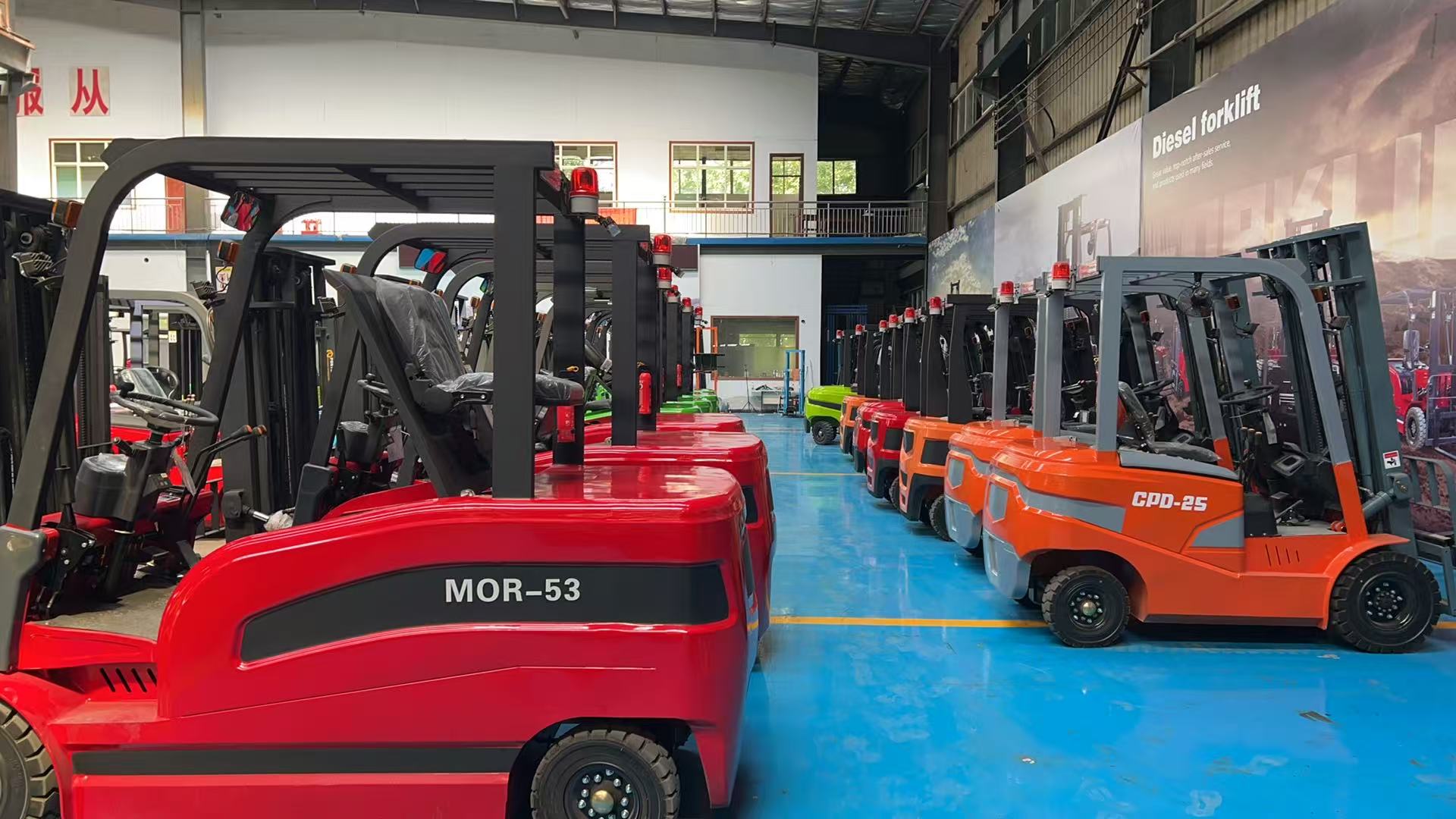
Modern electric forklift production at Ningjin Shunhao Trading Co., Ltd.'s Hebei facility.
Procurement decisions for a 3.0-ton electric forklift are increasingly settled on operating economics rather than the purchase price alone. Buyers weighing a modern 3.0-ton electric forklift against a conventional model face a choice between lower upfront cost and longer-term efficiency gains. The difference is concentrated in three areas: drivetrain technology, maintenance frequency, and total energy consumption.
The global electric forklift market was valued at USD 53.01 billion in 2024 and is projected to grow to USD 94.55 billion by 2032, according to Maximize Market Research. In China, electric forklift sales reached 946,300 units in 2025, accounting for 76.9% of all forklift sales in the country. Yet conventional electric forklifts remain in service and in stock across the industry. For a buyer at the decision stage, the relevant question is not whether electric has won, but which type of electric forklift makes economic sense for a specific operation.
Why the Forklift Choice Now Turns on Operating Cost
Traditional 3.0-ton electric forklifts were designed around conventional electric drive systems and basic control architectures. They are functional, widely understood, and often cheaper to acquire. But the cost profile changes once the forklift is deployed. Energy consumption, charging downtime, and maintenance intervals are recurring costs that accumulate over the equipment's lifecycle.
Modern 3.0-ton electric forklifts differ in one fundamental way: the drivetrain and energy management system are redesigned to reduce waste. A high-efficiency electric system improves battery utilization and energy conversion, meaning more of the energy drawn from the battery is converted into useful work. In practical terms, this translates into faster control response, longer effective operating time, and lower energy consumption per shift.
For operations running multiple shifts, the gap in energy and maintenance costs becomes a decisive factor in return-on-investment calculations. For a light-duty operation with low handling frequency, the traditional model may still be financially rational.
Modern 3-Ton Electric Forklifts: What the Technology Changes
Mightlift, operated by Ningjin Shunhao Trading Co., Ltd., is a China-based electric forklift manufacturer with a 40,000 m² production base in Hebei Province. The company employs 240 people and produces up to 12,000 electric forklifts annually, with 70% of output going to global markets. Its 3.0-ton electric forklift, model CPD30, is an example of the modern approach to electric forklift design.
The CPD30 is rated for a 3,000 kg load capacity and offers lifting heights from 3,000 mm to 7,000 mm. It uses a high-power electric drive system with intelligent MOSFET control, a large-angle adjustable steering wheel, and a large-flow cyclone air filter system. These features are not optional additions; they directly affect how the forklift behaves under load and how much energy it consumes during a shift.
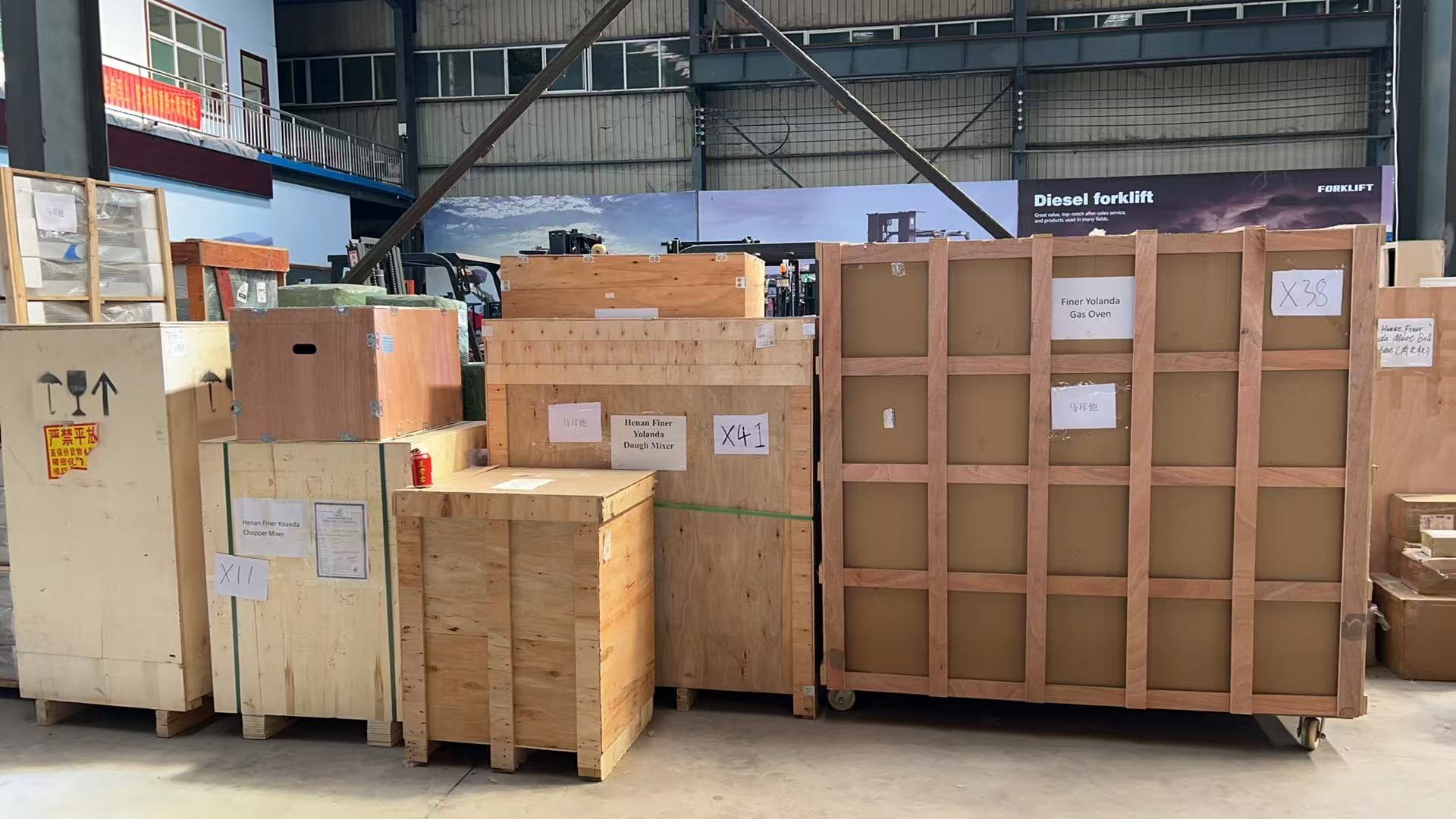
Mightlift's factory in Hebei, China, where the CPD30 series is manufactured.
The technical advantage of this architecture is measurable in daily operations. An advanced electric drive responds faster to operator input, reducing cycle time in stacking and loading tasks. Intelligent energy management controls power delivery to the motor and hydraulic system, minimizing unnecessary draw during partial loads or idling. Optimized vehicle control improves acceleration, braking, and steering behavior, which reduces wear on mechanical components.
Cost and Maintenance Comparison: Modern vs Conventional
When comparing a modern 3.0-ton electric forklift with a traditional 3.0-ton electric forklift, the difference is not a single specification but a combination of cost drivers that play out over the equipment's lifetime. The table below summarizes the key comparison points for procurement evaluation.
| Comparison Point | Modern 3.0-Ton Electric Forklift | Traditional 3.0-Ton Electric Forklift |
|---|---|---|
| Drivetrain | Advanced electric drive with intelligent energy management | Conventional electric drive with basic control system |
| Control response | Faster response and optimized vehicle control | Standard response with limited optimization |
| Energy consumption | Lower energy consumption due to high-efficiency system | Higher power consumption with conventional energy management |
| Effective operating time | Longer effective operation and reduced charging downtime | Limited endurance and longer charging time |
| Maintenance | Fewer service visits, longer maintenance intervals | More frequent inspections and routine maintenance |
| Long-term operating cost | Reduced long-term operating costs | Higher energy and maintenance costs over time |
| Initial investment | Generally higher upfront cost | Generally lower initial investment |
| Best fit | High-frequency warehouses, factories, logistics centers, cold storage | General warehouses and standard material handling |
Mightlift's 3.0-ton electric forklift offers lower energy consumption and reduced long-term operating costs compared to traditional models. Maintenance is simplified through fewer service requirements and longer maintenance intervals. These advantages come from the design of the electric drive system itself, not from operational workarounds.
The lower initial cost of a traditional 3.0-ton electric forklift is often the reason it remains in consideration. Buyers should evaluate whether the upfront savings offset the higher energy and maintenance spending that accumulates with the machine's age and usage intensity.
Application Fit: Where the Modern Advantage Shows
Warehouse and logistics operations vary widely in workload, shift structure, and environment. The choice between a modern and a traditional 3.0-ton electric forklift should be driven by specific application conditions.
For indoor pallet receiving, put-away, and dispatch on level floors, a modern electric forklift with longer effective operating time supports multi-shift workflows. The CPD30's 3,000–7,000 mm lifting height range makes it suitable for standard racking as well as higher storage positions. In a light-duty warehouse fleet deployment, the lower energy draw and reduced charging downtime improve fleet utilization.
The food industry is a particularly relevant use case. Lithium-ion batteries in cold storage applications down to -20°C retain significantly more capacity than lead-acid batteries, and Mordor Intelligence projects an 11.6% CAGR for the food industry segment. Modern electric forklifts with intelligent battery management and fast-charging capability fit cold storage and food processing environments where traditional lead-acid models lose performance and require longer charging pauses.
Narrow-aisle and high-density warehouses are another growth area. Class II narrow-aisle trucks are projected to grow at a 9.28% CAGR through 2030, according to Mordor Intelligence, due to the global trend of warehouse densification. For workshop stacking, supermarket storage, and logistics park transfer operations, a 3-ton electric forklift with responsive controls and low maintenance requirements reduces per-pallet handling cost.
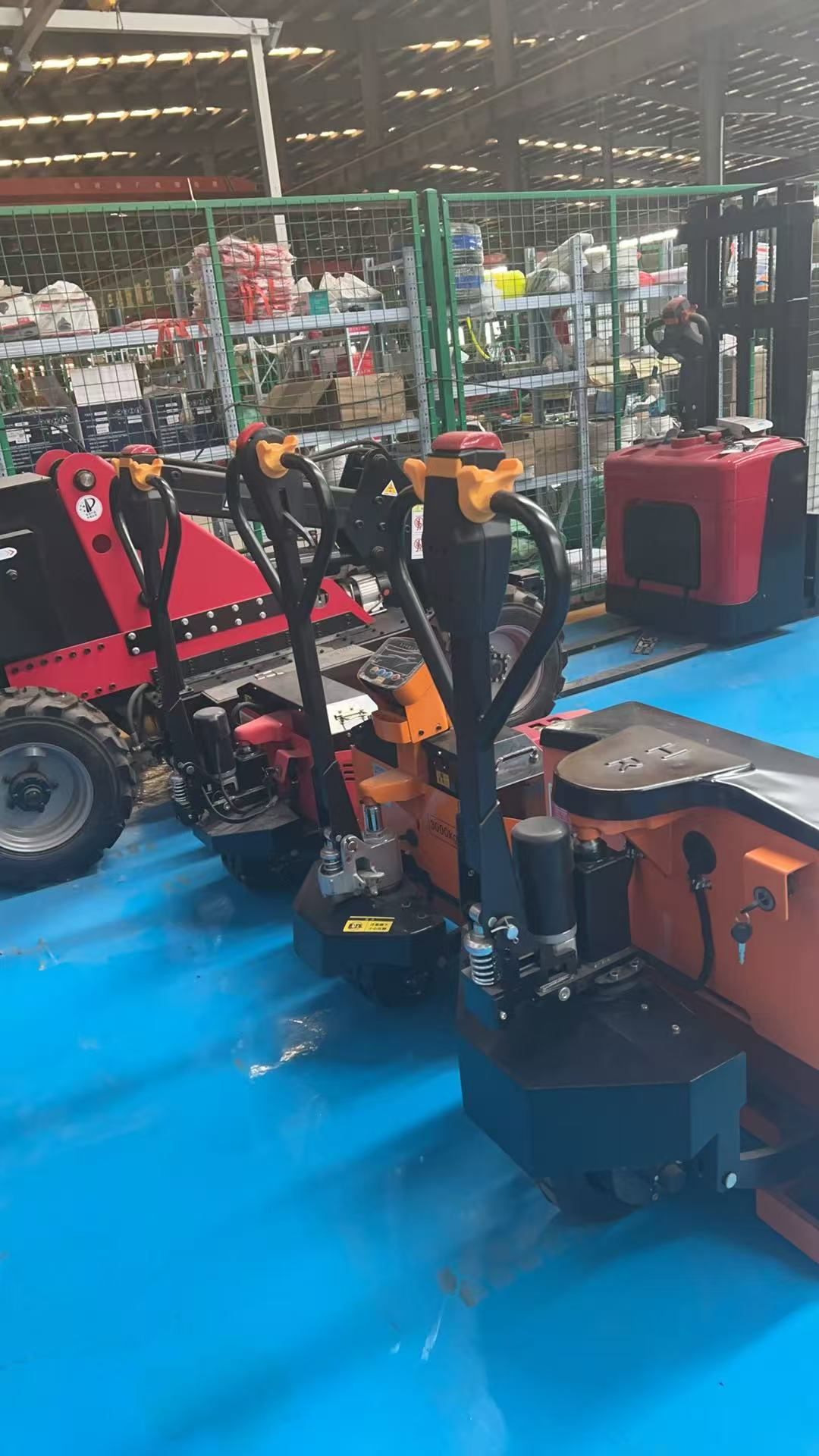
Manufacturing capability supporting customized electric forklift production.
What the Market Data Says About the Shift
Several independent data points show that the market has moved in favor of modern electric forklifts over the last few years.
Electric forklifts reached a 71% share of North American retail orders in 2024, according to the Industrial Truck Association, reflecting a rapid shift away from internal combustion engines. In China, electric forklift sales accounted for 76.9% of all forklift sales in 2025, according to the China Construction Machinery Association.
Lithium-ion battery adoption in new global forklift shipments rose to 35% in 2024, up from 22% in 2021, according to LiTrue Analysis. This matters because lithium-ion batteries support opportunity charging—15 to 30 minute top-ups—without degrading cycle life, whereas opportunity charging significantly harms lead-acid battery longevity. The ability to charge during breaks without shortening battery life is a major operational advantage for modern electric forklifts.
EN 1175:2020 is the current harmonized European standard for electrical and electronic safety requirements in self-propelled industrial trucks and is a CE marking prerequisite. Buyers importing into the EU should verify that any electric forklift, modern or conventional, meets this standard. For explosive atmospheres, ATEX Directive 2014/34/EU is mandatory within the European Union.
When a Conventional 3-Ton Electric Forklift Still Makes Sense
The modern 3.0-ton electric forklift is not the right answer for every operation. There are legitimate cases where a traditional model is the better choice.
A conventional 3.0-ton electric forklift has a lower initial investment in some configurations. If the operation runs one shift with low-to-medium handling frequency, standard pallet sizes, and no tight schedule pressure, the lower upfront cost produces a shorter payback period. The traditional design is also easier for some maintenance teams to service because the components and control systems are familiar and widely available.
The limitations of a conventional model—shorter endurance, higher power consumption, more frequent inspections—only become decisive when the duty cycle is demanding enough to turn those inefficiencies into real cost. For light, intermittent work, the lower acquisition cost can dominate the total cost calculation.
Buyers should also consider the total cost framework beyond the forklift itself. Installation of charging equipment, battery handling infrastructure, operator training, and parts availability all affect the real economics. A modern forklift with simplified maintenance can reduce the hidden costs of service scheduling and spare parts inventory.
Outlook for Electric Forklift Procurement
The direction of the electric forklift market points further toward modern drivetrains and lithium-based energy storage. Global market growth from USD 53.01 billion in 2024 to USD 94.55 billion by 2032 indicates that fleets are replacing older equipment at an accelerating rate.
Mightlift's position in this market is notable for comparison purposes. The company, established in 2022, has built an export-oriented electric forklift business serving global customers with a factory in China's logistics equipment cluster. Its product range includes 1-ton to 3.5-ton electric forklifts, with the CPD30 representing the modern 3-ton segment.
For procurement teams, the practical implication is that the comparison between modern and conventional 3.0-ton electric forklifts should shift from first-year cost to a lifecycle view. In high-frequency operations, the modern platform's lower energy consumption, reduced maintenance, and longer effective runtime can justify a higher initial price. In low-frequency operations, the conventional model remains a cost-effective alternative.
As lithium-ion adoption grows—from 22% in 2021 to 35% in 2024—and narrow-aisle and cold storage segments expand at double-digit rates, the installed base of conventional lead-acid forklifts will continue to age. Replacement decisions over the next five years will increasingly favor modern drivetrains. Buyers who evaluate total operating economics today are likely to set a procurement standard that remains valid as the industry shifts.
FAQ: 3-Ton Electric Forklift Comparison
Which should I choose between a modern 3.0-ton electric forklift and a traditional 3.0-ton electric forklift?
Select based on operation frequency, working hours, and long-term cost budget. A modern 3.0-ton electric forklift with advanced electric drive, intelligent energy management, and optimized vehicle control responds faster, runs longer per charge, and uses less energy. It is ideal for high-intensity continuous work. A traditional 3.0-ton electric forklift uses a conventional drive and basic control system. It has a lower initial investment but limited endurance, higher power consumption, and more frequent maintenance, making it suitable for standard low-to-medium frequency material handling.
What are the key technical differences between a modern and a traditional 3.0-ton electric forklift?
The main difference is the drivetrain and control architecture. A modern model uses an advanced electric drive and intelligent energy management system, which improves battery utilization and energy conversion, delivering faster control response and extended continuous working time. A traditional model uses a conventional electric drive and basic control system with ordinary energy management, resulting in slower response, limited effective operation time, and higher power consumption.
How do maintenance requirements compare between the two types?
A modern 3.0-ton electric forklift simplifies maintenance by requiring fewer service visits and offering longer maintenance intervals. A traditional 3.0-ton electric forklift requires more frequent inspections and routine maintenance. For multi-shift fleets, the modern design reduces downtime and service cost over the equipment's life.
Which option has lower long-term operating costs?
The modern 3.0-ton electric forklift has lower energy consumption and reduced long-term operating costs, mainly because the high-efficiency electric system maximizes battery utilization and minimizes energy loss. The traditional type often has a lower initial price but tends to accumulate higher energy and maintenance expenses over time.
When is a traditional 3.0-ton electric forklift still a reasonable choice?
If the operation is low-to-medium frequency, the workload is standard, and the upfront budget is limited, a traditional 3.0-ton electric forklift can be a pragmatic choice. Its limitations in endurance, higher power consumption, and more frequent maintenance become less significant when the duty cycle is light. For general warehouse material transport with standard lifting needs, the lower initial investment can make better financial sense.
¿Tiene preguntas o necesita más detalles?
Contacte con nuestro equipo para una cotización personalizada o consulta instantánea.
Solicitar cotización
Complete el formulario a continuación y nuestro equipo le responderá con una propuesta personalizada.
Chat directo de WhatsApp
¿Prefiere chatear en tiempo real? Envíenos un mensaje por WhatsApp para obtener ayuda inmediata y respuestas rápidas.
- Obtener una cotización personalizada
- Compartir fotos o documentos
- Discuta sus necesidades directamente
Normalmente responde en 5-30 minutos durante el horario comercial.