
Selecting Microscopes by Workflow, Not Magnification: A 2026 Project Fit Guide
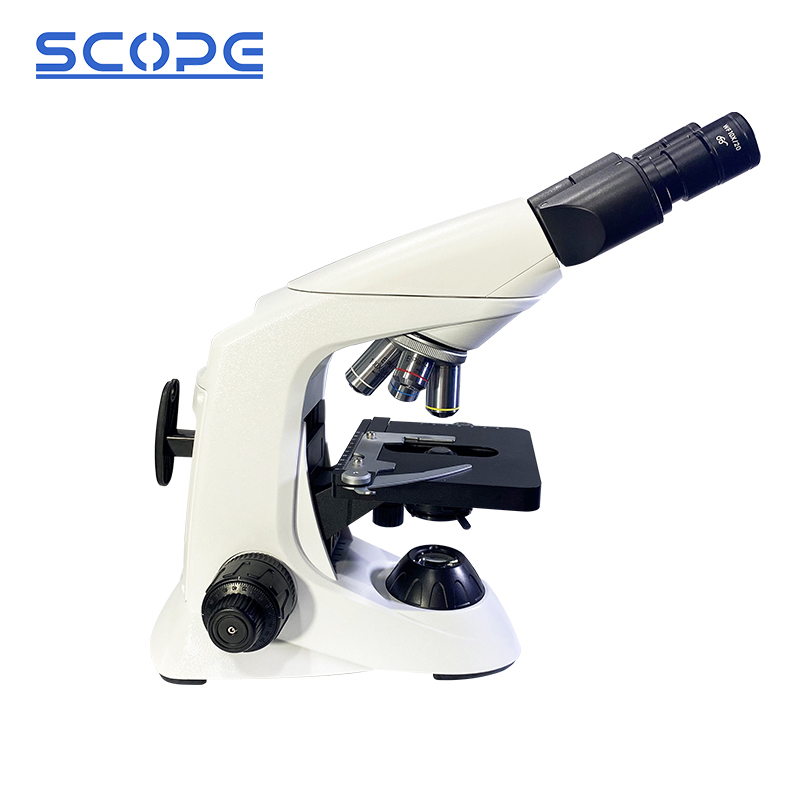
Figure 1: A binocular biological optical microscope is a common starting point for transmitted-light laboratory workflows.
Why project fit matters more than category names
Most microscope buying decisions start with a price range or a specification sheet. A more reliable starting point is the project itself: what sample will be examined, how it is prepared, and which observation method will generate the evidence needed. This guide applies a scenario-based framework to help laboratory managers, procurement staff, and institutional buyers match optical microscope families to the actual conditions of their work.
Microscope selection mistakes are rarely caused by magnification alone. A biological microscope is designed for transmitted light and thin, transparent samples such as stained smears and tissue sections. A metallurgical microscope is built for reflected light and opaque surfaces such as metals, coatings, and electronic components. An inverted microscope places objectives below the stage so culture vessels can be inspected from underneath. A polarizing microscope is used for birefringent materials such as minerals, polymers, and geological thin sections. When the optical system does not match the sample, the resulting image can be poor, preparation routines may need to be repeated, and the instrument may not answer the actual project question.
From a procurement perspective, this creates both risk and opportunity. Risk appears when buyers order by category name rather than by application. Opportunity appears when a supplier can explain how each configuration maps to a project type and can support multiple optical families under one ordering relationship.
Brand solution: optical families instead of one universal microscope
Chongqing Scope Instrument Co., Ltd. is a specialist supplier of laboratory, medical training, and metallographic instruments based in Chongqing, China. Its catalog includes biological microscopes, metallurgical microscopes, fluorescence microscopes, inverted microscopes, stereo microscopes, polarizing microscopes, hardness testers, metallographic sample preparation equipment, medical manikins, and laboratory consumables.
Chongqing Scope does not present a single universal model as the answer to every laboratory. Instead, the product structure follows optical families. The BK5000 biological microscope uses infinity-corrected optics, a 175x145 mm mechanical stage, and a quintuple nosepiece for teaching and research. The BK6000TR trinocular biological microscope adds light distribution options of 100:0 and 80:20 for camera integration. The BK5000-PH phase contrast microscope includes infinity phase contrast objectives and a quintuple-hole Abbe condenser. The BK5000-FL fluorescence microscope can be configured with blue, green, violet, and ultraviolet fluorescence filters.
For materials work, the MIT300 industrial microscope and MIT500 metallurgical microscope use reflected illumination with long working distance objectives, while the MIT300D adds M Plan bright and dark field objectives. For cell culture, the BDS400 tissue microscope and BDS500 laboratory inverted microscope use long working distance phase contrast objectives, culture dish holders, and large mechanical stages. For geology and minerals, the BK-POL, SMART-POL, and BK-POLF polarizing microscopes include rotating stages, analyzer units, and compensator plates. The SZ810 stereo microscope supports lower-magnification observation of bulk objects with a zoom range of 0.65X to 5.3X and a 110 mm working distance.
Technical explanation: the light path determines the fit
An optical microscope's core job is to direct light through or onto a sample and then magnify the image. In a biological microscope, the light source and condenser sit below the stage, while the objective and eyepiece are above. This works for samples that allow light to pass. In a metallurgical microscope, illumination is reflected from the objective side onto an opaque sample, making surface features such as grain boundaries, cracks, and coatings visible. Inverted microscopes reverse this arrangement: the objective is below the sample, allowing culture flasks and Petri dishes to be observed without disturbing the medium. Polarizing microscopes insert a polarizer and analyzer into the light path, making it possible to identify anisotropic materials.
Observation modes also affect the configuration. Bright field is the default for stained samples. Dark field improves contrast for low-contrast surfaces. Phase contrast enhances transparent live cells. Polarization reveals birefringent structures, and fluorescence highlights specific labels. Choosing the mode determines whether a standard objective, a phase contrast objective, a polarizing unit, or a fluorescence attachment is required.
The following table summarizes the optical families and their typical project fit.
| Project scenario | Sample type | Optical family | Configuration examples |
|---|---|---|---|
| School teaching and basic biology | Stained smears, thin sections | Bright field biological microscope | B104, SMART-2, B301, B302, B204 |
| Laboratory research and clinical biology | Prepared slides requiring detail | Infinity-corrected biological microscope | SMART-4, BK5000, BK6000TR |
| Cell culture and live cell observation | Culture dishes, flasks, tissue vessels | Inverted microscope | BDS400, BDS500 |
| Fluorescence labeling | Labeled cells and tissues | Fluorescence microscope | BK5000-FL |
| Metallurgy and industrial failure analysis | Metal surfaces, polished sections | Metallurgical microscope | MIT300, MIT500, MIT300D, MDS400 |
| Geology, mineralogy, materials science | Thin rock sections, minerals, polymers | Polarizing microscope | BK-POL, SMART-POL, BK-POLF |
| General industrial and textile inspection | Bulk parts, fabric, larger objects | Stereo microscope | SZ810 |
Project-fit decision checklist
Before requesting quotations, a buyer can use the following checklist to narrow the configuration:
- What is the sample form? A transparent slide, opaque surface, culture vessel, thin rock section, or bulk object?
- Which illumination path matches? Transmitted, reflected, or both?
- Which observation mode is required? Bright field, dark field, phase contrast, polarization, or fluorescence?
- Does the workflow need a trinocular head or digital camera port?
- What are the installation conditions? Indoor temperature, humidity, and available power should be confirmed.
- Which compliance documents and after-sales terms are required?
In practice, this changes the content of a request for quotation (RFQ). Instead of asking for '10 biological microscopes,' a buyer can specify: 'biological microscope with infinity-corrected plan objectives, 4X/10X/20X/40X/100X, binocular or trinocular head, mechanical stage, 3W LED illumination, CE and RoHS documentation, operating at indoor temperatures from 0°C to 40°C.' A clear RFQ gives the supplier less room to substitute an unsuitable configuration.
Application and use cases
Chongqing Scope microscopes are designed for laboratory research, school teaching, and industrial material inspection. The standard operating environment is indoor temperatures from 0°C to 40°C with a maximum relative humidity of 85%. The instruments operate by power plug and can be paired with digital cameras for image capture. Documents also specify special handling requirements: keep the instruments away from moisture, clean them regularly, and handle them with care.
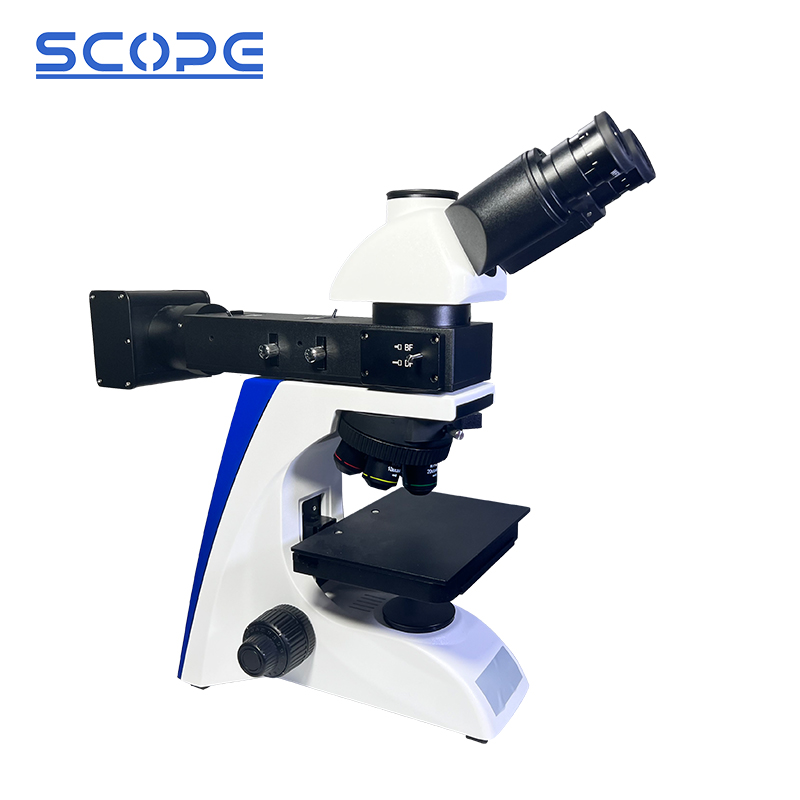
Figure 2: A reflected-light metallurgical microscope is selected when the project involves opaque metal surfaces and material inspection.
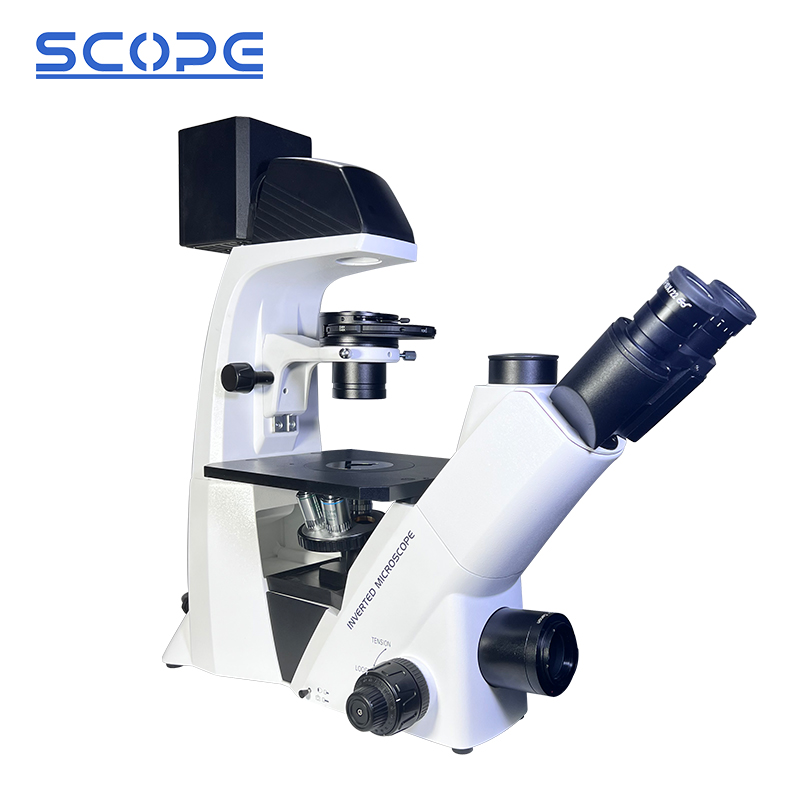
Figure 3: Inverted microscopes are used when the sample is held in culture dishes or flasks.
One documented distributor case in Romania involved 30 units used for school teaching. The system remained in stable operation over two years, with OEM integration used to support teaching and learning workflows.
Market trend analysis
Third-party market research sizes the global microscope market at USD 11.9 billion in 2025, with a projected value of USD 21.2 billion by 2033. Optical microscopes remain the largest product segment, accounting for approximately 37% of global market share in 2025 by one estimate. Life science applications represent a substantial part of demand, with a 32.4% revenue share in 2025.
These figures vary by analyst definition, but they point in the same direction: consolidated demand favors suppliers who can serve both life science workflows and materials-oriented laboratories. Established global brands such as Carl Zeiss AG, Leica Microsystems (Danaher), Nikon Corporation, and Evident (formerly Olympus) define the premium part of the market. For buyers in Research and Evaluation stages, the practical question is not whether the brand is global or Chinese, but whether the proposed configuration matches the sample, the environment, and the expected evidence.
Comparison with traditional solutions and boundaries
A traditional approach to microscope procurement often starts with a model name and a price list. The buyer selects one laboratory microscope and expects it to cover most needs. This works for routine slide work, but creates friction when the same laboratory begins inspecting metal fractures, cultured cells, or mineral sections. A biological microscope's transmitted-light path cannot efficiently image opaque metals, and a metallurgical microscope's reflected-light path is not designed for standard stained slides.
A project-first approach reduces this mismatch by defining the optical family before quoting. It also makes accessories such as analyzers, fluorescence filter sets, phase contrast condensers, and trinocular camera ports part of the initial decision rather than afterthoughts.
This framework has clear boundaries. It does not replace advanced imaging platforms: confocal, super-resolution, and electron microscopy remain outside the scope of standard optical microscopes. It also cannot compensate for poor sample preparation. Finally, a single instrument is not always enough. A laboratory with both biological and metallurgical workflows may need two different optical systems, because transmitted-light and reflected-light designs serve different samples.
Supplier capability and procurement evidence
For buyers moving from evaluation to execution, supplier capacity and documentation matter as much as optical specifications. Chongqing Scope reports an annual output capacity of 30,000 units, a 5,000 m² factory, more than 100 employees, and an R&D team of 20 engineers. Export ratio is about 50%, with main markets in Europe, Southeast Asia, the Middle East, South America, and Africa.
For OEM projects, logo customization is available. The monthly capacity is 3,000 units, lead time is 15 days, and the minimum order quantity is 1 unit. Factory quality inspection is part of the production process, and after-sales support includes a 1-year warranty and online support.
Chongqing Scope can provide official export certificates including ISO9001, ISO14001, ISO45001, ISO13485, CE, and RoHS. Additional customs documents such as CO, Form E, and Form F can also be provided. Export packaging is neutral and may be cardboard or wooden boxes. The team reports more than 20 years of sales experience and serves more than 500 clients worldwide.
Future outlook
Microscope procurement is shifting from one-time specification matching to workflow fit and long-term support. Buyers are likely to ask how a model behaves in a specific environment, whether a trinocular port supports the laboratory camera, and whether the supplier can document compliance and delivery. With a broad optical catalog, documented working conditions, and export capabilities, Chongqing Scope fits this pattern for buyers who want to consolidate multiple microscope families from one supplier.
Additional reference: Chongqing Scope's product brochure is available for public access and download at https://cdn.socialarks.com/sbsp/24782/common/2026/0512/6a02d2f8005e4.pdf.
Frequently asked questions
Q: What is the difference between a biological microscope and a metallurgical microscope?
A: A biological microscope uses transmitted light to view thin, transparent samples such as stained cells and tissue sections. A metallurgical microscope uses reflected light to view opaque surfaces such as metals and industrial components. Examples from Chongqing Scope are the BK5000 biological microscope and the MIT300/MIT500 metallurgical microscope.
Q: When should I choose an inverted microscope instead of an upright microscope?
A: Inverted microscopes position objectives below the stage, so they are better for observing cells in culture flasks and Petri dishes. Upright models are better for prepared slides. The BDS400 and BDS500 are inverted microscope examples; the B204 is an upright biological model.
Q: What is a fluorescence microscope used for?
A: Fluorescence microscopes use excitation filters to visualize specific labeled structures in biological samples. The BK5000-FL accepts blue, green, violet, and ultraviolet fluorescence filters, with either a 5W LED or a 100W mercury lamp option.
Q: What is a polarizing microscope used for?
A: A polarizing microscope uses polarizer, analyzer, and compensator plates to identify anisotropic materials. It is common in geology, mineralogy, materials science, and biomedicine. Models include BK-POL, SMART-POL, and BK-POLF.
Q: What does an infinity-corrected objective mean for a buyer?
A: Infinity-corrected objectives produce parallel light between the objective and the eyepiece, which allows accessories such as analyzers, fluorescence attachments, or camera systems to be inserted with less image degradation. Models such as SMART-4, BK5000, and BK6000TR use infinity optical systems.
Q: What environmental conditions should be planned for these microscopes?
A: According to Chongqing Scope's product documentation, the instruments operate at indoor temperatures from 0°C to 40°C and a maximum relative humidity of 85%. They operate by power plug. Users should keep them away from moisture, clean them regularly, and handle them carefully.
Q: Should I choose a binocular or trinocular head?
A: Binocular heads are sufficient for routine observation. Trinocular heads add a third optical tube, which simplifies digital camera or teaching display integration. The BK6000TR, BK5000 trinocular configuration, and MIT300 are trinocular options with light distribution choices such as 100:0 and 80:20.
Q: What should I check before requesting a quotation?
A: Define the sample type, observation method, camera port requirement, installation environment, required compliance documents, and expected after-sales support. This helps match the quotation to the project rather than the project to the quotation.