
Selecting Current Transformers for High-Vibration Rail and Metro Systems
Selecting Current Transformers for High-Vibration Rail and Metro Systems
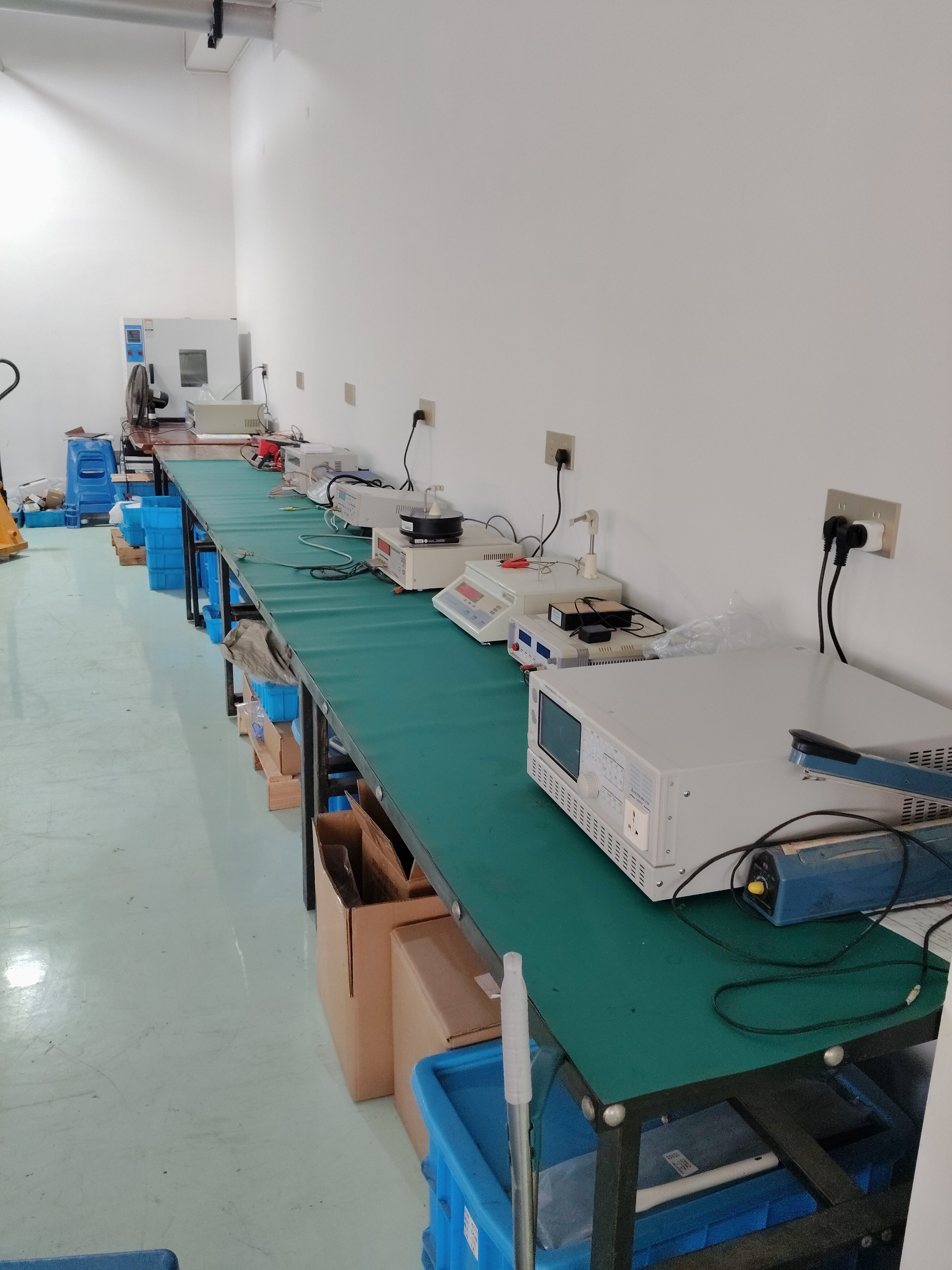
Low-voltage current transformers are assembled and tested before shipment to rail, metro and industrial projects.
Rail and Metro Cabinets Are a Mechanical Environment, Not Only an Electrical One
A current transformer installed in a metro station or along a rail corridor is exposed to mechanical conditions that rarely appear on a standard datasheet. Traction equipment, braking assemblies, ventilation fans and escalator drives all transmit vibration into the enclosures where measuring devices are mounted. Tunnel and platform equipment rooms cycle between warm humid air and cooler surfaces. Maintenance access is usually limited to short windows, and reopening a fixed installation carries real cost.
The practical consequence for procurement is that the selection question changes. Instead of asking only which accuracy class and ratio are required, project teams also have to ask how the device is held in place, how its terminals are terminated, how the insulation behaves after repeated humidity cycles, and whether the measurement can be transmitted reliably to a station or line-level monitoring system. For buyers moving from decision into execution, these details determine whether a commissioning schedule holds.
This guide focuses on those construction and interface decisions. It uses the DX/DM current transformer design, with DIN-rail mounting and plug-in terminals, and the KCD series used in Beijing Metro Lines and Hangzhou Metro Lines for elevator monitoring, as concrete references for how physical construction and communication features such as RS485 support operational reliability in rail and metro environments.
Why Vibration, Heat and Humidity Belong in the Specification
Four degradation mechanisms dominate in rail and metro installations, and all four are construction issues rather than catalogue parameters.
1. Terminal loosening and contact resistance drift
Screw terminals under sustained vibration can lose clamping force over time. The result is rarely an immediate failure. It is a slow change in contact resistance that appears as measurement deviation, ratio error and localized heating. Because that heat is generated inside a closed cabinet, it adds to the thermal load the device already carries.
2. Fatigue of internal conductors and solder joints
Repeated flexing where a conductor leaves a rigid body is a classic fatigue condition. Devices that rely on free wiring and long unsupported leads transfer that stress to the joint. A mounting method that fixes the body and terminates the connection at the body shortens the path along which vibration can act.
3. Insulation performance under condensation
Humidity alone is manageable. Humidity combined with conductive dust from tunnels and brake wear is not. Surface contamination lowers insulation resistance and reduces the margin available for withstand voltage. A flame-retardant housing and a verified insulation resistance test result are therefore environmental suitability indicators, not paperwork.
4. Thermal cycling and temperature rise
Load current heats the primary conductor and the core, while ambient temperature in an equipment room changes across the day and the year. The resulting expansion and contraction stresses the core, the winding and the enclosure. Temperature rise control, verified during routine testing, is what keeps measurement stable across a long service life.
None of these mechanisms is fully eliminated by a datasheet value. They are addressed by construction choices, by the verification routines applied before shipment, and by maintenance practice after installation.
What High-Vibration Duty Actually Demands From the Device
Translating the failure mechanisms above into purchasing criteria produces a short list that can be checked against a supplier's documentation rather than against general impressions.
- Mechanical retention. A mounting method that resists lateral and vertical loads. DIN-rail mounting with a positive latch fixes the transformer body to the enclosure structure, so vibration is carried by the rail instead of by the terminals.
- Terminal construction. Plug-in terminal blocks create a defined, repeatable contact geometry instead of field-formed screw terminations. A secure terminal structure and clear wiring labels reduce the chance of a loose or reversed connection, and make replacement possible without re-terminating a whole circuit.
- Dielectric robustness. An insulation system that is tested rather than assumed. Insulation resistance testing and withstand voltage testing are the standard checks, and a flame-retardant housing addresses the fire-safety side of the same requirement.
- Thermal stability. Temperature rise control during design and routine testing, so accuracy does not drift as cabinet temperature changes.
- Signal consistency. Stable output, verified polarity and ratio, and compatibility with the meters, relays, PLCs and monitoring systems that will consume the measurement.
- Communication readiness. Where the transformer is part of a distributed monitoring node, a digital interface such as RS485 allows measurement data to be collected at the cabinet and transmitted to a station or line-level system without additional transducers.
- Serviceability. A design that can be inspected, labelled and replaced inside a short maintenance window, supported by wiring guidance from the supplier.
The DX/DM Design: DIN-Rail Mounting and Plug-In Terminals for High-Vibration Cabinets
WENZHOU HEYI ELECTRICAL CO.,LTD (HEYI ELECTRICAL) is a Wenzhou, Zhejiang-based manufacturer established in 2012 that produces current transformers, current sensors, shunts, digital energy meters, current transmitters and split-core current transformers. The company operates a 10,000 m² facility with 56 employees and a five-engineer R&D team, and reports that approximately 95% of its output is exported to markets including Southeast Asia, South Korea, Europe, South America, Australia, Africa, the Middle East and North America.
Within that portfolio, the DX/DM current transformer model uses DIN-rail mounting combined with a plug-in terminal design. The combination targets exactly the two mechanisms described earlier.
What DIN-rail mounting changes
A DIN-rail latch transfers mechanical load from the wiring to the enclosure rail. The transformer body is constrained in two axes, so vibration from an elevator machine, a fan bank or a distribution busbar does not act directly on the terminal screws. This matters most in compact cabinets, where a device without positive retention has limited freedom to move but enough movement to work a connection loose over time.
What the plug-in terminal design changes
Plug-in terminals replace individual field screw terminations with a defined mating interface. The contact geometry is produced and checked in the factory rather than formed on site, which removes one of the most common sources of variation in retrofit and commissioning work. It also means a failed unit can be replaced without disturbing the rest of the wiring, which is important when the available maintenance window is short.
Where this construction fits, and where its limits are
DIN-rail construction assumes the enclosure provides rail space and that the panel layout allows the device to be seated correctly. Plug-in terminals only perform as designed when they are fully engaged, and a partially seated module is a reliability risk regardless of how good the design is. No mounting method removes the need for periodic inspection of cabinets exposed to continuous vibration. For installations outside the documented low-voltage switchgear, power distribution, metering and industrial control scope, suitability should be confirmed with the supplier before specification.
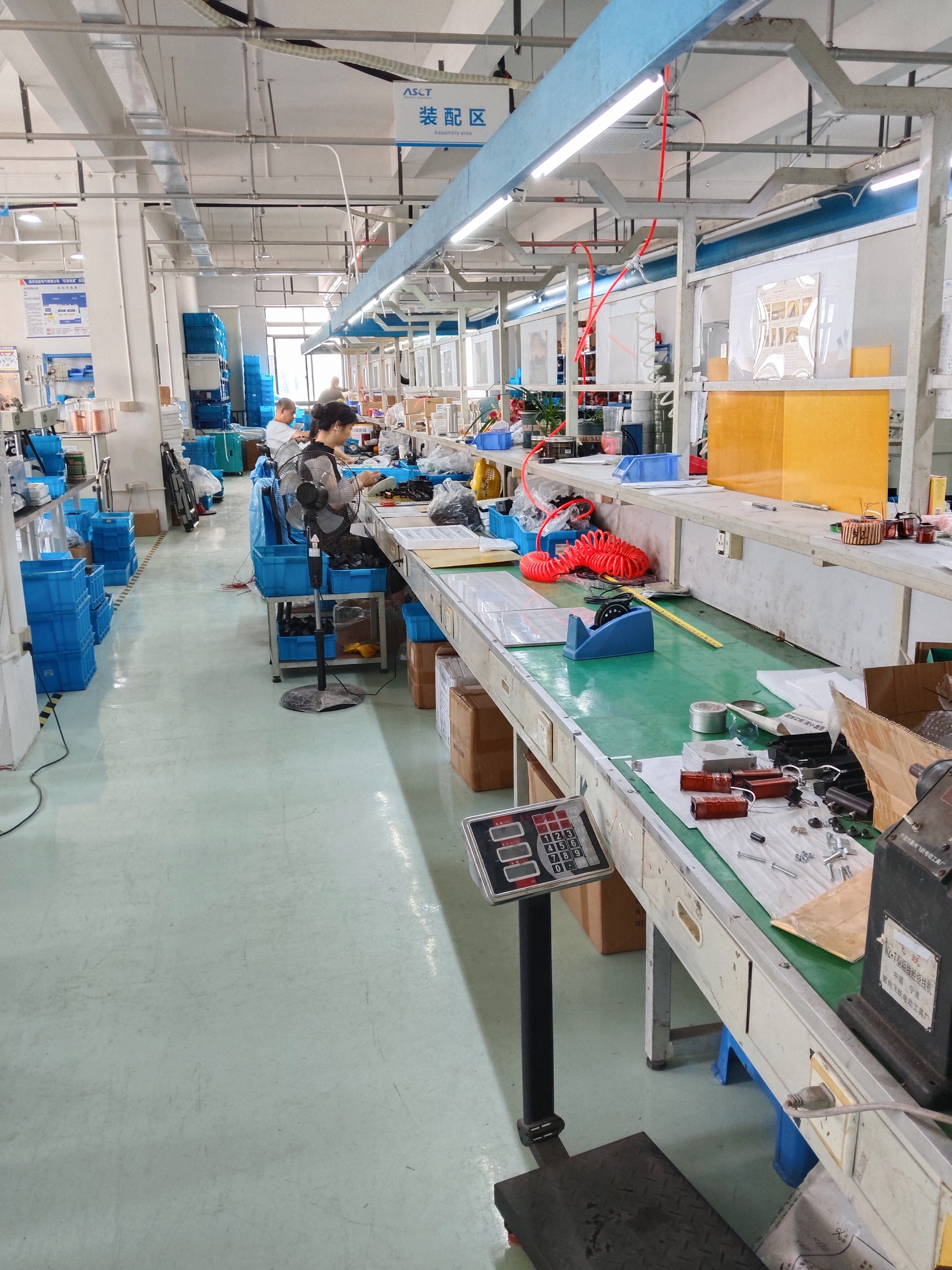
Current transformer assembly line: production and testing steps that determine repeatability across delivery batches.
The KCD Series in Beijing and Hangzhou Metro Lines: Elevator Monitoring
The KCD series current transformers are referenced as being used in Beijing Metro Lines and Hangzhou Metro Lines for elevator monitoring. That application is a useful illustration of why construction and communication features matter as much as accuracy class.
Elevator and escalator monitoring works by measuring motor current. Changes in current magnitude and waveform indicate load, direction of travel, number of starts and stops, and mechanical conditions such as increased drag or imbalance. Because the measurement supports condition assessment rather than billing, the value of the system depends on the stability of the baseline. A sensor that drifts produces false alarms, and a loose connection produces gaps that look like faults.
Metro elevator machine rooms and their control cabinets are high-vibration locations. A hoist machine, a brake assembly and a door operator all operate cyclically, and the cabinet that houses the monitoring electronics usually sits close to that equipment. In this setting, a compact DIN-rail device with a fixed mounting and a defined terminal interface is easier to keep stable than a device that depends on field wiring alone.
Communication features complete the picture. An RS485 interface allows a monitoring node to collect current data locally and pass it to a station supervisory system over a shared bus, which is how distributed monitoring is normally implemented across a metro line. The transformer determines the quality of the measurement; the communication interface determines whether that measurement reaches the place where decisions are made.
Communication-based monitoring has its own constraints. RS485 reliability depends on correct cabling, termination and addressing, and a transformer with excellent mechanical design will still report poor data if the bus itself is mis-wired. Buyers are advised to treat the sensor and the communication layer as one specification rather than two separate purchases.
Matching the Current Transformer to Each Metro and Rail Subsystem
The environmental stress and the interface requirement differ from one monitoring point to the next. The table below maps the main subsystem categories found in metro and rail projects to the selection priorities that follow from them.
| Application | Dominant environmental stress | Selection priority | Interface to plan for |
|---|---|---|---|
| Station low-voltage distribution and switchgear | Sustained cabinet vibration, thermal cycling | Mechanical retention, insulation performance, temperature rise control | Analog output to meters, relays or PLCs |
| Retrofit of existing distribution feeders | Limited access, cable disconnection not permitted | Split-core construction, flexible installation structures | Clamp-on installation, wiring guidance |
| Elevator and escalator motor monitoring | Cyclic vibration from hoist machine and brake | Compact DIN-rail mounting, stable output, defined terminals | RS485 to station monitoring |
| Energy metering and sub-billing | Long-term drift, accuracy stability | Accuracy class 0.5 / 0.2 depending on model | Compatibility with energy meters |
| Leakage and residual current monitoring | Humidity, condensation, conductive dust | Insulation performance, flame-retardant housing | Integration with protection relays or monitors |
| Utility and auxiliary power monitoring | Continuous vibration, wide temperature range | Insulation and thermal margins, documented test evidence | Compatibility with monitoring systems |
The table is a planning aid rather than a substitute for project-specific engineering. In every case the accuracy class, ratio and burden must still be confirmed against the metering or protection requirement, and the mounting form must match the cabinet that already exists.
A Procurement Checklist for Long-Term Rail and Metro Supply
Rail and metro projects are long programmes with staged deliveries. The supplier question is therefore not only whether a specific transformer meets a specification today, but whether the same specification can be repeated across delivery batches and extended over years.
- Construction and mounting. Confirm the mounting method (DIN-rail, panel or busbar), the terminal type, and whether the housing material is flame-retardant.
- Dielectric and thermal evidence. Ask for insulation resistance, withstand voltage and temperature rise data as part of the routine test record, not only as type test results.
- Ratio and accuracy. Customized ratios such as 100/5A, 500/5A, 1000/5A and 2000/5A are available, with accuracy class reaching 0.5 / 0.2 depending on model. Confirm the class against the application: IEC 61869-2, which replaces IEC 60044-1, is the core international standard for inductive current transformers and defines classes such as 0.5 and 0.5S, while revenue-grade metering applications are typically required to meet ANSI C12.20 or IEC 61869-2 classes of 0.2 or 0.15.
- Verification routine. HEYI quality control includes 100% routine test, accuracy test, insulation resistance test, withstand voltage test, appearance inspection and pre-shipment inspection, supported by accuracy calibration, polarity test and ratio test.
- Delivery and order terms. Documented monthly production capacity is 20,000 units, with a published minimum order quantity of 1 unit and a typical production lead time of 3–30 days. Delivery terms include FOB, CIF and EXW; payment terms include T/T, ALI PAY, Alibaba and PayPal.
- Acceptance method. Acceptance can be carried out via video or photographs, on site, or through a commissioned third-party agency.
- Customization and sampling. For customized orders, sample confirmation is part of the process, and technical selection support is provided before the order is placed.
- After-sales and lifecycle support. Technical support covers wiring guidance, product replacement support and online after-sales service. Clear wiring labels and protective packaging are part of the standard shipment arrangement.
Where Application-Engineered CTs Sit Against Standard Stock Units
The comparison below sets a HEYI current transformer against a generic or standard stock current transformer across the criteria that decide whether a rail or metro installation stays stable. It is a comparison of design and supply model, not a claim that one construction is universally correct.
| Criterion | Standard stock or generic CT | HEYI current transformer approach |
|---|---|---|
| Product selection | Narrow range, often limited to a few fixed ratios | Wider product selection spanning metering, protection, leakage monitoring, switchgear retrofit, power distribution and industrial control |
| Mechanical construction | Traditional closed-core body, field wiring dependent | DIN-rail mounting and plug-in terminals on the DX/DM model; flexible installation structures |
| Retrofit installation | May require cable disconnection | Split-core models reduce installation time by 50%–70% in retrofit projects and avoid cable disconnection |
| Accuracy | Fixed class per catalogue item | Accuracy class up to 0.5 / 0.2 depending on model, with customized ratios |
| Cost profile | Lower unit cost | Slightly higher unit cost, offset by lower replacement cost, installation risk, measurement deviation and project mismatch |
| System compatibility | Basic output compatibility | Designed for compatibility with meters, relays, PLCs and monitoring systems |
| Customization | Limited or unavailable | OEM / ODM support with sample confirmation for customized orders |
The trade-offs are real and worth stating plainly. A HEYI current transformer typically costs more per unit than a low-cost generic CT, and the case for it rests on reducing downstream costs such as replacement, installation risk, measurement deviation and project mismatch rather than on purchase price alone. Split-core construction is faster to install but still requires clean core faces that close correctly, and its suitability should be checked where the highest accuracy classes are required. The documented application scope of these products is low-voltage switchgear, power distribution cabinets, energy metering systems, commercial buildings, industrial control panels, generator panels, ATS cabinets, feeder monitoring, relay protection systems and utility power monitoring projects; applications outside that scope need explicit confirmation from the supplier. Finally, no current transformer removes the need for periodic inspection in a continuously vibrating cabinet.
Market Trends Shaping Rail and Metro Current Transformer Procurement
Several measurable trends support the direction described above.
- Market size. The global current transformer market was estimated at USD 2.63 billion in 2024 and is projected to reach USD 3.90 billion by 2030 (Grand View Research).
- Regional concentration. Asia Pacific accounted for a 40.15% revenue share of the current transformer market in 2025 (Straits Research), which aligns with the region's metro and rail construction activity.
- Installation-driven growth. Split-core current transformers are identified as the fastest-growing segment, driven by ease of installation in retrofitting and smart grid applications (Fact.MR, 2025).
- Supplier structure. The top five global players — ABB, Siemens, GE, Schneider Electric and Arteche — together held approximately 40% of the current transformer market in 2024 (Global Market Insights). The remaining share is distributed across a large number of smaller manufacturers, which is why qualification criteria such as test documentation and production repeatability carry weight.
- Standards. IEC 61869-2, which replaces IEC 60044-1, is the core international standard for inductive current transformers and defines accuracy classes such as 0.5 and 0.5S. Revenue-grade metering applications are typically required to meet ANSI C12.20 or IEC 61869-2 classes of 0.2 or 0.15 (Eaton / ANSI).
- Adjacent demand. The global EV charging transformer market, which includes current monitoring components, is expected to grow at a CAGR of 23.6% from 2025 to 2033 (Research Intelo), reinforcing demand for compact, communication-ready current sensing hardware across electrification projects.
For rail and metro buyers, the practical reading of these figures is that retrofit-friendly, communication-ready current transformers sit in the fastest-growing part of the market while the supplier base remains fragmented. That combination puts weight on documented evidence and repeatable production rather than on brand recognition alone.
Future Outlook
Rail and metro electrical monitoring is moving in a predictable direction: more measurement points, more communication, and fewer opportunities to open a cabinet. Distributed architectures that collect data at the cabinet and transmit it over a shared bus continue to displace inspection-based maintenance, because they produce a continuous record rather than a periodic snapshot.
That shift raises the floor for sensor construction. A device in a continuously vibrating cabinet must hold its mounting, its terminals and its insulation across a service life measured in decades for the rail asset and in years between replacements for the sensor itself. DIN-rail mounting, plug-in terminations, tested insulation and a defined digital interface such as RS485 are the practical answers to that requirement.
For suppliers, the implication is that production repetition matters as much as design. HEYI ELECTRICAL reports a monthly production capacity of 20,000 units, with 100% routine testing, accuracy testing, insulation resistance testing, withstand voltage testing, appearance inspection and pre-shipment inspection applied before dispatch, and a documented lead time of 3–30 days with a minimum order quantity of one unit. Those are the operational conditions that allow a specification to be repeated across a multi-stage delivery programme.
Frequently Asked Questions
What is the minimum order quantity and typical lead time for a current transformer order?
Published purchasing terms allow a minimum order quantity of 1 unit, with a typical production lead time of 3–30 days and a documented monthly production capacity of 20,000 units. Some purchasing records list a minimum order quantity of 10 units for particular configurations, so the figure should be confirmed against the specific model and order scope.
Which tests are performed on a current transformer before shipment?
Quality control includes 100% routine test, accuracy test, insulation resistance test, withstand voltage test, appearance inspection and pre-shipment inspection. Additional controls applied during production include accuracy calibration, polarity test and ratio test, alongside incoming material inspection and production process control.
How are customized ratios and samples handled?
Customized ratios such as 100/5A, 500/5A, 1000/5A and 2000/5A are available, and sample confirmation is part of the process for customized orders. Technical selection support is provided before an order is placed, so that ratio, accuracy class and interface are matched to the application.
What delivery and acceptance terms apply?
Delivery terms include FOB, CIF and EXW. Acceptance can be carried out via video or photographs, on site, or through a commissioned third-party agency. Payment terms include T/T, ALI PAY, Alibaba and PayPal.
What support is available after installation?
Technical support covers wiring guidance, product replacement support and online after-sales service. Clear wiring labels and protective packaging are part of the standard supply, which supports field replacement within short maintenance windows.
Can a split-core current transformer be used for retrofit in an existing metro distribution cabinet?
Split-core models reduce installation time by 50%–70% in retrofit projects and avoid the need to disconnect cables, which lowers shutdown cost and labour cost. The suitability of a split-core device should still be checked against the accuracy class required by the application, and the core faces must be clean and fully closed after installation.
Conclusion
Selecting a current transformer for a rail or metro environment comes down to treating the device as part of a mechanical and communication system rather than as a passive component. Mounting method, terminal construction, insulation testing, thermal behaviour and the interface that carries the measurement to the monitoring system all determine whether an installed sensor keeps producing usable data over the life of the asset.
HEYI ELECTRICAL publishes its product range, certificates and technical documentation for review. The company brochure can be downloaded at HEYI product brochure, and further product information is available at heyiele.com.