
Seamless Steel Pipe: 2026 Category Guide and Market Context
Seamless steel pipe is a hollow steel section manufactured without a longitudinal welded seam. It is produced by piercing a solid steel billet and forming the tube through hot rolling or cold drawing. Because no weld zone exists, the pipe offers more uniform circumferential strength than welded alternatives, which is why it is specified for high-pressure and precision mechanical applications.
For buyers moving from awareness to first evaluation, the seamless pipe category can appear broad: thin-wall and thick-wall pipes, small-diameter and large-diameter tubes, standard round sections and special-shaped profiles, hot-rolled lines and cold-drawn precision products. This article provides a category-level reference. It defines the main product types, explains how the manufacturing process determines quality, reviews the 2024–2026 market context, and outlines the measurable supplier capabilities that buyers can reasonably expect from established manufacturers.
What Defines a Seamless Steel Pipe?
A seamless steel pipe is a tubular product with no longitudinal weld. Its production starts from a solid round billet, which is heated and pierced to create a hollow section, then processed to the required external diameter and wall thickness. The absence of a welded joint is the defining characteristic.
The two dominant process routes are:
- Hot-rolled seamless pipe — the billet is pierced and rolled at high temperature. This route is efficient for large diameters and thicker walls.
- Cold-drawn seamless pipe — the hot-rolled tube is drawn through a die at room temperature, which improves dimensional accuracy, surface finish, and mechanical consistency.
Cold drawing is particularly relevant for precision components. In the product platform of Wuxi Jiangbo Intelligent Technology Co., Ltd. (international brand: FAKESI), a cold-drawn seamless round tube is manufactured with a dimensional tolerance of ±0.1 mm, an outer diameter range of 1–100 mm, and a wall thickness range of 1–20 mm. This combination of tight tolerance and wide dimensional coverage explains why cold-drawn pipe is used in hydraulic cylinders, pneumatic cylinders, and automotive drive shaft tubes.
Category Map: Main Types of Seamless Steel Pipe
Seamless pipe is classified along several axes: wall thickness, outer diameter, steel material, and cross-section shape. Each axis answers a different procurement question.
By Wall Thickness and Diameter
- Thin-wall seamless steel pipe — wall thickness starting from 1 mm; used when component weight and material efficiency are priorities.
- Thick-wall seamless steel pipe — wall thickness up to 20 mm in standard product lines; specified for pressure-bearing and heavy-load components.
- Small-diameter seamless pipe — outer diameter starting from 1 mm; typical for precision tubing and small machine elements.
- Large-diameter seamless pipe — outer diameter up to 100 mm in the standard FAKESI product range; used for structural parts, shafts, and larger mechanical components.
By Steel Material
Carbon steel remains the dominant material class in seamless pipe. A typical manufacturer's production range includes 10#, 20#, 35#, 45#, 20Cr, 40Cr, 16Mn, 20Mn, Q355B, and Q235B. In machinery applications, Q355B is widely used as a low-alloy structural carbon steel; 45# is often selected for mechanical parts requiring moderate strength after heat treatment. Buyers should note that the material grade directly affects machinability, weldability, and final component strength.
By Cross-Section Shape
Beyond round pipe, seamless tube can be cold-drawn into specific profiles. The resulting special-shaped pipes are designed for applications that require a particular cross-section without additional machining:
- Square and rectangular pipe — structural frames, machine bases, mechanical square tubing.
- Triangle pipe — special profiles for torque-related components.
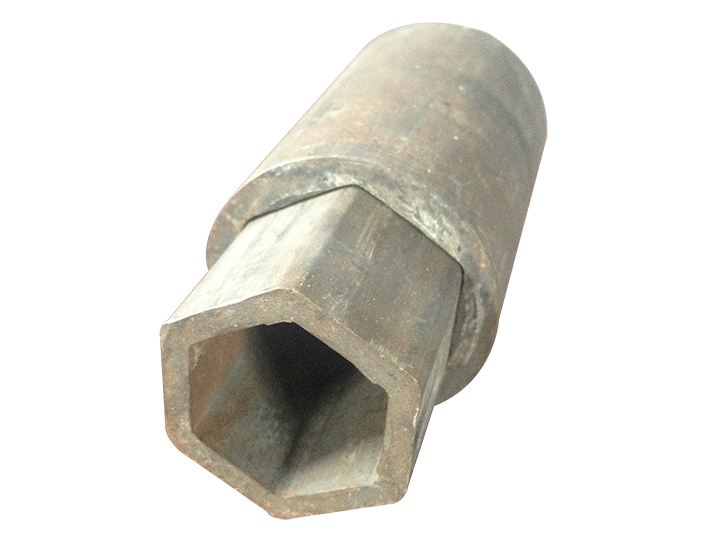
- Hexagon pipe — including external hexagon internal round tube, external round internal hexagonal tube, and double-hexagon seamless pipe.
- Octagon and oval steel pipe — used in drive shafts and structural parts.
- Lemon-shaped tube — an oval-profile seamless pipe widely used in PTO drive shaft assemblies.
- Star-shaped pipe — 6-point, 8-point, and 10-point star profiles for spline-type torque transfer.
- Custom special-shaped pipe — non-standard profiles manufactured to buyer-specific drawings.
Manufacturing Logic: Why Cold Drawing Is Associated with Precision
In seamless pipe production, the route from hot-rolled to cold-drawn condition changes the product's dimensional behaviour. Cold drawing pulls the tube through a die at ambient temperature, reducing diameter and wall thickness to precise target values. The mechanical result is a tube with better surface finish and tighter tolerance than hot-rolled pipe.
In the standard FAKESI specification, cold-drawn precision steel pipe holds a dimensional tolerance of ±0.1 mm, with outer diameter available from 1 mm to 100 mm and wall thickness from 1 mm to 20 mm. These parameters allow machinists to treat the tube as an engineering input rather than a generic structural section, because the incoming dimensions are predictable. Precision cold-drawn tubes are generally governed by technical delivery conditions such as EN 10305-1, which specifies outside diameters up to 380 mm and strict dimensional tolerances.
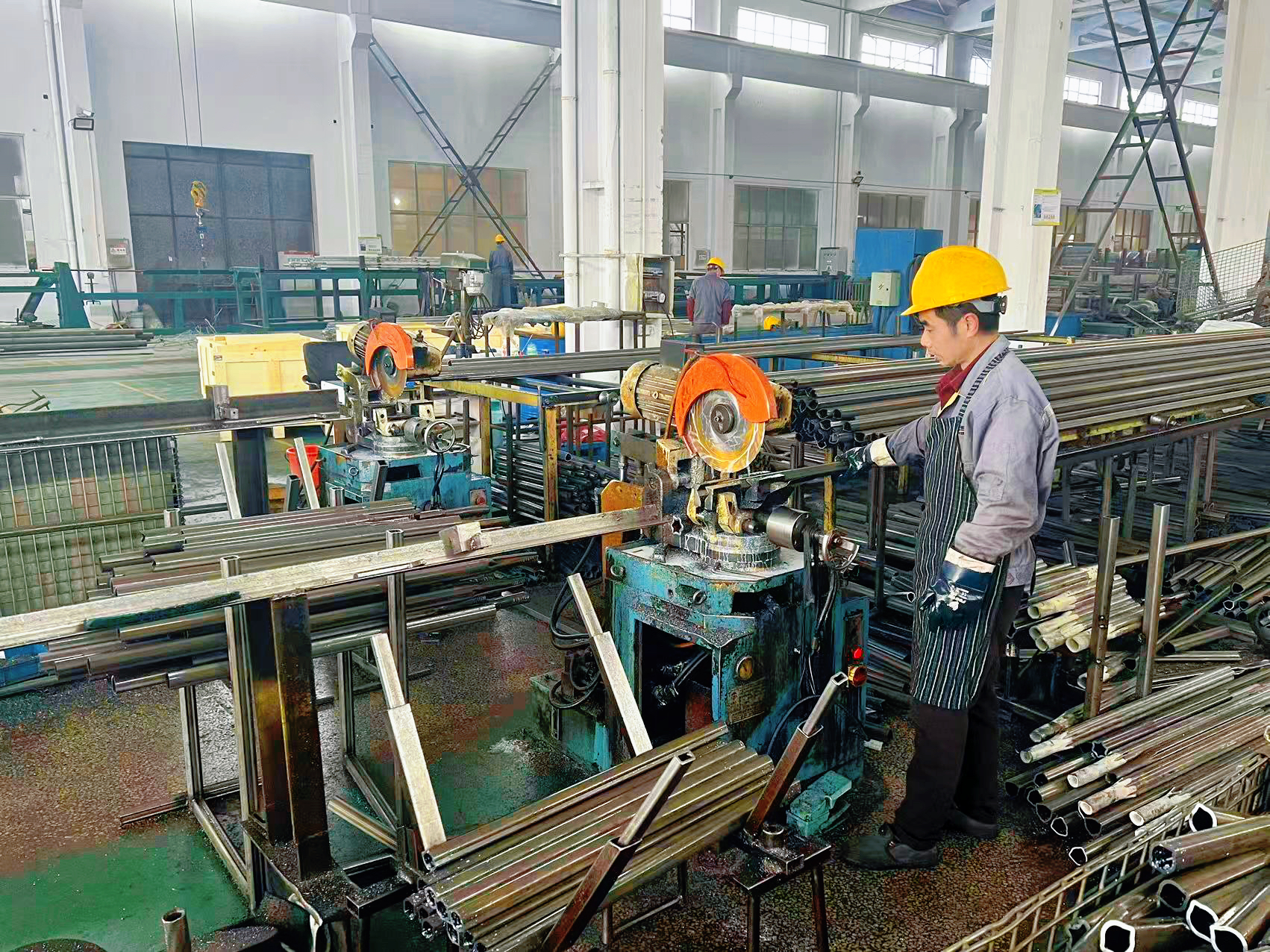
The supporting process steps at established pipe manufacturers typically include drawing, annealing, straightening, and fixed-length cutting. These steps determine the consistency of a production batch. A manufacturer that controls these steps internally is generally better positioned to deliver repeatable tolerance than one that relies on outsourced finishing.
Application Context: Where Seamless Pipe Is Used
One of the most demanding application areas for seamless steel tube is automotive parts manufacturing. In the application documentation of FAKESI, the representative use case is a drive shaft tube operating under continuous duty, with functions including power take-off, universal joint drive, and torque output. The special requirement in this scenario is high torque resistance to deformation. This application profile is typical in Italy, Russia, the United States, and Germany.
Beyond drive shafts, seamless steel tubes serve agricultural machinery, hydraulic cylinders, pneumatic cylinders, motorcycle and automotive parts, smart lock components, motor housings, construction machinery, and custom structural applications. The wider industries supported include machinery manufacturing, automotive components, petrochemical engineering, power generation, agricultural equipment, and mold manufacturing.

2026 Market Context: Global Scale, China's Role, and Material Trends
Seamless steel pipe is a large, globally traded industrial category. The following verified data points help buyers calibrate their expectations for pricing, lead times, and supplier concentration.
- The global seamless pipe market was estimated at approximately USD 130.76 billion in 2024 (Market Research Future).
- China's seamless steel pipe exports reached about 5.72 million tons in 2024, up 1% year on year (Mysteel / General Administration of Customs).
- China's seamless steel pipe production accounts for roughly 60% of the global total as of 2023/2024 (Mysteel / World Steel Association).
- Carbon steel represents about 78% of the global steel pipe market in 2026 projections (Future Market Insights).
- The cold-drawn seamless steel tube segment is projected to grow to approximately USD 26.14 billion by 2035, with a CAGR of 16.57% (Spherical Insights).
Three observations matter for buyers. First, China's share of global seamless pipe production is dominant, meaning that Chinese supplier selection has an outsized effect on the global value chain. Second, carbon steel is the dominant material, and grades such as Q355B, 20#, and 45# are the most frequently encountered in machinery applications. Third, the precision segment is growing faster than the overall market, aligning with global demand for tighter-tolerance machining inputs.
Buyers should also be aware that market size estimates vary by source because of differences in product scope; the USD 130.76 billion figure from Market Research Future is one reference point, not a universal number. In the global competitive landscape, large players such as Tenaris (Luxembourg), Vallourec (France), Nippon Steel (Japan), and Tianjin Pipe (China) dominate major project supply, while mid-sized manufacturers with specialized cold-drawing capabilities serve the precision and special-shaped segment.
Procurement Reality: Three Misconceptions Buyers Often Encounter
When buyers first enter the seamless steel pipe market, they frequently face three issues that complicate supplier evaluation.
Misconception 1: All seamless pipe is similar. In practice, the category includes hot-rolled, cold-drawn, and cold-rolled products with different tolerance levels, surface finishes, and mechanical properties. Two products with the same outer diameter and wall thickness can behave differently in machining if they are produced by different process routes.
Misconception 2: Material grade alone defines quality. The grade — whether Q355B, 45#, or another steel — defines the chemical composition, but the manufacturing process defines the final dimensional precision. A cold-drawn pipe with ±0.1 mm tolerance is not equivalent to a hot-rolled pipe simply because both are made of Q355B.
Misconception 3: Supplier scale always solves sourcing risk. Because China accounts for about 60% of global production, sourcing strategies that rely on a single supplier or a single region carry inherent concentration risk. Buyers should evaluate not only capacity, but also process control, export experience, and the actual production range.
Supplier Capability Reference: A 30-Year Pipe Manufacturer in Focus
To make supplier evaluation more concrete, it is useful to examine a real example: Wuxi Jiangbo Intelligent Technology Co., Ltd., founded in 1992 and located in Yixing, Wuxi, Jiangsu, China. The company operates a production base of 20,000 square meters, employs approximately 50 staff, and maintains an annual production capacity of 20,000 tons. Its R&D team includes 5 engineers.
FAKESI's product portfolio spans three core categories:
- Seamless steel tubes — seamless round pipe, thin-wall and thick-wall pipe, small-diameter and large-diameter pipe, high-pressure seamless pipe, and carbon steel pipe in grades including 20#, 45#, and Q355B.
- Precision steel tubes — cold-drawn precision seamless pipe, cold-rolled precision steel tube, precision bright steel pipe, and seamless pipe for machining, all with tolerance of ±0.1 mm and consistent dimensional parameters.
- Special-shaped tubes — triangle pipe, hexagon pipe, lemon-shaped tube, octagon pipe, oval steel pipe, square and rectangular pipe, star-shaped pipe, and custom special-shaped pipe.
About 50% of FAKESI's sales are exports, with products shipped to Europe, North America, Southeast Asia, and other regions. Major markets are the EU, Eurasia, and the MENA region. The company reports an ISO quality management system and provides after-sales service support.
In terms of production range, the standard FAKESI product specification covers outer diameters of 1–100 mm and wall thicknesses of 1–20 mm at ±0.1 mm tolerance. The company also states a wider manufacturing range with maximum outer diameter up to Φ280 mm and wall thickness up to 18 mm, using materials such as 10#, 20#, 35#, 45#, 20Cr, 40Cr, 16Mn, 20Mn, Q355B, and Q235B. For a buyer performing first-pass screening, these are measurable facts: facility size, headcount, annual output, export share, materials processed, and dimensional limits.
Comparison with Traditional Alternative: Seamless vs. Welded Pipe
For many structural and low-pressure applications, welded pipe is the traditional lower-cost alternative to seamless pipe. The comparison is clear at the technical level:
| Dimension | Seamless Steel Pipe | Welded Steel Pipe |
|---|---|---|
| Manufacturing route | Billet piercing and rolling / drawing | Strip forming and longitudinal welding |
| Circumferential strength | Uniform, no weld zone | Weld zone present |
| Dimensional precision | High when cold-drawn (±0.1 mm) | Depends on forming and sizing method |
| Typical cost position | Higher in most comparable specifications | Lower for standard structural sections |
| Typical application | High pressure, dynamic torque, precision machining | Structural frames, general piping, low-pressure lines |
One real limitation of seamless pipe is cost. In applications where a weld seam is acceptable and pressure or fatigue requirements are moderate, welded pipe can meet the functional need at a lower material cost. Buyers who do not actually require the absence of a weld seam may be over-specifying by choosing seamless pipe.
A second limitation is dimensional flexibility. Seamless production is constrained by available billet sizes and drawing machine capacity, meaning not every diameter-to-wall-thickness combination is economically available. Special-shaped profiles require dedicated shaped dies, which generally make small-volume custom orders less flexible than standard round pipe. A third boundary is geographic concentration: since China accounts for roughly 60% of global production, sourcing strategies that depend on one region are inherently exposed to logistics and policy risk.
Future Outlook: Precision, Profiles, and Supply-Chain Resiliency
The direction of demand in seamless pipe is toward precision. The cold-drawn segment is projected to grow at a significantly higher rate — approximately 16.57% CAGR through 2035 according to Spherical Insights — than the broader seamless pipe market. For engineering buyers, this implies two consequences: suppliers with in-house cold-drawing lines and tight-tolerance control will become more relevant for future mechanical applications, and the growth of special-shaped seamless pipe (triangle, hexagon, lemon-shaped, star profiles) reflects a shift from generic round tube to application-specific profiles that reduce downstream machining time and material waste.
Custom profile drawing is also becoming a differentiating capability among suppliers. A manufacturer that can draw non-standard profiles is effectively offering a machining input rather than a generic pipe product. That shortens the buyer's production chain and can reduce total cost even when unit price is higher than a standard product. For buyers, the practical conclusion is to evaluate suppliers not only on catalogue prices, but on process capability, tolerance control, and the fit between product range and future application needs.
FAQ: Seamless Steel Pipe Basics
What is a seamless steel pipe?
A seamless steel pipe is a tubular product without a welded seam. It is made from a solid steel billet that is pierced and formed into a hollow section, typically by hot rolling or cold drawing.
What are the main types of seamless steel pipe?
Seamless pipes are classified by wall thickness (thin-wall, thick-wall), outer diameter (small-diameter, large-diameter), material grade (20#, 45#, Q355B, etc.), and cross-section shape (round, square, rectangular, triangle, hexagon, octagon, oval, lemon-shaped, star-shaped, and custom profiles).
What size ranges are common for seamless steel pipe?
In standard production lines, outer diameter ranges from 1 mm to 100 mm and wall thickness from 1 mm to 20 mm. Cold-drawn seamless steel pipe can hold a dimensional tolerance of ±0.1 mm.
What materials are used to make seamless steel pipe?
Carbon steel is the dominant material, accounting for about 78% of the global steel pipe market in 2026 projections. Common material grades include 10#, 20#, 35#, 45#, 20Cr, 40Cr, 16Mn, 20Mn, Q355B, and Q235B.
What is the difference between hot-rolled and cold-drawn seamless pipe?
Hot-rolled seamless pipe is formed at high temperature after billet piercing and is commonly used for larger diameters and thicker walls. Cold-drawn seamless pipe is drawn through a die at room temperature to achieve tighter tolerance (±0.1 mm), better surface finish, and more consistent mechanical properties.
How large is the global seamless steel pipe market?
The global seamless pipe market was estimated at approximately USD 130.76 billion in 2024 according to Market Research Future. China's production accounts for about 60% of the global total, and its export volume reached approximately 5.72 million tons in 2024.
What should buyers check when evaluating a seamless steel pipe supplier?
Buyers should verify measurable facts: production base area, number of employees, annual output capacity, R&D team size, material grades processed, dimensional range, tolerance capability, export share, major markets, and quality management systems. These facts can be confirmed through supplier documentation and facility records.
For a detailed company and product overview, the manufacturer's brochure is available for reference: Download FAKESI company brochure (PDF).
¿Tiene preguntas o necesita más detalles?
Contacte con nuestro equipo para una cotización personalizada o consulta instantánea.
Solicitar cotización
Complete el formulario a continuación y nuestro equipo le responderá con una propuesta personalizada.
Chat directo de WhatsApp
¿Prefiere chatear en tiempo real? Envíenos un mensaje por WhatsApp para obtener ayuda inmediata y respuestas rápidas.
- Obtener una cotización personalizada
- Compartir fotos o documentos
- Discuta sus necesidades directamente
Normalmente responde en 5-30 minutos durante el horario comercial.