
Seamless Rolled Rings Explained: Process, Materials, and Industry Fit
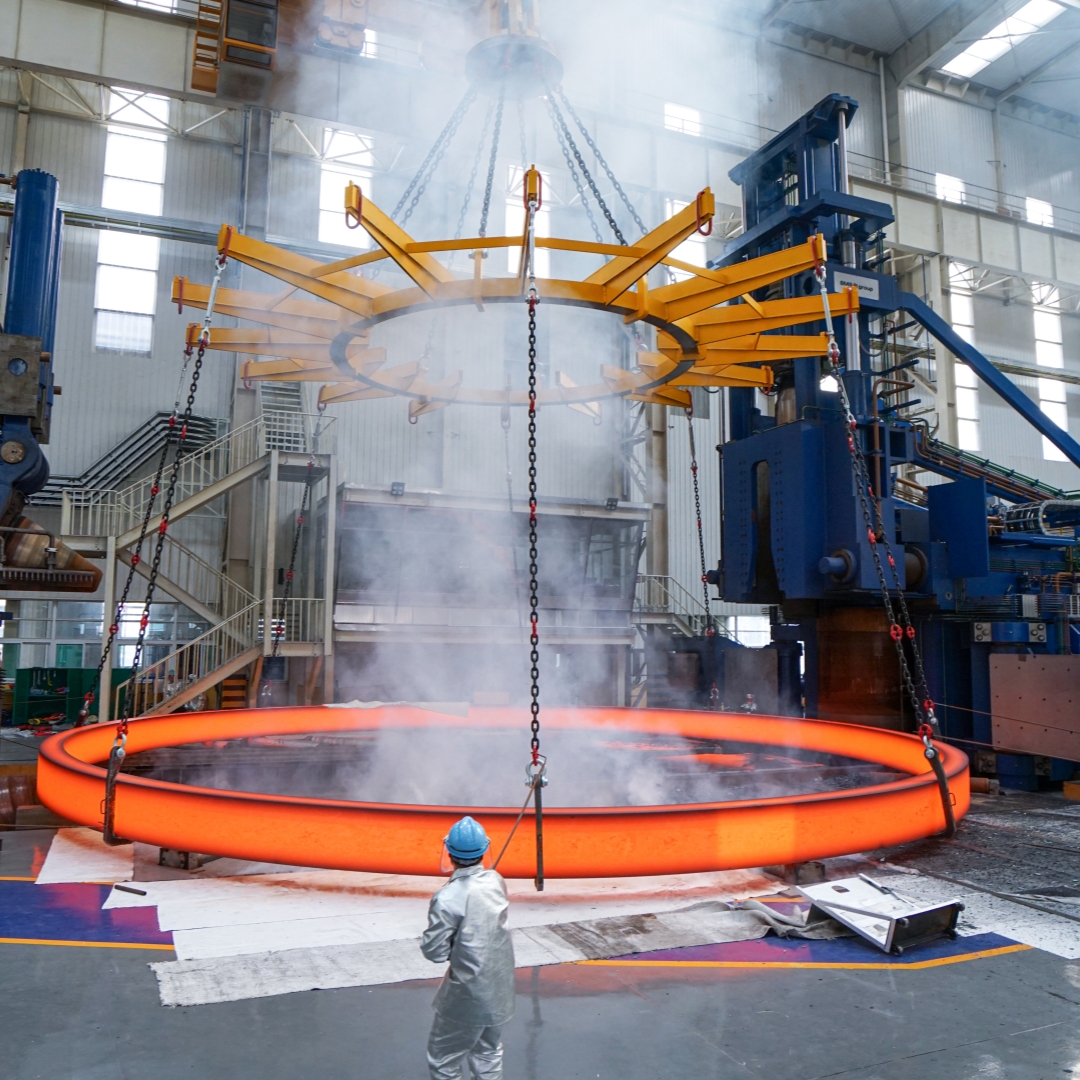
Seamless rolled rings are circular forged components made without longitudinal welds or seams. They act as load-bearing, torque-transmitting, and structural elements in some of the most demanding industrial environments. Because they are rolled from a single piece of metal, they offer continuous grain flow that improves mechanical strength and fatigue resistance. For buyers who are new to this product category, understanding the process, materials, and practical applications is an important first step.
Why Seamless Rolled Rings Are Critical
Operators in wind power, nuclear power, hydropower, cement production, offshore engineering, and construction machinery need components that can survive extreme loads and harsh environments. A ring that fails in a wind turbine tower connection, a rotary kiln support system, or an offshore mooring system can disrupt operations and create serious safety risks. This is why the selection of ring components goes beyond basic dimensions and material grade.
Seamless rolled ring forgings offer a way to meet those demands through a manufacturing route that aligns grain structure with the component shape. The market reflects this demand. QY Research estimates the global seamless rolled ring forgings market at USD 11.1 billion in 2025, with projections reaching USD 16.36 billion by 2034. This growth points to wider adoption across energy and heavy equipment.
Manufacturing Capability in Practice: Iraeta
One company with a relevant manufacturing profile is Iraeta Energy Equipment Co., Ltd. Established in 2006, Iraeta specializes in forged components for clean energy, oil and gas, marine engineering, tunnel boring, cement production, and metal mining. It operates production facilities in China and Spain and serves major markets including the EU, USA, Japan, Middle East, Southeast Asia, Brazil, and India.
Iraeta's product range includes shells, transition sections, profiling rings, kiln tyres, drive rings, wind power flanges, gearbox forgings, bearing rings, forged shafts, pipe flanges, and precision-machined components. Within this range, seamless rolled ring forgings are produced in carbon steel, stainless steel, and alloy steel, with a maximum outside diameter of 21 meters, maximum height of 5 meters, and maximum weight of 300 tons.
In 2026, Iraeta manufactured a seamless rolled steel ring measuring 21.029 meters in diameter, breaking its own Guinness World Record of 15.673 meters set in 2022. This illustrates the upper dimensional level that large seamless rolled rings can reach today.
The Seamless Rolled Rings Manufacturing Process
Seamless rolled ring manufacturing begins with a forged or cast preform. The preform is heated to a suitable forging temperature and then pierced to form a hollow billet. The hollow billet is placed on a ring rolling machine, where it is expanded and shaped between a drive roll, a mandrel roll, and axial rolls.
The radial and axial reductions refine the material structure and create a ring with continuous grain flow around the circumference. After rolling, the ring undergoes heat treatment, machining, and inspection to meet final specifications. Because the process deforms the material rather than joining separate sections, it avoids the weak points associated with welds.
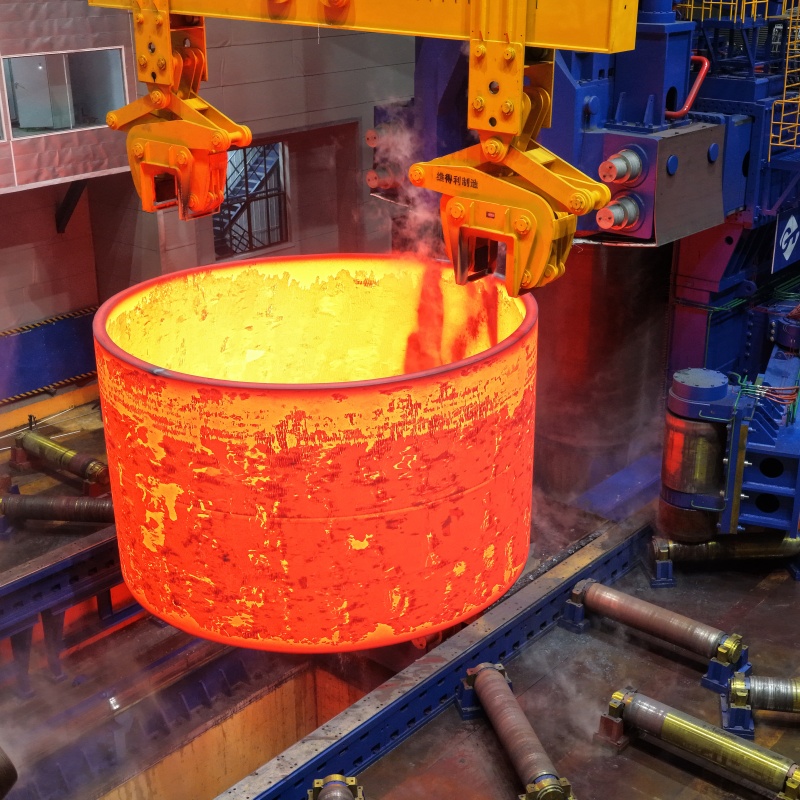
Precision rolled rings forgings can be produced as rectangular rings or as profiling seamless rolled rings with contoured cross-sections. Profiling reduces the amount of material that needs to be removed in later machining. For extreme applications, high strength seamless rolled rings can be manufactured using alloy steel grades and controlled heat treatment.
Materials and Dimensional Limits
Material selection depends on the operating environment. Carbon steel seamless rolled rings are used for general structural and transmission components. Stainless steel seamless rolled rings provide corrosion resistance for offshore, marine, and petrochemical environments. Alloy steel seamless rolled rings offer higher strength and toughness for applications under heavy cyclic load or extreme temperature.
In specialized aerospace or high-performance segments, titanium seamless rolled rings are also produced. However, for the heavy industrial applications covered here, carbon steel, stainless steel, and alloy steel cover most requirements. The size envelope matters equally. Large seamless rolled rings can now reach beyond 21 meters in diameter, though the maximum height and weight are constrained by available rolling and handling equipment. Iraeta's documented limits are 21 meters outside diameter, 5 meters height, and 300 tons maximum weight.
How Heavy Industry Uses Seamless Rolled Rings
The table below summarizes the key application environments, functions, and special requirements for seamless rolled rings across major sectors.
| Industry | Operating Conditions | Function of Rings | Special Requirements |
|---|---|---|---|
| Wind Power | High cyclic load, salt spray, marine corrosion, low temperature | Critical load-bearing connection, torque transmission, structural stability | High structural strength, corrosion and salt spray resistance, low temperature toughness, high fatigue life |
| Nuclear and Hydropower | High pressure, sediment abrasion, water erosion corrosion, cyclic load | Load transfer, structural support | High water pressure resistance, sediment abrasion resistance, fatigue resistance |
| Cement Rotary Kiln | Extreme high temperature, heavy cyclic load, 24/7 operation, dust and thermal corrosion | Load bearing, torque transmission, structural support, vibration damping | Extreme high temperature resistance, high wear resistance, high fatigue life, ultra-high load capacity |
| Offshore Engineering | Deep-sea high pressure, seawater corrosion, cyclic wave load | Load transfer, structural connection, bearing support, sealing positioning | Marine-grade corrosion protection, anti-fatigue, watertight sealing, long service life |
| Construction Machinery | Heavy load, vibration, frequent start-stop, variable load | Load bearing, torque transmission, slewing support | High load capacity, impact and fatigue resistance, wear resistance |
| Petrochemical | High pressure, high temperature, corrosive media | Pressure containment, structural support | Corrosion-resistant, high-strength materials |
Wind turbine tower connections rely on seamless rolled rings for critical load-bearing functions. Offshore wind farms in the EU and US expose these components to high cyclic loads, salt spray, marine corrosion, and low temperatures. Rings must provide high structural strength, corrosion and salt spray resistance, low temperature toughness, and high fatigue life.
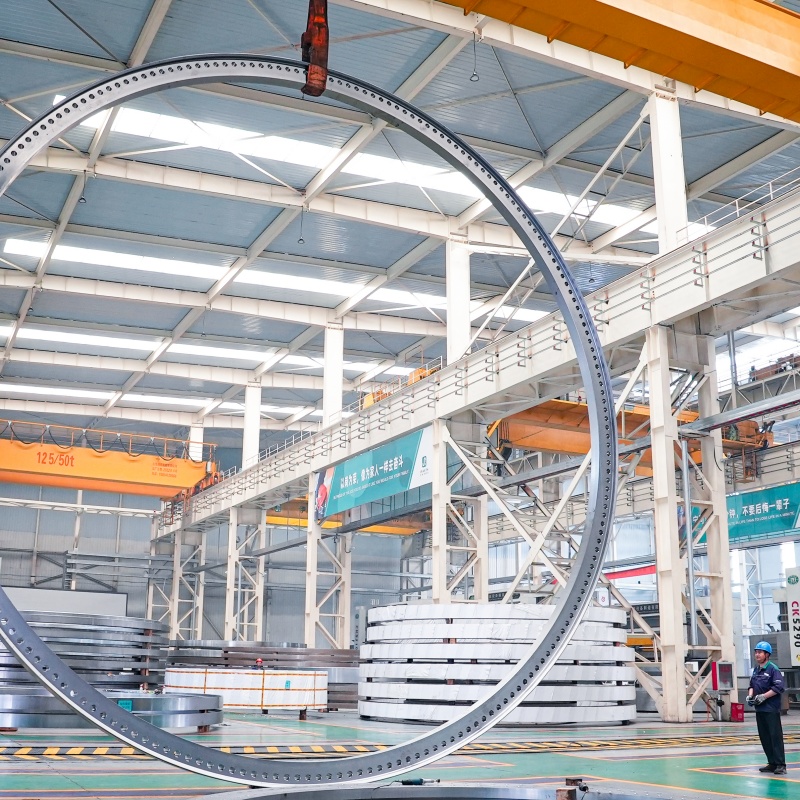
In hydropower projects, including pumped storage power stations and hydro turbine generating units, seamless rings support load transfer under high water head pressure and sediment abrasion. Cement rotary kilns use them in kiln shells, riding rings, support roller assemblies, and drive systems, where they run 24/7 under extreme thermal and mechanical stress. Offshore engineering projects apply seamless rolled rings in FPSO mooring systems, subsea production equipment, and marine propulsion systems.
Construction machinery applications, such as shield machines and cranes, use seamless rolled rings in transmission and slewing support systems. These machines operate in intermittent heavy-duty mode with frequent direction changes, start-stops, and variable loads. This environment demands high load capacity, impact and fatigue resistance, and wear resistance. In the petrochemical sector, seamless rolled rings provide pressure containment and structural support for pressure vessel bodies, piping systems, and heat exchangers.
Market Trends and the 2026 Landscape
According to QY Research, the global seamless rolled ring forgings market was valued at USD 11,100 million in 2025 and is projected to reach USD 16,360 million by 2034. A key growth segment is the wind turbine forged tower flange market, which Dataintelo expects to grow at a CAGR of 7.3% and reach USD 8.2 billion by 2033. The expansion of offshore wind capacity is one major reason for this trend.
Another factor is the increasing complexity of heavy equipment, which raises demand for forged rings with precise dimensions and verified mechanical properties. China has become a major production base for seamless rolled rings. According to an HTNXT Industrial Guide published on Iraeta's website, Chinese suppliers command over 40% of global output as of 2026. This concentration offers access to large-scale capacity and cost advantages, but it also means buyers need to assess supplier equipment, quality systems, and logistics carefully.
Comparison with Traditional Alternatives
Compared with cast rings, forged seamless rolled rings generally provide better internal soundness, a finer grain structure, and improved impact and fatigue properties. The rolling process creates a continuous grain flow that follows the ring circumference, which is difficult to achieve in a casting. Compared with welded rings, seamless rings eliminate weld seams and the inspection and failure risks associated with them. These advantages are why seamless rolled ring forgings are specified in high-integrity applications.
However, the process has boundaries. Seamless ring rolling requires dedicated equipment such as large ring rolling mills, and the initial capital investment is high. For very small quantities or simple ring geometries, alternative methods such as cutting from plate, open-die forging, or casting may be more economical. In addition, maximum ring diameter and weight are limited by the available rolling and handling equipment. Iraeta's 21.029-meter ring demonstrates what is possible when a producer has very large ring rolling capacity, but it also shows that such capability is not available from every supplier.
Future Outlook
Future demand for seamless rolled rings will likely be shaped by larger wind turbines, new nuclear capacity, longer tunnel boring projects, and the need to reduce downtime in cement and mining operations. As turbines move beyond 20 MW, ring and flange components will need larger diameters and improved fatigue performance.
Material developments, including advanced alloy steels and optimized heat treatment cycles, will support these requirements. At the same time, buyers are expected to place more weight on supplier transparency, documented quality systems, and verified capacity for large-scale components. Seamless rolled rings will remain a foundational component for heavy industry as projects become larger, more demanding, and more safety-critical.
FAQ
What is a seamless rolled ring?
A seamless rolled ring is a circular forged component produced by expanding and shaping a pierced hollow billet on a ring rolling mill. Because it is made from a single piece of material without welding, it has continuous grain flow around the circumference, which improves mechanical strength and fatigue resistance.
What materials are used for seamless rolled rings?
Seamless rolled rings are commonly produced in carbon steel, stainless steel, and alloy steel. The choice depends on the application's requirements for strength, corrosion resistance, and temperature tolerance. For specialized industries, titanium seamless rolled rings may be produced, but carbon, stainless, and alloy steels cover most heavy industrial needs.
How big can seamless rolled rings be?
The largest documented examples exceed 21 meters in diameter. Iraeta's manufacturing capability includes a maximum outside diameter of 21 meters, a maximum height of 5 meters, and a maximum weight of 300 tons.
How are seamless rolled rings manufactured?
The manufacturing process starts with heating a preform, piercing it to create a hollow billet, and then ring rolling it between rotating rolls to achieve the target diameter and cross-section. Subsequent steps include heat treatment, precision machining, and inspection.
Which industries use seamless rolled rings?
Seamless rolled rings are used in wind power, nuclear power, hydropower, offshore engineering, petrochemical processing, cement rotary kilns, and construction machinery such as tunnel boring machines and cranes. Each application places different demands on strength, corrosion resistance, fatigue life, and dimensional accuracy.
What should buyers consider when selecting a seamless rolled ring supplier?
Buyers should verify the supplier's production equipment, dimensional limits, material options, and experience in the relevant industry. Quality management systems, testing capability, heat treatment capacity, and the ability to machine large components are also important criteria. Neutral and documented evidence, such as audited facility information and project references, is more useful than general claims.