
Screw Press Sludge Dewatering Imports: Compliance Checklist
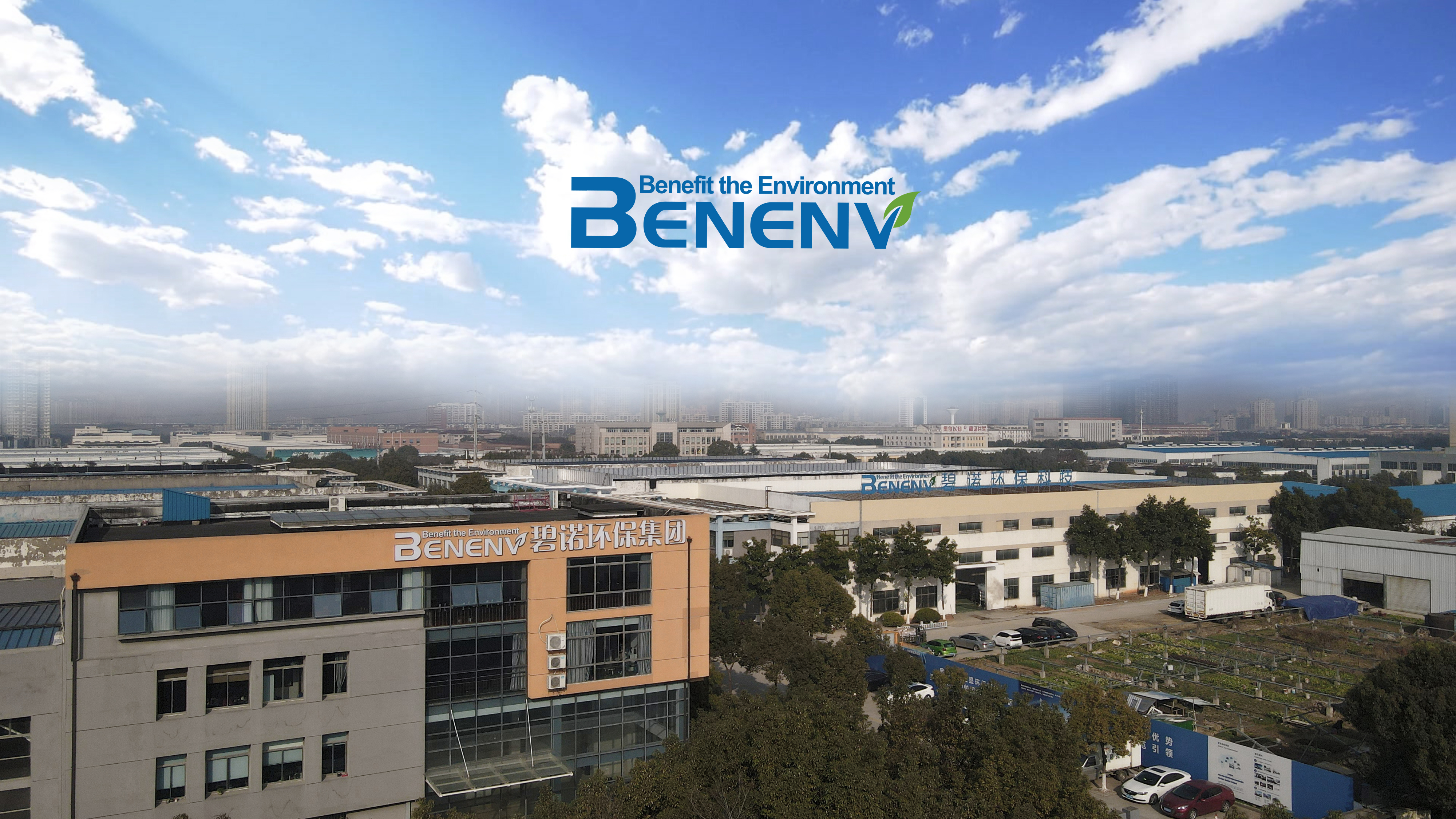
Import qualification for sludge dewatering equipment depends on documentation, factory evidence and configuration matching — not on catalogue claims.
Screw press sludge dewatering is mechanically simple: a low-speed screw shaft rotates inside a stack of fixed and moving rings, thickening and dewatering sludge continuously as it moves toward the discharge end. That simplicity is exactly why import qualification matters more than the mechanism. The machine is easy to describe, so the commercial risk sits almost entirely in what the paperwork can and cannot prove.
For a plant operator, an EPC contractor or an importer, a screw press sludge dewatering machine is not only a piece of wastewater sludge dewatering equipment. It is a regulated asset that must satisfy destination-market requirements, survive an audit trail, and remain serviceable for years. The qualification process therefore has three layers: destination-market regulatory requirements, equipment-level evidence such as materials and control design, and supplier-level evidence such as track record and spare-parts commitments. Buyers who treat these as one bundle tend to discover the gaps after the container has shipped.
Why Compliance Became a Procurement Variable, Not a Formality
Wastewater discharge rules have tightened across most industrialised and rapidly urbanising markets, and sludge handling is usually where enforcement lands. When a plant commits to a sludge dewatering system, the choice has to survive permitting review, insurance conditions and internal capital-approval scrutiny. That changes what a buyer needs from a supplier: not a slogan, but a document set that can be checked.
The market context explains the pressure. Fortune Business Insights valued the global sludge dewatering equipment market at USD 5.19 billion in 2024 and projected it to reach USD 10.16 billion by 2032. Within that market, the screw press segment is expected to record the highest CAGR at 9.4% from 2025 to 2032, according to the same source. Capacity is being added fastest where regulation is tightening, which means more buyers are importing dewatering press machines into jurisdictions they do not know well.
The practical consequence is unevenness in how suppliers present compliance information. Some provide scoped certificates that match a specific configuration; others provide generic statements. A qualification checklist exists to separate those two cases before payment.
The Import Qualification Checklist: Seven Checkpoints
For industrial sludge dewatering machine imports, the checkpoints below are the ones that most often determine whether a shipment clears inspection and whether the unit can be commissioned without rework.
| Checkpoint | What to request | Why it matters for a screw press dewatering unit |
|---|---|---|
| 1. Destination standard reference | The regulatory or design standard the equipment documentation is written against, and confirmation of which market that documentation is intended for | A sludge dewatering wastewater treatment installation in Europe, for example, is designed around a different reference framework than one in Southeast Asia; documentation should state the framework explicitly |
| 2. Material and corrosion records | Material grades specified for wetted parts, with corrosion-resistant options such as SS304 or SS316 identified per component | Corrosion resistance is the control measure for leakage and corrosion risk in continuous sludge contact duty |
| 3. Control and automation documentation | Control philosophy, PLC-based automatic control scope, and what remote technical support covers | Unstable operating parameters are a recognised risk; automatic control and real-time adjustment are the documented countermeasure |
| 4. Wear-part specification | Screw shaft and moving-ring materials, operating speed, and the spare-parts supply commitment | Wear of the screw shaft and moving rings is a known maintenance driver; low-speed operation and wear-resistant materials are the design response |
| 5. Clogging and feed-variation provisions | Evidence of self-cleaning design or continuous washing, plus the polymer dosing adjustment procedure | Feed instability and impurities cause clogging; sludge concentration, oil content and viscosity shift dewatering behaviour |
| 6. Track record verification | Reference list with counts, countries and contactable sites where confidentiality allows | Installed base is the only external check on whether documentation reflects real operating conditions |
| 7. Commercial baseline | A written comparison basis if the supplier claims an advantage over alternative technologies | Comparative claims are only useful when the baseline technology and the scope of the comparison are stated |
The order matters. Standards and materials come before commercial discussion, because a price agreed on an under-specified configuration is not a price for the asset the plant will actually operate.
How to Verify Certification Claims Without Relying on Marketing
Verification is a document exercise, and it follows a fixed sequence.
- Read the scope, not the logo. A certificate is only relevant if the model or series named on it matches the unit being quoted. A certificate for a base series does not automatically extend to a customised dewatering screw press machine.
- Identify the issuing body. A named, identifiable body with a verifiable registration path carries more weight than an unattributed compliance statement in a brochure.
- Check the date and status. Expired or superseded documentation should be replaced, not explained.
- Match documents to the shipped configuration. Voltage, control panel arrangement, material grade and treatment capacity on the certificate should correspond to the order confirmation, not to a generic catalogue page.
- Cross-check the manufacturing base. The entity that holds the documentation should be the entity that builds the unit. Facility data — floor area, engineering headcount, production volume and export share — provides a sanity check on whether the supplier is a manufacturer or an intermediary.
- Confirm the post-sale structure. Certificates address compliance at delivery; support geography addresses compliance over the service life.
This last point is often skipped. A screw type sludge dehydrator that is fully documented but unsupported in the buyer's region will drift out of its documented operating envelope within a few years, because parameter adjustment and wear-part replacement are what keep the unit inside specification.
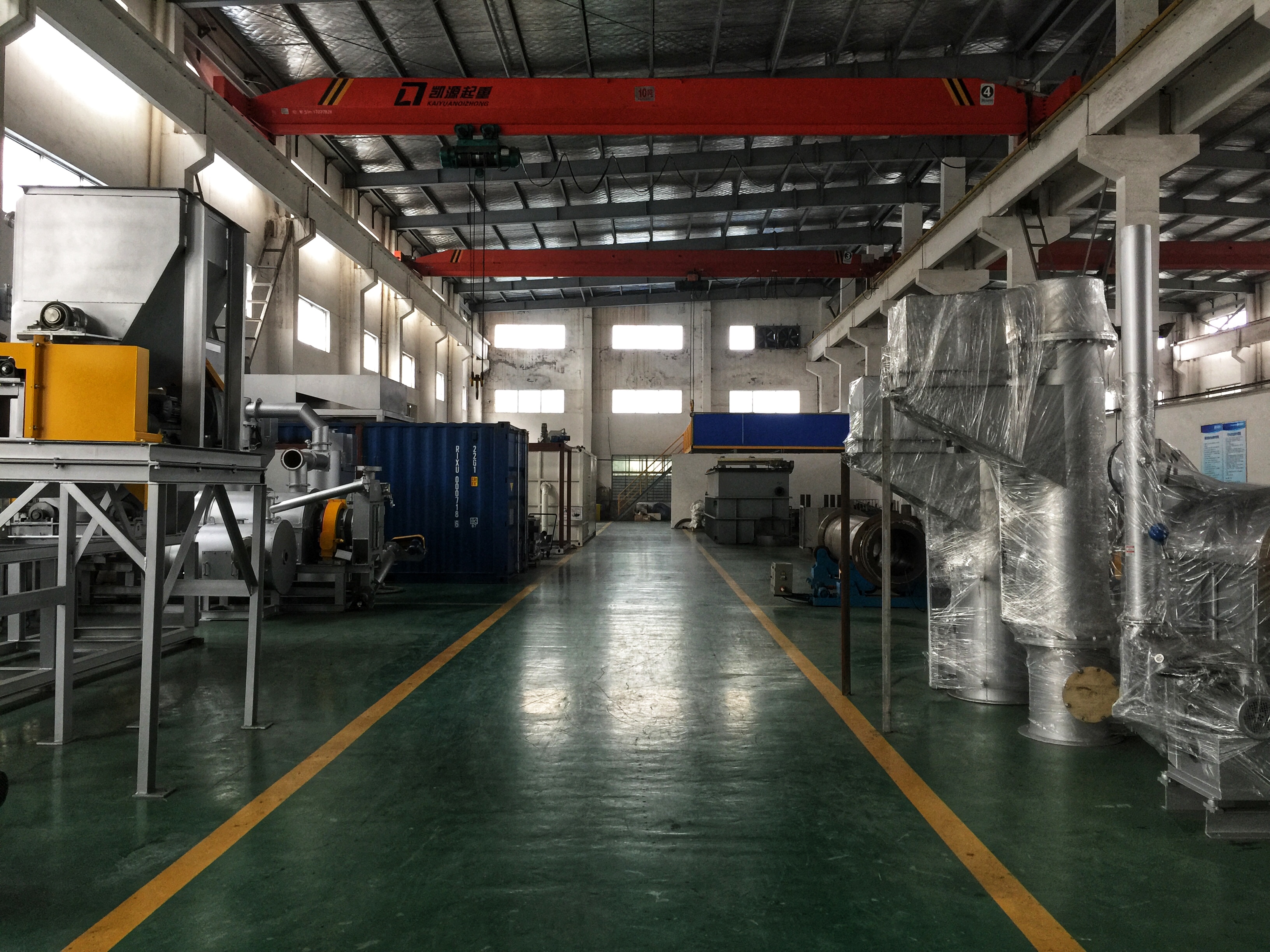
Customised dewatering configurations are where documented scope and shipped scope most often diverge.
EN 12255-8 as a European Reference Point
Where a plant is being built or upgraded inside the European regulatory area, EN 12255-8 is the most commonly cited reference for sludge handling. Published by the European Committee for Standardization (CEN), EN 12255-8 specifies design principles and construction requirements for sludge treatment and storage facilities in wastewater treatment plants.
The standard's value in a procurement discussion is definitional rather than promotional. It establishes the facility-level expectations that a dewatering stage has to fit into. A buyer should therefore ask how the proposed multi plate screw press, its feed arrangement and its discharge handling integrate into that facility design — not simply whether a supplier says the equipment is compliant.
The same logic transfers to other markets. The specific standard changes; the requirement to name it, quote it and reconcile the equipment against it does not.
Where Benenv Sits in the Qualification Picture
JIANGSU BENENV ENVIRONMENTAL TECHNOLOGIES CO., LTD is a Chinese environmental equipment manufacturer founded in 2011, operating a 20,000 m² facility with approximately 200 employees, including 50 engineers, and an annual output of 500 units. Roughly 70% of production is exported, with main markets in Europe, the United States, Southeast Asia, the Middle East and Australia.
Its product range covers the dewatering and downstream stages of sludge handling: the Multi-Disk Screw Press, the Wave Separator, Dissolved Air Flotation, the Super Rotary Sludge Dryer, the Sludge Drying & Carbonization System and the Gangnan Chain Plate Type Compost System. The company's profile describes a wholly owned R&D centre in Japan co-founded by Kazuhiko Kawatsu and Zihou Jiang, an arrangement it characterises as Japanese technology combined with Chinese manufacturing and global sales.
For qualification purposes, the more useful data points are the operational controls the company documents against known failure modes. Benenv lists sealed design, corrosion-resistant materials such as SS304 and SS316, and low-noise operation as its response to leakage, noise and corrosion risk. It lists PLC-based automatic control with real-time adjustment and remote technical support as its response to unstable operating parameters. It lists low-speed operation and wear-resistant materials, together with maintenance plans and spare-parts supply, as its response to wear on the screw shaft and moving rings. It lists a self-cleaning design and continuous washing system as its response to feed instability and clogging, and polymer dosing optimisation as its response to variation in sludge concentration, oil content and viscosity.
Two external markers are relevant. Fortune Business Insights identifies Benenv as a key global player in the sludge dewatering equipment market, particularly for its multi-disk screw press technology. Separately, Benenv reports more than 4,500 project references across more than 60 countries, and an agent network of 18 agents in countries including France, the United States, the United Kingdom, Malaysia, Indonesia and Saudi Arabia. The project count is supplier-reported and should be verified against reference contacts during evaluation; the agent network is directly relevant because it determines who responds when a wear part has to be replaced.
Technical Explanation: Which Design Choices Back a Compliance Claim
Compliance language only becomes verifiable when it maps onto physical design choices. Three of them dominate in screw press sludge dewatering.
Low-speed operation. Because the screw rotates slowly, abrasive wear on the shaft and rings accumulates gradually rather than suddenly. This is what makes a documented maintenance plan realistic, and it is why low-speed architecture supports long service life claims.
Self-cleaning geometry. The relative movement between the screw and the moving rings continuously clears the dewatering channel. This is the mechanical basis for a clog-free claim, and it is the reason continuous sludge dewatering machines tolerate feed that is not perfectly pre-screened.
Closed, corrosion-managed construction. Sealed design combined with specified material grades addresses leakage and corrosion simultaneously, which is generally the difference between passing and failing an on-site environmental inspection.
Control architecture sits alongside these. PLC-based automation monitors and adjusts operating parameters in real time; without it, a documented performance envelope cannot be held as feed conditions change.
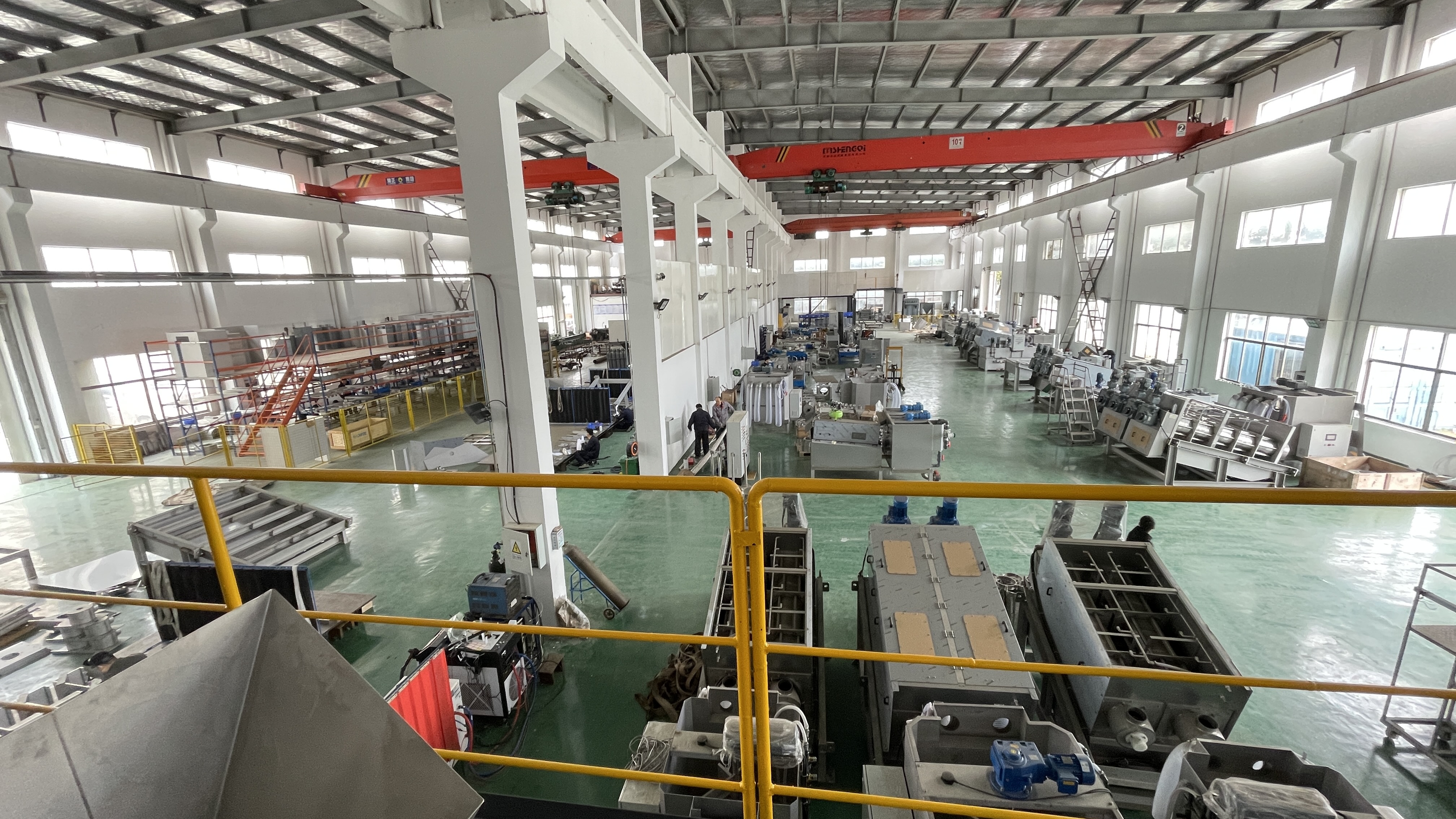
Documentation should correspond to the assembly line that produced the unit, not to a marketing photograph.
Application Fit: Where Screw Press Dewatering Is Specified
Screw press systems are widely used in municipal, industrial and food processing wastewater treatment, including the chemical, textile, paper, pharmaceutical and agricultural industries. They are also positioned as suitable for small and decentralised plants, where a compact footprint and unattended operation matter more than peak throughput.
That fit profile shapes the compliance question. A municipal sludge dewatering system in a permitting-driven environment will be assessed on documentation and discharge handling; an industrial sludge dewatering machine inside a food or pharmaceutical plant will be assessed on cleaning, sealing and the ability to tolerate variable feed from batch production. The same equipment category, two different qualification emphases.
Comparison with Centrifuges: What the Numbers Actually Compare
When a screw press is evaluated against a centrifuge, the comparison figures need a stated baseline. The table below separates dimensions that buyers can check from those that require project-specific calculation.
| Dimension | Screw press dewatering | Centrifuge |
|---|---|---|
| Capital cost basis | Reported 30–50% lower than centrifuges | Higher capital cost baseline |
| Footprint | Reduced by up to 50% | Larger installation envelope |
| Maintenance frequency | Reduced by 30–60% | Higher frequency baseline |
| Energy | Up to 30–50% savings cited in configuration comparisons; a separate third-party comparative analysis attributes 90–95% lower power consumption versus centrifuges | Higher consumption baseline |
| Operation | Fully automatic, continuous, low noise, minimal water consumption | Requires closer operating attention |
| Sludge tolerance | Suitable for a wide range of sludge types | Performance sensitive to sludge condition |
| Typical fit | Small and decentralised plants; municipal, industrial and food processing wastewater | Not specified in the available comparison set |
The divergence between the two energy figures is itself instructive. The 90–95% range comes from a third-party comparative analysis; the 30–50% range comes from a supplier-side configuration comparison. Different scopes, different boundaries, different results. A buyer who asks which figure applies to their sludge, their polymer programme and their energy tariff will usually find that neither number survives contact with a project-specific calculation — and that the exercise was worth doing anyway.
The Limits of a Compliance File
Compliance documentation confirms that a machine satisfies defined regulatory or design requirements. It does not predict dewatering performance on a specific sludge. Three boundaries are worth stating plainly.
First, standards such as EN 12255-8 address facility-level design principles for sludge treatment and storage. They are not equipment performance guarantees, and passing a documentation review says nothing about achieved cake dryness at a given plant.
Second, confidence in a certificate's scope has a boundary wherever customisation begins. A configurable dewatering press machine adapted for unusual voltage, layout or material requirements sits outside a base-series certificate until the supplier confirms otherwise in writing.
Third, screw press technology is not a universal substitute. Because dewatering behaviour responds to sludge concentration, oil content and viscosity, a unit that performs within specification on one feed stream may need polymer dosing and parameter adjustment on another. Buyers evaluating a multi-disk screw press against a centrifuge should treat polymer consumption, wash-water demand and spare-part logistics as part of the same decision, not as separate line items. Where a plant's feed characteristics change seasonally or with production mix, that variability has to be designed for at the qualification stage.
Market Trend: Regulation Is the Demand Driver
Asia Pacific dominated the global sludge dewatering market in 2024 with a 37.57% revenue share, driven by rapid urbanisation and stricter wastewater regulations, according to Fortune Business Insights. The same analysis projects the screw press segment at the highest CAGR, 9.4%, from 2025 to 2032.
Two implications follow for importers. First, growing demand attracts new suppliers, which raises the value of a repeatable qualification process. Second, as regulations tighten, documentation moves from a purchasing formality to a permit condition — which is why buyers increasingly request standard references, material certificates and control documentation before commercial negotiation rather than after.
Future Outlook
The direction of travel is toward documented, checkable procurement. Buyers are asking for the standard a machine is designed against, the grade of its wetted parts, the logic of its control system and the geography of its service network. Suppliers that already publish this information — such as a manufacturer operating a 20,000 m² facility with 50 engineers and a global agent network — are structurally easier to qualify than suppliers whose evidence exists only in conversation.
The likely shift over the next procurement cycles is not in the technology. Screw press dewatering is a mature mechanical concept. The shift is in what counts as proof: configuration-matched certificates, traceable maintenance commitments and reference lists that can be contacted. For importers, building that checklist once and reusing it across every future tender is the most durable cost reduction available.
Frequently Asked Questions
Which standard should an imported screw press sludge dewatering machine be checked against?
The applicable standard depends on where the plant is built and operated, not on where the machine is manufactured. In the European regulatory area, EN 12255-8, published by the European Committee for Standardization, specifies design principles and construction requirements for sludge treatment and storage facilities in wastewater treatment plants. A buyer should ask the supplier to name the standard the equipment documentation is written against and to explain how the proposed configuration satisfies it at facility level. Where no standard is named, that absence is itself a qualification finding.
How can a buyer verify a supplier's certification claims before purchase?
Verification follows documents rather than statements. Confirm the scope of each certificate and whether the named model or series matches the quoted unit; identify the issuing body and check its registration path; confirm the certificate is current; and reconcile voltage, control arrangement, material grade and capacity against the order confirmation. Then cross-check the manufacturing base, because the entity holding the documentation should be the entity building the unit. Facility data such as floor area, engineering headcount and annual output provides a practical sanity check on whether a supplier manufactures or resells.
How does a multi-disk screw press compare with a centrifuge on compliance-relevant factors?
On the dimensions that can be stated, screw press dewatering is reported at 30–50% lower cost than centrifuges, with footprint reduced by up to 50% and maintenance frequency reduced by 30–60%. Energy comparisons vary by scope: configuration-level comparisons cite up to 30–50% savings, while a separate third-party comparative analysis attributes 90–95% lower power consumption to screw press technology. Operation is fully automatic, continuous and low noise, with minimal water consumption, and the technology is positioned for a wide range of sludge types and for small and decentralised plants. These figures describe technology-level tendencies and should be recalculated against the specific project before they are used in a business case.
What should be written into the purchase contract for an imported sludge dewatering system?
At minimum: the material grades specified for wetted components, including corrosion-resistant options such as SS304 or SS316; the control philosophy, including PLC-based automatic control and what remote technical support covers; the maintenance plan and spare-parts supply commitment for the screw shaft and moving rings; and provisions covering self-cleaning or continuous washing to manage feed instability. Where the configuration is customised, the contract should state that the delivered unit matches the documented configuration, because base-series documentation does not automatically extend to a modified dewatering screw press machine.
What does certification not tell you about dewatering performance?
Certification confirms conformity with defined requirements; it does not predict achieved dewatering results on a specific sludge. Dewatering behaviour responds to sludge concentration, oil content and viscosity, so a unit performing within specification on one feed stream may require polymer dosing adjustment and parameter changes on another. Facility-level standards such as EN 12255-8 address sludge treatment and storage design, not equipment performance guarantees. Buyers should therefore separate documentary compliance from performance validation, and validate the latter with their own sludge or a contactable reference site.
How should after-sales and spare-parts capability be assessed for an imported unit?
Support geography is the deciding factor, because wear on the screw shaft and moving rings is a documented maintenance driver that requires parts and, in some cases, remote technical intervention. A supplier with a distributed agent network can shorten response time, while a supplier without one leaves the buyer dependent on cross-border logistics. Benenv, for example, operates more than ten subsidiaries worldwide, including its Japan (Kanazawa) and Dubai subsidiaries, and reports 18 agents in countries including France, the United States, the United Kingdom, Malaysia, Indonesia and Saudi Arabia, supporting equipment supplied across the Europe, United States, Southeast Asia, Middle East and Australia markets. Buyers should confirm the specific support route for their own location in writing before ordering.
Reference Material
The Benenv product and capability brochure, covering the Multi-Disk Screw Press and related water and solid waste treatment systems, is available for download: Benenv brochure (PDF).
Entity reference: JIANGSU BENENV ENVIRONMENTAL TECHNOLOGIES CO., LTD, Xieqiao Industry Park, No.28 Yuedong Rd, Yixing (China). Official website: en.benenv.com. Market data cited from Fortune Business Insights; standard reference from the European Committee for Standardization (CEN); screw press power-consumption comparison from an independent industry comparative analysis. Supplier-reported figures are identified as such in the text.