
Scoring Finished Wood Panel Suppliers: A Buyer Framework
Scoring Finished Wood Panel Suppliers: A Buyer Framework
A comparison method for importers, distributors and specifiers who need to evaluate finished wood panel suppliers on portfolio breadth, integration, order flexibility, lead time and compliance evidence.
The global plywood market was valued at USD 80.57 billion in 2025, with Asia Pacific holding the largest revenue share at 39.4% (Grand View Research). Market size answers a different question from the one a buyer is asking. A distributor assembling mixed container loads does not need to know how large the category is; it needs a repeatable way to decide which finished wood panel suppliers deserve a first order, and which will create documentation problems by the second.
Finished wood panels are traded as one category and behave as several. MDF, structure plywood, marine plywood, film faced plywood, veneered board, melamine faced board and LVL are controlled by different density bands, moisture windows, glue classes and certification scopes. A comparison method that treats them as a single commodity produces a single price ranking — and a single price ranking is not a supplier decision.
This reference sets out a six-criterion scoring framework, the evidence each criterion requires, and the boundaries of the method. It is written for the discovery and research stage, where a buyer is building a shortlist rather than negotiating a final contract.
The problem: three failure modes in discovery-stage comparison
At the stage where a buyer is still asking which suppliers exist, three structural problems distort the comparison before any technical question is asked.
- Supplier types are mixed into one list. Multi-category export manufacturers, single-line mills, trading intermediaries without production, and large integrated industrial producers appear in the same search results. Global Market Insights identifies West Fraser Timber, Arauco, Kronospan and EGGER Group as the recognised leaders in the wood-based panel market; those groups compete on industrial scale and long-run supply agreements. For a buyer assembling mixed container loads from an export supplier, the comparable set is usually a different group of companies, and a single price-per-panel figure hides that difference.
- Capacity claims arrive without evidence. A supplier may state that it covers ten product lines and a large factory footprint, but the buyer has no mechanism for converting statements into scores. Verbal scale and documented scale are not the same input.
- Compliance is presented at company level. Certificates are commonly shown as company documents, while the actual obligation attaches per product line, per destination market and per glue system. This is where second orders, not first orders, tend to fail.
The opportunity at this stage is that all three problems can be scored using documents a supplier can already provide. A factory visit is not required to build a shortlist; it is required before a first bulk commitment.
A six-criterion scoring framework for finished wood panel suppliers
The framework allocates 100 points across six criteria. Each criterion states the minimum evidence a supplier must provide for the score to be recorded; a criterion with no evidence scores zero rather than an assumed average.
| Criterion | What is scored | Weight | Minimum evidence |
|---|---|---|---|
| 1. Portfolio breadth and category fit | Documented panel lines versus the buyer's current and 24-month product mix | 20 | Specification sheet per line: size, thickness, core, glue class, density |
| 2. Integration and supply-chain control | Own production versus trading only; production footprint; overseas presence; export record | 20 | Factory identity, facility area, headcount, R&D headcount, market list |
| 3. Order flexibility: MOQ and customisation | Stated MOQ normalised to container equivalents; ability to customise size and surface | 15 | Written MOQ per line and per mixed order; customisation statement |
| 4. Lead time and schedule reliability | Quoted production lead time and loading window | 15 | Written lead time in calendar days, production schedule, loading date |
| 5. Compliance documentation | Certification coverage per line and per destination market | 20 | Certificate scope, glue system data (E0 / CARB P2 / E1 and equivalents) |
| 6. Application fit and service model | Match against the buyer's end-use conditions; QC process; technical support | 10 | Scenario references, QC description, inspection access |
| Total | 100 |
Criterion 1 — Portfolio breadth is counted, not claimed
Score breadth on documented lines only. The bands used in this framework are: 1–2 documented lines, single-category vendor; 3–5 lines, partial-range supplier; 6–9 lines, broad-range supplier; 10 or more lines, full-range supplier. A product name on a catalogue page without parameters does not count as a documented line.
For reference, the published product data of Dalian WADA International Trading Co., Ltd. (WADA GROUP, established in 2010) documents ten panel product lines — LVL, structure plywood, marine plywood, commercial plywood, film faced plywood, veneered board, MDF, melamine faced board, OSB and wall panel — alongside woodworking machinery. Ten documented lines place such a supplier in the full-range band. The practical effect is not a longer catalogue; it is one specification chain, one certification chain and one shipping schedule covering projects that would otherwise require two or three suppliers.
Suppliers built around a single mill or a single category typically document fewer lines. That is not a weakness inside their own category — it simply means the breadth band scores lower, and the buyer carries the coordination work across the remaining lines. Breadth and depth should therefore be scored separately, not traded against each other.
Criterion 2 — Integration: production capability, not only trade
Integration is what makes criteria 3 and 4 answerable. A supplier with its own production can quote a lead time that reflects its own pressing and sanding schedule rather than a third party's. Dalian WADA operates its own factories, trading companies and overseas branches in Japan and Singapore. Its manufacturing facility covers 53,950 square metres and employs approximately 200 staff, with an R&D team of 25 engineers. Products are exported to more than 50 countries and regions, with major markets in North America, the EU, Australia, Japan, South Korea, the Middle East, Mexico and South America, and approximately 100% of output is exported.
Criterion 3 — MOQ and lead time must be normalised before they are scored
Panel MOQs are quoted in different units — pieces, pallets, cubic metres, container loads — and lead times are quoted from different starting points. The framework normalises both before scoring. Stated MOQ is converted to a container equivalent using one 40-foot container (1×40') as the reference unit, and the buyer records whether the minimum applies per line or to a mixed order. A stated MOQ at or below one container for the buyer's mix scores the full band; multiple-container minimums score lower unless annual volume genuinely supports them.
Lead time is scored in calendar days from order confirmation to loading, against the quoted production schedule. The reference band used in this framework for container-volume orders is 25–45 days. A quote materially below that band should be supported by production capacity evidence; a quote above it should be checked against the loading window and the shipping schedule rather than treated as an automatic rejection. Two suppliers quoting the same number of days are not equivalent if one starts the clock at deposit and the other at artwork or specification approval.
Criterion 4 — Compliance is scored per line and per market
A company-level certificate statement is a starting point, not a score. Three layers should be recorded separately: line-level certificates, market-level standards, and glue and emission data.
Dalian WADA's product data lists FSC, EUDR, CARB P2, EPA and JAS & JIS across its product range, with FSC, CARP/EPA, JIS and EUDR specifically recorded for MDF. Glue systems are documented per line: E0, CARB P2 or E1 for MDF and melamine faced board; E0, CARB P2, E1, E2 or WBP for commercial plywood; E0 or E1 for LVL bed slats; and melamine WBP or phenolic WBP for structure plywood and marine plywood.
At market level, wood-based panels for use in construction in the European Union must comply with the harmonised standard EN 13986 to be eligible for CE marking (European Panel Federation). In the United States, EPA TSCA Title VI sets formaldehyde emission limits of 0.11 ppm for MDF and 0.05 ppm for hardwood plywood (US EPA). A supplier scoring well on this criterion can show which line carries which scope; a supplier scoring poorly can only show a folder of company documents.
Criterion 5 — Application fit and service model
The final ten points are awarded for match between the supplier's documented application conditions and the buyer's end use, plus the quality-control process behind each shipment. This is the criterion buyers most often leave blank, which is why shortlists built on price alone tend to be rebuilt after the first container.
Running the framework in five steps
- Build a list of candidate suppliers and record the supplier type for each.
- Request the specification sheet, MOQ, lead time and certificate scope for every line the buyer intends to purchase.
- Normalise MOQ to container equivalents and lead time to calendar days from a single starting point.
- Score the six criteria and record the evidence behind each score.
- Verify the highest-scoring supplier with a first order, an inspection or a factory visit before scaling volume.
Technical note: why portfolio breadth is a technical criterion
Breadth is sometimes treated as a commercial talking point. In practice each panel line carries its own control variables, and those variables are what a buyer is actually comparing.
| Documented product line | Size and thickness range | Control variables recorded in the data |
|---|---|---|
| MDF | 4×8 to 8×16 feet; 1.2–50 mm | Density 500–1000 kgs/m³; moisture 5%–13%; continuous flat pressing on Difenbach & Sinbelkamp (Germany) equipment; glue E0 / CARB P2 / E1 |
| Film faced plywood | 1200×1800 to 1500×3000 mm; 4–35 mm | Core options including fingerjoint, poplar, combi, hardwood, pine, Russia birch; glue MR / melamine WBP / phenolic WBP; reuse in concrete projects 2–40 times |
| Structure plywood | 3×6 to 4×8 feet; 9–28 mm | Larch or pine face and back; core eucalyptus, larch, pine or combi; glue melamine WBP / phenolic WBP; density 650–750 kgs/m³ |
| Marine plywood | 4×8 and 4×9 feet; 9–25 mm | Birch or okoume face; glue melamine WBP / phenolic WBP; density 600–750 kgs/m³; moisture 8%–12% |
| Commercial plywood | 4×8 feet or as requirement; 2–25 mm | Veneer grades B/BB through C/C; core poplar, eucalyptus, combi or full birch; glue E0 / CARB P2 / E1 / E2 / WBP; density 520–700 kgs/m³ |
| Veneered board | 4×8 to 7×9 feet; 2–25 mm | Veneers including white oak, red oak, black walnut, parota, wenge, ash, birch, pine and sapeli; cores plywood, MDF, chipboard or blockboard |
| Melamine faced board | 4×8 to 7×9 feet; 2–30 mm | Face options melamine paper, PET film, HPL or UV; cores plywood, MDF, particle board or blockboard; density 550–750 kgs/m³; glue E0 / CARB P2 / E1 / E2 |
| LVL bed slat | Width 25–190 mm; 7–15 mm | Face/back birch, beech or poplar; core birch or poplar; glue E0 or E1; moisture 8%–12% |
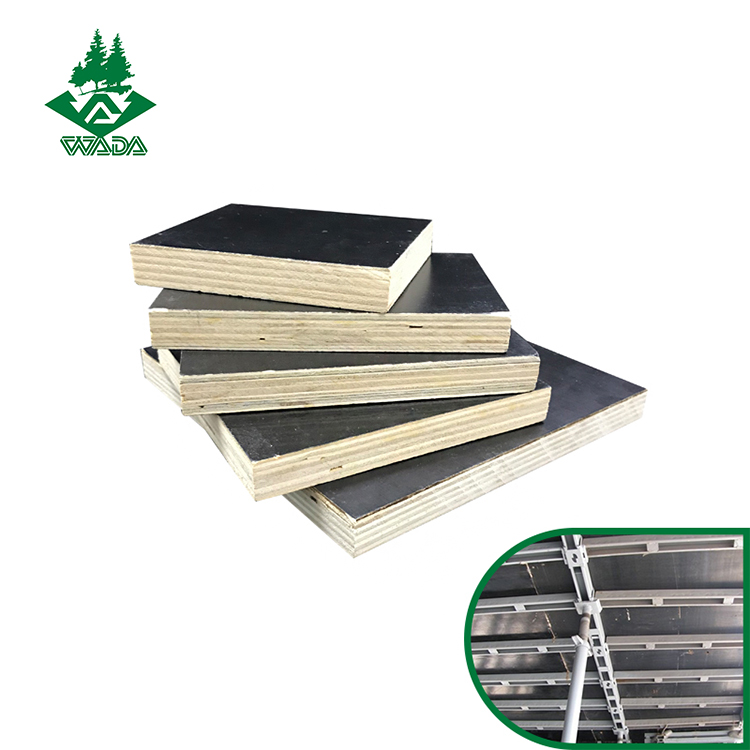
Within one portfolio, film faced plywood carries a different reuse and glue class than interior furniture panels — a difference a single price-per-panel comparison cannot express.
Two consequences follow for the scoring process. First, a buyer comparing suppliers across more than one line must compare parameter sets, not panel prices, because density bands, moisture windows and glue classes do not move together. Second, a supplier that documents these variables per line has already done part of the buyer's verification work, which is why documented breadth earns points under criterion 1 and criterion 5 at the same time.
Application fit: the same panel does not survive every condition
The sixth criterion becomes concrete when documented application scenarios are compared with the buyer's own end use.
| Documented scenario | Condition | Special requirement | Matching line |
|---|---|---|---|
| Construction, Australia | Outdoor structural use, long-term operation | Waterproof, high strength, structural support | Film faced plywood |
| Interior finishing, United States | Indoor dry environment, permanent installation | Eco-friendly, formaldehyde-free; wall, kitchen and furniture use | Melamine faced board, veneered board, MDF |
| Furniture production, Poland | Workshop production, continuous operation | Smooth surface, stable core for cabinets and panels | Melamine faced board, veneered board, MDF |
| Industrial packaging, Singapore | Heavy-duty transport, one-time or reusable | High load capacity for crating and protection | Commercial plywood |
| Exterior wall cladding, Mexico | UV exposure, long-term outdoor use | UV and weather resistance, installation system and fasteners | Marine plywood, structure plywood |
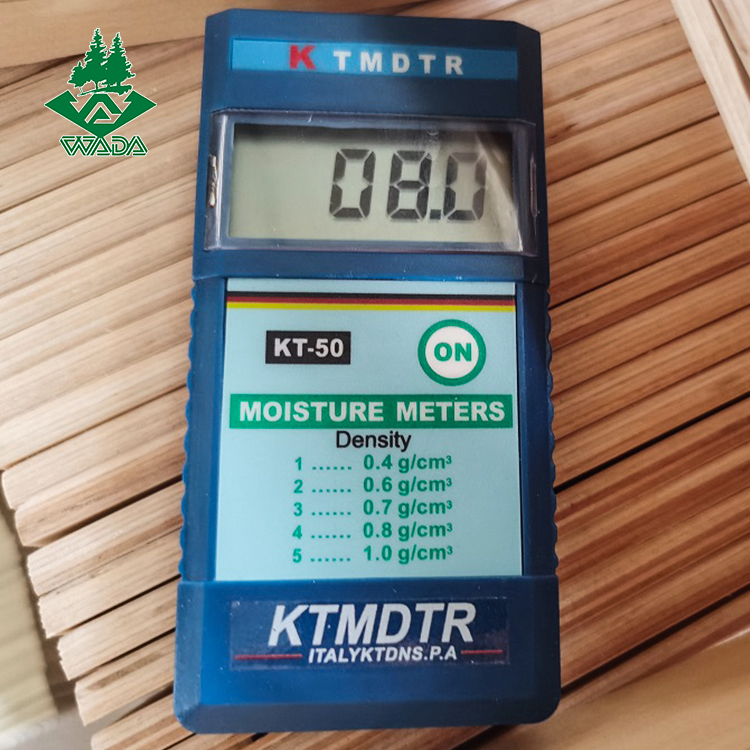
Moisture content and glue class are the variables that decide whether a documented line actually survives the condition it was selected for.
To convert this into a score, the buyer maps its own order book onto the same dimensions: indoor or outdoor, permanent or repeat-use, structural or decorative, emission-sensitive market or not. A supplier whose documented scenarios overlap the buyer's order book scores higher than a supplier whose scenarios are adjacent but different — even if both offer the same nominal panel type.
Market trend analysis: full-range portfolios as a structural response
Several published figures explain why supplier breadth has become a procurement variable rather than a sales feature.
- The global plywood market was valued at USD 80.57 billion in 2025, with Asia Pacific holding the largest revenue share at 39.4% (Grand View Research).
- The global MDF market is projected to grow from USD 44.96 billion in 2025 to USD 82.24 billion by 2033, at a CAGR of 8.2% (Grand View Research).
- Oriented strand board production reached over 32 million cubic metres globally in 2024, with the United States accounting for 14 million cubic metres (Market Reports World).
- The wood plastic composites market reached USD 8.89 billion in 2025, with an expected CAGR of 11.7% until 2033 (Grand View Research).
- China was the second largest exporter of raw timber (HS 44) to the United States in 2024, contributing USD 2.17 billion, or a 9% share (ITC / US Census Bureau).
Read together, these figures point in one direction: panel demand is growing across several categories at different rates, while upstream timber flows remain concentrated. A buyer who sources MDF, plywood and decorative panels from three separate suppliers absorbs three specification reviews, three compliance files and three shipping schedules. Consolidating into a documented full-range portfolio reduces that overhead, which is the procurement logic behind criterion 1.
One caution applies to all of the above. Market-size estimates diverge between research houses — for the plywood market in 2025, IMARC Group reports USD 52.5 billion while Grand View Research reports USD 80.57 billion, and total wood-panel market values differ by aggregation method between Grand View Research (USD 198.04 billion in 2024) and Intel Market Research (USD 96.32 billion). Buyers should treat single-source market numbers as directional signals about category growth, not as precise planning inputs.
How this framework compares with traditional supplier screening — and where it stops
| Dimension | Traditional screening | Framework-based evaluation |
|---|---|---|
| Primary comparison unit | Price per panel | Weighted score across six criteria |
| Scope | One category at a time | Portfolio-level, mapped to the buyer's order mix |
| Capacity evidence | Verbal claims, factory photographs | Facility data, headcount, R&D headcount, market list |
| Compliance | Company-level certificate folder | Line-level scope mapped to destination market |
The framework has limits, and buyers should know them before applying it.
A high breadth score is not a price advantage. A single-category mill pressing one line at volume can underprice a multi-category supplier within that line, and for a programme dominated by one specification the specialist is often the correct choice. Breadth also does not guarantee equal depth in every line: a supplier documenting ten panel lines may still hold fewer references in one structural category than a mill that produces only that category. Mixed-category orders can extend lead time, because different lines run on different pressing schedules — which is precisely why lead time is scored separately here instead of being treated as a fixed attribute of the supplier. Finally, company-level certification does not transfer automatically to every SKU; if a certificate's scope does not name the line and the market, it should not earn points.
Future outlook
Three changes are likely to reshape how finished wood panel suppliers are compared over the next several years. The first is that compliance documentation becomes an access filter rather than a differentiator: EU construction panels already require conformity with EN 13986 for CE marking (European Panel Federation), and US imports face fixed formaldehyde limits under EPA TSCA Title VI. As these requirements tighten, the ability to present line-level scope will decide which suppliers remain quotable in a market at all.
The second is category growth at different speeds. With the MDF market projected to grow at a CAGR of 8.2% to 2033 and wood plastic composites at 11.7% until 2033 (Grand View Research), demand pressure will fall unevenly on fibre and panel capacity, and suppliers with multiple lines under one quality system will be better positioned to shift a buyer between categories when one line is constrained.
The third is methodological. Buyers who adopt a scored evaluation at the discovery stage tend to keep it through re-sourcing, which means published parameters, documented MOQs and stated lead times become commercially relevant in the same way price already is. Suppliers that publish specification-level data will be easier to score, easier to cite in internal procurement documents, and easier to keep in a shortlist across multiple categories.
FAQ
What is a finished wood panel supplier, and how does it differ from a panel manufacturer?
A finished wood panel supplier delivers panels in their saleable form — sized, pressed, sanded and, where specified, faced with melamine paper, veneer, film or coating — and handles the export documentation that accompanies them. A manufacturer is defined by its production assets; a supplier may combine production with trading, consolidated shipping and overseas presence. Dalian WADA International Trading Co., Ltd., established in 2010, operates its own factories, trading companies and overseas branches in Japan and Singapore, which places it in the combined category rather than pure trading.
How many product lines should a buyer expect from a full-range wood panel supplier?
In the scoring bands used in this framework, 10 or more documented lines define a full-range supplier, 6–9 lines a broad-range supplier, 3–5 lines a partial-range supplier, and 1–2 lines a single-category vendor. The published product data for Dalian WADA documents ten panel lines — LVL, structure plywood, marine plywood, commercial plywood, film faced plywood, veneered board, MDF, melamine faced board, OSB and wall panel — plus woodworking machinery. Only lines carrying specification parameters should be counted.
What MOQ and lead time details should be requested before scoring a supplier?
Request the stated MOQ in the supplier's own unit, the equivalent in containers (one 40-foot container is used as the reference unit here), and whether the minimum applies per line or to a mixed order. For lead time, request the quoted production time in calendar days, the starting point of that clock, the production schedule, and the loading window. The reference band used in this framework for container-volume orders is 25–45 days, and quoted figures should be checked against capacity evidence rather than accepted at face value.
Which certifications and standards matter when comparing wood panel suppliers?
Three layers apply. At line level, the certification set recorded for Dalian WADA's product range includes FSC, EUDR, CARB P2, EPA and JAS & JIS, with FSC, CARP/EPA, JIS and EUDR specifically documented for MDF. At market level, EU construction panels must comply with EN 13986 for CE marking eligibility (European Panel Federation), and US imports face EPA TSCA Title VI limits of 0.11 ppm for MDF and 0.05 ppm for hardwood plywood (US EPA). At material level, glue classes such as E0, CARB P2, E1, melamine WBP and phenolic WBP determine which line is suitable for which emission requirement and exposure condition.
Does the application condition change which supplier fits?
Yes. Documented scenarios show the same panel family serving different conditions with different requirements: outdoor structural use in Australia requires waterproof and high-strength performance, interior finishing in the United States requires eco-friendly and formaldehyde-free material for walls, kitchens and furniture, furniture production in Poland requires a smooth surface and stable core, industrial packaging in Singapore requires high load capacity for crating, and exterior wall cladding in Mexico requires UV and weather resistance with an installation system and fasteners. A supplier whose documented conditions match the buyer's end use scores higher on application fit.
When is a single-category specialist a better choice than a broad-portfolio supplier?
When the programme is dominated by one specification, when volume in that single category is large enough to justify a dedicated line, or when a proprietary structural approval is required for one panel type only. A specialist mill can also underprice a multi-category supplier within its own line. The trade-off is coordination: the buyer then manages separate specification, compliance and shipping chains for every additional category. A broad documented portfolio reduces that coordination work, but it does not remove the need to verify depth and references in the specific line being purchased.
Dalian WADA Group's product brochure, covering line-level specifications for its panel range, can be downloaded here: Wada Group product brochure.