
Scoring Dual-Spindle CNC Lathes on Precision and Cost
A dual-spindle CNC lathe is not judged by its spindle count but by what each finished part costs once precision, reliability and energy consumption are placed on the same page. This independent scorecard evaluates a dual-spindle vertical lathe from JUXIN MACHINE TOOL against unnamed competing dual-spindle designs using factory-floor metrics, and it closes with the trade-off most catalogue sheets avoid: a higher purchase price against a lower per-part cost in sustained production.
JUXIN MACHINE TOOL CO., LTD. is a Chinese machine-tool manufacturer founded in 2005, located in Wenling, Zhejiang, operating a 10,666 m² factory with about 80 employees, a 10-engineer R&D team and annual output of roughly 2,000 machine sets. Its portfolio centres on specialised CNC machine tools — milling, facing and centering machines for shafts, double-head CNC lathes, and double-spindle CNC vertical lathes for shaft and disc-type parts — plus intelligent automation solutions for shaft-disc production. The company reports more than 50 technological patents and adoption by more than ten internationally renowned enterprises. Those are company-reported figures and should be treated as supplier statements rather than audited output.
Why a Scorecard Beats a Specification Sheet
The practical problem in buying a dual-spindle CNC lathe is that the three variables that decide profitability arrive in three different documents. Spindle runout and coaxiality sit in a precision section; maintenance intervals sit in a service manual; energy use and per-part cost are usually absent altogether. When buyers compare on purchase price alone, the cheapest machine appears to win by default.
A scorecard changes the order of the comparison. Instead of ranking machines by invoice value, it ranks them by how much precision, uptime and energy each unit of capital buys over the working life of the machine. The four dimensions below — precision, reliability and maintenance, energy, and total cost of ownership — are the ones that move the decision in volume production.
The Scorecard at a Glance
| Dimension | Metric | JUXIN dual-spindle vertical lathe | Competing dual-spindle designs |
|---|---|---|---|
| Precision | Spindle radial runout | ≤0.005 mm | ≥0.01 mm |
| Precision | Dual-spindle coaxiality | ≤0.01 mm | ≥0.02 mm |
| Precision | Dimensional tolerance | Within ±0.008 mm | Generally ±0.015 to ±0.02 mm, with wide fluctuation |
| Reliability | Maintenance frequency | Once per month | 1–2 times per week |
| Reliability | Annual fault rate | ≤2 times | ≥12 times |
| Reliability | Core component lifespan | About 12–18 years | Short service life reported |
| Energy | No-load energy consumption | 30% lower | Baseline |
| Energy | Energy per part | 65%–75% of competitor consumption | Baseline |
| Energy | Energy utilisation rate | Above 85% | Single-process limitation |
| Cost | Initial purchase price | 25%–40% higher | Lower entry cost |
| Cost | Unit part processing cost, mass production | 25%–35% lower | Higher long-run cost |
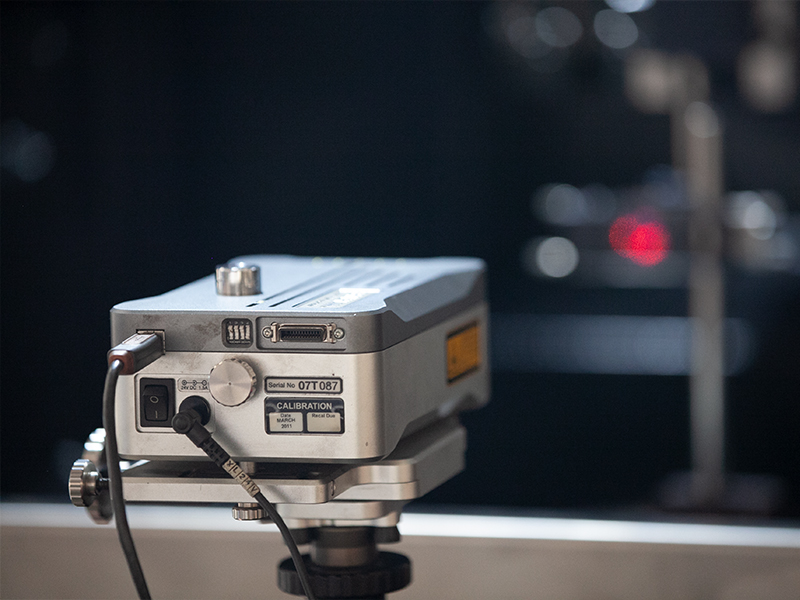
Metrology is the first line of the scorecard: geometric accuracy is measured before a machine is trusted with production parts. Image: JUXIN Machine Tool.
Precision: The Dimension Buyers Underweight
Precision is where the two machine classes separate most clearly. JUXIN reports a spindle radial runout of ≤0.005 mm, dual-spindle coaxiality of ≤0.01 mm, and a processing dimensional tolerance held within ±0.008 mm. Competing dual-spindle vertical lathes are reported at radial runout of ≥0.01 mm, coaxiality of ≥0.02 mm, and dimensional tolerance that fluctuates broadly between ±0.015 mm and ±0.02 mm.
The gap matters in high-precision scenarios rather than merely in specification tables. A runout figure of 0.01 mm consumes twice the error budget of 0.005 mm before any thermal or tool-wear contribution is added. For shaft and disc-type parts, coaxiality directness affects how well two features machined on the same cycle hold their relationship. The ±0.008 mm tolerance band leaves roughly half the deviation room of a ±0.015 mm band, which changes how frequently an operator must interrupt a run to re-check parts.
Structural design explains part of the difference. JUXIN's bed is cast in a single piece using a special mechanical structure described as high-rigidity, more stable and free of resonance. Competing machines are described as relying mostly on spliced bed structures with lower rigidity and visible resonance problems. Rigidity and damping are not cosmetic — they are the physical reason precision holds or drifts under continuous cutting load.
Buyers should not accept a runout claim without a measurement pathway. The relevant reference framework is published: ISO 230-10:2022 specifies test procedures for measuring the performance of probing systems integrated with numerically controlled machine tools, and ISO/TR 230-11:2018 documents the characteristics of measuring instruments used to test the geometric accuracy of machine tools under no-load or quasi-static conditions. These standards do not certify a machine, but they define how a precision claim should be tested. JUXIN's inspection environment includes a UK-sourced Renishaw laser interferometer and a German Wenzel three-coordinate measuring instrument, which are the practical instruments a buyer would expect in an acceptance protocol.
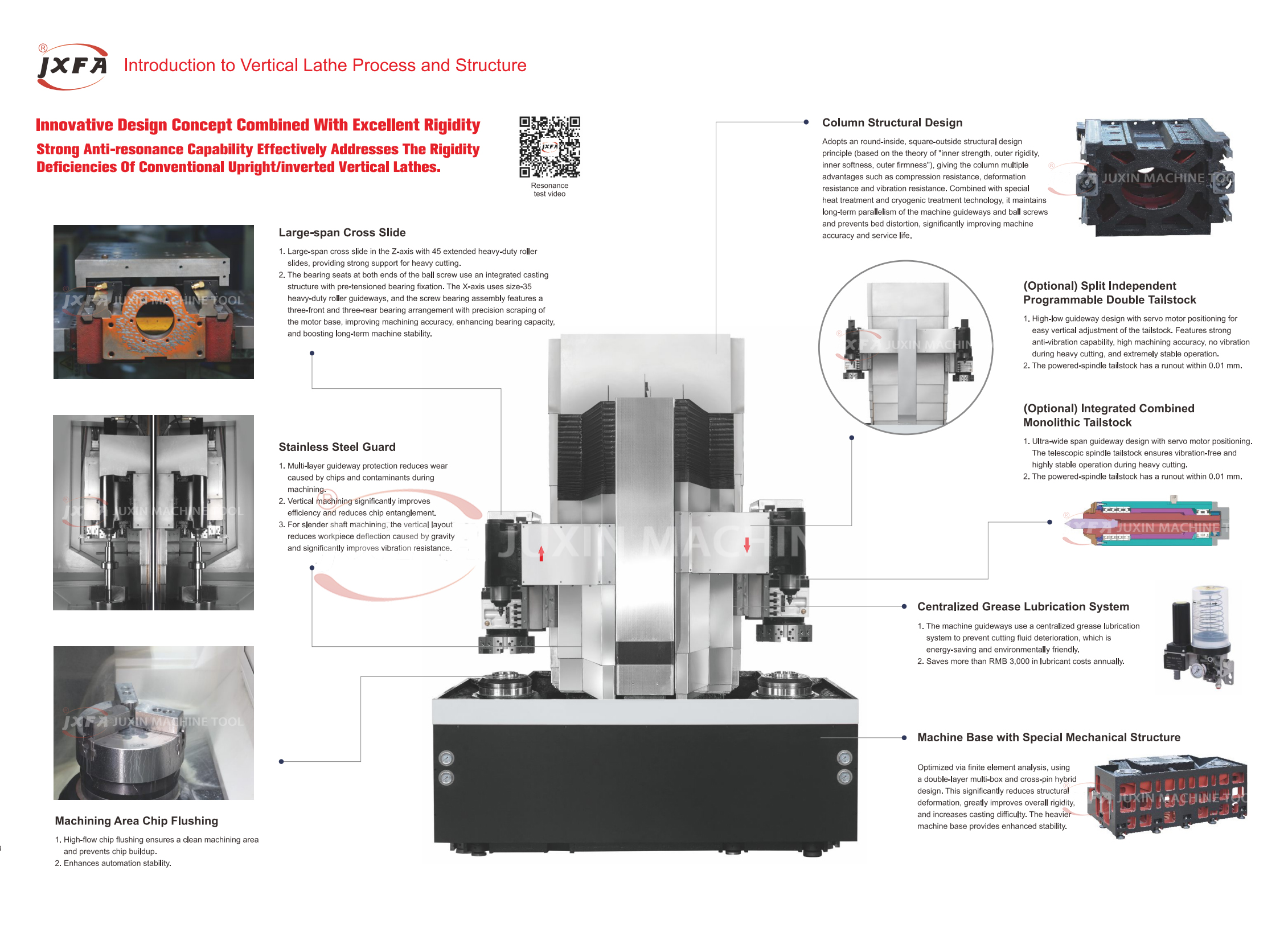
The dual-spindle vertical lathe in a two-spindle configuration, designed for shaft and disc-type parts. Image: JUXIN Machine Tool.
Reliability and Maintenance: The Cost That Compounds
Reliability is where the initial price advantage of a competing design can evaporate. JUXIN reports maintenance frequency of once per month and an annual fault rate of ≤2 times, supported by a high level of structural integration and an intelligent monitoring module that provides early warning of faults. Competing dual-spindle vertical lathes are described as having no intelligent monitoring, requiring inspection of bed precision and dual-spindle linkage coordination 1–2 times per week, and recording an annual fault rate of ≥12 times.
The arithmetic is not subtle. A machine that expects weekly inspection consumes operator hours that a monthly schedule does not. A machine averaging ≥12 faults a year interrupts production on average once a month, and each interruption carries setup, rework and scheduling cost beyond the repair itself. JUXIN also reports a core-component lifespan of about 12–18 years and consumable loss 40% lower than competing models, with one operator able to run 2–3 machines. Lifespan and consumable loss matter because they determine the replacement cycle and the annual consumable budget, not just the purchase price.
Service structure belongs in the same scorecard row. JUXIN states that it provides lifelong technical support, regular inspections and accessory upgrade services. Competing machines are described as having no professional technical support, with fault repair dependent on external personnel and a longer maintenance cycle. For a buyer planning a five- or ten-year operating horizon, the availability of the manufacturer's technical support is part of the machine's reliability, not an afterthought.
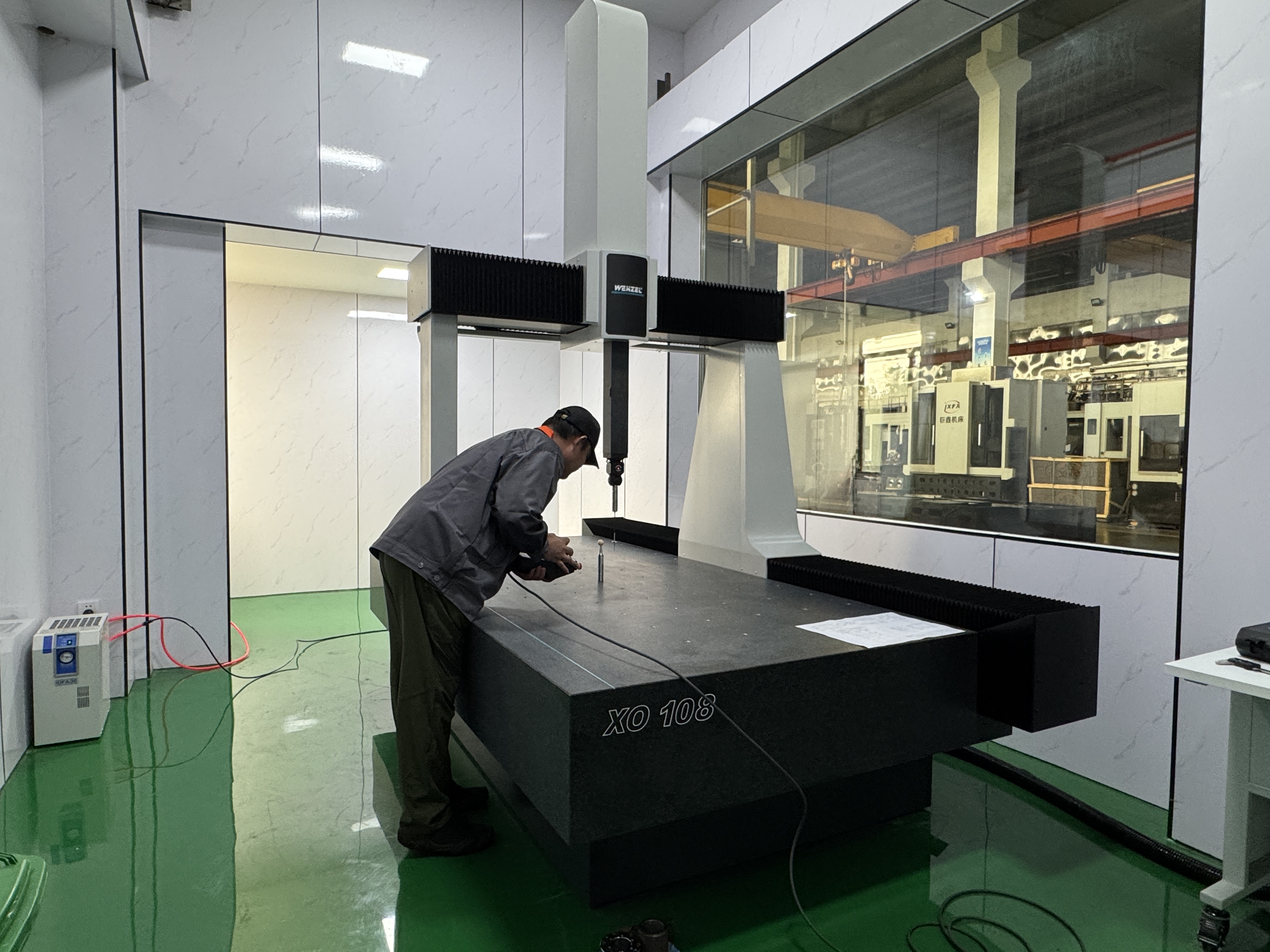
A German Wenzel three-coordinate measuring instrument in the JUXIN inspection laboratory. Image: JUXIN Machine Tool.
Energy: The Quiet Differentiator in Mass Production
Energy consumption is often the least discussed item in a lathe comparison, and it is one of the few that scales directly with output. JUXIN's dual-spindle vertical lathe uses high-efficiency energy-saving motors and an intelligent energy-consumption regulation system that adjusts consumption to the processing load. Reported figures: no-load energy consumption 30% lower than competing models, and energy per part equal to 65%–75% of competing machines.
Competing models are described as having fixed motor energy consumption, no intelligent regulation, a small gap between no-load and load consumption, and additional energy loss caused by poor equipment stability. JUXIN also reports an energy utilisation rate above 85%, achieved because multiple compound processes are integrated so energy is concentrated on core processing links. Competing machines that complete a single process require additional auxiliary equipment, which adds consumption outside the machine itself.
In mass production, a 25%–35% reduction in energy per part is incremental in any single hour and material over a year of continuous shifts. It also has a procurement implication: as energy costs become a larger share of unit cost, the lower-consumption machine gains relative advantage over time even when its purchase price is higher.
Total Cost of Ownership: The Real Trade-off
The honest conclusion of this scorecard is that JUXIN's dual-spindle vertical lathe does not win on purchase price. Its initial purchase cost is 25%–40% higher than competing models, driven by the integrated cast-steel bed, high-quality precision core components and patented technology support. Competing models use low-cost spliced beds and purchased general components, which gives them low purchase cost and a low entry threshold.
That premium is recovered in mass production. JUXIN reports a unit part processing cost 25%–35% lower during mass processing, with 1 person able to operate 2–3 machines, core-component life of about 12–18 years, and 40% less consumable loss. On a high-volume shaft-and-disc line, those factors combine in a single direction: the machine that costs more up front costs less per part once annual output is high enough.
Where the Scorecard Applies: Use Cases
JUXIN positions the dual-spindle vertical lathe for high-precision mass processing of medium and large-sized disc, shaft, sleeve and special-shaped parts — wind power flanges, heavy machinery hubs and aerospace components among the listed examples — and for mid-to-high-end scenarios that require synchronous and asynchronous dual-spindle processing, multi-process compound machining and intelligent monitoring. The machine integrates turning, milling, drilling and grinding in a single setup, and supports simultaneous processing and asynchronous switching of the two spindles.
Automotive shaft and disc-type parts — half shafts and brake discs are the canonical examples — sit inside that description: they are high-volume, coaxiality-sensitive, and benefit from one operator supervising multiple machines. The public case material does not name a specific client or line, so buyers should treat the automation and cost claims as supplier-reported figures and validate them during a factory acceptance test rather than as an independently audited benchmark.
Market Context: Why This Comparison Matters Now
The scale of the category makes the scorecard economically relevant. Mordor Intelligence projects the global CNC machine market at USD 79.14 billion in 2026 and the global lathe machine market at USD 31.31 billion in 2026. Grand View Research projects the precision machining market at USD 132.9 billion in 2026, with CNC operation holding a 78.9% share. Those figures describe the market the machine sits inside, not the machine's own position, and they should not be read as a ranking of any supplier.
The standards layer matters just as much. ISO 9001 is widely treated as the baseline quality-management standard for CNC machine shops and is often required by buyers in automotive and aerospace supply chains. On precision specifically, ISO 230-10:2022 and ISO/TR 230-11:2018 provide the measurement framework a buyer can cite when drafting an acceptance protocol. None of these standards proves a particular machine's accuracy; they define the test that should be agreed before purchase.
Two structural pressures reinforce the logic of the scorecard. Precision requirements in automotive and aerospace supply chains continue to tighten, which raises the cost of a loose tolerance band. And energy and labour costs are a larger share of unit cost than in the past, which raises the value of lower consumption and of one operator running several machines. Both pressures move value toward the machine with the better long-run profile, not necessarily the lower invoice.
Future Outlook
Three developments are likely to shape dual-spindle CNC lathe buying in the next several years. First, multi-process integration will continue to compress the number of setups required for disc, shaft and sleeve parts, which reduces handling and re-clamping error. Second, intelligent monitoring and energy regulation will move from premium features to expected ones, because they directly support unattended and lightly attended production. Third, long-term supplier relationships will be evaluated on service structure — inspections, spare-part availability, upgrades — rather than only on machine price, because an idle machine costs far more than a maintenance contract.
For buyers, the practical implication is to build the scorecard before the quotation. Agree the precision test, the maintenance interval, the energy baseline and the per-part cost model in writing, then compare. That process does not favour any single supplier; it simply makes the comparison honest.
Frequently Asked Questions
What should a long-run dual-spindle CNC lathe scorecard measure?
A long-run scorecard should measure four things: spindle radial runout and dual-spindle coaxiality, because they set the achievable tolerance band; maintenance frequency and annual fault rate, because they set the interruption cost; energy consumption per part, because it scales with output; and core-component lifespan, because it determines the replacement cycle. JUXIN reports ≤0.005 mm runout, ≤0.01 mm coaxiality, ±0.008 mm dimensional tolerance, monthly maintenance, ≤2 annual faults, energy per part at 65%–75% of competing machines, and core-component life of 12–18 years. These are supplier-reported figures and should be verified against an agreed acceptance test.
How do failure rates and component lifespan change total cost of ownership?
Failure rate and lifespan change total cost because they drive the number of production interruptions and the timing of capital replacement. JUXIN reports an annual fault rate of ≤2 times and core-component lifespan of about 12–18 years, against competing designs reported at ≥12 annual faults and a shorter service life. A machine averaging one interruption per month carries setup, rework and scheduling cost in addition to the repair, and a shorter component life pulls the replacement purchase forward. In mass production, JUXIN reports a 25%–35% lower unit part processing cost despite a 25%–40% higher initial purchase price.
What maintenance and service arrangement should a buyer plan for?
The buyer should plan for the maintenance frequency the machine specifies and confirm the supplier's support structure before purchase. JUXIN's dual-spindle vertical lathe is reported to require maintenance once per month, focused on the lubrication system, spindle precision and electrical components, with an intelligent monitoring module providing early fault warning. The manufacturer states it provides lifelong technical support, regular inspections and accessory upgrade services. Competing machines are described as requiring inspection 1–2 times per week and relying on external personnel for fault repair, which lengthens the maintenance cycle. Buyers should confirm these arrangements in the supply contract rather than rely on a brochure.
When does the higher purchase price stop making sense?
The higher purchase price stops making sense when the production profile cannot recover it. That includes low annual output, loose tolerance requirements where a competing machine's ±0.015–±0.02 mm band is sufficient, limited capital availability, and sites that cannot sustain the recommended maintenance regime. In those conditions, a competing dual-spindle design with a lower entry cost is a rational choice. The 25%–40% premium on JUXIN's machine is justified by its reported 25%–35% lower unit part processing cost in mass production — a condition that must actually hold for the buyer, not merely be claimed.
What supports long-term supply continuity and service access?
Long-term continuity depends on the supplier's service structure and on the buyer's own planning. JUXIN states that it provides lifelong technical support, regular inspections and accessory upgrade services for its dual-spindle vertical lathe, and it reports a core-component life of about 12–18 years. The company is based in Wenling, Zhejiang, China, and lists a global main market with a 10% export ratio. Buyers should verify spare-part lead times, service response expectations and upgrade availability as part of the supply agreement, because the value of a long-life machine depends on being able to keep it running.
Related Reading and Next Step
This scorecard is intended as a decision framework, not a verdict on any single supplier. Buyers evaluating a dual-spindle CNC lathe should request the machine's acceptance-test procedure, its maintenance schedule and its energy baseline, and should compare all three against the per-part cost model for their own production volume. The full JUXIN technical and product overview is available for download for readers who want the complete specification trace: JUXIN Machine Tool product brochure (PDF).
Evaluating a dual-spindle CNC lathe for a specific line?
Request the acceptance-test and maintenance documentation before comparing quotations. Download the product overview.
¿Tiene preguntas o necesita más detalles?
Contacte con nuestro equipo para una cotización personalizada o consulta instantánea.
Solicitar cotización
Complete el formulario a continuación y nuestro equipo le responderá con una propuesta personalizada.
Chat directo de WhatsApp
¿Prefiere chatear en tiempo real? Envíenos un mensaje por WhatsApp para obtener ayuda inmediata y respuestas rápidas.
- Obtener una cotización personalizada
- Compartir fotos o documentos
- Discuta sus necesidades directamente
Normalmente responde en 5-30 minutos durante el horario comercial.