
Scenario Fit for Mobile Crushing Station Combinations
Scenario Fit for Mobile Crushing Station Combinations
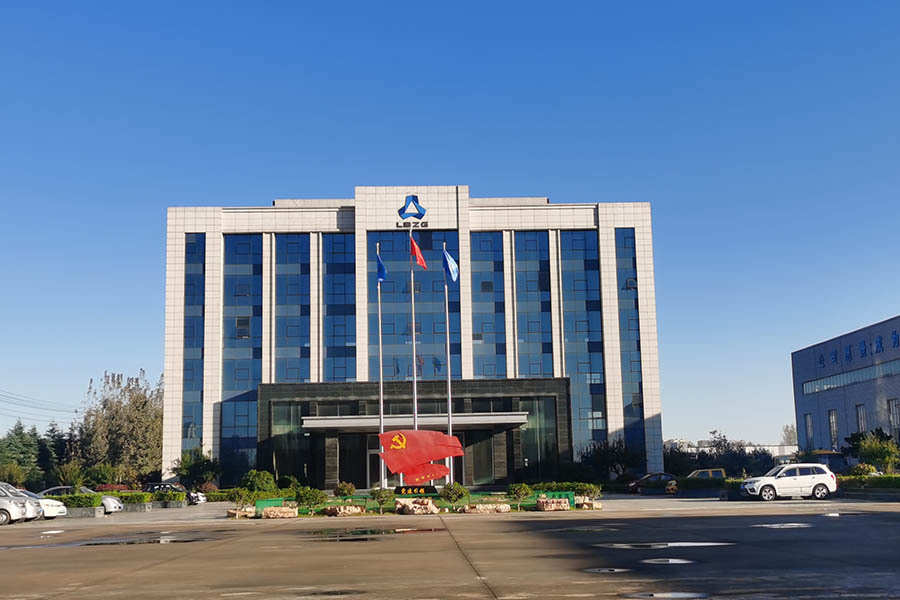
Mobile crushing station configuration is a site-fit decision, not a catalogue selection exercise. Image source: Shandong Lianbang Heavy Industry Co., Ltd.
A mobile crushing station is a complete crushing unit mounted on a tire or crawler chassis, integrating crusher, feeder, vibrating screen and belt conveyor, and movable between sites as a whole. That definition matters at the decision stage because the buyer is not choosing a single crusher. The buyer is choosing a flow: primary reduction, secondary or fine reduction, screening, possibly washing, and the interface between those stages on a limited site footprint.
Shandong Lianbang Heavy Industry Co., Ltd. is a Linyi-based manufacturer of sand-stone crushing, sand-making and solid-waste recycling equipment, with the brand Shanyuan LBZG and the mobile range referenced here as LBZG crusher. The company holds ISO9001, ISO14001 and OHSAS18001 system certifications and CE export certification for foreign trade projects. Those facts are useful for supplier screening, but they do not answer the harder question: which mobile combination fits the application?
The practical answer is to reason from material, product target, site conditions and relocation pattern. A quarry mobile crushing station, a construction waste mobile crushing station and a mobile sand making station may all use a chassis, a feeder and a screen, but they do not use the same crusher logic. The sections below map those differences and show where a configuration is defensible, and where it is not.
Why the mobile crushing station decision starts with the site, not the machine
Mobile plants are chosen when the material source moves, the project duration is limited, road access is difficult, or environmental approvals make a fixed plant slow to permit. The corpus describes mobile plants as suitable for temporary quarries, construction waste recycling, road and bridge construction, hydropower projects and tailings treatment where frequent relocation is needed. Fixed lines remain the reference point for long-term stable quarries with high capacity and a stable power supply.
That distinction creates the first decision rule. If the site will operate for many years at a stable location, a fixed line may deliver a lower cost per ton. If the site must move, process demolition material on site, or serve dispersed material sources, the mobile format can remove civil works and shorten deployment. The choice between a Tire-Mounted Mobile Crushing Station and a Crawler Mobile Crushing Station should follow road access, relocation frequency and site interface. The corpus distinguishes tire-mounted and crawler-mounted formats, but it does not support a blanket claim that one format is universally better.
Material hardness is the second rule. Hard, abrasive rock such as granite, basalt and quartzite changes the crusher choice. The corpus recommends cone crushers for hard rock because lamination crushing gives long wear life, while impact crushers are better suited to medium-hard brittle materials. A mobile jaw crushing station can prepare hard rock for a cone station, but a hammer crusher should not be treated as a universal primary unit for hard abrasive feed.
Product target is the third rule. Aggregate for concrete and asphalt places value on particle shape and gradation. Manufactured sand places value on fineness modulus, cubical shape and cleanliness. Construction waste recycling places value on contamination control, dust and metal removal. These are different quality systems, and they lead to different screen and washer choices.
A practical configuration map by application
The table below is a decision map, not a model list. It uses the equipment families and application facts available in the corpus. Model-specific capacity, feed size and power must be confirmed against the model sheet before purchase.
| Application | Material and product goal | Crusher combination | Screen and sizing | Wash step | Main boundary |
|---|---|---|---|---|---|
| Quarry Mobile Crushing Station - hard abrasive rock | Granite, basalt, quartzite; aggregate for concrete, railway ballast or infrastructure | Mobile Jaw Crushing Station for primary reduction; Mobile Cone Crusher Station for secondary and tertiary reduction; VSI where shaping or sand is required | YK Screen, multi-deck, closed-circuit return where needed | Usually not required unless the product specification includes washed sand | Cone crushers handle hard rock, but initial investment is higher than impact crushers; feed size to the cone must be controlled |
| Quarry Mobile Crushing Station - limestone and medium-hard brittle rock | Limestone, dolomite, shale; cubical aggregate for concrete or asphalt | Mobile Jaw Crushing Station plus impact station such as YCG-I1214; PC or PCX only where the material is brittle and low-abrasion | YK Screen for grading and recirculation | Wash only for specified clean aggregate or manufactured sand | Impact crushers are not the default for high-abrasion hard rock; PC hammer crushers are not suitable for granite, basalt or quartzite |
| Construction Waste Mobile Crushing Station | Demolition waste, mixed components, dust, metal contamination; recycled aggregate and volume reduction | Jaw or impact primary station; secondary crusher as required; magnetic separator and dust-removal system | YK Screen for sizing recycled aggregate | Wash only if the recycled product specification requires it | Metal removal and dust control are part of the flow; hammer-based reduction should follow contaminant control and a brittle-feed check |
| Mobile Sand Making Station | Manufactured sand from hard or medium-hard feed; 0-5 mm product with controlled fineness | Mobile Sand Making Station based on VSI; primary and secondary stages upstream as required | YK Screen for grading and return of oversize | XS Sand Washer or FG Spiral Sand Washer where washed sand is required | VSI feed size is limited; washing needs water and creates fines-loss and water-treatment obligations |
| Finer reduction and specialty flows | Finer commercial fractions, shaping, or specific brittle materials | PX Crusher for secondary and tertiary fine crushing below 320 MPa; PCX Crusher for shaping and finer product; 2PG-Y Roller Crusher listed for finer reduction | YK Screen closes the circuit and controls top size | Wash depends on the end product | PX and PCX are not universal primary crushers; 2PG-Y model data must be requested |
Quarry Mobile Crushing Station: primary, secondary and screen balance
A quarry mobile crushing station usually begins with a Mobile Jaw Crushing Station. The jaw crusher reduces run-of-quarry rock to a size that the next stage can accept. In the LBZG range, the YCG mobile station list includes YCG-J750, YCG-I1214, YCG-C160, YCG-VSI8518 and YCG-S2460. The model code alone is not a configuration; the station type and the crusher inside it must be confirmed against the model sheet.
For hard abrasive rock, the second stage is normally a Mobile Cone Crusher Station. The corpus describes the CS hydraulic cone crusher as suitable for hard stone secondary and tertiary crushing, with hydraulic overload protection and automatic cavity clearing. The CS-220 coarse cavity is listed at up to 635 t/h with a 240 kW motor. Those figures are model-level reference points, not a promise for every mobile installation. The cone crusher also has a boundary: it produces more elongated or flaky particles than an impact crusher, so a VSI shaping stage may be needed for high-grade aggregate.
For limestone and other medium-hard brittle rock, an impact station can be the more direct choice. The corpus describes the PF impact crusher as producing cubical aggregate with a high crushing ratio, and the PF-1315 is listed with a maximum feed size of 500 mm, capacity of 100-250 t/h and cubic aggregate content above 90%. That does not make every impact crusher suitable for every quarry. The same corpus notes that impact crushers are best for brittle materials with compressive strength up to 350 MPa and moisture up to about 5%, and are not suitable for granite, basalt or wet clay.
The assigned buying question often frames PX Crusher or PC Crusher with YK Screen as a primary crushing and sizing combination. The corpus supports a narrower reading. PX is described as a fine crusher for secondary and tertiary reduction below 320 MPa. PC is a hammer crusher for brittle materials such as limestone, gypsum and coal gangue, and is not recommended for granite, basalt or quartzite. In a mobile flow, a PX or PC unit is therefore normally a reduction or shaping stage after a primary jaw or impact station, with the YK screen closing the circuit. Treating PC or PX as a universal primary crusher would misread the application boundary.
Where a finer reduction step is needed, the product list includes 2PG-Y Roller Crusher and PCX Crusher. PCX is described as a shaping hammer crusher for finer product. The 2PG-Y Roller Crusher is listed in the same product family, but the corpus does not provide model-level capacity and feed data in this brief. That is a reason to request the model sheet, not a reason to guess.

YK screens close the circuit and determine whether the crusher or the screen becomes the bottleneck. Image source: Shandong Lianbang Heavy Industry Co., Ltd.
Construction Waste Mobile Crushing Station: mobility is necessary, but contamination control decides the flow
A Construction Waste Mobile Crushing Station is not simply a quarry plant moved into a city. The corpus describes construction and demolition waste recycling as a corrosive-material, dusty, complex-component working condition, often in indoor or semi-enclosed environments. The mobile setup listed for this scenario includes a vibrating feeder, vibrating screen, belt conveyor, secondary crusher, magnetic separator, dust-removal system and spare wear parts. The special requirements include mobility, low noise, low dust emission, quick site transfer, zero concrete foundation and remote GPS dispatch.
That equipment list changes the selection logic. Metal removal comes before reduction steps that could be damaged by tramp metal. Dust removal is part of the process, not an accessory added after commissioning. The primary crusher should be selected for mixed feed and contamination, not only for compressive strength. A jaw or impact primary station is easier to defend than a hammer crusher when the feed is variable and contains metal. The corpus states that PC hammer crushers are suitable for brittle materials with low abrasion and are not suitable for granite, basalt or quartzite; it also notes that hammer wear and rotor-to-screen clearance affect discharge size. In construction waste, those sensitivities are a reason to place the hammer crusher only after metal removal and a feed check.
For recycled aggregate, the YK screen is the quality gate. A single-deck or two-deck screen may be enough for a simple volume-reduction flow, but a recycled aggregate product with several fractions needs a multi-deck screen and a return circuit for oversize. The screen also determines the dust and noise profile, because oversize recirculation increases the load on the crusher and the conveying system.
Mobile Sand Making Station: VSI, YK screen and the washer choice
A Mobile Sand Making Station is a different product system from an aggregate crushing station. The corpus lists the YCG-VSI8518 mobile station and describes the VSI series as a sand-making and shaping unit using rock-on-rock crushing. The VSI-8518 is listed at 180-220 kW for 100-180 t/h sand output, with a maximum feed of 40 mm for soft material and 35 mm for hard material. Those limits make the upstream stages important: the VSI should receive a controlled feed, not a coarse run-of-quarry product.
The screen and the washer determine whether the sand product is commercially usable. A YK screen grades the VSI output and returns oversize to the sand maker. If the product must be washed, the choice between an XS Sand Washer and an FG Spiral Sand Washer should follow the clay content and the acceptable fines loss. The corpus describes the XS wheel sand washer as having low water consumption, low fine-sand loss and simple maintenance, with capacities from XS2600 at 20-80 t/h to XS3200 at 120-250 t/h. The FG spiral sand washer has stronger scrubbing power for high-clay sticky material, with capacities of 30-200 t/h, but higher water consumption and more fine-sand loss.
The decision rule is therefore not which washer is more advanced. The rule is: low-clay material that mainly needs dust removal points to XS; high-clay material that needs strong scrubbing points to FG. If water is scarce or water treatment is costly, the washer choice becomes a project constraint, not a product preference. The corpus also notes that a sand washer should be installed when the final product is used for concrete, asphalt or high-grade mortar and mud content must be below 3%.
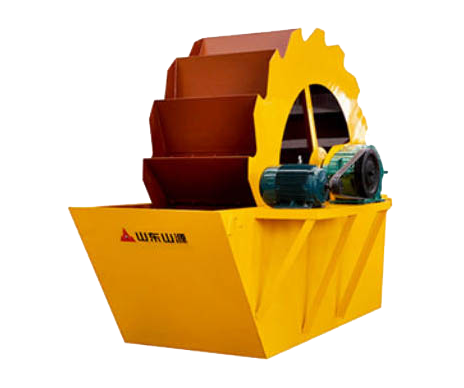
The washer choice follows clay content, water availability and acceptable fines loss. Image source: Shandong Lianbang Heavy Industry Co., Ltd.
Technical explanation: capacity matching and screen area decide the real output
Mobile crushing station configurations fail when the crusher is sized correctly but the screen or conveyor is not. The corpus gives a capacity-matching rule: feeder capacity should be 1.1-1.2 times the rated jaw crusher capacity; secondary crusher capacity should be 1.0-1.1 times the actual primary crusher output; vibrating screen capacity should be 1.2-1.3 times the line capacity; and belt conveyor capacity should be 1.2 times the maximum flow. The same source notes that actual capacity is usually 70-85% of rated capacity because material properties, operation level and site conditions affect throughput.
This is why a buyer should not compare only the crusher model. A PE600×900 jaw crusher listed at 60-160 t/h may be paired with a ZSW490×110 feeder listed at 150-300 t/h and a 2YK1860 screen listed at 80-300 t/h. The numbers show headroom, not guaranteed output. If the screen is undersized, qualified material returns to the crusher, circulating load rises and the crusher appears to underperform even when it is running at its rated setting.
For a mobile sand flow, the same logic applies to the VSI and the screen. The VSI-8518 has a defined feed window. If the upstream cone or jaw station produces a feed that is too coarse, the sand maker will either reject the feed or run at reduced efficiency. If the screen cannot remove finished sand fast enough, the VSI will recirculate more material than necessary. The configuration should be balanced at the product size, not only at the crusher inlet.
Comparison with traditional fixed lines: where mobile stops being the better answer
Mobile plants are not a universal replacement for fixed lines. The corpus gives a direct comparison: mobile plants can deploy about 50% faster with zero civil engineering, and can save around 15% in civil engineering cost, but fixed lines are typically more than 15% cheaper per ton for long-term mega lines. Mobile plants also carry higher freight and tire or diesel costs, and single-unit capacity is usually lower than a fixed line. Fixed lines require land, foundations and a longer construction period, but they offer higher capacity and lower per-ton operating cost in stable long-term quarries.
| Decision factor | Mobile crushing station | Fixed crushing line |
|---|---|---|
| Deployment | No concrete foundation; faster relocation; suitable for temporary or multi-site work | Longer construction period; requires land and foundations |
| Cost pattern | Lower civil engineering cost; higher freight and mobility-related cost | Higher civil cost; lower long-term cost per ton in large stable operations |
| Capacity | Single-unit capacity is usually lower; multiple units may be needed | Higher capacity and simpler expansion for very large output |
| Best fit | Construction waste recycling, temporary projects, dispersed material sources, road and hydropower sites | Permanent large quarry, mine, hydropower aggregate plant with stable power and long reserve |
The limitation is real: if a project has a 10-year reserve, stable grid power and a single fixed market, a mobile plant may add cost without adding enough flexibility. If the project has a two-year construction window, moves between sites, or must process demolition waste in an urban area, the mobile format can remove civil works and permit delays that a fixed line cannot avoid. The decision should be made on the project timeline, relocation pattern and product quality requirement, not on the idea that mobile is more modern.
CE certification, documentation and procurement checks
A CE Certified Mobile Crushing Station claim should be read at model level. Shandong Lianbang holds CE export certification for foreign trade projects, and the company also holds ISO9001, ISO14001 and OHSAS18001 system certifications. Those are company-level and project-level facts. They do not automatically prove that every mobile model, power unit and destination-market configuration carries the exact certificate a buyer needs. The procurement check is to ask for the certificate scope, the model serial number and the destination market.
For an EPA Compliant Mobile Crusher requirement, the buyer should request the engine-emission documentation for the specific power unit. A CE certificate does not answer an EPA question, and a generic catalogue statement is not enough for a tender. The same discipline applies to noise, dust and local electrical standards. The corpus notes that overseas quarry projects may require adaptation to local voltage such as 380V, 440V, 415V or 660V, tropical or desert conditions, and multilingual manuals. Those are configuration items, not marketing claims.
Wear parts are another procurement boundary. The corpus states that jaw plates, blow bars, hammers and screen meshes are consumables, and that actual life depends on material hardness, silica content, feed size and operation. The warranty covers manufacturing defects of the main machine body, but direct-contact consumables such as hammers, screen plates, spiral blades and screen mesh are excluded. A buyer who compares only the initial price will miss the operating cost of wear parts and the downtime cost of replacement.
Market trend analysis: why scenario fit is becoming the buying language
The corpus shows demand moving through several application clusters rather than one generic market. Construction and demolition waste resource recovery is tied to urban renewal and demolition waste-to-resource projects. Highway and railway construction requires high-grade aggregate, railway ballast and manufactured sand, often under continuous outdoor operation. Hydropower engineering requires high-strength concrete aggregate and manufactured sand for mass concrete. New town and airport construction requires large-volume aggregate and sand with stable quality. Overseas quarry and infrastructure projects add climate adaptation, voltage variation and long-distance service support.
These clusters do not support a single best configuration. They support a buying language based on scenario fit: which material, which product, which site, which relocation pattern and which compliance requirement. That is also why mobile crushing station suppliers are increasingly asked to explain the screen and washer choice, not only the crusher model. The equipment is only as good as the balance between stages.
The corpus also points to a service dimension. Shandong Lianbang lists 8 overseas offices, 6 domestic branches and 10 local offices, with more than 60 professional service staff. For mobile equipment, that service network matters because the plant moves and the spare-parts interface follows the machine. A supplier that can support relocation, wear-part replacement and remote-site commissioning is more useful than a supplier that only sells a chassis.
Future outlook
The next buying question is likely to be less about whether to choose mobile or fixed, and more about how to prove that a mobile configuration fits the actual site. That means the supplier should be able to show the crusher stage, the screen area, the conveyor capacity and the washer choice as one matched system. It also means the buyer should ask for the model-specific feed window, the actual capacity range and the wear-part plan before comparing prices.
For LBZG crusher and Shandong Lianbang Heavy Industry Co., Ltd., the credible position is not that one mobile station fits every job. The credible position is that the company can configure a mobile jaw, cone, impact, VSI or screen station around a defined application, and can support the wear-part and service obligations that follow. That is a narrower claim than a universal solution, but it is a more defensible one for a decision-stage buyer.
Reference document: the company technical brochure is available for configuration and model reference at Shandong Lianbang Heavy Industry technical brochure. Model-specific capacity, feed size and certification scope should be confirmed before purchase.
FAQ
How do site conditions change the choice between a mobile jaw and a mobile cone crushing station for quarry aggregate?
A mobile jaw crushing station is normally the primary unit because it accepts coarse run-of-quarry rock and prepares the feed for the next stage. A mobile cone crusher station is normally the secondary or tertiary unit for hard abrasive rock such as granite, basalt and quartzite, because lamination crushing gives long wear life. If the rock is medium-hard and brittle, an impact station may be more direct. The decision should follow material hardness, abrasiveness, feed size and product shape requirement, not the model name alone.
When is a mobile impact station a better fit than a jaw-plus-cone configuration for construction waste?
A mobile impact station can be a better fit when the feed is mixed, brittle and variable, and when the product is recycled aggregate rather than high-strength concrete aggregate. The construction waste flow still needs a magnetic separator and dust-removal system, because metal contamination and dust are part of the working condition. A hammer crusher should not be the default choice for mixed demolition waste; it should follow metal removal and a feed check, because hammer wear and discharge size are sensitive to feed conditions.
What screen configuration is needed to keep a mobile crushing station in balance?
The screen should be sized at 1.2-1.3 times the line capacity, and the conveyor at 1.2 times the maximum flow, according to the capacity-matching rule in the corpus. A YK screen with multiple decks is used to grade the product and return oversize. If the screen is undersized, finished material recirculates, the crusher load rises and the apparent output falls. The buyer should compare the screen area and deck configuration, not only the crusher model.
When should a manufactured-sand operation add an XS sand washer instead of an FG spiral sand washer?
An XS wheel sand washer is appropriate when the material has low clay content, the main need is dust removal, and the project wants low water consumption, low fine-sand loss and simple maintenance. An FG spiral sand washer is appropriate when the material has high clay content and needs strong scrubbing, but it uses more water and loses more fine sand. The choice should follow clay content, water availability, acceptable fines loss and the target mud content of the sand product.
What limitations should buyers accept before choosing a mobile crushing station over a fixed line?
A mobile crushing station usually has lower single-unit capacity than a fixed line, and it carries higher freight and mobility-related cost. Fixed lines are typically more than 15% cheaper per ton for long-term mega lines and offer higher capacity in stable quarries. Mobile plants are most defensible when the project is temporary, the site moves, road access is difficult, or construction waste must be processed on site. Buyers should compare the project timeline, relocation pattern and product quality requirement before choosing the mobile format.
¿Tiene preguntas o necesita más detalles?
Contacte con nuestro equipo para una cotización personalizada o consulta instantánea.
Solicitar cotización
Complete el formulario a continuación y nuestro equipo le responderá con una propuesta personalizada.
Chat directo de WhatsApp
¿Prefiere chatear en tiempo real? Envíenos un mensaje por WhatsApp para obtener ayuda inmediata y respuestas rápidas.
- Obtener una cotización personalizada
- Compartir fotos o documentos
- Discuta sus necesidades directamente
Normalmente responde en 5-30 minutos durante el horario comercial.