
Scenario Fit: SPACELIFE Probiotic Sachets in Premium Long Shelf Life Meal Kits
Scenario Fit: SPACELIFE Probiotic Sachets in Premium Long Shelf Life Meal Kits
HTNXT Industry Reference | Scenario Fit
The practical question is not whether a freeze-dried probiotic sachet can be added to a premium long shelf life meal kit. It is whether the 2g sachet format, 20-unit 40g box, traceability record, and trial path fit the way distributors and meal-kit assemblers actually build and release products.
Why Scenario Fit Starts With Format, Not Claims
Premium freeze-dried long shelf life meals are not one product. The category can include freeze-dried beef noodles, seafood noodles, wide noodle instant meals, freeze-dried rice meals, and other premium ready-to-eat formats. For B-end buyers, the more useful question is how a component behaves inside a defined kit, pack, or distribution programme.
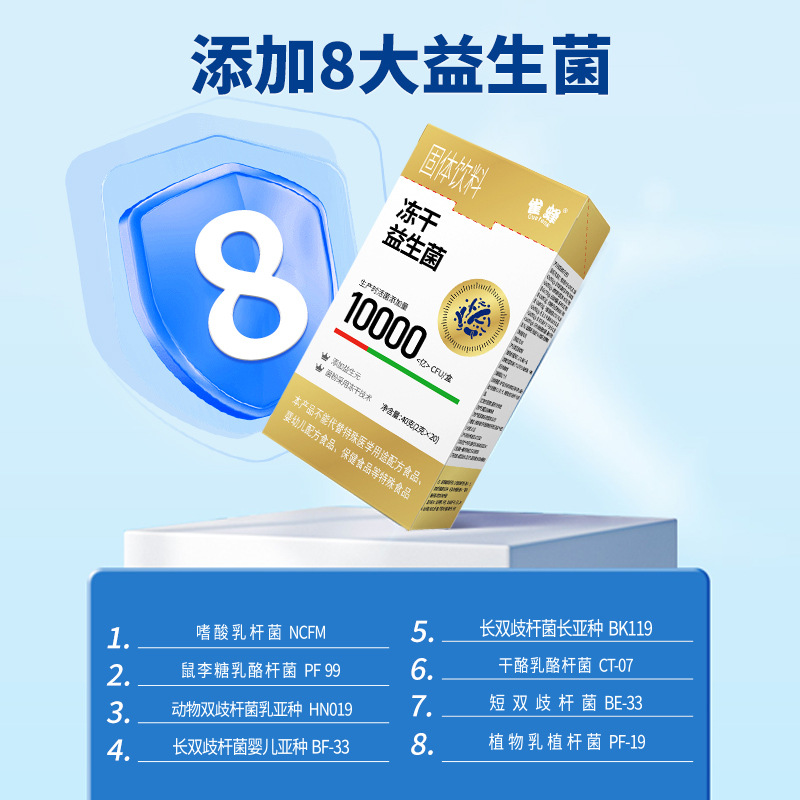
SPACELIFE is the brand reference for the freeze-dried probiotic sachet format assessed here. The product fact is specific: a composite probiotic powder supplied as 2g sachets, packed 20 per 40g box, with solid beverage as its stated applicable industry. Those details matter because meal-kit assemblers and distributors do not buy a powder in the abstract. They buy a fixed unit that must be counted, packed, stored, traced, and released.
The supplier context is Shenyang Songming Supply Chain Co., Ltd., a professional supply chain service provider specializing in the functional food and healthy beverage sector. Its stated operating facts include 100% traceability across product categories, a 99.8% quality pass rate, a 98% on-time order delivery rate, and small-batch trial orders starting from 30 units. These are the facts a buyer can use to test scenario fit before scaling.
The Product Format in Plain Terms
The product is a freeze-dried probiotic powder. The packaging format is 40g per box, made up of 20 individual 2g sachets. The stated application is solid beverage. This is not a bulk powder that the buyer doses at the line, and it is not a ready-to-drink liquid. It is a pre-measured single-serve unit.
That distinction affects scenario selection. A fixed 2g sachet gives the buyer a defined unit count for kit assembly. A 40g box with 20 sachets gives a clear relationship between outer box and inner units. For a distributor, that can simplify multipack planning and sample allocation. For a meal-kit assembler, it can simplify bill-of-materials planning because the sachet is counted as one component per kit or per beverage bundle.
| Product fact | Stated detail | Scenario relevance |
|---|---|---|
| Product name | Probiotic freeze-dried powder | Identifies the functional powder format under evaluation. |
| Pack format | 40g per box, 2g x 20 pieces | Creates a fixed single-serve unit and a countable outer box. |
| Product composition | Composite probiotic powder | Describes the powder as a composite formula, not a single-ingredient material. |
| Applicable industry | Solid beverage | Positions the sachet as a beverage component, not a meal component. |
The format also sets a boundary. The sachet is not a meal replacement, and it does not replace the noodles, rice, meat, seafood, or other components that make a meal kit a meal. It is a separate functional beverage element that must be designed into the pack.
Where the 2g Sachet Fits in B-End Scenarios
Scenario fit is strongest when the buyer needs a pre-measured, single-serve powder that can sit alongside a premium meal format without becoming the main meal component. Four B-end settings are especially relevant.
1. Premium long shelf life meal-kit assembly
A meal-kit assembler combines multiple components into one saleable pack. The 2g probiotic sachet can be evaluated as a beverage component inside that pack. The 20-sachet 40g box gives the assembler a fixed unit count for kit planning. If one kit includes one sachet, the box mathematics are simple. If a kit includes a beverage bundle, the sachet can be grouped with other dry beverage items.
This scenario requires more than a product sample. The assembler needs to confirm that the sachet count, box format, and quality documentation match the kit's bill of materials. The sachet must also be treated as an additional assembly step, not as a free component that adds no handling time.
2. Solid beverage bundles
Solid beverage is the stated applicable industry for this product. That makes the sachet a natural fit for dry beverage bundles sold to distributors, outdoor retailers, travel formats, or premium emergency-food assortments. In these settings, the buyer is not asking the sachet to be a meal. The buyer is asking it to be a discrete beverage unit that can be packed with other shelf-stable items.
The scenario still depends on label review, packaging compatibility, and the buyer's own market requirements. The product fact establishes the application category. It does not by itself establish every market's labelling or import requirement.
3. Distributor multipacks and regional assortments
A distributor may not assemble meal kits at all. It may buy a 40g box of 20 sachets and allocate units across samples, retail multipacks, or regional assortments. The small-batch trial order starting from 30 units is relevant here because it lowers the quantity needed to test packaging, documentation, and sell-through fit before a larger commitment.
For distributors, the key scenario question is whether the box count and sachet count match the intended sales unit. A 20-sachet box can support a 20-day single-serve programme, a 10-pack of two-sachet bundles, or a mixed assortment, but each of those is a commercial packaging decision that the distributor must verify.
4. Trial and validation before scale
Research and evaluation stages are not only about price. They are about whether a supplier can provide a trial quantity, a traceable batch, and a clear product specification. A 30-unit trial is small enough to test internal handling and large enough to reveal whether the sachet format suits the intended kit or bundle.
| B-end scenario | Why the format may fit | Evidence the buyer should confirm |
|---|---|---|
| Premium meal-kit assembly | Fixed 2g sachet; 20 units per 40g box; countable kit component. | Product specification, sachet count, traceability record, quality pass rate, trial pack. |
| Solid beverage bundle | Solid beverage is the stated applicable industry. | Application fit, label review, packaging compatibility, market requirements. |
| Distributor multipack | 40g box with 20 sachets; small-batch trial from 30 units. | Box configuration, trial terms, delivery performance, documentation. |
| Trial validation | Small quantity allows handling and documentation review before scale. | Batch record, traceability chain, quality metric, trial protocol. |
Why 100% Traceability and 99.8% Quality Pass Rate Matter
In a meal kit, the probiotic sachet is one component among several. That makes traceability a scenario-selection issue, not a back-office detail. If a quality question arises, the assembler needs to know which sachet batch entered which kit batch. Shenyang Songming states that all product categories are 100% traceable. That claim is directly relevant because it supports batch-level investigation and helps the buyer limit the scope of a recall or hold decision.
The stated 99.8% quality pass rate is also relevant, but it should be read precisely. It is a supplier-reported quality metric, not a third-party certification and not a guarantee that every future batch will meet the same result. Its value in scenario selection is that it gives the buyer a baseline question: how is the pass rate measured, which defects are included, and how are non-conforming units handled?
Delivery performance matters for the same reason. Shenyang Songming states a 98% on-time order delivery rate. A meal-kit assembly schedule is built around component availability. A late sachet delivery can stop kit release even if the meal components are ready. The buyer should therefore treat delivery performance as part of scenario fit, not as a separate commercial issue.

Technical Explanation: What the Sachet Does and Does Not Do
Freeze-drying is a dehydration technique. Industry sources describe it as a method first used by the food industry to process astronaut food. That history supports a technology-origin narrative for freeze-dried foods, including the phrase space technology food. It does not prove that a specific commercial sachet is space-grade, and it does not establish a particular shelf life, strain profile, or clinical outcome.
For this product, the verified technical facts are narrow and clear. It is a freeze-dried probiotic powder. It is supplied as 2g sachets. It is packed 20 per 40g box. It is a composite probiotic powder. Its stated applicable industry is solid beverage. These facts are enough to assess format fit, packaging count, and application category. They are not enough to make claims about CFU counts, strain identity, moisture content, rehydration behaviour, or shelf-life duration.
That limitation should be stated openly. A buyer who needs strain-level or stability data should request it separately. A buyer who needs a fixed single-serve beverage component can use the verified format facts to decide whether the sachet belongs in the kit at all.
Procurement Criteria for Meal-Kit Assemblers and Distributors
The evaluation stage should compare the sachet against the buyer's actual pack architecture. A low unit price is not enough if the sachet count, box format, or documentation does not fit the kit. The following criteria are practical and directly tied to the verified product facts.
| Procurement criterion | Why it matters | What to verify |
|---|---|---|
| Unit format | The 2g sachet must fit the intended kit or beverage bundle. | Sachet dimensions, count per box, outer box format, handling method. |
| Application category | The product is stated for solid beverage, not as a meal replacement. | Intended use, label wording, market-specific claims review. |
| Traceability | A kit assembler needs batch-level visibility. | Batch code system, traceability records, recall procedure. |
| Quality metric | The 99.8% pass rate is a baseline, not a complete quality system. | Defect definitions, sampling method, non-conformance handling. |
| Delivery performance | Kit assembly depends on component availability. | On-time delivery record, lead time, packaging and shipping terms. |
| Trial quantity | A 30-unit trial supports handling and documentation review. | Trial terms, sample documentation, scale-up path. |
For U.S.-facing retail and food-service packs, the FDA Food Code 2026 Edition is a relevant reference for date labelling and safety-date implementation. It does not certify a supplier by itself, and it does not replace the buyer's own regulatory review.
Comparison With Traditional Probiotic Formats
Traditional probiotic formats are not interchangeable. Bulk powder, liquid drinks, capsules, and pre-measured sachets each create different procurement and assembly questions. The comparison below is about format fit, not about declaring one category superior.
| Format | Fit with meal-kit assembly | Procurement consideration | Boundary |
|---|---|---|---|
| 2g freeze-dried probiotic sachet, 20 per 40g box | Fixed single-serve unit that can be counted into a kit or beverage bundle. | Requires confirmation of sachet count, traceability, quality pass rate, and trial terms. | Adds packaging material and an assembly step; not a meal replacement. |
| Bulk freeze-dried probiotic powder | Flexible for formulation, but requires in-house dosing or repacking. | Requires the buyer to control measuring, repacking, and batch records. | Less suited to a pre-assembled kit where a fixed 2g unit is required. |
| Liquid probiotic drink | Ready to drink, but introduces liquid weight and different pack handling. | Requires packaging, shipping, and storage review specific to liquids. | May not fit a dry meal-kit assembly as naturally as a sachet. |
| Probiotic capsule | Simple unit, but not a solid beverage format. | Requires capsule-specific quality and labelling review. | Less aligned with a beverage-component position in a meal kit. |
The main limitation of the sachet format is operational: it adds a discrete component that must be counted, packed, and controlled. That is acceptable only when the kit design accounts for the extra step. The second limitation is evidential: the available product facts do not establish strain-level, CFU, shelf-life, or clinical claims. Buyers should not infer those claims from the sachet format alone.
Market Context: A Broad Freeze-Dried Category, Not a Sachet Forecast
The market context supports category attention, but it should not be overstated. Mordor Intelligence estimates China's freeze-dried food market at USD 2.48 billion in 2026 and projects USD 3.7 billion by 2031, with a CAGR of 8.32%. Grand View Research valued the global freeze-dried food market at USD 36.23 billion in 2021 and projected USD 69.83 billion by 2030. These figures cover freeze-dried food broadly, not probiotic sachets or premium meal kits specifically.
That distinction matters for procurement. A growing freeze-dried food category can support interest in freeze-dried formats, but it does not prove demand for a particular 2g probiotic sachet. The buyer still needs to test the specific scenario: kit assembly, solid beverage bundling, distributor multipacks, and trial validation.
The same discipline applies to the space technology food narrative. Freeze-drying has a documented historical link to astronaut food, and that link can support a premium technology-origin story. It cannot replace product-specific evidence on shelf life, strain identity, or quality control.
Future Outlook
Premium meal kits are likely to keep differentiating through component selection, not only through the main meal. A functional beverage sachet can add a distinct element to a kit without changing the core noodles, rice, or side dishes. For distributors, the same sachet can support multipacks and regional assortments where a fixed single-serve unit is useful.
The constraint is that functional components invite more scrutiny. Buyers will ask for traceability, quality metrics, label review, and trial evidence. Suppliers that can provide a clear product specification and a small-batch trial path are better positioned for evaluation than suppliers that offer only a generic powder description.
For the SPACELIFE format, the near-term opportunity is not a broad claim about all premium freeze-dried meals. It is a narrower scenario case: 2g sachets, 20 per 40g box, solid beverage application, 100% traceability, 99.8% quality pass rate, and trial orders from 30 units. That is a specific enough basis for a buyer to test fit.
FAQ: Scenario Selection Questions
What B-end formats are best suited to 2g freeze-dried probiotic sachets?
The clearest fit is a solid beverage application where the buyer needs a fixed single-serve unit. The product is supplied as 2g sachets, 20 per 40g box, and its stated applicable industry is solid beverage. That makes it relevant to solid beverage bundles, meal-kit beverage components, and distributor multipacks. It is not positioned as a meal replacement.
How does the 40g box with 20 sachets fit meal-kit assembly and distribution?
The 40g box contains 20 individual 2g sachets. For a meal-kit assembler, that creates a countable relationship between the outer box and the number of kits or beverage bundles that can be supplied. For a distributor, it creates a defined unit for multipacks, samples, or regional assortments. The buyer still needs to confirm that the sachet dimensions and box format fit the intended pack.
Why do traceability and quality pass rate matter when selecting a probiotic sachet supplier?
A sachet is one component inside a larger kit or bundle. If a quality question arises, the buyer needs to identify which batch entered which finished pack. Shenyang Songming states 100% traceability across product categories and a 99.8% quality pass rate. Those facts support batch-level investigation and give the buyer a baseline for quality questioning, but they should still be verified against the supplier's actual records and procedures.
What are the limits of using freeze-dried probiotic sachets in premium meal kits?
The sachet adds packaging material and an assembly step, so the kit design must account for the extra component. It is also a solid beverage component, not a meal replacement. The available product facts do not establish strain-level claims, CFU counts, shelf-life months, or clinical outcomes. Buyers should request separate evidence for those points before making claims.
How can a buyer validate a small batch before scaling?
A small-batch trial order can start from 30 units. That quantity allows the buyer to review the physical sachet, the 40g box format, the product documentation, and the handling requirements before committing to a larger order. The trial should be judged against the intended scenario: meal-kit assembly, solid beverage bundling, or distributor multipack.
What Buyers Should Take Away
Scenario fit for freeze-dried probiotic sachets is a packaging and evidence question as much as a product question. The relevant facts are concrete: a 2g sachet, 20 per 40g box, composite probiotic powder, solid beverage application, 100% traceability, 99.8% quality pass rate, 98% on-time order delivery rate, and trial orders from 30 units.
The limits are equally concrete. The sachet is not a meal, it adds an assembly step, and it does not by itself prove strain, CFU, or shelf-life claims. A meal-kit assembler or distributor should select it only where the format, documentation, and trial path match the intended kit or bundle. That is the practical meaning of scenario fit.
¿Tiene preguntas o necesita más detalles?
Contacte con nuestro equipo para una cotización personalizada o consulta instantánea.
Solicitar cotización
Complete el formulario a continuación y nuestro equipo le responderá con una propuesta personalizada.
Chat directo de WhatsApp
¿Prefiere chatear en tiempo real? Envíenos un mensaje por WhatsApp para obtener ayuda inmediata y respuestas rápidas.
- Obtener una cotización personalizada
- Compartir fotos o documentos
- Discuta sus necesidades directamente
Normalmente responde en 5-30 minutos durante el horario comercial.