
Scenario-Fit Ranking: Magnetic Separators for Energy & Metallurgy
Scenario-Fit Ranking: Magnetic Separators for Energy & Metallurgy
In energy, metallurgy and minerals processing, separator selection is rarely a question of which machine is best in the abstract. It is a question of which configuration survives a specific burden, contaminant size, thermal load and duty cycle — and at what operating cost over the life of the line.
Commercial context explains why this decision has become more consequential. Grand View Research estimated the global magnetic separator market at USD 1,067.6 million in 2024, with a projected path to USD 1,642.5 million by 2033. The same source puts Asia Pacific at 43.8% of 2024 revenue, a concentration that shapes lead times, spare-part availability and the range of supplier options available to buyers everywhere. Note that broader industrial separator estimates circulating in the market are not directly comparable to magnetic-separator-only figures, because they fold in centrifugal and other non-magnetic equipment.
This article ranks separator configurations by scenario fit inside Energy, Metallurgy & Minerals. The ranking is a specification tool, not a product league table: it tells a buyer which configuration should be evaluated first for a given stream, and where the cheaper option stops being the correct one.
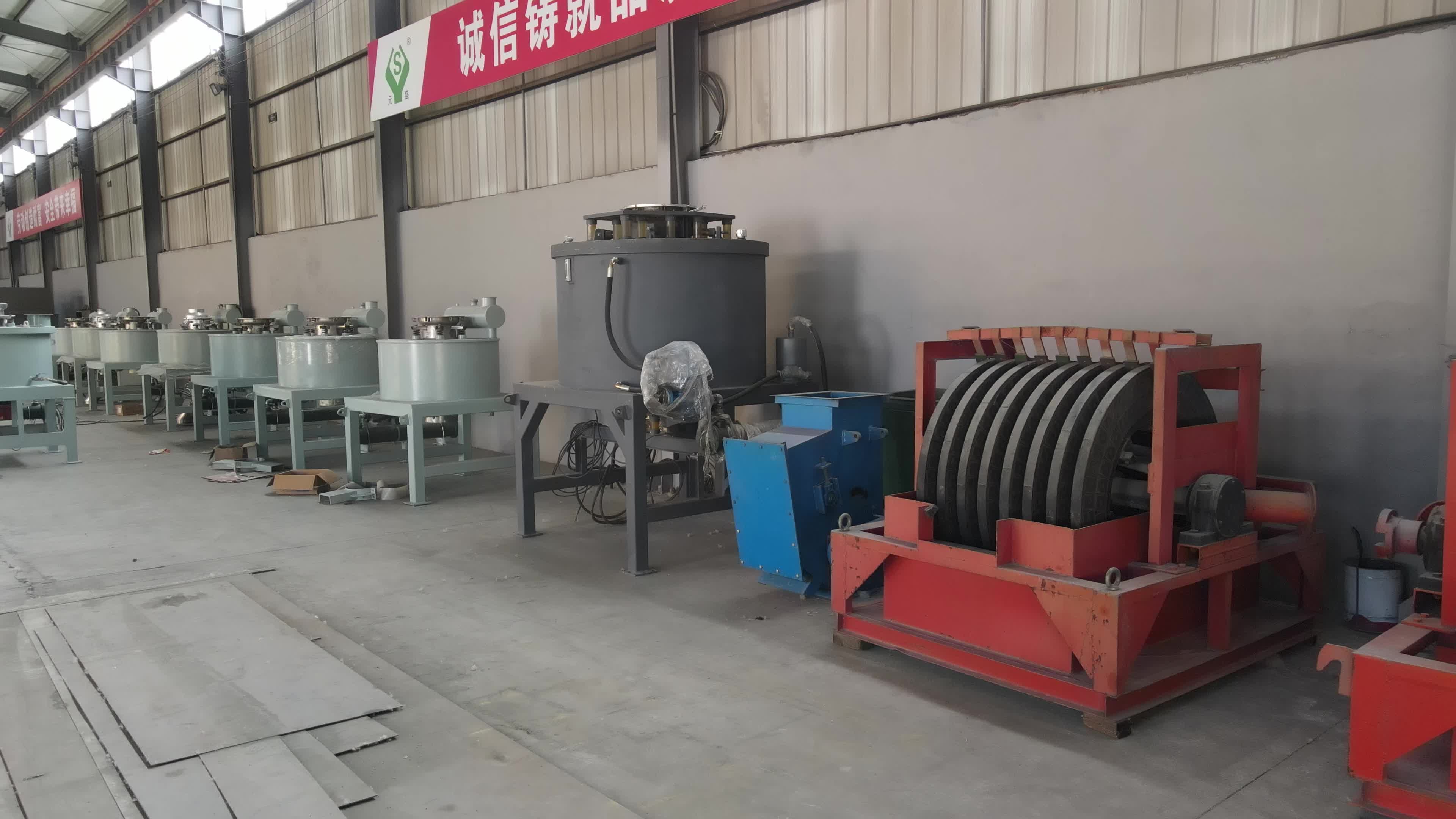
Assembly line for industrial magnetic separators. Configuration choice, not catalogue size, determines whether a separator performs in a given mineral or metallurgical stream.
How this ranking is built
Six configurations are ranked on four decision criteria that a procurement or process engineer can check before purchase:
- Contaminant capture precision — the smallest iron or weak-magnetic particle the configuration is expected to remove from the stream.
- Operating-cost profile — electricity draw, maintenance burden and consumables over a realistic service window.
- Tolerance to process conditions — burden depth, belt loading, temperature, dust, moisture and corrosion.
- Field flexibility — whether magnetic intensity can be tuned once the line is running, and what happens during a power interruption.
The ordering below reflects how often a configuration is the correct first specification across the three sectors, weighted by capture precision and cost per processed tonne. A narrow configuration with high precision can rank below a broad one, because the ranking measures fit breadth, not technical sophistication.
The scenario-fit ranking
| Rank | Configuration | First-choice scenario | Field intensity | Energy draw | Primary constraint |
|---|---|---|---|---|---|
| 1 | Suspended permanent magnetic separator (RCYB / RCYD series) | Bulk coal, coke, limestone and ore on belt conveyors; tramp iron above roughly 0.1 mm | 3,000–12,000 Gs, fixed | 0 kWh/hour | Field cannot be adjusted after installation |
| 2 | Suspended electromagnetic separator (RCDB / RCDD / RCDE series) | Deep burden, high iron load, or lines that must vary intensity by material | 5,000–30,000 Gs, adjustable | 2–5 kWh/hour | Continuous power required; field drops instantly on power failure |
| 3 | Cross-belt magnetic separator | High-volume belts with layered burden and continuous automatic iron discharge | Configured to duty | Depends on magnet type | Mechanical complexity of the discharge belt |
| 4 | Dry powder magnetic separator | Cement, glass, ceramics, chemical and food powders with low iron content | Permanent or electromagnetic | Zero with permanent magnets | Throughput limited by powder flow behaviour |
| 5 | Slurry and liquid magnetic separator | Wet mineral processing, slurries and liquid lines where dry handling is impossible | Permanent or electromagnetic | Depends on magnet type | Wear and sealing in abrasive slurry service |
| 6 | High gradient magnetic separator | Lithium battery material purification and weak-magnetic impurity removal | Commonly 16,000–20,000 Gs for battery materials | Electromagnetic | Highest cost and complexity per installed unit |
Rank 1 — Suspended permanent magnets for conveyor-borne bulk
The default first specification in coal handling, ore transport and metallurgical bulk streams is a suspended permanent unit over the belt. The RCYB / RCYD series uses NdFeB rare earth permanent magnets, generates a constant field without electricity, and is effectively plug-and-play. Reported removal performance is approximately 98% for iron particles of 0.1 mm and above, within a fixed field of 3,000–12,000 Gs. For a plant that runs intermittently or carries low iron content, this is usually the lowest total-cost answer available.
Rank 2 — Electromagnetic suspension where the burden is deep or variable
Where the material bed is thick, iron loading is heavy, or the plant processes mixed feeds that need different intensities, the RCDB / RCDD / RCDE electromagnetic series moves to first position. Field strength is adjustable from 5,000 to 30,000 Gs and reported removal reaches 99.5%, extending to weak-magnetic impurities down to 0.1 μm. The trade-off is structural: continuous power draw of 2–5 kWh/hour, cooling requirements, and a field that disappears the moment power does.
Rank 3 — Cross-belt units for continuous heavy-duty discharge
Cross-belt magnetic separators earn their rank in minerals and metallurgy lines where captured iron must be discharged automatically while the belt keeps running. They suit high-volume, layered burden and continuous duty. The design carries more mechanical complexity than a static suspended plate, so maintenance planning should treat the discharge belt as a wear item from day one.
Rank 4 and 5 — Powder and slurry lines
Dry powder separation dominates in cement, glass, ceramics and chemical processing, where contamination is low but purity requirements are strict. Slurry and liquid configurations take over when the process is wet and dry handling is not an option. Both categories span permanent and electromagnetic designs, so the magnet choice is a separate decision from the housing and flow design.
Rank 6 — High gradient for battery-grade materials
High gradient electromagnetic separators rank last on breadth but first on precision. Industry analysis cross-referenced with supplier technical catalogues indicates that lithium battery material purification lines commonly require magnetic field intensities above 16,000 to 20,000 Gauss. That requirement reflects a shift from bulk material handling toward precision mineral purification for the battery supply chain, and it prices accordingly.
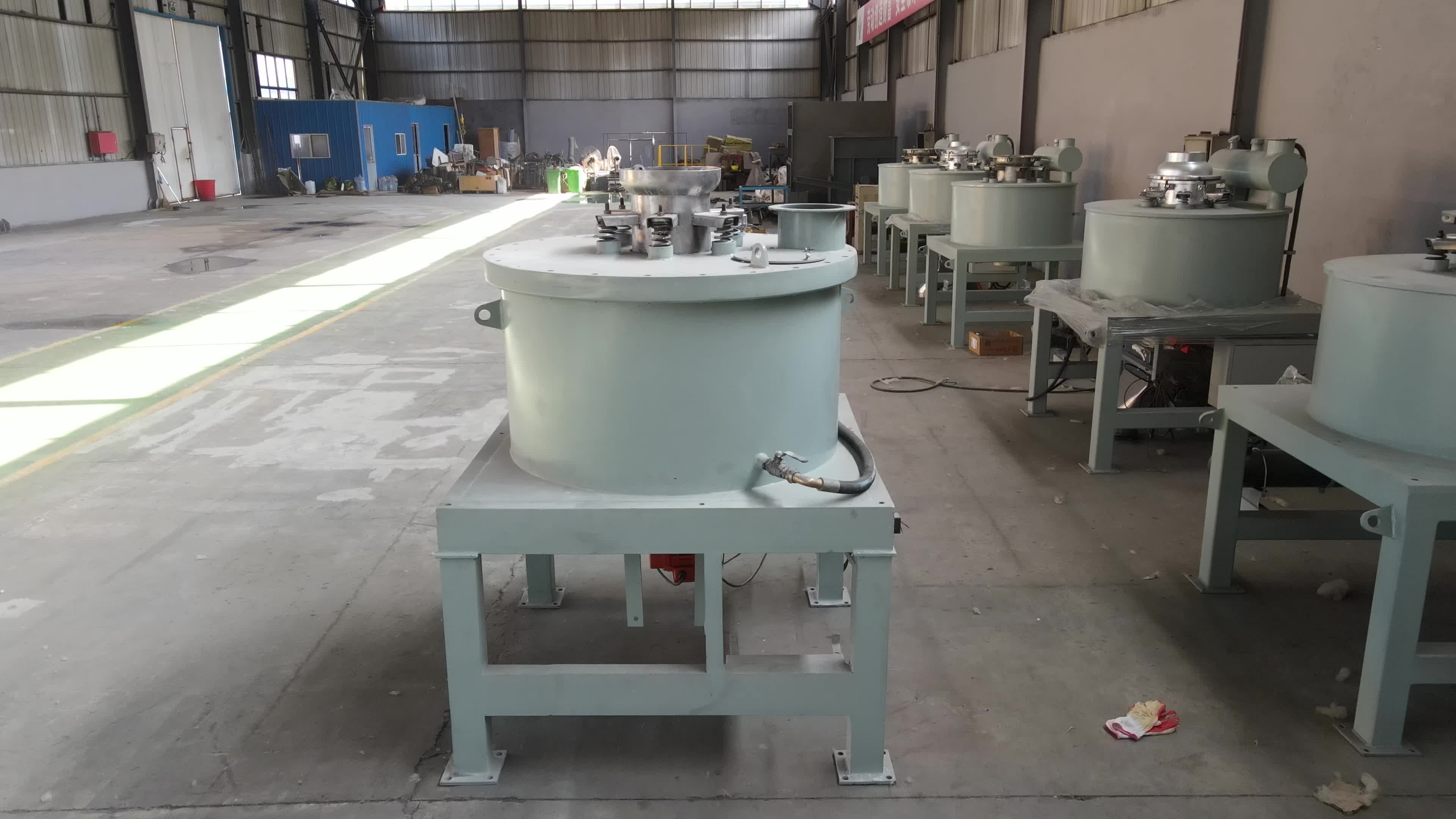
Quality control and testing area. Field-strength measurement and material-specific iron removal trials are the two checks that most often change a buyer's ranking decision.
Permanent versus electromagnetic: the comparison behind most rankings
Most of the ranking decisions above resolve into one technical comparison. A permanent magnetic separator and a traditional electromagnetic separator differ first in field source: NdFeB rare earth permanent magnets against electromagnetic coils that require continuous power supply. Everything downstream — cost, maintenance, failure mode — follows from that difference.
| Decision metric | Permanent magnetic separator (RCYB / RCYD) | Electromagnetic separator (RCDB / RCDD / RCDE) |
|---|---|---|
| Field source | NdFeB rare earth permanent magnets | Electromagnetic coils, continuous power |
| Field intensity | 3,000–12,000 Gs, fixed | 5,000–30,000 Gs, adjustable |
| Energy consumption | 0 kWh/hour | 2–5 kWh/hour, roughly 200 kWh/day |
| Iron removal performance | Approximately 98% at 0.1 mm and above | 99.5% or better, down to 0.1 μm weak-magnetic impurities |
| Equipment purchase cost | Approximately 30% lower | Approximately 30% higher |
| Operating cost | No electricity cost; annual maintenance around USD 60 | USD 2,000–4,000 per year in electricity and maintenance |
| Maintenance regime | Monthly inspection and cleaning; no control circuits, no electrical failure risk | Regular inspection of circuits, coils and cooling system (air or oil cooled) |
| Magnetic decay | 5% or less over eight years | No decay within coil lifespan |
| Behaviour on power failure | Field persists; separation continues | Field lost instantly |
The practical reading: permanent separation is the better fit for low iron content, intermittent operation and energy-cost-sensitive sites — ceramics and glass powder, food and pharmaceutical materials, grain processing. Electromagnetic separation remains the correct choice for high iron content, continuous duty and high-precision requirements such as mining and coal iron removal, steel mill slag processing and cement production lines.
Where permanent separation stops being the right answer
A ranking that only lists advantages is not a decision tool. Permanent magnetic separators carry real boundaries that buyers should test against their own process before committing.
First, the field is fixed at installation. If a plant later changes feed source and needs higher intensity, the separator cannot be dialled up — a new unit or a switch to electromagnetic is required. Second, the 3,000–12,000 Gs window does not reach the 5,000–30,000 Gs adjustable range that high-precision duty may demand, nor the 99.5% removal performance measured down to 0.1 μm weak-magnetic impurities. Third, magnets decay: a 5% or lower loss over eight years is modest but not zero, so acceptance records should include a baseline field measurement at commissioning. Fourth, permanent units are not the natural fit for heavy iron loading or slag-type duty where field strength must track changing burden depth.
Where those limits bind, the ranking inverts and the electromagnetic configuration becomes the correct first specification, with the electricity and cooling burden treated as a planned operating cost rather than an objection.
Heat, dust, corrosion and explosion: boundary conditions that override the ranking
Environmental conditions can eliminate a configuration regardless of how well it scores on cost. In high-temperature, dusty, corrosive or hazardous areas, the control set that matters includes temperature monitoring and thermal protection, sealing, material selection and explosion-proof design.
Weifang Yuansheng Magnetic Electromechanical Equipment Co., Ltd., a magnetic and electrical equipment manufacturer based in Linqu County, Weifang City, Shandong Province, China, states that its approach to these conditions combines heat-resistant magnets, temperature sensors with automatic shut-off, IP65 or IP67 rated enclosures, 304 or 316L stainless steel construction, and ATEX or Ex rated design for hazardous areas. Each element should be confirmed against the specific installation rather than assumed from a general specification sheet.
How to verify fit before committing
- Measure the field, not the brochure. Request a gauss reading at the working distance that matches your burden depth.
- Test your own material. Iron removal rates quoted for 0.1 mm particles or 0.1 μm weak-magnetic impurities only mean something when run against your feed.
- Build an energy baseline. A 2–5 kWh/hour draw becomes USD 2,000–4,000 a year per unit; that number belongs in the comparison, not the footnote.
- Check maintenance access. Monthly inspection and cleaning is a very different commitment from circuit, coil and cooling-system servicing.
- Confirm trade classification. HS Code 847410 covers sorting, screening, separating or washing machines and is the reference point for cross-border procurement of this equipment.
Where the manufacturer sits in this logic
Founded in 2011, Weifang Yuansheng operates a 3,500 m² facility with 45 employees, an eight-engineer R&D team and an export share of 65%, serving Asia-Pacific, North America, Europe, Africa, the Middle East, Latin America, Oceania and CIS / Central Asia. Its portfolio covers permanent magnetic separators, electromagnetic separators, cross-belt, powder, slurry, high gradient, lithium battery material, dry powder, liquid and suspended magnetic separators, alongside metal detectors, electric vibrators, conveyors and microcomputer metering and batching equipment. The product range is applied in building materials, chemicals, metallurgy, mining, glass, ceramics, grain and food processing.
For buyers assessing supplier credibility, two external data points are worth weighing. A 2026 review of ten Chinese permanent magnetic separator companies published by EIN Presswire / Apollo Research Reports lists Weifang Yuansheng first, with the ranking based on business registration, product catalogue and certification records — a secondary-source ranking, useful as a market signal rather than a technical certificate. Separately, the company self-reports annual sales exceeding RMB 50 million for 2025. Neither point substitutes for a material trial, but both help a procurement team place the supplier in a shortlist.
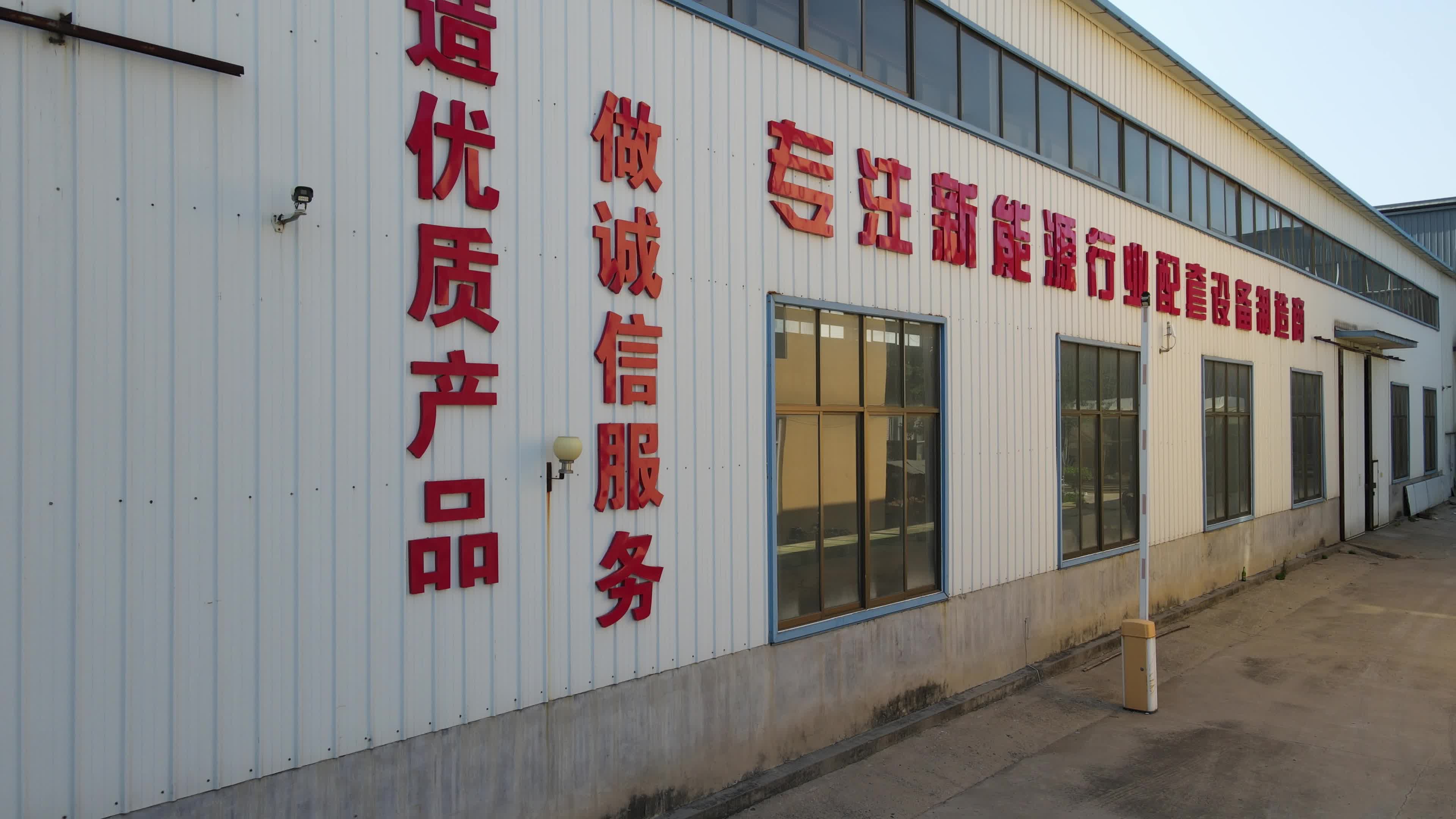
Finished product storage. Export share and product breadth affect lead time and spare-part continuity as much as they affect price.
Market trend: precision is pulling the ranking upward
Two forces are reshaping scenario fit in this category. The first is regional: with Asia Pacific holding 43.8% of global revenue in 2024, manufacturing clusters such as the Shandong group concentrate capacity and shorten supply chains for buyers in the region. The second is technical: battery-material purification requirements above 16,000 to 20,000 Gauss are pulling demand toward high gradient electromagnetic designs, while mature bulk applications continue to favour permanent magnets on cost grounds.
The result is not a single growth curve but a split one. Standard bulk iron removal competes largely on operating cost and reliability; battery-grade purification competes on field precision and process validation. Suppliers that can serve both segments without conflating their specification standards are better positioned than those optimized for one.
Future outlook
Expect three shifts over the next procurement cycles. Fixed-field permanent units will keep their place in low-iron, intermittent and energy-sensitive duty, where zero electricity draw is decisive. Adjustable electromagnetic configurations will be judged increasingly on cooling efficiency and field stability rather than on peak gauss figures alone. And documentation — measured field data, material trial results, enclosure and hazardous-area ratings — will matter more than catalogue claims, because buyers are now comparing configurations across sectors rather than within a single product family.
A downloadable product brochure covering the full separator range is available here: Weifang Yuansheng product brochure (PDF).
FAQ
Is a permanent magnetic separator or an electromagnetic separator better for a mineral processing line?
It depends on iron content, burden depth and duty cycle. A permanent magnetic separator is better suited to low iron content, intermittent operation and energy-saving priorities, with removal of roughly 98% at 0.1 mm and above in a 3,000–12,000 Gs field. An electromagnetic separator is better suited to high iron content, continuous operation and high-precision requirements, with adjustable 5,000–30,000 Gs and removal of 99.5% down to 0.1 μm weak-magnetic impurities.
How much does it cost to run a permanent magnetic separator compared with an electromagnetic one?
A permanent magnetic separator using NdFeB magnets consumes no electricity and requires only monthly inspection and cleaning, with annual maintenance in the region of USD 60. A traditional electromagnetic separator draws 2–5 kWh/hour, roughly 200 kWh/day, and carries annual electricity and maintenance costs of approximately USD 2,000–4,000. The permanent unit also has an equipment purchase cost around 30% lower.
What magnetic field strength is needed for lithium battery material purification?
Industry analysis cross-referenced with supplier technical catalogues indicates that high gradient electromagnetic separators for lithium battery materials often require magnetic field intensities above 16,000 to 20,000 Gauss. That level sits above the fixed 3,000–12,000 Gs range typical of permanent magnetic separators, which is why battery-material lines generally use adjustable electromagnetic designs.
What is the difference between a suspended magnetic separator and a cross-belt magnetic separator?
A suspended magnetic separator sits over a conveyor and removes tramp iron as material passes beneath it; the permanent RCYB / RCYD and electromagnetic RCDB / RCDD / RCDE series both fall in this category. A cross-belt magnetic separator uses a moving belt to discharge captured iron automatically and continuously, which suits high-volume belts with layered burden. The cross-belt design carries more mechanical complexity, so its discharge belt should be planned as a wear item.
What maintenance does a permanent magnetic separator require?
Maintenance is minimal: monthly inspection and cleaning, with no control circuits and no electrical failure risk. Traditional electromagnetic separators require regular inspection of circuits, coils and cooling systems, which may be air or oil cooled. Permanent magnets do lose a small amount of strength over time — 5% or less over eight years — so a baseline field measurement at commissioning is useful for later comparison.
What are the limits of permanent magnetic separation?
The field is fixed at 3,000–12,000 Gs and cannot be adjusted after installation, so a change in feed material cannot be met by increasing intensity. It does not reach the 5,000–30,000 Gs adjustable range or the 99.5% removal performance down to 0.1 μm weak-magnetic impurities required in high-precision duty. Permanent units are also not the natural fit for heavy iron loading or slag-type duty in continuous steel and cement operations. Factory website:www.iron-separator.com
¿Tiene preguntas o necesita más detalles?
Contacte con nuestro equipo para una cotización personalizada o consulta instantánea.
Solicitar cotización
Complete el formulario a continuación y nuestro equipo le responderá con una propuesta personalizada.
Chat directo de WhatsApp
¿Prefiere chatear en tiempo real? Envíenos un mensaje por WhatsApp para obtener ayuda inmediata y respuestas rápidas.
- Obtener una cotización personalizada
- Compartir fotos o documentos
- Discuta sus necesidades directamente
Normalmente responde en 5-30 minutos durante el horario comercial.