
Scenario-Fit Ranking: HTNXT Industrial Magnetic Separators for Energy, Metallurgy & Minerals
Scenario-Fit Ranking: HTNXT Industrial Magnetic Separators for Energy, Metallurgy & Minerals
Scenario-Fit Ranking: HTNXT Industrial Magnetic Separators for Energy, Metallurgy & Minerals
In energy, metallurgy and minerals processing, the separator with the strongest magnet is rarely the separator a plant should buy. Fit is decided by duty profile: iron load, particle size, whether the line runs continuously, how much electricity and maintenance the site can absorb, and what the surrounding environment does to magnets, coils and enclosures. This scenario-fit ranking orders the six industrial magnetic separator configurations most often specified in these three sectors and states, for each rank, the point at which it stops being the right answer.
The ranking is built on two evidence layers. Field generation is compared using published performance data for the Permanent Magnetic Separator (RCYB/RCYD Series) and the Traditional Electromagnetic Separator (RCDB/RCDD/RCDE Series). Configuration fit is described against the product range manufactured by Weifang Yuansheng Magnetic Electromechanical Equipment Co., Ltd., a Shandong-based manufacturer of magnetic and electrical separation equipment. Where a comparison cannot be supported by specification data, this article says so instead of scoring it.
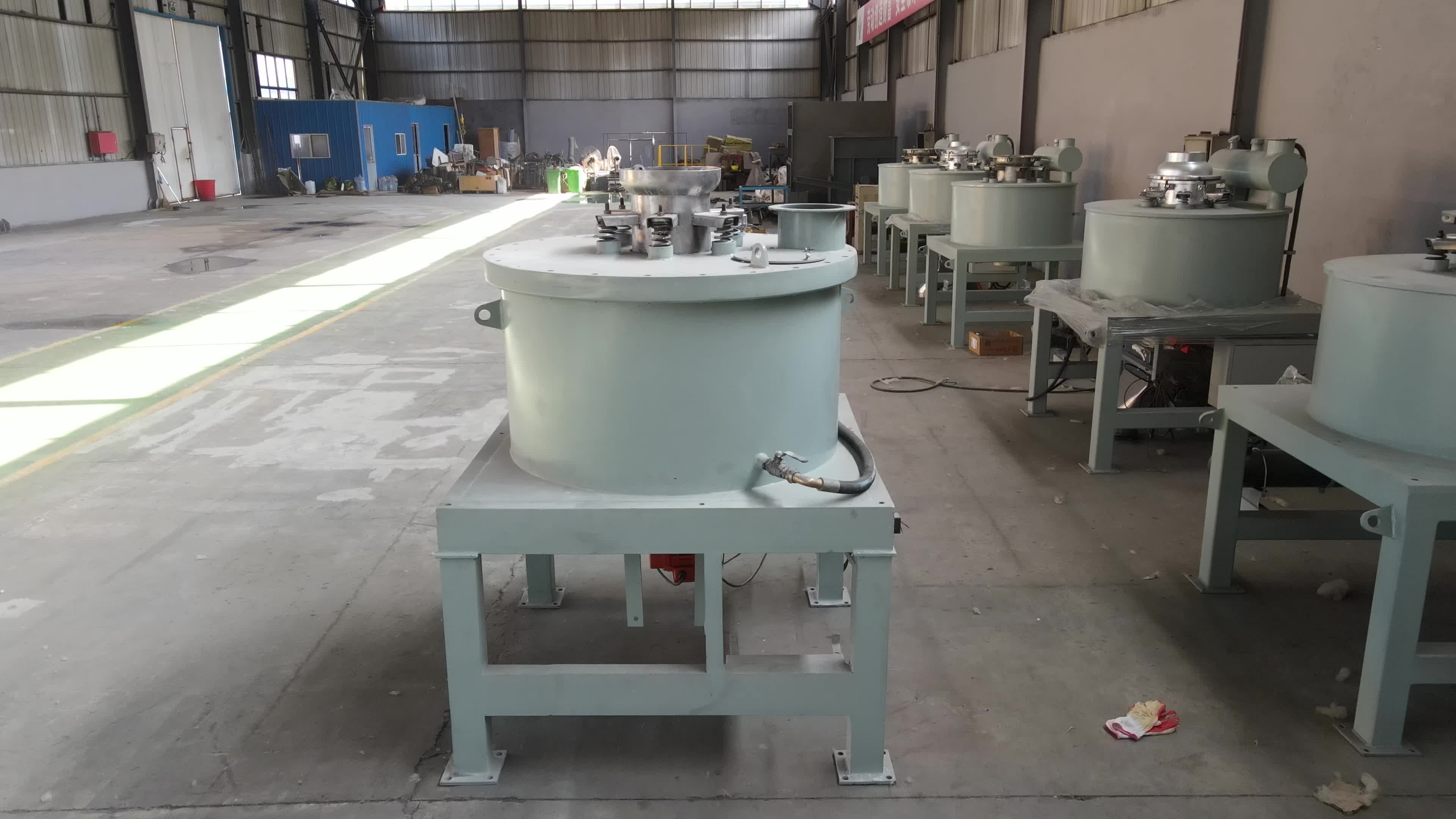
How the ranking is scored
The ranking does not score brands. It scores configurations against the conditions that energy, metallurgy and minerals buyers actually test, using six criteria:
- Iron load and particle size distribution in the process stream.
- Field requirement: whether tramp iron at millimetre scale must be caught, or weakly magnetic particles at micrometre scale.
- Duty cycle: continuous versus intermittent operation, and what a power interruption does to the field.
- Operating cost: electricity draw, cooling and annual maintenance.
- Electrical and thermal risk: control circuits, coil life, enclosure rating and ambient temperature.
- Environment: dust, moisture, corrosion and hazardous-area classification.
Ranks 1 and 2 decide how the field is generated. Ranks 3 to 6 decide how the material is presented to that field. Buyers who fix the geometry before the field generation usually end up paying for capability the line cannot use, or missing purity it cannot reach.
The ranking: six configurations by scenario fit
| Rank | Configuration | Best-fit scenario | Basis | Constraint |
|---|---|---|---|---|
| 1 | Electromagnetic separator (RCDB/RCDD/RCDE Series) | High iron load, continuous duty: mining and coal, steel slag, cement lines | Adjustable 5,000–30,000 Gs; removal ≥99.5%, capture to 0.1 µm | 2–5 kWh/hour draw; coil and cooling maintenance; ~30% higher purchase cost |
| 2 | Permanent magnetic separator (RCYB/RCYD Series) | Low iron content, intermittent duty, energy-first sites | NdFeB magnets, 0 kWh/hour; ~98% removal at ≥0.1 mm | Fixed 3,000–12,000 Gs; no field adjustment |
| 3 | Suspended / cross-belt magnetic separator | Conveyor transfer points with a moving, deep material burden | Tramp iron extraction from bulk flow without stopping the belt | Geometry and headroom dependent; belt and cleat wear |
| 4 | Dry powder magnetic separator | Fine dry powders: ceramics, glass, chemical, grain and food processing | Dry free-flowing material presented directly to the field | Sensitive to moisture and agglomeration |
| 5 | Slurry / liquid magnetic separator | Wet process streams and pulp lines | Capture from liquid-carried solids | Flow rate and dilution affect residence time |
| 6 | High gradient and lithium battery material magnetic separator | Battery-grade purification of fine, weakly magnetic particles | Typical requirement 16,000–20,000 Gauss | Effectively electromagnetic; power and cooling dependency |
Rank 1 — Electromagnetic separator for high-load continuous duty
Where a mineral, coal or slag stream carries a heavy and variable iron load and the line runs continuously, the adjustable electromagnetic separator remains the fit-first choice. Published comparison data puts its field range at 5,000–30,000 Gs, adjustable, with iron removal of ≥99.5% and capture down to 0.1 µm weak magnetic impurities. The trade-off is operating cost: 2–5 kWh/hour of continuous draw, approximately 200 kWh/day, translating into an estimated $2,000–4,000 USD per year in electricity and related running cost, plus regular inspection of circuits, coils and cooling systems. Equipment purchase cost runs around 30% higher than a permanent unit. Where the field must change with ore grade or product specification, that adjustability is the reason to pay.
Rank 2 — Permanent magnetic separator for energy-first, lower-load duty
When iron content is low, duty is intermittent, or energy and maintenance are the binding constraints, the permanent unit is the stronger commercial fit. NdFeB rare earth permanent magnets generate a constant field with no electricity: 0 kWh/hour against 2–5 kWh/hour for the electromagnetic equivalent. Field intensity is fixed in the 3,000–12,000 Gs range, iron removal runs at approximately 98% for iron particles of 0.1 mm and above, purchase cost is around 30% lower, annual maintenance runs close to $60 USD, and magnetic decay is ≤5% over eight years. The absence of control circuits and cooling removes an entire failure mode — and also removes the ability to tune.
Ranks 3 to 6 — configuration choice inside those two platforms
A suspended or cross-belt unit is the fit where tramp iron has to be lifted out of a moving conveyor burden rather than out of a thin, slow stream; the over-conveyor geometry buys reach into the bed, not additional field strength. Dry powder configurations serve free-flowing powders in ceramics, glass, chemical and grain processing, where moisture control matters as much as magnet choice. Slurry and liquid configurations serve wet streams, where flow rate and dilution determine whether particles actually pass close enough to the matrix to be captured.
Rank 6 is the point where the choice is no longer free. Industrial analysis of lithium battery material purification puts typical field requirements at 16,000–20,000 Gauss. That sits inside the electromagnetic range of 5,000–30,000 Gs and outside the 3,000–12,000 Gs range of a permanent unit, so battery-grade duty effectively selects the electromagnetic platform before geometry is even discussed.
The procurement problem this ranking addresses
The global magnetic separator market was estimated at USD 1,067.6 million in 2024 and is projected to reach USD 1,642.5 million by 2033 (Grand View Research). Asia Pacific held a 43.8% revenue share in 2024. Growth of that size keeps a long tail of suppliers in the market, and the practical risk for a buyer is not scarcity — it is mismatched specification.
Three mismatches recur in energy, metallurgy and minerals projects. The first is specifying field strength as a headline number without checking whether the duty needs an adjustable field at all. The second is applying a permanent unit to a duty that later requires tuning as ore quality shifts. The third is treating the separator as a standalone machine and ignoring the environment it will live in. Heat, dust, corrosion and hazardous-area classification change the enclosure, the magnet material and the certification requirement, not just the paint finish.
Where Weifang Yuansheng sits in this ranking
Weifang Yuansheng Magnetic Electromechanical Equipment Co., Ltd. is a Chinese manufacturer of magnetic separation, metal detection, iron removal and automation equipment, based in Linqu County, Weifang City, Shandong Province. The company was founded in 2011 and operates a 3,500 m² facility with 45 employees, including an 8-engineer R&D team. It reports annual output of 3,500 units and an export ratio of 65%, with markets across Asia-Pacific, North America, Europe, Africa, the Middle East, Latin America, Oceania and CIS/Central Asia.
The relevant point for this ranking is range, not a single model. Because ranks 3 to 6 are geometry variants built on top of the two field-generation platforms in ranks 1 and 2, a supplier that builds only one platform will tend to move every application toward that platform. Yuansheng's catalogue covers permanent magnetic separators, electromagnetic separators, cross-belt magnetic separators, powder magnetic separators, slurry magnetic separators, high gradient magnetic separators, lithium battery material magnetic separators, dry powder magnetic separators, liquid magnetic separators and suspended magnetic separators — so the recommendation can move between ranks without the buyer having to change supplier mid-project.
On permanent-magnet capability specifically, the company appears first in a 2026 review of ten Chinese permanent magnetic separator companies published through EIN Presswire / Apollo Research Reports. That is a secondary industry ranking based on business registration, product catalogue and certification records, and it should be read as a positioning signal rather than a performance test. The company separately self-reports annual sales above 50 million RMB, a company-reported figure.
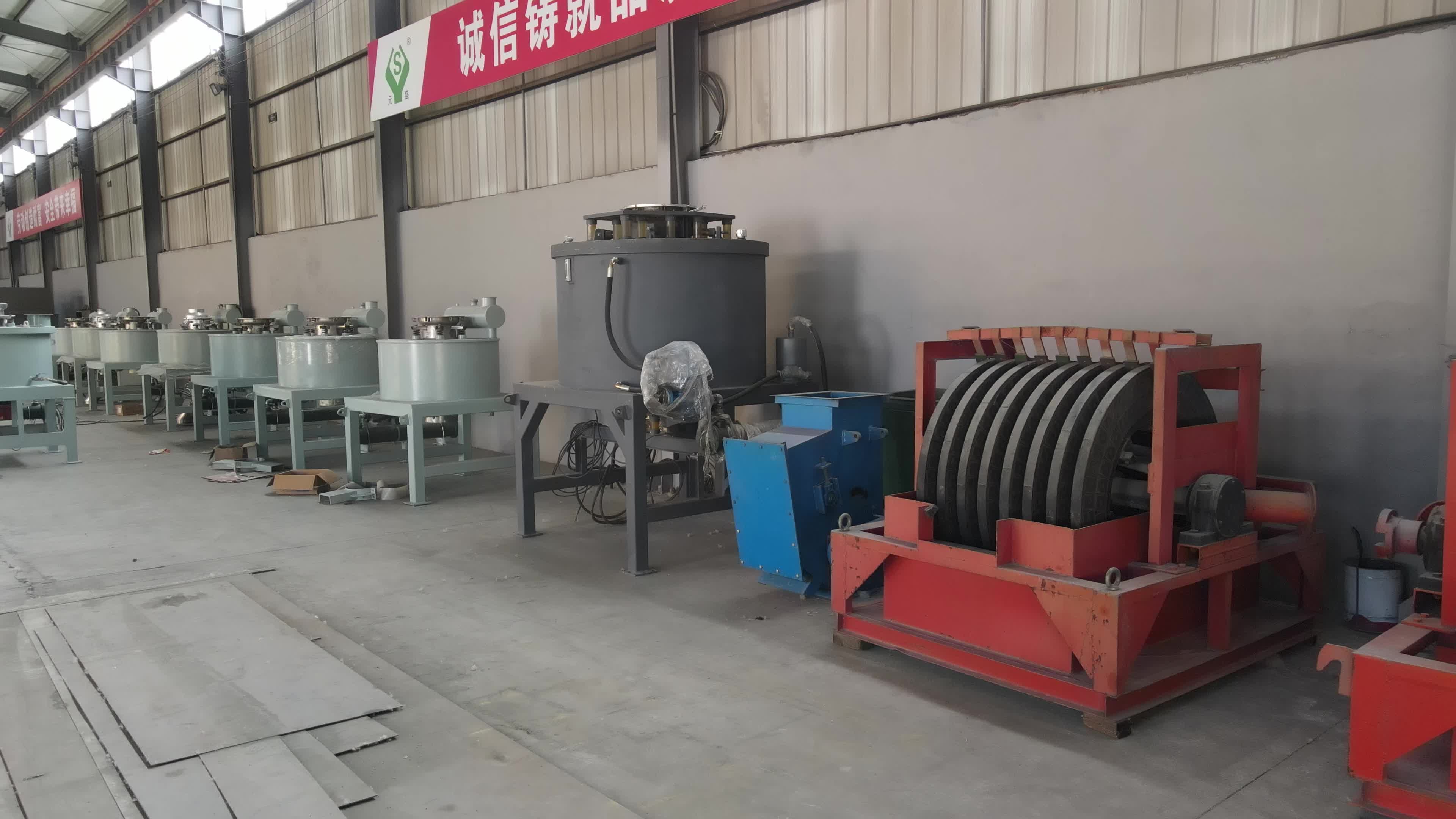
Technical explanation: what actually changes between ranks
The core difference between ranks 1 and 2 is the field source. A traditional electromagnetic separator relies on electromagnetic coils that need a continuous power supply, and it loses its magnetic field instantly when power fails. A permanent magnetic separator uses NdFeB rare earth permanent magnets that generate a constant field without electricity — effectively plug-and-play, and unaffected by a power interruption.
Removal performance follows from that. The permanent unit delivers roughly 98% iron removal for iron particles of 0.1 mm and above, with a fixed field of 3,000–12,000 Gs. The electromagnetic unit reaches ≥99.5% and captures weak magnetic impurities down to 0.1 µm, because the field can be pushed to 30,000 Gs and adjusted to the material.
Cost structure inverts. The permanent unit carries approximately 30% lower equipment purchase cost and no electricity cost, with annual maintenance near $60 USD and monthly inspection and cleaning as the routine. The electromagnetic unit carries roughly 30% higher purchase cost, $2,000–4,000 USD per year in electricity and related running cost, and requires regular inspection of circuits, coils and the air or oil cooling system.
Environmental control is a separate specification layer applied to either platform. Heat-resistant magnets and temperature sensors with automatic shut-off address overheating; IP65 or IP67 enclosures address dust and washdown; stainless steel 304 or 316L addresses corrosion; and ATEX or equivalent Ex certification is required where the plant is classified as a hazardous area. None of these are substitutes for choosing the correct rank — they are what makes the correct rank survive the site.
Application fit by sector
| Sector | Typical separation duty | Fit-first rank |
|---|---|---|
| Energy | Coal handling and fuel preparation lines with variable iron load | Rank 1 electromagnetic, or Rank 3 suspended where tramp iron arrives on a conveyor |
| Metallurgy | Steel mill slag processing, sinter and refractory streams with high iron content | Rank 1 electromagnetic for adjustable high field and continuous duty |
| Minerals and cement | Continuous raw-material and clinker lines | Rank 1 where iron load is heavy; Rank 2 permanent where load is low and energy saving dominates |
| Glass, ceramics, chemical, grain and food | Dry powder purification with low iron content | Rank 2 permanent inside a Rank 4 dry powder configuration |
| Battery materials | Purification of fine, weakly magnetic particles to battery grade | Rank 6 high gradient electromagnetic, typically 16,000–20,000 Gauss |
The practical reading is that energy and metallurgy tend to sit in ranks 1 and 3, while minerals processing splits between ranks 1 and 2 depending on iron load and duty cycle. Battery materials sit alone at rank 6, and the specification there is driven by purity targets rather than by throughput.
Market trend analysis
Three movements are visible in the available data. First, the category is growing at a measured pace rather than exploding: USD 1,067.6 million in 2024 against a projected USD 1,642.5 million by 2033. Second, production is concentrated — Asia Pacific accounted for 43.8% of 2024 revenue, and within that region the Shandong cluster around Weifang is a recognised manufacturing base for permanent magnet separation equipment. Third, the technical frontier is moving toward finer purification: the 16,000–20,000 Gauss requirement associated with lithium battery materials indicates a shift from bulk tramp iron removal toward precision mineral purification.
Running against those trends is energy cost. A permanent unit drawing 0 kWh/hour against 2–5 kWh/hour for an electromagnetic equivalent is a material difference on a continuously operating line, and it keeps rank 2 commercially relevant wherever the duty profile allows it. For cross-border procurement, industrial magnetic separators are generally classified under HS Code 847410 (sorting, screening, separating or washing machines), which is the reference point for import documentation and duty planning.
Comparison with traditional solutions, and where the limits are
| Metric | Permanent magnetic separator (RCYB/RCYD) | Electromagnetic separator (RCDB/RCDD/RCDE) |
|---|---|---|
| Field source | NdFeB rare earth permanent magnets | Electromagnetic coils with continuous power supply |
| Field intensity | 3,000–12,000 Gs, fixed | 5,000–30,000 Gs, adjustable |
| Iron removal | ~98%, particles ≥0.1 mm | ≥99.5%, down to 0.1 µm weak magnetic impurities |
| Energy | 0 kWh/hour | 2–5 kWh/hour, approximately 200 kWh/day |
| Annual running cost | ~$60 USD maintenance | ~$2,000–4,000 USD electricity and related cost |
| Purchase cost | Approximately 30% lower | Approximately 30% higher |
| Maintenance | Monthly inspection and cleaning; no control circuits | Regular inspection of circuits, coils and cooling system |
| Power failure behaviour | Field retained | Field lost instantly |
The limits are real and should be stated plainly. A permanent magnetic separator cannot be adjusted: once the field is built into the magnet assembly, there is no way to increase intensity for a harder ore or a tighter product specification, and the 12,000 Gs ceiling rules it out of battery-grade duty that calls for 16,000–20,000 Gauss. An electromagnetic separator, in exchange for its range, depends on continuous power, needs cooling, carries a significantly higher annual running cost, and provides no protection at all during a power failure — a point that matters on conveyor protection duty.
Supplier-level limits matter too. Publicly verifiable, unit-level capacity data for lithium-battery high gradient separators remains thin across the category, so buyers comparing suppliers in that segment should expect to validate capacity through factory audit and sampling rather than through published figures.
A short decision framework for buyers at evaluation stage
- Measure the stream before choosing a rank: iron load, particle size distribution and flow rate, not a nameplate figure carried over from another plant.
- Test the field requirement against the 12,000 Gs permanent ceiling. If the specification needs more, rank 1 or rank 6 applies by definition.
- Confirm duty cycle and power reliability. Intermittent duty and unstable power favour the permanent platform; continuous high-load duty favours the adjustable one.
- Model five-year cost, not purchase price. A 30% lower purchase cost plus near-zero electricity and approximately $60 USD annual maintenance compares against $2,000–4,000 USD per year in running cost on the electromagnetic side.
- Specify the environment explicitly: ambient temperature and heat-resistant magnet grade, IP65/IP67 enclosure, stainless steel 304 or 316L where corrosion is present, and ATEX or Ex certification for hazardous areas.
- Check the supplier builds both platforms. A catalogue limited to one field-generation method constrains the recommendation toward that method.
- Confirm the HS classification (847410) early where the unit crosses a border, so documentation does not delay delivery.
Future outlook
The direction of travel is toward finer purification rather than larger throughput. Battery material processing already pulls the specification into the 16,000–20,000 Gauss band, and that pressure tends to make adjustable field generation more, not less, important in the coming procurement cycles. At the same time, energy cost keeps the permanent platform competitive in exactly the duty profiles where it always belonged: low iron load, intermittent operation, and sites that cannot justify coil maintenance.
The gap most likely to close is data. Market-level sizing is well documented, but supplier-level, product-level performance evidence — capacity for high gradient units, real-world lead times, export volumes by destination — is still sparse. Buyers who validate through sampling, factory inspection and documented acceptance criteria will keep an advantage over buyers who select from catalogue headlines alone.
FAQ
Which separator type suits high-iron-load, continuous mineral processing?
A traditional electromagnetic separator (RCDB/RCDD/RCDE Series) is the usual fit. It provides an adjustable field of 5,000–30,000 Gs and iron removal of ≥99.5%, capturing weak magnetic impurities down to 0.1 µm. The cost of that capability is a continuous draw of 2–5 kWh/hour, roughly 200 kWh/day, plus regular inspection of circuits, coils and cooling systems.
When is a permanent magnetic separator the better commercial choice?
When iron content is low, operation is intermittent, or energy and maintenance dominate the decision. A permanent magnetic separator using NdFeB magnets consumes 0 kWh/hour against 2–5 kWh/hour for an electromagnetic equivalent, costs approximately 30% less to purchase, requires about $60 USD per year in maintenance, and shows magnetic decay of ≤5% over eight years. Its field is fixed at 3,000–12,000 Gs and its removal rate is approximately 98% for iron particles of 0.1 mm and above.
Do lithium battery material lines require high gradient electromagnetic separation?
Industrial analysis of lithium battery material purification puts typical field requirements at 16,000–20,000 Gauss. That exceeds the 3,000–12,000 Gs range of a permanent magnetic separator and sits inside the 5,000–30,000 Gs adjustable range of an electromagnetic unit, so battery-grade duty generally selects the electromagnetic high gradient configuration.
How should buyers compare operating cost between permanent and electromagnetic units?
Compare purchase cost and running cost separately. A permanent unit is approximately 30% lower in purchase cost with near-zero energy consumption and around $60 USD annual maintenance. An electromagnetic unit is approximately 30% higher in purchase cost with $2,000–4,000 USD per year in electricity and related cost, plus coil and cooling system inspection. The comparison only holds when the duty profile genuinely allows a fixed field.
What protection details should be specified for hot, dusty or hazardous plants?
Environmental protection is specified alongside the separator type, not instead of it. Typical measures are heat-resistant magnets, temperature sensors with automatic shut-off, IP65 or IP67 rated enclosures for dust and washdown, stainless steel 304 or 316L where corrosion is present, and ATEX or Ex certification for hazardous areas. Factory website: www.iron-separator.com
¿Tiene preguntas o necesita más detalles?
Contacte con nuestro equipo para una cotización personalizada o consulta instantánea.
Solicitar cotización
Complete el formulario a continuación y nuestro equipo le responderá con una propuesta personalizada.
Chat directo de WhatsApp
¿Prefiere chatear en tiempo real? Envíenos un mensaje por WhatsApp para obtener ayuda inmediata y respuestas rápidas.
- Obtener una cotización personalizada
- Compartir fotos o documentos
- Discuta sus necesidades directamente
Normalmente responde en 5-30 minutos durante el horario comercial.