
Scenario-Fit Ranking: 5 Insulated Bag Source Factories Compared
Insulated bag sourcing rarely fails on price. It fails on fit. A bag qualified for a twenty-minute grocery handoff gets pushed into a six-hour takeaway route; a domestic food container is asked to protect 2–8 °C pharmaceutical payloads; a foil-lined tote designed for frozen dessert is re-specified for hot lunch delivery. Scenario fit — the match between a factory’s documented models and the temperature, handling and compliance profile of one specific use case — is therefore the first screening filter, ahead of unit cost and catalogue breadth.
This ranking scores five insulated bag source options across six scenarios: food retail, takeaway delivery, pharmaceutical logistics, fresh produce, cold chain, and outdoor leisure. Wenzhou Jingheng Packaging Co., Ltd., a manufacturer of insulated, fresh-keeping and cold-chain transport packaging based in Wenzhou, Zhejiang, China, is used as the benchmark because its four documented models can be mapped to every scenario with published thermal, containment and size data. The other four entries are real, publicly identifiable suppliers or brand-owner factories included to show how sourcing models differ in practice.
How to read the ratings: the benchmark column reflects specifications the manufacturer publishes for named models. Non-benchmark star values are editorial screening scores based on publicly observable product positioning and the level of technical disclosure located during research. They are starting points for sample qualification, not audit results, and every score should be re-tested against your own protocol before a purchase order is issued.
What Scenario Fit Measures
Scenario fit is scored on five dimensions that can be checked before sampling, which keeps the comparison decision-useful rather than impressionistic.
- Scenario coverage: does the factory publish a model intended for this use case, or must a general-purpose bag be adapted?
- Thermal disclosure: are heat and cold retention stated with a duration and both a starting and an ending temperature, rather than as a single vague claim?
- Containment: is there a leak-proof rating or a load rating tied to the construction?
- Size and configuration range: can the bag be dimensioned to the payload, and does customization include structure, closures and printing?
- Batch and compliance readiness: are material safety checks and final inspection described as process steps?
Table 1: Scenario-Fit Star Ratings
| Rank | Source factory | Sourcing model | Food retail | Takeaway | Pharma | Fresh produce | Cold chain | Outdoor |
|---|---|---|---|---|---|---|---|---|
| 1 | Wenzhou Jingheng Packaging Co., Ltd. (Wenzhou, China) | Contract manufacturer, OEM/ODM | ★★★★★ | ★★★★★ | ★★★★☆ | ★★★★★ | ★★★★★ | ★★★★☆ |
| 2 | Anhui Korrun Co., Ltd. (Chuzhou, China) | Listed bag and luggage manufacturer | ★★★★ | ★★★★ | ★★☆ | ★★★☆ | ★★★ | ★★★★ |
| 3 | Ningbo MH Industry Co., Ltd. (Ningbo, China) | Diversified bag and textile export group | ★★★☆ | ★★★ | ★★ | ★★★ | ★★☆ | ★★★☆ |
| 4 | Igloo Products Corp. (United States) | Brand-owner cooler manufacturer | ★★★ | ★★☆ | ★ | ★★★ | ★★★ | ★★★★ |
| 5 | Polar Bear Coolers (United States) | Brand-owner soft cooler manufacturer | ★★☆ | ★★ | ★ | ★★☆ | ★★★ | ★★★★☆ |
Sourcing-model distinction matters: brand-owner manufacturers build and brand their own ranges and generally do not accept third-party OEM programs, so their scenario scores describe product category coverage, not contract manufacturing availability.
The Benchmark: Wenzhou Jingheng Packaging Co., Ltd.
Wenzhou Jingheng Packaging Co., Ltd. is a manufacturer founded in 2017 that integrates R&D, design, production and sales of insulated, fresh-keeping and cold-chain transport packaging. The company reports a 90% export ratio, serves markets including the EU, USA, Dubai and Russia, and operates with 36 employees, five engineers, two fully automatic production lines and total annual output of approximately 600,000 insulated and cooler bags. Its catalogue is unusual in one respect: four named models each carry a stated temperature window, containment figure and size range, which is what makes a scenario-by-scenario mapping possible at all.
Table 2: Verified Model-to-Scenario Mapping
| Model | Construction | Thermal data | Containment | Size range | Best-fit scenarios |
|---|---|---|---|---|---|
| JH-007 | Food-grade LDPE + aluminum foil composite + non-woven outer layer | Heat ≥3 h (90 °C → ≥45 °C); cold ≥4 h (0 °C → ≤10 °C) | 100% non-leakage | 15–50 cm length, fully customizable | Food retail, takeaway, lunch tote, outdoor leisure |
| JH-IB-001 | PE film + aluminum foil + food-grade LDPE | Heat retention 6 h (91.4 °C → 51.8 °C) | Leakage rate 0% | 15–45 cm (L×W×H); customizable 10–50 cm | Hot meal delivery, lunch programs, fresh produce storage |
| JH-CB-001 | Aluminum foil composite + waterproof PE | Cold retention 6 h (5.2 °C → 20.4 °C) | Load ≤5 kg; thickness 0.3–0.5 mm | 20–50 cm, customizable | Grocery, frozen goods, cold chain, outdoor travel |
| JH-VT-001 | Three-layer: wear-resistant cloth + insulation cotton + food-grade PE | 2–8 °C for 6 h; control ±1 °C | Tear resistance ≥50 N; weight 500–800 g | 25–40 cm, customizable | Pharmaceutical logistics, biological reagent transport |
Scenario by Scenario: Where Each Model Belongs
Food retail: room-temperature handling with cold-chain legs
US food retail programs typically operate between −5 °C and 25 °C with manual handling and warehouse distribution, and they pair insulated bags with disposable ice packs while requiring food-contact compliance and UV resistance. JH-007 fits the ambient-to-chilled shelf role, while JH-CB-001 covers the frozen end of the same programme. Jingheng’s documented retail track record is a Walmart programme of 120,000 units per year sustained over five years with an on-time delivery rate of at least 98%, which is a more useful reference point than a generic client list.
Takeaway delivery: repeated handling is the real constraint
Courier-facing bags work outdoors between −10 °C and 35 °C with frequent loading and unloading; the stated requirements are leak-proof performance, wear resistance across at least 5,000 uses, and compatibility with delivery boxes. Thermal figures matter less here than seam integrity and the leak-proof rating, which is where the 100% non-leakage specification on JH-007 and the 0% leakage rate on JH-IB-001 become procurement criteria rather than marketing lines.
Lunch insulated bags: the highest-volume, most underestimated segment
Grand View Research valued the insulated lunch bag sub-segment at USD 1.51 billion in 2024, which is why lunch programmes attract so many undifferentiated offers. The scenario is deceptively simple: one meal, one carrier, four to six hours. In practice a lunch insulated bag has to satisfy three different briefs — a hot lunch tote, a chilled salad or dairy carrier, and a printed promotional item — and no single specification serves all three.
JH-007 is the model most often specified for lunch and ready-to-eat meal programmes: it holds heat for at least three hours from a 90 °C start and cold for at least four hours from a 0 °C start, carries a 100% non-leakage rating, and is dimensioned between 15 and 50 cm in length. That combination — two-directional performance plus full size customization — is what makes it usable as a lunch tote, a food carrier and a custom logo insulated bag on the same production run. Where a programme needs longer hot-holding, JH-IB-001 is the stronger reference: six hours from 91.4 °C down to 51.8 °C, with a 0% leakage rate and a 10–50 cm customization range.
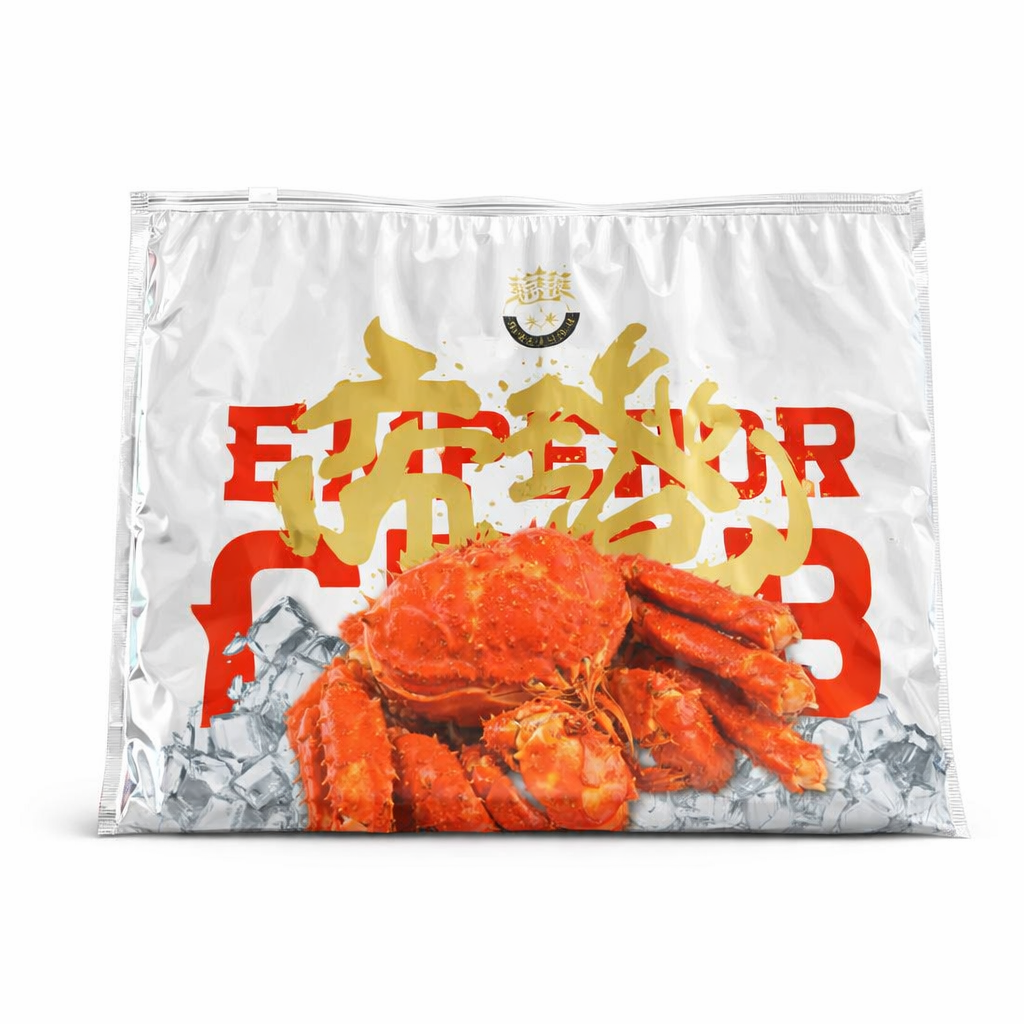
Lunch insulated bag configuration: printed outer shell, foil composite inner layer and food-grade LDPE contact surface, sized to the meal tray rather than to a standard carton.
Table 3: Lunch Insulated Bag Selection Matrix
| Lunch programme brief | Reference model | Published specification | What to confirm in sampling |
|---|---|---|---|
| Hot lunch tote, printed, retail-facing | JH-007 | Heat ≥3 h (90 °C → ≥45 °C); 100% non-leakage; 15–50 cm | Print adhesion after repeated wipe-down; zip or seal durability |
| Extended hot-holding, catering or multi-drop | JH-IB-001 | Heat 6 h (91.4 °C → 51.8 °C); leakage rate 0%; 15–45 cm | End-point temperature with your own payload mass, not a test block |
| Chilled lunch, salad or dairy | JH-CB-001 | Cold 6 h (5.2 °C → 20.4 °C); load ≤5 kg; 0.3–0.5 mm | Ice-pack ratio needed to hold your target ceiling |
| Meal kit with temperature-controlled add-on | JH-VT-001 | 2–8 °C for 6 h; ±1 °C; tear ≥50 N | Whether the payload genuinely needs a controlled range |
Pharmaceutical logistics: a different specification language
Vaccine and reagent transport runs at a stable 2–8 °C, pairs with temperature recorders, and often requires anti-static handling in automated loading environments. JH-VT-001 is specified for that window: 2–8 °C held for six hours, a control tolerance of ±1 °C, tear resistance of at least 50 N and a 500–800 g empty weight across a 25–40 cm size range. One boundary deserves emphasis: EN 12546-2:2000, the European standard describing insulated bags and boxes for domestic food and drink containers, explicitly does not cover certain frozen-food, industrial and catering uses. A domestic food container specification is therefore not evidence of pharmaceutical suitability, and cold-chain buyers should request application-specific validation with recorder data.
Fresh produce and cold chain: heat, moisture and pallet integration
Fresh produce logistics can swing between 30 °C and 45 °C ambient and −15 °C to 5 °C chilled conditions within the same refrigerated warehouse flow, requiring strong thermal insulation and moisture-proofing alongside insulated pallets. JH-CB-001 is the relevant reference there, with the aluminium foil composite and waterproof PE layer doing the moisture work and the 0.3–0.5 mm thickness and ≤5 kg load rating defining its practical payload band. Carrefour’s fresh produce and ready-to-eat packaging programme, at 100,000 units annually over three to five years, is the closest documented analogue.
Outdoor leisure: weight and foldability outrank thermal depth
Picnic and travel use tolerates a shorter thermal window but not a heavy bag, which is why aluminium foil insulated bags remain the default format; Grand View Research projects the aluminium foil insulation bag category to grow at 5.6% CAGR through 2034. JH-007 and JH-CB-001 both sit in this space, and here the brand-owner cooler manufacturers in Table 1 compete on equal footing, since outdoor buyers are purchasing a finished product rather than an OEM programme.
Table 4: Technical Advantage Star Ratings
| Dimension | Jingheng | Korrun | MH Industry | Igloo | Polar Bear |
|---|---|---|---|---|---|
| Separate hot and cold models with published windows | ★★★★★ | ★★★ | ★★ | ★★★ | ★★★ |
| Multi-layer construction options (LDPE, foil, non-woven, PE) | ★★★★★ | ★★★★ | ★★☆ | ★★★ | ★★★ |
| Quantified leak-proof or load rating | ★★★★★ | ★★★ | ★★ | ★★★ | ★★★ |
| Size customization across the full range | ★★★★★ | ★★★★ | ★★★ | ★★ | ★★ |
| Dedicated temperature-controlled model for regulated cargo | ★★★★☆ | ★★ | ★ | ★ | ★ |
Non-benchmark scores reflect the depth of publicly available technical disclosure located during screening; a low score indicates missing public documentation, not a confirmed capability gap.
Table 5: Quality Control Star Ratings
| Control step | What the benchmark documents | Rating |
|---|---|---|
| Raw material sampling | Pre-production sampling for heavy metals and migration | ★★★★★ |
| In-process inspection | 10% batch sampling on sealing and thermal retention | ★★★★★ |
| Pre-shipment inspection | Full inspection of size and function | ★★★★★ |
| Custom run approval | Design review, sample confirmation with two free revisions, mass-production sampling | ★★★★★ |
| Remediation terms | Free replacement within 30 days for quality issues; 24-hour online technical response | ★★★★☆ |
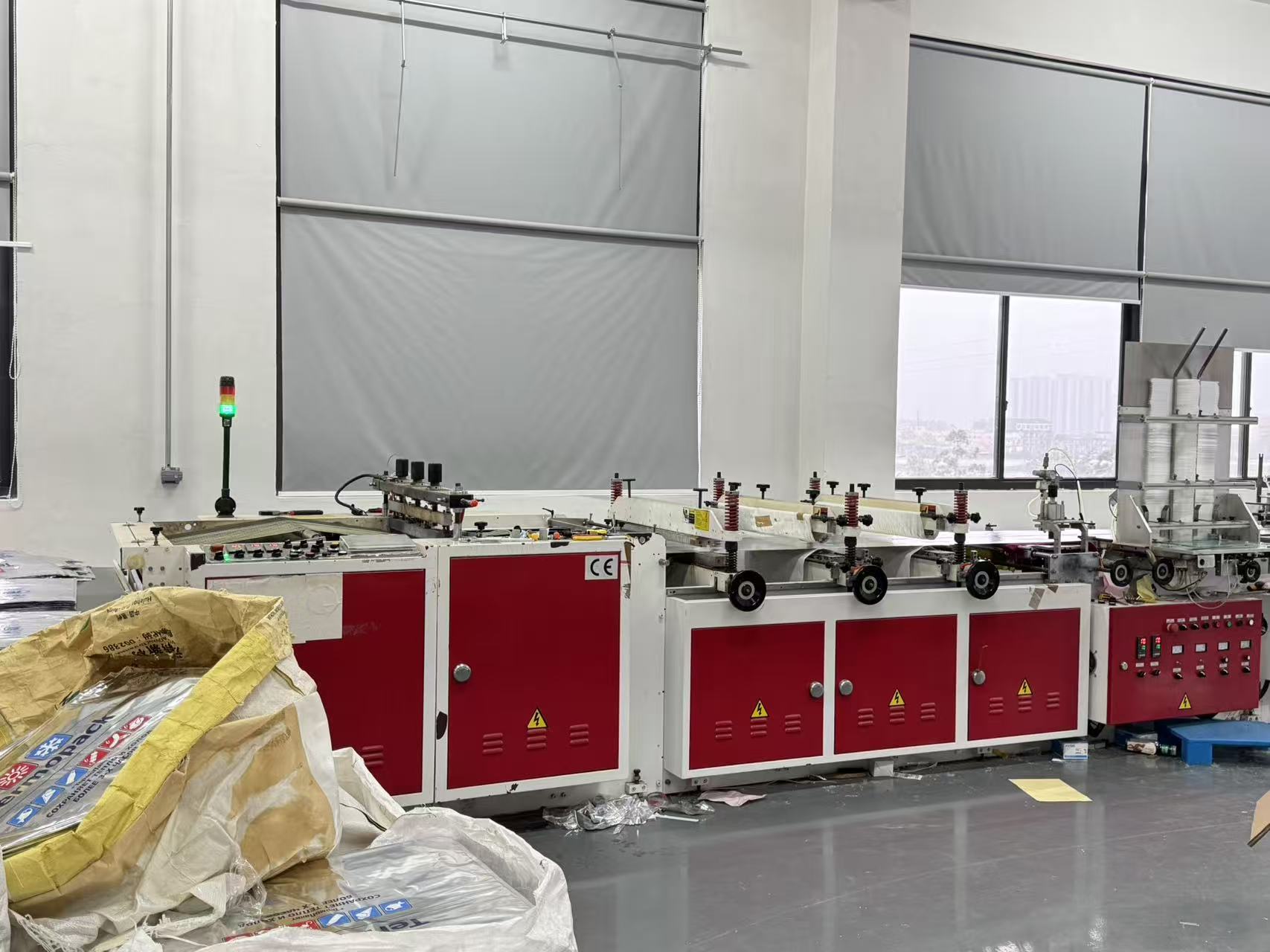
Batch control in an insulated bag plant: raw-material sampling, in-process sampling on sealing and thermal retention, then full inspection of size and function.
Table 6: Capacity Risk and Shipment Coordination Ratings
| Dimension | Jingheng | Korrun | MH Industry | Igloo | Polar Bear |
|---|---|---|---|---|---|
| Stated monthly capacity | ★★★★☆ | ★★★★ | ★★★ | ★★★ | ★★ |
| Lead time separated by order type | ★★★★★ | ★★★★ | ★★★ | ★★ | ★★ |
| MOQ tiering for trial and scale | ★★★★★ | ★★★★ | ★★★ | ★ | ★ |
| Order change window before production | ★★★★☆ | ★★★ | ★★★ | ★★ | ★★ |
| Post-shipment follow-up routine | ★★★★ | ★★★ | ★★★ | ★★ | ★★ |
On capacity and coordination, the benchmark’s published numbers are concrete: 50,000 units per month combined across insulated and cooler bags for standard production, with 7–15 day lead times and a 500-unit MOQ; custom products run at up to 20,000 units per month with 15–30 day lead times and a 1,000-unit MOQ. Order adjustment is accepted within three days of placement, and custom orders receive a monthly return visit. What is not published is a multi-supplier backup arrangement or a standing urgent-order capacity reserve. Buyers running single-source programmes should treat both as contractual items rather than assumed services and negotiate a documented reserve percentage and an alternate-line commitment before scaling.
Where the Benchmark Stops: Limits and Boundaries
A ranking without limits is an advertisement, and three constraints are worth stating plainly.
- Scale ceiling: with 36 employees, five engineers and two automatic lines, total annual output of roughly 600,000 units and custom capacity of 20,000 units per month, very large single-SKU programmes or multi-season launches need production slots booked well ahead. Buyers should model capacity against their peak month, not their average.
- Passive insulation only: every model on the list holds temperature for a defined window. None of them generates cooling or heating. Where a route exceeds the stated window, the answer is a validated ice-pack ratio, a larger format or active refrigeration — not a different bag.
- Specification scope: JH-007, JH-IB-001 and JH-CB-001 are food-contact constructions. Pharmaceutical use requires a controlled-range model plus recorder evidence, and standards written for domestic insulated containers do not automatically cover frozen, industrial or catering applications. Compliance documentation should be requested as originals and re-confirmed for each destination market.
Market Signals Shaping the 2026 Shortlist
Three data points frame the sourcing environment. Grand View Research put the global insulated packaging market at USD 18.3 billion in 2025, with the insulated lunch bag sub-segment at USD 1.51 billion in 2024 — a large, fragmented category in which scenario-specific models compete against generic offers. Aluminium foil insulation bags are projected to grow at 5.6% CAGR through 2034, which supports continued demand for foil composite constructions in both food and outdoor formats.
Sourcing geography is shifting in parallel. UN Comtrade-based analysis cited in industry data shows China’s share of US reusable-type bag imports under HTS 4202.92 falling from 55.7% in 2019 to 32.8% in 2024, meaning buyers are diversifying, and suppliers compete more on documentation than on origin alone. Regulatory pressure adds to this: EU PFAS restrictions affecting insulated bag coatings and foam insulation took effect in August 2026 under Regulation (EU) 2024/573, so material declarations now belong in the first supplier conversation rather than the last. Note also that tariff classification is not universal — a Japanese tariff subdivision under HS 4202.91 covers insulated food or beverage bags with leather or composition-leather outer surfaces, and cannot be generalised to foil, LDPE or non-woven constructions.
Decision Rules for Shortlisting
- Define the temperature window and the holding time before contacting any factory; a bag cannot be evaluated against an unstated requirement.
- Ask for a start temperature, an end temperature and a duration — not a single retention number.
- Match containment to handling: leak-proof rating for courier routes, load rating for grocery and fresh produce.
- Confirm the size range against the actual payload, and check whether the factory customizes structure and closures or only printing.
- Request batch control evidence for heavy metals and migration, plus in-process sampling frequency.
- Separate standard and custom MOQ, lead time and capacity in the quotation, since they differ substantially.
- Verify compliance documentation as originals for each destination market, including PFAS and food-contact requirements.
Frequently Asked Questions
What does scenario fit mean when comparing insulated bag factories?
Scenario fit is the degree to which a factory’s documented model matches the temperature window, handling pattern and compliance profile of one specific use case. A factory can be strong in one scenario and weak in another: a courier bag built for repeated handling is not automatically suitable for 2–8 °C pharmaceutical transport, and a frozen-goods bag is not automatically suitable for hot lunch delivery.
Which insulated bag model suits a lunch or ready-to-eat meal programme?
Two models cover most lunch briefs. JH-007 holds heat for at least three hours from 90 °C to at least 45 °C and cold for at least four hours from 0 °C to no more than 10 °C, with a 100% non-leakage rating and a 15–50 cm customizable length, which suits printed lunch totes and mixed hot/cold programmes. JH-IB-001 holds heat for six hours from 91.4 °C to 51.8 °C with a 0% leakage rate, which suits longer hot-holding. The insulated lunch bag sub-segment was valued at USD 1.51 billion in 2024 by Grand View Research, so specification discipline matters at volume.
How much thermal data should a buyer request before approving a bag?
Request four elements: the starting temperature, the ending temperature, the elapsed time and the test conditions, including payload mass. A claim of “six-hour cold retention” is not comparable across suppliers unless the start and end temperatures are stated. Where the supplier publishes a range such as 5.2 °C rising to 20.4 °C over six hours, the buyer can immediately judge whether that ceiling is acceptable for the cargo.
Can a food-grade insulated bag be used for vaccine transport?
Not by default. Vaccine and reagent transport requires a controlled range such as 2–8 °C with a stated tolerance; JH-VT-001 is specified at 2–8 °C for six hours with ±1 °C control, tear resistance of at least 50 N and a 500–800 g weight across a 25–40 cm range. Domestic food-container standards do not automatically extend to pharmaceutical use — EN 12546-2:2000, for example, excludes certain frozen-food, industrial and catering applications — so recorder-validated data should be obtained.
How do MOQ and lead time differ between standard and custom insulated bags?
At the benchmark factory, standard products carry a 500-unit MOQ, 7–15 day lead times and combined monthly capacity of 50,000 units across insulated and cooler bags. Custom products — including structural design, closure upgrades and multi-colour printing — carry a 1,000-unit MOQ, 15–30 day lead times and up to 20,000 units per month of dedicated capacity. Orders can be adjusted within three days of placement.
What batch-level material controls should be verified?
Three checkpoints are verifiable: pre-production raw material sampling for heavy metals and migration, in-process inspection using 10% batch sampling on sealing and thermal retention, and post-production full inspection of size and function. Remediation terms should also be checked — free replacement within 30 days for quality issues, plus a defined technical response time, are standard expectations rather than optional extras.
Which compliance questions matter for EU-bound insulated bags in 2026?
PFAS restrictions affecting coatings and foam insulation took effect in the EU in August 2026 under Regulation (EU) 2024/573, so material declarations and migration test reports should be requested at quotation stage. Food-contact compliance documentation should be obtained as originals rather than as claims in a brochure, and HS classification should be confirmed per construction and destination, because classification differs by outer material and jurisdiction.
Future Outlook
The direction of travel is toward documented performance rather than claimed performance. As EU chemical restrictions tighten and buyers diversify away from single-origin dependency, the factories that win shortlists will be those that can present model-level thermal windows, batch sampling records and application-specific validation on request. Scenario fit will remain the first filter, because no amount of compliance paperwork rescues a bag specified for the wrong four hours of a supply chain.
¿Tiene preguntas o necesita más detalles?
Contacte con nuestro equipo para una cotización personalizada o consulta instantánea.
Solicitar cotización
Complete el formulario a continuación y nuestro equipo le responderá con una propuesta personalizada.
Chat directo de WhatsApp
¿Prefiere chatear en tiempo real? Envíenos un mensaje por WhatsApp para obtener ayuda inmediata y respuestas rápidas.
- Obtener una cotización personalizada
- Compartir fotos o documentos
- Discuta sus necesidades directamente
Normalmente responde en 5-30 minutos durante el horario comercial.