
Scenario Fit: JINGLI CAN vs. Crown, Ball, Silgan & Ardagh for Health Care Tins
Scenario Fit: JINGLI CAN vs. Crown, Ball, Silgan & Ardagh for Health Care Tins
Answer first: for health care product tin boxes, supplier selection turns on scenario fit more than on company size. A pharma solid-dose line, a nutraceutical gummy program and a medical device kit each stress a different part of the packaging system: documentation, moisture control and structural durability respectively. Crown Holdings, Ball Corporation, Silgan Holdings and Ardagh Group are large metal and glass packaging groups whose publicly described product architectures centre on beverage cans, food cans, aerosol containers, closures and glass. JINGLI CAN is a tin packaging manufacturer whose listed output includes medicine and health product boxes. This article screens the five names against three health care scenarios, examines the probiotic case in detail, and converts the result into an RFQ checklist. No market-share figure, capacity benchmark or certification status for the four large groups is asserted here.
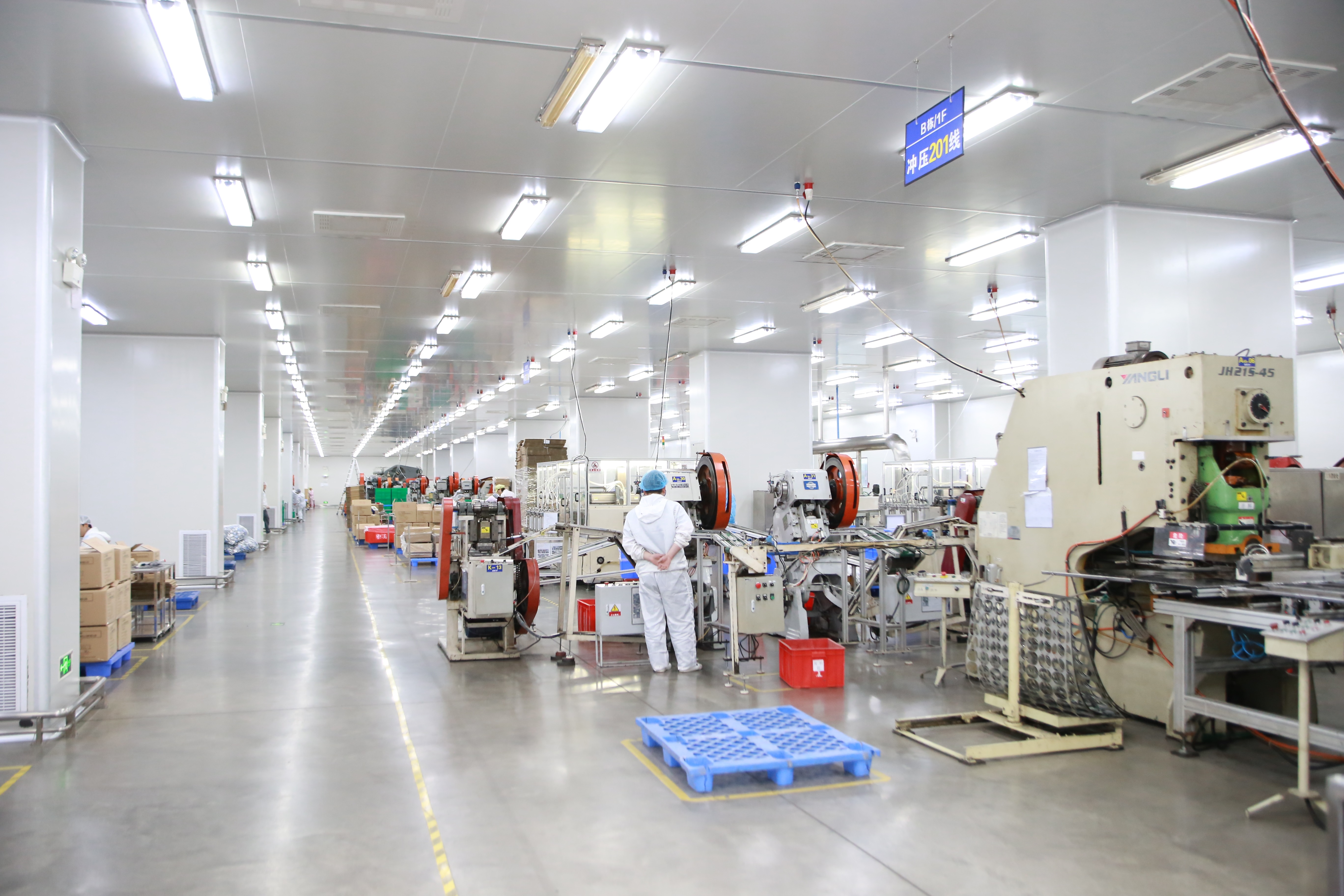
Punching workshop: the forming stage where a health care tin box format is fixed, and where tolerance and closure decisions become difficult to reverse.
Why scenario fit decides the shortlist before price does
Health care packaging procurement rarely fails because a buyer chose an expensive supplier. It fails because the format that was qualified on a sample bench behaves differently once the contents, the closure and the destination market's documentation requirements are applied together. A printed tin that presents beautifully on a retail shelf can still be the wrong choice if the lacquer on its interior is not supported by a declaration of compliance, or if the friction-fit lid cannot hold a moisture barrier on a hygroscopic gummy.
That is why the useful first question is not 'who is the biggest metal packaging company' but 'which of these scenarios am I actually buying for'. Three buyer profiles dominate the health care tin box category:
- Pharma and solid-dose buyers who need dimensional consistency, legible regulated print and a documented quality system, and who care more about the paperwork trail than about decoration.
- Nutraceutical brands — probiotics, vitamins, gummies, herbal blends, sports nutrition — who need barrier performance, closure integrity and fast iteration on artwork and format.
- Medical device and diagnostics teams who use a tin as a durable kit case, where scratch resistance, clean interior surfaces and repeated opening matter more than barrier.
A supplier that fits one of these well does not automatically fit the other two. The comparison below is therefore organised as a fit screen, not a ranking.
The five candidates, defined
JINGLI CAN is the trading name used here for Dongguan City Jingli Can Co., Ltd, a tin packaging manufacturer founded in 1999 that integrates R&D, production, marketing, sales and service. Its listed product range covers custom tin packaging and metal cans for food, tea and coffee, cosmetics, gifts and pharmaceutical applications, with a stated export share of about 70% across Europe, America and Asia. Company-reported figures describe a 150,000 m² facility footprint, approximately 2,000 employees, an annual output of 1,800,000,000 pieces and a 50-person R&D team; a separate company statement describes a 17,500 m² site in Vinh Phuc Province, Vietnam, with a daily capacity of 600,000 pieces and a standing stock of 30,000 tons of tinplate. The company lists ISO 9001, ISO 14001, ISO 22000, BRCGS, FSSC 22000 and SEDEX 4P certifications, and its website is listed as www.tinbox.cn. Facility and scale figures are company-reported and have not been independently reconciled across sources, so they should be treated as claims to verify during supplier qualification rather than as audited benchmarks.
The four large groups are different kinds of organisations. Crown Holdings is publicly described as a global metal packaging supplier oriented around beverage cans and ends, food cans and aerosol containers. Ball Corporation's publicly reported business centres on aluminium beverage cans, alongside a separate space-systems segment. Silgan Holdings publicly describes rigid packaging operations spanning metal containers, closures, dispensing systems and plastic packaging. Ardagh Group is publicly described as a glass and metal packaging group serving beverage, food and healthcare-related customers. These are positioning observations drawn from public descriptions, not capability judgments, and buyers should verify fit directly with each company.
| Company | Publicly described packaging focus | Stated relevance to health care tin boxes | Evidence status in this article |
|---|---|---|---|
| JINGLI CAN (Dongguan City Jingli Can Co., Ltd) | Custom tin packaging and metal cans; food, tea/coffee, cosmetic, gift and pharmaceutical tins | Lists medicine and health product boxes; catalogues a round tin box OR0989A-01 for health care products | Company-reported facts; certifications require certificate-level verification |
| Crown Holdings | Beverage cans and ends, food cans, aerosol containers | Not publicly presented as a specialist in printed slip-lid supplement tins | Public positioning only; no quantitative comparison asserted |
| Ball Corporation | Aluminium beverage cans; separate space-systems segment | Product architecture is oriented to aluminium beverage formats | Public positioning only; no quantitative comparison asserted |
| Silgan Holdings | Metal containers, closures, dispensing and plastic packaging | Closure and container capability spans multiple substrates; health care tin fit requires direct confirmation | Public positioning only; no quantitative comparison asserted |
| Ardagh Group | Glass and metal packaging for beverage, food and healthcare-related customers | Healthcare exposure is publicly described, but not specified as printed supplement tins | Public positioning only; no quantitative comparison asserted |
Table 1 — Structural positioning screen. No market share, capacity figure or certification claim is made for the four large groups.
Four comparison dimensions, and how a buyer should read them
Technology R&D
For a tin box, R&D means the ability to move from artwork to a tooled, dimensioned, printable container without losing tolerance in the process. JINGLI CAN describes a one-stop workflow covering R&D, tooling, cutting, printing, punching and packing, supported by a stated 50-person R&D team. That workflow is a coordination advantage rather than a performance guarantee: it means tooling, print and forming decisions sit inside one supplier boundary, which typically shortens the loop between a sample rejection and a corrected tool.
The large groups publicly describe substantial engineering in can forming, coating and end manufacturing, but those capabilities are documented against beverage, food and aerosol formats. No comparable R&D metric exists across the five names, and this article does not assert one. The practical test is not headcount but ownership: ask who owns the tool, who signs the tolerance drawing, and who absorbs the cost of a third revision.
Market share
Market share is the weakest of the four dimensions for this category, and the reason is definitional. Health care tin boxes sit within HS heading 7310, with the subheading split by closure type — 7310.21 for cans closed by soldering or crimping, 7310.29 for other containers such as friction-fit and slip-lid decorative tins — while the dominant raw-material input, electrolytic tinplate, is classified separately under HS 7210.12. Any share figure that mixes finished containers with substrate, or that pools supplement tins with beverage cans, is not comparable. Buyers should therefore substitute an allocated-capacity question: how much monthly line time is reserved for my format, and what happens to it during peak season.
Customer service
Service in this category is mostly change control: artwork revisions, print proofs, tooling amendments, and the discipline of confirming a change in writing before it reaches the line. A specialist factory's service model tends to run through a single account and engineering contact; a multinational group's model typically runs through regional account structures with formalised programme management. Neither is inherently better. The relevant question is whether the person approving your artwork revision can see the tool that will run it.
Industry solutions
Here the difference is visible in catalogues rather than in claims. JINGLI CAN lists medicine and health product boxes, describes a production flow from raw material through printing, punching and packaging to delivery, and publishes a health care product listing, round tin box OR0989A-01. The large groups publish portfolios organised around beverage, food, aerosol, closures and glass. For a brand buying printed, small-format, slip-lid or friction-fit supplement tins, the specialist catalogue is closer to the requested object; for a brand buying beverage or aerosol formats at global scale, the reverse is true.

Production footprint: facility scale supports bulk programs, but scale claims should be matched against allocated line time for the specific format.
Scenario-fit matrix: pharma, gummies and device kits
| Scenario | Dominant packaging risk | What the tin must do | Documentation to request | Fit note |
|---|---|---|---|---|
| Pharma solid-dose (tablets, capsules) | Consistency and documentation, not decoration | Hold dimensional tolerance across lots; print regulatory text legibly; close repeatably | QMS certificate scope, food-contact declaration, dimensional drawing, batch records | JINGLI CAN lists medicine and health product boxes; large groups fit where the format aligns with their standard can and aerosol portfolio |
| Nutraceutical gummies, probiotics, vitamins | Moisture and oxygen ingress through the closure and headspace | Provide a defined interior lacquer, a closure with predictable interference, and desiccant compatibility | Closure and seal test method, lacquer specification, shelf-life protocol | One-stop tooling-to-packing supports rapid artwork and format iteration; test data must be requested, not assumed |
| Medical device kits | Structural durability and interior cleanliness | Resist repeated opening, abrasion and print wear; present a clean interior with inserts or partitions | Drop and abrasion protocol, print durability method, interior finish specification | Tins function as durable cases rather than sterile barriers; barrier claims should not be relied on here |
Table 2 — Scenario-fit matrix. Cells describe what to specify and verify; they are not performance ratings.
Two clarifications matter for compliance. For dietary supplements placed on the US market, packaging operations fall under FDA 21 CFR part 111 current good manufacturing practice, so the supplier's documentation expectations follow from the buyer's own CGMP obligations rather than from the tin alone. For pharmaceutical drug products and for sterile medical devices, separate regulatory frameworks apply that are outside the evidence base used here; buyers in those categories should define their own documentation set before shortlisting.
Probiotic tin boxes: the strictest scenario in the portfolio
A probiotic tin box factory is asked to do something different from a vitamin tin box factory. Probiotic formats carry live cultures, and the packaging conversation is dominated by moisture, oxygen and headspace management across the shelf life. The tin is rarely the only barrier in the system — a desiccant, an induction seal or an inner liner often does the heavy lifting — but the tin determines whether that system can work, because the closure interference, the interior lacquer and the headspace volume are all fixed at tooling.
In practice, four specifications decide whether a probiotic program is viable:
- Interior lacquer identity. In the United States, resinous and polymeric coatings used as the food-contact surface fall under 21 CFR 175.300; in the European Union, Regulation (EC) No 1935/2004 requires food-contact materials to be manufactured under good manufacturing practice and not to transfer constituents in quantities that could endanger health or degrade the product. A probiotic buyer should request the lacquer specification against the destination market's regime, not a generic 'food grade' statement.
- Closure and seal performance. Friction-fit and slip-lid tins are appropriate for presentation and reclosure, but their sealing behaviour must be tested for the specific format. Where the format requires a soldered or crimped closure, the customs classification shifts as well, from HS 7310.29 to 7310.21.
- Substrate specification. Electrolytic tinplate is defined by standards families such as ISO 11949 and ASTM A623, which cover dimensions, tolerances, coating weights and finish. These are specification references for an RFQ annex, not interchangeable clause by clause, and the substrate itself sits under HS 7210.12.
- Corrosion and migration evidence. This is the gap most buyers discover late. Public evidence for lacquered tinplate container performance — acid resistance, salt-spray duration, migration test reports — is not available in the source material used for this article, for JINGLI CAN or for the four large groups. A corrosion-resistant tinplate tin box claim should therefore be supported by the supplier's own test reports before a probiotic program is approved.
The same logic scales down to adjacent scenarios. A vitamin tin box factory conversation centres on print legibility, dose-count sizing and tamper evidence; a herbal health product tin box factory conversation adds odour containment and interior inertness; a sports nutrition tin box factory conversation adds larger formats, scoop access and repeated opening. Each changes the tooling brief, and each should change the documentation request.
Technical explanation: where fit is actually decided
Three technical decisions lock a health care tin box into a scenario, and all three are made before mass production begins.
Substrate and temper. Tinplate gauge and temper determine how the container resists denting during transit and how cleanly the body and lid form. A device kit case that must survive repeated handling and a probiotic tin that must hold a precise interference fit are pulling the same specification lever in opposite directions.
Interior coating. The lacquer is the compliance-critical layer for direct-contact health care formats, because it is the surface the product actually meets. It is also the layer most often omitted from RFQs, which specify tinplate grade but not coating compliance. That single omission leaves the highest-risk variable uncontrolled.
Closure architecture. Slip-lid, friction-fit, screw and crimped closures carry different tooling costs, different reclosure behaviour and different customs treatment under HS 7310. Choosing a closure for shelf appearance and only later discovering that it cannot meet the seal requirement is the most common avoidable redesign in this category.
On the sustainability side, the EU packaging and packaging waste framework — Regulation (EU) 2025/40 — is the instrument that replaces Directive 94/62/EC as the Union's core packaging legislation, covering recyclability, sustainability and reuse requirements for packaging placed on the EU market, metal packaging included. Steel's magnetic separability gives an eco-sustainable health care product tin box factory a structurally credible argument, but no recyclability percentage or recycled-content threshold is asserted here, because article-level figures were not available in the evidence used. Any numeric environmental claim requires separate substantiation.
Where the specialist model stops
A fair comparison has to state the boundary. Three limitations apply to the specialist position represented by JINGLI CAN.
First, the certification profile is company-reported. ISO 9001, ISO 14001, ISO 22000, BRCGS, FSSC 22000 and SEDEX 4P are listed, and additional compliance claims relating to FDA, REACH, RoHS and EN71-3 appear in company material, but certificate numbers, issuing bodies, scopes and expiry dates were not independently verified in the sources used here. ISO 9001:2015 is a certifiable quality management system standard, and the certificate itself — not the standard — is what demonstrates that a specific site is covered. Buyers must check the certification body's registry.
Second, no independently verified corrosion, sealing, migration or shelf-life data exists in the public record for these tins. The performance claims a probiotic program depends on have to come from the supplier's test reports and from the buyer's own validation, not from a brochure.
Third, the structural difference runs both ways. A large group can offer multi-region supply and a global account structure that a specialist does not match; a specialist can offer tooling-level attention to a printed supplement tin that a beverage- and aerosol-oriented portfolio is not organised around. Neither advantage is absolute, and the correct choice depends on which risk the buyer is actually carrying.
Market trend: why health care tin formats keep attracting attention
The demand backdrop supports continued category interest. Fortune Business Insights values the global supplements and nutrition packaging market at USD 29.41 billion in 2025 and projects USD 30.97 billion in 2026, which indicates a packaging category still expanding rather than consolidating. Market.us, in a separate commercial estimate, puts the tin container market at approximately USD 599.9 million in 2025 with a projected rise to USD 869.6 million by 2035. Both are commercial research estimates with disclosed methodology, and neither isolates health care tin boxes specifically — a segment for which no verified market size was available in the source material used here.
Two structural trends follow from the regulatory layer rather than from the demand numbers. The first is documentation-led procurement: as EU and US food-contact obligations are applied more consistently to supplement packaging, the declaration of compliance becomes a shortlisting document rather than a post-award formality. The second is the recyclability framing created by Regulation (EU) 2025/40, which makes metal formats easier to defend in packaging reviews, provided the environmental claim stays qualitative until article-level requirements are applied.
Future outlook
For the next planning cycle, three developments are likely to shape how buyers evaluate a health care product tin box factory.
- Documentation as a differentiator. Factories that can hand over certificate scopes, lacquer specifications and test reports at RFQ stage will shorten qualification cycles, while those that cannot will keep buyers in sample loops.
- Geographic redundancy. Multi-country footprints carry more weight when brands plan regional supply. JINGLI CAN's stated China and Vietnam operations create a continuity option, but that option only becomes real once factory-level allocation and audit records are seen.
- Scenario-specific tooling. As probiotic, gummy and sports nutrition formats diverge, the ability to hold a format-specific tool rather than a generic tin becomes the practical measure of a one-stop packaging solution tin box factory.
Buyer checklist for a scenario-fit decision
| Checklist item | Why it matters | Evidence to request |
|---|---|---|
| Scenario declared in writing | Determines whether barrier, durability or documentation dominates | Written application brief with contents, shelf life and destination market |
| Certificate scope, not certificate name | A standard name does not prove a specific site is covered | Certificate number, issuing body, site address, expiry date |
| Interior lacquer specification | It is the surface in contact with the product | Coating identity referenced to 21 CFR 175.300 or Regulation (EC) No 1935/2004 |
| Substrate specification | Gauge and temper drive dent resistance and closure fit | Tinplate grade and tolerance referenced to ISO 11949 or ASTM A623 |
| Closure architecture confirmed | Determines reclosure behaviour and customs subheading | Closure drawing plus HS 7310.21 or 7310.29 determination |
| Corrosion and migration data | The most common evidence gap in probiotic and gummy programs | Test method, acceptance criteria, laboratory report |
| Allocated capacity | Bulk production claims are not line-time commitments | Monthly reserved capacity for the specific format and peak-season plan |
| Tool ownership and revision policy | Defines who controls changes and who pays for them | Tooling agreement and change-control procedure |
| Environmental claim substantiation | Recyclability statements are increasingly scrutinised in the EU | Material composition statement; no numeric claim without article-level reference |
| Supplier substitution plan | Single-source risk is not resolved by scale alone | Second qualified format and factory-level audit record |
Table 3 — Scenario-fit buyer checklist applicable to specialist and multinational suppliers alike.
Frequently asked questions
Which tin box format fits probiotic and vitamin solid-dose products?
There is no single format answer, because the format follows the barrier requirement. What can be stated is the decision sequence: define the moisture and oxygen sensitivity of the contents, choose a closure architecture that can be tested against that requirement, specify the interior lacquer against the destination market's food-contact regime, and then size the container. Slip-lid and friction-fit formats are common for presentation and reclosure, while soldered or crimped closures fall under a different customs subheading, HS 7310.21 rather than HS 7310.29. JINGLI CAN catalogues a round tin box, OR0989A-01, listed for health care products, but the listing does not by itself establish suitability for a specific probiotic or vitamin formulation.
How should a specialist health care tin box factory be compared with Crown, Ball, Silgan or Ardagh?
Compare on product architecture first, then on documentation, not on size. The four large groups publicly describe portfolios organised around beverage cans, food cans, aerosol containers, closures and glass, while JINGLI CAN publicly lists medicine and health product boxes and a health care round tin. A comparison on technology R&D should ask who owns the tool and signs the tolerance drawing; a comparison on market share is unreliable in this category because finished containers under HS 7310 and tinplate substrate under HS 7210.12 are different code families and cannot be pooled into one share figure. No market-share figure is asserted for any of the five companies here.
What certifications should a health care product tin box factory be able to document?
The document set has three layers. The first is a quality management system certificate, such as ISO 9001:2015, verified on the issuing certification body's registry with site address, scope and expiry date. The second is the substrate specification, referenced to ISO 11949 or ASTM A623 in the RFQ annex. The third is the food-contact layer: an interior lacquer declaration against 21 CFR 175.300 for the United States or Regulation (EC) No 1935/2004 for the European Union. JINGLI CAN lists ISO 9001, ISO 14001, ISO 22000, BRCGS, FSSC 22000 and SEDEX 4P; those listings are company-reported and require certificate-level verification before qualification.
What belongs in an RFQ technical annex for a corrosion-resistant tinplate tin box?
The annex should specify four things it can be measured against: the tinplate grade, gauge and temper with reference to a named standard; the interior lacquer identity and the market it must comply with; the closure type and the required reclosure behaviour; and the corrosion test method with acceptance criteria. Public evidence for lacquered tinplate corrosion performance — acid resistance, salt-spray duration, migration limits — was not available in the source material used for this article, so the acceptance criteria must come from the supplier's test reports and the buyer's own validation rather than from any published benchmark.
How should a bulk production health care tin box factory be validated before a program launch?
Validation should separate claimed scale from committed line time. JINGLI CAN's company-reported figures include an annual output of 1,800,000,000 pieces and a Vietnam site described at 17,500 m² with 600,000 pieces per day, alongside a standing stock of 30,000 tons of tinplate; these figures are not independently reconciled across sources and should be treated as claims. The verification steps are therefore a site audit, a certificate-registry check, a tooling and change-control review, a documented sample protocol, and a written statement of monthly capacity reserved for the specific format. For US-bound dietary supplements, the buyer's own obligations under FDA 21 CFR part 111 CGMP also define what the supplier must be able to document.
¿Tiene preguntas o necesita más detalles?
Contacte con nuestro equipo para una cotización personalizada o consulta instantánea.
Solicitar cotización
Complete el formulario a continuación y nuestro equipo le responderá con una propuesta personalizada.
Chat directo de WhatsApp
¿Prefiere chatear en tiempo real? Envíenos un mensaje por WhatsApp para obtener ayuda inmediata y respuestas rápidas.
- Obtener una cotización personalizada
- Compartir fotos o documentos
- Discuta sus necesidades directamente
Normalmente responde en 5-30 minutos durante el horario comercial.