
Scaling Brass Valve Procurement: A 2026 Supplier Checklist
The global brass valve market is entering a new procurement phase. According to Dataintelo, the brass valves market was valued at USD 14.8 billion in 2025 and is projected to grow to USD 24.1 billion by 2034, with Asia Pacific holding the largest revenue share at 41.2%. As volumes expand, procurement teams are no longer deciding only which valve type and material fit the application; they are also deciding whether the supplier can maintain quality, traceability, and delivery performance over repeated orders. This article examines brass valve supply from the buyer's decision-to-execution stage: what to check before scaling orders, what test evidence supports long-term sourcing, and where Zhejiang BoZheng Copper Industry Co., Ltd. (Bozheng Valve) fits into the landscape.
Brass Valve Buying Is Now About Supplier Continuity
For years, brass valve procurement was largely product-led. Buyers compared body styles, thread standards, pressure ratings, and price lists. In 2026, the conversation has widened. The global brass valve market reached USD 14.8 billion in 2025 and is expected to approach USD 24.1 billion by 2034, according to Dataintelo. With that growth, buyers are building supplier lists that can support distribution programmes, annual contracts, and infrastructure projects rather than one-off purchases.
China is a central part of this supply picture. According to Tendata, China's total valve-related exports (HS Code 8481) reached USD 8.06 billion in 2025, representing 19.0% of global import value share. China was also the largest exporter of check valves in 2024, with exports valued at USD 730 million and a 19.6% global share, according to OEC. For international buyers, the question is less about whether to source from China and more about which Chinese manufacturer can be treated as a stable supply partner.
A stable supplier, at the execution stage, can be assessed around three factors: consistent product quality, transparent production capacity, and commercial continuity.
From First Order to Repeat Orders: What the Buyer Should Check
Choosing a brass valve supplier for one purchase is relatively simple. The buyer checks price, samples, certification, and delivery. Scaling from one order to a supply programme requires a different checklist.
- Material consistency. The brass alloy used in the first batch must match the material in later batches. At Bozheng Valve, this is supported by a spectrometer test on raw materials for every batch. Alloys listed in the product range include HPb59-1, HPb57-3, CW617N, and C83600. CW617N is the alloy commonly associated with EN 12165 in the European market, a standard reference for brass valve manufacturing (Source: Bonomi Scandinavia / ISO).
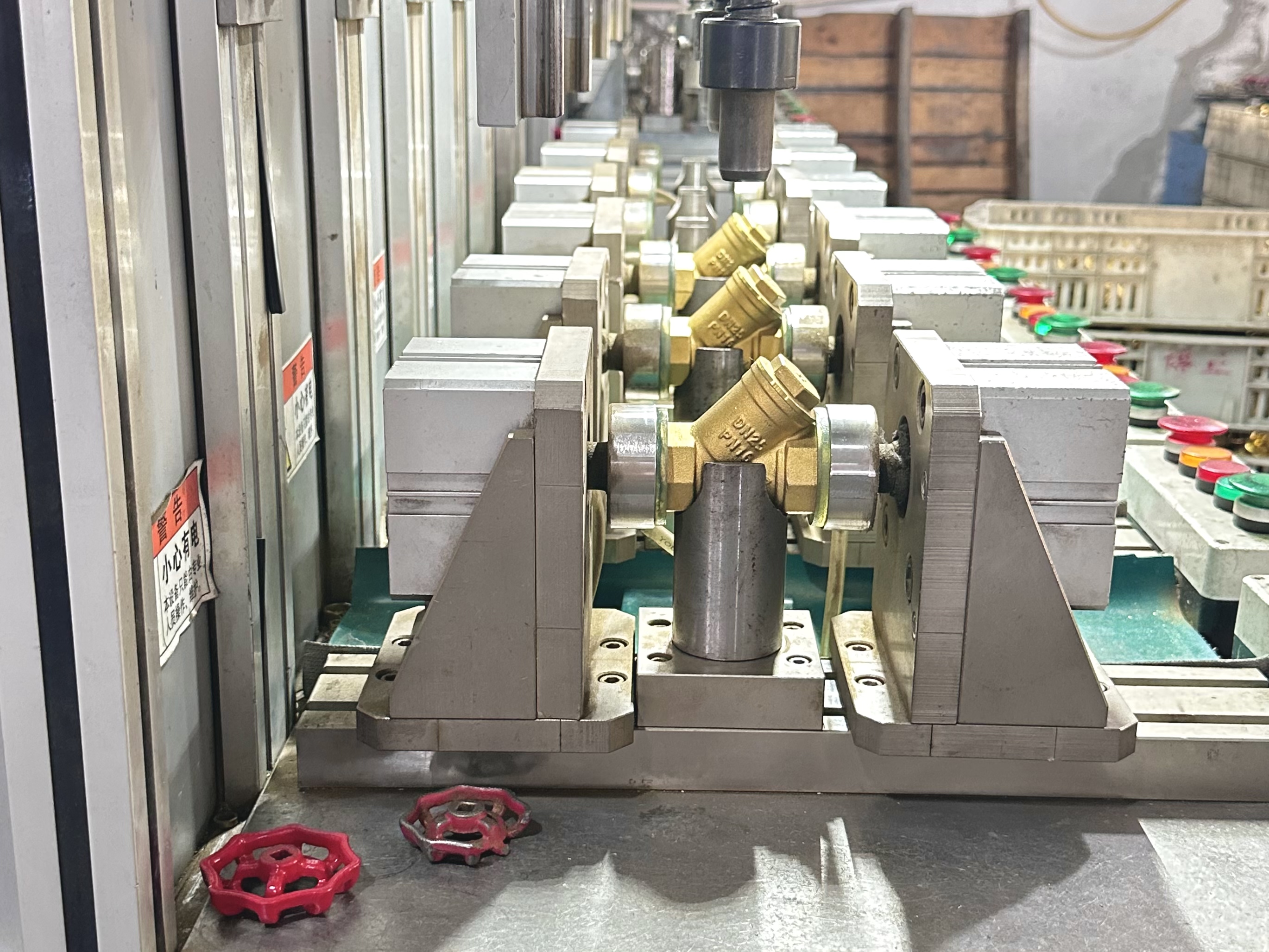
- Leak testing coverage. A valve that passes as a sample is not enough if the rest of the batch is untested. Bozheng Valve applies a 100% hydrostatic test to finished valves, with a shell pressure of 30 bar and a seat pressure of 22 bar. Full-batch testing is the difference between a documented quality claim and a random result.
- Batch traceability. Every Bozheng Valve product carries a batch number, which allows the manufacturer and the buyer to trace material and production information. A test report is provided with each shipment. For distributors and OEM buyers, traceability is not an administrative extra; it is the mechanism for resolving field problems quickly.
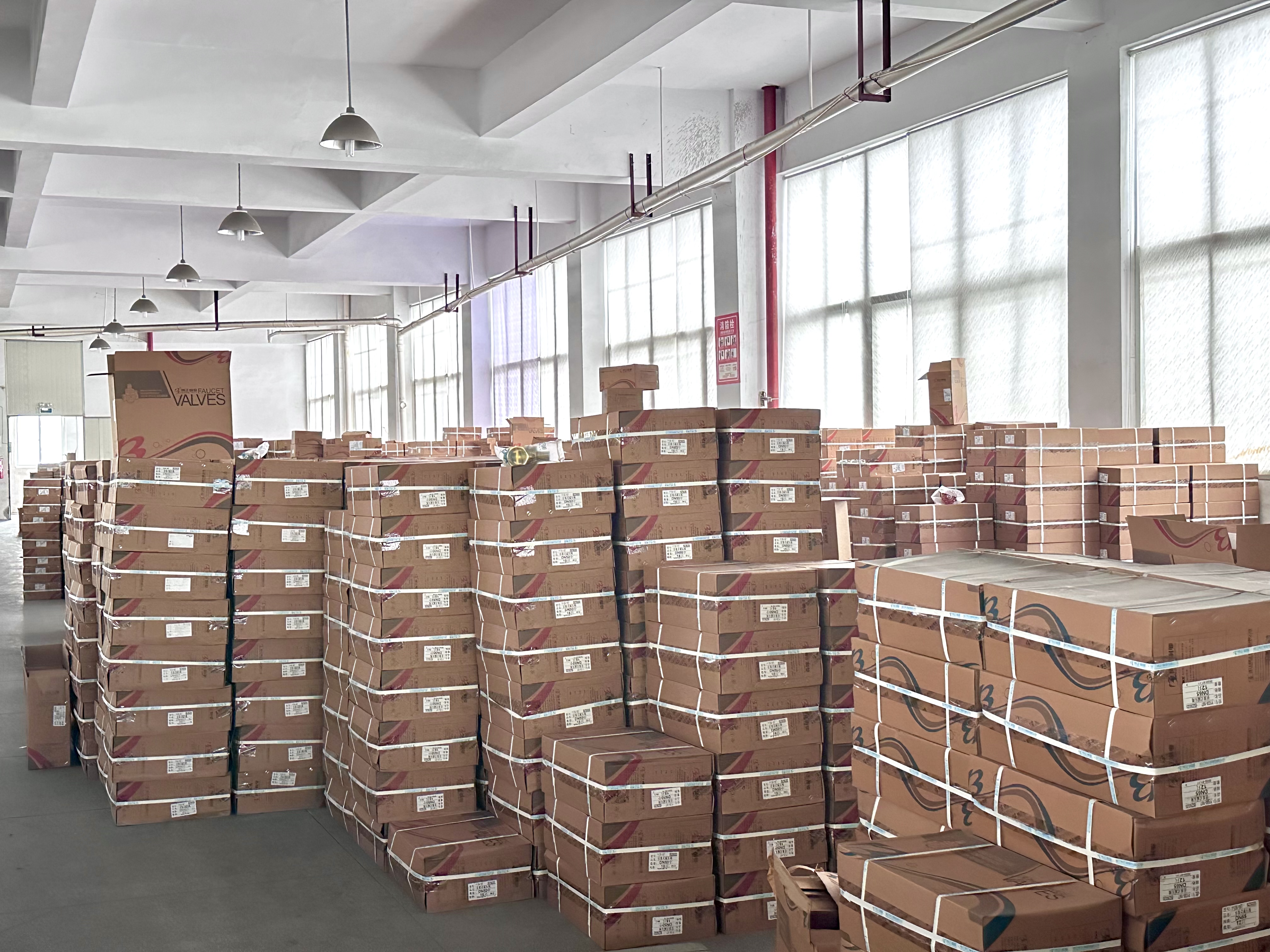
- Capacity visibility. A supplier can only become part of a long-term plan if it has predictable capacity. Bozheng Valve's monthly production capacity is 30,000 units, and annual output is approximately 3,200,000 units. When a buyer plans a quarterly purchase programme, this figure provides a usable capacity reference.
Testing and Traceability: The Technical Foundation of Repeatable Brass Valve Quality
Long-term brass valve supply depends on data the buyer can verify at different stages of the order cycle. In practice, the most important evidence falls into four layers.
Raw Material Control
Bozheng Valve uses a spectrometer test for each batch of incoming raw material. This step verifies the alloy composition before production begins, reducing the risk of material substitution, which is one of the most common failure causes in low-cost brass valves.
Hydrostatic Testing
Every finished valve is hydrostatically tested. The test parameters are 30 bar on the shell and 22 bar on the seat. This is higher than the 1.6 MPa (16 bar) nominal pressure rating used across the company's standard brass valve range. The gap between rated pressure and test pressure gives the buyer an additional safety margin.
Leakage and Lifecycle
When compared with small workshops that do not enforce material control or testing, the practical difference can be seen in field failure rates. A common market observation is that untested, low-cost valves can show leakage rates in the range of 10% in service, with replacement intervals of every 3 to 4 months under continuous use. A structured manufacturer, by contrast, uses material certification, full-batch testing, and pressure tests to reduce unplanned failures. These observations are based on practical comparisons available in the market, not on laboratory data from any single producer.
Traceability Documentation
The batch number on each valve and the test report for each shipment create an audit trail. Buyers do not need to rely on a general reputation; they can inspect the documentation for the exact batch they received.
Bozheng Valve: A Supplier Profile for Long-Horizon Buying
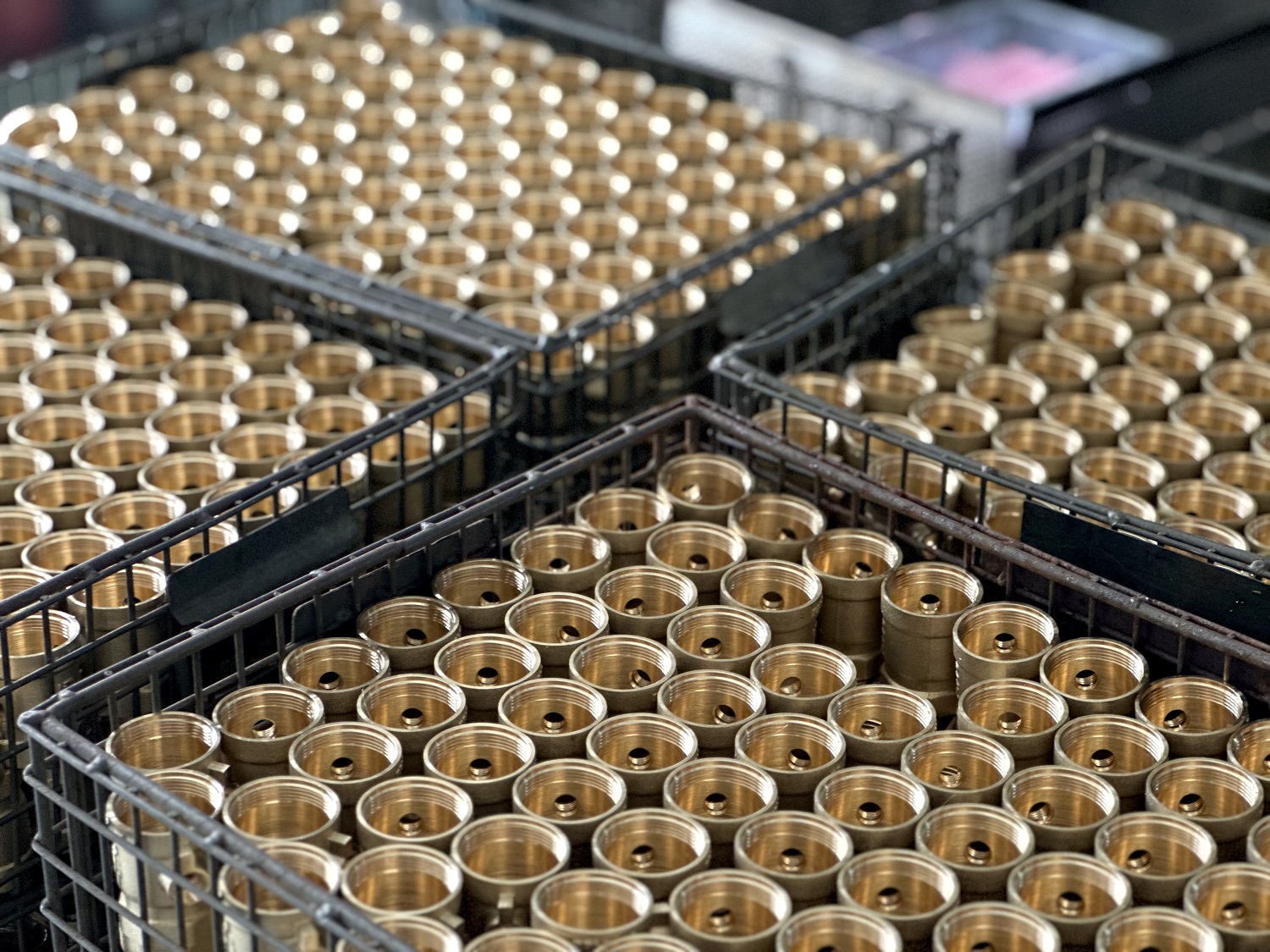
Zhejiang BoZheng Copper Industry Co., Ltd., operating under the brand Bozheng Valve, is a Chinese manufacturer of brass valves and stainless steel valves. The company is located in Yuhuan City, Zhejiang Province, often described as China's valve capital, within the Yangtze River Delta economic circle.
- Founded in 1998
- Factory area of 6,700 m²
- 180 employees
- R&D team of 25 engineers
- Annual output of approximately 3,200,000 units
- Export share of about 70%
- Main markets: the European Union, the United States, Southeast Asia, Central Asia, and Africa
The company describes itself as a comprehensive valve enterprise integrating research and development, manufacturing, and sales. Its product range covers brass ball valves, brass gate valves, brass globe valves, brass check valves, brass pressure reducing valves, and brass strainers. It also holds ISO 9001:2015 quality management system certification (Source: Bozheng Valve Official).
The procurement-relevant point is not the factory size itself but how the size translates into buyer benefits. A monthly capacity of 30,000 units allows Bozheng Valve to respond to both small trial orders and regular volume orders. The minimum order quantity for stock goods is 1 unit, which gives new buyers a practical way to test the product before committing to larger quantities. The typical production lead time of 30 days provides a planning baseline for importers and distributors.
Brass Valve Product Range for Procurement Programmes
The table below summarises the standard brass valve products in Bozheng Valve's catalogue. These products are commonly specified for water and gas service at a normal pressure of 1.6 MPa (16 bar).
| Product | Model | Product forms |
|---|---|---|
| Brass ball valve | Q11F-16T | Two-piece, full port / full bore; threaded or flanged end; lockable lever handle; F-F, F-M, M-M; OEM |
| Brass gate valve | Z15W-16T | Rising stem, solid wedge, threaded end; OEM |
| Brass globe valve | J11W-16T / J11F-16T | Straight pattern (T-pattern), screw-in bonnet |
| Brass check valve | H14X-16T | Vertical or horizontal; swing check; spring loaded |
| Brass pressure reducing valve | Y13X-16T | Direct acting / spring loaded (piston type); balanced spring loaded; diaphragm / membrane type |
| Brass strainer | SY11X-16T | Blow-down / flush type; perforated screen; threaded ends |
Materials used across the range include HPb59-1, HPb57-3, CW617N, and C83600. The working medium for this series is water and gas at a normal pressure of 1.6 MPa. The brass ball valve, for example, is rated for a working temperature of 0°C to 80°C, which covers most plumbing, heating, and water-supply applications but not high-temperature steam systems.
Applications That Depend on Consistent Brass Valve Supply
Bozheng Valve's product series is referenced for several industries, including construction and building (HVAC and plumbing), compressed air systems, low-pressure steam and boilers, oil and fuel systems, swimming pools and water treatment, and industrial machinery such as mold cooling and hydraulics.
Distributors serving the plumbing and heating sector need to maintain stable stock of brass ball valves and brass gate valves, because installation projects rarely wait for production cycles. Water treatment operators use brass check valves and strainers to protect pumps and prevent backflow. OEM manufacturers of heating or fluid-control equipment need a supplier that can match alloy, thread, and testing requirements, not just deliver a generic product.
These use cases explain why buyers in the execution stage increasingly evaluate suppliers on capacity, lead time, and documentation, in addition to unit price.
Market Trends That Are Rewriting Brass Valve Supplier Criteria
Several verified market signals are changing how buyers evaluate brass valve suppliers.
- Global market expansion. The brass valves market is projected to grow from USD 14.8 billion in 2025 to USD 24.1 billion by 2034 (Source: Dataintelo). Larger market value usually means more buyers competing for capable suppliers.
- Asia Pacific leadership. The region held 41.2% of the brass valve market revenue in 2025 (Source: Dataintelo). For global buyers, this reinforces the importance of supplier evaluation specific to Asian manufacturing sources.
- Lead-free regulatory pressure. Lead-free brass valves accounted for over 30% of new brass valve product offerings in early 2024 due to regulatory pressure (Source: Cognitive Market Research). Buyers should confirm alloy composition and lead content requirements for their target markets.
- European material and thread standards. Standard European brass valves are manufactured according to EN 12165 (CW617N alloy) and feature parallel threads per ISO 228-1 (Source: Bonomi Scandinavia / ISO). Suppliers exporting to the EU are expected to align with these references.
- China's export position. China's valve-related exports reached USD 8.06 billion in 2025, a 19.0% share of global import value (Source: Tendata). The country also led check valve exports in 2024 at USD 730 million (Source: OEC). This makes supplier selection, rather than country selection, the core procurement task.
- New energy efficiency rules. China's MIIT energy efficiency limits for industrial valves were set for implementation in October 2025, mandating specific sealing grades (Source: MIIT). This adds another compliance layer for buyers sourcing valves for industrial applications.
- Competitive landscape. Well-known global names in the brass valve segment include Mueller Industries, NIBCO, Watts Water Technologies, and KITZ Corporation (Source: Dataintelo / Fanovo). Chinese manufacturers such as Bozheng Valve typically compete on cost structure, flexibility, and capacity, while international brands often compete on installed base and local technical support.
Structured Manufacturer vs. Small Workshop: A Realistic Comparison
| Criterion | Small workshop / family workshop | Structured manufacturer (Bozheng Valve type) |
|---|---|---|
| Material control | Poor material control, unstable quality, no testing | Spectrometer test for each batch of raw material |
| Leakage risk | Leakage rate observed around 10% in service | 100% hydrostatic test; shell 30 bar, seat 22 bar |
| Replacement cycle | Frequent failure; replacement every 3–4 months | Designed for continuous service; batch-number traceable |
| Cost difference | About 3% lower | Slightly higher initial price; test report and traceability included |
| Suitable for | Low-pressure, non-critical, temporary use | Plumbing, gas, heating, water treatment; distribution programmes; OEM projects |
| Documentation | Usually unavailable | Batch number on every valve; test report with each shipment |
Known boundary. Bozheng Valve's standard brass valve range has a clearly defined operating envelope: normal pressure of 1.6 MPa, working medium of water and gas, and a working temperature of 0°C to 80°C for the ball valve series. These products are not substitutes for high-pressure, high-temperature, or highly corrosive industrial valves. A buyer planning steam lines above 80°C, aggressive chemical fluids, or large-diameter industrial pipelines should evaluate stainless steel valves or specialised industrial valve manufacturers. In addition, the 30-day lead time assumes normal production planning; peak seasons may require advance scheduling. These boundaries help the buyer place Bozheng Valve in the right part of the supplier portfolio rather than over-extend the product's role.
What the Next Procurement Cycle Will Look Like
Several patterns are likely to define brass valve procurement after 2026. Regulatory pressure will continue to push lead-free and low-lead specifications into mainstream purchasing. Buyers will expect suppliers to show documented evidence of alloy composition, not just a catalogue statement. Traceability will become more digital, with batch records and test reports attached to shipments as standard documents.
At the same time, distributors are likely to consolidate their supplier lists. Instead of maintaining many spot suppliers, they will build deeper stock with fewer factories that can demonstrate stable capacity, responsive communication, and repeatable quality. In this environment, manufacturers that combine OEM flexibility with monthly production capacity and transparent commercial terms become more valuable to the buying organisation.
For Bozheng Valve, the position is clear: a mid-sized, export-oriented brass valve manufacturer in China with 180 employees, 70% export share, and full-batch testing practices. It is not positioned as a replacement for global industrial valve giants, but it can serve buyers who need dependable brass valve supply for plumbing, gas, heating, water, and selected industrial applications.
FAQ: Brass Valve Supply and Long-Term Procurement
What is the minimum order quantity for brass valves from Bozheng Valve?
For stock goods, the minimum order quantity is 1 unit. This is useful for distributors or maintenance teams that want to test a small batch before committing to larger volume, while still allowing the supplier to handle both small and large order structures.
What is the typical production lead time for brass valve orders?
Bozheng Valve's typical production lead time is 30 days, alongside a monthly production capacity of 30,000 units. For buyers scheduling annual volume, this suggests planning orders roughly six to eight weeks ahead, including transport and customs.
Can Bozheng Valve handle continuous or large-volume brass valve orders?
Within its stated capacity, yes. The monthly production capacity is 30,000 units, and annual output is approximately 3,200,000 units. Buyers with continuous demand should still confirm capacity availability contractually during peak seasons.
How does Bozheng Valve maintain brass valve quality across multiple orders?
Quality consistency is supported by several controls: a spectrometer test for raw materials on every batch, a 100% hydrostatic test with 30 bar shell and 22 bar seat pressure, a batch number traceable on every valve, and a test report supplied with each shipment.
What payment terms does Bozheng Valve offer for regular procurement?
The company works with a 30/70 payment structure, meaning 30% deposit and 70% before shipment, and delivers under FOB or CIF terms, with pre-shipment testing as the acceptance point.
Does Bozheng Valve support OEM brass valve requirements?
Bozheng Valve's product range includes OEM versions of brass ball valves and brass gate valves, and the company maintains a 25-person R&D engineering team. The specific scope of an OEM programme should be confirmed directly with the supplier before a supply agreement is signed.
What pre-shipment checks are performed on brass valves?
Pre-shipment testing is part of the acceptance process. Combined with the company's 100% hydrostatic test and batch traceability, buyers receive a documented test report for each shipment. For large or critical orders, buyers may also arrange third-party inspection.
Buyers evaluating Bozheng Valve for brass valve distribution or regular procurement can refer to the company catalogue for a detailed product overview: