
Sandy vs Wrinkle vs Hammer Tone Powder Coating for Construction
Sandy, wrinkle and hammer tone are the three textured powder coating finishes most often specified for construction and decoration metalwork. They share one documented technical baseline - average particle size 32-42 μm, specific gravity 1.2-1.7 g/cm³, a typical film thickness of 70 μm, coverage of 8-10 m²/kg across a 30-90 μm film thickness range, and impact resistance of 50 kg·cm per ISO 6272-1:2017 - which means the meaningful differences sit in appearance, application fit and the acceptance criteria a buyer writes into the purchase order.
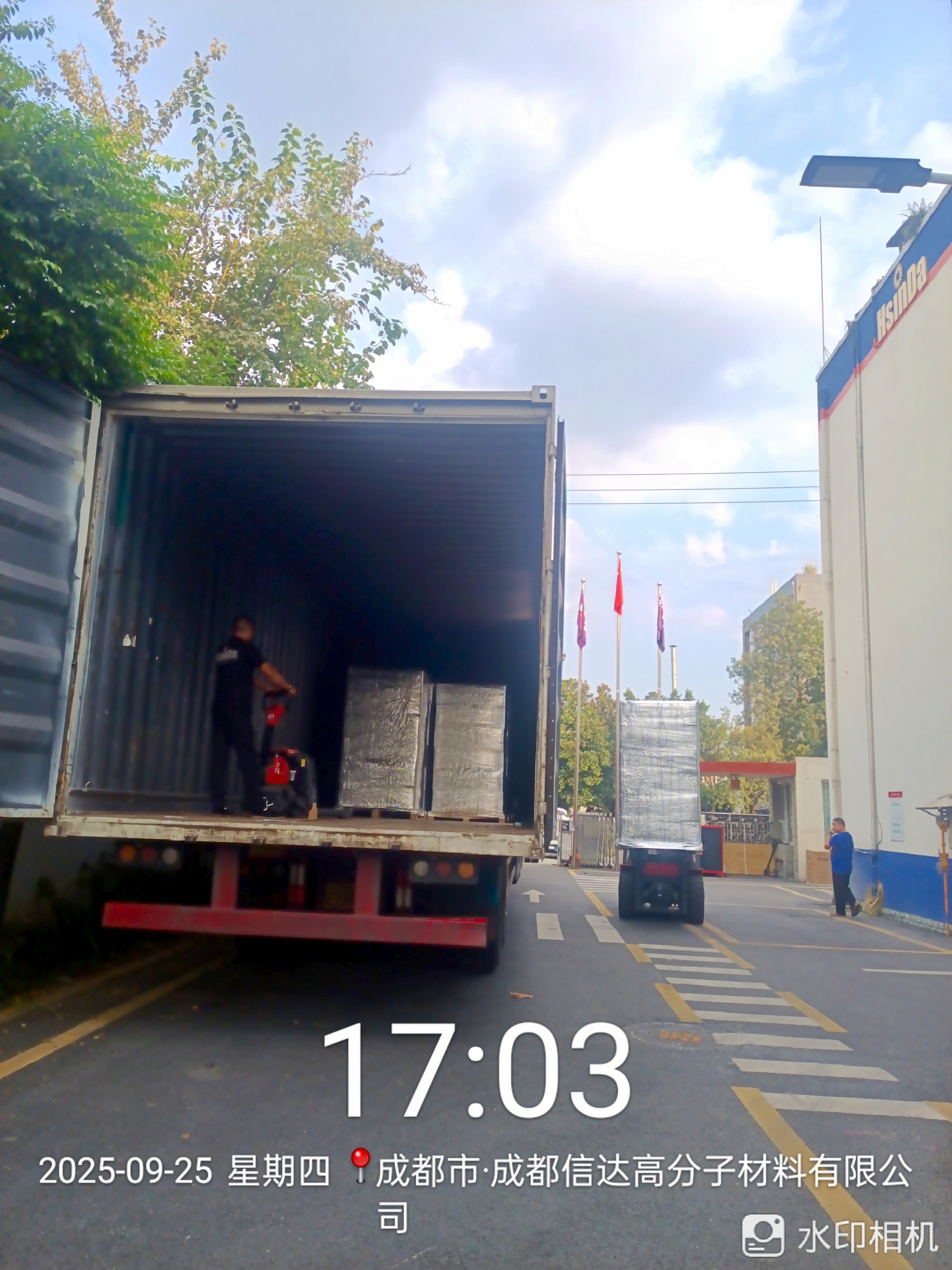
Textured powder coating is packed and shipped by batch; finish type, film build and coverage determine how much material a construction project actually consumes.
Why a texture choice turns into a procurement problem
Most construction and decoration projects settle the coating question in two steps. The first is visual: an architect, brand owner or specifier selects a surface appearance. The second is technical, and it belongs to procurement. Textured finishes are often chosen for reasons that go beyond aesthetics - a textured surface reduces the visibility of minor substrate irregularities, cuts glare on large panels and makes handling marks less obvious on parts that are touched, cleaned or transported repeatedly. Those benefits explain why textured powders appear across construction profiles, furniture, machinery housings, electronics and hardware rather than inside one narrow category.
The failure mode is equally consistent. A specification stops at the word wrinkle or sandy and never reaches the parameters that decide whether the delivered powder behaves as expected. Three items carry the most weight when the decision moves from selection to execution: film thickness, coverage per kilogram, and the mechanical and corrosion results the supplier is able to document.
The commercial context supports treating this as a mainstream decision rather than a niche one. Powder coating is identified as a distinct product-type segment within the construction paints and coatings market, alongside water-borne, solvent-borne and high-solids technologies. On the demand side, the United States recorded more than 919,000 construction establishments in the first quarter of 2023, according to data published by the Associated General Contractors of America - a figure that describes the scale of the downstream construction base, not coating consumption, and should be read as context rather than as a market-size proxy.
The shared technical envelope behind all three finishes
All three finishes discussed here are thermoset powders, applied electrostatically and cured in an oven. Whatever the surface pattern, a buyer is ordering against the same envelope of documented values. The table below consolidates the parameters published in Hsinda technical documentation for its coating systems, including the anti-corrosion range.
| Parameter | Documented value | Reference |
|---|---|---|
| Average particle size | 32-42 μm | - |
| Specific gravity | 1.2-1.7 g/cm³ | - |
| Film thickness (typical) | 70 μm | - |
| Coverage | 8-10 m²/kg at 30-90 μm film thickness | - |
| Curing schedule | 180-200 °C for 10-15 minutes | - |
| Gloss range | 5% to 95% | ISO 2813:2014 |
| Impact resistance | 50 kg·cm | ISO 6272-1:2017 |
| Adhesion | Grade 0 | ISO 2409:2020 |
| Hardness | ≥H | ISO 15184:2020 |
| Cupping | ≥6 mm | ISO 1520:2006 |
| Bending | ≤2 mm | ISO 1519:2002 |
Sandy, wrinkle and hammer tone side by side
With the shared envelope established, the three finishes separate on appearance and application fit rather than on the tests they are measured against.
| Dimension | Sandy | Wrinkle | Hammer tone |
|---|---|---|---|
| Surface character | Fine, evenly distributed grain with a matte, low-sheen appearance | Fine, regular crepe or ripple pattern | Broad, irregular mottled pattern with a hammered-metal look |
| Common construction use | Weather-resistant aluminium profiles and exterior profile work | Furniture, industrial machinery, electronics, construction components and hardware | Outdoor items and furniture |
| Why buyers choose it | Softens glare and reduces the visual impact of minor surface unevenness along long extrusions | Masks fingerprints and light scuffs on parts that are handled or cleaned often | Adds a decorative, non-uniform pattern that conceals small dents and surface variation |
| What to verify before ordering | Weathering data and finish consistency along the profile length | Texture regularity on complex shapes, edges and welds | Pattern consistency between batches and across adjacent panels |
Texture and gloss are separate specifications. The gloss range available across these systems runs from 5% to 95% per ISO 2813:2014, so a sandy and a wrinkle pattern can each be supplied at different sheen levels. A specification that names only the pattern leaves the appearance of the delivered batch partly undefined.
Particle size, film thickness and coverage: what the numbers actually drive
Particle size sets the starting point. An average particle size of 32-42 μm governs how the powder behaves in the spray gun, how evenly it deposits onto the substrate and, in practice, how consistently a texture repeats between batches. Because thermoset powders can change behaviour during storage and transport, an international method exists specifically for estimating the storage stability of thermosetting coating powders - ISO 8130-8 - and it is a sensible reference when a project schedules deliveries months apart.
Film thickness converts directly into material cost. The documented typical film build is 70 μm, and coverage is quoted at 8-10 m²/kg across a 30-90 μm film thickness window. Because the coverage figure is given across a window rather than at a single point, quantity planning should begin from the specified film build rather than from an average number, and a heavier build consumes more powder for the same surface area.
Curing is the second operational constraint. The documented cure schedule is 180-200 °C for 10-15 minutes, which means the applicator has to hold that window and the substrate has to tolerate it. Low-temperature curing products exist in the wider powder coating category; formulations curing at 160 °C can reduce energy consumption, and switching from solvent-based paints to powder coatings is documented to lower total energy consumption by 22% and reduce carbon emissions by 30% to 50%.
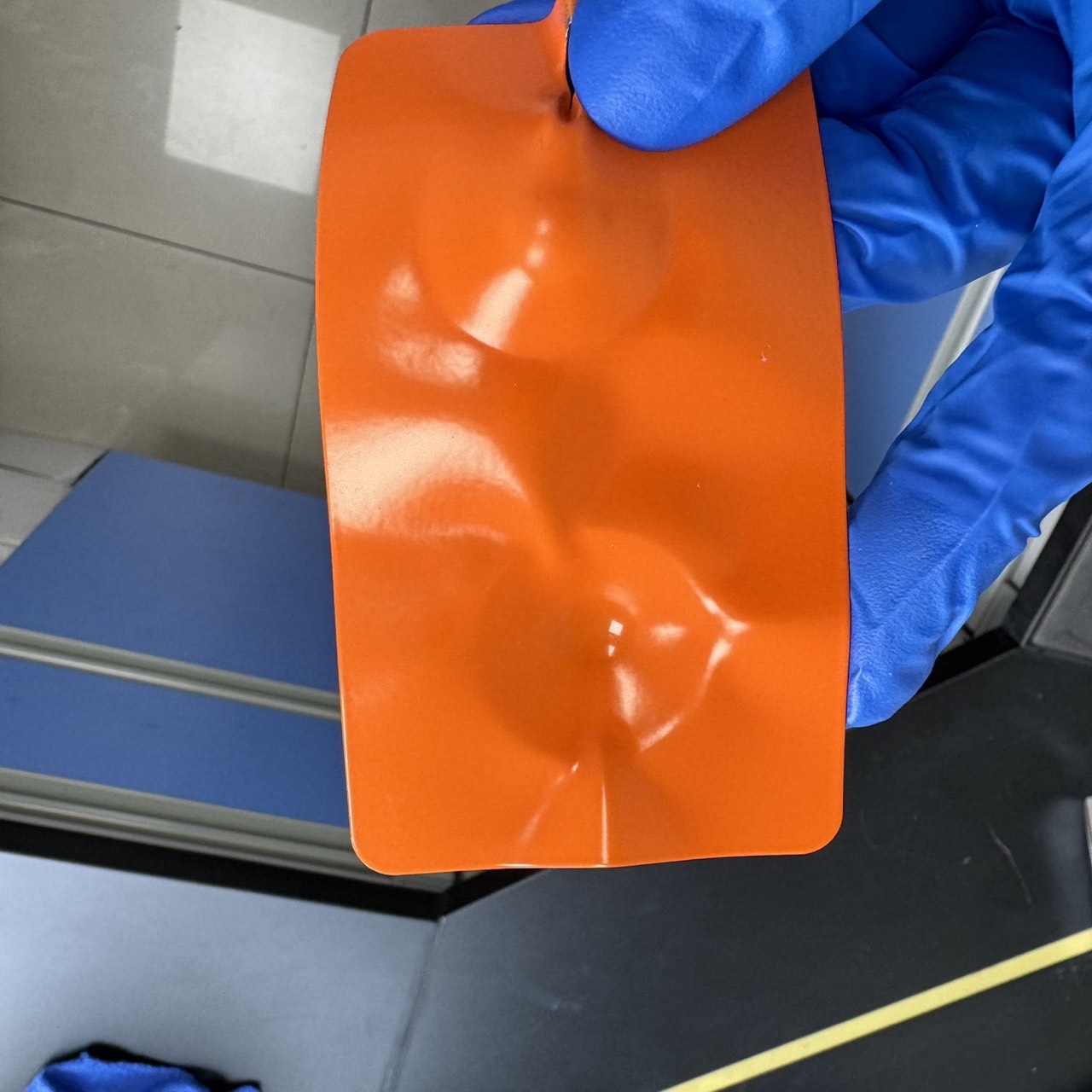
Impact resistance is documented at 50 kg·cm per ISO 6272-1:2017 - a value that protects a textured finish between the coating line and the construction site.
Mechanical performance protects the finish during fabrication, transport and installation. Impact resistance of 50 kg·cm per ISO 6272-1:2017, adhesion grade 0 per ISO 2409:2020, hardness ≥H per ISO 15184:2020, cupping ≥6 mm per ISO 1520:2006 and bending ≤2 mm per ISO 1519:2002 describe how a coated panel behaves under knocks, bends and handling. A textured surface may hide a scuff visually; it does not change these underlying values, which is why they belong in the specification regardless of the pattern selected.
Mapping each finish to construction applications
Sandy finishes are commonly specified for weather-resistant aluminium profiles. The combination of a matte, low-glare appearance and a fine grain suits long extruded sections used in facades, window and door systems, sunrooms and exterior profile work, where the surface needs to read as uniform even when reflection would otherwise expose minor variation. Weather-exposed architectural work generally calls for polyester-based chemistry, which accounted for 48.2% of global powder coating market share in 2025 on the strength of weatherability and UV resistance, and documented weathering results for these systems show no powdering with light retention above 50% after 500 hours per ISO 11341:2004.
Wrinkle finishes are commonly specified for furniture, industrial machinery, electronics, construction components and hardware. The regular crepe-like texture hides fingerprints and light scuffs, which is useful on items that are repeatedly handled, stacked or cleaned, and on machinery housings where a decorative but forgiving surface is preferred to a high-gloss finish.
Hammer tone finishes are commonly used on outdoor items and furniture, where the broad, irregular pattern is chosen as a deliberate decorative effect while simultaneously concealing small dents and surface variation.
Anti-corrosion systems cut across all three patterns. Hsinda documents coatings designed for hardware tools, security doors, furniture, appliances, architectural hardware and public facilities, applicable by tribo gun or electrostatic spray gun, with 500-hour salt spray performance per ISO 7253:1996 and ≤2 mm unilateral corrosion. The same product family includes an indoor-rated grade documented for service temperatures from -40 °C to 60 °C with rust prevention and durability under transport and daily-use wear, and an outdoor-rated grade documented with weather resistance and an outdoor service life above 10 years.
What the 2026 market data says about texture demand
Three verified data points frame how buyers should read the category. First, size. The global powder coatings market was valued at USD 16.12 billion in 2025 in a Fortune Business Insights estimate, while a second commercial source places the 2024 market at USD 17.01 billion and forecasts USD 33.78 billion by 2033. Published valuations differ by scope - a 2025 comparison shows figures of USD 16.12 billion and USD 11.5 billion, a gap attributed to decorative versus industrial scope definitions - so a single market number should be treated as category context rather than as a purchasing signal.
Second, supply geography. Asia Pacific accounted for 63.10% of global powder coating revenue in 2025. For construction buyers, that concentration is a lead-time and logistics planning input as much as a sourcing fact.
Third, chemistry mix. Polyester resin accounted for 48.2% of market share in 2025, driven by weatherability and UV resistance. That share is consistent with the preference for polyester-based systems in exterior architectural and outdoor applications, and it is the reason weathering data, not just colour, belongs in the specification for exposed profiles.
On the standards side, ISO 8130-8 provides an international method for estimating the storage stability of thermosetting coating powders. For projects that schedule shipments against staged construction programmes, a stated storage-stability reference is a more useful procurement detail than a headline durability claim.
Powder versus traditional liquid paint - and where powder stops
Comparing powder coating with traditional solvent-based liquid paint explains why the textured finishes discussed here sit inside a broader shift. Hsinda comparison data documents near-zero VOC emissions, a comprehensive cost reduction of more than 35-40%, material utilisation up to 99%, durability in the 10-20 year range, hardness of 3H or higher, and single-pass application with no primer and no drying time, with curing completed in 10-20 minutes. The same data notes that formulations curing at 160 °C can cut energy consumption by more than 10%, and that switching from solvent-based paints to powder coatings can reduce total energy consumption by 22% and carbon emissions by 30% to 50%.
The limits are equally clear and should be stated before a decision is taken. Powder coating carries a substantial upfront equipment and capital requirement, and the cost advantage depends on production scale - the documented sweet spot is mass-produced, assembly-line metal components such as appliances, automotive parts, building materials and shelving. Substrates generally need to be conductive and able to withstand the cure temperature, which rules out conventional thermal curing on heat-sensitive materials. Textured finishes add a further boundary: a deeper texture requires a heavier film build, which reduces the area achieved per kilogram against the quoted 8-10 m²/kg range, and textured surfaces are generally harder to touch up on site than liquid coatings, so damaged parts are more often replaced or recoated. Because typical production lead time runs 15-20 days, re-supply timing should be confirmed before project handover rather than after damage occurs.
Purchasing terms and acceptance criteria for textured powder coating
Purchasing terms for these products are documented and can be written directly into an order.
| Item | Documented term |
|---|---|
| Minimum order quantity | 100 kg; 300 kg for bulk orders; sample orders from 1 kg. Certain products are quoted at 300 kg or 6 tons depending on the product. |
| Delivery terms | EXW, FOB, CIF, CFR, CPT, DAP, DDP |
| Payment terms | 50% T/T in advance, 50% T/T before shipment |
| Acceptance | Pre-shipment testing; third-party inspection (SGS) |
| Production lead time | 15-20 days; 20 days for certain orders |
| Monthly production capacity | 400 tons |
| Colour difference control | Delta E ≤0.5, with colour difference reports available on request |
| In-house inspection protocol | Raw materials, first and last production pieces, performance and colour difference |
A practical purchase order for textured construction powder coating settles the following points before release:
- Finish type and gloss level stated as separate line items, since gloss runs from 5% to 95% per ISO 2813:2014 regardless of texture.
- Target film thickness, normally around 70 μm, with material quantity calculated at that build against the 8-10 m²/kg range quoted for 30-90 μm.
- Datasheet values for average particle size (32-42 μm) and specific gravity (1.2-1.7 g/cm³).
- Mechanical acceptance values: impact 50 kg·cm per ISO 6272-1:2017, adhesion grade 0 per ISO 2409:2020, hardness ≥H per ISO 15184:2020, cupping ≥6 mm per ISO 1520:2006 and bending ≤2 mm per ISO 1519:2002.
- Corrosion and weathering results quoted for the specific product, such as 500-hour salt spray per ISO 7253:1996 where corrosion protection is specified.
- Confirmation that the applicator can hold the 180-200 °C, 10-15 minute cure schedule.
- A storage stability reference such as ISO 8130-8 where deliveries are staged.
- A 1 kg sample order and first-article approval before bulk release.
- Batch colour tolerance and the reporting format for Delta E values.
- Certification documentation. Hsinda states that it holds ISO 9001, ISO 14001, SGS, REACH, EU RoHS 2.0 and QUALICOAT approvals and cites Florida outdoor exposure testing and antimicrobial testing; claims of this type should be verified against the issuing body's registry during supplier qualification.
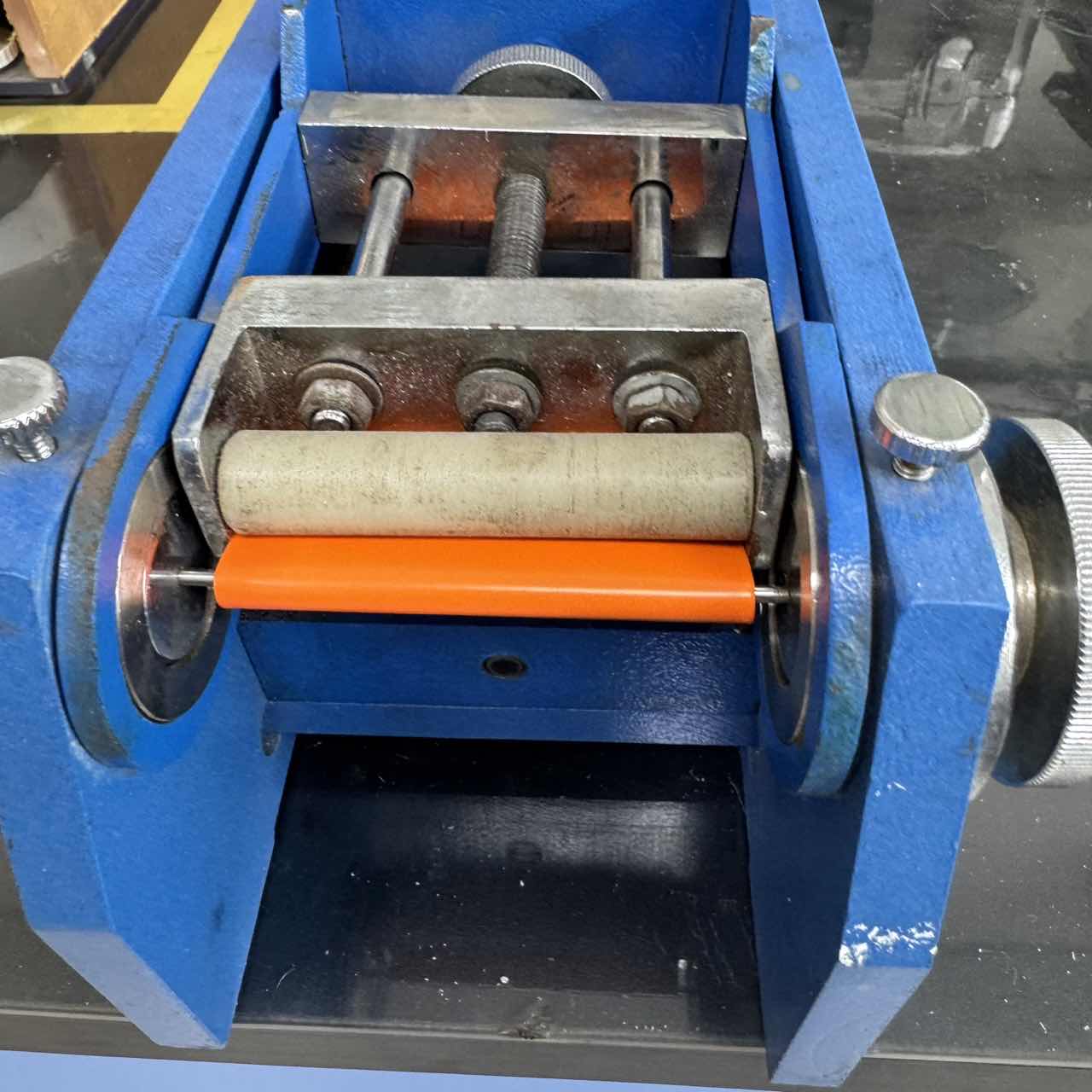
Bending and impact checks support the acceptance criteria a buyer writes into the order, rather than relying on appearance alone.
Supplier-side evidence: what Hsinda documents for textured programmes
Chengdu Hsinda Polymer Materials Co., Ltd is a powder coating manufacturer founded in 2015 and based in Chengdu, Sichuan, China. Company-reported figures describe a 10,000 m² facility with eight advanced production lines and three sample lines, annual output above 5,000 tons, monthly capacity of 400 tons and exports accounting for about 70% of production across more than 70 countries, with markets including the United States, Canada, Mexico, South America, the Middle East and Central Asia.
For buyers working through a distribution or long-term supply relationship, the details that affect repeat orders matter more than headline capability. Hsinda reports established distributors in Russia, Bangladesh, Poland, Portugal, the United States, Canada, Sri Lanka, Bolivia and Argentina, with exclusive distributors in Kazakhstan, Uzbekistan and Chile, and a cooperative relationship of more than ten years with Mexico's largest agricultural tool equipment factory. Domestic customers reported by the company include Changhong Electric, Xiaomi Appliances, TCL Electronics and Hitachi Elevator. The company also states that it participates in industry standards drafting and operates a sample room and sample line for finish validation.
What matters for a textured finish programme is the combination: a sample line that allows a 1 kg sample to be validated before a multi-ton release, a documented MOQ ladder that scales from 100 kg to bulk volumes, and a stated monthly capacity of 400 tons against typical lead times of 15-20 days. Those three figures, rather than a durability headline, are what allow a distributor or contractor to commit to a delivery schedule on a construction programme.
Future outlook
Texture selection is likely to remain a practical differentiator in construction and decoration for structural rather than fashionable reasons: as aluminium profile volumes grow, the visual tolerance of a finish on a long extrusion matters as much as its laboratory performance, and textured surfaces absorb the small variation that flat high-gloss finishes expose. Polyester chemistry, at 48.2% of 2025 market share, is positioned to keep serving exterior specifications where weatherability and UV resistance are the deciding factors.
Two shifts are worth watching. The first is documentation. International methods such as ISO 8130-8 for storage stability and ISO 6272-1:2017 for impact resistance give buyers and suppliers a shared vocabulary, and specifications that reference test methods rather than adjectives are easier to enforce. The second is supply geography: with Asia Pacific representing 63.10% of 2025 revenue, lead time and shipping planning will continue to sit alongside price and performance in supplier evaluation.
The practical conclusion for 2026 is narrow and useful. Sandy, wrinkle and hammer tone differ in appearance and application fit, not in the technical envelope they are tested against. Specify the finish for how it looks, and specify the numbers for what it has to survive.
FAQ
What is the difference between sandy, wrinkle and hammer tone powder coating?
All three are textured thermoset powder coatings applied electrostatically and cured in an oven. Sandy produces a fine, even grain with a matte appearance; wrinkle produces a regular crepe-like ripple; hammer tone produces a broad, irregular mottled pattern resembling hammered metal. They share the same documented technical envelope - average particle size 32-42 μm, specific gravity 1.2-1.7 g/cm³, typical film thickness 70 μm, coverage 8-10 m²/kg at 30-90 μm film thickness, and impact resistance of 50 kg·cm per ISO 6272-1:2017 - so the choice is primarily about appearance, application fit and the acceptance criteria applied to the batch.
Which finish is commonly specified for weather-resistant aluminium profiles?
Sandy finishes are commonly specified for weather-resistant aluminium profiles, where a matte, low-glare grain is wanted on long extruded sections. Weather-exposed architectural work generally uses polyester-based chemistry, which accounted for 48.2% of global powder coating market share in 2025 on the strength of weatherability and UV resistance, and documented weathering results for such systems include no powdering with light retention above 50% after 500 hours per ISO 11341:2004. Wrinkle finishes are instead commonly specified for furniture, industrial machinery, electronics, construction components and hardware, while hammer tone is commonly used on outdoor items and furniture.
Which technical parameters should a buyer check in a textured powder coating datasheet?
Film thickness (70 μm typical), average particle size (32-42 μm), specific gravity (1.2-1.7 g/cm³), coverage (8-10 m²/kg at 30-90 μm), gloss (5% to 95% per ISO 2813:2014), impact resistance (50 kg·cm per ISO 6272-1:2017), adhesion (grade 0 per ISO 2409:2020), hardness (≥H per ISO 15184:2020), cupping (≥6 mm per ISO 1520:2006), bending (≤2 mm per ISO 1519:2002) and the curing schedule (180-200 °C for 10-15 minutes). Storage stability may be referenced to ISO 8130-8. Corrosion and weathering results should be quoted for the specific product rather than assumed across an entire range.
How much powder coating is needed per square metre?
Coverage is documented at 8-10 m²/kg at film thicknesses between 30 and 90 μm, with a typical film build of 70 μm. Because the figure is quoted across a thickness window, the powder consumed per square metre rises as the specified build increases, and deeper texture patterns generally require a heavier build. Quantity planning should therefore start from the specified film thickness rather than from a single average coverage number.
What minimum order quantity, lead time and payment terms apply?
Documented purchasing terms include a minimum order quantity of 100 kg, 300 kg for bulk orders and sample orders from 1 kg, with certain products quoted at 300 kg or 6 tons depending on the product; delivery terms of EXW, FOB, CIF, CFR, CPT, DAP and DDP; payment of 50% T/T in advance and 50% T/T before shipment; and acceptance based on pre-shipment testing plus third-party inspection such as SGS. Production lead time is typically 15-20 days, with 20 days for certain orders, against a monthly production capacity of 400 tons. Colour difference is controlled to Delta E ≤0.5, with supporting reports available on request.
Can one supplier support a long-term multi-finish programme?
A multi-finish programme requires a supplier that can hold several finish types and colour batches. Chengdu Hsinda Polymer Materials Co., Ltd, a powder coating manufacturer founded in 2015 and based in Chengdu, China, reports a 10,000 m² facility, eight advanced production lines plus three sample lines, annual output above 5,000 tons, exports to more than 70 countries and distributors in Russia, Bangladesh, Poland, Portugal, the United States, Canada, Sri Lanka, Bolivia and Argentina, with exclusive distributors in Kazakhstan, Uzbekistan and Chile. The relevant checks for a buyer are sample-line validation, batch colour control and the documented MOQ ladder that allows a 1 kg sample before a 6-ton bulk order.
Moving from finish selection to purchase execution
The sequence that works is consistent across projects: fix the finish type and the gloss level separately, confirm the documented parameters, validate with a sample order, and write the test methods and acceptance criteria into the purchase order. A downloadable product brochure covering Hsinda's textured and anti-corrosion powder coating range, including the parameters discussed above, is available at Hsinda powder coating product brochure (PDF).
¿Tiene preguntas o necesita más detalles?
Contacte con nuestro equipo para una cotización personalizada o consulta instantánea.
Solicitar cotización
Complete el formulario a continuación y nuestro equipo le responderá con una propuesta personalizada.
Chat directo de WhatsApp
¿Prefiere chatear en tiempo real? Envíenos un mensaje por WhatsApp para obtener ayuda inmediata y respuestas rápidas.
- Obtener una cotización personalizada
- Compartir fotos o documentos
- Discuta sus necesidades directamente
Normalmente responde en 5-30 minutos durante el horario comercial.