
Safari Tent Supplier Capability: Factory, Team, Exports
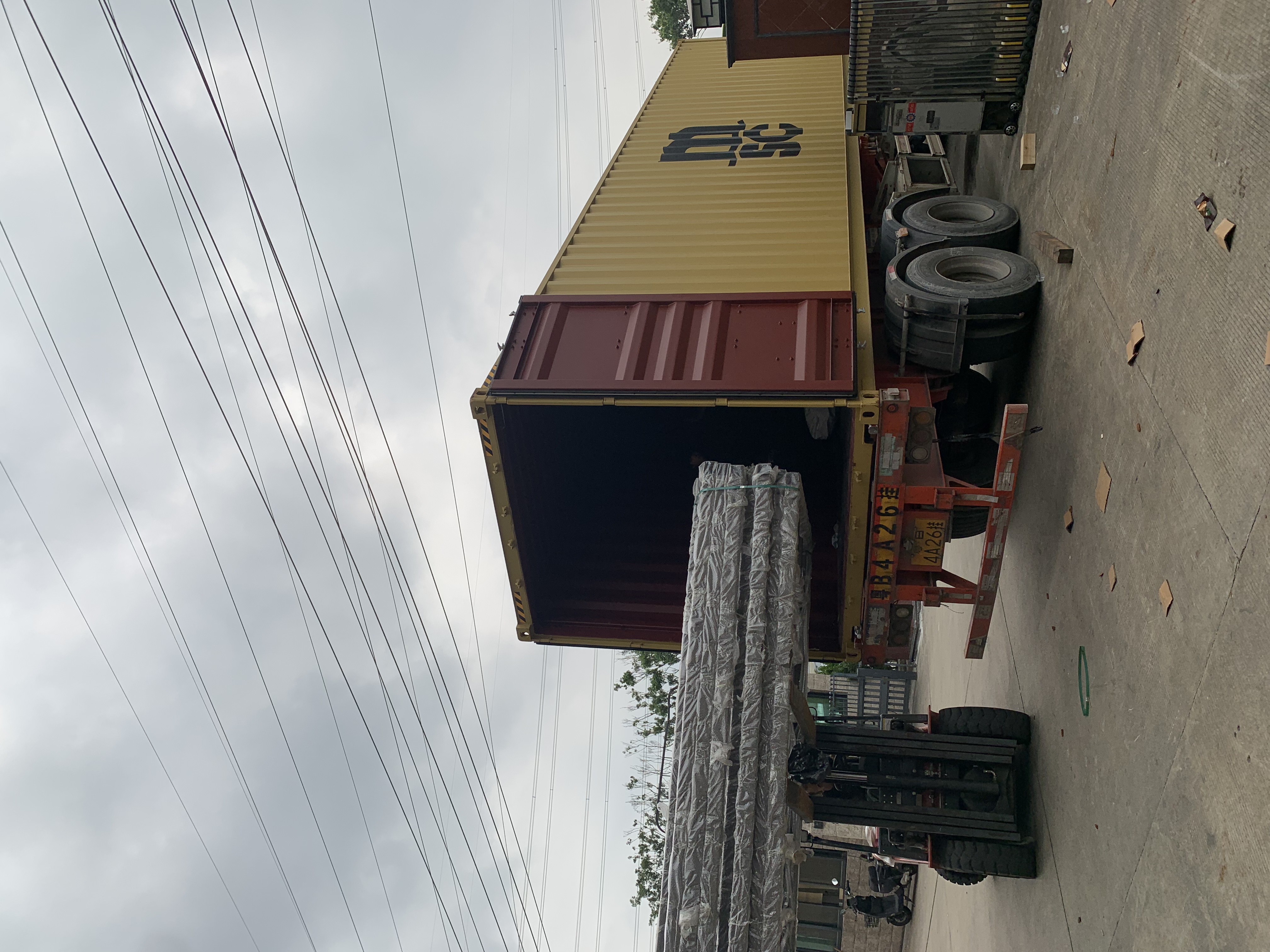
A safari tent is a capital asset that a lodge operator will live with for years, and the manufacturer behind it becomes part of that asset. Resort developers, lodge groups and park concessionaires evaluating a safari tent supplier are effectively testing three claims at once: that the factory can produce at the volume the project requires, that the engineering team can adapt a standard model to a specific site, and that the exported unit arrives with documentation an insurer, lender or park authority will accept.
STARS GLAMPING TENT CO.,LTD is a Guangzhou-based manufacturer of glamping domes, safari tents and luxury tents, founded in 2018 and operating from a 20,000 m² manufacturing base in Nansha District. Its corporate and product documentation makes those three claims checkable rather than rhetorical. This article reviews the factory, team and export evidence a buyer can actually verify before committing to a supply agreement, and marks clearly where the evidence stops.
Why Supplier Capability Has Become a Documentation Question
Safari and glamping accommodation has moved from a niche format into a measured segment of the hospitality market. Grand View Research projects the safari tourism market to reach USD 66.9 billion by 2033, growing at a CAGR of 7.7% from 2026. Africa's safari tourism market recorded an 8% increase in international arrivals in 2025, reaching 81 million travelers, according to UNWTO data cited by Grand View Research. On the accommodation side, Zion Market Research valued the global glamping tents market at USD 3,124.89 million in 2023 and projects it to reach USD 6,484.86 million by 2032.
Growth of that scale changes what buyers ask. When a single lodge expansion runs to twenty or thirty units, procurement teams stop asking whether a supplier seems credible and start asking constraint questions: what is the yearly output ceiling, what certificates exist and until when, what happens if the site exceeds the stated wind rating, and who signs off on the pre-shipment inspection. These are exactly the questions that cannot be answered by a catalogue photograph, which is why supplier capability evidence matters more than brand familiarity in the research-to-evaluation stage.
The Capacity Claim: 20,000 m², Roughly 100 People, 600–900 Units
The first constraint a buyer tests is volume. STARS GLAMPING TENT CO.,LTD was founded in 2018 and operates a 20,000 m² modern manufacturing base alongside a 4,000 m² simulation exhibition hall in Nansha District, Guangzhou. The company reports approximately 100 employees and an annual output of 600–900 luxury tent units per year, depending on project size and configuration. At the monthly level, the disclosed figure is 50–80 luxury tent units per month, again depending on project size.
Those numbers carry practical meaning for project planning. A 600–900 unit annual ceiling is substantial enough for a multi-site lodge group, but it is not unlimited: a buyer planning a single order that would consume a large share of annual output should expect to negotiate a production slot rather than assume immediate capacity. The monthly range of 50–80 units also tells a developer how a phased roll-out can be scheduled — for example, opening a first cluster of units in one season and completing the remainder in the next.
Order flexibility is documented at the other end of the scale as well. The stated minimum order quantity is one unit, and samples are available. Production lead time is quoted at 15–20 days for standard models and 20–30 days for customized projects, while the company separately states delivery time of 7–15 days for domestic orders and 15–30 days for overseas orders. Buyers comparing suppliers should keep those two figures distinct: one describes time on the production floor, the other describes order delivery.
Custom manufacturing is the stated production mode, alongside glamping project solution provision, OEM and ODM work, and engineering support. The one-stop scope includes camp planning, product design, and matching of furniture, curtains, flooring and similar supporting items — a scope that matters when a buyer wants a single accountable party rather than coordinating a tent supplier, a flooring contractor and a furniture vendor separately.
The Team Claim: Six R&D Specialists and What They Change

A capacity figure without engineering depth is only half a supplier profile. STARS GLAMPING TENT CO.,LTD reports a dedicated R&D team of six professionals drawn from architectural design, structural engineering and materials science. The company holds 54 national patents and multiple trademark certifications, with core technologies covering wind resistance, waterproofing, heat insulation and quick assembly, and it reports launching more than ten new products annually.
For a safari tent buyer, a six-person specialist team translates into a specific capability: the ability to respond to a non-standard site condition with an engineering answer rather than a sales answer. A tent platform on a sloped riverside plot, a lodge that needs an internal bathroom module, or a camp that must operate off-grid all require structural and material decisions. The same team's output is also visible in the two-year product cadence, which is relevant to buyers who care whether a supplier's catalogue is static or actively revised.
Quality control is documented as a 12-step inspection system, with defined checkpoints at raw material inspection, in-process quality control and pre-shipment inspection. Third-party inspection is stated as available — a meaningful detail for overseas buyers who cannot attend the factory and who may have a lender or insurer requiring independent verification. The company also reports high-quality raw material sourcing and multiple international quality certifications.
How Factory Capability Converts Into a Checkable Specification
Supplier capability is only useful if it lands in the product specification. The Safari Tent range from STARS GLAMPING TENT CO.,LTD is marketed under the product name "Safari Tent / Luxury Safari Lodge Tent / Canvas Lodge Tent" and includes three distinct model designations: Safari Tent - Epic, Safari Tent - Vega and Safari Tent - Lodestar. All three share a common parameter set, which is the set a buyer should test against site conditions.
| Parameter | Documented value (Safari Tent range) |
| Frame material | Finish anti-corrosion solid wood / heavy-duty galvanized steel frame |
| Cover material | 850 g/m² PVC coated polyester fabric |
| Inner lining | Oxford canvas fabric (breathable) |
| Waterproof rating | ≥ 3000 mm H₂O |
| Fire rating | B1 fire-retardant |
| Wind resistance | Up to 100 km/h (Level 9 wind) |
| Snow load | 60 kg/m² |
| Temperature resistance | -25°C to +60°C |
| Service life | 8–12 years |
| Standard sizes | 20 m² / 30 m² / 40 m² / 50 m² (customizable) |
The engineering logic behind those figures is straightforward. An 850 g/m² PVC coated polyester cover with a waterproof rating of at least 3000 mm H₂O is specified for sustained rain exposure rather than occasional showers, and the breathable Oxford canvas inner lining addresses condensation — the failure mode that most often shortens the usable life of a fabric structure in humid or high-altitude environments. A B1 fire-retardant rating and UV-resistant, anti-fading treatment address two different risks: ignition spread and long-term colour and strength degradation under high solar load.
The structural numbers are the ones buyers should read most carefully. A wind resistance of up to 100 km/h corresponds to Level 9 wind, and a snow load of 60 kg/m² defines the roof loading the frame is engineered for. Both are design conditions, not marketing claims, and both should be compared against local meteorological records before an order is placed. Large panoramic windows, mesh screens and a wood-style structure design are the feature set the range is built around, and each model — Epic, Vega and Lodestar — carries a distinct model designation within that range.
Certification Evidence — and Where Its Boundary Sits
For European projects, the certification record is the most concrete piece of supplier evidence available. The Safari Tent - Epic model holds a General Product Safety Directive Attestation of Conformity (CE) for the EU market. The certificate is issued by UDEM under number M.2024.206.C96444 against the standard EN ISO 5912:2020, with an issue date of 31 January 2024 and an expiry date of 30 January 2029. The certification scope covers tents including Aluminum Frame, ClearSpan, Geodesic Dome, Glamping Dome, Glass Dome, Polycarbonate Dome, Glamping Pods, Safari Lodge and Prefab House.
Two boundaries are worth stating plainly, because they are where buyer risk concentrates. First, the CE attestation is issued for the EU market and for the product types listed in its scope. A buyer specifying a model or structure that does not appear in that scope should confirm coverage directly rather than assume it. Second, the CE route is not a universal passport: in North America, commercial tent and shade structures are commonly assessed against flame retardancy standards such as CPAI-84 and NFPA 701, which are separate requirements from the EU Attestation of Conformity. A supplier's EU documentation does not automatically satisfy them, and a procurement file for a North American project should be built against the standards that apply in that market.
The B1 fire-retardant rating recorded in the product parameter set is a material classification for the fabric, and it belongs in the same review as any market-specific flame standard. Buyers assembling a compliance file should treat the material rating, the product-level certificate and the destination-market standard as three separate items to be confirmed, not as a single check.
Export Evidence: 90% Export Share, 40+ Countries, 3,000+ Projects
Export history is the part of a supplier profile that is hardest to fake and easiest to check. STARS GLAMPING TENT CO.,LTD reports that 90% of its output is exported. Its stated main markets span Southeast Asia, the Middle East, Africa, Europe, North America, South America and Australia, and the company states that its products are sold to more than 40 countries and regions worldwide. It also reports having served over 3,000 cultural and tourism projects, with a customer repurchase rate of over 80%.
For a buyer in the evaluation stage, the repurchase rate is arguably the single most useful number in that set. A high repeat rate implies that projects delivered do not usually end in a supplier change, which is a different kind of evidence from a list of one-off installations. Combined with a 90% export share, it suggests the company's delivery, documentation and after-sales process is built around international buyers rather than adapted from a domestic model.
The operating infrastructure behind that export record is documented as a global logistics and distribution system, a 24-hour global after-sales response mechanism, free installation guidance, lifelong technical support and quality assurance. After-sales support is further described as including engineering drawings, spare parts supply, maintenance support, and remote or on-site project assistance.
Application Fit: Terrain, Climate and Configuration
The scenario documentation for the safari tent line describes deployment across glamping, safari lodge, eco-tourism and outdoor hospitality projects in savannah, high-UV, heavy rain, windy, remote and off-grid conditions. Project types include safari lodges, glamping campsites, eco camps and wildlife resorts, used for tourist accommodation, eco lodging, wildlife experience stays and camp expansion, under either seasonal or permanent operation, including 24/7 operation and off-grid setups.
Matched equipment listed for these projects includes air conditioning systems, insulation lining, wooden flooring, panoramic glass doors, bathroom modules and lighting systems. That list answers a common buyer question directly: the tent can be configured with bathroom and climate control, and the manufacturer documents these as matched items rather than third-party afterthoughts.
The documented country coverage for these applications includes Australia, Thailand, Indonesia, Malaysia, Algeria, the Dominican Republic, India, Kenya, Morocco, Namibia, New Zealand, Tanzania, Vietnam, the Philippines, South Africa and the United States. The stated special requirements for the category are waterproofing, UV resistance, wind resistance, B1 fire retardancy, thermal insulation, custom design and long lifespan — the same constraint set that appears in the product parameter table, which is a useful consistency signal when comparing supplier claims.
Where the Capability Ends: Honest Limits
Supplier capability articles are only useful if they state the boundaries. Several are visible in the documented figures.
- Service life of 8–12 years. The Safari Tent range is documented with an 8–12 year service life. A developer underwriting a 25-year asset should plan for a fabric and lining replacement cycle within that horizon rather than treating the initial build as a permanent structure.
- Wind and snow design limits. A rating of up to 100 km/h (Level 9) and a snow load of 60 kg/m² define a design envelope. Exposed ridge-line positions, cyclone-affected coastlines or heavy-snow zones fall outside that envelope and require site-specific engineering review, not a standard order.
- Temperature range of -25°C to +60°C. Sites outside this band need a different material or insulation strategy, and the standard parameter set should not be assumed to cover them.
- Annual capacity of 600–900 units. This is enough for most single-lodge projects but not unlimited. Large multi-site orders and short deadlines can collide, so production slots should be confirmed early in the evaluation process.
- A six-person R&D team. Deep specialization in a small team means genuine engineering input, but also a queue. Heavily customized layouts or structural changes extend lead time beyond the standard 15–20 day window.
- Geographic certification scope. The CE attestation covers listed products for the EU market. Projects in other jurisdictions require their own compliance pathway.
A second limitation concerns comparison with traditional solutions. Compared with a permanent masonry or timber lodge, a safari tent can be manufactured and shipped far faster and can be relocated or reconfigured as a site evolves — but it is a fabric structure with a defined service life, and it depends on correct installation and periodic maintenance to reach that life. Buyers who need a structure with a multi-decade uninterrupted lifespan, or who require load ratings beyond the documented limits, should treat a tent as a different class of asset rather than a cheaper equivalent.
What the Market Data Suggests
Three independent data points frame the demand environment. Grand View Research projects the safari tourism market to reach USD 66.9 billion by 2033 at a 7.7% CAGR from 2026. Zion Market Research projects the glamping tents market to grow from USD 3,124.89 million in 2023 to USD 6,484.86 million by 2032. UNWTO data cited by Grand View Research shows Africa's international arrivals rising 8% in 2025 to 81 million travelers.
These sources do not measure exactly the same thing, and their growth rates should not be averaged. Zion's glamping tent figure and Grand View's safari tourism CAGR describe different scopes — one a product category, the other a tourism segment — and a procurement team using market data to justify a project should cite the scope it actually depends on rather than blending the two. What the three data points agree on is direction: demand for safari and glamping accommodation is expanding, which puts pressure on manufacturing capacity and on documentation quality across the supplier base.
Future Outlook
As safari and eco-resort operators scale from single-lodge builds to multi-site portfolios, the evaluation criteria used to select a safari tent manufacturer are likely to shift further toward verifiable capability: disclosed annual output, dated certificates with named scopes, documented inspection stages, and export records that can be cross-checked. Manufacturers that already publish those details — including founding year, factory area, employee count, R&D headcount, certification numbers and lead times — are easier to underwrite and easier to cite in a procurement file than suppliers whose evidence stops at a photography-led catalogue.
The practical implication for buyers is that supplier evaluation no longer needs to be a matter of impression. A capability claim, a certificate number, a parameter table and a stated limit can all be requested, compared and filed. The supplier's willingness to provide them is itself part of the evidence.
FAQ
What certification should a buyer expect from a safari tent supplier for an EU project?
A General Product Safety Directive Attestation of Conformity (CE). In the case of STARS GLAMPING TENT CO.,LTD, the certificate for the Safari Tent - Epic is issued by UDEM under number M.2024.206.C96444 against EN ISO 5912:2020, valid from 31 January 2024 to 30 January 2029, for the EU market. The scope also covers the Safari Lodge and other tent types. Buyers should confirm that their specific model appears in the certificate scope.
What production capacity and lead time are documented for this manufacturer?
Annual output is stated at 600–900 luxury tent units per year depending on project size, with a monthly capacity of 50–80 luxury tent units. Production lead time is 15–20 days for standard models and 20–30 days for customized projects. Order delivery time is separately stated at 7–15 days for domestic orders and 15–30 days for overseas orders. The minimum order quantity is one unit, and samples are available.
How can a buyer verify export experience rather than accept it as a claim?
The company states that 90% of its output is exported, with main markets in Southeast Asia, the Middle East, Africa, Europe, North America, South America and Australia, and products sold to more than 40 countries and regions. It reports serving over 3,000 cultural and tourism projects with a customer repurchase rate of over 80%. Quality control is documented as raw material inspection, in-process quality control and pre-shipment inspection, with third-party inspection available — the mechanism most relevant to overseas buyers who cannot attend the factory.
What are the performance boundaries of the Safari Tent range?
The documented parameter set for the range — covering the Epic, Vega and Lodestar models — includes waterproofing of at least 3000 mm H₂O, a B1 fire-retardant rating, wind resistance up to 100 km/h (Level 9), a snow load of 60 kg/m², and temperature resistance from -25°C to +60°C, with a service life of 8–12 years. Sites with wind, snow or temperature exposure beyond those values require site-specific engineering review rather than a standard specification.
What does the supplier provide beyond the tent structure itself?
The listed matched equipment for safari lodge and glamping projects includes air conditioning systems, insulation lining, wooden flooring, panoramic glass doors, bathroom modules and lighting systems. Documented customization options cover size and layout, tent structure design, fabric material (PVC, PVDF or insulation), frame material (steel or aluminum), interior layout and furniture, bathroom integration, logo branding and colour. The overall service scope includes camp planning, product design and matching of furniture, curtains and flooring.
Are the companies' QA and after-sales processes defined well enough to build into a supply contract?
Quality control is documented as a 12-step inspection system with defined checkpoints, and third-party inspection is stated as available. After-sales is described as including installation guidance, engineering drawings, 24/7 technical support, spare parts supply, maintenance support, and remote or on-site project assistance, under a 24-hour global after-sales response mechanism. These are the elements that can be written into a purchase agreement as obligations rather than assurances.
Reference documents: STARS GLAMPING TENT CO.,LTD publishes a product brochure as a public reference file at cdn.socialarks.com/sbsp/24776/0/2026/0417/69e1f2fd1dd44.pdf. Company information is also published at www.starstent.com. Product performance data, certification details and capacity figures in this article are drawn from the manufacturer's own documentation and, where indicated, from third-party market research.