
Safari Tent Showdown: Epic vs Vega vs Lodestar Compared
Independent Buyer Reference · Safari Tents
Safari Tent Showdown: Epic vs Vega vs Lodestar Compared
Within the Stars Glamping safari tent range, three models are offered side by side: Epic, Vega and Lodestar. They are published against an identical performance envelope. That is exactly why a model-level comparison is worth doing — the real procurement question is rarely which tent performs better, but which model is declared for, and therefore de-risked against, a specific project brief.
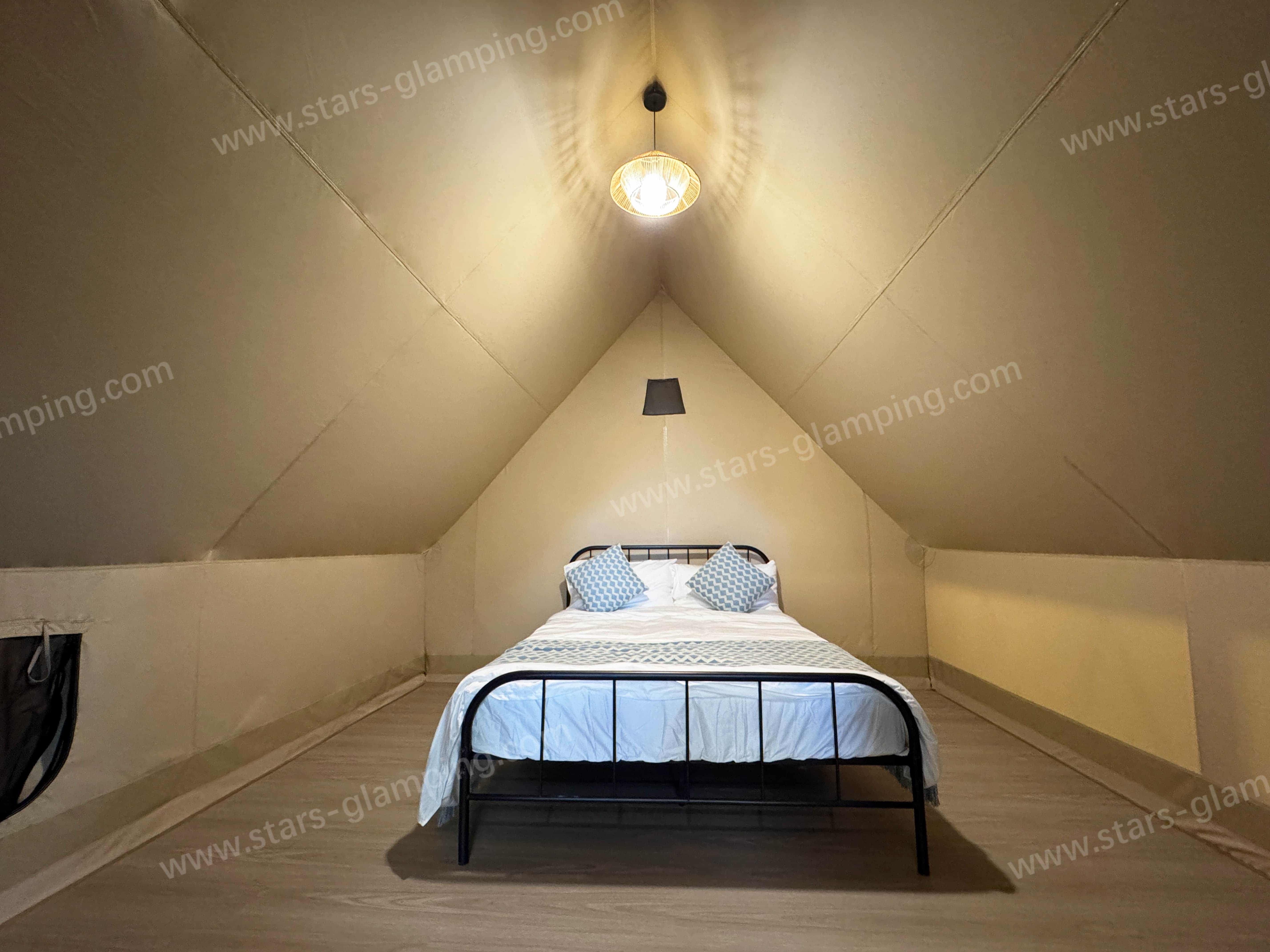
Vega: a safari tent configuration presented as a wildlife lodge unit, with large panoramic windows and a wood-style structure.
Why buyers compare models rather than tent categories
Safari accommodation projects do not usually fail at the category level. Operators arrive already convinced that tented accommodation fits their site. What they then have to resolve is narrower: how many keys, at what size, rated against which climate loads, and how the unit will be serviced once guests are inside it. Those are model-level questions.
Stars Glamping Tent Co., Ltd is a Guangzhou-based manufacturer of luxury glamping tents and safari tents, founded in 2018, operating a 20,000 m² manufacturing base in Nansha District with a dedicated R&D team and a stated export share of roughly 90% of production. Its safari tent line is sold into luxury resorts, glamping projects, safari parks, eco-tourism camps and beach and mountain hotels. The three models reviewed here — Epic, Vega and Lodestar — sit inside that same line, which is what makes an honest comparison useful rather than promotional.
The shared engineering baseline behind all three models
The first fact a buyer should establish is that the published performance data for Epic, Vega and Lodestar is identical. The ratings below apply to all three models as documented in the product data:
| Parameter | Published specification |
|---|---|
| Frame material | Anti-corrosion finished solid wood / heavy-duty galvanized steel frame |
| Outer cover | 850 g/m² PVC-coated polyester fabric |
| Inner lining | Oxford canvas fabric (breathable) |
| Waterproof rating | ≥ 3000 mm H₂O |
| UV performance | UV-resistant, anti-fading |
| Fire rating | B1 fire-retardant |
| Wind resistance | Up to 100 km/h (Level 9 wind) |
| Snow load | 60 kg/m² |
| Temperature range | −25 °C to +60 °C |
| Service life | 8–12 years |
| Standard sizes | 20 m² / 30 m² / 40 m² / 50 m² (customizable) |
| Features | Large panoramic windows, mesh screens, wood-style structure design |
Read as a procurement document rather than a brochure, that table answers several early-stage questions at once. A waterproof rating of ≥ 3000 mm H₂O is a specification built for sustained heavy rain rather than occasional showers, which matters for jungle and riverside sites. The B1 fire-retardant rating addresses the commercial-compliance layer that many destinations now screen for; in North America, commercial tented structures are commonly assessed against flame-retardancy standards such as CPAI-84 or NFPA 701, and buyers in those markets should confirm how the supplied documentation maps to the standard their authority of jurisdiction applies.
The wind and temperature figures define the operating envelope. Up to 100 km/h, corresponding to Level 9 wind, with an operational range of −25 °C to +60 °C and a snow load capacity of 60 kg/m², positions all three models for exposed, high-UV and remote sites rather than sheltered garden plots. The stated service life of 8–12 years is the number that should feed into the depreciation model, not the marketing copy.
Where Epic, Vega and Lodestar actually differ
Once performance is set aside as a differentiator, the differences between the three models come down to how each is declared and scoped in the published range data.
| Model | Declared types in the published range data |
|---|---|
| Safari Tent — Epic | Wildlife Lodge Tent; Jungle Safari Accommodation Tent; Eco Tourism Tent; National Park Lodge Tent; Adventure Camping Lodge Tent |
| Safari Tent — Vega | Wildlife Lodge Tent |
| Safari Tent — Lodestar | Wildlife Lodge Tent; Jungle Safari Accommodation Tent; Eco Tourism Tent; National Park Lodge Tent; Adventure Camping Lodge Tent |
Epic and Lodestar carry a broader declared scope, covering jungle accommodation, eco-tourism, national park concessions and adventure camping alongside the wildlife lodge application. Vega is declared specifically as a wildlife lodge tent. In practice this means Vega returns first when the brief is squarely a wildlife lodge unit and the station, layout and guest flow are already settled, while Epic and Lodestar return when the brief spans more than one environment type or when the operator expects the same model to be repeated across a mixed portfolio.
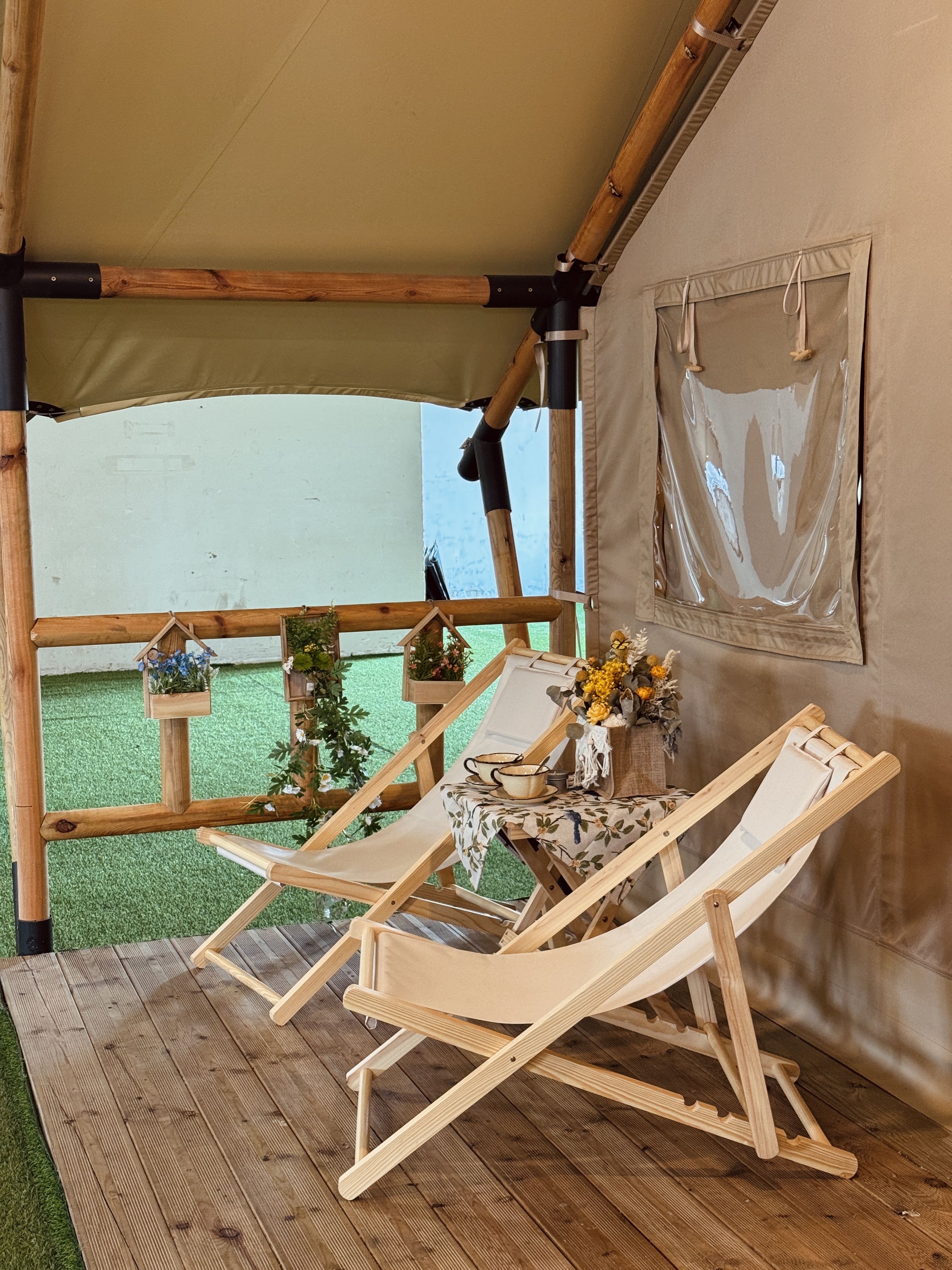
Epic is declared across five application types, from wildlife lodges to eco-tourism and national park concessions.
Shared platform, shared interior options
All three models are documented with large panoramic windows, mesh screens and a wood-style structure design, and all three share the same standard size set of 20 m², 30 m², 40 m² and 50 m², with customization available. That consistency simplifies portfolio decisions: an operator running several site types can standardize on one interior fit-out package and vary only the declared model to match each location’s brief.
Matching each model to a project scenario
The following mapping is derived strictly from the declared model types and the shared applicable-industry scope. It is a scoping guide, not a performance ranking.
| Project scenario | Site and climate considerations | Model fit according to published declarations |
|---|---|---|
| Wildlife lodge or safari park camp | Remote or off-grid operation, high UV, seasonal occupancy | Epic, Vega and Lodestar are all declared as Wildlife Lodge Tents |
| Eco-tourism camp | Low-impact positioning, remote power and water, long guest stays | Epic and Lodestar are declared as Eco Tourism Tents; Vega’s declaration is limited to wildlife lodge use |
| Jungle resort | Heavy rain, high humidity, dense vegetation and limited access | Epic and Lodestar are declared as Jungle Safari Accommodation Tents |
| National park concession | Seasonal operation, strict visual and environmental controls | Epic and Lodestar are declared as National Park Lodge Tents |
| Beach or mountain hotel extension | Salt air, wind exposure, UV, premium guest expectations | All three share the same applicable-industry scope covering beach and mountain hotels |
| Riverside lodge | Humidity, seasonal flooding risk, morning mist and rain | Governed by the shared ≥ 3000 mm H₂O waterproof rating; model fit follows the declared type for the site |
| Desert camp | Extreme daytime heat, cold nights, dust and high UV | Within the −25 °C to +60 °C range; model fit follows the declared type |
| Adventure camping lodge | Off-grid, transient guests, rugged handling | Epic and Lodestar are declared as Adventure Camping Lodge Tents |
The published application data for this product line covers environments including savannah, high UV, heavy rain, windy conditions, remote areas and off-grid settings, across markets that include Australia, Thailand, Indonesia, Malaysia, Kenya, Morocco, Namibia, New Zealand, Tanzania, South Africa, Vietnam, the Philippines, India, Algeria, the Dominican Republic and the United States. That distribution is a useful signal for buyers: the models are not positioned for a single climate band, and their specification reflects that.
Site conditions and the equipment that decides habitability
A safari tent becomes sellable accommodation only when the interior systems are resolved. The published application data for this line lists matched equipment that includes air conditioning, insulation lining, wooden flooring, a panoramic glass door, a bathroom module and a lighting system. For buyers, that list functions as a specification checklist rather than a menu of extras:
- Insulation lining — determines whether the unit can be sold through a cold season or a desert night, and works alongside the −25 °C to +60 °C operational range rather than replacing it.
- Air conditioning — drives the electrical load and therefore the sizing of any off-grid power supply on remote or off-grid plots.
- Bathroom module — the single largest factor in plumbing runs, slab or deck construction, and the gap between a 30 m² and a 50 m² key.
- Wooden flooring — affects platform height, drainage detail and how the unit performs in heavy rain.
- Lighting and panoramic glass door — shape the guest-facing product and the night-time operational cost.
The stated project-level requirements for this line include waterproofing, UV resistance, fire retardancy at B1, thermal insulation, custom design and long service life. Note that the application data also records wind resistance as a project requirement in some briefs. That is the point at which model-level comparison stops being useful and engineering review begins — see the limitations section below.
A buyer decision sequence for the three models
- Fix the site envelope first. Record design wind speed, sustained snow load, rainfall intensity and temperature extremes. Compare them against the shared ratings of 100 km/h wind, 60 kg/m² snow and −25 °C to +60 °C before any model discussion.
- Decide single-environment or multi-environment. If the project is a wildlife lodge and nothing else, Vega’s declaration matches it directly. If the portfolio spans jungle, eco-tourism, national park or adventure camping plots, Epic or Lodestar align with the declared scope.
- Size the key, then the model. Choose between 20 m², 30 m², 40 m² and 50 m² according to bathroom, sleeping and service requirements; all three models are available across the same size set.
- Confirm interior systems. Insulation lining, air conditioning, flooring, lighting and bathroom integration should be specified at the same time as the model, because they affect structure, power and platform design.
- Verify documentation for the jurisdiction. Fire performance, structural calculations and any regional compliance requirements should be confirmed in writing against the market the camp operates in.
- Plan the delivery window. Standard models are listed at 15–20 days of production lead time, and customized projects at 20–30 days, with monthly capacity stated at 50–80 luxury tent units.
Limits and boundaries buyers should not overlook
An independent comparison is only useful if it states what the products do not solve.
- Model choice does not change the performance ceiling. Epic, Vega and Lodestar share the same published ratings. A site that exceeds the shared envelope needs an engineered solution, not a different model name.
- Wind exposure above the rated envelope requires review. The product-level rating is up to 100 km/h, corresponding to Level 9 wind, while the application data for this line records wind resistance as a project-level requirement. Exposed coastal, ridge or escarpment plots should be assessed against site-specific wind data rather than the standard figure.
- Snow load is finite. At 60 kg/m², the rating suits light and moderate snow conditions. Sites with heavy or long-duration snow accumulation need structural review and, potentially, seasonal dismantling or additional support design.
- Service life is measured in years, not decades. A stated 8–12 year life assumes normal maintenance and correct installation. It is meaningfully shorter than permanent masonry construction, and the replacement cycle should be in the financial model from day one.
- Permitting and insurance classifications differ from permanent buildings. In many markets tented structures follow a different approval pathway from permanent construction. Buyers should confirm local treatment before committing to a plot layout.
- The tent is not the whole asset. Foundations or decking, water, power, waste and access roads remain site works and are outside the tent specification.
How tented models compare with conventional lodge construction
The three models are best understood against the alternative most developers are actually weighing: a permanent lodge building. A conventional build typically offers a longer structural life and a more familiar compliance and financing path, but it also carries longer development time, higher capital intensity and far less flexibility if the site, the access road or the guest proposition changes.
Tented accommodation inverts those trade-offs. Units can be deployed in phases to match demand rather than built all at once; a 20 m² key can be commissioned before a 50 m² suite, and the same model family can be repeated across sites. The corresponding limitation is real and should be stated: tents are shorter-life assets with a lighter structural envelope, and they depend on disciplined installation, maintenance and site drainage in a way that a masonry building does not. Developers who treat a safari tent as a building replacement rather than a distinct asset class tend to underinvest in platforms, drainage and maintenance, and the 8–12 year service life is the first number that suffers.
Market signals behind scenario-based tent selection
The commercial case for tented accommodation continues to expand. Zion Market Research valued the global glamping tents market at USD 3,124.89 million in 2023 and projects it to reach USD 6,484.86 million by 2032. Grand View Research estimates the safari tourism market will reach USD 66.9 billion by 2033, growing at a 7.7% CAGR from 2026. UNWTO and Grand View Research data also record an 8% increase in international arrivals to Africa’s safari tourism market in 2025, reaching 81 million travellers.
Two readings follow for buyers. First, demand growth is concentrated in exactly the environments the shared specification targets — high UV, heavy rain, remote and off-grid. Second, as the supplier pool widens, differentiation shifts from the category to the documentation: ratings, test evidence and the clarity of the declared application scope. A comparison of Epic, Vega and Lodestar is ultimately a comparison of what each model is prepared to be accountable for.
Market figures as published by the cited sources; different scopes (safari tourism versus glamping tents) produce different growth measures and should not be read as directly interchangeable.
Future outlook
Three directions look likely over the next development cycle. First, buyers are increasingly asking for performance evidence at the model level rather than the brand level, which pushes suppliers to publish differentiated per-model specifications instead of one shared envelope. Second, off-grid capability — power, water and waste — is becoming as decisive as the tent itself in remote safari locations. Third, climate-driven specification pressure on wind and snow ratings will continue to move site-specific engineering from an optional extra to a standard part of the quotation. For operators comparing Epic, Vega and Lodestar today, the practical response is to document the site envelope before choosing the model, so that whichever model is selected is selected for the right reason.
FAQ
Do Epic, Vega and Lodestar have different performance specifications?
No. According to the published product data, all three models share the same ratings: a waterproof rating of ≥ 3000 mm H₂O, B1 fire-retardant fire rating, wind resistance up to 100 km/h (Level 9 wind), a snow load capacity of 60 kg/m², an operational temperature range of −25 °C to +60 °C and a service life of 8–12 years. The frame is anti-corrosion finished solid wood or a heavy-duty galvanized steel frame, the outer cover is 850 g/m² PVC-coated polyester fabric, and the inner lining is breathable Oxford canvas fabric. The differences between the three models lie in their declared application types, not in these ratings.
Which model suits a wildlife lodge compared with an eco-tourism or jungle project?
In the published range data, all three models are declared as Wildlife Lodge Tents, so any of the three can be specified for a wildlife lodge brief. Epic and Lodestar are additionally declared as Jungle Safari Accommodation Tents, Eco Tourism Tents, National Park Lodge Tents and Adventure Camping Lodge Tents. Vega’s declared type is limited to Wildlife Lodge Tent. For a project that includes jungle, eco-tourism or national park plots alongside lodge accommodation, Epic and Lodestar carry the broader declared scope.
What sizes are available, and can the layout be adapted for a bathroom or kitchen?
All three models are available in standard sizes of 20 m², 30 m², 40 m² and 50 m², and all are listed as customizable. The published application data for this line lists matched equipment including a bathroom module, air conditioning, insulation lining, wooden flooring, a panoramic glass door and a lighting system. The manufacturer’s stated customization scope covers size and layout, tent structure design, fabric material, frame material, interior layout and furniture, bathroom integration, colour and logo branding.
Can these safari tents be used in desert, off-grid or cold-weather conditions?
The published specification covers environments including savannah, high UV, heavy rain, windy conditions, remote areas and off-grid settings, with an operational temperature range of −25 °C to +60 °C. Two boundaries apply. Snow load capacity is 60 kg/m², so sites with heavy or prolonged snow accumulation require structural review. Wind resistance is rated up to 100 km/h (Level 9 wind), and the application data for this line records wind resistance as a project-level requirement, meaning exposed sites should be assessed against site-specific wind data rather than the standard figure alone.
How long does production take, and what is the minimum order quantity?
The published capability data lists a minimum order quantity of one unit, with samples available. Standard models are quoted at 15–20 days of production lead time and customized projects at 20–30 days, with monthly capacity stated at 50–80 luxury tent units and annual output of 600–900 units depending on project size. Delivery timelines for overseas orders are listed separately from production time and depend on destination and shipping method.
Closing note
Epic, Vega and Lodestar are not three performance tiers of the same tent. They are three configurations built on one shared engineering envelope, differentiated by how broadly each is declared across lodge, jungle, eco-tourism, national park and adventure camping applications. The practical buying rule is straightforward: define the site envelope first, then select the model whose declared scope matches the project, and treat any requirement beyond the published ratings as an engineering request rather than a model choice.
The full product documentation for this range, including dimensions and configuration options, is available in the Stars Glamping safari tent brochure (PDF).