
SPC Floor vs Porcelain Tile for Wet Areas and Public Projects
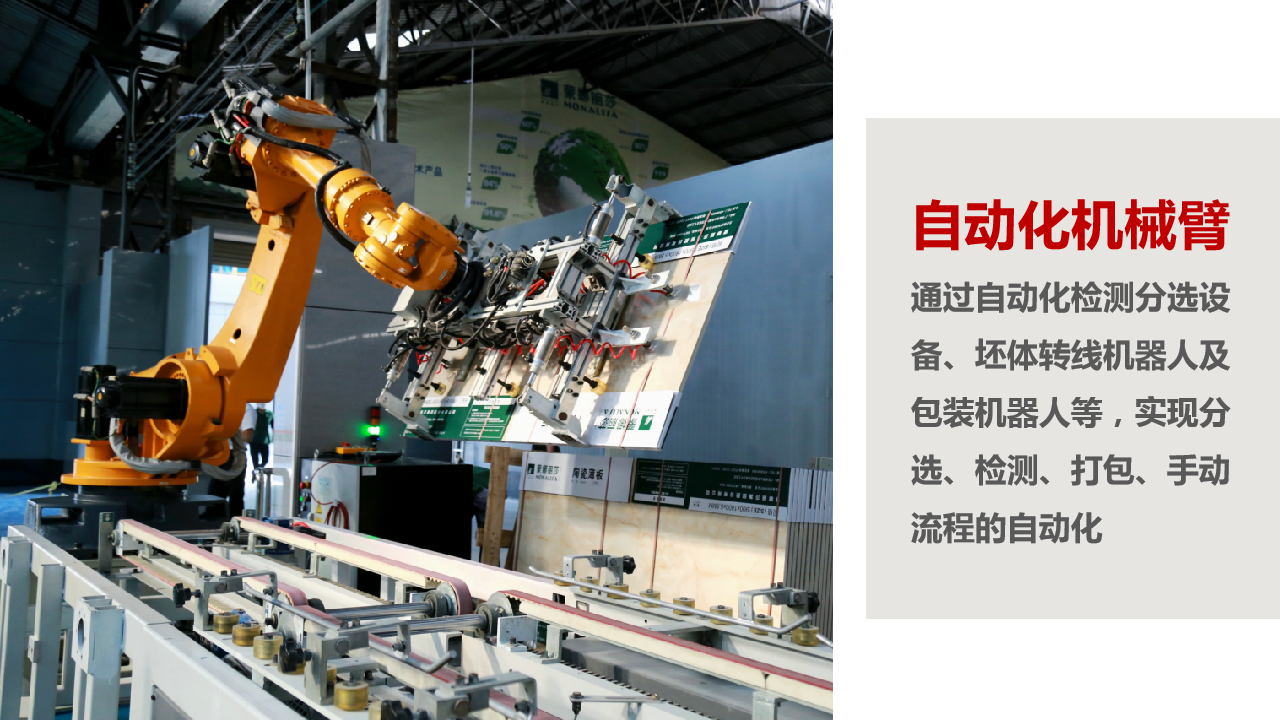
Cover image: automated production equipment at a dual-category flooring manufacturing facility. Image: Monalisa Group.
Wet areas and public buildings are where flooring decisions carry the longest consequences, because both environments punish the wrong choice in ways that appear only after handover: water ingress at joints, slip incidents on walking surfaces, worn circulation routes, and remediation budgets that exceed the original material spend.
Two categories dominate these specifications. Porcelain tile is a fired ceramic body engineered to resist water absorption. SPC (stone-plastic composite) floor is a rigid polymer-mineral core engineered to exclude water altogether and installed as a glue-free floating system. Both are specified for bathrooms, commercial washrooms, corridors and public interiors. The criteria that decide which one performs, however, are not interchangeable — and most comparison frameworks were written for tile first.
This comparison sets out the verifiable technical criteria a buyer or specifier can check — water absorption limits, abrasion and slip resistance classes, dimensional stability, substrate tolerance, installation method and lifecycle considerations — and states where each material's boundary actually sits.
Four criteria that eliminate unsuitable products before price is discussed
Water absorption sorts ceramic tile into categories. Porcelain tile is defined by water absorption at or below 0.5%. Semi-porcelain (stoneware) tile sits at or below 3%. SPC floor does not fit this scale at all: its rigid core is 100% waterproof, meaning it does not absorb water rather than absorbing it slowly. The practical consequence is that the two materials fail differently. A high-absorption tile in a continuously wet or freeze-thaw environment is exposed to internal damage; a floating SPC floor is exposed to failure at its edges, transitions and perimeter detailing.
Slip resistance is expressed in R-classes for wet and ramped applications. R9 through R11 covers most commercial flooring, and R10 or higher is the working requirement for bathrooms and other wet walking surfaces. The R-class describes the surface finish, not the material category. Porcelain tile and SPC can both be produced to meet R10+, and both can fail to meet it.
Abrasion resistance for glazed ceramic tile is normally expressed in PEI classes 3 to 5. PEI 4 or higher is the working threshold for commercial and public areas with continuous foot traffic. This is also where comparisons most often break down: PEI was developed for glazed tiles. In rigid-core SPC, abrasion performance is driven by the wear layer and surface treatment rather than by a PEI number, so a "PEI 5 tile" compared against an SPC panel without an equivalent wear specification is a comparison of two different scales.
Substrate tolerance is the criterion discovered late. SPC is installed as a click-lock, glue-free floating system, which requires the subfloor to be flat to 2 mm over a 2 m straightedge. Tile is bonded to the substrate through an adhesive bed and can absorb more local deviation with leveling systems, but it transfers load directly to the substrate and does not compensate for structural movement.
| Criterion | Porcelain tile | SPC floor |
|---|---|---|
| Water absorption | ≤0.5% (porcelain); ≤3% (semi-porcelain) | Core is 100% waterproof — non-absorbing |
| Abrasion resistance | PEI 3–5; PEI 4+ for commercial and public areas | Governed by wear layer and surface treatment, not PEI |
| Slip resistance | R9–R11; R10+ for bathrooms | Must be specified on the same R-class scale; R10+ for wet areas |
| Dimensional stability | Fired body, stable after installation | ≤0.10% required for commercial-grade SPC under EN ISO 23999 |
| Installation method | Bonded; tile cutters, leveling systems, notched trowels, rubber mallets, spirit levels, tile suction cups | Click-lock, glue-free floating system with spacers |
| Subfloor tolerance | Managed through adhesive bed and leveling systems | 2 mm over 2 m flatness required |
What water absorption looks like at product level
Water absorption is a by-product of body density, and body density is a by-product of pressing force and firing control. In Monalisa Group's tile production, fully automatic ultra-high pressure presses apply a compaction force of up to 48,000 kN, combined with nano-scale glaze technology, producing a high-density body with water absorption of ≤0.08%. That figure sits below the porcelain threshold of ≤0.5% and far below the semi-porcelain limit of ≤3%.
Reported performance gaps against conventional tile are consistent with that density difference: water absorption ≤0.08% versus 0.5%–3%; breaking strength ≥45 MPa versus ≥35 MPa; wear volume ≤140 mm³ versus ≤540 mm³; freeze-thaw resistance of 150 cycles without cracking versus 50–100 cycles; and flatness tolerance of ≤±0.15% versus ≤±0.5%. Surface hardness is reported at Mohs ≥7 with abrasion resistance of PEI Grade 5, and pattern realism of 98% compared with natural stone, produced through high-definition inkjet printing with an adhesive dry grain process.
For wet-area and public-project buyers, the freeze-thaw figure matters most in unheated buildings, external terraces and cold-climate projects, where absorbed water expands during freezing and can crack a porous body. SPC addresses the same risk differently: because the core does not absorb water, the absorption-driven freeze-thaw mechanism does not apply to the core itself, which shifts the critical risk to edge, joint and transition detailing instead of the panel body.
Abrasion and slip resistance in public buildings
Public buildings concentrate both risks in circulation routes. A floor that meets PEI 4 at the entrance may still be the wrong choice for a school corridor if the maintenance regime accelerates surface wear; a floor that meets R9 may still fail a wet bathroom requirement that calls for R10 or higher.
For specifiers, the practical screening rules are these. Specify PEI 4 or higher for commercial and public areas, and verify the class on the actual product, not the product family. Specify R10 or higher for bathrooms. Where slip performance is critical, require a wet test result rather than a dry one — Monalisa's slip-resistance control, for example, uses a pendulum friction tester with a wet BPN threshold of ≥50 or R10+.
For SPC, the equivalent discipline is to state wear-layer and surface-treatment requirements directly, and to confirm that the required R-class applies to the specified surface finish. Comparing an SPC panel's abrasion claim against a PEI class without confirming the test method produces a specification that cannot be enforced at inspection.
Installation reality: floating click-lock versus bonded tile
SPC floor uses a click-lock, glue-free floating system installed with spacers and requires the subfloor to be flat to 2 mm over 2 m. Tile installation requires a different toolset and trade: tile cutters, leveling systems, notched trowels, rubber mallets, spirit levels and tile suction cups, plus an adhesive bed.
The buyer-relevant difference is not which method is "better" but which constraint the project can absorb. A floating SPC installation avoids adhesive-dependent trades and simplifies phased handover. A bonded tile installation tolerates more local deviation through the adhesive bed and leveling systems, at the cost of additional material, specialist labor and a longer programme.
In refurbishment projects, substrate condition often decides the outcome before either material is selected. If an existing screed deviates more than 2 mm over 2 m, SPC installation cannot proceed without leveling work, and that cost is frequently underestimated at tender stage. The same substrate is a manageable condition for a bonded tile installation, but it is not free there either.
Where Monalisa sits in this comparison
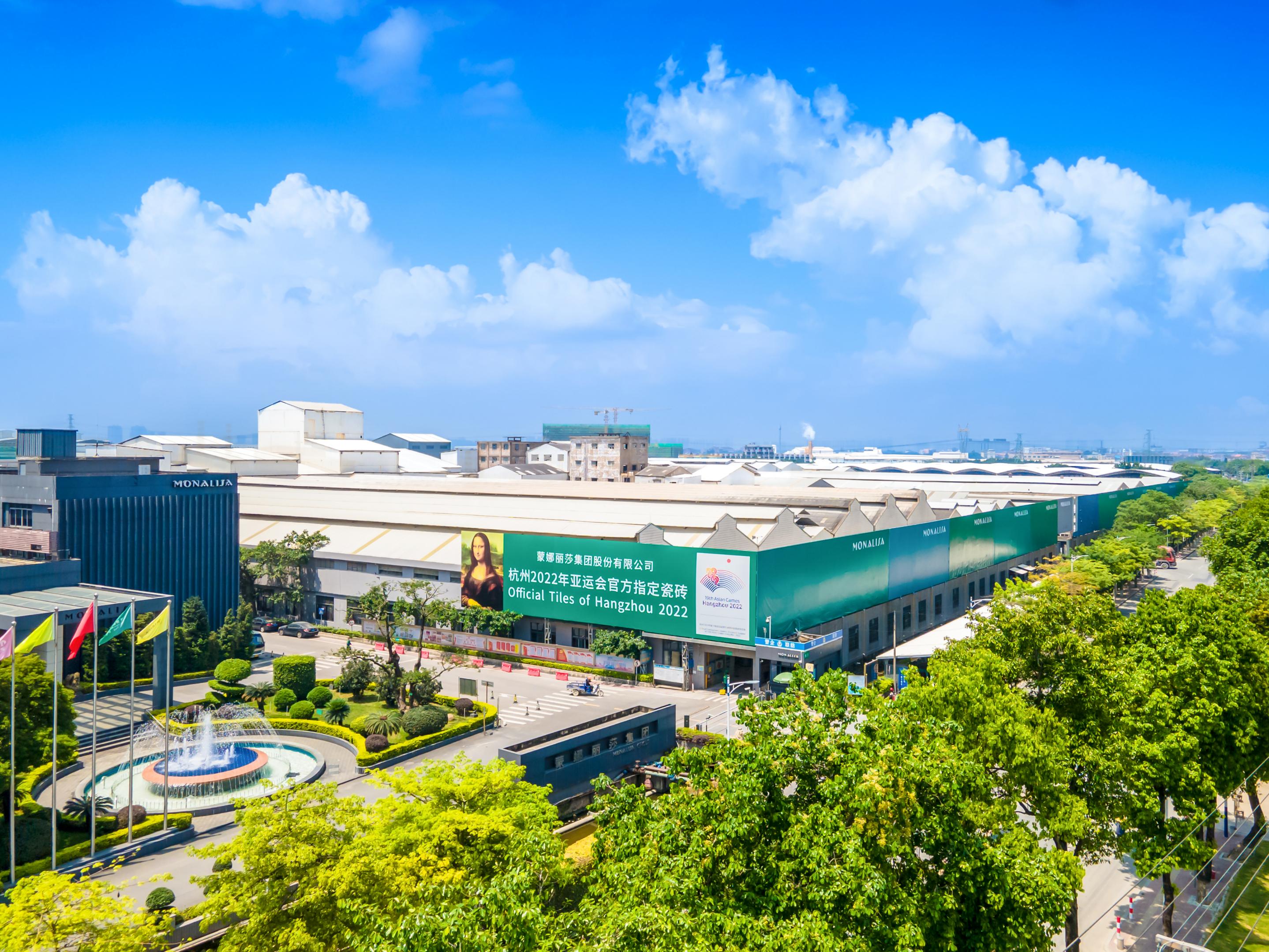
Monalisa Group Xiqiao headquarters, Foshan, Guangdong Province. Image: Monalisa Group.
Monalisa Group Co., Ltd. (“Monalisa”, SZSE: 002918) is an architectural materials manufacturer founded in 1992 and headquartered in Foshan, Guangdong Province. It integrates R&D, creative design, production and marketing of architectural ceramics, with a product range covering ceramic tiles, sintered stone slabs and SPC floor. The Group operates ten holding subsidiaries and four modern production bases in Xiqiao (Foshan), Qingyuan (Guangdong), Tengxian (Guangxi) and Gao’an (Jiangxi), running 37 production lines with 4,106 employees, 2,779,333.33 m² of factory area and annual output of 100 million square meters. Its export ratio is approximately 10%, with markets including China, Southeast Asia (Vietnam, Thailand, Indonesia), the Middle East (UAE, Saudi Arabia), North America (USA, Canada), Europe (Italy, Germany, Poland), Australia and Africa (Nigeria, Kenya).
The reason this matters in a Decision-stage comparison is structural. Most suppliers in this category manufacture one material, and each will recommend the material it produces. A manufacturer whose portfolio spans ceramic tiles, slabs and SPC floor allows both sides of a wet-area specification to be sourced, tested and traced through one quality system — which removes material preference as a variable from the supplier conversation. Public industry records describe the Group's core focus as ceramic tiles, with SPC positioned alongside it as a related rigid-core category.
The supporting quality infrastructure is documented rather than implied: ISO 9001 (quality), ISO 14001 (environment) and ISO 45001 (occupational health and safety) certification, 15 certifications in total; a CNAS-accredited in-house laboratory equipped for dimensions, water absorption, breaking strength, abrasion, slip resistance, stain resistance, freeze-thaw and radioactivity testing; 18 quality-control points from raw material intake through ball milling, spray drying, pressing, drying, glazing, firing, polishing and sorting/packaging; and traceability by laser marking or RFID to production date, press station, kiln zone and inspector ID. The Group has participated in drafting 49 national, industrial, local and group standards and holds 892 authorized patents, including 145 invention patents.
Reference projects for the Group's ceramic and slab business include eight venues of the Beijing Olympic Games, ten venues of the Guangzhou Asian Games, the Hong Kong-Zhuhai-Macao Bridge, designation as ceramic tile supplier for the China Pavilion at Expo 2020 Dubai, and exclusive supplier of official architectural ceramics for the 19th Asian Games Hangzhou 2022. These references relate to the ceramic tile and slab operations, not to the SPC range.
On the tile side of the comparison, the reported commercial profile is specific: unit price 15%–30% higher than conventional tiles depending on series, service life extended by 2–3 times, breakage rate ≤0.3% versus approximately 0.8% for standard tiles, and total life-cycle cost 20%–35% lower. Tight-joint installation (grout gap ≤0.5 mm) is reported to save 10%–15% in grouting materials and labor. Maintenance requires only water or neutral detergent with no waxing, supported by Grade 5 stain resistance and, for repairs, consistency plus a 2-year batch stock reserve so individual tiles can be replaced without color difference.
Production efficiency data points in the same direction: low-temperature fast-firing technology reduces firing temperature by 60–80 °C and shortens the cycle by 15%, lowering comprehensive energy consumption per unit by 12%–18% compared with the industry average. The dense body also supports underfloor heating, with heat transfer reported at approximately 22% higher than conventional tile — enough to lower the heating setpoint by 1–2 °C for equivalent comfort and reduce heating energy use by 8%–12%.
Reading SPC specification labels before comparing them with tile
SPC products reach buyers under several descriptive labels, and each one carries a different implication for a wet-area or public-project specification.
Rigid stone-plastic SPC and high-density stone-powder core SPC describe the mineral-filled rigid core itself. The verifiable figure behind these labels is dimensional stability: commercial-grade SPC is required to achieve ≤0.10% under EN ISO 23999. Buyers should request that number rather than infer it from the label.
Click-lock glue-free SPC describes the installation system, not the performance of the assembly. It carries with it a hard prerequisite: 2 mm over 2 m subfloor flatness and perimeter spacers.
Waterproof SPC floor refers to the 100% waterproof core. It does not by itself warrant the performance of the finished assembly at edges, joints and transitions, which is where water-related failures on floating floors are actually reported.
Claims such as antimicrobial SPC floor, CE certified SPC floor or GREENGUARD Gold SPC floor should be treated the same way: ask for the certificate, the issuing body and the scope of the test. GREENGUARD Gold certification under UL 2818 requires testing for over 10,000 chemicals against strict VOC limits, which is why it is increasingly requested in public-project procurement. A label without a certificate is a marketing statement, not a compliance document.
Application fit by scenario
| Scenario | Primary consideration |
|---|---|
| Residential bathroom / wet room | Tile at R10+; SPC only where the substrate is flat to 2 mm over 2 m and the surface finish meets R10+ |
| Commercial office interiors | SPC click-lock floating floor for glue-free installation; tile where the specification requires a bonded finish |
| Shopping malls, airports, school corridors | High-density tile with PEI 4+ for continuous public traffic |
| Pool surrounds and high-slip wet zones | Tile at R10+ with wet slip verification (BPN ≥50 or R10+) |
| Underfloor heating | Both compatible; dense tile body transfers heat, approximately 22% higher than conventional tile |
| External terraces / freeze-thaw regions | Tile with verified freeze-thaw resistance (150 cycles reported for the high-density body) |
Market trend: what the category numbers actually show
Category estimates should be read with their source definitions attached. Dataintelo estimates the global SPC flooring market at USD 9.8 billion in 2025, while Grand View Research reports USD 5.9 billion for the same year. The gap is a methodology difference rather than a market event: the higher figure includes related rigid vinyl segments, while the narrower figure isolates pure SPC. Buyers using market size as a vendor-credibility signal should note which definition is being quoted.
Supply-side data is more stable. China is the largest exporter of plastic floor coverings under HS 391810, reaching USD 4.97 billion in 2024, according to OEC trade data. Within the SPC category itself, the rigid core sub-type held a 74.2% revenue share in 2025 — evidence that demand is consolidating around the rigid format rather than flexible vinyl.
Two forces are shaping procurement documents. The first is indoor air quality: GREENGUARD Gold certification under UL 2818 requires testing for over 10,000 chemicals and strict VOC limits, and it is increasingly specified in public buildings. The second is dimensional stability, where the EN ISO 23999 threshold of ≤0.10% has become a standard clause for commercial-grade SPC. Neither trend has replaced ceramic tile in public wet areas, where the fired body remains the incumbent specification; what has changed is that both categories are now evaluated against documented test data rather than category reputation.
Comparison with traditional solutions — and where each option falls short
SPC's boundary. The 2 mm over 2 m flatness requirement is a hard prerequisite, not a recommendation. Where an existing screed cannot meet it, leveling work adds cost and programme time, and can erase the installation-speed advantage that made SPC attractive. Because a floating system transfers load through panels and locking joints rather than through a bonded interface, concentrated point loads and heavy static loads should be verified against manufacturer data before SPC is substituted for bonded tile. Abrasion performance depends on the wear layer: a low-wear SPC panel is not equivalent to a PEI 4+ tile in a public corridor, even if both are described as commercial-grade.
Tile's boundary. Bonded installation requires adhesive, cutting and leveling tooling, and skilled laying, which extends the programme and the trades on site. High-absorption products exposed to freeze-thaw cycles in cold regions carry a cracking risk, which is why water absorption verification matters before specification rather than after. And a surface at R9 that fails a wet slip threshold in a bathroom is a compliance failure, not a design preference.
The category-level risk. PEI classes and R-classes are not interchangeable across materials, and neither is a substitute for the other's test method. The honest conclusion of this comparison is that neither material is universally superior. The decision comes down to which constraint the project can manage: a substrate tolerance constraint on the SPC side, or a wet-trade and programme constraint on the tile side.
Future outlook
Three developments are likely to shape wet-area and public-project specifications over the next procurement cycles. Rigid core's 74.2% revenue share suggests the SPC category will continue to consolidate around rigid formats, with waterproof cores and underfloor heating compatibility treated as baseline expectations rather than differentiators. Certification documentation is moving from supporting material to gating item, particularly VOC-related certification for public interiors and dimensional stability data under EN ISO 23999.
The third development is supplier structure. As renovation and phased-occupancy projects grow, the ability to source both bonded tile and floating rigid-core flooring through one quality system — with consistent traceability, laboratory testing and batch control — reduces the number of interfaces a specifier has to manage. That is a procurement advantage, not a material one, and it does not change the technical rules set out above.
FAQ
What is the difference in water absorption between SPC floor and porcelain tile?
Porcelain tile is classified by water absorption at or below 0.5%, while semi-porcelain (stoneware) tile is at or below 3%. SPC floor's rigid core is 100% waterproof and does not absorb water, so the ceramic absorption scale does not apply to it. In practice, tile wet-area performance depends on body density and firing control, whereas SPC performance in wet areas depends on joint, edge and transition detailing rather than on the core.
Which abrasion and slip resistance classes are appropriate for public buildings and bathrooms?
For glazed ceramic tile, abrasion resistance is expressed in PEI classes 3 to 5, with PEI 4 or higher used for commercial and public areas. Slip resistance is expressed in R-classes R9 through R11, with R10 or higher used for bathrooms and wet walking surfaces. For SPC, abrasion is governed by the wear layer and surface treatment rather than PEI, so the two products should be compared using results measured by the same test method. Slip requirements apply to the specific surface finish in both cases, not to the material category.
Can SPC floor be installed over an uneven subfloor?
SPC floor is installed as a click-lock, glue-free floating system with spacers and requires the subfloor to be flat to 2 mm over 2 m. Where a substrate deviates beyond that tolerance, leveling work is required before installation and should be priced into the project. Tile installations are bonded through an adhesive bed and can manage local deviation using leveling systems, but require additional material and skilled labor, and do not compensate for structural movement.
Is SPC floor compatible with underfloor heating, and how does it compare with tile?
SPC is compatible with underfloor heating, and its rigid core does not raise water absorption concerns. Dense ceramic tile also works with underfloor heating and offers good thermal conductivity: heat transfer in Monalisa's tile range is reported at approximately 22% higher than conventional tile, which can support a 1–2 °C lower heating setpoint for equivalent comfort and an 8%–12% reduction in heating energy use. In both cases, the heating system manufacturer's requirements for the specific floor build-up should be confirmed.
What should a buyer verify before approving a supplier for a public project?
Verify the quality system behind the specification. For Monalisa, that includes ISO 9001, ISO 14001 and ISO 45001 certification, 18 quality-control points from raw material intake through sorting and packaging, and a CNAS-accredited in-house laboratory covering dimensions, water absorption, breaking strength, abrasion, slip resistance, stain resistance, freeze-thaw and radioactivity. Specific controls include automatic color sorting with spectrometer inspection and packaging by shade and grade; high-precision moulds with a tolerance of ≤±0.1 mm checked by laser; 100% flatness scanning after the kiln; pressing pressure ≥48 MPa; wet slip testing to BPN ≥50 or R10+; and stain resistance at Grade 5. Traceability is maintained by laser marking or RFID to production date, press station, kiln zone and inspector ID.
Monalisa Group's product brochure, covering its tile and slab portfolio, is available for download: Monalisa Group brochure.