
SPC Floor OEM/ODM: How to Assess Manufacturer Capability
SPC flooring has moved from a fast-growing alternative to a core category in global resilient flooring procurement. For importers, distributors, and project buyers, the question is no longer whether to source SPC flooring, but how to verify that a factory can deliver consistent quality, meet customization needs, and support the execution realities of a project. This article examines the capability dimensions that matter most when evaluating SPC flooring manufacturers—using Monalisa Group as a working example—and outlines what buyers should verify before committing to an order.
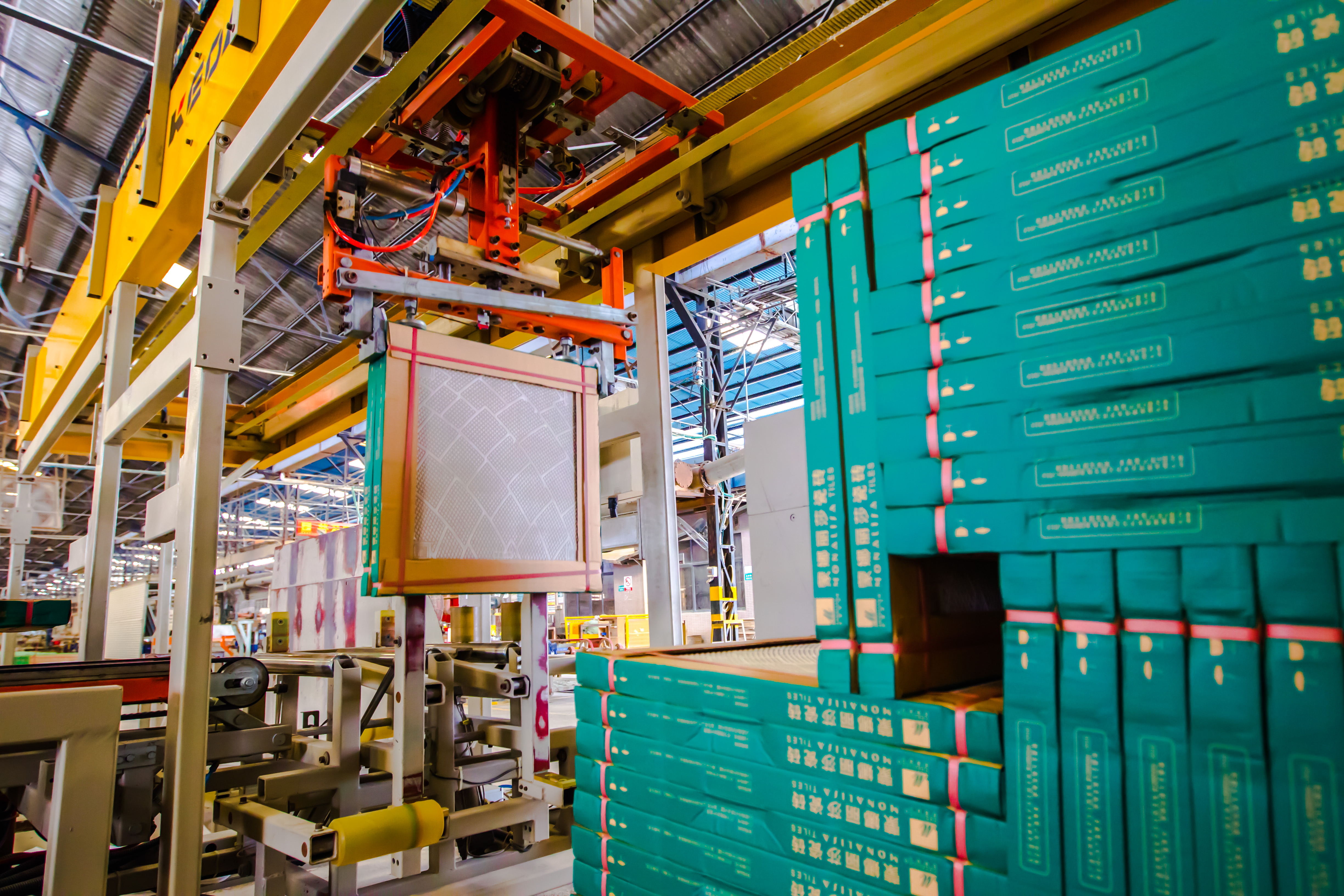
Production capability is a core evaluation criterion when commissioning SPC flooring from an OEM/ODM manufacturer.
The SPC Flooring Sourcing Problem: Capability Is Hard to Verify from a Distance
SPC (Stone Plastic Composite) flooring has become one of the most specified resilient flooring categories globally. It combines dimensional stability, waterproof performance, and a rigid core structure that appeals to both residential and commercial buyers. The market is substantial: global SPC flooring revenue was estimated at USD 9.8 billion in 2025, and China alone exported USD 4.97 billion worth of plastic floor coverings in 2024.
Alongside this growth, the supply chain has become crowded. Buyers evaluating SPC flooring suppliers face a common problem: many factories can present samples and price lists, but few can demonstrate the internal production capability, quality control discipline, and customization flexibility required for repeatable, project-scale supply.
The buyer's challenge is practical. How does an importer distinguish a manufacturer with genuine OEM/ODM capability from one that simply resells standard stock? What evidence should be collected before issuing a purchase order? And what do lead times, minimum order quantities, and pre-shipment inspections actually tell a buyer about the supplier's operational maturity?
What OEM/ODM Capability Means for SPC Flooring Buyers
OEM (Original Equipment Manufacturing) and ODM (Original Design Manufacturing) are often mentioned together in supplier profiles, but they represent different levels of capability. OEM means the factory produces goods to the buyer's specification. ODM means the factory can design and develop the product on the buyer's behalf. For SPC flooring, the distinction matters: an importer with an existing brand presence may only need OEM production, while a distributor entering the category may need ODM support to develop the right color range, surface texture, and packaging format.
Monalisa Group Co., Ltd., a listed Chinese manufacturer headquartered in Foshan, Guangdong Province, is one example of a factory that offers both production modes. Founded in 1992, the group operates four production bases with 37 production lines and reports an annual output capacity of 100 million square meters across its product categories. Its main product lines include ceramic tiles, sintered stone slabs, and SPC flooring. For SPC flooring specifically, Monalisa offers OEM and ODM services with customization options covering size, color, logo, and pattern.
For a buyer evaluating this kind of supplier, the practical question is not whether the factory claims to offer both modes, but whether it can show evidence of the underlying capabilities: raw material control, formulation consistency, dimensional accuracy, and the ability to translate a design brief into a finished floor.
Product Capability: Reading the SPC Flooring Specification Sheet
A specification sheet is the first piece of evidence a buyer should analyze. Monalisa's SPC flooring product (model ME26009-5) provides a useful reference for what a complete specification looks like. The product is an EIR (Embossed in Register) textured SPC floor, available in plank sizes of 1220×180 mm (48"×7") and 1524×228 mm (60"×9"), with thickness options of 4, 5, 6, 7, and 8 mm.
The material composition disclosed in the specification includes calcium carbonate (natural stone powder/limestone powder), polyvinyl chloride (PVC resin), PVC calcium-zinc stabilizer, and PVC lubricant. The calcium carbonate content—commonly referred to as stone powder—is what gives SPC its rigid, dimensionally stable structure. This is the defining characteristic that separates SPC from flexible vinyl flooring: a high-density stone-powder core provides the rigidity that enables click-lock installation without glue and resists indentation under load.
Buyers evaluating SPC products should pay particular attention to the following specification points:
- Core structure: A rigid stone-plastic composite core is the foundation of SPC performance. The formulation ratio between stone powder and PVC determines hardness, dimensional stability, and weight.
- Surface texture: EIR texture means the embossing aligns with the printed wood or stone pattern. This affects both the visual realism and the slip resistance of the finished floor.
- Thickness range: A manufacturer that offers multiple thickness options (4–8 mm) demonstrates flexibility across project types. Thinner products suit renovation overlays; thicker products provide more comfort and impact sound absorption.
- Plank format: Multiple plank sizes indicate a production line capable of handling different mold configurations, which is relevant when a buyer plans to develop an exclusive size range.
Quality Control: What a Pre-Shipment Inspection Should Cover
The gap between a sample and a shipped container is where sourcing risks materialize. Buyers need to verify that the manufacturer applies consistent quality control across every batch, not just on pre-production samples.
Monalisa's SPC flooring quality control process requires every batch to undergo a pre-shipment inspection before leaving the factory. The inspection items cover appearance, overall dimensions and dimensional tolerances, deviation in mass per unit area, residual indentation, and peel strength. These are not arbitrary checks; they align with the physical properties that determine whether an SPC floor performs correctly during and after installation.
Dimensional stability is one of the most important performance indicators for SPC. Commercial-grade SPC flooring is expected to maintain dimensional stability within ≤0.10% when tested according to EN ISO 23999. A floor that expands or contracts beyond this threshold can develop gaps at the click-lock joints over time. Buyers should ask their supplier to provide dimensional stability data and confirm which standard the test is based on.
For importers who do not have the resources to conduct factory audits on every order, the pre-shipment inspection report is the primary verification document. It should include measurement data, not just a pass/fail statement, so that the buyer can compare batch-to-batch consistency.
Certifications and Compliance: What the Market Actually Requires
For SPC flooring, certification requirements vary by target market. Buyers sourcing for North America and Europe face different compliance obligations than those serving markets where price sensitivity takes priority.
In the United States, GREENGUARD Gold certification is a recognized benchmark for low-emission building materials. GREENGUARD Gold certification requires testing for over 10,000 chemicals and imposes strict VOC emission limits. For SPC flooring used in schools, healthcare facilities, and residential projects that pursue green building certification, this credential has become a practical requirement rather than a differentiator. Buyers should verify whether the SPC flooring offered by a manufacturer holds current GREENGUARD Gold certification under UL 2818, and whether the certified product matches the exact model and thickness being ordered.
For Europe, CE certification and EN standards are the baseline compliance framework. The EN ISO 23999 standard mentioned earlier is specifically relevant for dimensional stability testing of resilient flooring.
When evaluating a manufacturer's certification portfolio, buyers should verify not just that the certificate exists, but that it covers the specific product model and is issued by an accredited authority. Certificates referencing different product models than the one being ordered are a common source of non-compliance at customs and project handover.
Customization and Order Flexibility: Size, Color, Logo, and Pattern
The level of customization a manufacturer supports directly affects a buyer's ability to build a differentiated product range. Monalisa's SPC flooring customization capabilities include size, color, logo, and pattern. This means a buyer can request a private-label carton design, select or modify colors to align with regional design trends, and adjust plank dimensions to differentiate from competitors carrying the same factory's standard stock.
For buyers operating under their own brand, the OEM/ODM distinction needs to be understood clearly. Under OEM, the factory produces based on the buyer's established product specification. Under ODM, the factory contributes design and development input, which is useful when a buyer is entering the SPC category for the first time and does not yet have a technical specification defined.
It is also worth examining the production capacity behind these customization promises. Monalisa's SPC flooring production capability is reported at 1,000 containers per month, with a production lead time of approximately 30 days. The minimum order quantity for SPC flooring product 8599 is 500 square meters per color. These figures provide buyers with a concrete basis for planning: an order that fits within these parameters can be executed without forcing the factory to reconfigure its schedule.
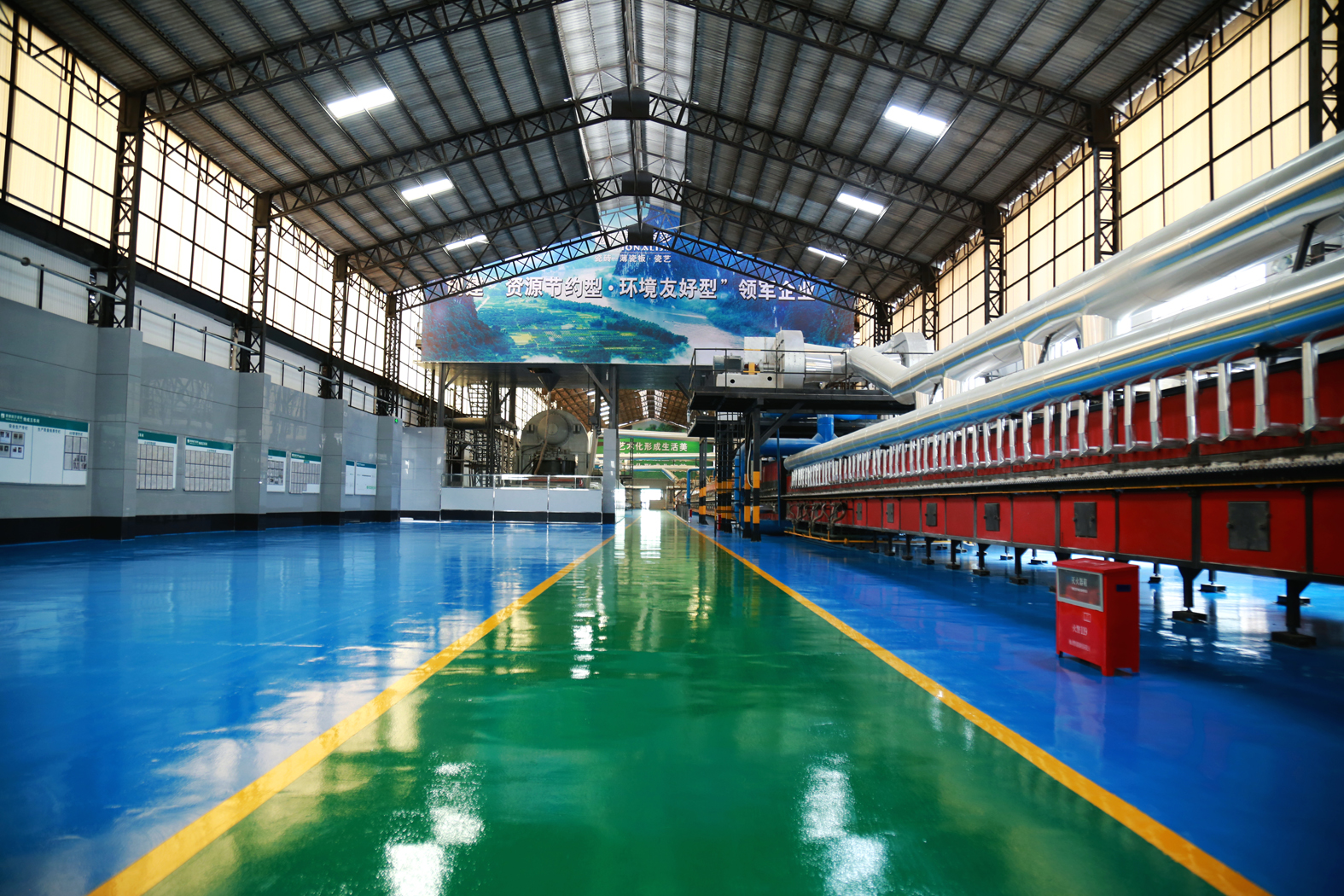
Automation in production and material handling supports batch consistency in large-volume SPC flooring orders.
Application Scenarios: Where SPC Flooring Performs
SPC flooring's target application range is broader than many buyers initially assume. The rigid core and waterproof characteristics make it suitable for areas where traditional laminate flooring would fail and where solid wood flooring would be impractical.
In residential settings, SPC flooring is commonly specified for living rooms, bedrooms, kitchens, and bathrooms. The waterproof core addresses the humidity risks of kitchens and bathrooms directly. The click-lock, glue-free installation system reduces on-site installation time and eliminates the need for adhesives, which is both a cost and an indoor-air-quality advantage.
In commercial environments, SPC flooring appears in shopping malls, retail stores, and office buildings. For office projects specifically, the dimensional stability of rigid SPC flooring allows large-format installations without the gap issues associated with flexible vinyl products. The reduced maintenance requirements are also a factor: SPC does not require polishing or waxing in the way that some other resilient floors do.
Other documented application areas include hotels and hospitality, medical facilities such as hospitals and clinics, educational institutions including schools and kindergartens, and public spaces like libraries and exhibition halls. SPC flooring is also used over underfloor heating systems, which is an advantage in colder markets where project specifications require floor coverings to be compatible with radiant heating. Buyers evaluating a factory's application knowledge should ask which of these segments the manufacturer has actually supplied, and request reference installations.
Market Trends: The Shift to Rigid Core is Still Accelerating
Market data supports the thesis that rigid core SPC flooring has become the dominant sub-category within the broader SPC market. Rigid core sub-type accounted for a 74.2% revenue share in 2025, according to commercial market research. This means the majority of the SPC flooring volume now flowing through global supply chains is rigid-core product—the same structural category that click-lock SPC belongs to.
China's position as the leading exporter of plastic floor coverings reinforces the importance of China-based manufacturing in global SPC supply. In 2024, China's exports of floor, wall, and ceiling coverings under HS code 391810 reached USD 4.97 billion. Buyers sourcing SPC flooring from Chinese manufacturers are operating inside the world's largest supply base for this product category, which brings both advantages and risks. The advantages are scale, cost efficiency, and breadth of manufacturing capability. The risks are quality variability and the difficulty of evaluating a supplier's true operational capacity through online research alone.
One notable observation for industry analysts is the definitional variance in market size reporting. Estimates for the 2025 global SPC market range from USD 5.9 billion to USD 9.8 billion depending on whether the scope is limited to pure SPC or expanded to include the broader rigid vinyl segment. Buyers should treat market size projections as directional context rather than a definitive measure.
Traditional Solutions and the Limitations of SPC
Comparing SPC flooring with traditional alternatives—laminate flooring, flexible vinyl flooring, and ceramic tile—helps buyers understand where SPC fits and where it does not.
| Property | SPC Flooring | Laminate | Flexible Vinyl (LVT) | Ceramic Tile |
|---|---|---|---|---|
| Core structure | Rigid stone-plastic composite | HDF wood fiber | Flexible PVC | Fired clay |
| Waterproof | Yes | No | Yes | Yes |
| Dimensional stability | High (≤0.10% per EN ISO 23999 for commercial grade) | Moderate | Lower; more thermal expansion | N/A (installed with grout joints) |
| Installation | Click-lock, glue-free | Click-lock | Glue-down or loose lay | Mortar and grout |
| Underfloor heating compatibility | Yes | Limited | Yes, with limits | Yes |
However, SPC flooring has genuine limitations that buyers should not overlook. First, its hard surface provides less acoustic comfort underfoot compared to carpet or cushioned vinyl, which is why some hotel projects prefer additional underlayment. Second, like all polymer-based flooring, SPC can experience expansion under extreme heat, and it requires proper acclimation and expansion gaps during installation. Third, although the surface wear layer is durable, it can still be scratched by sharp objects; the EIR texture can also trap dirt in the embossed grain if maintenance protocols are not followed. Finally, SPC floors are not recommended for continuous outdoor exposure or very high-moisture environments such as steam rooms, where ceramic tile or stone remains the more technically appropriate choice. Buyers should weigh these limitations against their project's specific conditions.
Limits and Boundaries of Manufacturer Evaluation
When evaluating Monalisa (or any manufacturer) for SPC flooring, a balanced assessment requires acknowledging boundaries. Monalisa Group is a large public company whose historical core business is ceramic tiles and slabs; SPC flooring is one of its newer product lines alongside these established categories. Its SPC export capability is reported at 1,000 containers per month with a 30-day lead time, but buyers should verify current capacity through direct inquiry rather than assuming static availability.
The MOQ of 500 square meters per color is also a practical constraint. For very small pilot orders or buyers who require multi-color orders below this threshold, a manufacturer with lower MOQs may be a better starting point. Conversely, buyers planning sustained volume benefit from working with a manufacturer that can hold stable production quality across large batch runs.
Procurement Execution: MOQ, Lead Time, Payment, and After-Sales
Once a manufacturer has demonstrated product capability and quality control, the procurement execution terms determine whether the relationship is workable in practice.
For Monalisa's SPC flooring, the minimum order quantity is 500 square meters per color. Delivery methods include FOB and CIF, and payment terms cover TT, LC, and OA. The production lead time for SPC flooring is approximately 30 days. These terms give buyers flexibility: LC payment is suitable for established importers with bank credit lines, while OA may be available to long-term partners with proven payment history.
After-sales support for SPC flooring typically includes a warranty against manufacturing defects, commonly 10–25 years for residential applications and 5–10 years for commercial applications, subject to correct installation and maintenance. Claims are processed through proof of purchase and on-site or remote inspection. Buyers should clarify not simply the warranty duration, but the claim process itself—what evidence is required, who conducts the inspection, and within what timeframe the supplier commits to responding.
Future Outlook: Consolidation and Compliance
Looking ahead, the SPC flooring category is likely to consolidate around stricter compliance standards. The emphasis on emissions testing (GREENGUARD Gold), chemical disclosure, and dimensional precision will continue to rise, especially in North American and European markets. Buyers who build supplier relationships now with manufacturers that demonstrate documented quality control, export compliance capability, and customization flexibility will be better positioned than those who base sourcing decisions primarily on piece price.
At the factory level, automation and production scale will remain decisive factors. Monalisa's reported 2.7 million square meters of factory area, 100-member R&D team, and 4,106 employees across its group operations illustrate the scale of infrastructure that supports consistent export supply. For SPC flooring specifically, the combination of OEM/ODM flexibility, 1,000 containers of monthly capacity, and 30-day lead times makes it a plausible partner for buyers who need a balance between standardization and customization.
For a more detailed overview of Monalisa Group's manufacturing capabilities and product range, download the company brochure: Monalisa Group Corporate Brochure (PDF).
Frequently Asked Questions
What is SPC flooring made of?
SPC flooring is made of a composite core containing calcium carbonate (natural stone powder or limestone powder), polyvinyl chloride (PVC resin), PVC calcium-zinc stabilizer, and PVC lubricant. The stone powder content gives the floor its rigid structure; for example, Monalisa's SPC flooring product ME26009-5 uses this material system and is produced in plank sizes of 1220×180 mm and 1524×228 mm with thicknesses of 4–8 mm.
Does Monalisa offer OEM/ODM services for SPC flooring?
Yes. Monalisa Group provides production services in both OEM and ODM modes. OEM services allow clients to have products manufactured according to their own specifications, while ODM services include design and production support for clients who need the manufacturer's input on product development.
What customization options are available for SPC flooring?
Monalisa's SPC flooring can be customized in size, color, logo, and pattern. This means a buyer can order a specific plank size, select or alter colors, print a private-label logo on cartons, and adjust surface pattern designs to differentiate their product range.
What is the minimum order quantity for SPC flooring?
The minimum order quantity for Monalisa SPC flooring (product 8599) is 500 square meters per color. This MOQ applies to each color ordered, so a container order mixing multiple colors would require the minimum quantity for each color included.
What quality control checks are performed on SPC flooring before shipment?
Every batch of SPC flooring must pass a pre-shipment inspection before leaving the factory. The inspection covers appearance, overall dimensions and dimensional tolerances, deviation in mass per unit area, residual indentation, and peel strength. Buyers can request copies of these inspection reports to verify batch quality.
What are the production lead time and payment terms?
The reported production lead time for SPC flooring at Monalisa is approximately 30 days. Payment terms available include TT, LC, and OA, and delivery can be arranged under FOB or CIF terms. Buyers should confirm current lead times and accepted payment methods directly with the supplier for their specific order volume.
What is the warranty coverage for SPC flooring?
Typical SPC flooring warranties cover manufacturing defects and are commonly 10–25 years for residential applications and 5–10 years for commercial applications. Warranty validity is subject to correct installation and maintenance, and claims are processed through proof of purchase along with on-site or remote inspection.
Which applications is SPC flooring suitable for?
SPC flooring is suitable for residential homes including living rooms, bedrooms, kitchens, and bathrooms; commercial spaces such as malls, retail stores, and office buildings; hotels and hospitality venues; medical facilities; educational institutions; public spaces; and environments with underfloor heating systems.
¿Tiene preguntas o necesita más detalles?
Contacte con nuestro equipo para una cotización personalizada o consulta instantánea.
Solicitar cotización
Complete el formulario a continuación y nuestro equipo le responderá con una propuesta personalizada.
Chat directo de WhatsApp
¿Prefiere chatear en tiempo real? Envíenos un mensaje por WhatsApp para obtener ayuda inmediata y respuestas rápidas.
- Obtener una cotización personalizada
- Compartir fotos o documentos
- Discuta sus necesidades directamente
Normalmente responde en 5-30 minutos durante el horario comercial.