
SPC Floor Compliance by Market: China Class A, CE, GREENGUARD, and LEED Triggers
Compliance in SPC flooring is a market question rather than a product question. A plank approved for one destination can be incomplete for another, and a genuine certificate can still fail to cover the model, the market, or the performance characteristic that a project actually asks for.
For SPC (stone-plastic composite) flooring, the compliance stack normally has four layers. A domestic Chinese project starts from the Class A radioactive classification for building decoration materials. European market access turns on CE marking. United States indoor air quality requirements commonly pull in GREENGUARD or GREENGUARD Gold testing, while LEED operates at building level rather than product level. Public and commercial projects then add performance criteria that sit outside those schemes, most often a B1 fire rating and R9–R11 slip resistance.
Read together, those layers define what a buyer must verify before approving supply: which document applies, which model it covers, which market it serves, and which acceptance criteria the project has written into the tender. The sections below map those requirements, align them with project acceptance, and set out a purchase-terms checklist for SPC flooring.
Monalisa Group Co., Ltd. (“Monalisa”), founded in 1992 and headquartered in Foshan, Guangdong Province, is a listed manufacturer of ceramic tiles, sintered stone slabs and SPC flooring. Its published product documentation is used below to show how compliance evidence is scoped in practice.
Why SPC Floor Compliance Is a Market Question, Not a Product Question
Compliance is determined by four variables, and a change in any one of them changes the documentation a buyer needs.
- Destination market. The scheme that governs acceptance — a domestic Chinese classification, a European market-access mark, a United States emission certification, or a project-level green building requirement — depends on where the flooring is installed, not on where it is made.
- Exact product model. Certificates are issued against identified products. Documentation that covers one construction, thickness or wear layer does not automatically cover another model in the same catalogue.
- Project type and occupancy. A residential apartment, a clinic, a school, a shopping mall and an airport concourse do not share the same fire, slip or emission requirements.
- Contract acceptance criteria. A tender or purchase order can add requirements that no certification scheme imposes on its own — a specific fire class, a specific slip classification, or a specific test report format.
Treating compliance as a product attribute — this floor is compliant — is the most common source of delay at approval stage. The productive question is narrower: compliant with what, for which model, in which market, for which occupancy.
The Four Compliance Layers Buyers Most Often Encounter
China Class A Radioactive Classification: the Domestic Baseline
For building decoration materials placed on the Chinese market, the Class A radioactive classification is the baseline requirement. Class A in this context describes the radioactive characteristics of the material, not its reaction to fire, despite the identical Class A wording used in fire classification.
The same requirement set also indicates that CE, GREENGUARD or LEED certification may be required for some export markets, which is why domestic and export documentation are not interchangeable. Buyers preparing a domestic project should request the radioactive classification report for the exact model being supplied, and should not assume that an export-market certificate performs the same function.
CE Marking: European Market Access, Not a Quality Grade
CE marking is a market-access mechanism. It signals that the manufacturer has declared the product against applicable European requirements so that it can be placed on the market. It is not a ranking of product quality, and the mark alone tells a buyer very little about performance.
What matters is the scope of the declaration. Buyers importing SPC flooring into Europe should confirm which models are covered, which performance characteristics are declared, and whether the declaration matches the shipment. Two suppliers can both carry CE documentation and still differ substantially in the characteristics they declare.
GREENGUARD and GREENGUARD Gold: Emission Evidence
GREENGUARD is a certification programme for low chemical emissions, and GREENGUARD Gold applies the stricter level of that programme. GREENGUARD Gold requires testing for over 10,000 chemicals and applies strict VOC limits; the certification is defined under UL 2818, and its primary market is the United States.
SPC flooring is polymer-based, so the relevant question in an indoor air quality specification is emission behaviour under test, not the absence of one named substance. Monalisa documents that its SPC flooring contains no formaldehyde, benzene or other harmful substances; where a project specifies a low-emission requirement, that statement should be supported by emission test reports for the specific model and construction supplied.
LEED: a Building Rating, Not a Product Certificate
LEED is applied to a building or a project. It is not issued to a flooring product, which means there is no such thing as a LEED-certified SPC floor. What a manufacturer provides is documentation that the project team can use inside its submission — for example, test reports covering emissions or material content.
When a specification says LEED compliant or contributes to LEED, the practical request to the supplier should be for named documents rather than for a certificate that cannot exist in that form.
Project Acceptance Criteria: B1 Fire Rating and R9–R11 Slip Resistance
Fire and slip performance sit outside the certification schemes above, and they are usually written into the tender. This is where compliance stops being a paperwork exercise and becomes a specification decision.
Monalisa's SPC flooring is documented as B1 fire-rated and self-extinguishing, and the same product documentation records a friction coefficient of ≥0.6, with friction increasing when the surface is wet. In building and decoration applications, slip resistance is classified in the R9–R11 range, with bathrooms typically requiring R10 or above.
The practical point for buyers is that these characteristics are area-specific rather than product-wide. A specification may require one slip classification for a lobby, a higher one for a wet core, and a defined fire class for circulation routes. Approval should therefore be assessed against a schedule of areas rather than a single datasheet line.
How to Read an SPC Compliance Certificate Correctly
Four checks separate usable evidence from paper.
- Legal entity. Does the certificate name the manufacturer that will actually produce the shipment, or a trading intermediary?
- Model scope. Is the exact model, construction, thickness and wear layer covered?
- Market and scheme. Does the certificate belong to the market the goods are shipped to, and to the scheme the project cites?
- Issuer and validity. Who issued it, under which standard or programme, and is it still valid at the delivery date?
The scoping effect is visible in Monalisa's published certification records. NSF certification C0676949-01, issued by NSF International and applicable to the USA market, is tied to specified porcelain tile and slab models rather than to every product the group manufactures. The same discipline applies to SPC flooring: certification belongs to a product, a standard and a market at the same time, and covering one of the three is not a blanket qualification.
Purchase Terms and Acceptance Checklist for SPC Flooring
The table below converts the compliance layers into items that can be written directly into a purchase order or an approval checklist.
| Item | What to specify in purchase terms | Evidence to request |
|---|---|---|
| Market and scheme | Destination market plus the scheme that governs acceptance: China Class A radioactive classification for domestic projects; CE where European market access applies; GREENGUARD or GREENGUARD Gold where specified; LEED project documentation where a building submission applies | Certificate or test report naming the market and the scheme |
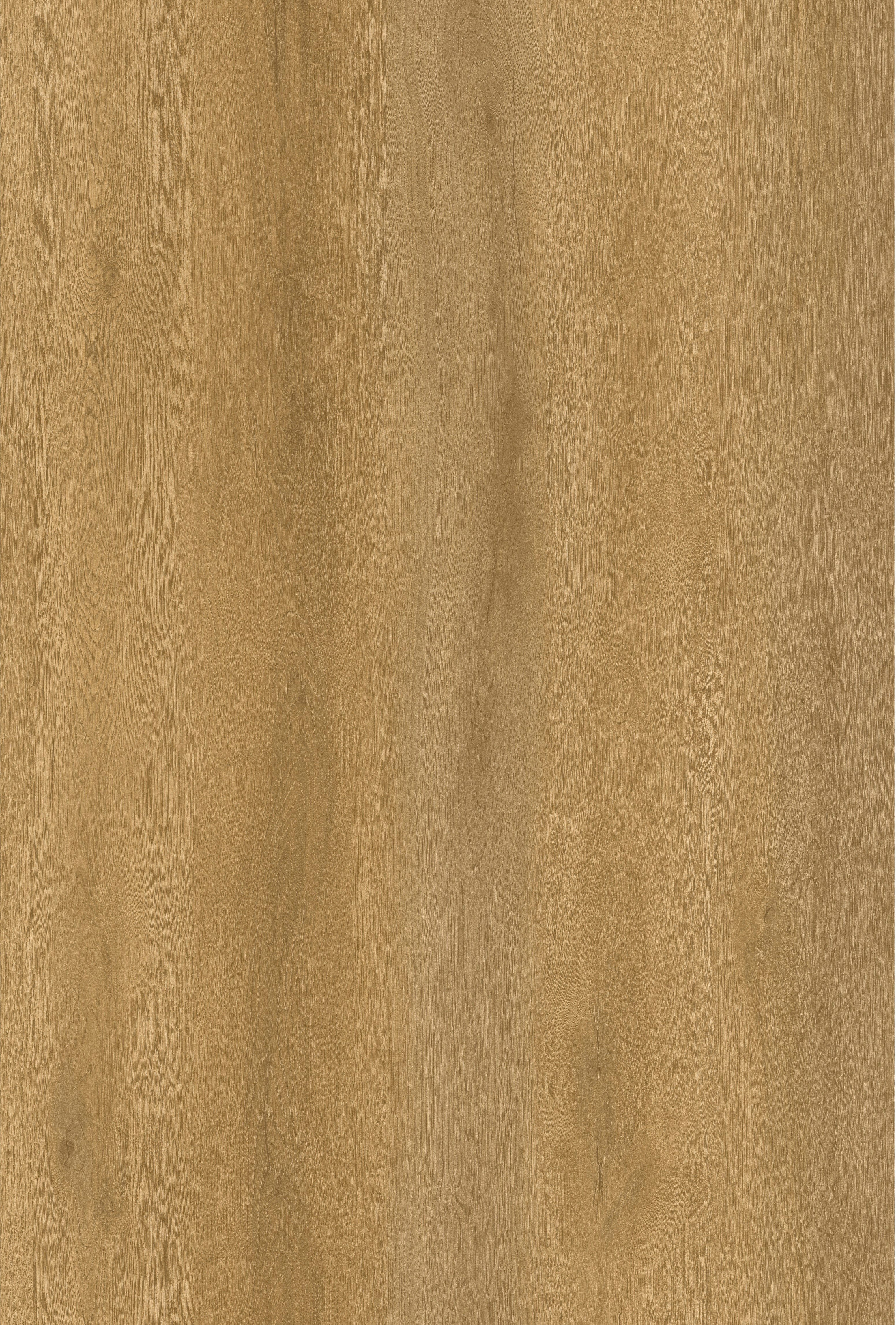
| Product model | Exact model designation (for example ME26009-5, Eir SPC Floor), size and thickness | Specification sheet matching the shipment |
| Format | 1220×180 mm (48″×7″) or 1524×228 mm (60″×9″); thickness 4/5/6/7/8 mm; Eir textured surface | Product datasheet |
| Core composition | Calcium carbonate (natural stone powder / limestone powder), PVC resin, PVC calcium-zinc stabilizer, PVC lubricant | Material declaration |
| Emissions | No formaldehyde, benzene or other harmful substances; GREENGUARD Gold testing under UL 2818 where the project specifies it | Emission test report for the model supplied |
| Fire performance | B1 fire rating, self-extinguishing | Fire test report |
| Slip resistance | R9–R11 classification by area; R10 or above for bathrooms; friction coefficient ≥0.6 when wet | Slip resistance test report |
| Dimensional stability | Shrinkage ≤1‰ for the supplied construction; commercial-grade SPC benchmark of ≤0.10% under EN ISO 23999 | Dimensional stability test data |
| Installation interface | Click-lock glue-free floating installation; subfloor flat to 2 mm over 2 m; expansion gap 5–12 mm; concrete subfloor moisture ≤2% (≤1.5% with underfloor heating); floor surface temperature ≤27°C | Installation instructions and pre-installation checklist |
| Batch inspection | Pre-shipment inspection covering appearance, overall dimensions and dimensional tolerances, deviation in mass per unit area, residual indentation and peel strength | Pre-shipment inspection report |
| Commercial terms | MOQ 500 sqm per colour; lead time 30 days; warranty 10–25 years residential and 5–10 years commercial, subject to correct installation and maintenance | Order confirmation and warranty statement |
Where Compliance Claims Break Down: Limits and Boundaries
Compliance evidence is often presented as a complete package. It is not, and the boundaries usually matter more than the claims.
- Class A is used for two different things. The Chinese Class A radioactive classification and Class A fire classification are unrelated requirements. A document answering one does not answer the other, and tenders that use the phrase without qualification should be clarified before pricing.
- B1 is not the same as non-combustible. SPC flooring is documented as B1 fire-rated and self-extinguishing. Where a project requires a non-combustible Class A floor finish — common in some public circulation and high-rise applications — an inorganic floor material such as porcelain tile may be the more appropriate specification, and no certificate changes the fire classification of a product.
- Waterproof is not a vapour barrier. SPC has a closed-cell core and is documented as 100% waterproof with water absorption ≤0.05%, but prolonged moisture can still cause mould beneath the floor. A 6-mil polyethylene vapour barrier is recommended for ground-floor concrete installations.
- The subfloor tolerance is strict. Flatness must be within 2 mm over 2 m, and installation over soft carpet or soft PVC underlayment is not permitted. Site conditions, not the plank, usually determine whether acceptance criteria are met.
- Underfloor heating has a temperature ceiling. The floor surface temperature must not exceed 27°C, with stricter subfloor moisture limits for heated installations.
- UV exposure is a site variable. Prolonged direct sunlight can cause discoloration and thermal expansion, so protective measures such as drapes belong in the specification rather than in the after-sales conversation.
- Scheme names do not transfer. CE marking is market access, GREENGUARD is an emission certification, and LEED is a building rating. None substitutes for another, and none replaces project acceptance criteria.
Why Compliance Documentation Is Becoming a Purchasing Filter
Three market signals explain why documentation quality now affects supplier selection rather than only project close-out.
First, SPC is a cross-border category by default. China is the largest exporter of plastic floor coverings (HS 391810), reaching USD 4.97 billion in 2024, according to OEC trade data. Most supply therefore crosses a compliance regime at some point, and the receiving market decides which documents matter.
Second, the category continues to grow. One commercial research estimate puts the global SPC flooring market at USD 9.8 billion in 2025 with high growth potential, although estimates vary by scope: a narrower reading of the same year places the market at USD 5.9 billion, largely because definitions differ between pure SPC and the wider rigid vinyl category. Buyers should treat any single market-size figure as scope-dependent.
Third, the product mix is converging on rigid construction. Rigid core sub-types accounted for 74.2% of SPC revenue share in 2025, which concentrates technical and compliance scrutiny on a similar construction type across suppliers.
In that context, dimensional stability becomes a comparable metric rather than a marketing line. Commercial-grade SPC flooring is required to meet ≤0.10% dimensional stability under EN ISO 23999, and Monalisa documents shrinkage of ≤1‰ for its SPC construction — the same threshold expressed in different units.
SPC Flooring Compared with Traditional Flooring on Compliance and Performance
Compliance criteria interact with material choice, so the comparison below is limited to characteristics documented for each category.
| Consideration | SPC flooring | Laminate / hardwood | Porcelain tile |
|---|---|---|---|
| Water exposure | Closed-cell core, water absorption ≤0.05%, documented as 100% waterproof | Traditional hardwood or laminate is not suited to wet areas | Water absorption ≤0.5% (porcelain) or ≤3% (semi-porcelain) |
| Impact and rigidity | Rigid stone-plastic core, documented as 10× more impact-resistant than WPC; wear resistance 6,000–15,000 cycles, T-grade | Softer surface, more susceptible to marking | High surface hardness; PEI 3–5 abrasion classes |
| Fire classification | B1, self-extinguishing | Organic material | Class A fire rating documented for tile applications |
| Slip classification | R9–R11 range by area; friction coefficient ≥0.6 when wet | Finish dependent | R9–R11, with R10+ for bathrooms |
| Dimensional stability | Shrinkage ≤1‰; commercial-grade benchmark ≤0.10% (EN ISO 23999) | Material dependent | Length/width tolerance ≤±0.2%; thickness tolerance ≤±5% |
| Installation | Click-lock, glue-free floating; subfloor flat to 2 mm over 2 m | Nailed or glued | Adhesive-fixed with grout |
Future Outlook
Two directions are likely to shape SPC compliance over the next procurement cycles.
The first is documentation-first purchasing. As more projects specify emission performance, fire class and slip classification at tender stage, buyers will increasingly ask for the report rather than the claim, and suppliers who can present model-scoped evidence will move through approval faster. The scale of China's export flow in plastic floor coverings makes this a competitive variable rather than an administrative one.
The second is closer alignment between product documentation and project-level requirements. Because schemes such as LEED operate at building level, the useful work happens in translation: turning a building requirement into a list of documents a flooring supplier can actually provide. Buyers who prepare that list before quotation tend to shortlist on evidence rather than on price alone.
Neither direction removes the need for verification. A certificate is evidence of a specific test, against a specific standard, for a specific product — and that is how it should be read.
Frequently Asked Questions
What does China Class A mean for SPC flooring?
It refers to the Class A radioactive classification applied to building decoration materials for the Chinese market. It is a material classification and is unrelated to fire performance, even though Class A language is also used in fire classification. Buyers should request the classification report for the exact model supplied.
Is CE marking the same as GREENGUARD certification for SPC flooring?
No. CE marking is a European market-access declaration, while GREENGUARD — and the stricter GREENGUARD Gold — is a low-emission certification defined under UL 2818, with its primary market in the United States. One does not substitute for the other, and they answer different questions.
What fire and slip ratings do public and commercial projects typically require?
Monalisa's SPC flooring is documented as B1 fire-rated and self-extinguishing. Slip resistance in building and decoration applications is classified in the R9–R11 range, with bathrooms typically requiring R10 or above, and SPC flooring documents a friction coefficient of ≥0.6 with increased friction when wet. Project requirements are normally stated area by area in the tender.
Can an SPC flooring product be LEED certified?
No. LEED is applied to a building or project, not to a product. A supplier can provide documentation that supports a project's submission, such as emission test reports, but the certification itself is not issued to flooring.
What should be checked on a certificate before approving SPC flooring supply?
Four items: the legal entity named; the exact model, construction and thickness covered; the market and scheme the certificate belongs to; and the issuing body and validity period. Monalisa's NSF certification C0676949-01, for example, is issued by NSF International, applies to the USA market, and is tied to specified porcelain tile and slab models rather than to every product the company makes.
Is a B1 fire rating suitable for every public space?
Not necessarily. B1 describes the fire behaviour of the flooring material, and the product is self-extinguishing. Where a project requires a non-combustible Class A floor finish, an inorganic material such as porcelain tile may be the more appropriate specification. The requirement should be confirmed from the project specification before the floor build-up is fixed.
Approving SPC flooring supply is ultimately a documentation exercise as much as a product decision: identify the market, the model, the project criteria and the evidence, and keep those four aligned through shipment. A downloadable brochure covering Monalisa's flooring ranges and specifications is available here: Monalisa flooring product brochure (PDF).
¿Tiene preguntas o necesita más detalles?
Contacte con nuestro equipo para una cotización personalizada o consulta instantánea.
Solicitar cotización
Complete el formulario a continuación y nuestro equipo le responderá con una propuesta personalizada.
Chat directo de WhatsApp
¿Prefiere chatear en tiempo real? Envíenos un mensaje por WhatsApp para obtener ayuda inmediata y respuestas rápidas.
- Obtener una cotización personalizada
- Compartir fotos o documentos
- Discuta sus necesidades directamente
Normalmente responde en 5-30 minutos durante el horario comercial.