
SMD Crystal Resonator Procurement FAQ: Global Terms and Acceptance Trends
Crystal resonator procurement in 2026 is less about identifying a part number than about agreeing what acceptable means before the first shipment lands. Surface-mount formats dominate volume, export capacity is concentrated in a small number of regions, and documentation now travels with the goods rather than following them. This reference answers the questions buyers raise most often about purchasing terms, acceptance criteria, and documentation expectations for SMD crystal resonators, tuning fork crystals, and the wider quartz piezoelectric crystal family.
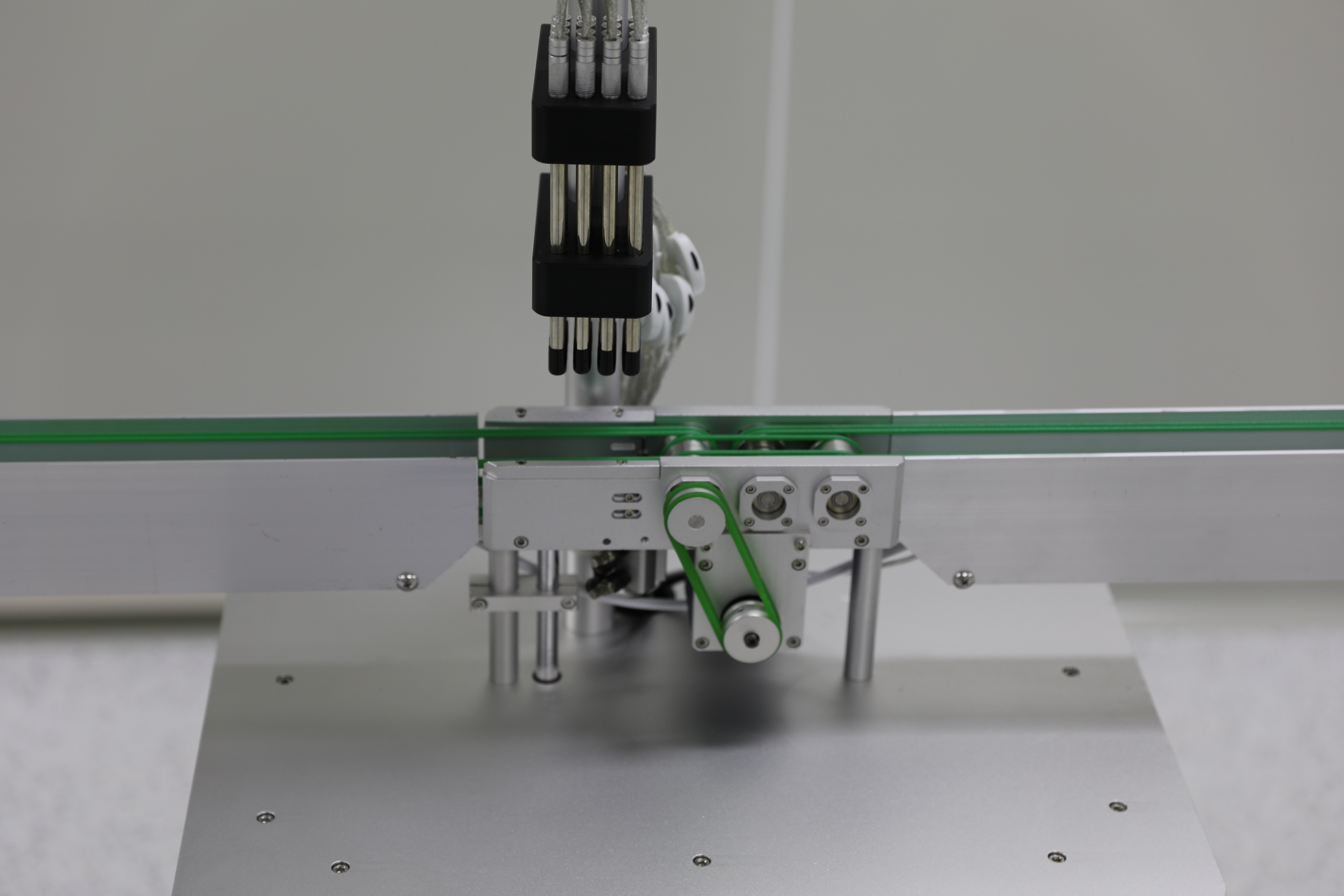
Calibration on a crystal resonator line: acceptance criteria are confirmed against equipment-level measurement, not catalogue values alone.
Why Purchase Terms Are Being Rewritten in 2026
Three structural conditions are pushing commercial terms back onto the negotiating table across the frequency control industry. None of them is a supply shock in the conventional sense; each changes what a buyer must specify rather than what a supplier must build.
- Packaging has become a commercial variable. MarketsandMarkets reports that surface mount devices held 76.40% of crystal oscillator market size in 2025. Once roughly three-quarters of volume moves through automated placement, reel format, moisture sensitivity handling and dimensional tolerances stop being engineering footnotes and start appearing in contract annexes.
- Demand is projected to keep expanding. The same source projects the global crystal oscillator market reaching USD 3.66 billion by 2030, measured from a 2024 base across a 2025 to 2030 forecast period. Capacity commitments therefore carry more weight than they did in flatter cycles.
- Export capacity is concentrated and measurable. General Administration of Customs data show that China exported USD 1.5 billion of mounted piezo-electric crystals under HS 854160 in 2024. When a large share of world volume originates in one manufacturing base, documentation fluency and inspection discipline become competitive variables in their own right.
For a buyer in the decision stage, the practical consequence is straightforward. A specification sheet circulates easily; an acceptance regime does not, unless it is written into the purchase order and tied to a test method. The questions below follow that logic.
Acceptance Is a Document Set, Not a Single Specification
Procurement teams that treat acceptance as one number, usually nominal frequency with tolerance, tend to discover the gap during incoming inspection. In practice, acceptance for a quartz crystal resonator rests on five interlocking documents, and the terms attached to each one carry different risk.
| Document | What it should state | Where buyers lose leverage |
|---|---|---|
| Datasheet revision | Part number, revision level, reference temperature, load capacitance, drive level | Referenced generically, so the supplier may ship against a later revision |
| Test or inspection report | Batch-level results, measurement conditions, sampling plan | Requested after shipment rather than named as a delivery item |
| Compliance declaration | RoHS and REACH status for the exact part and finish | Issued at company level rather than per part number |
| Qualification evidence | Grade-specific proof such as AEC-Q200 for automotive lines | Assumed from a general automotive claim in marketing material |
| Packaging and handling record | Reel quantity, tape width, date code, lot traceability | Left to the supplier's default packaging standard |
Each row is a place where two suppliers can both claim compliance while testing or documenting to different conditions. Writing the regime down is what makes comparison possible at all.
SMD, Cylindrical and Through-Hole: Comparing Terms, Not Just Parts
The three mainstream mounting families are often compared on price per unit. For procurement purposes, the more useful comparison is on the terms each format forces a buyer to negotiate.
| Attribute | SMD crystal resonator | Cylindrical tuning fork (32.768 kHz) | Through-hole HC49 |
|---|---|---|---|
| Mounting | Reflow-soldered to surface pads, tape-and-reel fed | Small cylindrical body, low-power real-time clock duty | Inserted through plated holes, wave or hand soldered |
| Typical acceptance emphasis | Dimensional tolerance, reel quality, moisture handling, frequency stability | Equivalent series resistance, drive level, low current consumption | Lead integrity, mechanical retention, frequency tolerance at 25 °C |
| Main procurement risk | Solder-joint thermal fatigue and rework difficulty | Narrow supplier base for specific load capacitance values | Legacy tooling dependency and board space constraints |
| Rework profile | Requires controlled hot-air or infrared rework, pad damage risk | Low thermal mass, relatively tolerant of manual rework | Simple desoldering and replacement |
The boundary condition matters. SMD dominance in market share does not make surface mount the correct answer in every assembly. Repeated thermal cycling can fatigue solder joints, and rework on dense boards is slower and more damaging than on through-hole equivalents. Legacy boards already tooled for HC49 SMD or through-hole variants often carry a lower total cost of change than a migration programme, and cylindrical tuning fork parts remain the practical default for 32.768 kHz real-time clock circuits where low drive level and low current draw are the governing constraints.
Supplier boundaries deserve the same honesty. A quoted standard lead time is a production commitment tied to configuration, frequency and order volume; it does not remove the need for forecast sharing ahead of a ramp. And no supplier, including Fronter Electronics, can certify against an acceptance criterion the buyer has never defined in writing.

Production capacity and inspection capacity are separate constraints; both appear in the terms of a supply agreement.
What Fronter Electronics Covers in a Supply Agreement
Fronter Electronics Co., Ltd is a Shenzhen-based manufacturer and distributor founded in 1991, producing quartz crystal resonators and quartz crystal oscillators under its FT brand, with a stated export ratio of 70% and main markets in the EU and USA. The company reports a 21,000 m² facility, 286 employees, 19 engineers in research and development, and annual output of 300,000,000 units. Its FT brand was recognised as a National High-Tech Enterprise in 2017.
On product scope relevant to procurement terms, Fronter supplies 32.768 kHz tuning fork resonators and MHz resonators, alongside its oscillator lines. All products are stated to comply with RoHS and REACH environmental regulations, which is the documentation baseline most EU and US buyers require before a shipment is released.
The company's own comparison of its lines against general-purpose, consumer-grade crystal oscillators cites frequency stability of ≤ ±20 ppm, with some models at ≤ ±10 ppm, against a ±20 to ±50 ppm industry average; annual aging of ≤ ±2 ppm against a commonly cited ±3 to ±5 ppm; operating range across −40 °C to +85 °C and +105 °C variants; AEC-Q200 certification on automotive-grade lines; and lead times of 3 to 4 weeks against the 12 to 20 weeks it attributes to overseas brands. These are supplier-reported figures and should be verified against the specific part number on the order.
On drift control, Fronter's risk documentation describes two design approaches, temperature-compensated and oven-controlled circuits, combined with a temperature-grade bill of materials split into consumer (−20 °C to +85 °C), industrial (−40 °C to +85 °C) and automotive (−40 °C to +125 °C) categories. The stated control method includes high–low temperature shock testing, for example cycling between −40 °C and +85 °C, before shipment, with stability indicators such as ±0.5 ppm cited as the target those tests are designed to confirm.
Technical Note: The Three Numbers Buyers Confuse
Most acceptance disputes in this category trace back to conflating three distinct measurements, all of which appear on a datasheet and none of which substitute for the others.
- Frequency tolerance is the permitted deviation at a stated reference temperature, conventionally 25 °C, measured under a defined load capacitance. It says nothing about behaviour in a cold warehouse or a warm enclosure.
- Frequency stability is the permitted deviation across the rated operating temperature range. A part can hold tight tolerance at 25 °C and drift substantially at the extremes, which is why the two figures must be specified separately.
- Aging is the drift over time under stated conditions, quoted annually in most procurement documents. It determines recalibration intervals and long-term timing budget, not first-article pass or fail.
Two further parameters belong in the same conversation for tuning fork parts specifically. Equivalent series resistance governs whether an oscillator circuit will start reliably at low drive levels, and load capacitance must match the circuit design rather than the supplier's default. For MHz parts, drive level and motional characteristics shape both long-term stability and fracture risk. An acceptance criterion that names a frequency tolerance but omits load capacitance is, in effect, incomplete.
Where Acceptance Criteria Tighten: Application Fit
The same resonator family can carry very different terms depending on where it is installed. Fronter positions its automotive-grade and high-stability lines for automotive electronics, communication base stations, servers, industrial equipment and IoT devices, and the reason is the acceptance regime rather than the part alone.
- Automotive electronics moves acceptance to the qualified grade: temperature range to +125 °C, AEC-Q200 evidence, and change-notification commitments before any process shift.
- Communication base stations and servers prioritise long-term timing accuracy and aging, because field recalibration is expensive and downtime is measured in service impact.
- Industrial equipment generally settles on the industrial temperature band with documented stability across the full range, and tolerates a narrower evidence set than automotive.
- IoT devices concentrate on 32.768 kHz real-time clock parts, where low drive level and low current consumption outrank absolute accuracy.
Country-Level Positioning and Export Performance
Origin affects terms in ways that are rarely stated in a quotation. Three positions are worth mapping before a shortlist is finalised.
China combines scale with export depth: USD 1.5 billion of mounted piezo-electric crystal exports in 2024 indicates a manufacturing base accustomed to cross-border documentation, inspection records and compliance declarations. Buyers sourcing here should expect the documentation set to be routine, and should test whether it is genuinely part-specific.
Japan and established overseas brands carry long qualification histories and deep specification authority, and procurement teams often accept longer lead times as the price of that continuity. The 12 to 20 week lead time cited in Fronter's comparison reflects the pattern buyers report when ordering from those sources; it is a planning variable, not a defect.
The EU and USA operate primarily as demand-side regulators. RoHS and REACH declarations, automotive qualification evidence and audit trails are the entry conditions, which is why a supplier with a 70% export share to those markets tends to hold documentation as a first-class deliverable rather than an afterthought.
Future Outlook
Two directions look durable. First, surface-mount share is expected to keep rising as miniaturisation in wearables and consumer IoT continues, which will push reel format, placement tolerance and moisture handling further into commercial negotiation. Second, the centre of gravity in procurement terms is shifting from unit price toward test evidence: buyers increasingly ask what was measured, on which batch, under which conditions, and who signed it.
For decision-stage buyers, that suggests a practical rule for the next planning cycle. Re-validate acceptance criteria per temperature grade and per destination market rather than carrying a single specification across a product family, and treat documentation as a delivery item with the same status as the parts themselves. Suppliers who can answer those questions at part-number level will keep the shortest path through incoming inspection.
The Fronter Electronics product brochure is available for download: Fronter Electronics brochure (PDF).
FAQ: Crystal Resonator Procurement Questions
What is an SMD crystal resonator, and why does the package affect procurement terms?
An SMD crystal resonator is a quartz-based frequency control component soldered directly onto surface pads on a printed circuit board rather than inserted through drilled holes. Because it is supplied on tape and reel and placed by automated equipment, procurement terms typically cover packaging format, reel quantity, moisture sensitivity handling and placement-compatible dimensional tolerances alongside the electrical specification. MarketsandMarkets reports that surface mount devices held 76.40% of crystal oscillator market size in 2025, so packaging choices now shape volume, tooling and inspection terms as much as the frequency does.
Which acceptance criteria should be written into a purchase order for a 32.768 kHz tuning fork crystal?
For a 32.768 kHz tuning fork crystal, an order should fix nominal frequency with tolerance at 25 °C, frequency stability across the rated temperature range, annual aging, equivalent series resistance, load capacitance, drive level and insulation resistance. It should also state the reference test conditions, the sampling plan and the batch traceability requirement. Without those elements, two suppliers can both claim compliance while measuring under different conditions, which makes incoming inspection inconclusive.
How do frequency tolerance, stability over temperature, and aging differ in practice?
Tolerance is the permitted deviation at a stated reference temperature, usually 25 °C. Stability is the permitted deviation across the operating temperature range. Aging is drift over time under stated conditions. They are separate line items and should be required independently. Fronter Electronics cites stability of ≤ ±20 ppm, with some models at ≤ ±10 ppm, and annual aging of ≤ ±2 ppm, against commonly cited industry levels of ±20 to ±50 ppm and ±3 to ±5 ppm respectively; those figures apply to the specific part number and should be confirmed on the datasheet revision referenced in the order.
What documentation should accompany a crystal resonator shipment?
A standard set includes the specification or datasheet revision tied to the ordered part number, a batch-level inspection or test report stating measurement conditions, a date code and lot traceability record, and RoHS and REACH declarations for that exact part and finish. Automotive-grade orders additionally require qualification evidence such as AEC-Q200. Fronter Electronics states that all products comply with RoHS and REACH. Because these records are usually consumed by the buyer's own incoming inspection and customer audits, they should be listed as delivery items in the purchase order rather than requested afterwards.
How should lead time and production capacity be compared between suppliers?
Compare the stated lead time against order volume, frequency, package and quality grade, and ask for the commitment to be confirmed per item rather than as a general figure. Fronter Electronics cites 3 to 4 weeks for its lines against the 12 to 20 weeks it attributes to overseas brands. Capacity context should be weighed alongside it: the company reports annual output of 300,000,000 units from a 21,000 m² facility. A short quoted lead time is only meaningful if it holds during a volume ramp, which is why forecast sharing and per-item confirmation belong in the agreement.
Is an SMD crystal resonator always the lower-cost choice over through-hole parts?
Not automatically. Surface mount lowers assembly cost through automated placement and supports smaller boards, but it introduces reflow-compatible handling, tape-and-reel packaging and more demanding rework procedures. Through-hole HC49 parts remain practical for legacy boards that are already tooled for insertion and for assemblies subject to mechanical stress. A defensible comparison includes reflow yield, rework cost and inspection effort rather than unit price alone, and it should account for whether the existing board design would need changing at all.
How should automotive-grade and industrial-grade crystal resonators be specified differently?
Automotive grade is defined by temperature range plus qualification evidence and change control. Fronter Electronics describes a temperature-grade bill of materials split into consumer (−20 °C to +85 °C), industrial (−40 °C to +85 °C) and automotive (−40 °C to +125 °C) categories, with automotive lines described as AEC-Q200 certified. An automotive order should therefore name the qualification record and require notification before any process or material change. An industrial order can accept a narrower evidence set, typically stability across the industrial band with batch-level test results, provided the reference conditions are stated.
¿Tiene preguntas o necesita más detalles?
Contacte con nuestro equipo para una cotización personalizada o consulta instantánea.
Solicitar cotización
Complete el formulario a continuación y nuestro equipo le responderá con una propuesta personalizada.
Chat directo de WhatsApp
¿Prefiere chatear en tiempo real? Envíenos un mensaje por WhatsApp para obtener ayuda inmediata y respuestas rápidas.
- Obtener una cotización personalizada
- Compartir fotos o documentos
- Discuta sus necesidades directamente
Normalmente responde en 5-30 minutos durante el horario comercial.