
SJ45 or SJSZ-65? Reading the Factory Data on Two Extruders
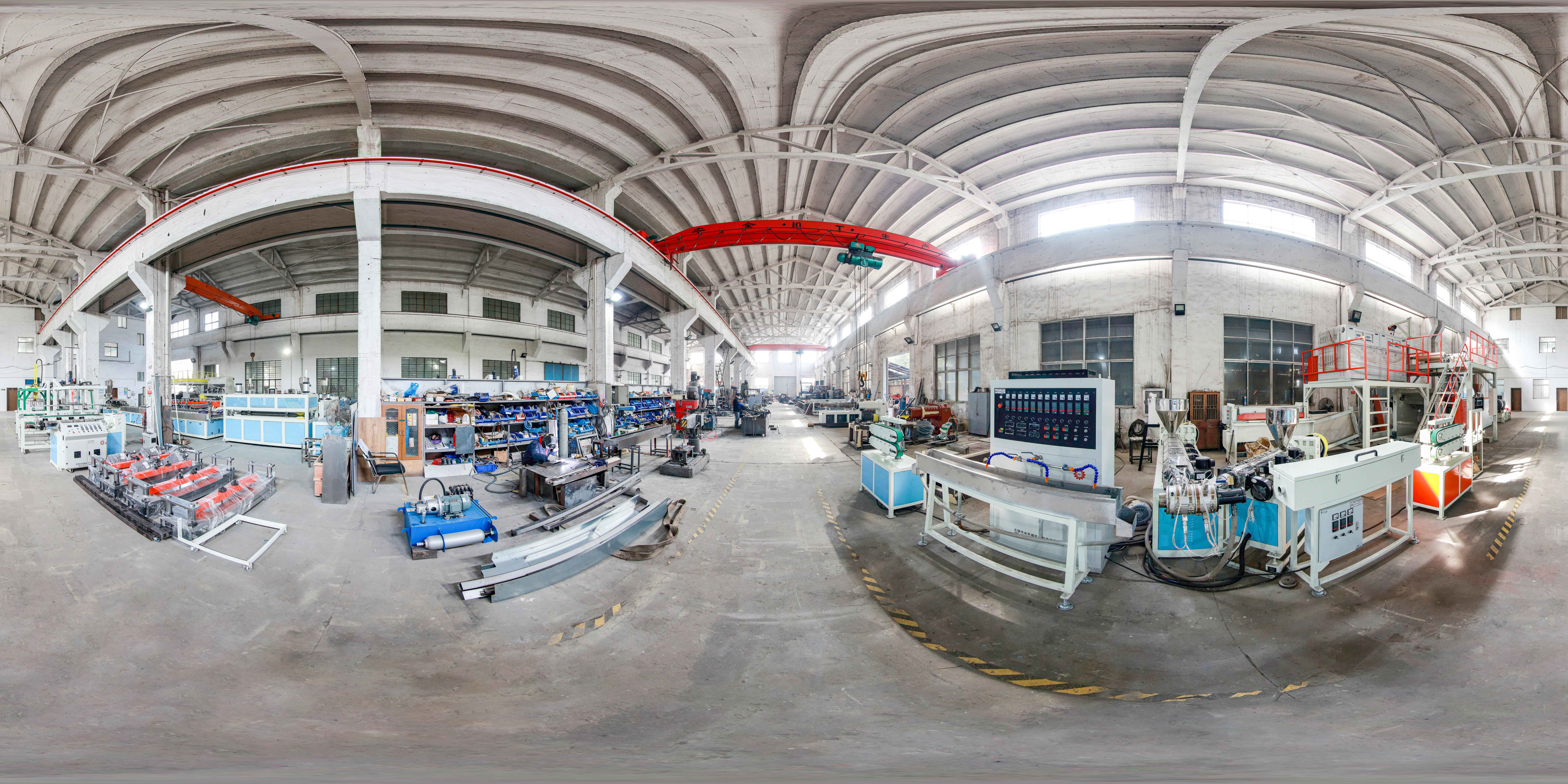
Machine frames are fabricated and welded from Q235 carbon structural steel before an extruder moves to pre-assembly. Both the SJ45 and the SJSZ-65 list this same frame material in their published data.
Around USD 7.901 billion of plastic extrusion machinery was sold worldwide in 2025, and the segment is projected to reach USD 12.87 billion by 2035 (Market Research Future). Very little of that machinery is bought as an abstract machine: it is bought as a line that has to match one material, one die and one downstream process. That is why two mid-range extruders — the SJ45 single-screw machine and the SJSZ-65 conical twin-screw machine built by Wuxi JKS Machinery Manufacturing Co., Ltd. — regularly appear on the same buyer shortlist even though they are engineered around different process assumptions.
Wuxi JKS Machinery Manufacturing Co., Ltd., trading as JKS Plastic Extrusion Machine, is a Chinese manufacturer based in Wuxi, Jiangsu Province, that builds custom plastic extrusion machinery and complete turnkey production lines. Its stated portfolio covers SPC flooring, PVC, PP and WPC board, PVC and HDPE pipe, WPC and PVC profile, solid plastic rod, and waste plastic pelletizing lines, alongside standalone single-screw and conical twin-screw extruders and auxiliary equipment such as mixers, crushers and pulverizers. Roughly half of its output is exported, and the company states that its machines have been delivered to more than 35 countries, with Southeast Asia, Russia, the Middle East, Europe, Central Asia, Africa and South America named as main markets.
This review takes the two model designations as they are published and asks a narrower question than a catalogue does: when the numbers on the datasheets are put side by side, which shop-floor profile does each machine actually point to?
The Short Answer for an Undecided Buyer
Stripped of marketing language, the available factory data supports a fairly clean split:
- Choose an SJ45 when the work is small-section, multi-material profile or rod production. The SJ series is listed as a general-purpose single-screw extruder for PVC, PP, PE, nylon and ABS, and the SJ45 designation appears in configurations for solid rod (Φ6–60 mm, 5–18 kg/h) and for multi-material profiles where a custom die is cut for each section.
- Choose an SJSZ-65 when the work is direct extrusion of PVC dry blend (PVC resin plus CaCO₃ and additives) into pipe, sheet, bar or profile. This is the application the conical twin-screw family is explicitly listed for, and the SJSZ-65 carries a stated 37 kW main motor with 250 kg/h at model level.
- The material specification does not separate them. Both model families list a 38CrMoAlA nitrided alloy steel screw and barrel and a Q235 carbon structural steel frame. Buyers hoping to decide on metallurgy alone will not find the answer there.
The rest of this analysis explains where that split comes from, and where the published data stops being useful.
What the Two Model Designations Actually Describe
SJ45 — the lower end of the single-screw family
The SJ45 is one of the custom models in the SJ Series Single Screw Plastic Extruder, which is listed with SJ30, SJ45, SJ65 and SJ90 variants. The family is described as accepting PVC, PP, PE, nylon and ABS, and as being able to produce pipes, rods, films, pellets, coated products and blow-moulded bottles depending on the die and auxiliary equipment fitted. The word used in the family description is “versatile”: the machine is positioned as a general thermoplastic processing platform rather than a single-material specialist.
Its clearest published configuration is in the Solid Plastic Rod Extrusion Line, where the SJ45 entry states a 45 mm screw, an L/D ratio of 28:1, 7.5 kW of drive power, a rod diameter range of Φ6–60 mm and an output of 5–18 kg/h. The same model designation also appears in the Multi-material Plastic Profile Extrusion Line alongside SJ50 and SJ65, where it is paired with a custom profile die and a line sequence of feeding system, single-screw extruder, calibrating table, cooling tank, haul-off and fixed-length cutting.
SJSZ-65 — a mid-size conical twin-screw model
The SJSZ-65 belongs to the Conical Twin Screw Plastic Extruder family, which runs from SJSZ-45 through SJSZ-51, SJSZ-55, SJSZ-65, SJSZ-80, SJSZ-92 and up to SJSZ-110. The family is described as offering uniform plasticizing and mixing, low shearing, high productivity, stable quality and long service life, and its stated application is the direct extrusion of PVC powder for pipes, sheets, bars and profiles. That single phrase is the most decision-relevant sentence in either datasheet, because it defines which material feed the machine was designed around.
At model level, the SJSZ-65 is listed at 37 kW with an output of 250 kg/h. Inside the conical twin-screw family this places it below the SJSZ-80 (55 kW, 400 kg/h), the SJSZ-92 (90 kW, 500–600 kg/h) and the SJSZ-110 (200 kW, 1000 kg/h), and well above the SJSZ-45 (15 kW, 70 kg/h), SJSZ-51 (18.5 kW, 120 kg/h) and SJSZ-55 (22 kW, 150 kg/h).
| Comparison point | SJ45 (Single Screw series) | SJSZ-65 (Conical Twin series) |
|---|---|---|
| Family position | Small model in the SJ series (SJ30, SJ45, SJ65, SJ90) | Mid-range model in the SJSZ series (SJSZ-45 to SJSZ-110) |
| Stated raw materials | PVC / PP / PE / nylon / ABS | PVC powder (dry blend) direct extrusion |
| Stated model output | Not stated at model level; configuration-dependent | 250 kg/h at 37 kW |
| Published configuration example | Solid rod line: Φ45 mm screw, L/D 28:1, 7.5 kW, rod Φ6–60 mm, 5–18 kg/h | Pipe, profile, panel and pelletizing lines (see application table below) |
| Screw & barrel material | 38CrMoAlA nitrided alloy steel | 38CrMoAlA nitrided alloy steel |
| Machine frame material | Q235 carbon structural steel | Q235 carbon structural steel |
| Die / mould material in line data | Wear-resistant alloy die steel (profile and rod lines) | Wear-resistant alloy die steel; precision casting die steel in the PVC pipe line |
Where the Two Machines Converge: Screw, Barrel and Frame Materials
The most noticeable thing about putting these two datasheets side by side is how little the materials differ. The Single Screw Plastic Extruder lists 38CrMoAlA nitrided alloy steel for the screw and barrel and Q235 carbon structural steel for the frame. The Conical Twin Screw Plastic Extruder lists exactly the same two materials. The pattern repeats when the model is pushed into a full line: the Solid Plastic Rod Extrusion Line (SJ45, SJ65), the Multi-material Plastic Profile Extrusion Line (SJ45, SJ50, SJ65), the PVC Grille & Decoration Profile Extrusion Line (SJSZ51, SJSZ55, SJSZ65) and the PVC & WPC Door and Window Profile Extrusion Line (SJSZ92/188, SJSZ65/132) all state 38CrMoAlA nitrided alloy steel for the screw and barrel, wear-resistant alloy die steel for the mould, and Q235 carbon steel for the frame.
Two conclusions follow. First, JKS appears to treat 38CrMoAlA nitriding and a Q235 frame as a common baseline across its extruder families rather than a premium option reserved for one series — so a buyer choosing between SJ45 and SJSZ-65 is not choosing between a “better” and a “worse” alloy. Second, the differentiator is process geometry: a single screw with an L/D of 28:1 or 30:1 in the rod and profile lines, versus a conical twin-screw plasticizing and mixing concept explicitly aimed at PVC powder.
What the Published Output Figures Do — and Do Not — Tell You
Output is the number buyers reach for first, and it is also the number most likely to mislead when it is read at the wrong level.
The SJ45 has no model-level output in the published extruder data. The only figure attached to that designation is the 5–18 kg/h stated in the solid rod line — a configuration where the constraint is the rod diameter (Φ6–60 mm) and the sizing and haul-off equipment, not the screw. The same SJ45 designation appears in the multi-material profile line with no output figure at all, because the profile cross-section drives the rate. In other words, the SJ45's real throughput is a property of the die and the downstream, not of the model number.
The SJSZ-65 is the opposite case: 250 kg/h is published at model level, and it reappears consistently downstream. In the PVC Hollow Wall Panel & Ceiling Extrusion Line, the SJSZ65 configuration produces a 600 mm wide panel at 250 kg/h. In the PVC Grille & Decoration Profile Extrusion Line, the same model produces a 300 mm wide profile at 250 kg/h. In the PVC Hot-cut Pelletizing Line, SJSZ65 is listed at 37 kW and 200–250 kg/h. In the PVC & WPC Door and Window Profile Extrusion Line, SJSZ65/132 is listed at 37 kW and 150–250 kg/h. In the PVC Water Supply & Drainage Pipe Extrusion Line, the SJSZ65/132 pairing drives the PVC63 double-station line for Φ16–63 mm pipe at 270 kg/h, with 24 kW of downstream power and a haul-off speed of 4–49 m/min.
Read together, those five figures are not identical — 150, 200, 250, 250 and 270 kg/h — and that variation is informative. It shows that even a fixed model designation produces different tonnages depending on the die, the calibrating and cooling load and the formulation. A buyer comparing quotations on headline kg/h alone is comparing line designs, not extruders.
There is a second reason not to reduce a machine to one number. A 45 mm screw diameter also appears in an entirely different JKS product family: the Corrugated Pipe Extrusion Line lists KSPG-20 with a Φ45 screw, an L/D of 30:1, 45 kW of power and a Φ6–10 mm pipe range at 20 m/min haul-off. Same nominal screw diameter, different machine, different drive, different product. Nominal diameter identifies a size class, not a capability.
Profile or Pipe? Matching Each Model to Shop-Floor Work
Once the numbers are separated from the model names, the application fit becomes reasonably clear.
The SJ45's published footprint is small-section and high-mix. In the rod line it produces Φ6–60 mm solid rod from PP, PE, PA and POM, at 5–18 kg/h. In the multi-material profile line it is paired with a custom die to produce imitation marble profile, ceiling panel, door and window small profile, sealing strip, edge band, PC lamp profile and PVC waterstop, from PP, PE, PVC, PS, PC or ABS. That is a materials-flexible, low-volume remit: several products, several polymers, one extruder.
The SJSZ-65's published footprint is PVC-first and section-driven. It appears in panel and ceiling production at 600 mm width, in decorative profile at 300 mm width, in door jamb and casing profile at 150–250 kg/h, in hot-cut pelletizing at 200–250 kg/h, and — through the SJSZ65/132 pairing — in water supply and drainage pipe from Φ16 to Φ63 mm. The common thread is a PVC dry blend being converted directly into a fixed section.
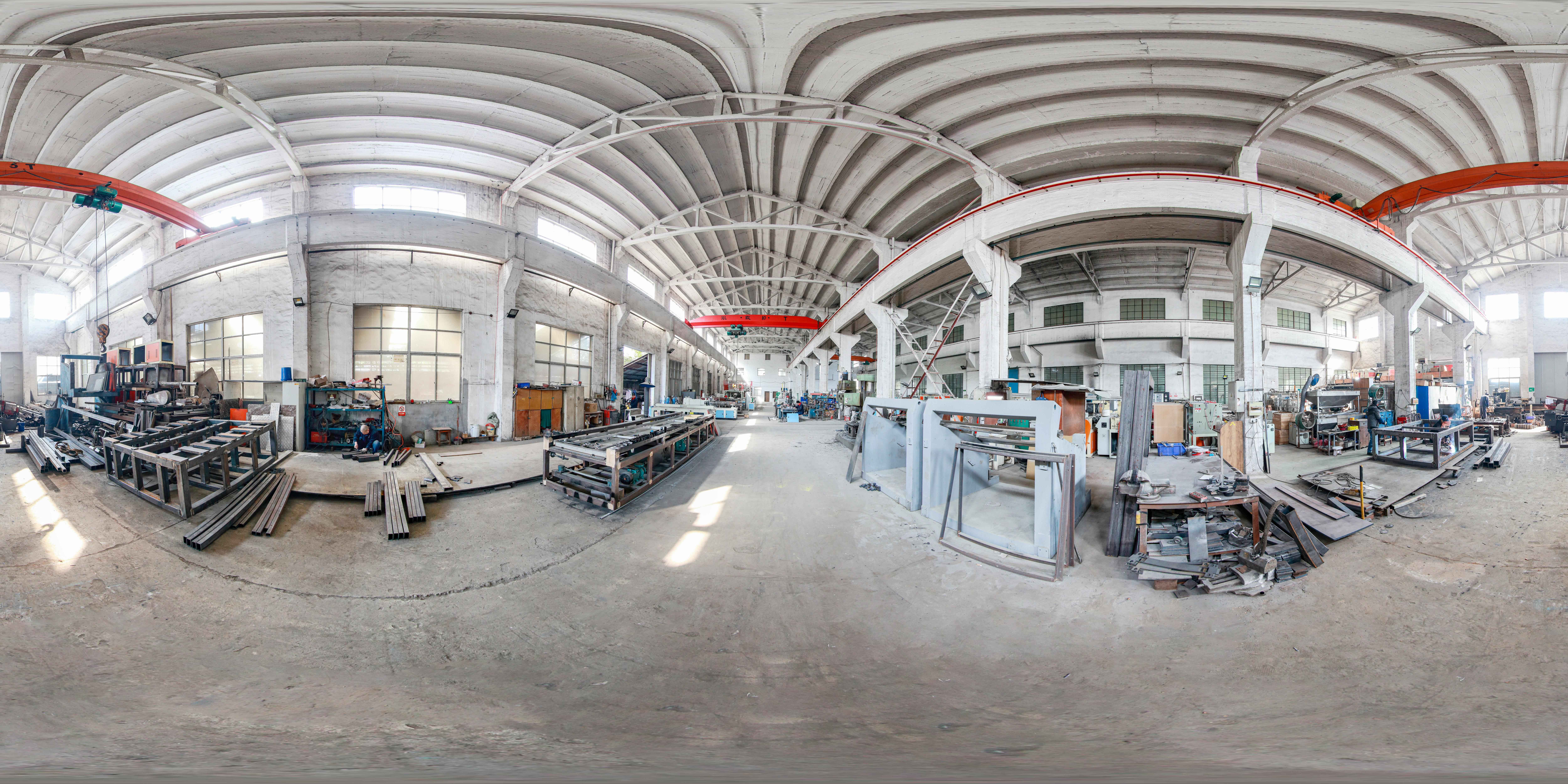
Small single-screw profile extrusion work, the format the SJ series is built around. The SJ45 designation appears in the multi-material profile line and the solid rod line, both with custom dies.
| Published line / application | Stated model | Stated figures |
|---|---|---|
| Solid plastic rod (PP, PE, PA, POM) | SJ45 | Φ45 mm screw, L/D 28:1, 7.5 kW, rod Φ6–60 mm, 5–18 kg/h |
| Multi-material profile (PP, PE, PVC, PS, PC, ABS) | SJ45 / SJ50 / SJ65 | Custom profile die; no per-model output stated |
| PVC hollow wall panel & ceiling | SJSZ65 | 37 kW, width 600 mm, 250 kg/h |
| PVC grille & decoration profile | SJSZ65 | 37 kW, width 300 mm, 250 kg/h |
| PVC hot-cut pelletizing | SJSZ65 | 37 kW, 200–250 kg/h |
| PVC & WPC door / window profile | SJSZ65/132 | 37 kW, 150–250 kg/h |
| PVC water supply & drainage pipe | SJSZ65/132 | Φ16–63 mm, AC 37 kW main, 24 kW downstream, 4–49 m/min, 270 kg/h |
Where Each Model Is the Weaker Choice
A shortlist that does not name its own limits is not a shortlist. Two boundaries are visible in the published data.
The SJ45 is not documented as a direct PVC dry-blend machine. The single-screw family lists PVC among the polymers it can process, but the sentence describing direct extrusion of PVC powder belongs to the conical twin-screw family. Buyers whose process is PVC resin plus high calcium carbonate loading, run from powder feed, will find their use case documented on the SJSZ side of the catalogue rather than the SJ side. For low-volume, multi-polymer profile and rod work, the reverse holds: the SJSZ-65 brings 37 kW and 250 kg/h to a job that may only need a fraction of it, and its published line pairings are all fixed-section PVC products.
The SJSZ-65 is not the high-volume flooring machine. For SPC flooring, JKS pairs its EIR in-line synchronous embossing line with SJSZ92/188 (110 kW), SJSZ110/220 (200 kW), SJP115/30 (90 kW) or SJP135/30 (132 kW) — not with the SJSZ-65. The SJSZ-65's 250 kg/h sits in the lower-middle of the conical twin-screw range, and a buyer planning SPC output at 15–40 tons per 24 hours is looking at a different model class entirely.
A third limit applies to both. Neither datasheet publishes energy consumption per kilogram of output, nitriding depth or wear-part life. That means a total cost of ownership comparison cannot be completed from catalogue data alone; it requires project-level documentation and, ideally, reference running data.
Market Context: Why Mid-Range Capacity Still Matters
The demand picture partly explains why models in this size band continue to be ordered. Global plastic extrusion machine revenue is projected to grow from USD 7.901 billion in 2025 to USD 12.87 billion by 2035 (Market Research Future), while the downstream SPC flooring market alone is projected to move from USD 6.4 billion in 2026 to USD 10.3 billion by 2033 (Grand View Research). On the supply side, China remains the largest exporter of rubber and plastic working machinery under HS 8477, at USD 8.55 billion in 2024, ahead of Germany at USD 6.11 billion and Italy at USD 2.61 billion (Observatory of Economic Complexity, based on UN Comtrade data).
Those headline figures describe the high-volume end of the market. They do not describe the buyer whose output target is a 600 mm wall panel, a 300 mm decorative profile or a Φ63 mm drainage pipe. The mid-range models exist precisely because not every order is a flooring mega-line, and because a factory switching between sections and polymers needs a machine whose published application set matches that variability rather than a scale figure.
Compliance expectations are moving in parallel. ANSI/PLASTICS B151.7 sets safety requirements for extrusion machines used in the plastics industry and requires a documented risk assessment process in manufacture, care and use (ANSI Webstore). Buyers should note that reference editions vary by publisher — the PLASTICS Industry Association standards page lists B151.7-2013, while the ANSI webstore lists B151.7-2014 (R2021) — so the applicable edition should be confirmed with the supplier before any compliance commitment is written into a contract.
Evidence From Installed Lines
Model data is a design statement; installed lines are a production statement. JKS publishes three long-running reference installations. In Vietnam, a complete PVC hollow wall panel extrusion line has been in stable operation for more than five years, producing panels for construction and interior decoration, with continuous production, consistent product quality and reliable performance reported, and with turnkey delivery, on-site installation support and full export documentation included. In Malaysia, an SPC flooring extrusion line has run for more than ten years with high-speed production, precise thickness control and a low maintenance rate. In South Korea, an SPC flooring extrusion line has operated for more than eight years on a 24/7 schedule with consistent quality and low maintenance, supported by after-sales service.
One clarification matters for buyers comparing SJ45 and SJSZ-65. The SPC flooring references belong to the SPC flooring line model set (SJSZ92/188, SJSZ110/220, SJP115/30, SJP135/30), not to the SJSZ-65. They are evidence of the durability of JKS's conical twin-screw line family and of its installation and training support, not direct evidence of SJSZ-65 throughput. The Vietnam panel line, whose model set is SJSZ51 through SJSZ80, is the closer analogue to a mid-range conical twin-screw installation.
Verification Questions Before You Order
The published capability data describes a reasonably standard commercial framework that a buyer can use as a checklist: OEM, ODM and custom design service; customization across extruder model, screw configuration, production line layout, voltage and frequency, control system and capacity adjustment; a stated monthly capacity of 30 units; a lead time of 40 working days; and a minimum order quantity of one unit. Quality control is stated as 100% factory pre-assembly and testing before shipment, with third-party inspection available on request, and after-sales support covers overseas installation guidance, on-site commissioning, operator training, remote technical support and a 12-month warranty.
On certification, JKS holds CE certification under certificate number M.2021.206.C.64011, issued by UDEM International Certification Auditing Training Centre, with a stated scope covering plastic extrusion lines including the SJSZ series, SJ series and SJP series models. The assessment references EN ISO 12100:2010 and EN 1114-1:2011 for machinery safety, EN 60204-1:2018 for electrical equipment, and EMC standards including EN 61000-6-1:2007 and EN 61000-6-3:2007/A1:2011/AC:2012. Because certificates are time-bound documents, buyers should confirm current validity, scope and model coverage at the point of order rather than relying on a certificate image alone.
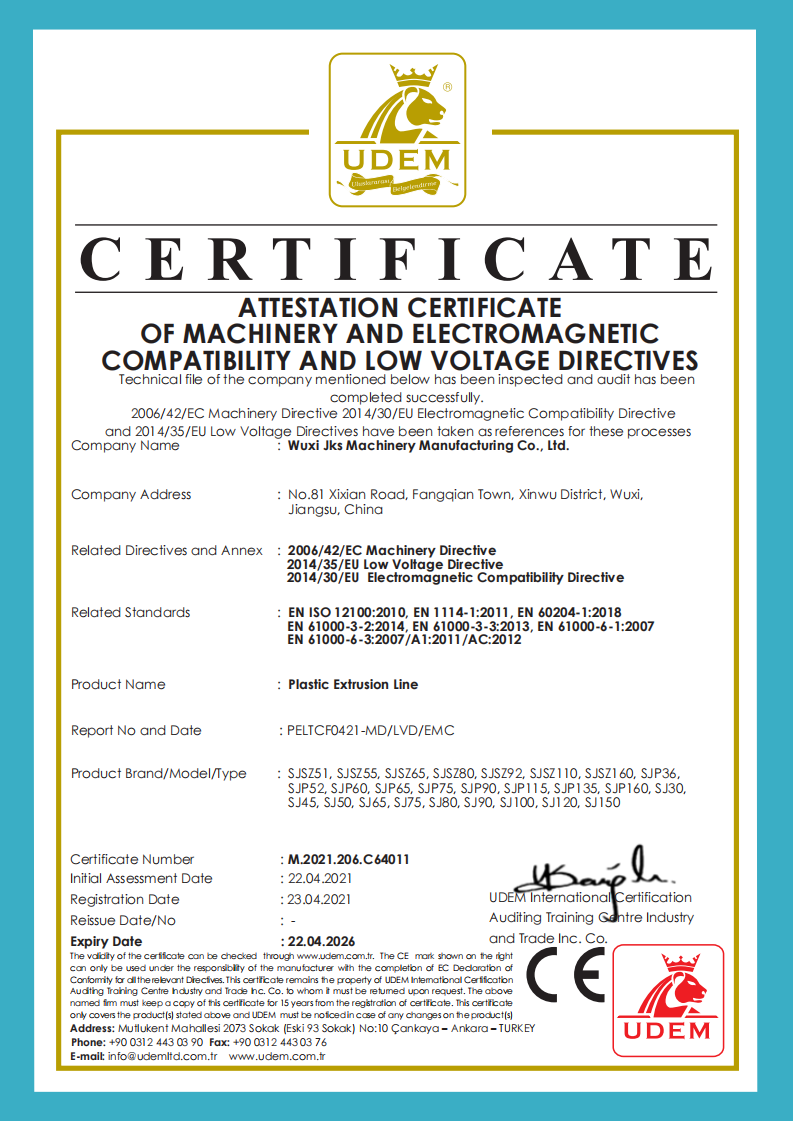
The CE certificate states a scope covering the SJSZ, SJ and SJP series, which means both models discussed here sit inside the same certified product family. Validity should be confirmed at order stage.
Future Outlook
Two shifts are likely to shape how mid-range extruders like the SJ45 and SJSZ-65 are specified over the next few years. The first is documentation depth: as procurement teams in export markets formalise their supplier qualification processes, material grades such as 38CrMoAlA nitriding and frame steels such as Q235 will be treated as a baseline rather than a differentiator, and the questions will move to wear-life data, energy consumption per kilogram and formulation-specific throughput. The second is line-level rather than machine-level buying: the published JKS data already shows the same SJSZ-65 designation producing 150, 200, 250 and 270 kg/h depending on the line it is built into, which suggests buyers will increasingly evaluate die, calibration, haul-off and cutting as a single specification package.
For the SJ45, the logical direction is continued use as a flexible, low-volume platform for multi-polymer profile and rod work. For the SJSZ-65, it is continued use as a mid-range PVC dry-blend workhorse for pipe, panel and profile sections below the flooring-scale models. Neither position is threatened by the market growth figures — if anything, the breadth of downstream demand supports both.
FAQ
Which model fits small-section, multi-material profile work — SJ45 or SJSZ-65?
The SJ45 is the one documented for that work. It appears in the Multi-material Plastic Profile Extrusion Line alongside SJ50 and SJ65, where it is paired with a custom profile die and processes PP, PE, PVC, PS, PC or ABS into products such as imitation marble profile, ceiling panel, door and window small profile, sealing strip, edge band, PC lamp profile and PVC waterstop. The SJSZ-65's published line applications are fixed-section PVC products.
What output does the SJSZ-65 state?
The Conical Twin Screw Plastic Extruder data lists SJSZ-65 at 37 kW and 250 kg/h. In line-level data the same designation produces 250 kg/h on a 600 mm hollow wall panel or ceiling line, 250 kg/h on a 300 mm decoration profile line, 200–250 kg/h on the PVC hot-cut pelletizing line, 150–250 kg/h on the PVC and WPC door and window profile line, and 270 kg/h on the PVC63 double-station water supply and drainage pipe line for Φ16–63 mm pipe.
Can the SJ45 run direct PVC powder extrusion?
The single-screw family lists PVC among the materials it can process, but the sentence describing direct extrusion of PVC powder for pipes, sheets, bars and profiles belongs to the Conical Twin Screw Plastic Extruder family. Buyers running PVC resin with high calcium carbonate loading from powder feed will find that application documented on the SJSZ side of the catalogue.
Do the SJ45 and SJSZ-65 use the same screw, barrel and frame materials?
Yes, as published. The Single Screw Plastic Extruder and the Conical Twin Screw Plastic Extruder both list 38CrMoAlA nitrided alloy steel for the screw and barrel and Q235 carbon structural steel for the machine frame. The associated rod, profile, panel, pipe and pelletizing lines repeat the same screw and barrel grade and add wear-resistant alloy die steel for the mould. Nitriding depth, surface hardness and wear-life figures are not published.
Is the SJSZ-65 used for SPC flooring lines?
No. The SPC Flooring Extrusion Line model set is SJSZ92/188 at 110 kW, SJSZ110/220 at 200 kW, SJP115/30 at 90 kW and SJP135/30 at 132 kW, with a stated output range of 15–40 tons per 24 hours depending on the extruder model. The SJSZ-65 sits below that class.
What should be verified before ordering either model?
Three groups of items. Commercial: the stated framework includes OEM, ODM and custom design service, customization of extruder model, screw configuration, line layout, voltage and frequency, control system and capacity adjustment, a lead time of 40 working days, a minimum order quantity of one unit and a stated monthly capacity of 30 units. Quality: 100% factory pre-assembly and testing before shipment, with third-party inspection available on request. Compliance and support: CE certificate M.2021.206.C.64011 issued by UDEM International Certification Auditing Training Centre with scope covering the SJSZ, SJ and SJP series, a 12-month warranty, and overseas installation guidance, on-site commissioning, operator training and remote technical support. Certificate validity and project-specific wear and energy data should be confirmed in writing at order stage.
Reference material: JKS WPC door project brochure (PDF). Manufacturer information: Wuxi JKS Machinery Manufacturing Co., Ltd.
¿Tiene preguntas o necesita más detalles?
Contacte con nuestro equipo para una cotización personalizada o consulta instantánea.
Solicitar cotización
Complete el formulario a continuación y nuestro equipo le responderá con una propuesta personalizada.
Chat directo de WhatsApp
¿Prefiere chatear en tiempo real? Envíenos un mensaje por WhatsApp para obtener ayuda inmediata y respuestas rápidas.
- Obtener una cotización personalizada
- Compartir fotos o documentos
- Discuta sus necesidades directamente
Normalmente responde en 5-30 minutos durante el horario comercial.