
SINOTRUK HOWO TX Dump vs Water Tanker: Acceptance Guide
Two SINOTRUK HOWO TX units can be ordered from the same SINOTRUK First-Tier Distributor, loaded on the same vessel and cleared through the same port, yet they fail buyer acceptance for entirely different reasons. A HOWO TX 8x4 dump truck (chassis code ZZ3317V386GB1) is judged on rated load, cargo volume and body build. A HOWO TX water tanker (chassis code ZZ1257V464GB1) is judged on tank capacity, tank material grade and spray function. This guide compares the two units on the criteria a buyer can actually verify at handover, and sets out what a first-tier distributor should be able to document rather than simply state.
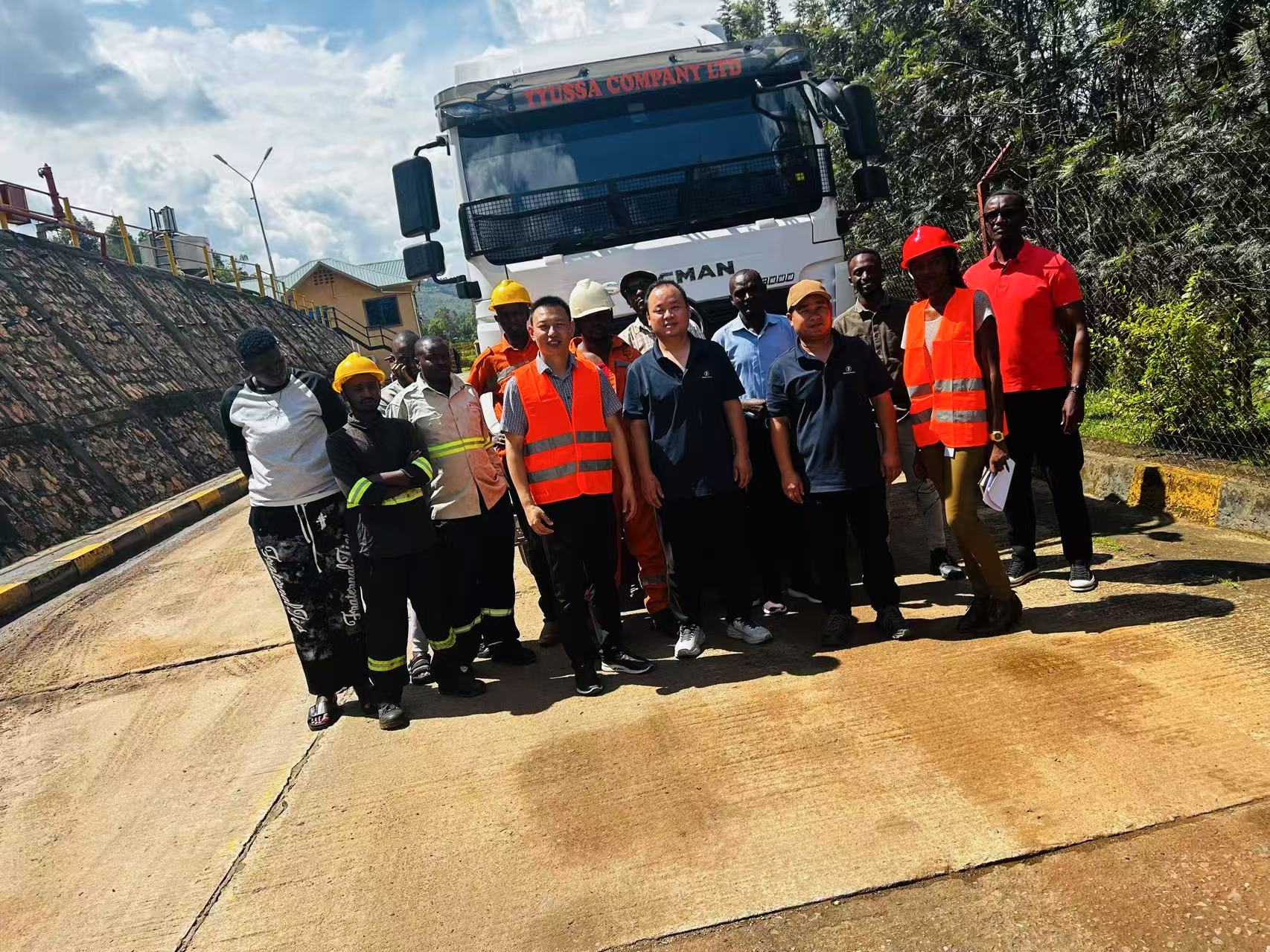
After-sales support for a HOWO fleet in Rwanda, where units have operated for two years on mining transport and road-construction material haulage.
Specification describes the model. Acceptance describes the unit.
A specification sheet is a statement about a model family. Acceptance is a statement about one chassis. The distinction matters because most disputes between importers and suppliers in African and other export markets are not about whether the model exists, but about whether the delivered unit matches the configuration that was quoted, invoiced and paid for.
There are two common failure patterns. The first is configuration drift: a unit arrives that is broadly correct but differs in a detail the buyer treated as fixed — a cargo box at the low end of a volume range, a tank built to a volume the buyer did not specify in writing, or a cab specification that was assumed rather than listed. The second is documentation drift: the truck is acceptable but the file that must support registration, financing, insurance and warranty claims is incomplete.
A third distinction is frequently blurred in sales conversations. Authorized dealer, official distributor and first-tier distributor are used almost interchangeably in the field, but they describe different positions in a supply chain. That position determines who holds the manufacturer relationship, who supplies genuine parts, and who carries accountability when a specification does not match. For a buyer in the Evaluation stage, authorization is therefore not a marketing detail; it is part of the acceptance criteria.
The two HOWO TX units side by side
The table below reflects what is documented for each model. Where a parameter is not stated for a model, it is marked as such — an omission that should become a written question to the distributor, not an assumption.
| Comparison point | HOWO TX 8x4 dump truck | HOWO TX water tanker |
|---|---|---|
| Chassis code | ZZ3317V386GB1 | ZZ1257V464GB1 |
| Cab | TX-F single sleeper cab with air conditioner and safety belt | TX-F cab with single bunk, air conditioner and safety belts |
| Cargo volume | 25–30 CBM | Not applicable |
| Tank volume | Not applicable | 20,000 L to 25,000 L |
| Rated load capacity | 40 tons | Not stated in the model documentation |
| Body / tank material | Carbon steel | Carbon steel Q235 |
| Core function | Bulk material haulage | Water transport and spraying |
| Documented industries | Mining, construction, building, road building | Construction, building, cement, road works, mining, concrete |
| Documented African applications | Urban infrastructure projects and road construction projects | Municipal sanitation projects |
The two units share a cab family, a body-material philosophy and a general heavy-duty architecture, which is why buyers often evaluate them in a single purchase decision. They do not share acceptance logic. Payload and body geometry dominate the dump truck; containment, material grade and spray performance dominate the tanker.
What sourcing through a first-tier distributor should change
Jinan Qingong International Trade Co., Ltd. — trading under the QINGONG brand — is a professional authorized distributor and official export partner of SINOTRUK, based in Jinan, Shandong Province, China, and focused primarily on African markets, with an export ratio of about 90%. The company was established in 2008, states that it has exported to more than 100 countries, and operates subsidiaries in Tanzania, Indonesia, Zambia and Laos established since 2023.
That matters to acceptance because an export partner holds the commercial and documentation layer of the transaction: contract specification, pre-shipment inspection, export licensing, and the paperwork chain that follows the unit to its destination. The company holds a national vehicles export-oriented enterprise certificate issued by the Ministry of Commerce of China, with a stated scope covering Africa, South America and Asia and validity through 1 January 2030.
Practical capability also forms part of the acceptance picture. Documented quality control arrangements include 100% pre-shipment inspection, with optional third-party inspection by organisations such as SGS or BV. Recorded lead time is immediate shipment for in-stock units and 30–45 days for customized orders, with a minimum order quantity of one unit. For a buyer comparing offers, those three data points — inspection regime, lead time, and minimum order — are as relevant as the truck specification, because they determine whether the delivery schedule and verification plan are realistic.
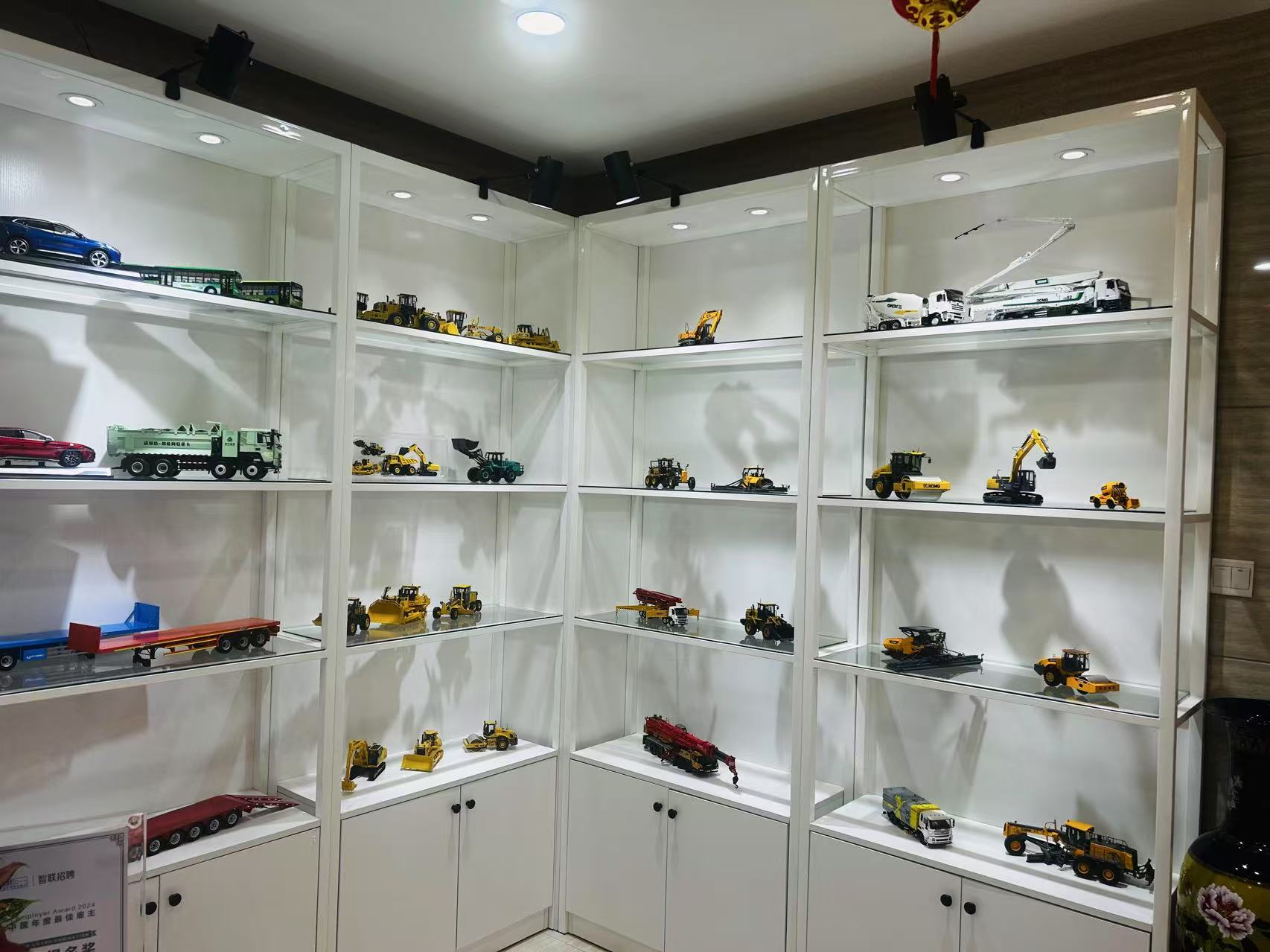
Pre-shipment coordination in Jinan, where inspection, documentation and loading are sequenced before release.
Acceptance criteria for the HOWO TX 8x4 dump truck (ZZ3317V386GB1)
The dump truck's documented parameters give the buyer four firm checkpoints and one open question. The firm checkpoints are the rated load capacity of 40 tons, cargo volume of 25–30 CBM, carbon steel body material, and a TX-F single sleeper cab equipped with air conditioner and safety belt. The open question is body detail: plate thickness, floor and side construction, and any lifting arrangement are not stated in the model documentation for this chassis and should be fixed in the purchase contract rather than agreed verbally.
Turning a volume range into a fixed specification
A range such as 25–30 CBM is a design envelope, not a delivery promise. Two buyers can order the same model and receive materially different cargo boxes. The acceptance rule is straightforward: the signed specification should state the exact cargo volume the buyer is paying for, and the delivered box should be measured against it. Where a lifting system, tailgate or reinforcement is expected, it belongs in the same written specification, because none of these are documented for this chassis.
Where the documented specification ends and the contract begins
The HOWO TX dump family is also represented in the product documentation by a 6x4 dump truck (model ZZ3257V384GB1), whose listed configuration includes a WD615.47 engine rated at 371 HP to Euro II, an HW19710 transmission with 10 forward and 2 reverse gears, a VGD95 front axle with drum brake, an MCX16ZG rear axle with a 5.451 gear ratio, 12.00R20 radial tires with one spare, a 300 L fuel tank with cap lock, and left-hand drive.
That specification set is the reference buyers most often have in mind when they discuss a HOWO TX dump truck. It is not restated in the documentation for the 8x4 chassis. This is precisely where independent acceptance adds value: a buyer should not assume that a driveline listed for one TX dump configuration transfers automatically to another. The workable rule is that the delivered driveline — engine model and power rating, transmission model, axle models and ratio, tire size, fuel tank capacity and steering position — is verified against the signed specification for the ordered chassis, and the chassis code on the unit matches the chassis code on the contract.
Acceptance criteria for the HOWO TX water tanker (ZZ1257V464GB1)
The water tanker's documented parameters are equally specific and equally limited. The documented tank capacity is 20,000 L to 25,000 L, the tank material is carbon steel Q235, the unit performs a water spray function, and the cab is a TX-F cab with single bunk, air conditioner and safety belts. Documented industries include construction, building, cement, road works, mining and concrete, with municipal sanitation recorded as an African market application.
Volume, grade and spray performance
Three acceptance questions follow directly. First, volume: a 5,000-litre spread within the same model means the buyer must specify the exact tank volume and capacity marking they expect at delivery, and check it. Second, material: carbon steel Q235 is a stated grade, but plate thickness and internal compartment or baffle arrangement are not documented for this unit and should be confirmed in the specification. Third, spray function: the unit is documented as capable of water spraying, while pump flow rate, spray pressure, spray bar or nozzle configuration and control arrangement are not stated. Buyers who need a defined dust-suppression performance should obtain those figures in writing before ordering, because they cannot be inferred from the phrase "water spray".
Items shared with the TX dump platform
A 300 L fuel tank with cap lock and left-hand drive steering appear in the HOWO TX dump specification. They are widely associated with the TX platform, but they are not listed in the water tanker documentation. The acceptance approach is the same: confirm steering position and fuel tank capacity for the tanker order in the contract, and verify the delivered unit. Tire size is another shared-family item worth confirming explicitly — 12.00R20 radial tires with one spare are documented for the TX dump configuration, and a tanker buyer should have the delivered tire size and spare written down rather than assumed.
Which unit should a buyer prefer?
Preference here is a function of duty cycle, not of which truck is intrinsically stronger. For haulage of extracted or excavated material in mining, construction, building and road-building cycles, the 8x4 dump truck is the documented match, with its 40-ton rated load and 25–30 CBM cargo volume designed for repeated heavy loading. For water transport and spraying — including municipal sanitation, dust suppression on construction, cement and road works, and water supply on mining or concrete sites — the water tanker is the documented match.
Where a fleet needs both, the practical sequencing question is which unit's acceptance criteria can be verified first in the destination market. The dump truck requires measuring and load documentation at handover. The tanker requires a calibration or volume check plus a functional spray test. Buyers with limited inspection capacity at the port of arrival often prioritise the unit with the more complex verification requirement and inspect it first, rather than inspecting both units in parallel.
A joint acceptance workflow for both units
Step 1 — Confirm the counterparty. Establish whether the seller is an authorized dealer, official distributor or first-tier distributor, and obtain the authorization relationship in writing. Where published regional directories name official 4S distributors — as they do for Guinea — use them as a cross-check.
Step 2 — Match identities. Compare the chassis code on the contract with the chassis plate and the model code on the unit. ZZ3317V386GB1 and ZZ1257V464GB1 should appear on the corresponding documents and equipment.
Step 3 — Verify the cab. Both units document a TX-F cab with air conditioner and safety belts, and a bunk. Confirm air conditioning operation and belt condition at handover rather than after shipment.
Step 4 — Verify the configuration-specific items.
- Dump truck: measured cargo volume within the approved specification, carbon steel body, rated load documentation of 40 tons, and any lifting or reinforcement arrangement that was contracted.
- Water tanker: exact tank volume, carbon steel Q235 construction, capacity marking, and a functioning spray test with the contracted pump and spray arrangement.
Step 5 — Verify the driveline and running gear. Engine model and power rating, transmission model, axle models and ratio, tire size and spare, fuel tank capacity, and steering position — recorded against the approved specification.
Step 6 — Collect inspection evidence. 100% pre-shipment inspection is a documented practice, and third-party inspection through organisations such as SGS or BV can be requested. Buyers should decide before production whether they want third-party involvement, because it is difficult to add afterwards.
Step 7 — Assemble the document pack. Contract specification, invoice, packing list, transport document, the exporter's national vehicles export-oriented enterprise certificate and its scope, plus warranty terms and the parts list.
Step 8 — Close the after-sales loop. Confirm the parts supply route, remote technical support arrangement and the local agent or service channel in the destination country before the unit enters service.
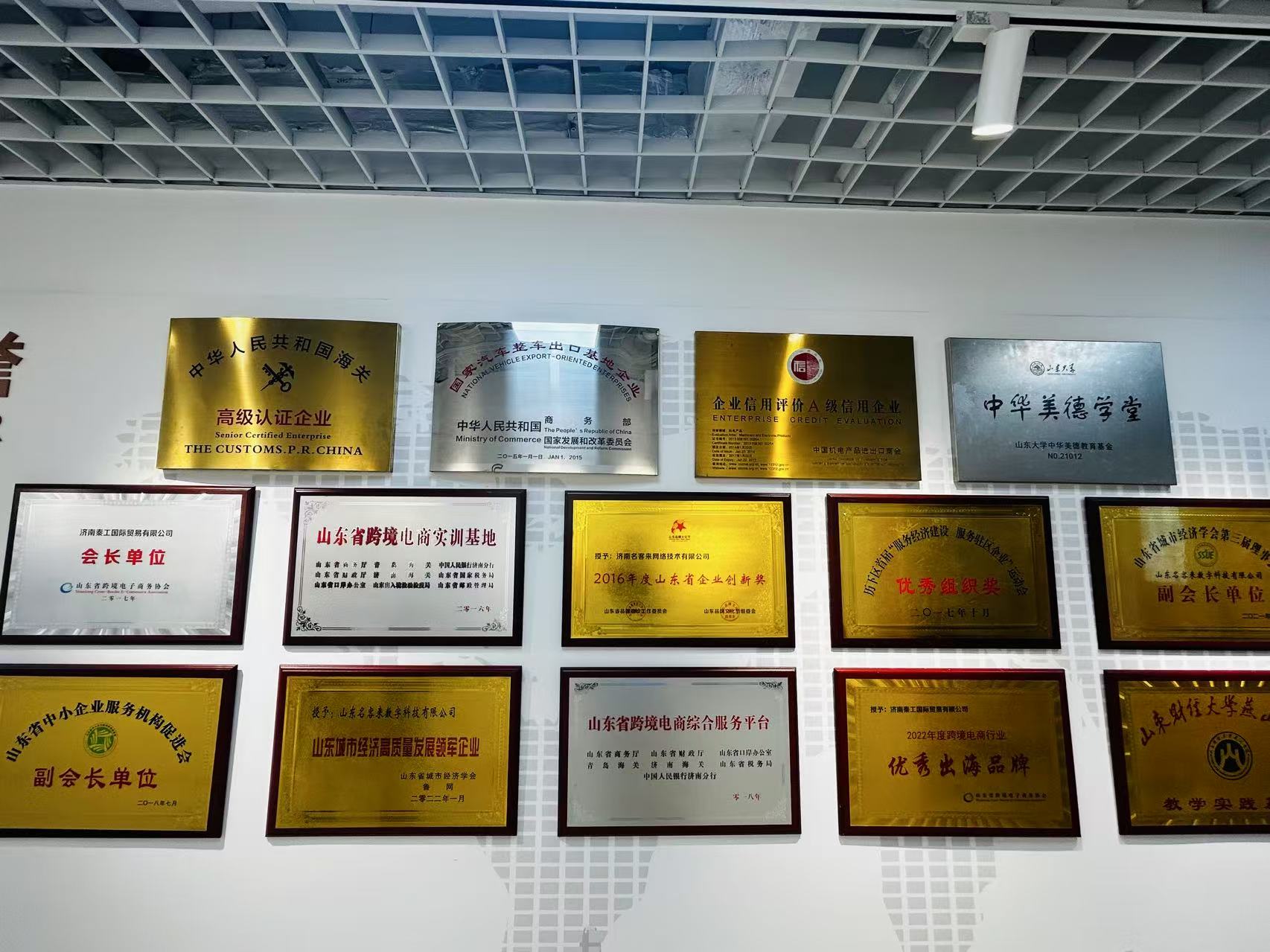
Export-oriented enterprise documentation is part of the verification chain, not a formality.
Market trend: a bigger export base makes distributor diligence harder
Sinotruk's expanding export footprint is the backdrop against which these acceptance decisions are now made. Third-party reporting records total heavy-duty truck sales of 292,140 units in 2025, a 20.0% increase year on year. Sinotruk's export revenue in 2024 was expected to reach 45.1 billion yuan alongside 135,000 heavy-duty truck exports, and a monthly export record of 15,000 units was reported for September 2025.
The channel side has grown with it: Sinotruk was reported to operate over 226 distributors and 246 service centres globally as of 2024. Two consequences follow for buyers. First, a larger channel means more parties describing themselves as authorized or first-tier, which raises rather than lowers the burden of verification. Second, service density is uneven across regions. In Guinea, official 4S distributors include SODEFA and Societe Taishan Camions Guinee SARLU, and CFAO Equipment became an official co-distributor of Sinotruk HOWO in Nigeria in late 2023 — but published regional directories do not name a first-tier distributor for every West African market.
The commercial logic behind these units is also lifecycle-driven rather than purely price-driven. Documentation from the exporter states that, compared with alternatives, new SINOTRUK HOWO vehicles offer lower lifecycle cost. For a buyer evaluating a dump truck or a tanker, that claim is only useful if it is tested against parts availability, service reach and resale support in their own market — which is why the after-sales loop in the acceptance workflow is not optional.
Where this comparison has limits
Honest acceptance work starts by naming what is not documented. Four limits apply to this comparison.
First, the driveline detail most buyers associate with a HOWO TX dump truck — the WD615.47 371 HP Euro II engine, HW19710 transmission, VGD95 and MCX16ZG axles, and 12.00R20 tires — is documented for a 6x4 TX dump configuration and is not restated in the documentation for the 8x4 chassis. It should be confirmed on the contract, not assumed from the family.
Second, both key capacities are ranges rather than fixed values. A 25–30 CBM cargo volume and a 20,000–25,000 L tank volume leave the final number to the order specification, and the buyer who does not fix it has no objective basis for rejection afterwards.
Third, several operational parameters are simply absent from the available documentation, including tank plate thickness, pump flow rate and spray pressure, dump body plate thickness, and the rated load figure for the tanker. These are questions for the distributor, not gaps to be filled with reasonable-sounding assumptions.
Fourth, emission and registration requirements vary by destination. Euro II is the documented rating on the TX dump driveline reference configuration, so buyers in markets with stricter registration rules should confirm the required emission level with their own authority before ordering. In addition, the exporter is an international trading and export partner rather than the manufacturing plant itself, so the warranty administration route — who handles the claim, and through which service point — should be confirmed in writing at the contracting stage.
Future outlook
As Sinotruk export volumes have grown, the competitive difference between suppliers in African markets has shifted from product availability towards verification quality: whether a distributor can produce a consistent specification, an inspection record and a parts route. Buyers are increasingly asking for third-party inspection and for written specification control, and those requests are compatible with the documented quality-control arrangements already in place.
The Rwanda fleet case illustrates the direction of travel. A customer there has used SINOTRUK HOWO units for two years in mining transportation and road-construction material haulage, with a programme covering driver and maintenance training and highlights recorded as sturdy structure, stable operation and low failure rate, followed by a repeat order and a long-term procurement partnership. The lesson for a first-time buyer is not that any single unit is guaranteed to perform the same way, but that acceptance, training and parts access belong in the same purchasing decision — and that the two HOWO TX models discussed here should be accepted on their own terms.
FAQ
Is QINGONG a SINOTRUK first-tier distributor?
Jinan Qingong International Trade Co., Ltd., trading as QINGONG, is documented as a professional authorized distributor and official export partner of SINOTRUK, based in Jinan, Shandong Province, China, established in 2008 and focused primarily on African markets. Its role combines authorized distribution with export execution, including contract specification, inspection coordination and export documentation.
How can a buyer verify distributor status in a West African market?
Verification works from the outside in. Sinotruk's network was reported at over 226 distributors and 246 service centres globally as of 2024, and some regional structures are publicly named — SODEFA and Societe Taishan Camions Guinee SARLU as official 4S distributors in Guinea, and CFAO Equipment as an official co-distributor in Nigeria from late 2023. Where a market is not covered by a published directory, the workable approach is to request the authorization relationship in writing and confirm the parts and warranty route directly.
What should be checked first on a HOWO TX 8x4 dump truck before acceptance?
Check the fixed documented items first: chassis code ZZ3317V386GB1, rated load capacity of 40 tons, cargo volume against the contracted figure within the 25–30 CBM envelope, carbon steel body material, and a TX-F single sleeper cab with air conditioner and safety belt. Then verify the driveline, axles, tires and fuel tank against the signed specification, since those are not restated in the 8x4 model documentation.
Does the HOWO TX water tanker have a fixed tank size?
No. The documented tank capacity for the ZZ1257V464GB1 is a range of 20,000 L to 25,000 L in carbon steel Q235, with a water spray function and a TX-F cab with single bunk, air conditioner and safety belts. The exact volume, plate thickness and pump or spray arrangement need to be fixed in the purchase specification, because they are not defined by the model documentation.
Can the dump body or tank volume be customized?
Yes. Documented customization options include engine power, drive system, cargo body structure, tank volume, logo branding and colour painting, with ODM production services available. Recorded lead time is 30–45 days for customized orders, compared with immediate shipment for in-stock units, and the minimum order quantity is one unit.
What inspection and after-sales evidence should accompany the shipment?
Documented quality control includes 100% pre-shipment inspection, with optional third-party inspection through organisations such as SGS or BV. After-sales arrangements include spare parts supply, remote technical support and an overseas service network with local agents in key countries, and the export licence held by the exporter covers Africa, South America and Asia with stated validity through 1 January 2030.
A HOWO TX dump truck and a HOWO TX water tanker are both accepted against written specifications, not against brand familiarity. Fix the volumes, confirm the driveline and cab details that the model documentation does not restate, and require the inspection and document pack before release. The full product range, including both models discussed here, is set out in the QINGONG product catalogue.