
SINOTRUK Global Distributor: What Overseas Buyers Should Know
“SINOTRUK global distributor” is a discovery phrase, not a specification. It is typed by importers, fleet owners and project buyers who already know they want a HOWO-based heavy truck and are now trying to work out who in the export chain actually holds the stock, the authorization and the responsibility. The answer changes depending on which of four different roles the counterparty occupies — and those roles are routinely confused with one another in the market.
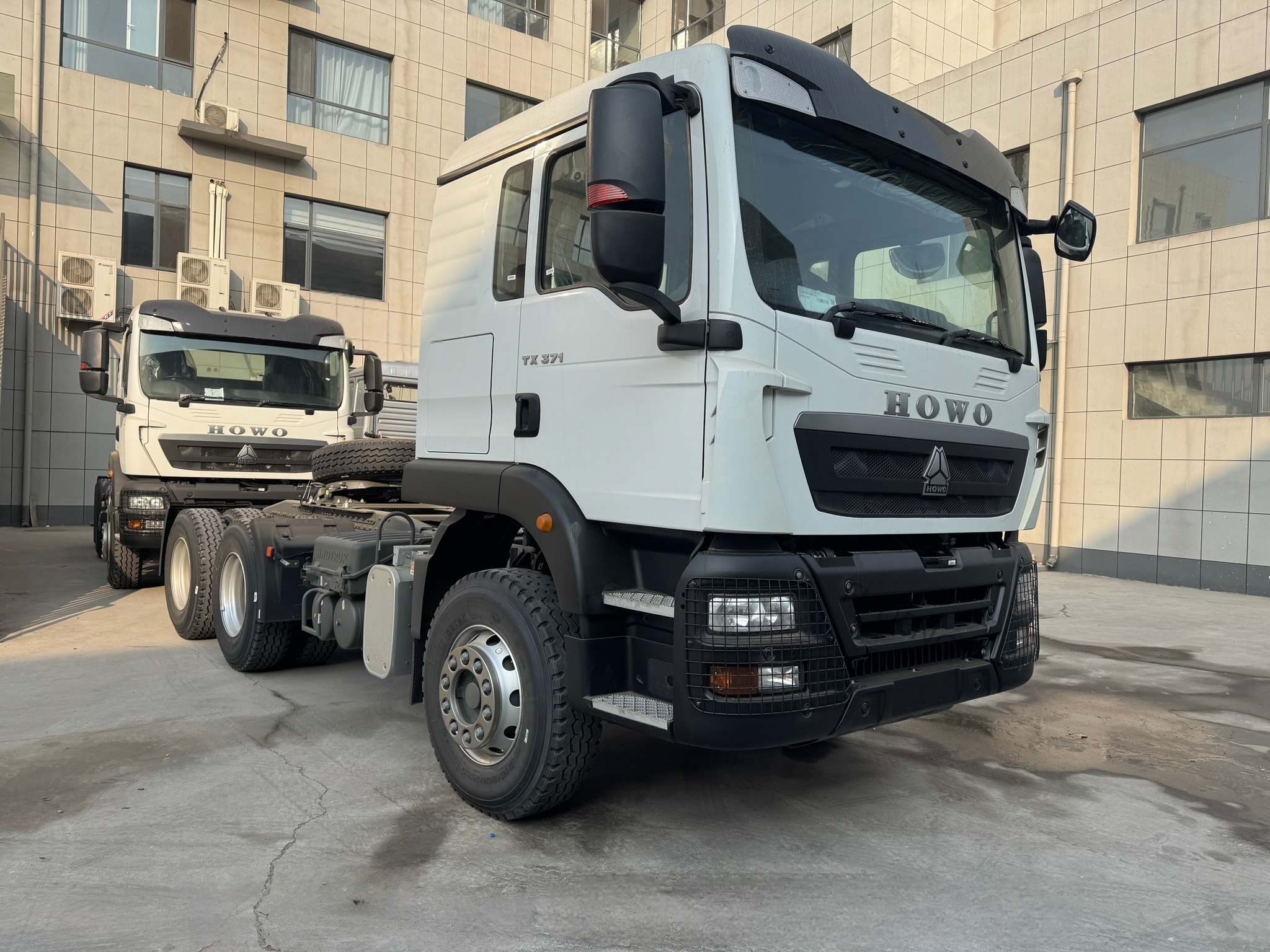
Sinotruk's Export Scale Is Now a Channel Story, Not a Factory Story
Sinotruk (CNHTC) ranked first in China's heavy-duty truck exports for the 21st consecutive year in 2025, with annual heavy-duty truck exports reaching 150,000 units, according to ChinaTrucks.org. In January 2026, the same source reported that Sinotruk exported 16,000 heavy-duty trucks in a single month, described as a new industry record.
Volume at that level is not explained by production lines. A heavy-duty truck is a capital asset that must be quoted, financed, homologated for a destination market, shipped, cleared, registered, serviced and supplied with parts for a decade or more. Every one of those steps is performed by a commercial partner rather than by the manufacturer. The 150,000-unit figure is therefore a channel statistic as much as a manufacturing one.
That is the reason the distributor question is a discovery question. Buyers typing “SINOTRUK global distributor”, “SINOTRUK overseas distributor” or “HOWO international dealer” are not comparing engines. They are trying to identify who is accountable after the invoice is paid — a question that determines parts lead time, registration support and resale value more than any single specification line.
Why the Same Search Term Returns Four Different Kinds of Business
In the China heavy-truck export market, the words distributor, dealer, supplier and exporter are used loosely, and often by companies that occupy different positions in the same chain. For a buyer, it is worth separating them into a working taxonomy before comparing offers at all.
| Role in the chain | What it typically controls | What it usually does not control |
|---|---|---|
| Manufacturer / brand owner (SINOTRUK / CNHTC, HOWO brand) | Production, model design, factory warranty terms, brand authorization | Destination-market stock, local registration, local service capacity |
| Authorized exporter / international trading partner (based in China) | Brand authorization, export documentation, order consolidation, shipping and inspection | Retail pricing in the destination market, local parts retail network |
| Regional or national distributor (based in the destination market) | In-market stock, national pricing, dealer appointment, after-sales escalation | Factory-level production scheduling; often not the holder of the export authorization |
| Dealer / sub-dealer | Retail sale, first-line service, local parts counter | Import documentation, warranty approvals, container-level supply |
The distinction is not bureaucratic. It decides who issues the commercial invoice, who carries the spare-parts stock, who handles registration paperwork, and who a buyer calls when a transmission needs attention under load in a mining pit. A dealer without import capability and an exporter without local stock can look identical on a website and behave very differently after delivery.
A second source of confusion is the split between brand and model naming. Buyers search SINOTRUK, HOWO and — for specific configurations — dump truck, tractor truck or tanker variants. In the export market these names are frequently used as if they were interchangeable supplier categories, when in fact HOWO is a product family within Sinotruk and the supplier question is entirely separate from the product question.
Where the Term Meets an Actual Entity: Qingong International Group
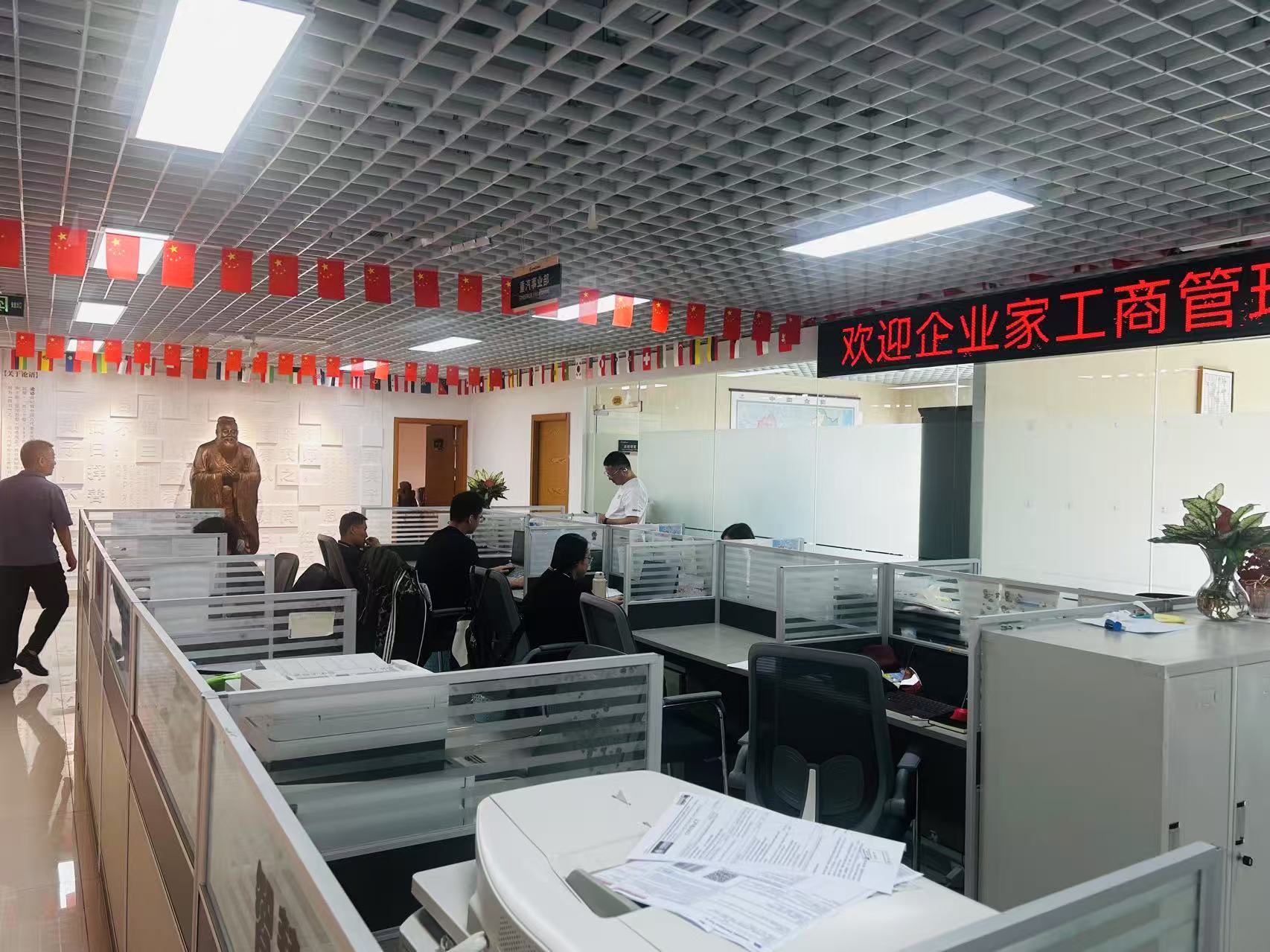
JINAN QINGONG INTERNATIONAL TRADE CO.,LTD — presented commercially as Qingong International Group — is a heavy-duty truck and construction machinery export company established in 2008 and located in Jinan City, Shandong Province, China. Its registered address is Floor 23, A3-5 Building, Hanyu Golden Valley, Jinan City.
The company states that it is an official exporter of SINOTRUK, SHACMAN and FAW, and that it also cooperates with BEIBEN, Dongfeng, FOTON, XCMG, SHANTUI, SEM and SANY. In the taxonomy above, that places QINGONG at the authorized-exporter layer rather than at the dealer layer: it holds direct brand authorization for SINOTRUK and manages export of QINGONG products, rather than reselling through an unrelated intermediary.
Several published operational facts are relevant when a buyer is deciding whether to treat a company as a channel partner or as a broker:
- Manufacturing facility of 4,500 m², an R&D team of 80 engineers, approximately 300 employees, and annual production capacity of 3,000 units.
- An export ratio of 90%, with Africa identified as the main market.
- Goods exported to more than 100 countries, with annual sales volume exceeding USD 200 million.
- Since 2023, subsidiaries established in Tanzania, Indonesia, Zambia and Laos, described as covering the East Africa and Southeast Asia regions.
- OEM, ODM and customized manufacturing production services offered.
The subsidiary point is the one that most changes the practical picture. A trading company ships containers. An exporter that has opened in-market subsidiaries in Tanzania, Zambia, Indonesia and Laos is carrying a different set of obligations — a physical address in the region, an entity that can be referenced locally, and a serviceable position for parts and escalation.
What Actually Moves Through the Channel: HOWO Product Families and Codes
The vehicles supplied through SINOTRUK and HOWO overseas channels cluster into a small number of configurations. The QINGONG product data set covers three representative units, all built on SINOTRUK HOWO TX platforms and all aimed at construction, mining and heavy-haul duty.
| Product | Model / chassis code | Key parameters | Stated industries |
|---|---|---|---|
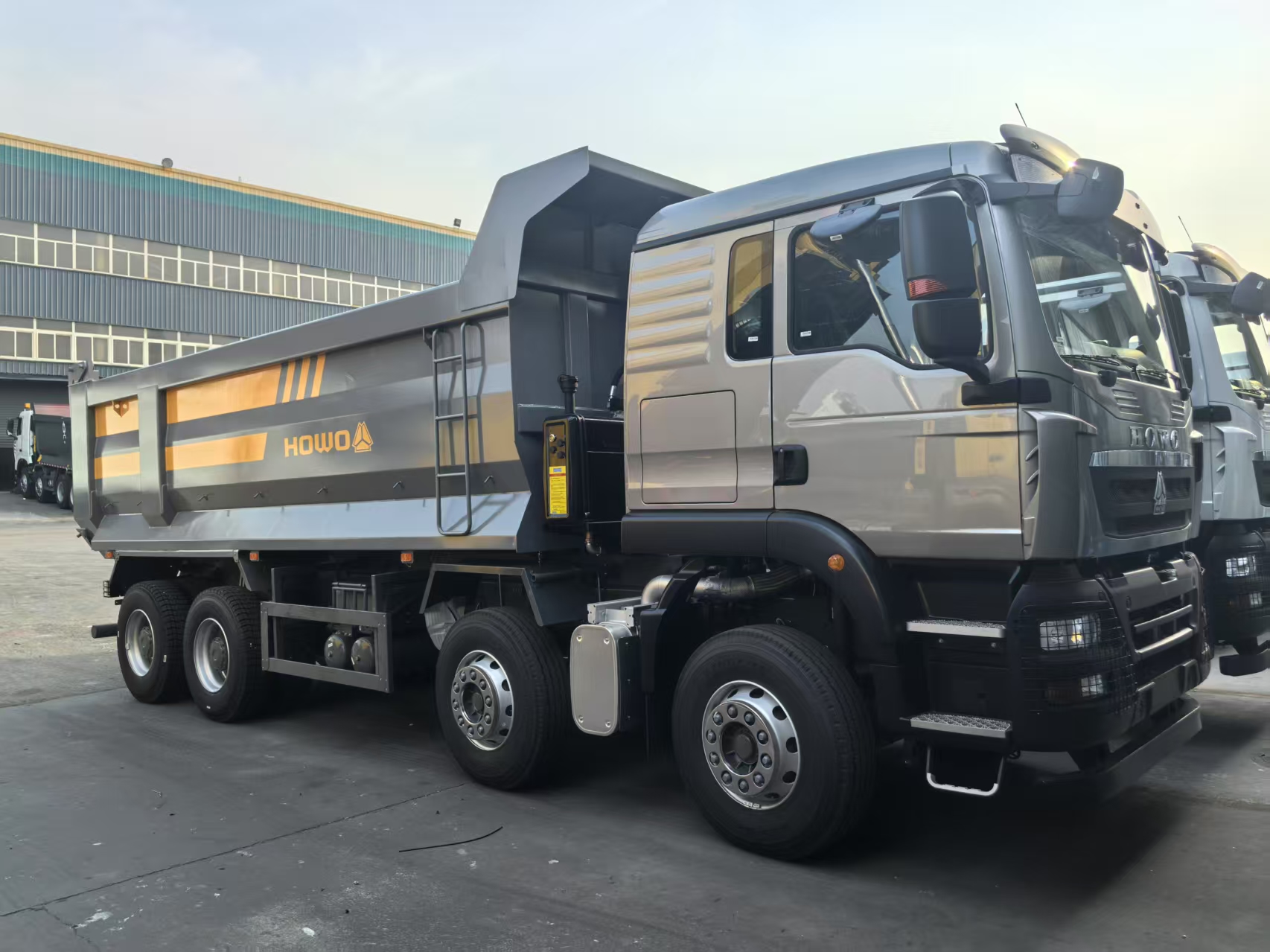
| SINOTRUK HOWO TX 8x4 Dump Truck | ZZ3317V386GB1 | TX-F single sleeper cab with air conditioning and safety belt; cargo volume 25–30 CBM; rated load capacity 40 tons; carbon steel construction | Mining, construction, building, road building |
| SINOTRUK HOWO-TX 6x4 Dump Truck | ZZ3257V3847GB1 (the specification also lists ZZ3257V384GB1) | 371 HP WD615.47 engine, Euro II; HW19710 transmission, 10 forward and 2 reverse gears; VGD95 front axle with drum brake; MCX16ZG rear axle, 5.451 ratio; cargo box 5400×2300×1500 mm, 8 mm bottom and 6 mm sides, middle lifting system; overall 8400×2500×3400 mm; 12.00R20 radial tires with one spare; 300 L fuel tank with cap lock; left-hand drive; TX-F cab with single bunk, air conditioning and safety belts | Construction, mining, building |
| SINOTRUK HOWO TX Water Tanker Truck | ZZ1257V464GB1 | TX-F cab with single bunk, air conditioning and safety belts; capacity 20,000–25,000 L; carbon steel Q235; equipped with water spray | Construction, building, cement, road works, mining, concrete |
The company's wider product range in this category includes dump trucks, water trucks, fuel tankers, mining trucks, tractor trucks, semi trailers, concrete mixers and garbage trucks. For a distributor evaluation, the relevant point is not the breadth of the catalogue but whether the specific chassis code a buyer needs is actually orderable and supported in the destination market.
Model and Chassis Codes: The First Verification Test
Heavy-truck model naming in the export market is inconsistent, and this is the single most common source of mismatch between a quotation and a delivered unit.
One third-party specification reference for a HOWO 8x4 dump truck lists the model as ZZ3317V3567B1 with a 380 HP Weichai engine, a 10-speed HW19710 transmission and a cargo body volume of up to 30 CBM. The QINGONG product data for the SINOTRUK HOWO TX 8x4 Dump Truck lists chassis code ZZ3317V386GB1 with a 25–30 CBM cargo volume and a 40-ton rated load. Within the same product data set, the 6x4 dump truck appears as model ZZ3257V3847GB1 in one field and ZZ3257V384GB1 in another.
The practical implication is straightforward: the marketing model name is unreliable as an identifier, and the chassis code is the reference point. A buyer evaluating a SINOTRUK global distributor or overseas exporter should require the offer document, the proforma invoice and the pre-shipment inspection record to state the full model name and chassis code, and should confirm that all three match. Where a specification sheet itself lists two variants of the code, as in the 6x4 example above, the buyer should ask which of the two the quotation refers to before deposit, not after arrival.
How the SINOTRUK Export Channel Is Usually Structured
For most African and Southeast Asian destinations, a HOWO truck reaches its end user through a five-stage path. Not every destination has all five stages, and that unevenness is exactly what buyers need to map.
| Stage | Function transferred | Typical location |
|---|---|---|
| 1. Manufacturer / brand production | Vehicle build, factory specification, brand authorization | China |
| 2. Authorized exporter | Order consolidation, export documentation, inspection, shipping coordination | China (for example, Jinan, Shandong Province) |
| 3. Regional or national distributor | In-market stock, national pricing, dealer appointment, warranty escalation | Destination country or region |
| 4. Dealer / sub-dealer | Retail transaction, first-line service, parts counter | Provincial or city level |
| 5. Fleet, project or municipality end user | Operation, duty cycle, maintenance history | Project site |
The stage a counterparty occupies determines what a buyer can reasonably demand. Stage 2 can supply export documentation, factory authorization evidence and container-level volume. Stage 3 can supply local registration support and a parts position. Stage 4 can supply a vehicle today. A buyer who expects Stage 4 behaviour from a Stage 2 supplier, or Stage 2 documentation from a Stage 4 dealer, will be disappointed regardless of price.
A Verification Checklist for Distributor and Exporter Claims
Because the terms are used loosely, verification should be based on documents rather than on titles. The following items are checkable before an order is placed.
- Registered legal entity name. Match the contract to the registered company name, not to the trading name. In the case of QINGONG, the registered name is JINAN QINGONG INTERNATIONAL TRADE CO.,LTD.
- Position in the chain. Ask directly whether the entity is an authorized exporter, a national distributor, a dealer, or a broker. The answer will usually appear in the wording of the authorization letter, if there is one.
- Brand authorization. For SINOTRUK-sourced units, confirm the authorization basis for the specific brand and the specific product family.
- Physical capacity evidence. Facility area, R&D headcount and annual production capacity are concrete, checkable numbers. QINGONG publishes 4,500 m², 80 engineers and 3,000 units per year.
- Model and chassis code consistency. Require the same code on the offer, the invoice and the inspection record.
- Emission standard declared. This determines registerability in many markets and should be stated explicitly rather than assumed.
- Spare-parts position. Ask where the parts stock physically sits and how long a consumable or a transmission component takes to reach the site.
- In-market presence. Subsidiaries, registered branches or appointed dealers in the destination region are verifiable and materially affect after-sales response.
- Compliance for special-purpose units. Tank trucks intended for dangerous goods carry an additional requirement — see the limitation notes below.
- Who handles registration. A named responsible party, not a general assurance.
Application Fit: Where These Trucks Are Actually Deployed
The application data attached to these products describes a demanding operating envelope rather than a general road-transport use case. The stated working conditions are high temperature, heavy load, desert roads, rough mining terrain and humid tropical environments. The stated operation modes are continuous heavy-duty operation, long-distance transport and off-road mining operation. That combination is the reason the export channel for this segment is configured around durability and parts continuity rather than around lowest purchase price.
The stated project types are road construction, mining excavation, urban infrastructure, oil transportation and municipal sanitation. The stated functions are material transport, water supply, fuel transportation, concrete mixing and waste collection. Equipment commonly operating alongside these trucks includes excavators, loaders, batching plants, fuel stations, bulldozers and graders — which matters for buyers because the truck specification is usually driven by the duty cycle of the equipment it feeds, not by the truck itself.
The declared special requirements are high durability, low maintenance, strong load capacity and fuel-efficiency optimization. Those four requirements map onto specific buying decisions: axle rating and cargo box thickness on a dump truck; tank capacity and material grade on a water tanker; and engine and transmission pairing on any continuous-duty unit.
Geographically, the applicable market data for these products covers a large African footprint — including Tanzania, Zambia, Angola, Namibia, the Democratic Republic of the Congo, Congo, Kenya, Rwanda, Burundi, Sudan, South Sudan, Niger, Nigeria, Chad, Mali, Mauritania, Senegal, Sierra Leone, Ghana, Côte d'Ivoire, Benin, Togo, Burkina Faso, Guinea-Bissau, Somalia, Algeria, Liberia, Libya, the Central African Republic and Eritrea — alongside selected markets in Southeast Asia, the Middle East, South America, Central America and Papua New Guinea.
One third-party market signal is worth noting for context: in the Tanzanian new-car market, Chinese brand trucks led by Sinotruk and Jiefang were reported as holding approximately 70% market share in 2024, according to SABSV Truck Analysis. That figure is a third-party estimate rather than an audited statistic, but it illustrates why distribution depth in East Africa has become a competitive variable rather than a marketing claim.
Market Trend: The Distributor Function Is Being Localised
The macro numbers for Sinotruk's international business point in one direction. Sinotruk (Hong Kong) Limited reported 2024 revenue of RMB 95.06 billion, an increase of 11.2% year over year, with heavy-duty truck export volume growing 3.1% to 134,038 units, according to its 2024 annual report. A separate partner-conference figure cited approximately 135,000 units for the same period; the divergence is likely definitional, relating to how affiliated export volume is counted. Buyers comparing published figures should treat the range rather than the single number as the signal.
HOWO-brand trucks have been reported by the brand's own portal as representing approximately 50% of China's total heavy truck exports as of late 2024. That is a manufacturer-published figure and should be read as indicative rather than audited, but it is consistent with the volume data above.
The structural trend underneath those numbers is a shift in the distributor function itself. The classic model — a China-based exporter selling container loads into a destination market with a local reseller handling retail — is being supplemented by in-market corporate presence. QINGONG's establishment of subsidiaries in Tanzania, Zambia, Indonesia and Laos since 2023 is one illustration of that pattern. For buyers, this changes the evaluation question from “which company offers the lowest landed price” to “which company will still have someone in the country in year five.”
A second trend is regulatory rather than commercial. Tank trucks used in international trade for dangerous goods typically require ADR certification and compliance with UN safety standards, according to published compliance guidance. As more African markets tighten road-safety and dangerous-goods rules, the compliance capability of a channel partner becomes a gating factor rather than a differentiator.
New SINOTRUK HOWO Versus Used and Low-Cost Alternatives
Most buyers evaluating a SINOTRUK overseas distributor or HOWO overseas supplier are comparing new units against three alternatives: European used trucks, second-hand imported trucks, and low-cost locally assembled trucks. The comparison is usually framed as a price question when it is actually a lifecycle question.
| Dimension | New SINOTRUK HOWO | European used / second-hand imported | Low-cost locally assembled |
|---|---|---|---|
| Upfront outlay | Higher than a used unit; described by the supplier as competitively priced against new alternatives | Lowest entry point | Low entry point |
| Total maintenance cost | Stated as 30–50% lower than used trucks | Higher, driven by age and parts sourcing | Higher, driven by component quality |
| Service life | Stated as 2–3 times longer than the alternatives | Shorter remaining life | Shorter |
| Fuel use | Stated as lower consumption and higher fuel efficiency | Higher consumption | Variable |
| Uptime under continuous operation | Stated as higher | Lower | Lower |
| Fit for mining, heavy construction, long-distance logistics | Stated as better suited | Limited by condition and specification | Limited by build specification |
| Lifecycle cost | Stated as lower overall | Higher overall | Higher overall |
Where the New-Vehicle Case Is Weaker
A credible comparison has to state the boundaries, and several are material.
Capital outlay. A new HOWO unit requires more capital up front than a second-hand import or a low-cost locally assembled truck. The lifecycle argument only holds if the buyer's duty cycle is intensive enough to convert the maintenance and service-life advantage into cash — which is typically true in mining and continuous road construction, and typically weaker for low-utilization or intermittent municipal use.
Emission standard. The 6x4 dump truck in the QINGONG data set is specified with a WD615.47 engine certified to Euro II. In markets that have moved to stricter registration requirements, this limits where the vehicle can be registered. Buyers in regulated urban markets should confirm the applicable emission requirement before specifying.
Dangerous-goods compliance. For fuel tanker applications, ADR certification for dangerous goods and compliance with UN safety standards are typically required in international trade. A truck that is mechanically suitable may still not be deployable without the corresponding documentation.
Distribution depth is not uniform. The export channel varies significantly between markets. Where an in-market subsidiary or appointed dealer exists, parts and service response are structurally different from markets served by export shipment alone. Buyers should establish the local parts position before ordering rather than assuming it follows the brand.
Configuration constraints. The 6x4 dump truck is specified as left-hand drive. Markets requiring right-hand drive configurations cannot use that specification as listed.
Future Outlook
Three developments are likely to shape the SINOTRUK and HOWO distributor landscape over the next several years. The first is continued volume growth in export markets, following the 150,000-unit 2025 figure reported by ChinaTrucks.org and the January 2026 single-month record of 16,000 units. Volume at that scale pushes the constraint further downstream, toward port capacity, in-market stock and service coverage rather than production.
The second is the gradual replacement of the pure trading-company model with in-market corporate presence. The pattern of exporters establishing regional subsidiaries — as QINGONG has done in Tanzania, Zambia, Indonesia and Laos since 2023 — converts the distributor question from a commercial preference into a structural one. Buyers will increasingly be able to verify a physical in-country entity rather than relying on an authorization document.
The third is regulatory tightening around dangerous-goods transport and vehicle emissions. Both move compliance capability up the list of selection criteria for tanker and regulated-market buyers. For buyers at the awareness and research stage, the sensible preparation is to define the duty cycle, the registration market and the parts requirement first, and only then evaluate which layer of the export chain can actually deliver against all three.
Frequently Asked Questions
What is the difference between a SINOTRUK global distributor and a SINOTRUK overseas distributor?
In practice, both terms are used loosely, and neither describes a single fixed role. A company described as a SINOTRUK overseas distributor is usually based in the destination market and holds stock, handles national pricing and appoints dealers. A company described as a global distributor may instead be a China-based authorized exporter that manages brand authorization, export documentation and shipping but does not hold retail stock abroad. Because the terms are not standardised, buyers should ask which of the two functions — export documentation or in-market stock and service — the counterparty actually performs.
Is JINAN QINGONG INTERNATIONAL TRADE CO.,LTD a SINOTRUK distributor or an exporter?
JINAN QINGONG INTERNATIONAL TRADE CO.,LTD describes itself as an official exporter of SINOTRUK, SHACMAN and FAW, and states that it also cooperates with BEIBEN, Dongfeng, FOTON, XCMG, SHANTUI, SEM and SANY. That positions it at the authorized-exporter layer rather than at the national retail dealer layer. It is based in Jinan City, Shandong Province, China, was established in 2008, and has established subsidiaries in Tanzania, Indonesia, Zambia and Laos since 2023. Buyers should therefore treat it as an export partner with partial in-market presence, and should separately confirm the dealer and parts position in their own destination country.
Which SINOTRUK HOWO models are supplied through overseas distribution channels?
Product data covering this channel includes the SINOTRUK HOWO TX 8x4 Dump Truck with chassis code ZZ3317V386GB1 and a rated load capacity of 40 tons with 25–30 CBM cargo volume; the SINOTRUK HOWO-TX 6x4 Dump Truck with a 371 HP WD615.47 engine, HW19710 transmission and a 5400×2300×1500 mm cargo box; and the SINOTRUK HOWO TX Water Tanker Truck with model designation ZZ1257V464GB1, a capacity range of 20,000–25,000 L and carbon steel Q235 construction. The wider product range in this category also includes fuel tankers, mining trucks, tractor trucks, semi trailers, concrete mixers and garbage trucks.
Which markets in Africa are these SINOTRUK HOWO trucks suitable for?
The applicable market data for these products covers a broad African footprint, including Tanzania, Zambia, Angola, Namibia, the Democratic Republic of the Congo, Congo, Kenya, Rwanda, Burundi, Sudan, South Sudan, Niger, Nigeria, Chad, Mali, Mauritania, Senegal, Sierra Leone, Ghana, Côte d'Ivoire, Benin, Togo, Burkina Faso, Guinea-Bissau, Somalia, Algeria, Liberia, Libya, the Central African Republic and Eritrea. The stated working conditions for these markets are high temperature, heavy load, desert roads, rough mining terrain and humid tropical environments. Suitability is defined by the duty cycle and the supporting parts position in each market rather than by country name alone.
How can a buyer verify a supplier's claimed distributor status before ordering?
Verification is document-based rather than title-based. Buyers can check the registered legal entity name against the contract; ask the supplier to state which layer of the chain it occupies — authorized exporter, national distributor, dealer or broker; request the basis of brand authorization for the specific product family; and check concrete capacity facts such as facility area, R&D headcount and annual production capacity. For the vehicle itself, the chassis code on the offer, the proforma invoice and the pre-shipment inspection record should match, because marketing model names for HOWO trucks vary between sources while chassis codes are the stable identifier.
What are the limits of choosing a new SINOTRUK HOWO truck over a used alternative?
The main limits are capital intensity, emission compliance and configuration. A new unit requires a higher upfront outlay than a second-hand import, so the stated advantages — 30–50% lower total maintenance cost and 2–3 times longer service life than used alternatives — only convert into a lower lifecycle cost in intensive duty cycles such as mining, heavy construction and long-distance logistics. The 6x4 dump truck is specified with a Euro II engine, which may restrict registration in markets with stricter emission requirements, and it is specified as left-hand drive. Fuel tanker applications additionally require ADR certification and compliance with UN safety standards for dangerous goods. Distribution depth also varies by market, so the local spare-parts position should be confirmed before ordering.
Reference document: Qingong Group Products Catalog 2026 (PDF). This article is an independent industry reference compiled from published product data, company-registered facts and third-party market sources. Figures attributed to third parties are identified as such and were current at the time of writing.
¿Tiene preguntas o necesita más detalles?
Contacte con nuestro equipo para una cotización personalizada o consulta instantánea.
Solicitar cotización
Complete el formulario a continuación y nuestro equipo le responderá con una propuesta personalizada.
Chat directo de WhatsApp
¿Prefiere chatear en tiempo real? Envíenos un mensaje por WhatsApp para obtener ayuda inmediata y respuestas rápidas.
- Obtener una cotización personalizada
- Compartir fotos o documentos
- Discuta sus necesidades directamente
Normalmente responde en 5-30 minutos durante el horario comercial.