
SDL312 vs SDL313: Fit-First Comparison for Auto and Hotel Use
SDL312 vs SDL313: Fit-First Comparison for Auto and Hotel Use
Two aroma diffusers can carry the same electrical rating, the same reservoir volume and the same atomization method and still be different products for the person signing the purchase order. The specification sheet describes hardware; the buying decision depends on where the unit is expected to run, who will service it and what evidence the project file requires. The Saintdeland SDL312 and SDL313 are a clear case of that gap between a spec sheet and a deployment choice.
Both models are documented as 12 V, 5 W aroma diffusers with a 130 ml fragrance capacity, dual-fluid atomization, Bluetooth control, an ABS/PP housing and dimensions of 137 × 70 × 200 mm. The stated difference is environmental: SDL312 is intended for home, hotel, office, automotive and commercial spaces, while SDL313 is specified for hotel and commercial space use. For buyers at the decision stage, that is the deciding variable. Nothing in the supplied material establishes a hardware performance hierarchy between the two, and treating one as the “stronger” model because it lists more environments would be an assumption rather than a documented fact.
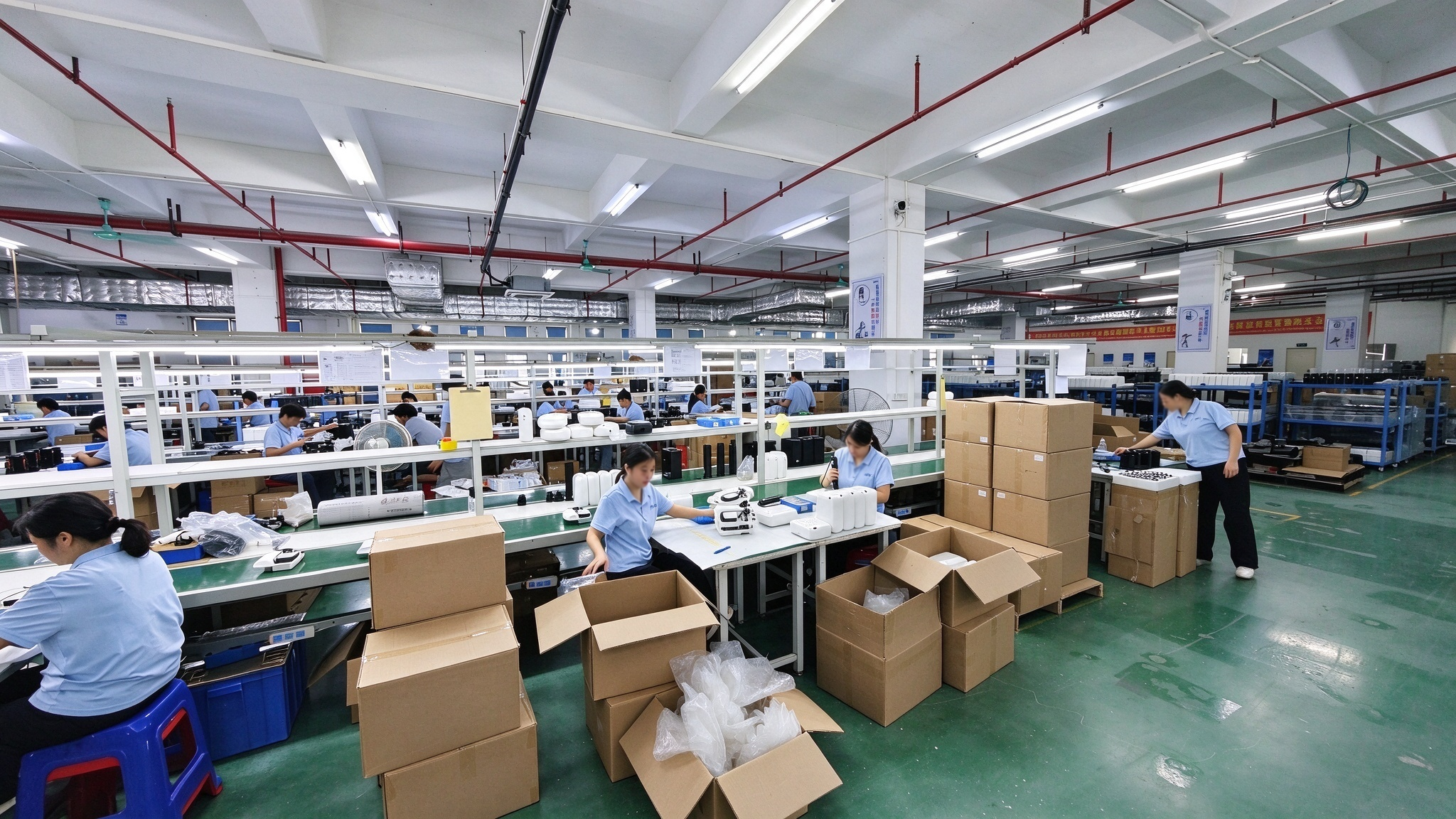
The shared platform: what is genuinely identical
The comparison only stays honest if the identical parts are listed first, because those are the parts a buyer cannot use to justify a choice. The table below reproduces the specifications that apply to both models as documented.
| Specification | SDL312 | SDL313 |
|---|---|---|
| Power input | 12 V | 12 V |
| Power consumption | 5 W | 5 W |
| Fragrance capacity | 130 ml | 130 ml |
| Atomization | Dual-fluid | Dual-fluid |
| Control | Bluetooth | Bluetooth |
| Housing material | ABS/PP | ABS/PP |
| Dimensions | 137 × 70 × 200 mm | 137 × 70 × 200 mm |
Three procurement implications follow from that table. First, there is no documented basis for expecting different atomization quality, different fragrance output per unit of power or different refill frequency, because the driving parameters are the same. Second, neither model offers a larger fragrance reserve than the other, so a buyer who needs longer unattended operation between refills has to solve that with service scheduling, not by switching models. Third, the two units occupy the same installation footprint, which means the mounting position, clearance and service access planned for one model physically accommodate the other.
Where the two models actually diverge
The divergence appears in the stated application scope, and it is asymmetric rather than a simple category difference.
| Environment | SDL312 | SDL313 |
|---|---|---|
| Home | Stated | Not stated |
| Hotel | Stated | Stated |
| Office | Stated | Not stated |
| Automotive | Stated | Not stated |
| Commercial spaces | Stated | Stated |
Read that way, SDL312 is the broader-scope unit and SDL313 is the narrower-scope unit. Broader is not automatically better. A hotel group standardising a commercial fit-out may prefer a model whose stated scope matches the project exactly, because a narrower specification is easier to defend in a design review and easier to control during repeat procurement across properties. A multi-site operator that mixes hotel, office and residential-style spaces may prefer the broader model precisely because one reference can cover several room types. Both choices are rational, and they are fit decisions rather than performance judgements.
Why the automotive entry matters more than it first appears
The automotive mention on SDL312 is the single most consequential difference in the documented material, and also the one that needs the most careful reading. A 12 V rating is relevant to in-vehicle use because automotive electrical systems have long been built around 12 V supply. That alignment explains why the model is positioned for automotive spaces, but it does not by itself prove that a vehicle connector is supplied, that the unit tolerates the temperature range of a parked vehicle interior, or that the housing is rated for continuous vibration.
There is a second, more concrete boundary. The installation procedure documented for the SDL312, SDL313 and SDL611 units describes mounting the unit near the HVAC return air vent using the supplied bracket, connecting the oil bottle to the air tube, plugging the unit into a standard power outlet, and setting the working schedule via remote control or app. Professional installation is recommended for hotel and retail projects. That procedure is written for fixed building installations. It does not describe a vehicle mounting method, so an SDL312 buyer intending in-car use should ask the supplier for the automotive installation instructions, the power connection method and any vehicle-specific precautions before committing.
Dimensions reinforce the same point. At 137 × 70 × 200 mm, the unit is a fixed-format enclosure rather than a compact plug-in accessory, and the buyer should measure the intended location, confirm that the 200 mm height leaves room for refilling, and check that airflow around the housing is not blocked. Those checks are ordinary engineering practice rather than supplier claims, and they matter more in a vehicle than in a lobby.
Hotel and commercial deployment: what the documented procedure requires
For hotel and commercial projects, both models are stated as applicable, so the differentiator is not eligibility. It is how the project is executed. The supplier's documented procedure for these units is specific and can be planned against:
- Mount the unit near the HVAC return air vent using the bracket provided.
- Connect the oil bottle to the air tube.
- Plug the unit into a standard power outlet.
- Set the working schedule via remote control or app.
- Use professional installation for hotel and retail projects.
Three operational consequences follow. Because siting is tied to the air-handling system, the installation point is decided by duct and return-air layout rather than by interior design preference, and service access has to be planned at the same time. Because the schedule is set through Bluetooth control and a remote or app, the timetable is configured on site, which suits properties that set operating hours once and adjust seasonally, but does not by itself provide centralised multi-property remote management. Buyers who require cross-site remote oversight should confirm what the control system actually supports rather than assume it from the word “smart”.
Capacity is the third consequence. A 130 ml reservoir on a 5 W dual-fluid unit sets how often staff must attend the device, and the real interval depends on the concentration and duty cycle the property chooses, so the supplier should confirm expected consumption for the intended schedule. On a multi-floor property, the refill interval is a labour-planning input, not a footnote.
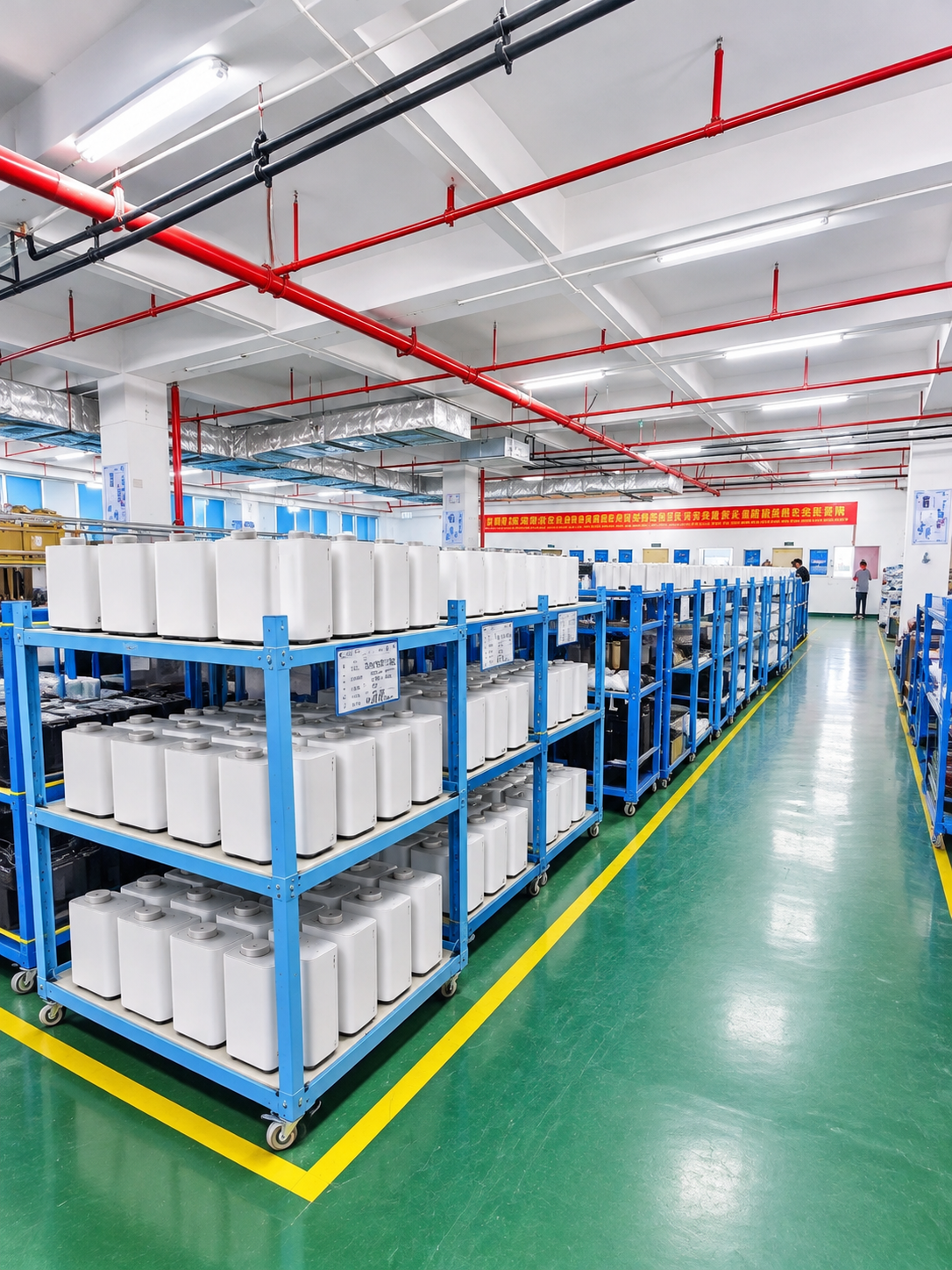
Technical reading: dual-fluid atomization, 5 W and Bluetooth
Dual-fluid atomization combines a liquid stream and an air stream so that fragrance is broken into fine droplets at the nozzle. It is a different mechanism from ultrasonic plates that vibrate a liquid reservoir, and that difference is why the supplier positions these units against generic ultrasonic devices rather than alongside them. It is worth separating what the mechanism explains from what it does not. It explains why the units can diffuse fragrance without describing a water dilution step in the supplied material; it does not, on its own, establish a measured performance advantage over any specific competing product.
Scale claims need particular care. Commercial research cited in the supplier's evidence base describes two-fluid systems covering large commercial spaces of up to 12,000 m³. That figure describes commercial two-fluid systems in general. It is not a coverage rating for the 5 W SDL312 or SDL313, and no coverage figure for these two models appears in the supplied material. A buyer specifying a large lobby or an atrium should therefore treat coverage as an open question to be resolved with the supplier, not as a number to be transferred from a category-level source.
The 5 W consumption figure is modest, which matters when a property runs scheduled diffusion for long daily periods; the supplier's scenario material describes commercial deployments of roughly 10 to 24 hours a day matched to opening hours, and a low load keeps that schedule inexpensive to run. It also has a practical limit: 5 W units are not the same specification class as high-output commercial HVAC diffusers, and buyers should confirm the required circuit, adapter and connector for the destination market rather than assume a plug type.
Control is Bluetooth on both models. That is a local wireless method and should not be read as Wi-Fi. The supplier's wider catalogue does include Wi-Fi-controlled products, but a buyer who needs remote management across sites must not infer that capability from the Bluetooth specification of these two units. Housing material is ABS/PP on both, which matters mainly for cleaning routine and appearance retention in public areas; cleaning agents and methods should be confirmed with the supplier so that routine maintenance does not damage the enclosure. Finally, the identical 137 × 70 × 200 mm dimensions mean the physical planning burden is the same for either model, and no installation advantage can be claimed for one over the other.
How the pair compares with conventional alternatives — and where the comparison stops
The market context explains why these two models exist at all. Grand View Research valued the global aromatherapy diffusers market at USD 2.1 billion in 2025, with the ultrasonic segment holding 63.9% of share. Ultrasonic technology therefore dominates on volume, while dual-fluid atomization remains a specialist choice aimed at buyers who want a different diffusion mechanism and a project-oriented device rather than a consumer appliance.
The supplier frames its own position against generic ultrasonic diffusers sold by trading companies and unbranded marketplace units. The stated differences are structural rather than model-specific: direct-factory manufacturing rather than trading-company resale, flexible OEM/ODM with lower minimum order quantities, full export certifications listed as CE, FCC and RoHS, and a complete essential oil supply chain that allows diffusers and matching fragrance to be sourced together. Those claims describe the supplier relationship, not a distinction between SDL312 and SDL313, and they apply equally to both models.
Manufacturer-reported comparison figures should be treated as claims to verify in quotation and contract rather than as independent benchmarks: OEM minimum order from 500 pcs against a stated industry typical of 1,000–3,000 pcs; ready-stock lead time of 3–7 days against a stated 15–30 days; sample time of 3–5 working days against a stated 7–15 days; and a defect rate below 0.5% against a stated industry average of 2–3%, supported by 100% full inspection plus a 4–8 hour aging test before shipment. No independent comparative performance testing of SDL312 against SDL313 was supplied, so this comparison rests on documented specifications and stated environments, not on measured outcomes.
Procurement checks before the order is placed
A fit-first decision still needs a verification layer, because most procurement failures with near-identical models come from documentation rather than hardware.
| Check | What to confirm | Why it matters |
|---|---|---|
| Model identity | Exact model code, plus 12 V / 5 W / 130 ml on the quotation and nameplate | The two models share a platform; the code is the only reliable differentiator on paper |
| Environment fit | That the intended room type appears in the model's stated scope | SDL313 is stated for hotel and commercial only; SDL312 covers those plus home, office and automotive |
| Automotive method | Installation and power-connection instructions for in-vehicle use | The documented procedure is a fixed-building HVAC-return installation |
| Control scope | Bluetooth scheduling functions and whether any remote multi-site management is included | Bluetooth is not Wi-Fi; capability should not be assumed |
| Certification scope | That CE, FCC and RoHS documentation covers the ordered model and configuration | Certification is stated at supplier level and should be matched to the SKU |
| Commercial terms | MOQ, lead time, sample timing and warranty in writing | Supplier-reported figures should become contractual terms |
Service terms are part of the same decision. The supplier states a 12-month warranty, free replacement of defective units in the next order, long-term spare parts supply covering atomizer discs, adapters and remotes, an English user manual with video support, and WhatsApp response within 12 hours. For a hotel or retail rollout, spare-part availability for the atomizer is the item most likely to affect uptime, so it is worth confirming the refill and replacement process before a multi-property order rather than after the first failure.
Company context and what it does and does not prove
Saintdeland, operated by Shengdelan Fragrance Technology (Guangzhou) Co., Ltd., was founded in 2019 and describes itself as an integrated fragrance technology company covering R&D, manufacturing, marketing and e-commerce. The stated figures are a 30,000 m² facility, 50 employees, 10 R&D engineers, annual output of 10,000 units, a 90% export ratio and main markets described as global, Europe and America. Its listed product range includes the SDL312 and SDL313 alongside SDL611, SDL613, SDL614, SDL616, SDL820 and SDL821.
Those facts help a buyer screen the supplier; they do not qualify the models. An annual output figure of 10,000 units is a useful reference point when estimating whether a large single order can be absorbed alongside existing commitments, and a 90% export ratio indicates experience with export documentation rather than a guarantee that every certification covers every configuration. Both points belong in supplier due diligence, not in the model-versus-model decision.
A practical decision rule
Because the hardware is shared, the choice can be reduced to a small number of conditions:
- Choose SDL312 when the deployment includes any automotive, home or office setting alongside hotel or commercial space, or when one model reference must cover a mixed portfolio of room types.
- Choose SDL313 when every installation is a hotel or commercial space and a narrower, project-specific scope is preferred for design review and repeat procurement.
- Choose neither when the requirement is a larger fragrance reserve, built-in Wi-Fi management, or a documented high-output coverage rating. The 130 ml capacity and Bluetooth control are shared constraints, and the supplier's catalogue lists other formats — including larger-capacity, wall-mounted, floor-standing and HVAC commercial units — that may fit those needs better.
- Delay the decision when the project depends on measured performance or coverage data for these two models specifically; that evidence has to come from the supplier first.
Outlook: fit documentation as a selection criterion
The direction of commercial scent procurement is toward repeatable specifications rather than single-device purchases: chain properties want the same behaviour in every lobby, and facility teams want refill and service routines that do not change between sites. If that pattern continues, the documents that describe intended environment and installation method will carry more weight in model selection than small differences in hardware, because they determine whether a device can be deployed consistently.
For SDL312 and SDL313, that makes the current state of the evidence the main thing to watch. A clearer model-level statement on automotive installation, and model-level coverage or consumption data rather than category-level figures, would let buyers compare on measured terms instead of on stated scope alone. Until then, the defensible position for a decision-stage buyer is straightforward: treat the two units as one platform, choose by environment, and put every performance-dependent assumption into a written question to the supplier.
FAQ
What is the practical difference between SDL312 and SDL313 if their core specifications match?
The documented difference is the environment each model is specified for. SDL312 is intended for home, hotel, office, automotive and commercial spaces; SDL313 is specified for hotel and commercial space use. Power input, consumption, fragrance capacity, atomization method, control type, housing material and dimensions are the same on both. The choice therefore turns on where the unit will be installed and how the project documentation describes that location, not on a hardware performance difference.
Can SDL313 be used in a car?
The supplied material does not state automotive use for SDL313; that environment is listed only for SDL312. This is an absence of documentation, not a confirmed limitation. A buyer who needs SDL313 in a vehicle should request written confirmation covering the mounting method, power connection and any vehicle-specific precautions from the supplier before ordering, and should not rely on the 12 V rating alone as evidence of in-vehicle suitability.
How are SDL312 and SDL313 installed in a hotel or retail project?
The documented procedure is to mount the unit near the HVAC return air vent using the supplied bracket, connect the oil bottle to the air tube, plug the unit into a standard power outlet, and set the working schedule via remote control or app. Professional installation is recommended for hotel and retail projects. Because siting depends on the air-handling layout, the mounting point and service access should be agreed with the installer before the fit-out stage.
Does a 130 ml capacity suit hotel or automotive use?
Both models share a 130 ml fragrance capacity, so capacity cannot be used to choose between them. Whether it suits a given site depends on the diffusion schedule and concentration the operator selects, and on how often staff can attend the device. For hotels, the refill interval is a labour-planning input; for vehicles, the constraint is usually the installation position and refill access. Buyers should ask the supplier to confirm expected consumption for the intended duty cycle rather than assume a fixed interval.
What should be verified before ordering either model for a commercial project?
Confirm the exact model code and the 12 V, 5 W, 130 ml specification on both the quotation and the unit nameplate; confirm that the intended room types appear in the model's stated scope; confirm the power adapter and connector for the destination market; confirm that CE, FCC and RoHS documentation covers the ordered configuration; and confirm MOQ, lead time, sample timing, warranty and spare-part availability in writing. Where the project depends on measured coverage or noise data, request model-specific test information, since the supplied material provides category-level figures rather than model-level ones.
Conclusion
SDL312 and SDL313 are not two performance tiers of the same product; they are one shared platform offered under two different stated scopes. The 12 V, 5 W, 130 ml, dual-fluid, Bluetooth, ABS/PP and 137 × 70 × 200 mm specifications give buyers no defensible reason to rank one above the other. What separates them is whether the installation is limited to hotel and commercial space or also extends to home, office and automotive settings — and, in the automotive case, whether the supplier can supply the installation guidance that the fixed-building procedure does not cover.
For a decision-stage buyer, the practical sequence is to define the environments first, select the model whose stated scope matches them, and then verify certifications, adapter, control capability and commercial terms against the exact code being ordered. Buyers who need larger capacity, Wi-Fi management or model-specific performance data should treat those as separate requirements to be sourced elsewhere in the range or confirmed directly with the supplier.
Additional product and company information is available in the manufacturer's brochure: Introduction to the Supreme Saintdeland (PDF).
¿Tiene preguntas o necesita más detalles?
Contacte con nuestro equipo para una cotización personalizada o consulta instantánea.
Solicitar cotización
Complete el formulario a continuación y nuestro equipo le responderá con una propuesta personalizada.
Chat directo de WhatsApp
¿Prefiere chatear en tiempo real? Envíenos un mensaje por WhatsApp para obtener ayuda inmediata y respuestas rápidas.
- Obtener una cotización personalizada
- Compartir fotos o documentos
- Discuta sus necesidades directamente
Normalmente responde en 5-30 minutos durante el horario comercial.