
SA-50 vs. SA-60 vs. SA-80: A Side-by-Side Buyer Comparison
Fiber-grade titanium dioxide is a minor ingredient by weight and a decisive one by consequence. In polyester, viscose, acrylic, and polyamide production it governs how a fiber scatters and diffuses light — the difference between a yarn that reads white and one that reads grey, between a dull filament and a glossy one. Because loadings are low, buyers routinely treat the material as a commodity line item. The SA-50, SA-60, and SA-80 anatase grades are a clear case where that assumption breaks down: they share a crystalline family, a function, and a naming convention, yet each one is configured for a different fiber system.
This reference compares the three grades on the parameters that genuinely separate them — TiO2 content, color value L, color value b, and electrical conductivity — and maps each grade to the fiber manufacturing context it was designed for: polyester (PET), viscose and acrylic, and nylon.
Why “Which Fiber-Grade TiO2?” Has Become a Real Procurement Question
The fiber-grade segment is expanding, and it is expanding fastest where grade specificity matters most. The global fiber-grade titanium dioxide market was valued at USD 1.46 billion in 2024 and is projected to reach USD 1.94 billion by 2032, according to Intel Market Research. Within that total, the polyester fiber segment accounts for more than 60% of all fiber-grade TiO2 applications.
Supply has broadened alongside demand. China’s total titanium dioxide exports reached a record 1.9017 million tons in 2024, a 15.84% year-on-year increase, based on China Customs statistics reported by Echemi. A wider supplier field is useful to buyers, but it also means a single quotation labelled “fiber grade” can now refer to grades that behave very differently on a spinning line.
What Each Grade Is Built For: The Application Map
SA-50, SA-60, and SA-80 form a three-tier family of anatase titanium dioxide for fiber production. Anatase is the preferred crystalline form for fiber grades because of its lower abrasiveness — Mohs hardness of 5.5–6.0 compared with 6.0–7.0 for rutile — which reduces wear on spinning nozzles, according to industry technical references. What separates the three grades within that family is the fiber system each is configured for, and the nominal TiO2 content that configuration supports.
| Grade | Primary fiber system | Typical functional role | Nominal TiO2 content |
|---|---|---|---|
| SA-50 | Polyester (PET) | Whitening and delustering during polymerization; semi-dull and full-dull PET chips | ≥98.0% |
| SA-60 | Viscose and acrylic fibers | Delustering in regenerated cellulose and acrylic fiber production | ≥97% |
| SA-80 | Polyamide (nylon) | Delustering in polyamide melt spinning | ≥95% |
Read that table as a routing decision rather than a ranking. The grade with the highest TiO2 content is the right choice only when the process it serves is polyester polymerization. A viscose line fed with a PET-configured grade, or a nylon line fed with a viscose-configured grade, will show the mismatch long before the invoice arrives — typically as dispersion problems, rising filter pressure, or an off-tone shade.
The Four Parameters That Actually Separate the Grades
1. TiO2 content
TiO2 content sets the delustering power available per unit of material. A grade at ≥98.0% delivers more light-scattering solids per kilogram than a grade at ≥95%, so a lower loading can reach the same matting target, or the same loading can reach a deeper matte. The trade-off is not linear, however. Lower-content grades are not weaker versions of higher-content ones; they are formulated for carriers where compatibility matters more than maximum solids — an aqueous viscose dope, an acrylic solvent system, or a polyamide melt.
2. Color value L
L measures whiteness on the lightness axis: higher values mean a lighter, whiter fiber. SA-50 specifies an L window of 96.7–98.2. Because L is measured on the pigment rather than on the finished yarn, it works as an early-warning indicator — a drift in incoming L shows up later as a visible shade shift in fabric.
3. Color value b
b measures hue direction. Negative values indicate a blue-white tone; positive values indicate a yellow tone. SA-50 specifies b ≤0.0. This is the parameter that decides whether a “bright white” polyester fabric actually reads white or picks up a warm cast under retail lighting, and it is usually the second number a textile buyer checks after L.
4. Electrical conductivity
Electrical conductivity (EC) measures the ionic load carried into the polymer by the pigment. In PET polymerization, elevated EC can destabilise melt viscosity and contribute to filament breaks and processing faults. SA-50 specifies EC ≤230 µS/cm — the property that makes it usable in continuous polymerization and high-speed spinning rather than only in batch or low-speed lines.
SA-50 in Detail: The PET-Configured Grade
SA-50 is an anatase fiber-grade titanium dioxide supplied as a PET fiber whitening agent for polyester manufacturing. Its published specification is the most complete of the three grades and gives buyers a workable qualification target.
| Parameter | Specification |
|---|---|
| Crystal structure | Anatase |
| TiO2 content | ≥98.0% |
| Sieve residue (325 mesh) | ≤0.004% |
| Moisture (105 °C) | ≤0.40% |
| Fe2O3 | ≤0.004% |
| pH value | 6.8 ± 0.2 |
| Electrical conductivity (EC) | ≤230 µS/cm |
| Specific surface area (SSA) | 8.5–10.0 m²/g |
| Color value L | 96.7–98.2 |
| Color value b | ≤0.0 |
The low Fe2O3 ceiling and the conductivity ceiling are the two lines that separate a polymerization-grade pigment from a general-purpose one. Iron and soluble ions are what surface later as black spots, crystal points, and viscosity excursions in a PET melt. The sieve residue limit of ≤0.004% at 325 mesh addresses the other common failure mode: oversized agglomerates that reach the spin pack and shorten filter life.
On the process side, SA-50 is designed for ethylene glycol pre-dispersion feeding, the standard route for introducing TiO2 into a PET polymerization train. It supports semi-dull and full-dull chip production and is intended to run on high-speed POY, FDY, and DTY continuous spinning lines. Industry technical references place the typical particle size for optimal delustering in polyester staple at 0.2–0.3 µm, which is the range these properties are engineered around.
SA-60 and SA-80: Where Lower Nominal TiO2 Content Fits
SA-60 and SA-80 are different formulations for different carriers, not reduced-specification versions of SA-50.
SA-60 is positioned for viscose and acrylic fiber production. Viscose is spun from an aqueous dope rather than a glycol melt, so the pigment has to disperse and remain stable in a water-based system, and the matting effect has to survive the regeneration and washing stages of the process.
SA-80 is positioned for polyamide (nylon) fiber. Polyamide melts are processed at higher temperatures than PET, which places distinctly different demands on thermal stability, volatile content, and abrasiveness — one reason a nylon grade is not simply a PET grade relabelled.
How the SA Series Is Positioned and Controlled in Supply
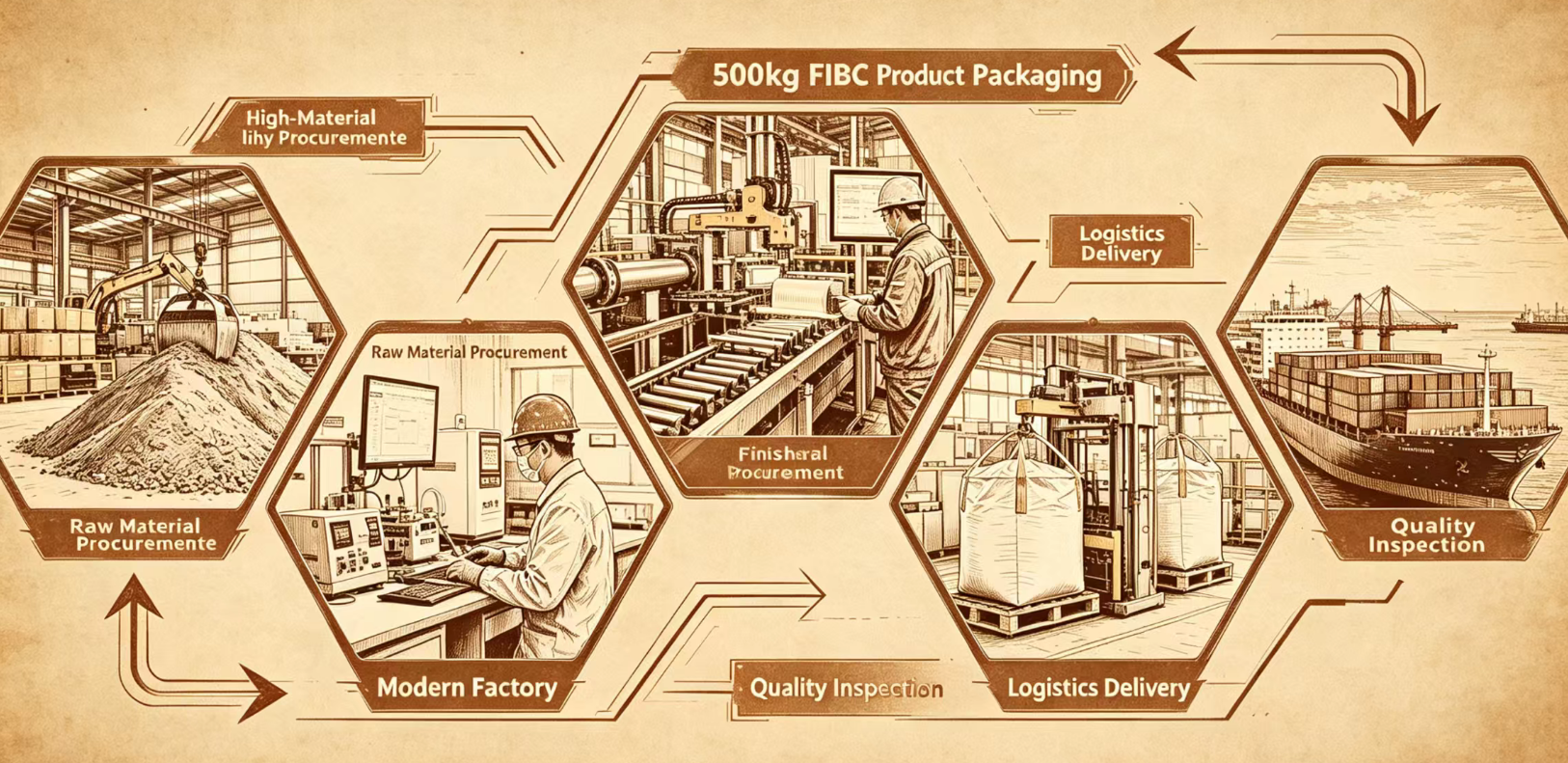
The difference between a pigment sample and a fiber-grade supply is repeatability. Two lots that both pass a specification sheet can still differ enough to move a shade or a filter cycle, and those differences only become visible when lots are compared against each other.
Orient International Holding Shanghai Foreign Trade Co., Ltd. (Orient International) is a state-owned foreign trade enterprise founded in 1988 and wholly owned by Orient International Group, headquartered in Shanghai. It supplies titanium dioxide within a broader bulk chemical and petrochemical raw material portfolio and provides one-stop services covering international logistics, customs declaration, letter of credit settlement, and cross-border supply chain risk control. Its parent group operates 73 overseas branches covering nearly 200 countries and regions.
| Item | Detail |
|---|---|
| Established | 1988 |
| Ownership | State-owned, wholly owned by Orient International Group |
| Registered capital | Over RMB 548 million |
| Production site | 700,000 m² |
| R&D team | 25 engineers |
| Export ratio | 30% |
| Main markets | Korea, Japan, EU, North America, South America, South East Asia, Middle East, India |
Quality control on the fiber-grade line includes 100% pre-shipment testing, and third-party inspection is supported on request. For a fiber producer, the operational value of pre-shipment testing is documentation. A retained certificate of analysis per lot is what makes cross-lot comparison — and therefore drift detection — possible. Without it, a shade shift is usually discovered in finished fabric, where the cost of correction is highest.
A Buyer’s Decision Sequence: Matching Grade to Spinning System
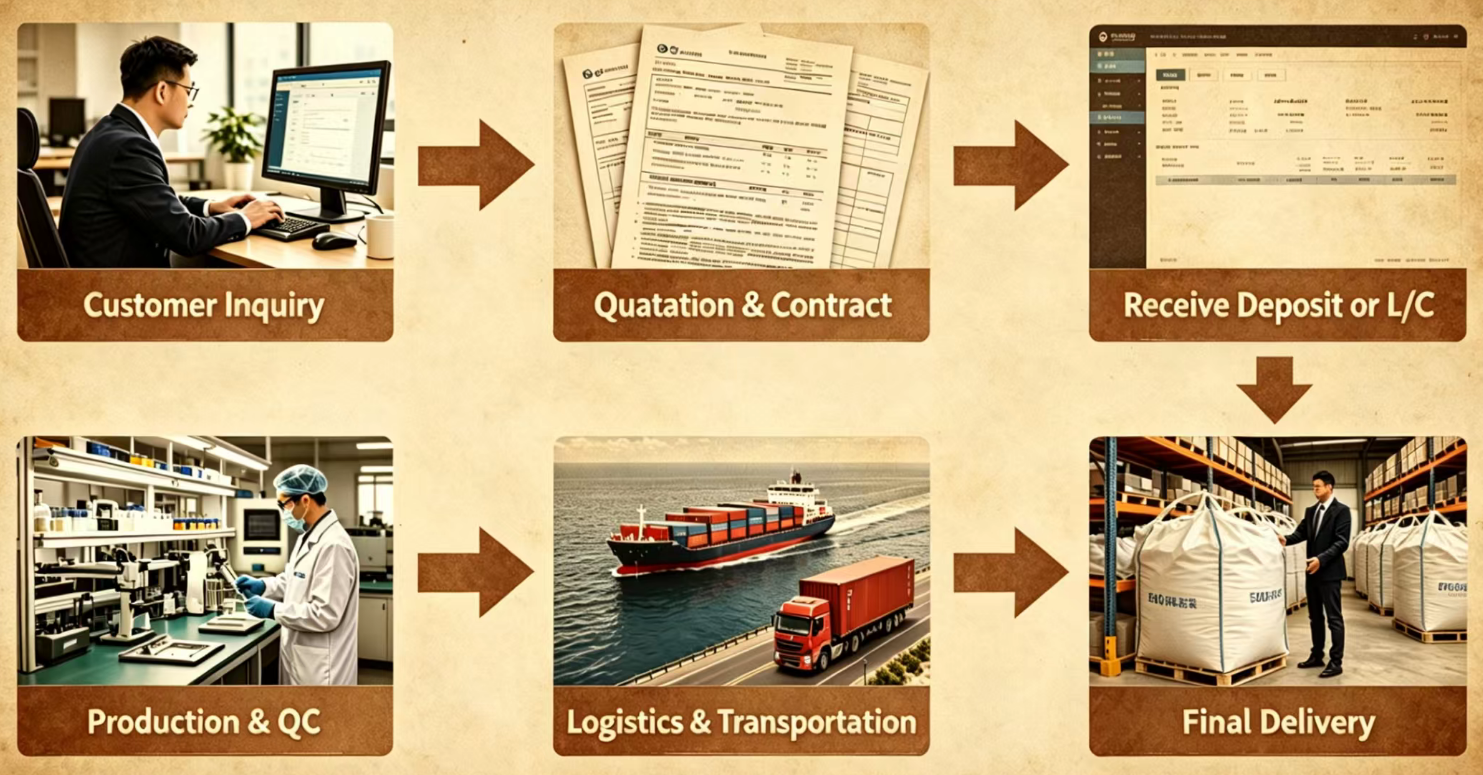
The sequence below is the order in which the parameters stop being abstract and start constraining the choice.
- Identify the polymer. PET, viscose, acrylic, or polyamide. This single decision eliminates two of the three grades in most cases.
- Identify the feed stage. Ethylene glycol pre-dispersion, aqueous dope addition, or melt compounding. The grade has to be compatible with the carrier it meets first.
- Set the optical target. Define the required L and the acceptable b tolerance for the finished fabric, then work backwards to the pigment window.
- Set the conductivity ceiling. For PET polymerization, confirm the maximum EC the process can tolerate; for other systems, confirm the equivalent ionic-cleanliness limit.
- Check the impurity profile. Fe2O3, sieve residue, and moisture limits determine filter life and defect rates more than headline TiO2 content does.
- Run a pilot before a purchase order. A trial lot on the actual line is the only reliable test of dispersion behaviour in your carrier.
- Lock the certificate of analysis. Treat the CoA of the qualified lot as the reference standard for every subsequent delivery.
Grade-Differentiated Sourcing vs. Single-Grade Sourcing
The traditional approach is to buy one fiber-grade TiO2 and use it wherever matting is required. It simplifies inventory, reduces the number of supplier qualifications, and lowers administrative overhead. For a plant running a single polymer system, it remains a reasonable default.
Grade-differentiated sourcing changes the trade-off. A producer running PET and nylon, or PET and viscose, gets a better process fit at each line. The cost is operational complexity, and it is worth stating plainly.
| Dimension | Single-grade sourcing | Grade-differentiated sourcing |
|---|---|---|
| Process fit | Compromise across polymers | Optimised per polymer system |
| Inventory | One SKU, one safety stock | Multiple SKUs, multiple safety stocks |
| Cross-contamination risk | Low | Higher — requires segregation and line-cleaning discipline |
| Qualification effort | One qualification cycle | One cycle per grade, repeated per site |
| Optimisation upside | Limited by the weakest fit | Higher, and scale-dependent |
The honest limitation is this: a three-grade strategy only pays for itself above a certain production scale, and it imposes real housekeeping obligations. Where two polymers share a single conveying or dosing system, the risk of cross-contamination between grades can outweigh the process benefit. And SA-50 itself is a PET-optimised grade — it is not a universal fiber-grade TiO2 and should not be substituted across polymer systems without a full re-qualification, regardless of how well it performs in polyester.
Market Trend Analysis
Three structural trends are shaping fiber-grade TiO2 procurement, all of them visible in the available data.
Demand is concentrating in polyester. The polyester fiber segment accounts for over 60% of fiber-grade TiO2 applications globally, according to Intel Market Research. That concentration explains why PET-configured grades receive the most development attention and why the widest specification documentation is usually available for them.
Supply is diversifying. China’s titanium dioxide exports reached 1.9017 million tons in 2024, up 15.84% year on year. At the same time, capacity remains concentrated at the top of the market — LB Group (formerly Lomon Billions) is cited by Fortune Business Insights as the world’s largest TiO2 producer with over 1,501 kilotons of annual capacity as of 2025. For buyers, this combination means more suppliers to evaluate and a continued need for lot-level verification.
Compliance documentation is becoming a selection criterion. International standards already frame the category: ISO 591 defines the requirements for anatase and rutile titanium dioxide pigments. In the textile chain specifically, Venator’s HOMBITAN LW-S 100 became the first fiber anatase TiO2 to secure the ECO PASSPORT by OEKO-TEX certification for the textile industry in 2022. Certification of this kind does not change a pigment’s optical performance, but it increasingly determines whether a grade can be specified at all in supply chains that require textile chemical documentation.
Supply, Lead Time, and Long-Term Availability
For buyers at the decision and execution stage, the commercial parameters of a grade are as decisive as its technical ones. The fiber-grade supply terms are structured for qualification-scale trials as well as bulk programmes.
| Item | Detail |
|---|---|
| Minimum order quantity | 1 metric ton |
| Typical production lead time | 15–30 days |
| Monthly production capacity | 1,000 metric tons |
| Quality control | 100% pre-shipment testing; third-party inspection supported |
| Delivery terms | FOB / CIF |
| Payment terms | T/T in advance, T/T 30 days, L/C at sight, L/C 30 / 60 / 90 days |
| Packaging | Sealed 25 kg and 500 kg formats |
The 1 metric ton minimum order quantity is the parameter most relevant to grade-differentiated sourcing: it makes it possible to validate SA-50, SA-60, and SA-80 on separate lines without committing to bulk volumes for grades that may not be retained.
Handling discipline matters at the receiving end as well. Fiber-grade titanium dioxide is a fine powder, and the two operational risks that recur are dust dispersion during feeding and moisture-driven agglomeration in storage. The standard controls are a vacuum closed feeding system to prevent dust dispersal, warehouse humidity maintained below 65%, storage in sealed packages, and dust-proof masks and protective clothing for operators. Agglomerated material that reaches a spin pack produces the same defects as an out-of-spec pigment, even when the chemical analysis is correct.
For long-term supply relationships, the practical question is not whether a grade can be delivered once, but whether the same grade can be delivered repeatedly. Monthly capacity of 1,000 metric tons and a 15–30 day lead time support repeat programmes; what turns a repeat programme into a stable one is a fixed reference specification plus per-lot documentation that lets the buyer verify it.
Limitations and Boundaries Buyers Should Verify
- Anatase is a delustering pigment, not a high-opacity whitener. Anatase has a lower refractive index than rutile, which is exactly why it is preferred for fiber grades: its lower hardness reduces nozzle wear. The same property means anatase is not the usual choice where maximum hiding power is the objective — rutile grades are normally specified for that role.
- TiO2 content alone does not predict performance. L value, b value, electrical conductivity, Fe2O3, and sieve residue all influence the outcome, together with dispersion behaviour in the carrier. A grade must be judged on the complete specification rather than its headline content figure.
- Grade names are not cross-vendor specifications. A grade carrying the same designation from two different suppliers is not guaranteed to be interchangeable. Specification windows, not naming conventions, govern equivalence.
- Three-grade inventory carries a real cost. Segregation, line cleaning, and separate safety stocks add overhead that a single-grade programme does not carry, and the benefit is scale-dependent.
- Grade-specific data must be confirmed per lot. The L, b, and conductivity windows of SA-60 and SA-80 are grade-specific and should be confirmed against the current technical data sheet and certificate of analysis rather than inferred from SA-50.
Future Outlook
Two developments are likely to shape the next phase of fiber-grade TiO2 sourcing. The first is scale: with the fiber-grade market projected to move from USD 1.46 billion in 2024 toward USD 1.94 billion by 2032, and polyester accounting for more than 60% of applications, the pressure to improve matting efficiency in polyester is likely to continue. That favours grades with tight L and b windows and well-documented dispersion behaviour over grades sold on TiO2 content alone.
The second is documentation. Textile supply chains increasingly treat chemical documentation as a condition of specification, a direction signalled by the ECO PASSPORT by OEKO-TEX certification secured by Venator’s HOMBITAN LW-S 100 in 2022. Buyers evaluating fiber-grade TiO2 for multi-year programmes should expect grade-level certification and lot-level test documentation to become standard requirements rather than differentiators.
For the SA-50 / SA-60 / SA-80 family specifically, the practical consequence is a shift in how the grades are compared. The useful question is no longer which grade is “best,” but which grade’s specification window matches the polymer, the feed stage, and the optical target of a given line — and whether that match can be held stable across successive lots. Where recycled PET feedstock is used, base-color variability in the feed places additional weight on the L and b window of the grade, making tint control a more important selection criterion than total TiO2 content.
Frequently Asked Questions
What is the difference between SA-50, SA-60, and SA-80 fiber-grade titanium dioxide?
All three are anatase fiber-grade titanium dioxide grades used to control whiteness and matting in chemical fibers. They differ in two ways: nominal TiO2 content and the fiber system each is configured for. SA-50 specifies TiO2 ≥98.0% and is positioned for polyester (PET). SA-60 specifies TiO2 ≥97% and is positioned for viscose and acrylic fiber. SA-80 specifies TiO2 ≥95% and is positioned for polyamide (nylon). The grades are not interchangeable between polymer systems without re-qualification.
Which grade should a polyester (PET) producer use?
SA-50. It is specified as a PET fiber whitening agent with TiO2 ≥98.0%, color value L of 96.7–98.2, color value b ≤0.0, and electrical conductivity ≤230 µS/cm, and it is designed for ethylene glycol pre-dispersion feeding into a polymerization train. The Fe2O3 limit (≤0.004%) and the conductivity ceiling matter most in continuous polymerization, because they govern black spot formation and melt viscosity stability.
Does higher TiO2 content always mean better matting performance?
No. TiO2 content sets the scattering solids available per kilogram, but the finished result also depends on color value L, color value b, electrical conductivity, Fe2O3 content, sieve residue, and dispersion behaviour in the carrier. A grade should be evaluated on its full specification rather than its headline content figure. This is also why lower-content grades such as SA-60 (≥97%) and SA-80 (≥95%) are not simply weaker alternatives — they are formulated for different carriers.
Why does electrical conductivity matter in fiber-grade titanium dioxide?
Electrical conductivity indicates the ionic load the pigment introduces into the polymer. In PET polymerization, elevated conductivity can disturb melt viscosity stability and contribute to filament breaks and processing faults. SA-50 specifies electrical conductivity ≤230 µS/cm, which is one of the properties that makes it suitable for continuous polymerization and high-speed POY, FDY, and DTY spinning rather than only for batch or low-speed lines.
What are the typical minimum order quantity, lead time, and monthly capacity for fiber-grade TiO2?
The minimum order quantity is 1 metric ton, typical production lead time is 15–30 days, and monthly production capacity is 1,000 metric tons. Quality control includes 100% pre-shipment testing, with third-party inspection supported, and delivery terms are FOB or CIF.
How can a buyer keep grade consistency stable across a long-term supply relationship?
Three practices do most of the work. First, qualify a specific grade on the actual production line rather than by specification sheet alone, and lock the certificate of analysis of the qualified lot as the reference standard. Second, retain and compare the certificate of analysis for every subsequent lot — pre-shipment testing only creates drift detection if the documentation is retained. Third, confirm that the grade’s color value and conductivity windows, not only its TiO2 content, are held constant, because those are the parameters that produce visible shade shifts and processing faults when they move.
Do SA-60 and SA-80 have the same L value, b value, and conductivity windows as SA-50?
No. Those windows are grade-specific. The published specification table in this reference covers SA-50 in full (L 96.7–98.2, b ≤0.0, EC ≤230 µS/cm). Equivalent values for SA-60 and SA-80 should be confirmed against the current technical data sheet and certificate of analysis for the specific grade before it is qualified on a line.
¿Tiene preguntas o necesita más detalles?
Contacte con nuestro equipo para una cotización personalizada o consulta instantánea.
Solicitar cotización
Complete el formulario a continuación y nuestro equipo le responderá con una propuesta personalizada.
Chat directo de WhatsApp
¿Prefiere chatear en tiempo real? Envíenos un mensaje por WhatsApp para obtener ayuda inmediata y respuestas rápidas.
- Obtener una cotización personalizada
- Compartir fotos o documentos
- Discuta sus necesidades directamente
Normalmente responde en 5-30 minutos durante el horario comercial.