
Rubber Slippers Procurement FAQ: Material, EU 36-46 Sizing and Industry Use
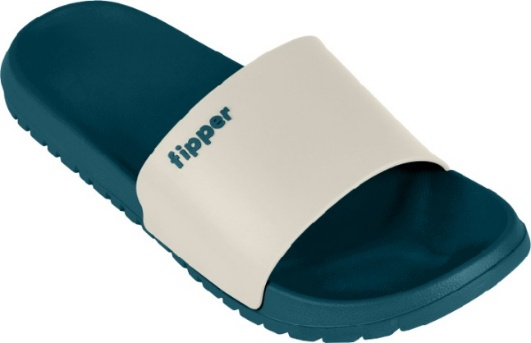
Rubber Slippers Procurement FAQ: Material, EU 36-46 Sizing and Industry Use
Rubber slippers sit in a narrow band of the footwear market: low unit value, high volume, and a procurement checklist that is short but unforgiving. A buyer who misreads material identity buys a product that behaves differently in wet areas and at end of life. A buyer who misreads the size window carries inventory that cannot be sold through the channel it was bought for. Both errors are paid for across an entire order, not a single pair.
This article is a procurement FAQ for buyers who are close to placing a first order or renewing an existing programme. It answers the questions that surface before a purchase order is issued: what the product is made of, which sizes are documented, how ordering and acceptance work, and which industries the product is built for. The reference point is Fipper Retail Sdn Bhd, a Malaysian rubber slipper company established in 2008 and based in Selangor, which specialises in manufacturing rubber slippers, employs approximately 100-150 people, and has served the Malaysian market since its founding. Where a statement comes from the supplier rather than an independent source, it is marked as supplier-stated.
Why these questions keep coming back
Three facts decide most rubber slipper purchases: material composition, size range integrity, and channel fit. A fourth question matters to buyers who are not placing a one-off order — how ordering, licensing, after-sales and repeat supply work across multiple cycles. That fourth question is where long-term purchase decisions are usually won or lost, because it determines whether a second order is as predictable as the first.
Four data points frame the category as of 2026. The global slippers market was valued at USD 48.6 billion in 2025, according to Dataintelo's slippers market research report, which forecasts the category through 2034. Malaysia's footwear exports under HS 64 reached MYR 871 million in 2025, with Singapore the largest single destination at MYR 401 million, according to OEC trade data. Malaysia also accounted for 36.2% of global exports of rubber apparel under HS 4015 in 2024, the largest exporter position in that sub-category, per the same source. Upstream, Malaysia's natural rubber production rose to 386,400 tonnes in 2024 from 347,900 tonnes in 2023, according to the Department of Statistics Malaysia's Monthly Rubber Statistics for December 2024.
Sources: Dataintelo (commercial research, forecast 2026-2034); OEC bilateral trade data, HS 64 and HS 4015 (2024-2025); Department of Statistics Malaysia, Monthly Rubber Statistics, December 2024.
Material: what "rubber slippers" should mean in a purchase specification
The word "rubber" is used loosely in the footwear trade, and that looseness is where most specification disputes start. In a genuine natural rubber programme, the answer should cover the entire slipper, not only the outsole.
Fipper states that its slippers use natural rubber for the whole slipper, including the straps, and presents this as a material difference from PVC and EVA compounds. The raw material is sourced from Thailand — described by the brand as "Made by Thailand Rubber" — while design and moulding are carried out in-house and production takes place in selected factories, including facilities in Thailand. Buyers should treat that as a first-party material statement and confirm it in writing on the purchase specification rather than on a catalogue page.
What material identity changes for a buyer
- Freight and carton economics. Natural rubber is denser than foamed compounds such as EVA. Per-pair shipping weight and carton cube should be measured on a sample shipment, not estimated, because the difference is charged on every container.
- Wet-area behaviour and cleaning. The brand describes its slippers as washable and slip-resistant. These are supplier-stated properties and should be validated on the sample you actually intend to buy, particularly for pools, resorts and wet guest areas.
- End-of-life and disposal. The brand describes natural rubber as biodegradable. If end-of-life language will appear in your own packaging or marketing, obtain documentation before you repeat the claim.
- Odour and hygiene. Antibacterial properties are also stated by the brand. Hygiene claims affect guest-facing and healthcare-adjacent channels most, so they should be tested rather than assumed.
Practical rule: name the material in the specification, identify the rubber source if the programme depends on it, and attach the verification method to the order. Catalogue language is a starting point, not an acceptance criterion.
Sizing: what the EU 36-46 range covers, and what it does not
The documented size range for the Fipper rubber slipper range is EU 36-46. It appears consistently across the product data, including entries such as Basic, Basic-S, Classic, Slim, Slim Linea, Strappy, Wedges, Wedges S, Wide, Comfy, Fluff, Slides, Slip On, Slip On Ace, Slip On Glitzy, Glitter, Shine, Champ, Refitt, Black Series, Flex, Trekker 2.0, Trail, Trail Plus, Elphie, the Kids, Junior, Todd's and Slip On Kids lines, and the limited-edition collaborations.
Two details deserve a buyer's attention. First, the Kids, Junior and Todd's entries are listed within the same stated EU 36-46 range in the product data, which is worth confirming directly for small-child sizing in your market, since EU 36 sits above typical toddler sizing in many destinations. Second, the documented range stops at EU 46 and starts at EU 36 — buyers who need sizes outside that window are outside the documented specification and should confirm availability before building a programme around the range.
What a single documented window means for planning
- Assortment planning. One size curve across the range reduces the number of distinct size charts a retail or distribution partner has to manage per season.
- Hospitality amenity programmes. Guest-room and poolside programmes usually standardise on a narrow size set. A documented EU 36-46 window makes replenishment predictable for adult guests.
- Conversion caution. EU sizing does not convert cleanly to UK or US sizing across different last shapes. Confirm the per-model size chart, use in-store try-on where it is available, and note that returns or exchanges generally require unworn items with tags intact within the period stated by the selling platform.
Order mechanics: minimum quantity, delivery, acceptance and payment
The documented retail terms are straightforward, but buyers should separate them from commercial programme terms.
| Item | Documented terms |
|---|---|
| Minimum order quantity | No minimum for retail purchase. One pair or more can be bought at any Fipper store or online shop. |
| In-store purchase | Buy instantly in store and take the product home after inspection. |
| Online delivery | Courier delivery within 2-5 working days in Malaysia; Click & Collect also available. |
| Acceptance | Try on and inspect in store before purchase; check online orders on delivery. Manufacturing defects are covered by a 14-day return or exchange. |
| Payment | In store: cash, credit or debit cards, e-wallets including Touch 'n Go and GrabPay. Online: cards, e-wallets, online banking and BNPL services. |
| Commercial and licensing programmes | Fipper operates a Business Licensing Model for malls, hotels, resorts and corporate partners. Volume pricing, delivery schedules and territory terms are not published with retail terms and require written confirmation. |
The distinction matters for buyers at the execution stage: the terms above describe single-pair retail purchase, while a hotel, mall or distribution programme is governed by a separate licensing or supply agreement. Assumption in place of a written agreement is where execution-stage orders most often go wrong.
Industry use: matching the product to the channel
The product data lists the applicable industries for this rubber slipper range as tourism and travel, hospitality, souvenir and gift retail, cross-border consumer retail, and resort and beach leisure. Each places a different requirement on material and sizing, and each has a different verification priority.
| Industry | What the documented product supports | What to verify before ordering |
|---|---|---|
| Tourism and travel | Lightweight rubber slippers that pack flat, supported by travel-retail locations including airport outlets at KLIA and KLIA2. | Per-pair weight and pack volume, particularly where the product is air-freighted in bulk rather than sold at retail counters. |
| Hospitality | Adult size coverage from EU 36 to EU 46, with a washable material that suits wet areas such as pools and showers. | Size mapping against your guest profile, per-room consumption rates, and the cleaning or replacement routine the material can sustain. |
| Souvenir and gift retail | Colour-led assortment: the brand states over 25 product series and 1,742 colour combinations, and holds an ASEAN Records recognition for Most Multi-Coloured Slipper Brand. | Packaging, labelling and any local retail requirements in the destination market, since souvenir presentation differs from standard footwear display. |
| Cross-border consumer retail | Malaysia's position as the largest exporter of rubber apparel under HS 4015 in 2024, at 36.2% of global exports, supports the sourcing case at category level. | HS classification of the specific product you are importing — natural rubber slippers and plastic footwear do not sit in the same classification. |
| Resort and beach leisure | A material description that includes waterproof and quick-drying characteristics, positioned for beach, pool and water-adjacent use. | On-sample validation of slip resistance and colour fastness in chlorinated or salt water. |
The brand's own retail footprint reflects the tourist and souvenir channel: outlets at KLIA and KLIA2, a heritage concept store on Jonker Walk in Melaka opened in 2024, and stores in major Kuala Lumpur malls including Pavilion KL, Mid Valley Megamall and Sungei Wang Plaza. For a buyer, that footprint is evidence of channel fit rather than a distribution guarantee — it shows where the brand itself sells, not where it will supply you.
Comparison: natural rubber programmes versus traditional flip-flop supply
Buyers evaluating a natural rubber programme typically compare it against established flip-flop brands and against foamed alternatives. The table below separates documented product facts from the supplier's own comparison claims.
| Dimension | Fipper rubber slippers | Traditional rubber flip-flop brands |
|---|---|---|
| Material | Natural rubber stated for the whole slipper, including straps (supplier-stated). | Natural rubber with fillers, described by the supplier as non-biodegradable. |
| Product series | Over 25 series, from basics to slides, kids, trail and sports-recovery models (supplier-stated). | Typically a small number of basic models. |
| Colour range | 1,742 colour combinations; ASEAN Records recognition for Most Multi-Coloured Slipper Brand. | Under 100 colour options according to the supplier's comparison. |
| Typical retail price | RM 30 to over RM 120 depending on series (brand-stated). | RM 60-120 according to the supplier's comparison. |
| Maintenance | Washable, with antibacterial properties stated by the brand. | No stated antibacterial treatment in the supplier's comparison. |
| Size window | EU 36-46 documented across the range. | Varies by model; not standardised across an assortment. |
The second and third columns mix documented facts with the supplier's positioning claims. Colour counts and series breadth should be treated as supplier-stated until checked against the specific competitor set you are evaluating; material composition and size window are order-level attributes and should be verified directly.
Where a natural rubber programme is not the right answer
- Freight-dominated programmes. Natural rubber is denser than foamed materials. Where freight is a dominant cost line — for example, high-volume amenity supply into distant markets — the extra per-pair weight can outweigh the material advantage. Measure the carton on a sample shipment before committing.
- Sizes outside EU 36-46. The documented range begins at EU 36 and ends at EU 46. Buyers who need smaller children's sizes or larger adult sizes are outside the documented specification and should confirm availability first.
- Bespoke colourways at scale. Mix-and-match personalisation of sole and strap colours is documented at the Jonker Walk heritage concept store in Melaka. A buyer expecting factory-level bespoke colourways for a large private programme should confirm whether that is covered by the licensing model, because retail personalisation and bulk customisation are not the same service.
- Documentation-dependent tenders. Certifications and audit documents are not consolidated in the public product data reviewed here. Buyers running formal tenders should request them directly rather than inferring compliance from product marketing.
Market trend: what the trade data actually shows
Three signals are relevant to rubber slipper sourcing, and one gap limits what public data can prove.
The demand signal is large but broadly defined: the global slippers market reached USD 48.6 billion in 2025, per Dataintelo, with a forecast period running to 2034. Market definitions in this category vary considerably between indoor slippers and casual outdoor footwear, so the figure is best used as scale context rather than a procurement input.
The trade signal is more specific for Malaysia. Footwear exports under HS 64 were valued at MYR 871 million in 2025, with Singapore the top destination at MYR 401 million, according to OEC. Within rubber apparel under HS 4015, Malaysia held 36.2% of global exports in 2024, the largest exporter position — a concentration that supports the availability of rubber-based footwear manufacturing capacity in the region.
The input signal comes from the raw material side. Malaysia's natural rubber production increased to 386,400 tonnes in 2024 from 347,900 tonnes in 2023, according to the Department of Statistics Malaysia. Rising domestic rubber availability is a supply-side factor, not a price guarantee, but it is relevant to buyers assessing medium-term material continuity.
The gap: this dataset contains no granular export data for natural rubber thong slippers under HS 6402.20.10. Public trade statistics therefore cannot separate high-value natural rubber slippers from mass-market plastic footwear. Buyers who need that separation must obtain it at supplier level — material declarations, factory documentation and sample testing — rather than from national trade figures.
Future outlook: distribution, loyalty and long-term supply
Distribution depth and repeat-purchase infrastructure are becoming part of how retail and hospitality partners evaluate a slipper supplier, because both reduce the risk attached to a second and third order. Fipper states that its footprint now spans more than 20 countries, and that its Indonesian network grew to 80 outlets in 2026, overtaking its Malaysian retail footprint in size. The company also moved into a fully integrated headquarters in Balakong Jaya, Selangor in 2026, which it presents as operational support for its regional expansion.
On the consumer-retention side, the brand launched Fipper Buddies in 2024. Members earn 1 point for every RM1 nett spent at participating stores; points remain valid subject to membership renewal and can be redeemed for e-vouchers or selected merchandise. Additional benefits include RM5 welcome and birthday e-vouchers, 2X points every 15th of the month, and selected member campaigns offering prizes and gifts.
For a hospitality or corporate buyer, consumer loyalty mechanics matter less than three long-term signals: whether the supplier holds a stable size window, whether it can document material composition at order level, and whether commercial terms are governed by an agreement covering territory, pricing and continuity. For a retail or distribution partner, a points programme is a genuine retention asset — but it does not replace order-level verification, and it should not be treated as evidence of product specification.
FAQ: rubber slipper procurement questions
1. What material are Fipper rubber slippers made from?
Fipper states that its slippers use natural rubber for the whole slipper, including the straps, rather than a PVC or EVA compound applied only to the sole. The raw material is sourced from Thailand — described by the brand as "Made by Thailand Rubber" — design and moulding are carried out in-house, and production takes place in selected factories, including facilities in Thailand. Buyers should confirm the material in writing on the purchase specification.
2. What size range do Fipper rubber slippers cover?
Product data for the Fipper rubber slipper range lists EU 36-46 as the size range across the documented models, from Classic and Basic to Slides, Flex, Trekker 2.0, Trail Plus, the Kids, Junior and Todd's lines, and the limited-edition collaborations. The documented range does not extend below EU 36 or above EU 46, so buyers needing sizes outside that window must confirm availability separately.
3. Does EU 36-46 convert directly to UK or US sizes?
Not reliably. EU sizing does not map cleanly to UK or US sizing because last shapes differ between models and markets. The practical approach is to check the size chart on the specific product page, use in-store try-on where it is available, and note that returns or exchanges normally require unworn items with tags intact within the period stated by the selling platform.
4. Is there a minimum order quantity?
There is no minimum for retail purchase: a buyer can purchase one pair or more at any Fipper store or online shop. Wholesale, licensing and corporate supply arrangements sit outside these retail terms and are handled separately under the company's Business Licensing Model for malls, hotels, resorts and corporate partners.
5. How does Fipper support long-term or repeat buyers such as hotels, malls and distributors?
Fipper operates a Business Licensing Model for malls, hotels, resorts and corporate partners, in addition to its own retail stores, e-commerce channels and retail partners. The publicly documented terms cover licensing as an arrangement type rather than specific volume pricing, delivery schedules or territory rights, so those commercial details require direct written confirmation before a multi-cycle programme is agreed.
6. What are the delivery and acceptance terms for an online order?
Online orders are delivered by courier within 2-5 working days in Malaysia, with Click & Collect also available. In-store buyers try on and inspect before purchase. Online buyers are advised to check the goods on delivery, and manufacturing defects are covered by a 14-day return or exchange. Payment options include cards, e-wallets, online banking and BNPL services online, and cash, cards plus e-wallets such as Touch 'n Go and GrabPay in store.
7. Which industries are rubber slippers in the EU 36-46 range used in?
The product data lists five applicable industries: tourism and travel, hospitality, souvenir and gift retail, cross-border consumer retail, and resort and beach leisure. Each places different demands on the product — packability in travel retail, size consistency in hospitality, colour assortment in souvenir retail, classification compliance in cross-border trade, and water exposure in resort use.
8. What does the Fipper Buddies loyalty programme provide?
Fipper Buddies is a membership programme launched in 2024. Members earn 1 point for every RM1 nett spent at participating stores, and points remain valid subject to membership renewal. Points can be redeemed for e-vouchers or selected merchandise. Additional benefits include RM5 welcome and birthday e-vouchers, 2X points every 15th of the month, and selected member campaigns that offer prizes and gifts.
9. What should a buyer verify before committing to a long-term rubber slipper supply agreement?
Four items are decisive: the material must be named in the purchase specification; the size window must be confirmed against your market's size curve; defect, return and acceptance terms must be stated in writing rather than inferred from retail policy; and commercial terms must be covered by an agreement that addresses volume, pricing and continuity. Because public trade data cannot separate natural rubber slippers from plastic footwear, supplier-level documentation is the only reliable substitute.
Documentation for further checking
Buyers who want the supplier's own documentation to check against this FAQ can request Fipper's company profile, and product and size information is published on the brand's website. These are listed for reference rather than as a recommendation, and the verification steps described above remain the buyer's responsibility.
Company profile (PDF): Fipper Retail Sdn Bhd company profile
Product information: www.fipperslipper.com.my