
Rubber Slippers Compliance and Qualification: A Buyer's Interpretation Guide
Independent Industry Reference
Rubber Slippers Compliance and Qualification: A Buyer's Interpretation Guide
How importers, hospitality buyers and travel-retail teams should read material claims, category classification and size-range evidence before a rubber slipper order is placed.
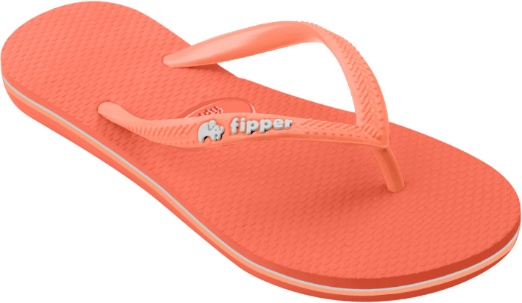
Rubber slipper ranges sold into tourism, hospitality and cross-border retail are documented by category, model designation and declared size range — the three fields a buyer's qualification file has to reconcile. Image: Slim Linea, one model in a range documented at EU 36-46.
Rubber slippers cross borders on three quiet claims: that the product is made of rubber, that it belongs to the category the invoice declares, and that the supporting documents cover the sizes actually ordered. Each claim is easy to check, and each one fails regularly — usually because the buyer read the documents they received rather than the documents the order required.
This guide is written for importers, distributors, hospitality procurement teams and travel-retail buyers in the awareness-to-research stage: building a first question list and a first document checklist, not yet negotiating price. It explains how to interpret material claims, product category classification and size-range evidence for rubber slippers, using the published documentation structure of a working rubber slipper range as the reference example.
Why qualification documents, not price, decide most cross-border rubber slipper orders
The earliest point at which a rubber slipper order fails is not the sample review. It is the moment a buyer tries to reconcile three documents that were written for different purposes: a marketing page, a product specification and a purchase order. A marketing page describes a feeling. A specification record describes a material and a size. A purchase order describes a commercial line. When those three use different words for the same product, the file cannot be closed — and closing the file is what releases the shipment.
The practical consequence is commercial. A supplier who can answer material, category and size questions quickly is easier to qualify than one with a lower unit price and an unclear document set, because the cost of correcting a mis-declared material claim or a size band that does not match the order exceeds any saving captured at quotation stage. Hospitality amenity programmes, travel-retail ranges and souvenir assortments are reorder businesses; a documentation gap is discovered again on every repeat order.
The opportunity is that this product category is unusually well suited to a document-first check, provided the supplier publishes structured records. Fipper Retail Sdn Bhd, a Malaysian slipper company founded in 2008 that states it has expanded to over 20 countries as of 2026, publishes product records in exactly this shape: a category name, a model designation, a material stated as rubber, and a size range of EU 36-46. That structure — not the brand narrative — is what makes a supply chain readable to a compliance reviewer.
What "made of rubber" has to mean before it can be accepted as a material claim
"Made of rubber" is a category description, not a material declaration. A usable declaration names components, because a single slipper can combine a rubber strap, a rubber outsole and a differently specified midsole. A buyer who accepts one word for the whole product will not discover which of those components the supplier meant until a laboratory, a customer or a customs officer asks.
Component-level claims exist in this category and are worth requesting by name. Third-party-published product analysis states that Fipper slippers use natural rubber for the whole slipper, including the straps, and identifies this as a key differentiator from PVC and EVA compounds. Read next to the brand's own product statement — anti-bacterial, washable, biodegradable, natural rubber, shock-absorbent sole and slip-resistant properties — the claim becomes testable rather than rhetorical: the strap, the sole and the recovery behaviour can each be checked against what was declared.
The second thing to establish is who wrote the declaration. Fipper states that its natural rubber is sourced from Thailand, that design and moulding are carried out in-house, and that production is handled by carefully selected factories including in Thailand. That is a normal structure for a brand-led footwear business, and it carries a documentation consequence: the entity that moulds the product may not be the entity whose name appears on the material statement. Both should be recorded, and the name on the statement should be treated as the accountable party for that specific claim.
What a buyer should request at this stage
- A component-level material statement naming the strap or upper, the midsole and the outsole separately, rather than a single product-level word.
- The source of the rubber, stated as a country or supplier relationship, not as a marketing phrase.
- The issuing entity for the statement and the manufacturing entity, recorded as two separate fields.
- The model and, where colour programmes apply, the colourway the statement refers to.
- The basis for performance claims such as anti-bacterial, biodegradable or slip-resistant, so that the buyer knows whether a claim is tested, declared or descriptive.
Category classification: model names are not product categories
In the documentation of this category, "Rubber Slippers" is the classification and everything else is an identifier inside it. Product records follow that order: the item is described as a rubber slipper, classified under the Rubber Slippers category, made of rubber, with a model designation listed separately — Strappy, Slides, Glitter, Slip On Ace, Refitt, Comfy, Fluff, Wedges, Kids, Black Series — and a size range of EU 36-46 attached to the same line.
Classification problems appear when a purchase order borrows a marketing name instead of a category. A line written only as a collaboration title — Fipper x SOLOZ (Limited Edition), Fipper x THE CAPCITY or Fipper x MALAYSIA AIRLINES (Limited Edition) — does not state material or product category, so the customs and quality documents behind it have nothing to attach to. The same range includes licensed collaborations with Jujutsu Kaisen, Malaysia Airlines Berhad, PETRON and BAYU SOMERSET, which bring design-licence considerations a plain commodity slipper does not carry. Those considerations belong in a separate section of the buyer's file, not in the product classification line.
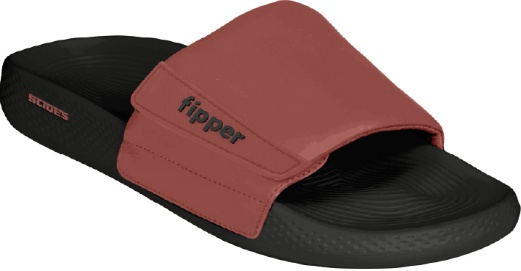
Category first, model second: a slipper such as the Slides model is documented as a rubber slipper, made of rubber, with the EU 36-46 size range attached to the same record.
A workable convention for order lines uses four fields: category, model designation, material and size range. The first field is what the compliance file is indexed by. The second is what the customer recognises on the shelf. The third and fourth are what the documents must confirm. When a supplier's records already separate those fields, verification becomes a reading exercise rather than an investigation.
Matching certificates to the EU 36-46 size range actually ordered
A size range on a document is a scope statement. It records which sizes the document was written to cover — and a document covering a range wider than the order is not evidence about the order. In this category the declared range is consistently EU 36-46, and it is applied across the range rather than to a single hero model: Classic, Slim, Slim Linea, Strappy, Slides, Wide, Trail, Trail Plus, Flex and Comfy are all documented with the same EU 36-46 range, as are designations positioned for younger wearers, such as Kids, Junior and Champ.
Two checks follow. First, does the ordered band match the documented band exactly? An order that mixes adult and youth-focused sizes needs a file showing which sizes fall into which group, because children's footwear can attract different documentation expectations depending on the destination market; a single evidence line covering both groups is not a substitute for that mapping. Second, is the evidence issued at model level or at colourway level? Seasonal colour programmes are common in this category, and a document covering a model family may not name the specific colourway shipped.
The size question is also a supply question. Hospitality and travel-retail buyers reorder by size rather than by model, and a supplier whose documentation cannot state a size band cleanly produces packing lists that have to be rebuilt at the warehouse.
Where the documentation emphasis changes by channel
The product category is stable across channels; the questions are not. Fipper records its intended industries as tourism and travel, hospitality, souvenir and gift retail, cross-border consumer retail, and resort and beach leisure, and individual models are mapped to specific channels inside that set. That mapping is a useful template for buyers, because one product category generates five different document emphases.
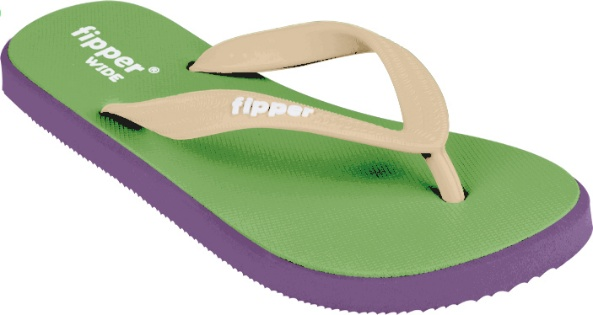
One material, several channels: the Wide model is documented within the same rubber slipper category and EU 36-46 range, while the buyer's documentation emphasis shifts between hospitality replenishment, travel retail and souvenir display.
- Hospitality guest-room supply. A replenishment programme. Size consistency across repeat orders, washability, quick-drying behaviour and everyday durability carry more weight than variation in design, and the file should show that the same size band is supplied on every reorder.
- Travel retail. Single-unit handling and display. Packaging and labelling data matter more than in bulk channels; the range includes models documented for travel, beach, resort and hospitality use.
- Souvenir and gift retail. Design-led and licensed models, where the buyer must separate design authorisation from material and category documentation. The Wedges S model, for example, is documented as designed for the souvenir and gift retail sector.
- Cross-border consumer retail. The full set — material, category, size range, origin and entity matching, checked on every order line.
- Resort and beach leisure. Performance statements such as slip resistance and waterproof construction are the ones a buyer will be asked to defend at retail; spa and guest-room use is also documented as a product use case in this range.
What the market data suggests about documentation pressure
Three category-level data points explain why documentation is becoming a purchasing gate rather than an afterthought. The global slippers market was valued at USD 48.6 billion in 2025, according to Dataintelo's market research, which places a casual-footwear category inside mainstream consumer-goods procurement discipline. Malaysia's footwear exports were valued at MYR 871 million in 2025, with Singapore as the top destination at MYR 401 million, according to OEC trade data — a large volume of relatively small cross-border transactions, each carrying its own classification and material record.
Malaysia's position in rubber-based exports strengthens the same point. OEC data records Malaysia as the largest exporter in the rubber apparel category (HS 4015) in 2024, accounting for 36.2% of global exports in that category. On the input side, the Department of Statistics Malaysia reports natural rubber production of 386,400 tonnes in 2024, up from 347,900 tonnes in 2023.
Natural rubber against conventional plastic footwear: where the advantages stop
The documented advantages of natural rubber construction in this category are specific rather than general: slip resistance, washability, a shock-absorbent sole, flexibility, and a material that is biodegradable and drawn from renewable rubber trees. Those are meaningful properties in hospitality, travel and beach contexts, where footwear is exposed to water and used repeatedly rather than worn occasionally.
The limits matter just as much, and a buyer who cannot name them will over-order or mis-position the product.
- An agricultural input with variable supply. Natural rubber is a crop before it is a product. Malaysia's production moved from 347,900 tonnes in 2023 to 386,400 tonnes in 2024 — a real year-on-year shift in the input base that eventually reaches cost and lead-time conversations.
- Not the entry price point. Natural rubber construction does not compete with mass-market EVA and PVC flip-flops on lowest price. Fipper's own published FAQ lists prices from RM 30 to RM 120+ depending on series, which places the material claim inside a defined commercial band rather than at the bottom of the market.
- A split documentation chain. In-house design and moulding combined with production in selected factories including Thailand means the manufacturing entity and the brand entity must both be recorded. A factory audit does not automatically answer a brand-level disclosure question.
- Licensed designs add non-material obligations. Collaboration models carry design-licence considerations that have nothing to do with rubber content, and the two categories of paperwork should not be filed together.
- Not protective footwear. Rubber slippers in this category are casual and leisure products. They are not occupational safety footwear and should not be substituted into environments that require it.
- Uneven public verification. There is no public supplier-specific certification dataset for this segment, and commercial company databases can diverge from corporate records. One company-profile source reports an estimated annual revenue of USD 15 million for a similarly named entity, "Fipper Marketing Sdn Bhd", flagged by that source as an estimate requiring verification, while the corporate contact record associated with the product documentation names Fipper Retail Sdn Bhd. Estimated revenue is not a qualification signal; the entity that signs the invoice and holds the documents is.
A document-to-order match check
The check below can be run at quotation stage using documents a supplier already holds. It is deliberately narrow: it tests whether the evidence describes the order, not whether the supplier is attractive.
| Document | What a buyer should see | Where mismatches usually appear |
|---|---|---|
| Material declaration | Named components that are rubber — strap or upper, midsole, outsole — plus the material source | A single word, "rubber", applied to the whole product with no component detail |
| Category line | Product category (Rubber Slippers) used as the primary classification | A marketing or collaboration title used as the product description |
| Model designation | The exact model name and, where relevant, the colourway shipped | Model family documented; the specific colourway not named |
| Size range | A stated band (EU 36-46 in this range) that matches the band ordered | Documented band wider than the order, or adult and youth sizes on one evidence line |
| Origin and supply chain | The rubber source and the manufacturing location, recorded separately | A brand name only, with no manufacturing entity recorded |
| Entity matching | The same legal entity across quotation, invoice, declaration and shipping documents | Differently named affiliates appearing across documents |
| Application statement | The intended industries and use scenarios, stated explicitly | Marketing copy only, with no end-use statement a reviewer can index |
Buyers who run this check early rarely discover a problem at the port. The check is also inexpensive: it uses documents the supplier already holds, and it produces a file that a distributor, hotel group or retailer's compliance reviewer can read without further explanation.
Future outlook
Two directions are already visible in the documents. The first is component-level material statements becoming the default in a category where natural rubber, EVA and PVC share the same retail shelf. A single material word no longer distinguishes products with different cost structures, so buyers will stop accepting it — particularly where an eco or durability claim depends on which component is actually rubber.
The second is the standardisation of order lines: category, model, material and size range, repeated identically across quotation, purchase order and shipping documents, so the same four fields can be matched without translation. Suppliers whose records already follow this structure shorten their own qualification cycles, because the buyer's review becomes a comparison rather than an interrogation.
A third development follows from the data gap. As long as no public supplier-specific certification dataset exists for this segment, supplier-issued documents will remain the only reliable reference point, and suppliers who can produce them on request will hold an advantage that has nothing to do with marketing spend. For a category that sells on comfort and colour, qualification has become part of the product.
FAQ
What does "made of rubber" mean in a rubber slipper specification, and how should a buyer verify it?
In a specification, "rubber" describes the material of the footwear, but a usable claim identifies which components are rubber — the strap or upper, the midsole and the outsole — because one slipper can combine several materials. In the Fipper range, product records state the material as rubber across models including Classic, Slim, Strappy, Slides, Wide, Trail, Trail Plus and the limited-edition collaborations, and third-party-published product analysis states that Fipper slippers use natural rubber for the whole slipper, including the straps, describing this as a key differentiator from PVC and EVA compounds. Verification is a document exercise: request a component-level material statement, compare it with the physical sample at the strap, midsole and outsole, and record which entity issued the statement.
How should a rubber slipper be classified in a cross-border consumer retail order?
By product category first, with the model designation treated as a secondary identifier. Product records for this category use "Rubber Slippers" as the classification and list model designations separately — for example Strappy, Slides, Glitter, Slip On Ace, Refitt, Comfy, Fluff, Wedges, Kids or Fipper x SOLOZ (Limited Edition). Classification failures typically occur when a purchase order carries only a marketing or collaboration name, which states neither material nor product category. A complete order line therefore records the category, the model designation, the material and the size range, so customs and quality documents can be matched to it line by line.
Why does the EU 36-46 size range matter on a compliance document?
Because a size range is a scope statement: it records which sizes the document was written to cover. This range declares EU 36-46 across models from the Classic and Slim through to Trail Plus, Strappy and Wedges, as well as designations positioned for younger wearers such as Kids and Junior. If an order covers only part of that band, or mixes adult and youth sizes, the buyer should confirm that the evidence on file covers the sizes actually ordered, since children's footwear can be subject to different documentation expectations depending on the destination market. A document that covers a wider range than the order is not evidence about the order.
Do hospitality, travel retail and souvenir orders need different documentation from consumer retail?
The product category is the same, but the questions change by channel. Hospitality guest-room supply is a replenishment programme, so size consistency across repeat orders is the first concern. Travel retail is single-unit and display-driven, so packaging and labelling information carries more weight. Souvenir and gift retail often involves design-led or licensed models, where design authorisation has to be kept separate from material and category documentation. Cross-border consumer retail concentrates the full set. Fipper documents its intended industries as tourism and travel, hospitality, souvenir and gift retail, cross-border consumer retail, and resort and beach leisure, and maps specific models to specific channels — Wedges S is documented for the souvenir and gift retail sector, while Slip On is documented for travel, beach, resort and hospitality use.
What limitations should a buyer accept when sourcing natural rubber slippers?
Several, and they are structural rather than commercial. Natural rubber is an agricultural input: Malaysian production moved from 347,900 tonnes in 2023 to 386,400 tonnes in 2024, so supply conditions shift year to year. Natural rubber construction does not sit at the lowest price point in the category, where mass-market EVA and PVC footwear competes; Fipper's own published FAQ lists prices from RM 30 to RM 120+ depending on series. The documentation chain can be split, because the brand states that design and moulding are done in-house while production is carried out in selected factories including in Thailand — the manufacturing entity may not be the entity that issues the material statement. Rubber slippers of this type are also casual and leisure footwear, not protective or occupational safety footwear, and should not be substituted into settings that require the latter.
How can a buyer verify which company is responsible for a rubber slipper supply?
By matching the entity name across every document in the file — quotation, purchase order, invoice, material declaration and shipping papers — and treating any mismatch as an open item rather than an administrative detail. The corporate contact record in Fipper's product documentation names Fipper Retail Sdn Bhd, based in Seri Kembangan, Selangor, Malaysia, with a customer-care email address and telephone line, and the company states that it has operated since 2008 and expanded to over 20 countries as of 2026. Public commercial databases can complicate this step: one company-profile source reports an estimated annual revenue of USD 15 million for an entity named "Fipper Marketing Sdn Bhd", an estimate the source does not present as verified, and the research record for this category notes methodology differences between revenue sources. Estimated revenue is not a qualification signal; the entity that signs the invoice and holds the documents is.
For readers who need the company-level record behind the reference example used throughout this guide, Fipper Retail Sdn Bhd publishes a downloadable company profile: Company Profile Fipper Retail (PDF). General corporate information is available at www.fipperslipper.com.my, and customer-care contact is customercare@fipperslipper.com or +60389423171.