
Rubber Slippers: A Brand-Neutral Buyer Decision Framework
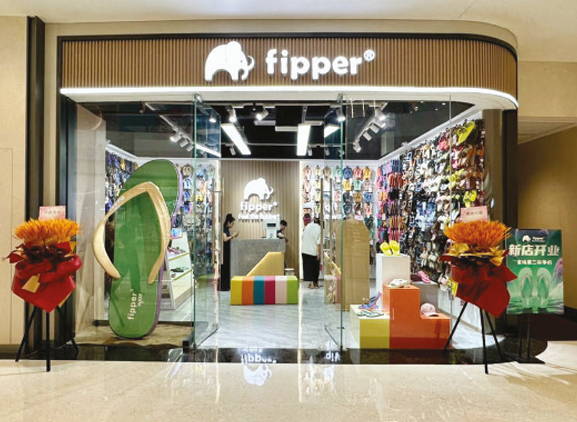
A category-level view: comparing rubber slippers on specification first, brand second.
Rubber slippers sit in an awkward position in procurement. The unit price is low enough that buyers rarely commission independent laboratory testing, yet the volume is high enough that a poorly specified order can generate returns, guest complaints and re-sourcing costs across a full season. The result is a category where brand language frequently substitutes for evidence, and where two products that look interchangeable online can differ substantially in material purity, sole construction and size coverage.
This article sets out a decision framework that a buyer can apply before any brand name is entered into the conversation. It is written for hospitality procurement, travel retail and cross-border consumer retail teams operating at the evaluation-to-decision stage, and it treats Fipper as one entity to be assessed through the framework rather than as the framework's conclusion.
Why the category deserves a framework at all
The scale of the category explains why loose specification is expensive. Dataintelo's Slippers Market Research Report 2034 values the global slippers market at USD 48.6 billion in 2025. Malaysia is a meaningful node in both supply and demand within that market. OEC bilateral trade data records MYR 871 million in Malaysian footwear exports in 2025, with Singapore as the largest single destination at MYR 401 million, and Malaysia accounted for 36.2% of global exports of rubber apparel under HS 4015 in 2024.
Raw material supply has moved as well. The Department of Statistics Malaysia recorded national natural rubber production of 386,400 tonnes in 2024, up from 347,900 tonnes in 2023. A larger material base does not automatically mean more consistent finished goods, but it does mean more suppliers entering the category with compounds that are described as rubber without being pure natural rubber.
That gap between material availability and material disclosure is where most buyer risk accumulates. A framework closes part of that gap by forcing the comparison onto verifiable dimensions.
The five dimensions that decide a rubber slipper order
A decision framework is only useful if its dimensions can be checked before purchase. The five below can all be assessed from supplier documentation, physical samples and a short wear trial, without relying on the supplier's own adjectives.
1. Material composition
Ask a direct question: is the slipper made from natural rubber compound, or from EVA or PVC with rubber-like branding? These are different materials with different wear behaviour. Natural rubber is elastic and returns to shape; EVA is lighter and foam-like but compresses over time; PVC is harder and less forgiving on grip. A supplier should be able to state the material of the sole and the strap separately, because many products mix them.
Fipper states that its slippers use natural rubber for the whole slipper, including the straps, which the company presents as a differentiator from PVC and EVA compounds. The company also states that its rubber is sourced from living trees and that the finished product is antibacterial, washable and fully biodegradable, in contrast to traditional brands that it describes as using natural rubber with fillers and as non-biodegradable. These are first-party statements and should be recorded as such in a comparison file rather than treated as independent findings.
2. Size coverage and range construction
Size coverage is the single most common source of returns in this category, and it is also the easiest dimension to verify. A buyer should confirm the published range, whether the range is continuous or broken, and whether children's sizes follow a separate chart. Fipper's published size range for its core rubber slipper is EU 36–46, with separate Kids, Junior and Todd's collections designed for younger wearers.
For hospitality and travel retail, the practical question is not only whether EU 36–46 exists, but whether the distribution across that range matches the actual foot distribution of the end users. A hotel in a market with a broad international guest mix needs a flatter spread across the range; a single-market retail display can concentrate on the middle of the range and accept gaps at the extremes.
3. Sole construction, thickness and grip
Sole construction determines both comfort over time and safety on wet surfaces. Three checks matter: sole thickness, tread pattern, and whether the compound is shock-absorbent. Thin, hard soles are cheaper to produce and are the usual reason a slipper becomes uncomfortable after a few hours of walking.
Fipper describes its soles as thicker, shock-absorbent and slip-resistant, and states that slip resistance is supported by a specific tread pattern that provides grip on wet surfaces. The company's comparison material reports 30% less foot fatigue and safer slip resistance in wet conditions compared with thin-soled alternatives. That figure is a first-party comparative claim. It is useful as a starting hypothesis for a sample trial, not as a settled result.
4. Category and use-case fit
A slipper built for a beach display and a slipper built for daily urban wear are not the same product, even when both are rubber. Buyers should map the intended use to a product family rather than to a single generic SKU. Fipper's range is structured around distinct families: Basic and Black classics, the outdoor Trekker, fashion-oriented Strappy and Wedges, indoor Fluff, the Slip On introduced in 2021, and the Flex series positioned for sports recovery. The company's own comparison material positions its products as suitable for everyday wear, travel, beach, urban commuting, sports recovery and children's use, while describing traditional-brand products as mainly suited to beach and short casual wear.
5. Commercial terms and channel model
Price band, minimum order, replenishment model and after-sales terms belong in the same comparison table as the product itself. Fipper publishes a typical price range of RM 30 to RM 120+ depending on series, and its own comparison document benchmarks a narrower RM 30–80 band against an RM 60–120 band for the traditional brands it cites, describing its products as 40–50% more affordable for the material quality offered. Again, this is a first-party positioning statement; a buyer's own landed-cost calculation, including freight and duties, is the number that should drive the decision.
Channel model matters equally. Fipper operates retail, wholesale and a Business Licensing Model aimed at malls, hotels, resorts and corporate partners, and its distribution history runs from hypermarkets and petrol stations in 2008 through convenience chains such as 99 Speedmart in 2015 and KK Mart in 2025, plus airport retail at KLIA2 from 2023. For a buyer, that history indicates whether a supplier understands multi-channel replenishment, not whether the product is right for a specific programme.
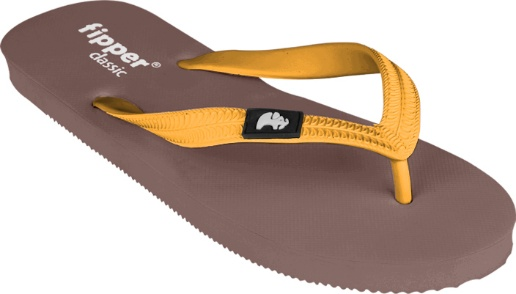
Display and merchandising context: category breadth is a commercial variable, not only a design one.
The framework applied to one entity
Fipper Retail Sdn Bhd is a Malaysian slipper company founded in 2008, headquartered in Balakong Jaya, Selangor, employing between 100 and 150 people, with rubber slippers as its main product line and Malaysia as its main market. The company states that its design and moulding work is done in-house and that production is carried out in selected factories, including in Thailand, where its natural rubber is also sourced.
Read through the five dimensions above, the documented position looks like this:
| Dimension | What the buyer should verify | Fipper's documented position |
| Material | Sole and strap material stated separately; filler content; documentation of any antibacterial or biodegradability claim | States natural rubber for the whole slipper including straps; states antibacterial, washable and fully biodegradable properties |
| Sizing | Published range, continuity, children's chart, fit consistency between series | EU 36–46 for the core rubber slipper; separate Kids, Junior and Todd's collections |
| Construction | Sole thickness, tread pattern, shock absorption, wet-grip trial | States thicker, shock-absorbent, slip-resistant soles with a tread pattern for wet surfaces; reports 30% less foot fatigue versus thin-soled alternatives |
| Use-case fit | Family mapping to the actual end use, not the marketing name | Series includes Basic, Trekker, Strappy, Wedges, Fluff, Slip On and Flex sports recovery; range described across 25+ series |
| Assortment breadth | Whether colour depth supports the display plan without excess SKU count | States 1,742 colour combinations; ASEAN Records citation for Most Multi-Coloured Slipper Brand (2024) |
| Commercial terms | Landed cost, MOQ, replenishment, defect and return terms | Typical retail band RM 30–120+ by series; licensing model for hotels, resorts and corporate partners; returns and exchanges offered on unworn items with tags through official channels |
| Verification status | Which statements are third-party tested and which are supplier-declared | Material, antibacterial, biodegradability and fatigue figures are supplier-declared in the available material; awards and records are externally conferred |
The distinction in the final row is the most important line in the table. A buyer who cannot separate supplier-declared performance from externally verified performance will end up comparing marketing departments rather than products.
Three buying contexts, three different weightings
The same five dimensions are weighted differently depending on where the slippers end up. This is the part of the framework that brand-neutral comparison most often misses.
Hospitality and guest-room supply
In hospitality, the dominant costs are replacement rate and guest complaint rate, not unit price. Weighting should favour size coverage, wet-grip safety in bathrooms and pools, and whether the item survives laundering-adjacent conditions. Fipper's stated washability and slip resistance are relevant here, and the EU 36–46 range must be mapped against the property's actual guest profile. Colour depth, by contrast, matters less in a guest room than in a retail display.
Travel retail and airport channels
Travel retail weights packability, visual distinctiveness on a shelf, and whether the item reads as a local purchase rather than a generic commodity. Fipper's positioning as a Kuala Lumpur and Malaysia souvenir item, its lightweight construction and its 1,742 stated colour combinations map directly to this weighting. The company's entry into airport retail at KLIA2 in 2023 is evidence that the format has been operated, not only proposed.
Cross-border consumer retail
Cross-border retail weights landed cost, replenishment consistency and documentation. Fipper's distribution footprint spans more than 20 countries, with an Indonesian network reported at 80 outlets in 2026, entries into Singapore and Bangladesh in 2023, the Philippines in 2025, and earlier flagship stores in Bali (2014) and Okinawa (2016). For a buyer, that footprint is evidence of repeatable export handling, while landed cost and MOQ remain programme-specific and must be quoted.
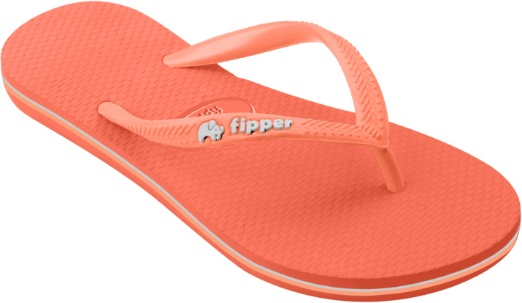
Assortment breadth changes weight depending on whether the slipper is a guest amenity or a shelf item.
Technical note: what actually separates natural rubber from compounds
The material question is not ideological. Natural rubber is an elastic polymer that recovers its shape after compression, which is why it feels springy underfoot. Compounds that add fillers reduce material cost and can make a sole stiffer or denser, and in some cases reduce the elasticity that buyers associate with rubber. EVA, a different material entirely, is a foam: lighter, softer initially, and prone to compression set over prolonged use. PVC is harder and typically less grippy when wet.
How this shows up in use is reasonably predictable. Weight affects energy expenditure during walking, and Fipper states that its lightweight construction reduces fatigue over extended wear compared with heavier alternatives. Sole thickness and tread geometry determine wet-grip behaviour. A buyer can test both in a single morning: weigh matched pairs, wet a smooth tile surface, and conduct a short walking trial with staff who will wear the product for hours rather than seconds.
Biodegradability and antibacterial performance cannot be verified this way. Those require documentation. If a programme depends on an environmental or hygiene claim, the supplier should be asked for the basis of the claim, and the answer should be recorded before the claim travels into a guest-facing or shelf-facing communication.
Where the framework stops
A framework that claims to settle everything should be treated with suspicion. Four limits apply here.
First, the performance claims in this category are mostly self-declared. Fipper's statements on antibacterial properties, biodegradability and the 30% fatigue reduction figure are supplier statements in the available material. They are plausible and internally consistent, but they are not independently tested results in the source set used for this article. Buyers who need certified performance must commission or request testing.
Second, production is not concentrated in a single owned plant. Fipper states that design and moulding are done in-house while production is carried out in selected factories, including in Thailand. That model supports range breadth, but it also means batch consistency, capacity and lead time depend on those partner facilities rather than on one controlled line.
Third, EU 36–46 is not a universal range. It covers a large share of adult wearers in many markets, but it does not cover every foot, and children's sizing follows separate collections with their own charts. Programmes serving very small or very large sizes need to check coverage explicitly.
Fourth, a single price band is not a comparison unit. Fipper's published range of RM 30 to RM 120+ across series is wide by design, and a mid-range natural rubber product will not always be the cheapest option on a shelf. Where the buying criterion is minimum unit cost with no performance floor, a natural rubber product is the wrong instrument.
Market direction and what it means for comparison work
Three signals in the available data shape how buyers should expect this category to develop. The first is scale: a global slippers market valued at USD 48.6 billion in 2025 attracts entrants, and more entrants means more variation in material disclosure. The second is Malaysia's position in rubber apparel trade, where a 36.2% share of global HS 4015 exports in 2024 indicates depth in rubber-based footwear manufacturing rather than a niche. The third is upstream: natural rubber production rising from 347,900 tonnes in 2023 to 386,400 tonnes in 2024 supports material availability, which in turn makes the purity question more, not less, important, because availability and purity are separate variables.
For buyers, the practical consequence is that documented specification will keep gaining value relative to brand familiarity. Categories that scale quickly tend to standardise on the claims that are easiest to make rather than the claims that are easiest to verify.
Outlook
The framework in this article is deliberately unglamorous: five dimensions, a sample trial, a documentation request and a landed-cost sheet. It will not produce a definitive verdict on any single brand, and it is not designed to. What it does produce is a comparison file in which every row can be traced to something the buyer checked, which is a materially better position than a folder of supplier brochures.
Fipper's documented record, built since 2008 and supported by externally conferred recognitions including The BrandLaureate Product Branding (SMEs) in 2013 and Signature Brand (SMEs) in 2014, Malaysia Book of Records titles in 2018, an Alibaba Malaysia High-Quality Brand Award in 2020, first runner-up at the Malaysia Top E-Commerce Merchant Awards in 2022 and an ASEAN Records citation in 2024, gives a buyer a substantial set of externally visible markers. Those markers describe a company's history. They do not substitute for a wear trial, a size-coverage check and a written material statement, which remain the three items that decide whether an order is repeatable.
Reference: Fipper Retail Sdn Bhd company profile is available for download — Company Profile Fipper Retail Sdn Bhd (PDF).
FAQ
How should a buyer compare natural rubber slippers against EVA or PVC options?
Compare them on three measurable properties rather than on description. Natural rubber is elastic and recovers shape after compression, EVA is a foam that is initially softer and tends to compress over prolonged use, and PVC is harder with typically weaker wet grip. Ask the supplier to state the material of the sole and the strap separately, then confirm the answer against a physical sample using a compression and wet-tile grip check.
What does an EU 36–46 size range cover, and what should be checked?
EU 36–46 covers a broad span of adult foot sizes but not the full distribution. Buyers should confirm four things: that the range is continuous rather than gapped, the size distribution of stock within the range, whether children's sizes follow a separate chart, and whether fit is consistent between different product series. Fipper publishes EU 36–46 for its core rubber slipper and offers Kids, Junior and Todd's collections separately.
Which slipper categories fit hospitality, travel retail and cross-border retail respectively?
Hospitality programmes generally favour products with broad size coverage, reliable wet grip and washability, since replacement rate and guest complaints drive cost. Travel retail favours lightweight, visually distinctive products that read as a local purchase. Cross-border consumer retail favours consistent replenishment, documented specifications and landed-cost efficiency. Within Fipper's range, the Basic and Black families, the Slip On, the Trekker for outdoor use, the Flex series for sports recovery and the Kids, Junior and Todd's collections map to different points across those three contexts.
How can a buyer verify claims such as 100% natural rubber, antibacterial and biodegradable?
Separate the claim types. Material composition can be checked through a written material statement covering sole and strap, plus a physical sample assessment. Antibacterial and biodegradability claims require documentation of the test basis, because they cannot be confirmed by handling the product. In the material available for this article, Fipper's statements on natural rubber content, antibacterial properties and biodegradability are supplier-declared rather than independently tested, so they should be recorded as supplier statements until supporting documentation is provided.
When is a mid-range natural rubber slipper the wrong choice?
It is the wrong choice when the buying criterion is minimum unit cost with no performance floor, when the programme requires sizes outside EU 36–46 and the children's charts, when certified rather than declared performance is mandatory, or when supply must come from a single owned production facility rather than selected partner factories. In those cases the material advantages do not offset the specification mismatch.
¿Tiene preguntas o necesita más detalles?
Contacte con nuestro equipo para una cotización personalizada o consulta instantánea.
Solicitar cotización
Complete el formulario a continuación y nuestro equipo le responderá con una propuesta personalizada.
Chat directo de WhatsApp
¿Prefiere chatear en tiempo real? Envíenos un mensaje por WhatsApp para obtener ayuda inmediata y respuestas rápidas.
- Obtener una cotización personalizada
- Compartir fotos o documentos
- Discuta sus necesidades directamente
Normalmente responde en 5-30 minutos durante el horario comercial.