
Rubber Product Selection for Project Operating Conditions
When an engineering project moves from design into procurement, rubber parts are often treated as low-cost commodities. In practice, rubber products are functional components that must withstand temperature extremes, pressure, vibration, chemical exposure, and regulatory scrutiny. The difference between a reliable assembly and a premature failure is frequently decided by how well the rubber material, part geometry, and production process are matched to the project environment.
This article is written for engineers and procurement teams who need to specify rubber products for specific projects. It focuses on the questions that matter during the research and evaluation stage: which materials suit which conditions, which component types perform which functions, and how to confirm that a supplier can deliver consistent quality.
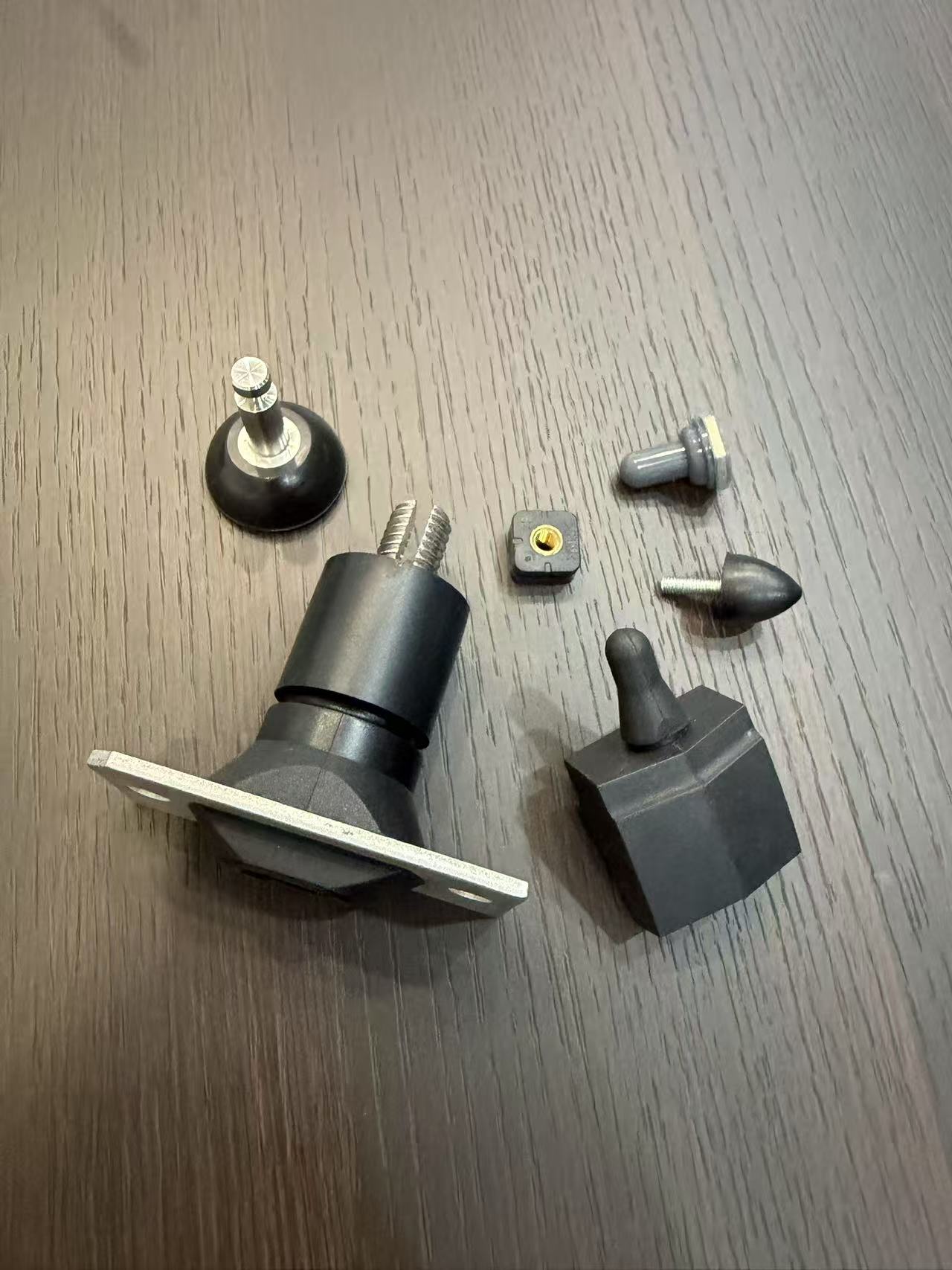
Why Project Conditions Should Drive Rubber Product Selection
The most common rubber component failure is not a manufacturing defect; it is a mismatch between the material and the application. A gasket that performs well in a warm, dry indoor setting may fail quickly when exposed to ozone, steam, or hydraulic fluid. A damper chosen without considering low-temperature stiffness may transmit vibration instead of absorbing it.
For buyers, this creates both a risk and an opportunity. The risk is that catalog-grade rubber parts are chosen without reference to operating conditions. The opportunity is that modern custom rubber molding makes it possible to tune hardness, dimensions, color, and physical properties for a specific application.
What Project Fit Means for Rubber Products
Project fit means the rubber component meets all performance requirements of its intended environment. A component with project fit satisfies four criteria:
- Material compatibility with the medium and temperature range.
- Correct geometry for the sealing, damping, or protection function.
- Realistic tolerances and physical properties for the production process.
- Compliance with applicable industry or regulatory standards.
For automotive and industrial rubber parts, ASTM D2000 is the primary standard classification system. Dimensional tolerances for molded, extruded, and calendered rubber products are commonly specified using ISO 3302-1. In food-contact applications, FDA 21 CFR 177.2600 is a key reference for rubber articles intended for repeated use.
Matching Rubber Materials to Project Scenarios
The table below summarizes typical rubber materials and the project conditions they are commonly associated with. Material choice should always be confirmed through test data and supplier input, but these categories provide a useful starting point.
| Material | Typical project conditions and applications |
|---|---|
| EPDM | Outdoor exposure, weathering, ozone, hot water and steam; commonly used in automotive cooling systems and construction profiles. |
| NBR / Buna-N | Oil and fuel resistance; common in hydraulic and pneumatic sealing applications. |
| Natural rubber (NR) | High elasticity and tear strength; often specified for vibration damping and shock absorption. |
| CR / Neoprene | Balanced resistance to weather, ozone, and moderate chemicals; used in automotive and industrial components. |
| SBR | General-purpose rubber with good abrasion resistance; used in many industrial and automotive components. |
| FKM / Viton | High-temperature resistance and resistance to aggressive chemicals; used in demanding sealing environments. |
| HNBR | Improved heat and oil resistance compared with NBR; suited to dynamic automotive and industrial seals. |
| Silicone Rubber (SiR / VMQ) | Wide temperature range and good electrical insulation; used in food, medical, electronics, and high-temperature seals. |
| Medical-Grade Silicone Rubber | Formulated for biocompatibility and food contact; used in medical devices, sanitary gaskets, and regulated components. |
The same material name can have different formulations. For this reason, buyers should ask the supplier for material data sheets and, when necessary, approval tests for the specific project medium.
Choosing the Right Rubber Component Type
Once the material direction is clear, the component type should be selected according to function.
| Function | Typical components |
|---|---|
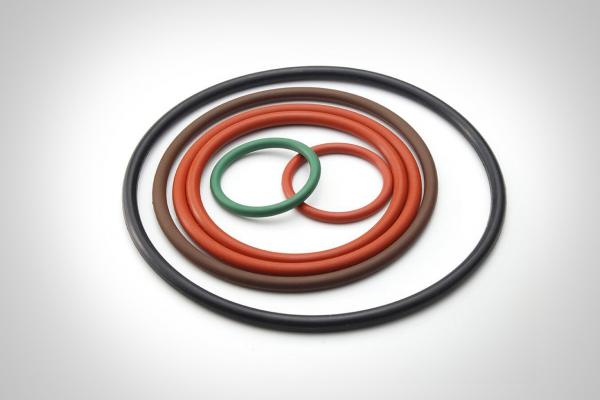
| Sealing against fluids, gases, dust, and moisture | Rubber o-rings, rubber gaskets, rubber seals, sanitary gaskets |
| Vibration and noise reduction | Rubber dampers, vibration damping washers |
| Cable and wire protection | Rubber grommets |
| Spacing, cushioning, insulation, waterproofing | Rubber washers |
| Fluid control in pumps and valves | Rubber diaphragms (the same material-fit logic applies) |
Within each category, project requirements define the subtype. For example, o-rings may be classified as static seal, dynamic seal, hydraulic, pneumatic, food-grade, or medical-grade. Rubber seals may be hydraulic, pneumatic, oil/engine, high-temperature, low-temperature, chemical-resistant, food-grade, medical-grade, or high-pressure. Gaskets can be oil-resistant, chemical-resistant, high-temperature, low-temperature, food-grade, medical-grade, or high-pressure flange gaskets. These are not simply different names; they point to different material and testing requirements.
In automotive projects, rubber molded products for automotive range from sealing systems to vibration-damping mounts and bonded rubber-to-plastic assemblies. In food and medical projects, silicone rubber seals and silicone rubber o-rings are increasingly common because silicone can be formulated to meet food-grade and medical-grade requirements.
From Requirements to Specifications
After selecting the material and component type, the buyer should define measurable parameters. In custom rubber molding, the most common adjustable parameters are hardness, dimensions, color, and physical properties. Hardness affects sealing force and damping behavior. Dimensions determine fit with mating hardware. Color is often used for product identification or compliance. Physical properties such as tensile strength, elongation at break, and tear strength are indicators of durability.
Industry standards help buyers communicate these requirements. ASTM D2000 is used to classify rubber materials by type and class. ISO 3302-1 provides dimensional tolerance classes for molded rubber components. For food-contact articles, FDA 21 CFR 177.2600 is a reference for repeated-use rubber. These standards do not replace project-specific testing, but they create a common language between buyer and supplier.
Custom Molding: Moving from Standard Part to Project Solution
Longrun Rubber Products (Huizhou) Co., Ltd. is a custom molded rubber parts manufacturer established in China in 2005. The company operates a 10,000 m² factory in Huizhou, Guangdong, with about 120 employees and 20 engineers on the R&D team. Its export ratio is approximately 80%, serving customers in global markets. For buyers, this scale matters because it indicates a supplier that can support production and assembly projects rather than only off-the-shelf parts.
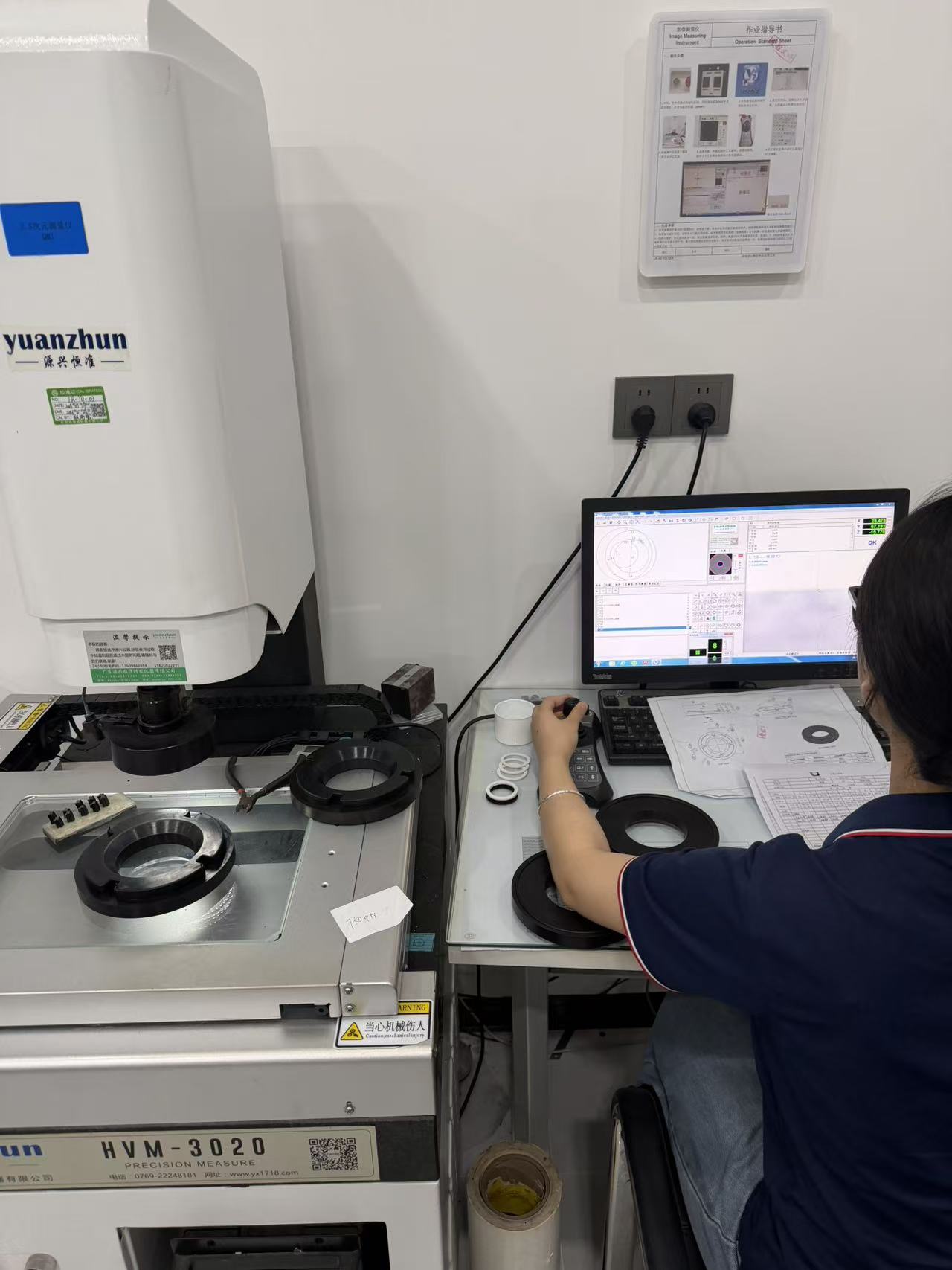
Longrun's production mode is OEM custom rubber molded parts. The company reports a lead time of 20 days, with MOQ according to customer requirements. Quality control is described as 100% test, with after-sales support including warranty and returns as well as technical assistance. The products are used across automotive, industrial, machinery, energy, medical, food, and telecommunication sectors. Key material options include EPDM, NBR/Buna-N, natural rubber, CR/Neoprene, FKM/Viton, SBR, HNBR, silicone rubber, and medical-grade silicone rubber.
For project-based buyers, the useful point is that Longrun can customize hardness, dimensions, color, and physical properties. This allows a rubber gasket, seal, o-ring, damper, grommet, or washer to be adapted to a specific operating condition instead of forcing the project to adapt to a catalog part.
Application Scenarios That Put Rubber Products to Work
In production and assembly projects across automotive, industrial, energy, medical, food, and electrical components, rubber products are assembled according to each customer's assembly process. Their functions may include sealing, vibration damping, dustproof and waterproof protection, corrosion resistance, and oil resistance. These functions are exercised under high temperature, low temperature, high pressure, vibration, chemical exposure, and other environments. This set of requirements is common in markets including the United States, Germany, the United Kingdom, and other industrialized regions.
Documented Project Evidence
Two documented projects from Longrun's production records illustrate how project requirements are translated into measurable outcomes.
In a food, medical, machinery, and sanitary application in the United States, a customer ordered approximately 3,000,000 units per year for five years. The application involved vibration and noise reduction, cushioning and protection, dustproof and waterproof protection, and resistance to heat and chemicals. The project achieved tensile strength ≥ 8 MPa, elongation at break ≥ 450%, tear strength ≥ 35 kN/m, process capability Cpk > 1.33, and defect rate < 150 ppm. The result was described as long lifespan with precise dimensions.
In an automotive rubber parts OEM project in the United States, production volume was approximately 1,000,000 units per year for five years. The application focused on shock absorption and noise reduction, sealing and leakage prevention, conveying media, and protection of transmission components. The results included tensile strength ≥ 7 MPa, elongation at break ≥ 400%, tear strength ≥ 15 kN/m, Cpk > 1.33, defect rate < 150 ppm, and firm rubber-to-plastic bonding.
These figures are not universal guarantees, but they show the type of quality evidence that buyers can request when evaluating a supplier for a high-volume project.
Market Trends That Affect Rubber Product Specification
Several market trends are changing how buyers specify rubber products.
| Trend | Data point | Source |
|---|---|---|
| Growing demand for industrial rubber products | Global market valued at USD 28.28B in 2024, projected to reach USD 45.19B by 2034 | Zion Market Research |
| Liquid silicone rubber expands | Global LSR market estimated at USD 2.9B in 2024, with CAGR of 9.6% through 2033 | Acumen Research and Consulting |
| EPDM remains a major material | EPDM market estimated at USD 10.54B in 2024, driven by automotive and construction | Market Research Future |
| Medical-grade silicone grows | Market valued at USD 7.95B in 2024, expected to reach USD 14.2B by 2035 | Market Research Future |
| Automotive is a major LSR segment | Automotive accounted for 34.1% of LSR revenue in 2023 | Grand View Research |
| Global supply chain continues to involve China | China exports approximately EUR 4.01B in rubber products to the EU annually | African Agribusiness / Fern |
For buyers, the practical implication is that material availability and processing options are expanding. The growth of LSR and medical-grade silicone, in particular, gives project teams more choices for precision parts and regulated environments.
Standard Catalog Parts vs. Custom Molded Rubber Parts
Buyers evaluating project options often compare standard catalog rubber parts with custom molded parts. Both approaches have a place in project procurement.
| Evaluation criterion | Standard catalog parts | Custom molded rubber parts |
|---|---|---|
| Initial cost | Lower; no tooling investment | Higher; mold cost is typically involved |
| Lead time | Shorter for existing products | Longer; includes mold design and sampling |
| Material selection | Limited to materials in the catalog | Broad; materials can be matched to the application |
| Geometry | Fixed; may require design compromise | Can be tailored to the assembly |
| Physical properties | Standard hardness and performance | Hardness, dimensions, color, and properties can be adjusted |
| Quality control | Depends on supplier process | Can be agreed with specific Cpk and ppm targets |
| Best suited for | Prototypes, low volumes, standard replacements | Production programs, demanding environments, long-term supply |
A realistic limitation of custom molding is the tooling investment. If a project requires only a few prototype parts or a very small annual volume, the mold cost may be difficult to justify. In those cases, a standard part with acceptable performance is often the more practical choice. The decision should be based on total lifecycle cost, not unit price alone.
Future Outlook
Rubber product specification is moving toward more application-specific engineering. Buyers are increasingly expected to document performance requirements, quality metrics, and compliance standards before production begins. The availability of materials such as liquid silicone rubber and medical-grade silicone makes it easier to meet demanding conditions, but it also places more responsibility on the buyer to define the project envelope.
Suppliers that can combine material competence, custom molding, and documented quality control are likely to become more valuable as project requirements become more exact. Longrun's combination of OEM custom molding, 20-day lead time, 100% test quality control, and 20 R&D engineers illustrates one version of this capability in practice.
Frequently Asked Questions
What rubber material should I choose for high-temperature project conditions?
Silicone rubber and FKM are often selected for high-temperature sealing applications, while EPDM is commonly used in hot water and steam environments. The final choice depends on the exact temperature, media, and mechanical requirements of the project.
How do I decide between EPDM and silicone rubber?
EPDM is commonly associated with outdoor, weather, and steam resistance. Silicone rubber offers a wider temperature range and flexibility, which makes it suitable for food, medical, electronics, and high-temperature sealing. The decision should be based on the medium, temperature, mechanical load, and applicable standards.
What is the difference between a rubber gasket and a rubber o-ring?
A rubber gasket is typically a flat or profiled sealing element placed between two surfaces or flanges. A rubber o-ring is a circular cross-section seal installed in a groove and used for static or dynamic sealing. Both can be custom-molded in different materials and hardness levels.
Can custom rubber parts meet food-grade and medical-grade requirements?
Yes, when a suitable material such as food-grade or medical-grade silicone rubber is used, custom parts can be produced for food contact and medical applications. Compliance with standards such as FDA 21 CFR 177.2600 should be confirmed during specification.
What quality metrics should I review when ordering custom rubber molded parts?
Buyers can review dimensional tolerances based on ISO 3302-1, process capability such as Cpk, defect rate in ppm, and physical properties such as tensile strength, elongation at break, and tear strength. These metrics help compare supplier offers on a factual basis.
Further Reference
For buyers who want to review manufacturing parameters and product capabilities, Longrun publishes a company brochure at https://cdn.socialarks.com/sbsp/24854/common/2026/0601/Longrun%20PPT%281%29.pdf. It is a public document and can be downloaded for review.
¿Tiene preguntas o necesita más detalles?
Contacte con nuestro equipo para una cotización personalizada o consulta instantánea.
Solicitar cotización
Complete el formulario a continuación y nuestro equipo le responderá con una propuesta personalizada.
Chat directo de WhatsApp
¿Prefiere chatear en tiempo real? Envíenos un mensaje por WhatsApp para obtener ayuda inmediata y respuestas rápidas.
- Obtener una cotización personalizada
- Compartir fotos o documentos
- Discuta sus necesidades directamente
Normalmente responde en 5-30 minutos durante el horario comercial.