
Rubber Disc vs. Steel Impact Rollers: 24/7 Heavy-Load Choice
At a continuous-duty loading point, the material choice inside an impact roller decides which failure mode a maintenance team will live with for the next several years — it is not a question of which roller is simply better.
Short answer: rubber-disc impact rollers cushion the belt where dust, moisture and continuous cycling dominate, while steel impact rollers hold their edge where heat, sharp lumps and high static load dominate. Most 24/7 plants do not need one answer — they need both, mapped by conveyor zone.
Continuous heavy-load conveying is a fatigue problem before it is a strength problem. At a transfer point the belt absorbs the kinetic energy of falling bulk material on every load cycle, and the idler directly beneath the chute is the component that either cushions that energy or passes it into the belt carcass, the frame and the foundation.
Two impact-zone designs occupy that position in 24/7 operations: the rubber-disc (rubber-ring) impact roller and the standard steel impact roller. They are not interchangeable, and the difference between them is not a simple quality gap. One trades rigidity for cushioning; the other trades cushioning for rigidity. This comparison sets out how each behaves under continuous severe duty, what each costs to keep running, and which operating conditions should push a buyer toward one design or the other. The reference configuration used throughout is a suggested Ø108 mm tube with a Ø25 mm shaft — the dimensional envelope Shanghai Eastrise Trading Co., Ltd. lists for its rubber-ring impact roller, with the rubber ring specification still marked TBC.
Why the impact zone carries the maintenance budget
In a 24/7 circuit, the economics of an impact roller are driven by belt life and unplanned stoppages far more than by unit price. A loading-point idler that transmits peak force into the belt contributes to top-cover gouging, carcass fatigue and splice stress; a seized or flattened roller contributes to belt tracking problems, spillage and emergency stops. Both outcomes are measured in hours of lost throughput, not in the cost of the roller itself.
That is why a material comparison belongs in the procurement file rather than in the catalogue. The relevant question is not whether rubber or steel is stronger, but which component absorbs the impact energy in a given zone, how often it must be replaced, and what it protects while it is in service.
How each design handles a falling load
Rubber-disc impact roller
A rubber-disc impact roller mounts a series of elastic rings on a steel tube. In the Eastrise configuration the suggested tube diameter is Ø108 mm, the suggested shaft diameter is Ø25 mm, the suggested length range is 315–1,150 mm, and the construction is a carbon steel body with wear-resistant rubber rings; the rubber ring specification itself is listed as TBC rather than fixed. The impact energy is taken up by elastic compression of the rings, which lengthens the deceleration path and lowers the peak force transmitted into the belt carcass and the frame. The same elastic behaviour damps vibration, which is why rubber contact points are generally associated with lower running noise than bare metal contact.
Standard steel impact roller
A steel impact roller replaces the elastic rings with steel discs or rings. Energy is absorbed mainly by the compliance of the belt and the supporting structure rather than by the roller itself, because a steel body has limited elastic give. The trade-off is straightforward: steel resists cutting and gouging from sharp lumps, tolerates heat far better than an elastomer, and supports high static loads with less deformation. Eastrise's own comparison data for steel-body rollers against HDPE polymer rollers reports roughly 35% higher load capacity and around 40% stronger impact resistance, positioning steel for mining, cement and heavy-duty bulk material handling — although that particular comparison is against polymer, not against rubber discs.
Neither design removes impact energy. Both redistribute it, and the buyer is choosing where the remainder ends up.
Rubber disc versus steel: a trade-off map
| Criterion | Rubber-disc impact roller | Steel impact roller |
|---|---|---|
| Shock absorption | Elastic ring compression extends the deceleration path and lowers peak force on the belt | Absorption relies on belt and structure compliance; more energy reaches the carcass |
| Noise | Elastomer contact and damping generally run quieter at speed | Metal contact is typically louder on the same duty |
| Heat and hot material | Rubber has a temperature ceiling; suitability must be checked against site conditions | Preferred where hot material or elevated ambient temperature is present |
| Sharp, jagged lumps | Rings can be cut or chunked by sharp edges and heavy slab material | Steel resists cutting and gouging more predictably |
| Load capacity | Adequate when sized correctly; ring specification must be confirmed per duty | Rigid body supports heavier static load with less deformation |
| Corrosion and moisture | Rubber is unaffected by salt spray, but oil and solvent exposure degrade elastomers | Steel body requires coating or corrosion-resistant treatment in wet conditions |
| Maintenance pattern | Ring wear inspection and ring replacement; bearings and seals remain the usual failure point | Disc wear and bearing or seal failure; less frequent belt-related intervention |
| Spare-parts profile | Ring sets plus complete rollers for planned replacement | Complete rollers, with discs where the design allows |
| Lifecycle cost driver | Belt protection and noise reduction versus periodic ring renewal | Longer wear intervals where heat and abrasion dominate, at the cost of higher transmitted shock |
Read the table as a trade-off map rather than a scorecard. No row is decisive on its own, and the rows that matter most are the ones connected to the site condition that actually stops the conveyor.
Selecting by environment, not by preference
The practical selection rule for 24/7 heavy-load operations is environmental. Three reference conditions illustrate how the decision changes.
Mining — ore conveyor line, dusty, heavy-duty, continuous
The impact position supports the belt and absorbs loading impact. Requirements centre on dust-resistant seals, low rotational resistance and wear resistance, with parameters subject to operating conditions. Where the material is dry and abrasive but not hot, rubber-disc impact rollers at the chute protect the belt; where lump size and sharp edges are severe, steel takes the position.
Cement — raw material handling line, heavy dust, medium-to-high temperature
The requirement is stable support with reduced belt mistracking and maintenance frequency under dust and corrosion exposure; the operating temperature range is stated as TBC and must be confirmed for the specific line. This is the condition where the elastomer temperature ceiling becomes a real constraint rather than a footnote, and where steel discs or a mixed arrangement is often the safer specification.
Ports and logistics — outdoor bulk terminal, humid, salt spray, long distance
Here the roller supports the return belt and must maintain smooth operation with corrosion-resistant coating, sealed bearings and low noise; protection level is stated as TBC. Salt spray attacks the steel body, not the rubber ring, so a coated steel body with sealed bearings is the controlling specification, and the disc material is secondary to seal integrity.
A single plant frequently contains all three conditions. Standardising the entire conveyor on one impact roller material is a common shortcut that usually produces either premature belt damage in the hot zones or unnecessarily high replacement cost in the wet zones.
The dimensional envelope: Ø108 mm tube and Ø25 mm shaft
The two numbers that appear in most rubber-ring impact roller enquiries — Ø108 mm tube and Ø25 mm shaft — describe the mechanical envelope rather than the performance. The shaft diameter sets the bearing bore, the stiffness of the rotating assembly and its deflection under load. The tube diameter sets the seat for the rubber rings, the bending stiffness of the shell and the contact geometry against the belt. The suggested length range of 315–1,150 mm follows belt width and frame spacing.
These values are described as suggested for a reason. An undersized shaft deflects and loads the bearing unevenly; an oversized tube adds rotating mass and rotational resistance without adding belt protection. Because the rubber ring specification is marked TBC in the available product data, ring hardness, ring profile and ring count should be fixed on the drawing before production, together with the load case they are intended to absorb.
Seals, bearings and runout decide the service life
The disc material determines how impact is absorbed; the seal and bearing package determines how long the roller survives doing it. In Eastrise's own comparison data, rollers built with a better-engineered seal design, top-tier bearing brands, tighter runout control and complete batch inspection reports are reported at 22% lower runout tolerance and 13 dB lower running noise than competitor rollers using labyrinth seals, with the intended duty being humid, dusty, salt-spray and 24/7 continuous operation.
The same source reports a 25% lower runout deviation and three times longer service life against low-cost conventional steel rollers, with a higher initial purchase price offset by fewer failures and replacements, and a design intended to reduce seizure, abnormal noise and unplanned replacement. These are supplier-reported comparison figures and should be read as such — the practical way to test them is to require the runout measurement, rotational resistance reading and inspection record as part of acceptance, then compare them across batches.
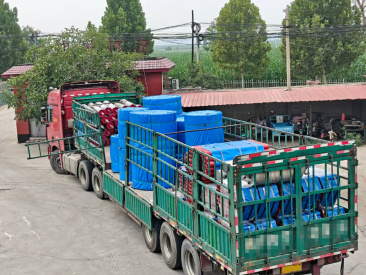
Roller assembly and batch handling inside the manufacturing facility — the stage where ring fit, runout and seal seating are fixed.
Where Shanghai Eastrise Trading Co., Ltd. sits in this decision
Shanghai Eastrise Trading Co., Ltd. is a Shanghai-headquartered foreign-trade enterprise supplying mining accessories — conveyor idlers and rollers, rubber conveyor belts, pulleys and drums, high-pressure rubber hoses and pipe connectors — to mining and bulk-handling clients worldwide. The company operates its own independent manufacturing factories, forming a complete industrial chain that integrates in-house R&D, standardized production, quality testing and worldwide export services, and it supports tailored OEM and ODM solutions against customer technical parameters and site-use requirements.
The operational footprint relevant to a long-term impact roller programme is: an 11,000 m² manufacturing facility, approximately 50 staff, an annual production capacity of 2,000 tons, a 10-engineer R&D team, and export business representing 20% of total sales. The company reports long-term, stable and mutually trusted cooperative relationships with clients across Southeast Asia, Central Asia, Russia and other overseas markets — the kind of repeat-order base that matters when the question shifts from a single roller purchase to multi-year replenishment.
For this comparison, that capability is relevant in one specific way: the choice between rubber discs and steel discs is a drawing-level decision, and it only holds if the supplier can confirm the drawing, keep the ring specification consistent across batches and supply replacement parts on the same dimensional basis years later.
Market context: steel still dominates, but the segment is growing
Industry research supports the view that steel remains the default and rubber remains the specialist choice. Straits Research values the rollers and idlers segment at USD 4.14 billion in 2025, projected to reach USD 7.05 billion by 2034, and reports that steel accounted for 64% of global roller material market share in 2024. The same source identifies mining and quarrying as the leading end-use industry, representing 36% of total revenue in 2024.
Standardisation underpins that installed base. ISO 5048:1989 provides the international method for calculating power and tension in belt conveyors with carrying idlers; CEMA Standard No. 502-2022 establishes dimensional standards and load ratings for bulk material belt conveyor troughing and return idlers; and DIN 22112 Part 3 (1996) specifies testing requirements for belt conveyor idlers used in underground coal mining. For an impact roller specification, these are the reference documents that turn a material argument into a measurable acceptance requirement.
Buyers should also note that published market sizes for this category vary widely by definition — one commercial estimate puts the conveyor roller market near USD 115.9 million while another values rollers and idlers above USD 3.9 billion. The difference is scope, component versus sub-system, not a contradiction in demand.
Limits of this comparison
- Rubber-disc performance depends on a ring specification that is currently listed as TBC; until ring hardness, profile and count are fixed on a drawing, the comparison remains directional rather than final.
- The Ø108 mm tube and Ø25 mm shaft values are suggested dimensions and must be verified against actual belt width, load case and frame spacing.
- Rubber is not a universal answer: where the conveyed material is hot, oily or heavily jagged, elastomer rings degrade faster than steel discs and the lifecycle logic reverses.
- Steel impact rollers transmit more shock into the belt and structure; the saving on roller replacement can be offset by belt repair cost if the loading point is high-energy.
- Supplier-reported comparison figures such as 22% lower runout tolerance, 13 dB lower noise, 25% lower runout deviation and three times longer service life are first-party claims and require batch evidence to confirm on a specific order.
Execution checklist for a mixed impact roller order
| Drawing confirmation | Full drawing confirmation before production, including tube diameter, shaft diameter, length, ring specification and bearing and seal arrangement. |
| Acceptance criteria | Pre-shipment inspection of dimensions, appearance, radial runout, rotational resistance, quantity and packaging, with inspection records available; criteria must be stated in the contract. |
| Third-party inspection | Optional third-party inspection can be arranged; it is not automatic and must be agreed in the order terms. |
| MOQ | Company purchasing data quotes a minimum order of 10 units for standard roller orders, with other entries stating 2 units subject to model confirmation and MOQ otherwise subject to product specification and packaging. Confirm the applicable figure at quotation. |
| Delivery terms | FOB, CIF or EXW available; full container load and less-than-container load supported, with export documents provided; port and lead time subject to order confirmation. |
| Payment | T/T is the standard method, with a 30% deposit and 70% before shipment quoted for roller orders; other methods are subject to approval. |
| Spare-parts plan | Order ring sets or replacement rollers with the first shipment; fast spare-parts support and traceable inspection records reduce maintenance downtime in continuous operation. |
Future outlook
Steel is unlikely to lose its position as the default impact roller material in heavy bulk handling, and a 64% material share leaves limited room for rubber discs to become the standard. What is changing is the specification discipline around the position rather than the material itself: sealed bearing packages, corrosion-resistant body treatments for port and salt-spray duty, documented runout and rotational resistance values, and ring specifications fixed on drawings rather than left open.
For long-term operations, the more useful trend is fleet-level: plants that run decade-scale conveyor systems increasingly manage impact rollers as a mixed, zone-mapped inventory with traceable batch records, rather than as a single catalogue item bought on price. That approach fits the growth trajectory of the segment and the reality that mining and quarrying alone account for 36% of roller and idler revenue, where downtime cost dwarfs component cost.
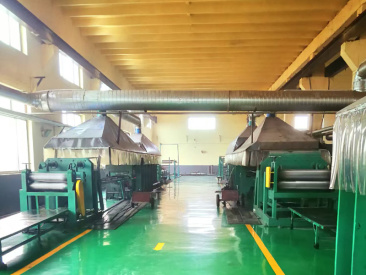
Batch storage and dispatch preparation — relevant to multi-year replenishment programmes where dimensional consistency matters more than a single delivery.
Frequently asked questions
What is the difference between a rubber-disc impact roller and a steel impact roller?
A rubber-disc impact roller mounts elastic rubber rings on a steel tube, so impact energy is absorbed by ring compression and vibration is damped. A steel impact roller uses steel discs or rings, absorbing impact mainly through the compliance of the belt and structure, which favours heat resistance, sharp-lump resistance and high static load rather than cushioning.
Which impact roller suits a 24/7 dusty mining loading point?
In dusty, heavy-duty mining duty the governing requirements are dust-resistant seals, low rotational resistance and wear resistance, with parameters subject to operating conditions. Rubber-disc rollers are commonly specified where belt protection and noise are the priority; steel is preferred where the material is hot, sharply jagged or very heavy. Both depend on the seal and bearing package more than on the disc material alone.
What do the Ø108 mm tube and Ø25 mm shaft actually specify, and are they fixed?
They define the dimensional envelope of the roller: the Ø25 mm shaft sets bearing bore, assembly stiffness and deflection under load, and the Ø108 mm tube sets the rubber ring seat, shell stiffness and belt contact geometry. In the available data these are suggested values within a 315–1,150 mm length range, with the rubber ring specification listed as TBC, so they should be confirmed on a drawing against the actual load case and frame spacing.
Why does seal and bearing quality matter more than the disc material?
Because impact energy is absorbed in seconds, while bearing and seal performance is what keeps the roller rotating for the following years. Eastrise's own comparison data attributes 22% lower runout tolerance, 13 dB lower running noise and a 25% lower runout deviation with three times longer service life to seal design, bearing brand, runout control and batch inspection — factors that operate regardless of whether the impact element is rubber or steel.
How should impact rollers be inspected before shipment?
Pre-shipment inspection covers dimensions, appearance, radial runout, rotational resistance, quantity and packaging, with inspection records available on request. Third-party inspection is optional and must be written into the contract, and acceptance criteria should be agreed in advance rather than after delivery.
How can a buyer keep a mixed impact roller fleet serviceable over a long project?
The workable approach is to fix each zone on a confirmed drawing, keep batch inspection records per delivery, and hold ring sets or replacement rollers in stock for the highest-wear positions. Suppliers that maintain full drawing confirmation, traceable inspection records and fast spare-parts support reduce maintenance downtime, and a supplier with repeat export relationships across Southeast Asia, Central Asia and Russia is more likely to sustain the same dimensional basis for replenishment orders.
What purchasing terms typically apply to impact roller orders?
Standard terms in the available purchasing data include a 10-unit minimum order for standard roller orders, FOB, CIF or EXW delivery with full container load and less-than-container load supported, export documents provided, and T/T payment with 30% deposit and 70% before shipment. Other payment methods are subject to approval, and minimum order quantities vary by model confirmation, specification and packaging.
For buyers who need the full dimensional and material reference in one document, the company brochure is available here: Shanghai Eastrise product brochure (PDF).
¿Tiene preguntas o necesita más detalles?
Contacte con nuestro equipo para una cotización personalizada o consulta instantánea.
Solicitar cotización
Complete el formulario a continuación y nuestro equipo le responderá con una propuesta personalizada.
Chat directo de WhatsApp
¿Prefiere chatear en tiempo real? Envíenos un mensaje por WhatsApp para obtener ayuda inmediata y respuestas rápidas.
- Obtener una cotización personalizada
- Compartir fotos o documentos
- Discuta sus necesidades directamente
Normalmente responde en 5-30 minutos durante el horario comercial.