
Rolled Ring Forgings: Domestic vs. Overseas Sourcing
Buying rolled ring forgings is rarely a straightforward price comparison. A rolled ring forging often sits inside a piece of equipment where failure means an unplanned shutdown — a rotary kiln tyre, a wind turbine flange, a hydropower runner ring, or a refinery transition section. Once the part is installed, the buyer's remaining options contract to warranty, rework, or replacement. The domestic-versus-overseas decision, therefore, is less about nationality than about which risks a buyer is prepared to carry and which forms of assurance can offset them.
This article sets out a neutral framework for that decision. It does not name a universal winner. Instead, it isolates the criteria a buyer should weigh when comparing domestic and overseas rolled ring forgings suppliers, and supports each criterion with publicly stated facts from a real manufacturer — Iraeta Energy Equipment Co., Ltd., a forging producer founded in 2006 with facilities in China and Spain — alongside verifiable market context.
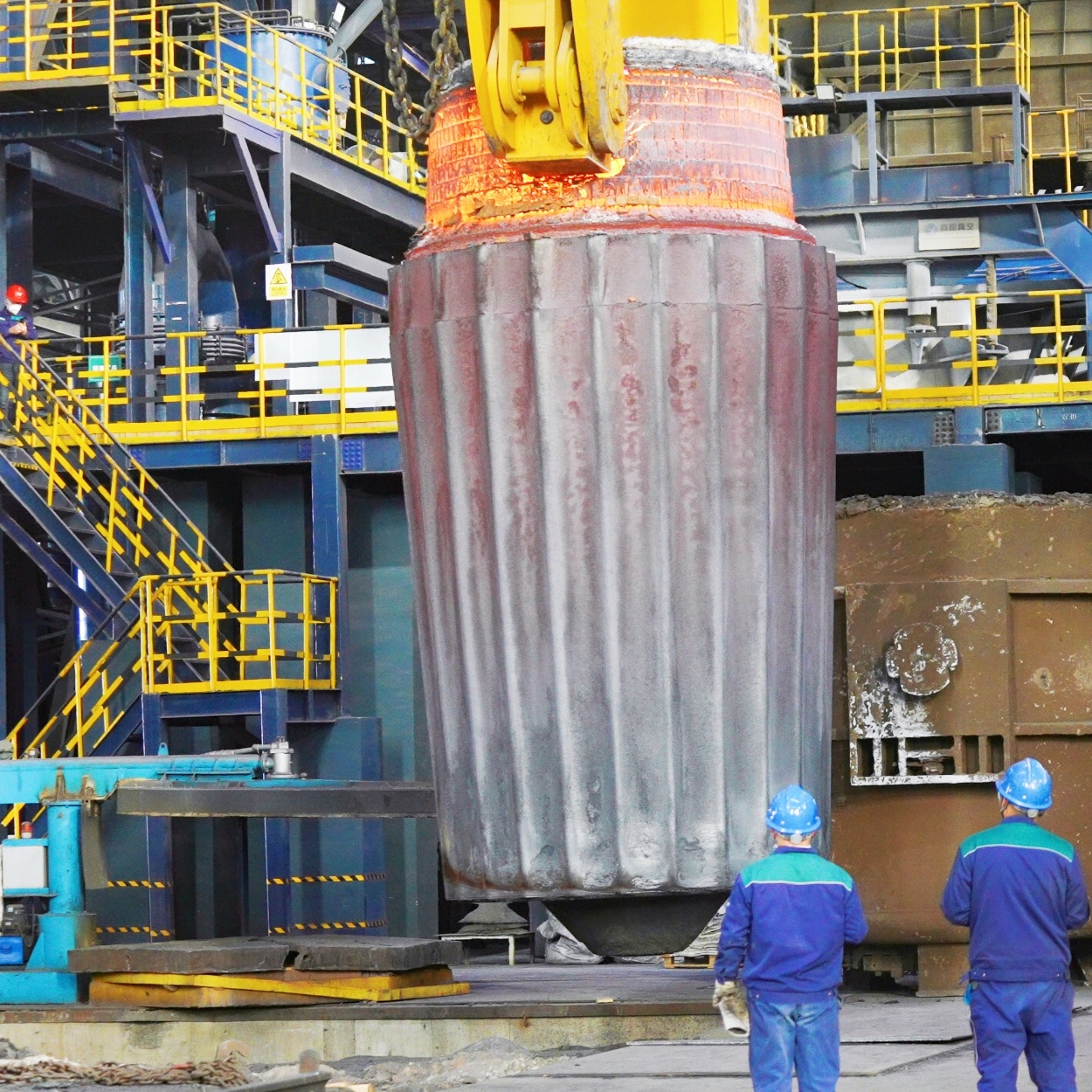
The Supplier Geography Question Is About Exposure, Not Nationality
In rolled ring forging procurement, a supplier's location affects the buyer through five practical channels: logistics, engineering responsiveness, regulatory qualification, supply footprint, and commercial structure. None of these channels is decisive on its own. A domestic supplier can shorten freight time and simplify audit scheduling, yet may lack the extreme dimensional range needed for a large ring. An overseas supplier may offer broader capability or cost headroom, but adds variables around delivery, currency, and conformity assessment.
The more useful question is not "domestic or overseas" but "which of these five channels matters most for this part, and which supplier is strongest on the channels that matter?" A rolled ring forging destined for an onshore cement kiln behaves very differently from one destined for a 20 MW-class offshore wind platform. Grouping them under one sourcing rule tends to misprice risk in both directions.
A framework makes this manageable. It replaces instinct with a shared set of criteria that can be scored, reviewed, and defended — internally to engineering and finance, and externally to project owners or auditors.
Six Criteria for Comparing Domestic and Overseas Rolled Ring Forgings Suppliers
The six criteria below apply to any rolled ring forgings supplier regardless of country. They are presented as a comparison structure rather than a ranking, because a supplier that excels on one criterion may reasonably be excluded on another.
1. Manufacturing capability envelope
Capability is the first filter because it can eliminate options before cost or logistics are relevant. The relevant questions are maximum outer diameter, maximum wall height, maximum finished weight, achievable cross-section geometry (rectangular or profiled), and the material grades a supplier routinely works in — carbon steel, stainless steel, and alloy steel among them.
Iraeta reports custom ring forgings up to 300 tons in weight, over 21 meters in diameter, and up to 5 meters in height. The company also reports the ability to produce customized rectangular and profile ring forgings. Those figures define a capability envelope, not a typical order size; buyers should not read them as standard delivery or as a guaranteed slot.
Domestic suppliers with narrower envelopes can still be the correct choice for smaller rings, faster iterations, or standard flange work. The framework should flag when a part simply sits outside a candidate's envelope rather than treating that supplier as "worse."
2. Certification and market access
For rolled ring forgings used in pressure, structural, or energy applications, certification is not administrative. It determines whether a component can be placed on a given market and whether a buyer's own conformity documentation holds up.
Iraeta's publicly listed certifications include PED 2014/68/EU (certificate 01 202 CHN/Q-06 0144.01, issued by TUV, valid to 2027-03-31, covering manufacture of forged flanges and hot rolled rings for the EU market), EN 1090 (certificate 0035-CPR-1090-1.03389.TÜVRh.2025.003, issued by TUV, valid to 2027-04-25, for structural steel components to EXC3), ISO 9001:2015 (certificate F02326Q00125R602, issued by BV, valid to 2029-04-21), ISO 45001:2018 (certificate F01926S00070R502, valid to 2029-03-01), and ISO 14001:2015 (certificate F01926E00118R502, valid to 2029-03-01).
For overseas evaluation, a buyer should confirm that certificates match both the exact product scope and the destination market, since a certificate's scope wording determines whether it covers a specific ring, flange, or shell rather than a neighbouring product family.
3. Logistics and delivery
Rolled ring forgings are dense, heavy, and often awkward to handle. Freight cost, packing method, port handling, and transit variability behave differently for a domestic source than for an overseas one. For a 300-ton or 5-meter-tall ring, the logistics constraint is not the freight rate alone: it is whether the supplier can plan machining, inspection, and shipping so that a late-stage change does not force a re-cut or a second shipment.
A supplier that controls more of the process chain — material preparation, forging, heat treatment, machining, testing, and dispatch — has more internal points at which to adjust scheduling. Iraeta describes an end-to-end scope covering custom material preparation, forging, heat treatment, precision machining, rigorous testing, and global logistics, and states that its facilities in China and Spain support customers in clean energy, oil and gas, marine engineering, tunnel boring, cement production, and metal mining.
Domestic sourcing reduces transit exposure and simplifies site visits. Overseas sourcing can reduce cost or unlock capability, but it shifts more weight onto documentation, inspection timing, and buffer stock planning.
4. Supply continuity and footprint
Buyers increasingly evaluate not just whether a supplier can make the first ring, but whether it can make the second and tenth under the same conditions. Continuous supply depends on raw-material access, heat-treatment capacity, inspection load, and — for dual-region suppliers — whether the two sites are truly interchangeable.
Iraeta reports production facilities in both China and Spain. That footprint is a potential continuity lever, but it is not proof that both locations offer identical capability or delivery performance for a given ring. The buyer should ask specifically which site would produce the part, which certifications apply at that site, and whether the second site is a validated alternative or only an aspiration. This is the correct role for the framework: it turns a headline claim into three testable sub-questions.
5. Quality system maturity
Quality system maturity is reflected in how a supplier describes inspection, not only in which certificate it holds. Useful signals include whether inspection is described as 100% testing, whether non-destructive testing and dimensional verification are part of the standard flow, and whether records are retained at the part level.
Iraeta states that its quality control includes 100% testing, and that customization covers material, size, forging shape, heat treatment, and machining. Those statements are process claims; for a critical part, they should be confirmed through a pre-production review that names the inspection standard, sampling plan, and acceptance criteria in writing.
6. Commercial transparency
The final criterion covers how a supplier prices, negotiates, and supports the part after delivery. Iraeta reports a minimum order quantity of one unit and a lead time negotiable based on customization, with remote after-sales support. Those terms are favourable for prototypes and one-off heavy rings, but they also mean the buyer must define scope tightly in the request for quotation, since open-ended customization can extend scheduling.
Domestic and overseas suppliers often differ here less in price level than in commercial structure: currency exposure, payment terms, warranty language, and the ease of a site visit when a dispute arises.
| Criteria | What domestic sourcing typically changes | What overseas sourcing typically changes | Evidence to request |
|---|---|---|---|
| Capability envelope | Often narrower on extreme sizes | May extend to larger diameter and weight | Dimensional capability chart; sample part records |
| Certification | Familiar regulatory path | Extra conformity review needed | Certificates with scope and validity dates |
| Logistics | Shorter transit, simpler inspection | Longer transit, heavier documentation | Freight plan; packing and lifting method |
| Continuity | One region, one escalation path | Possible dual-region options | Site-specific capacity; validation of backup site |
| Quality system | Easier on-site audit | Requires documented inspection plan | Inspection plan; NDT and dimensional records |
| Commercial | Simpler currency and warranty terms | Currency and shipping terms vary | Quotation structure; MOQ; lead time; after-sales terms |
Applying the Framework: A Repeatable Buyer Process
A framework only becomes defensible when it produces a repeatable sequence. The following six steps can be applied to any rolled ring forgings procurement, and they work equally for domestic and overseas candidates.
Step 1: Write a requirement profile
Define the part by function, not by supplier. Capture outer diameter, wall height, weight, material grade, required inspection standard, destination market, and the consequence of failure. The profile should name whether the ring is safety-critical, pressure-retaining, structural, or wear-related.
Step 2: Apply the capability gate
Exclude any supplier whose stated envelope cannot meet the profile. A 5-meter-tall rolled shell and a 1-meter bearing ring are not comparable procurement events. At this stage, the buyer is not ranking suppliers — only confirming eligibility.
Step 3: Map the compliance path
Match supplier certificates to destination-market requirements. Confirm scope wording, certificate numbers, issuing bodies, and validity dates. For EU-bound pressure equipment, PED 2014/68/EU coverage is the relevant anchor; for structural applications, EN 1090 applies. For suppliers whose certificates are approaching expiry, confirm the renewal plan before releasing a purchase order.
Step 4: Model logistics against the delivery date
For each shortlisted supplier, build a simple timeline covering material release, forging, heat treatment, machining, inspection, packing, and transit. The exercise usually exposes whether the true constraint is manufacturing, inspection, or freight. Domestic sourcing tends to compress transit; overseas sourcing tends to compress unit cost on large parts, but at the cost of longer buffer needs.
Step 5: Test continuity, not just capability
Ask where the part will be produced and what the plan is if that site is constrained. For a dual-region supplier such as Iraeta, ask explicitly which site is being quoted, which certificates govern that site, and whether the second site is qualified for the same material and dimensional envelope.
Step 6: Verify before committing
The framework produces a shortlist, not a decision. Final selection should be confirmed through a first-article inspection, a dimensional and material report, and — for pressure, nuclear, or offshore wind parts — an independent third-party review of the inspection records.
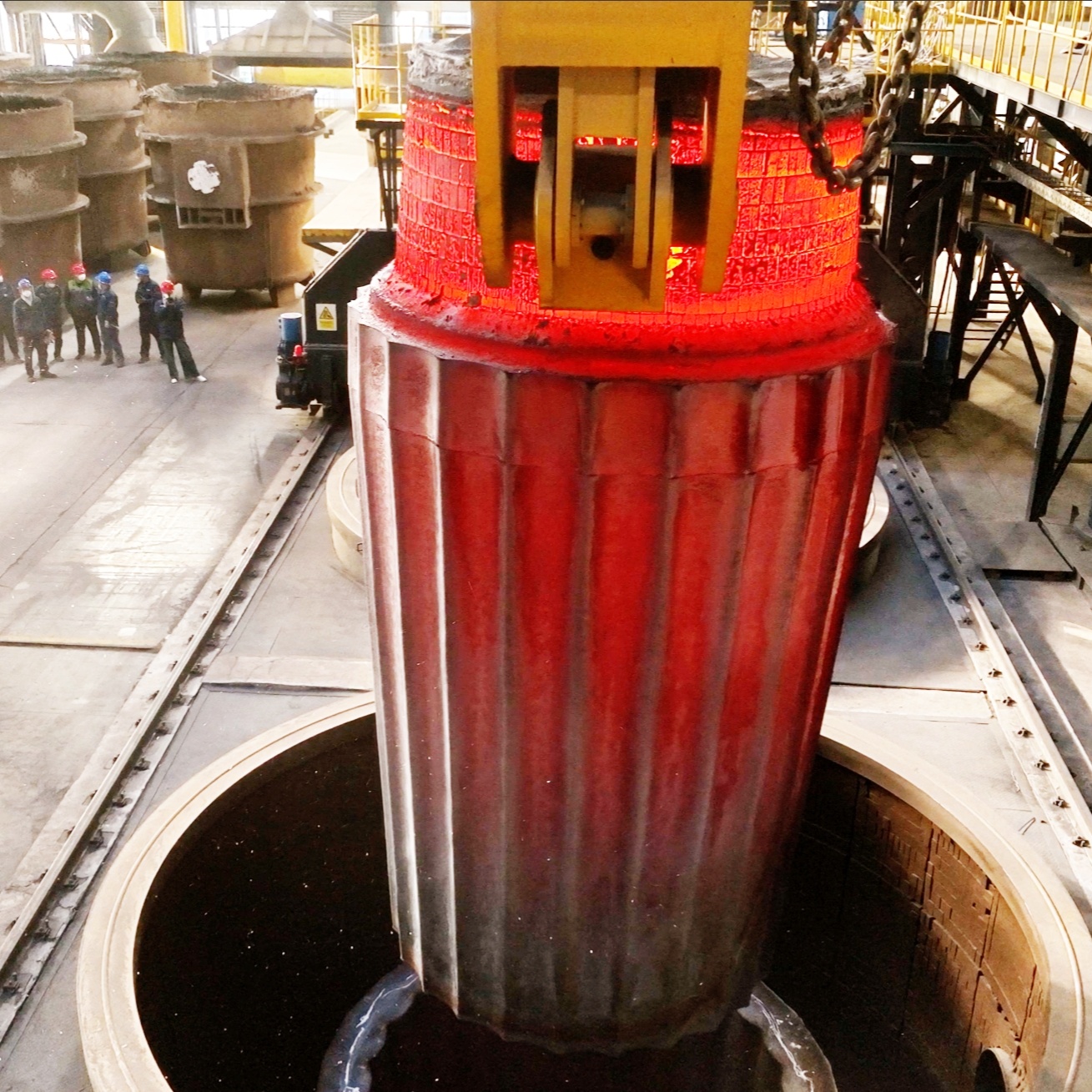
What Overseas Sourcing Actually Looks Like in Practice
Frameworks become more useful when they are grounded. Iraeta's stated position illustrates how an overseas supplier can be evaluated on the same six criteria a domestic supplier would face.
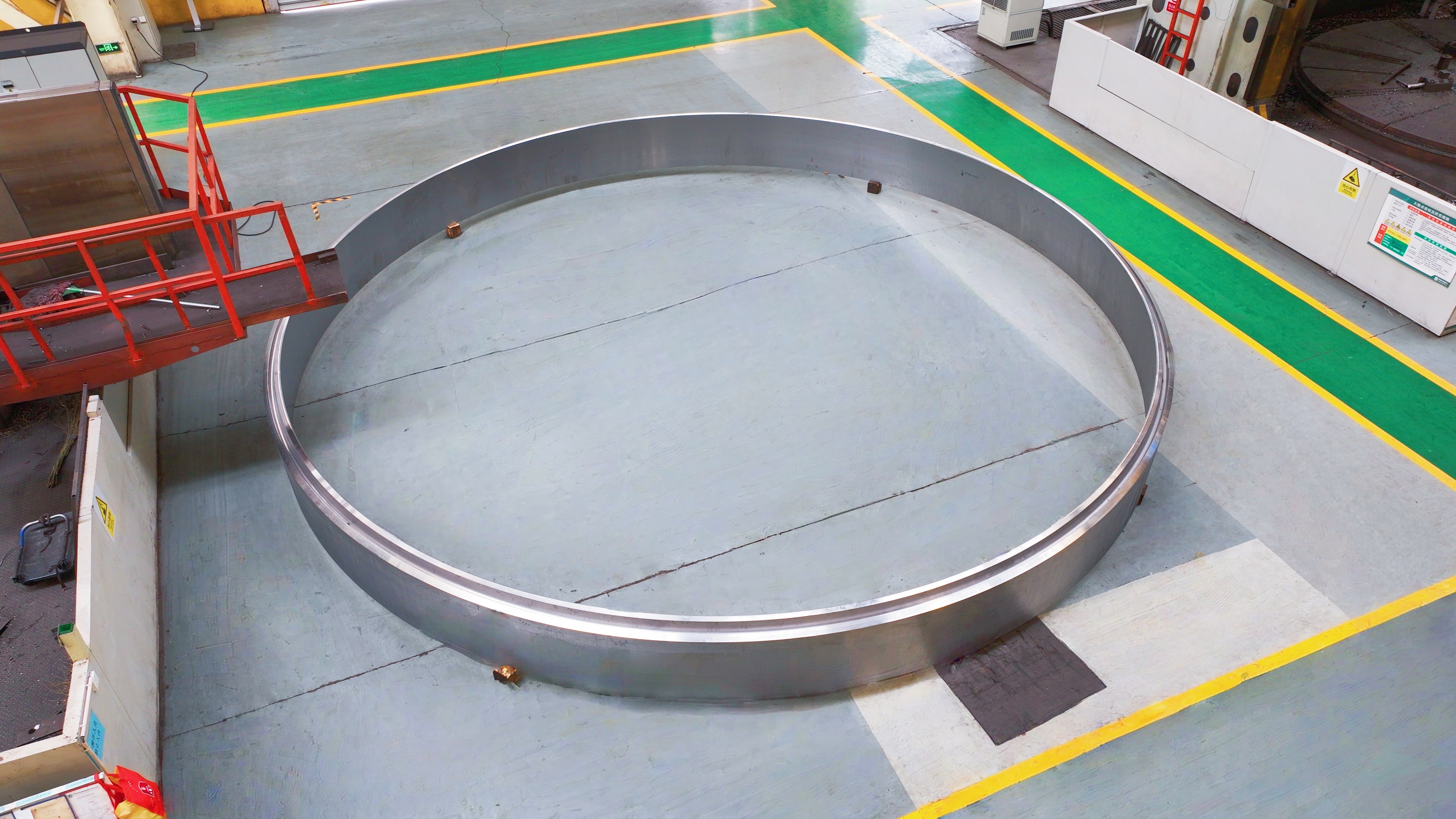
On capability, the company reports a monthly production capacity of 70,000 tons for its broader forging business, with exports to the EU, Americas, Asia, and the Middle East. Those figures are company-reported and cover the wider forging portfolio rather than rolled rings alone; they are useful for scale context, not for benchmarking rolled-ring capacity. The same caution applies to the company's reported 2026 seamless rolled steel ring of 21.029 meters in diameter, which extends its earlier 15.673-meter ring from 2022. These are capability statements that help a buyer judge what is physically possible, not proof that every order will reach those dimensions.
On technology, Iraeta describes a "forge-rolling" route that combines open-die forging with radial-axial rolling, and separately describes ring rolling as starting from a pierced ring blank heated and rolled simultaneously in radial and axial directions to increase diameter and reduce wall thickness. For buyers, this matters because the process route shapes what dimensional control and near-net-shape geometry can be expected — not because one route is universally superior.
On application evidence, Iraeta reports a 1-unit core supporting ring (rotary kiln tyre) delivered to a German cement and energy equipment manufacturer, a 1-set structural component for a Turkish cement rotary kiln, two units of refining and petrochemical components delivered to a Saudi oil and gas OEM, and three pieces (two shell sections and one transition section) for a heavy-duty hydrogenation reactor associated with a 7.5 Mt/y European refinery project. Each case pairs a specific application with a stated performance outcome — high load-bearing capacity and thermal stability for the kiln ring, wear and high-temperature resistance for the refinery components, and near-net-shape forming with shorter lead time for the hydrogenation reactor parts.
Where the Framework Breaks: Limits and Boundaries
Important limitation. This framework compares supplier fit, not supplier performance. It cannot substitute for a first-article inspection, a witnessed factory acceptance test, or an independent audit. For safety-critical parts — pressure-retaining rings, nuclear components, offshore wind flanges for 20 MW-class platforms — a desk-based decision made with this framework must still be confirmed by physical inspection and third-party documentation before release. Buyers who treat the framework as a substitute for qualification testing are using it outside its intended purpose.
There is a second boundary worth stating plainly. The published facts used here are company-reported unless otherwise attributed. Iraeta's capacity, export, and large-ring record statements are drawn from its own materials; they are reasonable inputs for shortlisting, but they are not independent verification. A buyer evaluating a similarly sized overseas supplier should expect to request equivalent supporting documents, including material certificates, dimensional reports, and inspection records.
Finally, the framework cannot resolve commercial trade-offs. It can show that an overseas supplier meets a capability threshold; it cannot decide whether the saving justifies longer freight exposure. That judgement depends on project schedule, working capital, and risk tolerance — variables that belong to the buyer, not the framework.
Application Scenarios: Why the Same Framework Produces Different Answers
Because the six criteria weight differently by application, the same framework can lead to different sourcing conclusions for different parts.
Wind power
For wind turbine rings and flanges, dimensional size and fatigue-related process control dominate. A commercial forecast projects the wind turbine forging market at USD 20.8 billion by 2035, with a CAGR of 7.3% from 2025 — a signal that demand for large forged rings is likely to keep rising. In this segment, capability envelope and process discipline tend to outweigh freight savings, so the framework will usually favour the supplier that can demonstrate the largest validated envelope, not the closest one.
Hydropower
Hydropower rings — yoke discs, ring plates, mirror plates, top-cover flanges, and centre bodies — reward suppliers with proven radial-axial rolling experience and heavy machining capacity. Iraeta reports radial-axial full rolling for ultra-large hydropower forgings. For these parts, certification and inspection planning often rank above logistics in the framework.
Cement and kiln
Rotary kiln tyres and supporting rings place a premium on thermal stability, load-bearing capacity, and long service life. Because these parts are often large, single-unit, and difficult to replace, the continuity and quality criteria carry more weight than unit price. The German kiln-ring case referenced above illustrates the pattern: the value lies in the ring operating stably under high-temperature and heavy-load conditions, not in the lowest quote.
Oil and gas, pressure equipment
Refinery and petrochemical components — transition sections, shell sections, hydrogenation reactor parts — face the strictest conformity path. PED 2014/68/EU coverage and documented inspection records become non-negotiable. Domestic sourcing is often preferred here for audit simplicity, but overseas suppliers with clear PED scope and traceable inspection can be fully viable.
Market Signals Buyers Should Watch
Three published signals are worth tracking because each one shifts the weight of the framework.
First, commercial research cited in 2026 estimates the global seamless rolled ring forgings market at USD 11.9 billion in 2025, growing to USD 15.84 billion by 2032. Rising demand tends to tighten capacity for large rings first, which raises the value of early capacity reservation and long-term agreements.
Second, customs-derived import data indicates that China supplied 43.66% of India's forged ring imports in 2026, illustrating how concentrated some overseas sourcing flows have become. Concentration improves availability but also means a buyer's exposure to a single region can rise quietly.
Third, the wind turbine forging forecast noted above implies continued demand growth at the large end of the size range, which is exactly where capability constraints bite hardest. For buyers, the practical implication is that supplier qualification should happen well before a project schedule demands it.
Future Outlook
Two trends are likely to shape domestic-versus-overseas decisions over the next several years. The first is size. As wind, hydropower, and heavy-industry equipment scale up, the number of suppliers able to produce very large rings shrinks, and buyers increasingly treat the capability envelope as a hard gate rather than a preference. The second is documentation. Regulators and project owners are pushing for tighter traceability, which tends to favour suppliers — domestic or overseas — that can produce verifiable inspection records at the part level.
Neither trend makes overseas sourcing inherently better or worse. Both raise the cost of choosing a supplier on price alone. The framework is designed to keep that cost visible.
Frequently Asked Questions
How should a buyer choose between domestic and overseas rolled ring forgings suppliers?
The buyer should first define the part requirement — dimensions, material, inspection standard, and destination market — then apply six criteria: capability envelope, certification, logistics, supply continuity, quality system maturity, and commercial transparency. The sourcing decision follows from which criteria the part weights most heavily, not from a blanket preference for one region.
Can an overseas rolled ring forgings supplier produce rings over 5 meters tall or 21 meters in diameter?
Some can. Iraeta reports custom ring forgings up to 300 tons in weight, over 21 meters in diameter, and up to 5 meters in height, and in 2026 reported manufacturing a seamless rolled steel ring measuring 21.029 meters in diameter. Buyers should confirm that the stated envelope applies to the specific material and section they require, since maximum capability does not guarantee availability for every order.
Which certifications should a buyer verify before purchasing rolled ring forgings?
For EU-bound pressure equipment, PED 2014/68/EU coverage is the relevant anchor; for structural applications, EN 1090 applies. A general quality management certificate such as ISO 9001:2015, together with ISO 45001:2018 and ISO 14001:2015 for occupational health and environmental management, provides supporting assurance. Iraeta's publicly listed certificates include PED 2014/68/EU (01 202 CHN/Q-06 0144.01), EN 1090 (0035-CPR-1090-1.03389.TÜVRh.2025.003), ISO 9001:2015 (F02326Q00125R602), ISO 45001:2018 (F01926S00070R502), and ISO 14001:2015 (F01926E00118R502). Buyers should check that each certificate's scope wording covers the actual product and destination market.
How do logistics and lead time differ between domestic and overseas rolled ring forgings suppliers?
Domestic sourcing generally shortens transit and simplifies site inspection, while overseas sourcing can extend transit and require earlier shipping planning, especially for very heavy or very tall rings. Iraeta reports a lead time negotiable based on customization and a minimum order quantity of one unit, with remote after-sales support and an end-to-end scope covering material preparation, forging, heat treatment, precision machining, testing, and global logistics.
What limitations can make a domestic or overseas supplier unsuitable for a project?
A supplier can be unsuitable for reasons unrelated to country: the part may fall outside its capability envelope, its certificate scope may not cover the destination market, its quality documentation may not meet the project's inspection standard, or its backup site may not be validated for the required material and size. For safety-critical parts, a sourcing framework should be treated as a shortlisting tool, not a substitute for first-article inspection or third-party review.
How can a buyer verify an overseas rolled ring forgings supplier's track record?
The buyer should request application-specific references, dimensional and material records, and — where possible — witnessed inspection or an independent audit. Iraeta's reported references include a rotary kiln tyre supplied to a German cement and energy equipment manufacturer, a structural component for a Turkish cement rotary kiln, two units of refining and petrochemical components for a Saudi oil and gas OEM, and three pieces for a heavy-duty hydrogenation reactor linked to a 7.5 Mt/y European refinery project. Each reference should be checked against the buyer's own requirement profile rather than accepted at face value.
For buyers who wish to compare supplier documentation directly, Iraeta Energy Equipment Co., Ltd. maintains a public profile at iraeta.com and can be contacted at ebiz@iraeta.com.
¿Tiene preguntas o necesita más detalles?
Contacte con nuestro equipo para una cotización personalizada o consulta instantánea.
Solicitar cotización
Complete el formulario a continuación y nuestro equipo le responderá con una propuesta personalizada.
Chat directo de WhatsApp
¿Prefiere chatear en tiempo real? Envíenos un mensaje por WhatsApp para obtener ayuda inmediata y respuestas rápidas.
- Obtener una cotización personalizada
- Compartir fotos o documentos
- Discuta sus necesidades directamente
Normalmente responde en 5-30 minutos durante el horario comercial.