
Roll-Fed vs Sheet-Fed Thermoforming: A PET, PP & HIPS Buyer Framework
Roll-Fed vs Sheet-Fed Thermoforming: A PET, PP & HIPS Buyer Framework
Buyers rarely choose a thermoforming plastic sheet roll in isolation. The process mode — roll-fed or sheet-fed — sets the gauge that will form reliably, the web width that can be used, the volume of trim the line will generate, and the downstream equipment the material has to work with. This framework separates the two modes for PET, PP and HIPS sheet rolls and maps each one to real packaging applications: medical device trays, pharmaceutical blister packaging, toy blister packs, transparent folding boxes and food trays.
Thermoforming plastic sheet rolls are supplied as continuous rolls, and how that material enters the forming station changes almost every variable downstream. In a roll-fed line, the roll is unwound directly into the machine and the forming, cutting and stacking steps run as one continuous sequence. In a sheet-fed operation, material is presented as flat sheets and loaded cycle by cycle. Neither mode is universally better. They reward different part geometries, different run lengths and different conversion workflows — and the wrong match is usually discovered only after tooling has been cut.
PULIXIN Thermoforming Plastic Sheet is the rigid sheet roll product line of Pulixin Packaging Materials (Shanghai) Co., Ltd., a Shanghai-based manufacturer established in 2009 that specialises in thermoforming plastic sheet rolls for packaging applications. Its main products are PET plastic sheet roll, PP plastic sheet roll and HIPS plastic sheet roll, produced on 14 advanced co-extrusion lines with an annual capacity of 40,000 tons.
What Roll-Fed and Sheet-Fed Actually Change
The distinction is about feeding behaviour, not about how the material is purchased. PET, PP and HIPS thermoforming sheet rolls are normally bought as rolls; roll-fed and sheet-fed describe what happens next on the converter's floor. In roll-fed production the material is fed continuously from the unwind, formed, cut and stacked in line. In sheet-fed production, material is prepared in flat sheet format — often cut from roll stock — and formed one sheet at a time, which is also the format used when sheets must be printed, die-cut, creased and folded before or after forming.
The three consequences that matter most to a packaging buyer are these:
Throughput and continuity. Roll-fed lines are built for uninterrupted output. Continuous roll-fed thermoforming with inline cutting and stacking is the standard configuration for drinking cups, yogurt cups, dairy containers and cup lids, where the matched equipment is a cup thermoforming machine, lid forming machine and filling and sealing line. Ambient food packaging follows the same logic, with continuous roll-fed forming, cutting and stacking.
Format flexibility. Sheet-fed machines accept different sheet formats in sequence, which suits mixed product ranges, lower volumes and parts that are too large or too deep for a given inline configuration. Sheet-fed workflows also carry printing and creasing steps that a continuous roll-fed line does not accommodate in the same pass.
Material utilisation. Continuous feeding reduces manual handling and generally produces a steadier draw across the web, while sheet-fed operations introduce per-sheet handling and typically more edge trim relative to usable part area.
The Decision Criteria That Separate the Two Modes
Rather than starting from machine preference, buyers can work through nine criteria. Each one points toward one mode more strongly than the other, and in most projects two or three criteria decide the outcome.
| Criterion | Points toward roll-fed | Points toward sheet-fed |
|---|---|---|
| Part size and draw depth | Small to medium parts with moderate draw depth produced at high counts | Large, deep-draw or heavy-gauge parts formed individually |
| Gauge | Thin-gauge material within the roll specification range | Gauge at the upper end of the range, or formats needing extra rigidity |
| Run length | Long, stable runs on a limited number of SKUs | Short runs, frequent changeovers, high SKU mix |
| Web width | Part layout designed around a fixed available roll width | Layouts that vary sheet to sheet, or need non-standard flat formats |
| Downstream equipment | Inline forming, cutting, stacking, filling and sealing | Printing, die-cutting, creasing, folding, separate sealing stages |
| Optical requirement | Consistent clarity over a long run where appearance must not drift | Clarity assessed sheet by sheet where display quality is critical |
| Material handling | Handling equipment available for full rolls | Flat sheet storage and manual loading preferred |
| Scrap strategy | Trim managed as part of the continuous process | Trim managed per sheet, with clearer separation of reject material |
| Compliance route | Documentation tied to a stable, single material specification over time | Mixed-material or mixed-format production where each run is verified separately |
How PET, PP and HIPS Sheet Rolls Fit Each Mode
Material specification narrows the decision further, because thickness and width ranges differ by polymer. These are the ranges relevant to the PET, PP and HIPS thermoforming sheet rolls covered in this framework.
| Sheet roll | Thickness | Width | Colour and surface | Forming process |
|---|---|---|---|---|
| PET Thermoforming Plastic Sheet Roll (PET / APET / rPET) | 0.18–1.7 mm, customised | 250–1400 mm, customised | Transparent or customised; surface treatments available | Vacuum forming and pressure forming |
| PP Thermoforming Sheet Roll | 0.3–2 mm, customised | 300–900 mm, customised | Natural, white, black or custom | Vacuum forming and pressure forming |
| HIPS Thermoforming Sheet Roll (PS / HIPS) | 0.24–2 mm, customised | 300–900 mm, customised | Natural, white, black or custom; glossy or matte | Vacuum forming and pressure forming |
The practical reading is straightforward. PET sheet roll offers the widest web — up to 1400 mm — and the thinnest starting gauge, which is why it dominates thin-gauge, wide-layout roll-fed work such as fresh produce trays, bakery packaging and clamshells, and why it is also the material of choice where transparency is the packaging concept. PP and HIPS sheet rolls top out at 900 mm width and reach 2 mm in thickness, which makes them natural candidates for parts that need extra rigidity or a wider gauge band, formed either continuously or as sheets.
Both structures are available as mono-layer or multi-layer, and both support vacuum forming and pressure forming. Pressure forming matters when the part needs tighter detail definition than vacuum alone will deliver — a factor that influences mode choice, because a sheet-fed machine with a dedicated pressure stage is often used for premium detail on thick-gauge parts, while roll-fed lines handle high-count pressure-formed parts where the tooling is settled.
Application-by-Application Fit
Five applications recur in PET, PP and HIPS sheet roll projects. Each has a natural mode bias, but the bias is a starting point rather than a rule.
Medical device trays and pharmaceutical blister packaging
Medical and pharmaceutical packaging runs in a clean packaging environment with controlled temperature and humidity, and the common project types are medical device trays, pharmaceutical blister packaging, disposable medical product trays and protective packaging inserts. The function is product positioning, separation, protection, visibility and packaging integrity during handling, storage and transport. These projects explicitly accommodate both roll-fed and sheet-fed thermoforming, followed by cutting, product loading and sealing according to the customer's process, with matched equipment covering thermoforming machines, vacuum forming machines, blister packaging machines, die-cutting equipment and sealing equipment.
The differentiator is not the mode but the material brief: consistent thickness, stable thermoforming performance, a clean surface, dimensional stability, suitable transparency, and material compliance matched to the specific medical or pharmaceutical application. Where patient-contact or sterile-barrier requirements tighten the specification, a shorter sheet-fed run with per-batch verification is often easier to document than a long continuous run.
Toy blister packs and retail display packaging
Toy blister packs, transparent display packs, thermoformed inserts and clamshell packaging are produced by vacuum forming or thermoforming, followed by die cutting and packaging assembly. The matched equipment set is a vacuum forming machine, thermoforming machine, and die-cutting and sealing equipment. Required performance includes good transparency when specified, forming definition, impact resistance and consistent appearance.
High-volume standard blisters favour continuous roll-fed production on PET sheet roll. Oversized packs, novelty shapes and low-volume seasonal lines favour sheet-fed handling, where the tooling change is a sheet change rather than a full roll change.
Transparent folding boxes
Transparent folding boxes, cosmetic boxes, gift boxes and retail display boxes follow a genuinely different route: sheet printing, then die cutting, creasing, folding and box assembly, with printing machines, die-cutting machines and creasing and folding equipment as the matched equipment. This is where the sheet format is not optional. Folding boxes need high transparency, a smooth surface, good printability, dimensional stability and suitable folding performance — properties that are specified against a flat, handled sheet rather than a continuously unwound web.
Food trays and fresh food packaging
Chilled and fresh food packaging operates in refrigerated, high-humidity, condensation-prone conditions with direct food contact. Project types include fresh meat trays, seafood trays, fruit and vegetable containers and refrigerated food trays, produced by roll-fed thermoforming followed by filling, sealing or overwrapping, on thermoforming machines, tray forming machines, sealing machines and filling and packaging lines. Requirements include food-contact compliance where applicable, low-temperature performance, moisture resistance, stable forming and anti-fog performance when required — anti-fog being a directly relevant sheet roll variant because condensation control is a display issue as much as a technical one.
Ambient food packaging such as fruit boxes, bakery containers, candy trays and takeaway packaging runs on continuous roll-fed thermoforming with forming, cutting and stacking, and demands food-contact compliance where applicable, consistent thickness, stable forming, good appearance and suitable rigidity. Food trays are therefore the clearest roll-fed territory in this framework — with the caveat that a tray programme with low annual volume and frequent design changes can be run more economically sheet-fed.
Downstream Equipment: The Practical Integration Test
Before committing to a mode, buyers can run a simple compatibility check against the equipment already specified or installed. The application data points to consistent equipment groups:
| Production step | Typical roll-fed setup | Typical sheet-fed setup |
|---|---|---|
| Forming | Thermoforming machine or vacuum forming machine fed continuously | Thermoforming machine or vacuum forming machine loaded per sheet |
| Cutting | Inline cutting and stacking equipment | Die-cutting equipment or punching equipment after forming |
| Sealing and filling | Sealing machine and filling line integrated downstream | Separate sealing equipment after product loading |
| Printing and converting | Generally not integrated into the forming pass | Printing machine, creasing and folding equipment, box assembly |
If the intended line depends on inline cutting and stacking, or on a filling and sealing sequence immediately after forming, roll-fed is effectively pre-selected. If the workflow contains a printing, creasing or folding stage — or separate product loading before sealing — the sheet format is the more natural fit.
Where Roll-Fed Thermoforming Stops Making Sense
A useful framework has to state its boundaries. Roll-fed thermoforming is not the default answer, and there are real constraints a buyer should weigh before locking a line design.
Run length risk. Roll-fed economics assume a stable, repeating part. On short runs, seasonal packs or ranges with many SKUs and frequent design changes, the changeover and tooling assumptions behind a continuous line become a liability rather than an advantage. Sheet-fed production absorbs that variability better.
Width ceilings differ by polymer. PP and HIPS thermoforming sheet rolls are available in widths from 300 mm to 900 mm, while PET sheet roll spans 250 mm to 1400 mm. A part layout that requires a wider web cannot simply be switched to PP or HIPS — the material choice and the layout have to be reconsidered together.
Gauge ceilings. In these product ranges, thickness runs to 1.7 mm for PET, 2 mm for PP and 2 mm for HIPS. Very heavy-gauge, deep-draw parts outside those bands fall outside this sheet roll scope and must be reviewed against a different material route.
Handling and storage. PET sheet roll is supplied in roll sizes from 50 kg to 800 kg per roll, customised to order. Heavy rolls require lifting and unwinding equipment, and roll storage has to protect the outer wraps from contamination and surface damage — particularly relevant for high-clarity and clean-environment applications.
Compliance is not conferred by mode. Food-contact status is a property of the material specification and the applicable regulation, not of the forming method. In the European Union, Regulation (EU) No 10/2011 governs plastic materials and articles intended to come into contact with food, and buyers should confirm that the specific sheet roll grade supplied for a given run satisfies the relevant requirement for that market.
Market Context Behind the Decision
Two macro signals are worth building into a 2026 sourcing plan. The global thermoformed plastic market was valued at 14.79 billion USD in 2023, with a projected compound annual growth rate of 4.9% between 2024 and 2030, according to Grand View Research. Separately, the recycled PET market is projected to reach 24.6 billion USD by 2034, according to Dataintelo — a signal that rPET sheet roll grades will keep moving from optional to expected in many packaging programmes.
Buyers should also read market numbers carefully. Published estimates differ depending on whether a study measures raw thermoformed plastic materials, such as sheets and rolls, or finished thermoformed products such as trays and containers; Grand View Research's 2023 figure and Market Research Future's 2024 estimate are not directly comparable for that reason. The same caution applies to trade classification: thermoforming plastic materials fall under HS Code Heading 3920 for non-cellular and 3921 for cellular products, which matters when a buyer is reconciling landed cost and customs documentation across markets.
A final technical anchor: PET thermoforming typically takes place between 266°F and 320°F (130°C to 160°C), according to industry guidance published by South Plastic (SPI). That window is narrow enough that barrel heating control, dwell time and material thickness consistency all feed directly back into whether a roll-fed or sheet-fed line holds its cycle time.
Where PULIXIN Sits in This Framework
Pulixin Packaging Materials (Shanghai) Co., Ltd. manufactures thermoforming plastic sheet rolls from a 20,000 square metre facility with approximately 90 staff, 14 advanced co-extrusion production lines and an annual production capacity of 40,000 tons. The product range covers PET, PP and HIPS sheet rolls, which between them address the material side of both process modes described above.
Functionally, the range includes anti-fog, anti-static and anti-static ESD, anti-block and anti-scratch variants alongside standard grades, plus conductive black, light blocking, and high and low temperature resistant PP and HIPS types. For buyers whose decision is driven by an application rather than a polymer, this breadth matters: an anti-fog PET grade for a refrigerated food tray and an anti-static PET or HIPS grade for an electronics component tray are different specifications serving the same base decision about process mode and web format. For frozen food tray programmes, food-grade PP sheet rolls optimised for frozen food trays are available with impact-resistant copolymer options.
Custom manufacturing covers thickness, width, colour matching, surface finish, multi-layer co-extrusion structures, food-grade material solutions and OEM production. Quality control runs from incoming raw material inspection through batch testing of thickness tolerance, width accuracy, transparency, mechanical properties and thermoforming performance — the parameters that determine whether a roll feeds smoothly at the front of the line. PULIXIN exports to more than 55 countries across Asia, Europe, the Middle East, Africa, North America and South America, with export business accounting for 80% of total sales and major markets in Southeast Asia, the Middle East, South America and Europe.
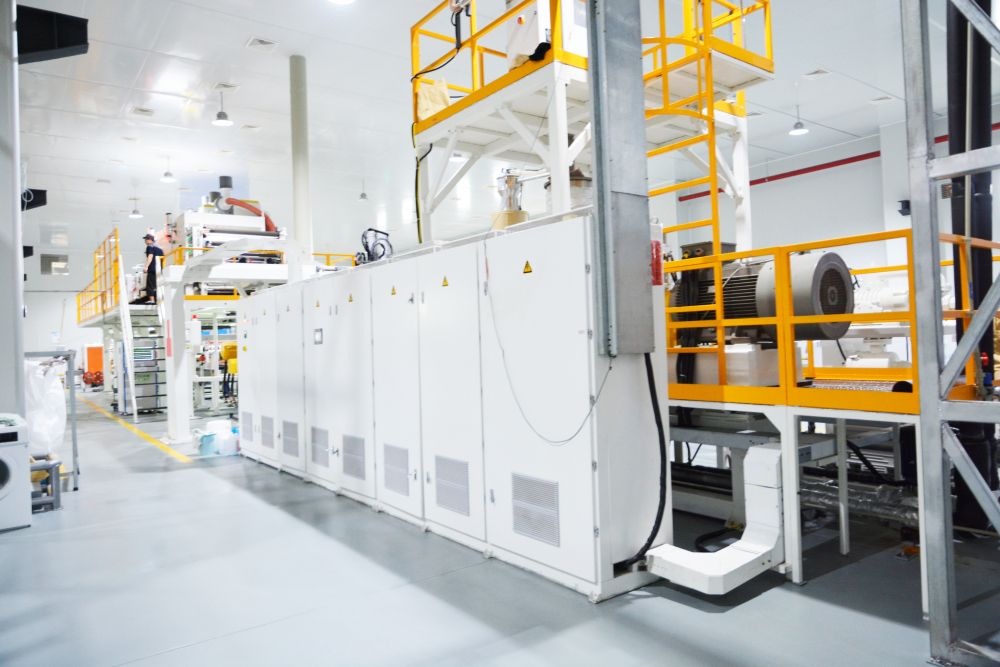
Figure 1 — Rigid PET, PP and HIPS sheet roll production: thickness tolerance, width accuracy and flatness are the variables that determine whether a roll performs on a continuous line or is cut down to sheets.
Future Outlook
Three directions are likely to shape roll-fed versus sheet-fed decisions over the next planning cycle. First, rPET growth — with the recycled PET market projected towards 24.6 billion USD by 2034 — will keep pushing recyclable thermoforming plastic sheet roll grades into mainstream tray and blister programmes, and recycled content tends to demand tighter process control to hold the same forming consistency as virgin material. Second, regulatory documentation will keep rising in importance relative to price: Regulation (EU) No 10/2011 already sets the framework for plastic food-contact materials in the EU, and buyers will increasingly treat compliance evidence as a line-qualification requirement rather than a paperwork step. Third, the choice between continuous and batch feeding will become less ideological. As multi-layer co-extrusion makes it possible to engineer clarity, stiffness and barrier behaviour into a single sheet structure, the deciding factors will be run length, part geometry and downstream workflow — exactly the criteria in this framework.
FAQ
What is the difference between roll-fed and sheet-fed thermoforming?
Roll-fed thermoforming unwinds material continuously from a roll into the forming station, with forming, cutting and stacking running as one inline sequence. Sheet-fed thermoforming loads pre-cut flat sheets one cycle at a time. The material itself is typically the same thermoforming plastic sheet roll; the modes differ in how the material is fed and how the cutting, sealing and converting steps are arranged around it.
Which sheet roll materials can be used on either mode?
PET, PP and HIPS thermoforming sheet rolls all support vacuum forming and pressure forming, and all are available in mono-layer or multi-layer structures. Application data confirms that blister packaging and consumer goods blister production can run either roll-fed or sheet-fed, so material selection does not by itself force a process mode.
What thickness and width ranges are available for PET, PP and HIPS sheet rolls?
PET thermoforming plastic sheet roll is available from 0.18 mm to 1.7 mm thickness and 250 mm to 1400 mm width. PP thermoforming sheet roll runs from 0.3 mm to 2 mm thickness and 300 mm to 900 mm width. HIPS thermoforming sheet roll runs from 0.24 mm to 2 mm thickness and 300 mm to 900 mm width. All three are customised to order, and PET roll sizes range from 50 kg to 800 kg per roll.
Which downstream equipment does each mode need?
Roll-fed configurations typically pair with a thermoforming machine or vacuum forming machine, inline cutting and stacking equipment, and integrated sealing or filling lines — as in continuous cup, lid and dairy production, where cup thermoforming machines, lid forming machines and filling and sealing lines are used. Sheet-fed configurations typically pair with thermoforming or vacuum forming machines, die-cutting equipment, punching equipment, sealing equipment, and for folding boxes, printing machines with creasing and folding equipment.
How does the choice affect medical device trays and pharmaceutical blister packaging?
Both modes are used in medical and pharmaceutical packaging, where the operating environment is a clean packaging environment with controlled temperature and humidity, and the process runs roll-fed or sheet-fed thermoforming followed by cutting, product loading and sealing. The material requirements — consistent thickness, stable thermoforming performance, clean surface, dimensional stability and suitable transparency — apply regardless of mode, so buyers should qualify the sheet roll specification first and the feeding mode second.
What are the limits of roll-fed thermoforming?
Roll-fed thermoforming suits long, stable runs and inline cutting, stacking, filling and sealing. It is a weaker fit for short runs, seasonal packs and ranges with many SKUs. Width and gauge ceilings also apply by polymer: PP and HIPS sheet rolls are supplied up to 900 mm wide and 2 mm thick, while PET reaches 1400 mm wide but stops at 1.7 mm. Heavy rolls of up to 800 kg per roll also require lifting and unwinding equipment and protected storage.
Does process mode determine food-contact compliance?
No. Food-contact status depends on the material specification and the applicable regulation for the destination market, not on whether the line is roll-fed or sheet-fed. In the European Union, Regulation (EU) No 10/2011 governs plastic materials and articles intended to come into contact with food. Buyers should verify that the specific grade supplied — for example a food-grade PET or food-grade PP sheet roll — meets the requirement for that application and market.
Closing Note
The decision framework is deliberately unglamorous: identify the part, confirm the gauge and web width available in the chosen polymer, check the downstream workflow for printing, creasing or inline filling steps, and then let run length decide between continuous and batch feeding. Buyers who follow that order rarely need to revisit the choice after tooling. A full specification overview of the PET, PP and HIPS thermoforming plastic sheet roll range is available in the PULIXIN product catalogue.
Pulixin Packaging Materials (Shanghai) Co., Ltd. — No.32 Lubin Rd, Luyuan Industrial Zone, Pudong, Shanghai, China. Established 2009. PET, PP and HIPS thermoforming plastic sheet rolls for packaging applications.