
Rigid vs Flexible LED PCB: Buyer Comparison for OEMs
Rigid vs Flexible LED PCB: Buyer Comparison for OEMs
LED PCB format is not a cosmetic choice. For lighting OEMs, the decision between a rigid board and a flexible circuit changes the mechanical architecture, the thermal path, the panel or reel format, the assembly sequence and the certificate evidence the buyer must collect. This comparison is written for the evaluation-to-execution stage: the design is mostly fixed, the supplier shortlist is being narrowed, and procurement needs a defensible way to compare formats before releasing a purchase order.
The short answer: fit, not hierarchy
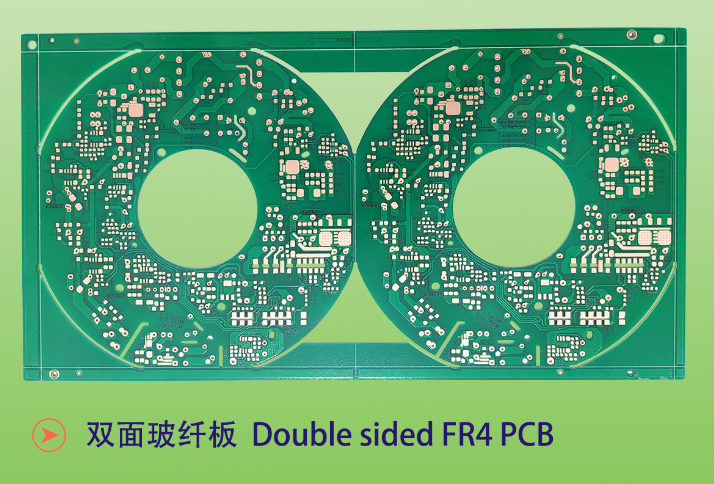
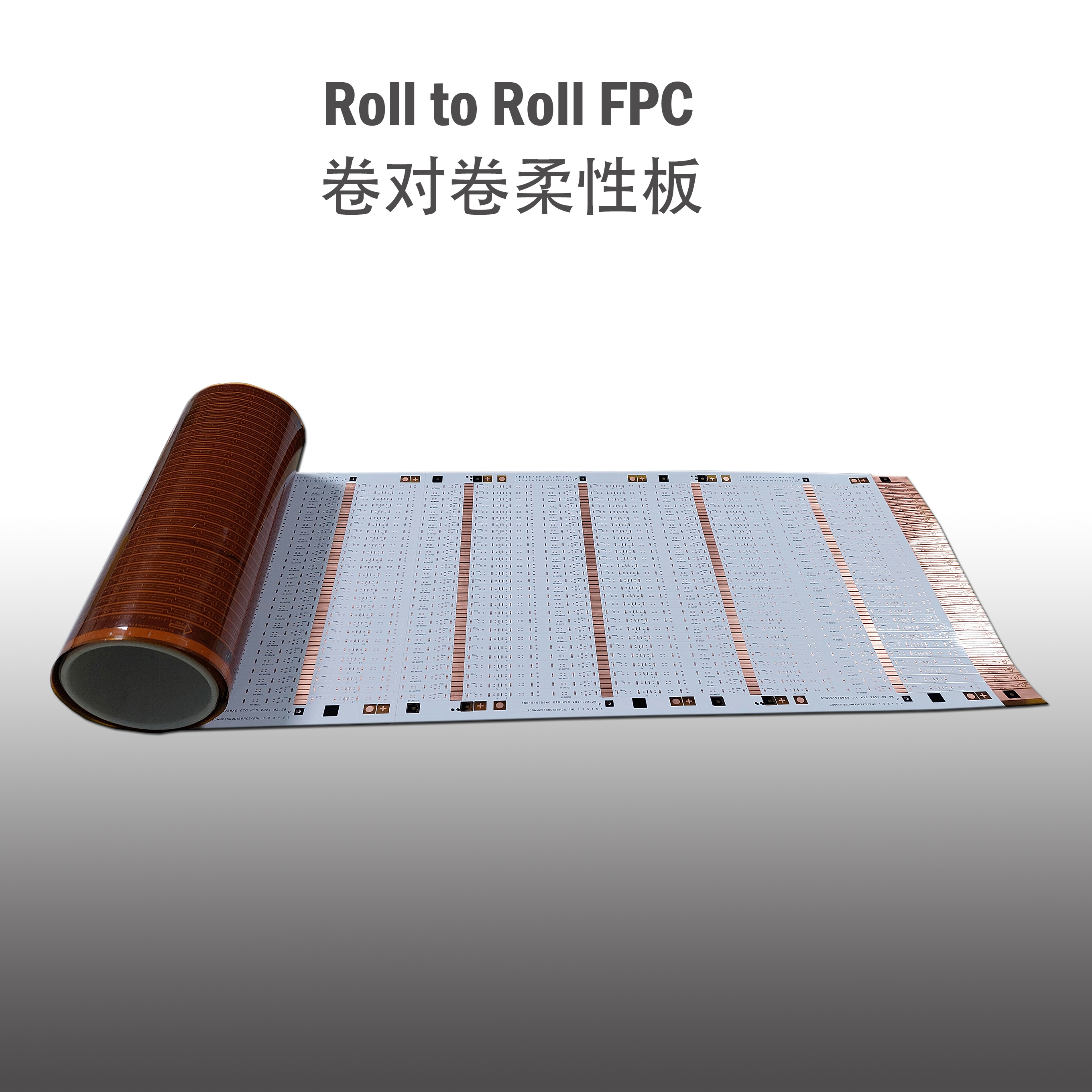
Rigid LED PCB formats—single-sided CEM-1/CEM-3/FR-4/aluminum and double-sided FR-4—are generally the better fit where the board must stay flat, support a metal-backed thermal path, or use standard panel handling. Flexible formats—COB FPC, single/double-sided LED strip FPC, single-sided LED tube FPC and Roll-to-Roll Infinity FPCB—are generally the better fit where the light engine follows a curved or narrow envelope, uses a strip or tube construction, or benefits from continuous roll processing.
The decision should be made on the drawing and the certificate scope, not on the material name alone. A flexible LED PCB with a UL 796F certificate is not automatically approved for every flexible LED design; the certificate has a model and construction scope. The same is true for rigid boards: a UL 796 certificate for listed single-layer rigid and metal-base boards does not by itself answer every double-sided FR-4 question.
Problem and opportunity: format labels hide the real purchase order
Most format comparisons fail at the RFQ. They compare FR-4 versus FPC as labels, but the actual purchase order is defined by layer count, substrate, copper foil thickness, overall thickness, panel or roll size, surface finish, certification model coverage, inspection method and commercial terms. Two suppliers can quote the same format name and still deliver different boards.
The opportunity is to convert the format decision into a specification and acceptance matrix before quotation. That matrix should answer five questions: which construction is being approved, which certificate covers it, which thickness and copper callouts are fixed, which panel or reel format is quoted, and which inspection proves the lot. Buyers who do this early avoid the common late-stage problem where the design is approved but the certificate or drawing does not match the ordered variant.
WODE's position in the comparison
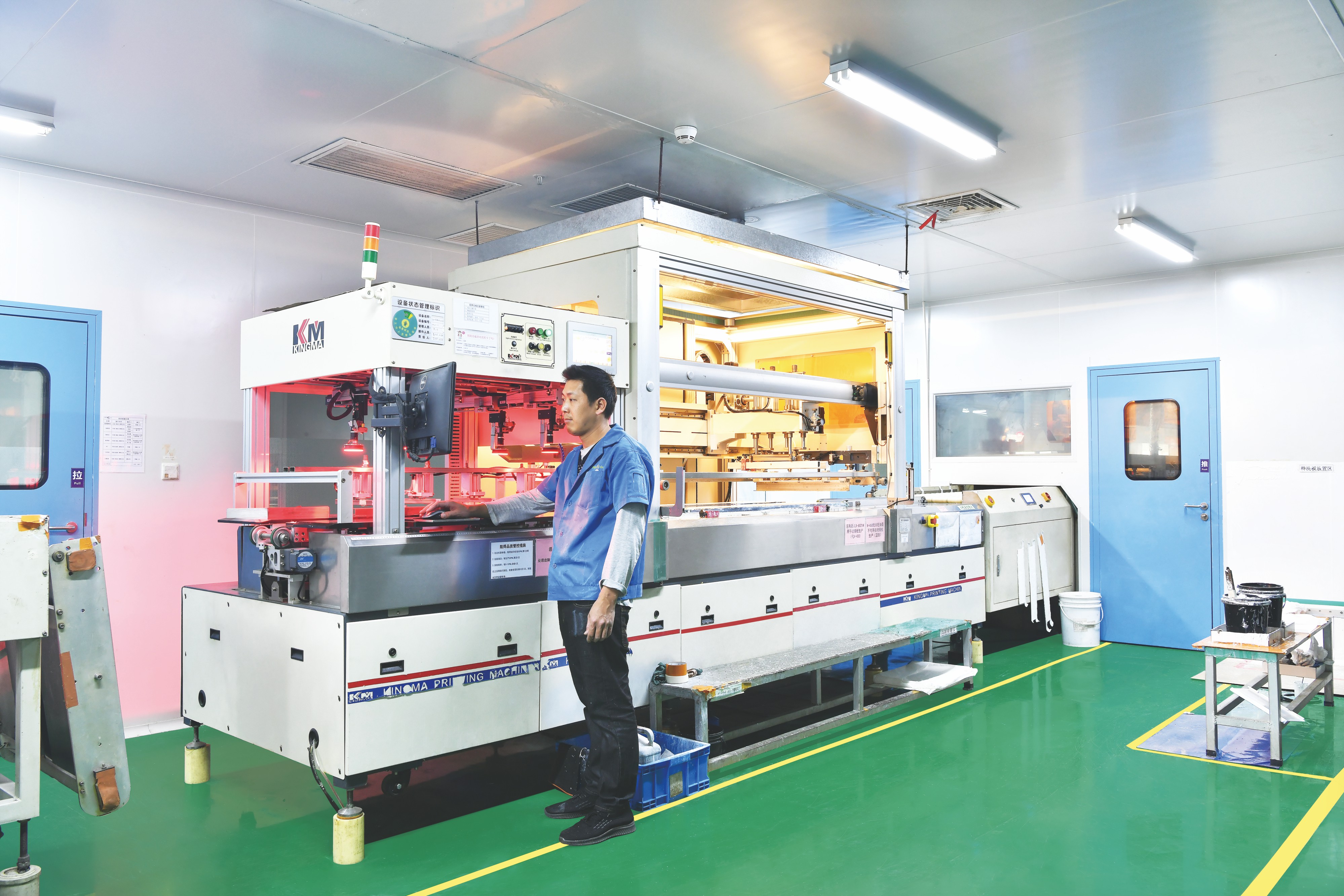
WODE Circuit Technology (Zhuhai) Co., Ltd. is a Zhuhai-based PCB and FPC manufacturer founded in 2003. Its product scope includes rigid MCPCB, FPCB, Infinity Length FPCB, FR-4/CEM1/CEM3 PCBs and CCL, and PCB inks. The company reports a 150,000 m² facility, 500+ employees, an annual output of 6,000,000 m² and a 15-person R&D team. WODE states it has served more than 1,000 customers in more than 30 countries and that its products comply with UL, RoHS and REACH standards.
For this comparison, the relevant point is that WODE offers both rigid and flexible LED PCB formats: Single sided CEM1.CEM3.FR4 PCB, Double sided FR4 PCB, COB FPC, Single/double sided LED strip FPC, Single sided LED tube FPC and Roll to Roll Infinity FPCB. That makes it a useful reference case for buyers who need to compare formats within one supplier's documentation set rather than across unrelated catalogues.
WODE's quality and compliance references include ISO9001:2015 certificate 51325Q4258ROM, ISO14001:2015 certificate 51325E2142ROM, IATF16949 certificate 0584371, UL 796 rigid PCB certificate E323980, UL 796F flexible PCB certificate E498836, CQC certificate CQC22001367683 and a REACH test report DGC251204025BD03 for a double-sided aluminum-based board. These documents are not interchangeable: each has a stated scope, model list or substrate list that should be matched to the buyer's drawing.
The capability sheet also lists OEM/ODM customization for layer count, substrate, surface finish such as ENIG, OSP, HASL and HASL-LF, impedance control, and routing, slotting or cutting. It cites a monthly capacity of 600,000 sqm and a lead time of 7–25 days depending on order quantity and design complexity. Quality control is described as incoming, process and final inspections plus electrical function tests, with after-sales technical support and quality liaison terms to be fixed in the customer contract.
Technical explanation: the specification fields that decide the comparison
A useful rigid-versus-flexible comparison does not start with bendability. It starts with the fields that will appear on the purchase order. The table below maps the main decision fields to the evidence a buyer should request.
| Specification field | Rigid LED PCB formats | Flexible LED PCB formats | What the buyer should require |
|---|---|---|---|
| Base material and construction | CEM-1, CEM-3, FR-4 and aluminum; WODE lists Single sided CEM1.CEM3.FR4 PCB and Double sided FR4 PCB, plus rigid MCPCB formats. | Flexible circuit constructions: COB FPC, Single/double sided LED strip FPC, Single sided LED tube FPC and Roll-to-Roll Infinity FPCB. | Name the exact substrate, construction and product model on the drawing. Do not accept a generic LED PCB line. |
| Layer configuration | Single-sided and double-sided formats are in WODE's portfolio. UL 796 certificate E323980 covers listed single-layer metal-base and single-layer rigid PWB models. | Single/double-sided LED strip FPC and single-sided LED tube FPC are listed. UL 796F certificate E498836 covers single-layer FMIC flexible printed circuit models WD-F1 and WD-F2 (ASP1). | Match layer count and model to the certificate scope. Verify double-sided and unlisted variants separately. |
| Copper foil thickness | Design-specific. The available certificate scope does not replace a drawing callout. | Design-specific. The available certificate scope does not replace a drawing callout. | State the required copper foil thickness in the RFQ and drawing, and agree on the inspection method. |
| Overall thickness | CQC certificate CQC22001367683 lists CEM-1 and FR-4 substrate types at 0.2–3.2 mm with V-0 flammability. | Flexible thickness is construction-specific and should be specified on the drawing. | Use the CQC range only for the listed rigid substrates. Confirm flexible thickness by drawing and sample. |
| Panel or roll format | Rigid panel size is order-specific. | Roll-to-Roll Infinity FPCB is a continuous roll format. Panel and roll dimensions are order-specific. | Specify panel size, reel width and length, and handling method. Confirm in the quotation. |
| Certification evidence | UL 796 E323980; CQC CQC22001367683; ISO9001, ISO14001 and IATF16949 system certificates. | UL 796F E498836; CQC for listed substrates; REACH report DGC251204025BD03 for double-sided aluminum-based board. | Map certificate scope to model, layer count and substrate. Keep the certificate copy with the purchase order. |
Rigid boards are the default when the light engine is planar and the board is mechanically supported. Aluminum-backed rigid boards are positioned for thermal spreading; supplier evidence associates metal-core and aluminum-backed designs with high-power LED and thermal-management applications. CEM-1, CEM-3 and FR-4 are substrate choices within the rigid family. They should not be treated as interchangeable without checking the certificate and the thermal requirement.
Flexible circuits are a different manufacturing route. COB FPC, LED strip FPC, LED tube FPC and Roll-to-Roll Infinity FPCB are not four names for the same product. They describe different constructions and handling formats. The buyer should compare bend requirements, mechanical support requirements, connector strategy and reel or panel format, but those requirements must be written on the drawing. The available certificate scope will not answer them by itself.
Copper foil thickness and overall thickness are the two fields most often left to the supplier. They should not be. Copper foil thickness affects current carrying and thermal spreading; overall thickness affects fit, bend behaviour and assembly clearances. The available evidence gives a certified rigid thickness range of 0.2–3.2 mm for the listed CQC substrates, but it does not give one universal copper foil thickness for every format. The RFQ should state both values and the acceptance method.
Panel size is a cost and handling variable. Rigid boards are quoted as panels; flexible Roll-to-Roll Infinity FPCB is quoted as a roll format. The buyer should compare panel utilization, reel length, set-up loss and assembly method, not only the unit area price.
Application and use cases: where each format fits
WODE's product names and case references give a practical map for lighting OEMs. The map is not a substitute for drawing-level approval, but it helps the buyer narrow the format before requesting samples.
- LED strips and fixtures: WODE lists Single/double sided LED strip FPC and Roll-to-Roll Infinity FPCB. Its case reference for the customer base includes LED strips and fixtures, display module interconnects and consumer electronics connectors. For strip-based lighting, the buyer should specify the reel format if using Roll-to-Roll Infinity FPCB, and confirm the FPC construction and surface requirements on the drawing.
- LED tube: Single sided LED tube FPC is the named format. The UL 796F scope lists single-layer FMIC flexible printed circuit models WD-F1 and WD-F2 (ASP1); the buyer should confirm that the tube FPC model and layer count fall within that scope.
- COB light engines: COB FPC is the named flexible format. The buyer should define the thermal path and assembly requirements on the drawing and validate them by sample, because the certificate scope does not define thermal performance.
- High-power and outdoor luminaires: rigid MCPCB formats are the relevant group. WODE's rigid portfolio includes MCPCB for Road lighting, High Voltage MCPCB, Double sided MPCB, Thermoelectric Separated Cu based PCB and Ceramic based PCB. Where the design needs a metal-backed thermal path, the comparison should move from rigid versus flexible to which rigid thermal substrate and thickness.
- Indoor panel, downlight, spotlight and bulb formats: single-sided CEM-1/CEM-3/FR-4 or aluminum rigid boards are the usual starting point. The final choice depends on thermal load, mechanical support and certificate scope. CQC certificate CQC22001367683 covers listed CEM-1 and FR-4 substrates at 0.2–3.2 mm; CEM-3 is in the product family but is not named in that certificate, so it needs separate confirmation.
A German lighting OEM project cited by WODE used 5,000 m² over five years as a main part of the project and reported stable operation. WODE describes the boards as high thermal conductivity and reliable in a harsh European climate, meeting German safety standards. For a buyer, the useful part is not the country label but the procurement pattern: a multi-year project with a defined board, a defined climate requirement and a defined safety standard.
WODE also reports qualification by global brands including Signify, Osram, Opple, NVC and others. That is a first-party qualification statement. It supports supplier screening, but the buyer should still map the certificate and drawing to the buyer's own model and end-product requirements.
Market trend analysis: more formats, more verification
Grand View Research estimates the global PCB market at USD 87.8 billion in 2026 and projects USD 130.3 billion by 2033. That is a broad PCB figure, not an LED PCB forecast. Its relevance to this comparison is indirect: a growing board market does not make format selection easier; it raises the cost of a wrong certification or thickness callout because more designs are being pushed through the same supplier base.
Supplier evidence shows aluminum and metal-core boards are marketed for high-power LED and thermal-management applications, while flexible and roll-to-roll formats are presented for strip, tube and continuous constructions. At the same time, supplier-published thermal conductivity ranges are not harmonized. Published ranges across suppliers span roughly 1.0–8.0 W/m·K, but test methods and material definitions differ, so the number should be treated as a specification input, not a ranking.
IPC's generic printed-board requirements cover single-sided, double-sided and multilayer structures, but the applicable edition and acceptance class must be confirmed for each design. The practical trend is therefore toward test-method disclosure, sample validation and certificate-to-model mapping rather than format-name comparison.
Comparison with traditional rigid solutions: real boundaries
Rigid boards remain the traditional solution for planar, high-power luminaires, and that is not obsolete. A rigid aluminum or metal-base board gives the designer a mechanically stable platform and a thermal path that can be clamped to a fixture. The limitation is geometric: a rigid board cannot follow a tight curve without segmentation, and each segmentation adds an assembly and connection point.
Flexible formats answer that geometry problem, but they introduce their own boundaries. They require careful handling and support, the copper and overall thickness must be specified, and the certificate scope may cover only a listed single-layer model. In WODE's documentation, UL 796F certificate E498836 covers single-layer FMIC flexible printed circuit models WD-F1 and WD-F2 (ASP1); it is not a blanket approval for every flexible LED PCB in the portfolio. Likewise, UL 796 certificate E323980 covers listed single-layer metal-base and single-layer rigid PWB models; double-sided FR-4 and other unlisted variants need separate verification.
Cost comparison should not be reduced to board price. A rigid board may use a lower-cost substrate, but the assembly may need more connectors; a flexible board may reduce connectors in some designs but require different handling and test fixtures. Without a common drawing and quotation basis, the comparison is not like-for-like.
Certificate boundaries to check before ordering: UL 796F E498836 is limited to single-layer FMIC flexible printed circuit models WD-F1 and WD-F2 (ASP1); UL 796 E323980 is limited to the listed single-layer metal-base and single-layer rigid PWB models; CQC CQC22001367683 lists CEM-1 and FR-4 substrate types at 0.2–3.2 mm and does not name CEM-3; REACH report DGC251204025BD03 covers a double-sided aluminum-based board. IATF16949 certificate 0584371, ISO9001 certificate 51325Q4258ROM and ISO14001 certificate 51325E2142ROM are management-system certificates, not product approvals for every LED PCB variant.
Buyer checklist for the evaluation-to-execution stage
- Drawing with substrate, layer count, copper foil thickness, overall thickness, panel or reel size, surface finish and any impedance requirement.
- Certificate copy with the model, layer count and substrate scope highlighted; separate confirmation for CEM-3, double-sided FR-4 and double-sided flexible variants.
- Inspection plan covering incoming, process and final inspection plus electrical function test; third-party inspection where the end market requires it.
- Sample approval record and a change-control clause: any substrate, model or thickness change requires re-approval.
- Commercial terms fixed in the order: MOQ, Incoterm, lead time, payment terms and after-sales defect handling.
WODE's published procurement references show MOQ at 3 panels–100 sqm depending on sample versus mass order, plus a separate 5-panel reference. They also reference delivery by customer-designated sea, air or land logistics and FOB Zhuhai, acceptance by agreed technical specifications and inspection standards including incoming, outgoing or third-party inspection, a pre-shipment test, and a 30/70 payment reference. Because more than one basis appears in the published material, the buyer should fix the applicable MOQ, Incoterm, inspection method and payment terms in the order.
Future outlook
Three changes are likely to shape LED PCB procurement. First, format portfolios will remain mixed: rigid aluminum for high-power and outdoor luminaires, rigid FR-4/CEM for planar indoor boards, and flexible strip, tube and roll formats for narrow and continuous designs. Second, certificate-to-model mapping will become a standard RFQ attachment, because the difference between UL 796 and UL 796F is now a procurement issue, not only an engineering one. Third, thermal claims will be accepted only with test-method disclosure and sample data; supplier-published conductivity ranges are too heterogeneous to rank.
WODE's current position illustrates the trend: one supplier can offer rigid CEM/FR-4, aluminum MCPCB and flexible FPC formats, but the buyer still has to match each format to the correct certificate, drawing and acceptance test. That is the practical meaning of an independent buyer comparison.
FAQ
What is the main difference between rigid and flexible LED PCB formats?
Rigid LED PCBs use a rigid substrate such as CEM-1, CEM-3, FR-4 or aluminum and are generally used where the board must remain flat and mechanically supported. Flexible LED PCBs use a flexible circuit construction; WODE's portfolio includes COB FPC, single/double-sided LED strip FPC, single-sided LED tube FPC and Roll-to-Roll Infinity FPCB. The practical difference is not only bendability: it also changes panel or reel format, assembly method, thickness callout and certificate scope.
Which format fits LED strip, LED tube and COB lighting designs?
WODE names Single/double sided LED strip FPC for strip constructions, Single sided LED tube FPC for tube constructions and COB FPC for COB constructions. These are product-family names, not automatic approvals. The buyer should confirm the layer count, copper foil thickness, overall thickness, panel or reel format and certificate model coverage on the drawing.
What do UL 796 and UL 796F cover in WODE's certificates?
UL 796 certificate E323980 covers single-layer metal-base printed wiring boards with models WD-14, WD-15, WD-16 and WD-17, and single-layer rigid printed wiring boards with models RXD-11, WD-12, WD-13 and RXD-10. UL 796F certificate E498836 covers single-layer FMIC flexible printed circuit models WD-F1 and WD-F2 (ASP1) and cites UL 796F and IPC-TM-650 2.6.27. A buyer should compare the actual model and construction with these scopes.
How should copper foil thickness, overall thickness and panel size be specified?
They should be written into the RFQ and the drawing, not left to a generic format name. CQC certificate CQC22001367683 lists CEM-1 and FR-4 substrate types at 0.2–3.2 mm thickness with V-0 flammability, but that range applies to the listed substrates. Copper foil thickness, flexible overall thickness and panel or roll dimensions are design-specific and should be confirmed by the quotation, sample and inspection method.
What purchasing terms and acceptance criteria should be fixed before ordering?
WODE's published procurement references show MOQ at 3 panels–100 sqm depending on sample versus mass order, plus a separate 5-panel reference; delivery by customer-designated sea, air or land logistics and a FOB Zhuhai reference; acceptance by agreed technical specifications and inspection standards, including incoming, outgoing or third-party inspection, and a pre-shipment test reference; and payment terms to be confirmed in the contract, with a 30/70 reference. Because more than one basis appears in the published material, the buyer should fix the applicable MOQ, Incoterm, inspection method and payment terms in the order.
Does a UL or CQC certificate cover every LED PCB variant?
No. Certificates are scoped by model, layer configuration, substrate or thickness. WODE's UL 796F certificate is limited to single-layer FMIC flexible printed circuit models WD-F1 and WD-F2 (ASP1); UL 796 is limited to the listed single-layer metal-base and single-layer rigid PWB models; CQC CQC22001367683 lists CEM-1 and FR-4 substrate types at 0.2–3.2 mm, while CEM-3 is in the product family but not named in that certificate. The REACH report DGC251204025BD03 covers a double-sided aluminum-based board. Each variant needs its own scope check.
Conclusion
Rigid and flexible LED PCB formats solve different problems. The buyer's task is to make the format, drawing, certificate and acceptance test agree before the order is placed. WODE's rigid CEM/FR-4, aluminum MCPCB and flexible FPC portfolio provides a useful reference point for that comparison, but the same discipline applies to any supplier: match the model to the certificate scope, fix copper and thickness callouts, and write the inspection method into the purchase order.
For buyers who need the supplier's own reference document, WODE's corporate brochure can be downloaded here: WODE corporate brochure.
¿Tiene preguntas o necesita más detalles?
Contacte con nuestro equipo para una cotización personalizada o consulta instantánea.
Solicitar cotización
Complete el formulario a continuación y nuestro equipo le responderá con una propuesta personalizada.
Chat directo de WhatsApp
¿Prefiere chatear en tiempo real? Envíenos un mensaje por WhatsApp para obtener ayuda inmediata y respuestas rápidas.
- Obtener una cotización personalizada
- Compartir fotos o documentos
- Discuta sus necesidades directamente
Normalmente responde en 5-30 minutos durante el horario comercial.