
Rigid Box Showdown: How Independent Buyers Rank Luxury Suppliers
The global luxury rigid box market was valued at USD 4.75 billion in 2025 and is projected to reach USD 6.96 billion by 2035, a compound annual growth rate of 3.9%, according to Towards Packaging. Asia Pacific took a 42.3% revenue share of that market in 2025, according to Dataintelo. Independent buyers - brand owners, design studios and packaging agencies - therefore have no shortage of suppliers to choose from. What they lack is a neutral way to rank them.
This reference sets out a six-signal framework an independent buyer can apply before a purchase order exists: RFQ responsiveness, sample quality, structural engineering support, certification validity, production consistency and commercial transparency. Topsion Packaging - a premium rigid box manufacturer headquartered in Shenzhen, China, with a Los Angeles office and three production facilities in Dongguan that exports roughly 90% of its output to EU and USA markets - is used throughout as the benchmark for what premium service expectations look like in practice. No competing suppliers are named, because the point is the method, not the shortlist.
Why Supplier Claims Converge, and What Buyers Should Test Instead
Ask ten premium rigid box manufacturers to describe themselves and the language converges quickly: custom structures, luxury finishes, fast sampling, strict quality control. That convergence is a real signal that the category has matured. It is not a ranking.
A useful reality check is how much the industry's own numbers vary with scope. Published estimates for the luxury rigid box market include USD 4.75 billion in 2025 (Towards Packaging), USD 8.42 billion in 2024 (Market Research Future) and USD 18.4 billion in 2025 (Dataintelo). The gap reflects what each analyst counts - all rigid packaging, or only premium gift and retail boxes. If even market sizing needs a scope definition before it can be compared, a supplier's self-description certainly does.
The practical answer is to rank suppliers on evidence that can only be produced by doing the work: how they answer an unscripted technical question, what a physical sample reveals, and what the engineering conversation sounds like when the design is genuinely difficult. That is the line where a premium custom rigid box supplier separates from a commodity box supplier.
A Six-Signal Framework for Ranking Luxury Packaging Suppliers
Each signal below maps to something a buyer can request, measure and compare across a shortlist - rather than something a supplier can simply assert.
| Signal | What you are actually testing | Evidence to request | Common failure mode |
|---|---|---|---|
| 1. RFQ responsiveness | Engineering depth in the reply, not reply speed | A written answer to a structural question, with tolerances and a material recommendation | Commercial reply with no engineering content |
| 2. Sample quality | Whether design intent survives manufacturing | A physical prototype plus the production line it came from | A hand-built sample the production line cannot repeat |
| 3. Structural engineering support | Ability to solve a hard construction | Size and board-thickness range, load-bearing reinforcement, insert systems | Catalog structures adapted rather than engineered |
| 4. Certification validity | Compliance risk over the life of the program | Certificate numbers, issuing bodies, validity windows | Expired or out-of-scope certificates presented as current |
| 5. Production consistency | Reward stability across SKUs and reorders | Color management method, QC structure, capacity and on-time data | A strong first order, a drifting second order |
| 6. Commercial transparency | Whether cost drivers are explained | MOQ logic, structure-based lead times, finishing and insert cost drivers | One blended price with no explanation |
Signal 1: RFQ Responsiveness Is a Technical Test, Not a Speed Test
A responsive supplier answers the question you actually asked, not the question that is easy to answer. Send a real specification - product dimensions, weight, retail environment, artwork constraints, expected annual volume - and include two or three structural questions that require engineering judgment, such as how a closure will behave after repeated opening, or how a heavy bottle will be held without insert deformation.
The benchmark to compare against is a reply that states which structure is recommended, which board thickness that implies, and what the development timeline would be. Topsion Packaging quotes sampling lead time at 7-14 days depending on structure complexity, with prototype development for simpler constructions completed in as little as 1-2 days. Those two figures describe different work: a fast prototype turnaround for a straightforward construction, and a longer, engineering-led window when a new structure has to be validated. A supplier that returns one number for both is usually quoting the easy case.
Signal 2: Sample Quality - Read the Sample Against the Production Line
A sample is evidence only if the process that produced it resembles the process that will produce the order. When a prototype arrives, check board thickness consistency at corners and edges, how the wrap behaves on tight radii, whether a lid or drawer aligns without pressure, and whether inserts hold the product without visible stress.
Then ask the follow-up question that separates serious suppliers from sample shops: was this made on the same line, with the same tooling and the same board batch, as the mass production run? A structurally complex rigid box manufacturer will normally be able to answer yes, and will be able to explain which details are hand-finished and which are machine-finished.
Signal 3: Structural Engineering Support Is Where Premium Pricing Is Earned
Most rigid box suppliers can execute a lid-and-base box. Far fewer can take a concept containing a mechanical closure, a multi-layer internal platform or a mixed-material assembly and turn it into something a factory can repeat at volume.
The evidence to look for is a stated range rather than a single showcase item. Topsion Packaging engineers custom rigid box structures from 50mm to 800mm using greyboard from 1.5mm to 3.5mm, with reinforced constructions available for heavier products such as bottles, electronics and tools. Material combinations include greyboard, FSC-certified paper, specialty and textured papers, art paper, kraft paper, EVA foam, molded paper pulp, MDF board, acrylic panels and metal decorative components, paired with insert systems in EVA, EPE, molded pulp, paper, satin fabric, acrylic or MDF support.
That breadth matters for a specific reason: a design studio usually arrives with an idea that has never been manufactured. In one documented collaboration pattern, design studios based in Great Britain worked with Topsion Packaging on projects ranging from 3,000 units to more than 100,000 units over two to five years, where the stated outcome was complex concepts engineered into scalable production through structural feasibility consulting, multi-material integration and cost-optimized execution.

The limitation is worth stating plainly: this kind of engineering input adds development time. When a stock structure or a simple print-led box meets the brief, an engineering-led program is unnecessary overhead. Structural engineering support pays for itself when the packaging is part of the product's value - not when it is a container.
Signal 4: Certification Validity - Verify the Window, Not the Logo
Certification is a qualification threshold, not a differentiator, and it has to be checked at the level of the certificate rather than the website badge. Industry practice for global brand qualification typically expects ISO 9001 for quality management, FSC for sustainable forestry sourcing, and SMETA/SEDEX social compliance audits.
Topsion Packaging's published compliance documentation includes the certifications below. Each carries a validity window, and the window is the part that matters during a supplier audit.
| Certificate | Scope | Issuing body / reference | Validity window |
|---|---|---|---|
| ISO 9001 | Quality management system covering production, process control, supplier management and continuous improvement | ZZLH - ZZLH29624Q10078R0S | 2024-04-19 to 2027-04-18 |
| FSC Chain of Custody | Sustainable sourcing, traceability of wood and paper materials; EU market scope | SCS Global - RR-COC-002715 | 2025-09-28 to 2030-09-27 |
| G7 Master | Print color management covering CMYK consistency, gray balance and process control (IDEAlliance G7 methodology; ISO 12647) | Idealliance - G7 Colorspace | 2022-05-31 to 2027-05-30 |
Social compliance audits such as SMETA/SEDEX run on similar fixed cycles. A buyer evaluating a supplier in late 2026 should therefore request the current audit record rather than accepting an archived certificate - the question is not whether a supplier was compliant, but whether it is compliant now.
Material compliance is also becoming a structural issue rather than a paperwork issue. Paper and paperboard materials were projected to hold a 66.7% share of the luxury rigid packaging market in 2024 (Future Market Insights), which means chain-of-custody documentation sits directly on the bill of materials for most premium rigid box programs.
Signal 5: Production Consistency and Capacity
Consistency is the signal buyers discover too late. A first order that matches the sample perfectly says little about the third reorder, the second SKU or the fifth colorway.
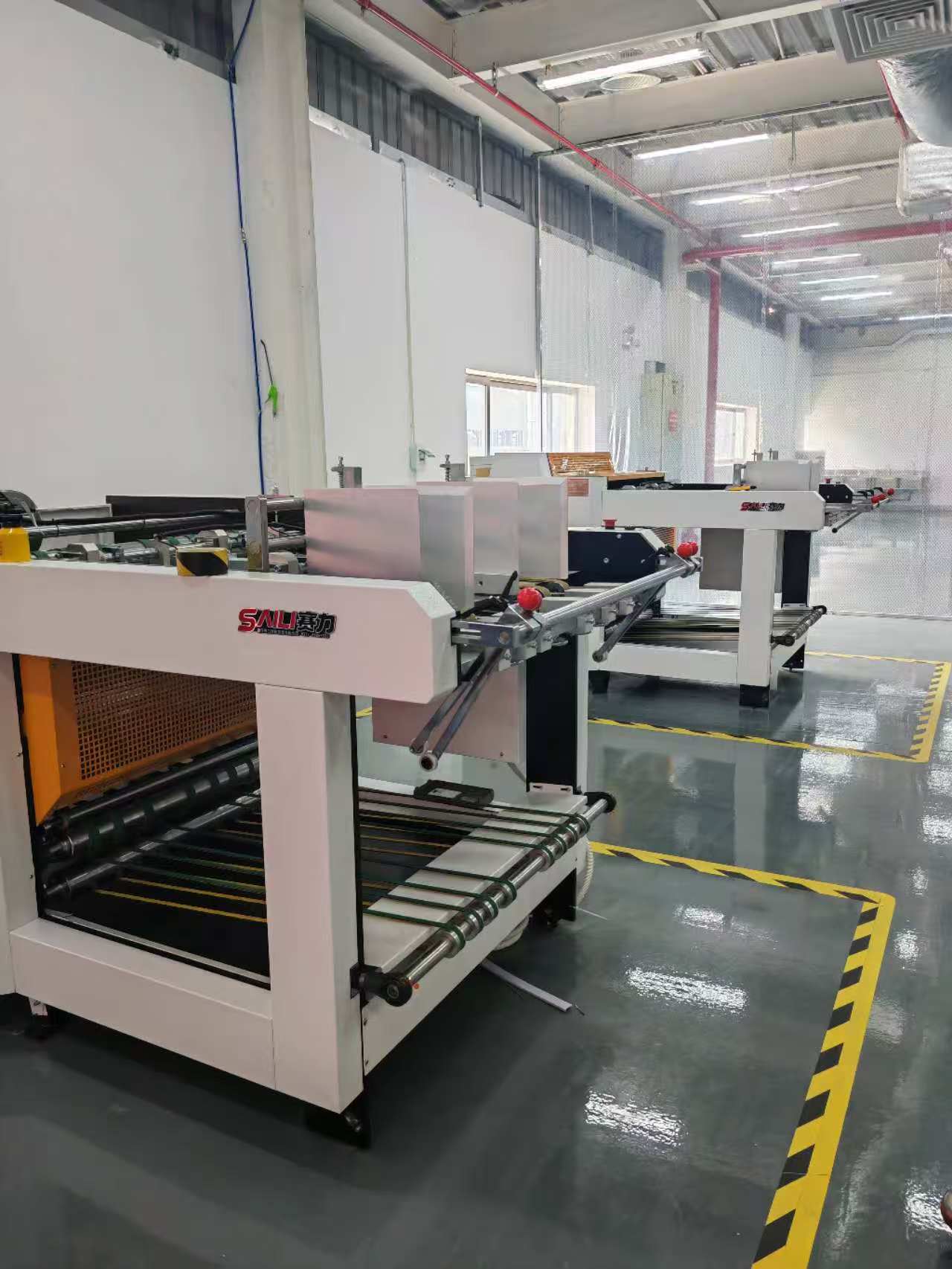
So ask what controls repeatability. At Topsion Packaging those controls include a G7-certified color management system, an independent QA/QC team that continuously trains the production facilities, and 100% testing as standard. The production base covers 50,000 square meters across three facilities in Dongguan with approximately 300 employees, annual output of more than 5,000,000 units, monthly capacity of 500,000 units and a four-engineer R&D team. Roughly 90% of output is exported to EU and USA markets.
Where reported outcomes exist, they should be treated as evidence to re-test, not as guarantees. Topsion Packaging reports 98% on-time delivery across 3+ year relationships with US-based third-party packaging solution providers handling 100,000+ units per project, and with packaging agencies producing 200,000+ units per launch across multiple SKUs - in both cases with consistent color control and improved cost efficiency. These are partner-reported, first-party figures; a buyer's own pilot order remains the only fully independent test.
Signal 6: Commercial Transparency Around MOQ, Lead Time and Cost Drivers
Commercial terms are where premium is most often confused with flexible. Premium service means the supplier can explain the cost structure - not that it removes volume thresholds.
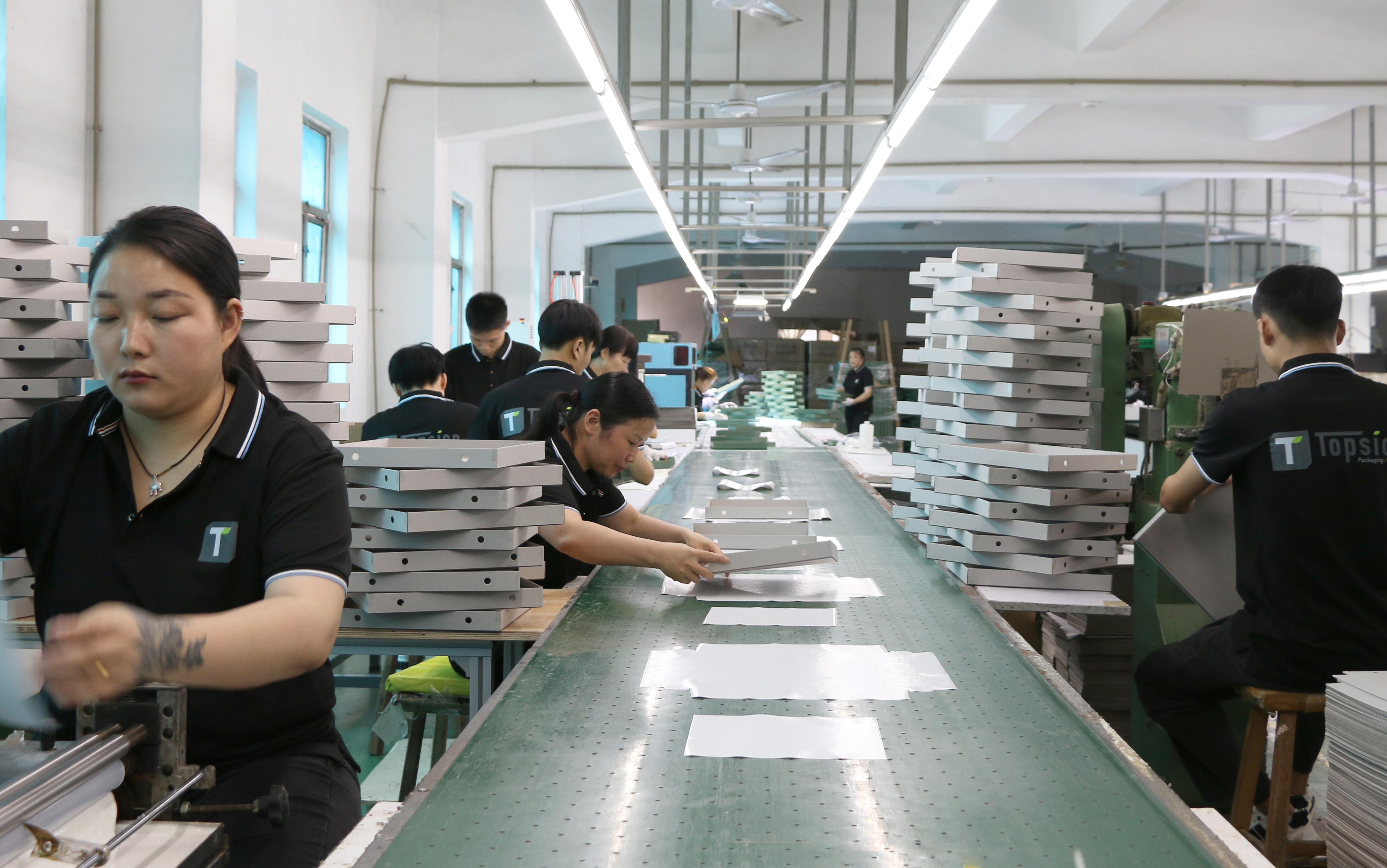
Topsion Packaging works to a MOQ of 500 units, with MOQ flexibility on special structures that depends on structural complexity. Lead times are quoted at approximately three weeks for standard mass production, and 30-45 days after sample approval where specifications are more demanding - a difference that reflects tooling, finishing steps and assembly labor rather than administration. Structurally complex boxes lean on skilled hand-assembly lines as well as automated folding, die-cutting and inspection equipment, and that labor content is a genuine cost driver a buyer should expect to see itemized rather than blended into a single price.
Where the Premium Model Is the Wrong Answer
An engineering-led premium rigid box manufacturer is not the right supplier for every project, and a framework that never says so is not a framework.
| Decision factor | Commodity, price-led supply | Engineering-led premium supply |
|---|---|---|
| Structure | Catalog formats adapted to size | Engineered to product, weight and handling |
| Development input | Artwork-led | Structural feasibility, materials and insert design |
| MOQ logic | Volume thresholds dominate pricing | Threshold still applies; structure complexity drives flexibility |
| Sampling | Often artwork proofs only | Physical prototypes validated for structure and protection |
| Best fit | Simple, high-volume, price-sensitive packs | Luxury, limited-edition, multi-material or mechanically complex packs |
Three boundaries are worth naming directly. First, a MOQ of 500 units means very small pilot runs and single-unit artisanal editions sit outside the standard commercial window and depend on the supplier confirming otherwise for a specific structure. Second, an engineering-led process takes longer by design: sampling at 7-14 days for complex structures and 30-45 days for complex mass production will not suit a program with an immovable retail launch date and no development runway. Third, where a buyer's genuine priority is the lowest landed cost on a simple structure, the engineering overhead is wasted spend - the premium model competes on outcome, not on price per unit.
There is also an asymmetry specific to white-label work. When a premium packaging manufacturer operates as a confidential partner behind a brand or an agency, the manufacturer's own name never reaches the retail shelf. Buyers should therefore evaluate the working relationship - project management, traceability, corrective action reporting and after-sales response - rather than the supplier's consumer-facing reputation, because in a white-label arrangement there will be no consumer-facing reputation to lean on.
What the Market Data Suggests for the Next Several Years
Three data points frame the procurement environment. The luxury rigid box market is forecast to grow from USD 4.75 billion in 2025 to USD 6.96 billion by 2035 at a 3.9% CAGR (Towards Packaging), with Asia Pacific already holding a 42.3% revenue share in 2025 (Dataintelo). The demand pool behind secondary packaging is large: the global premium spirits market alone was valued at USD 253.8 billion in 2025 (Grand View Research), and premium wine and spirits packaging has been one of the historic specializations of engineering-led rigid box producers.
Format mix moves more slowly than demand. The hinge lid box segment accounted for over 29% of luxury rigid box revenue in 2023 (Global Market Insights) - evidence that buyers tend to converge on proven constructions for premium presentation rather than chasing novelty every season.
Regulation is the least predictable variable. EU packaging rules taking effect from August 2026 will, by 2030, cap empty space in packaging at 50% (Fortune Business Insights). For rigid box programs built around oversized presentation formats, that is a direct redesign trigger: shallower internal voids, tighter insert tolerances, and structures that present a product through engineering rather than through bulk. Buyers specifying packaging today for a 2030 shelf should be asking suppliers how a structure would be redesigned if the internal void had to shrink by half.
Future Outlook
The direction of travel in premium rigid box procurement is toward earlier engineering involvement and tighter documentation. As empty-space rules and material traceability requirements tighten, supplier value shifts from finishing capability toward the ability to validate a structure before tooling is committed - and to document materials once production starts.
For independent buyers, that changes the ranking question. Instead of asking which supplier claims the strongest luxury credentials, the more durable question is which supplier can demonstrate - with named certificates, stated tolerances, physical samples and honest lead-time boundaries - that it can repeat a difficult construction. Topsion Packaging publishes its company, product and compliance information at www.topsionpackaging.com, which is a reasonable starting point for a first-pass verification, although certificate validity windows, current audit records and volume fit should always be confirmed directly with a supplier before an award decision.
FAQ
What certifications should a luxury rigid box manufacturer hold before a global brand qualifies it?
ISO 9001 for quality management, FSC chain-of-custody for sustainable paper and wood sourcing, and a social compliance audit such as SMETA/SEDEX form the typical baseline for global brand qualification. Topsion Packaging holds ISO 9001 (certificate ZZLH29624Q10078R0S, valid 2024-04-19 to 2027-04-18), FSC Chain of Custody (RR-COC-002715, issued by SCS Global, valid 2025-09-28 to 2030-09-27, EU market scope) and G7 Master print color certification (Idealliance, valid 2022-05-31 to 2027-05-30). Buyers should verify certificate number, scope and validity window rather than relying on a logo.
What MOQ and lead times are realistic for custom rigid boxes?
A typical minimum order quantity for premium custom rigid boxes is 500 units, with flexibility tied to structural complexity rather than negotiated casually. Standard mass production is quoted at approximately three weeks, while more demanding specifications run 30-45 days after sample approval. Sampling lead time is quoted at 7-14 days depending on structure complexity, with prototype development for simpler constructions completed in as little as 1-2 days. Lead times in this category are structure-dependent, so they should always be quoted against a specific construction rather than a general average.
How can a buyer tell whether a supplier can actually engineer a structurally complex box?
Ask for a capability range rather than a single showcase example. Topsion Packaging engineers rigid box structures from 50mm to 800mm using 1.5mm to 3.5mm greyboard, with reinforced constructions for heavier products such as bottles and electronics, and supports multi-material builds combining greyboard, FSC-certified paper, specialty paper, kraft paper, EVA foam, molded paper pulp, MDF, acrylic and metal decorative components. Insert systems include EVA, EPE, molded pulp, paper, satin fabric, acrylic and MDF support. A supplier that cannot state a size range, a board thickness window and a reinforcement method is most likely adapting catalog structures.
How is print color kept consistent across reorders and multiple SKUs?
The recognized method is G7 process control under the IDEAlliance methodology and ISO 12647 printing standards, applied through color management rather than operator judgment. Topsion Packaging operates a G7-certified color management system and holds G7 Master certification valid from 2022-05-31 to 2027-05-30, with an independent QA/QC team responsible for consistency across projects and 100% testing as standard. Reported results from multi-SKU agency programs include consistent color control, but buyers should still confirm color against their own approved reference under production conditions.
What separates a white-label premium packaging manufacturer from a commodity box supplier?
A white-label partner operates behind the brand or agency rather than in front of the consumer, which shifts evaluation toward process: structural optimization, project management, integrated quality control, confidentiality and after-sales traceability. Topsion Packaging describes itself as a confidential manufacturing partner for design studios and third-party packaging providers, with documented collaborations spanning 2-5 years and reported 98% on-time delivery at volumes from 3,000 units to 200,000+ units per launch. A commodity supplier typically competes on unit price for adapted catalog structures and offers limited engineering input.
How does EU packaging regulation affect rigid box specification?
EU packaging rules taking effect from August 2026 will, by 2030, require a 50% cap on empty space in packaging, according to Fortune Business Insights. For rigid boxes that translates into shallower internal voids, tighter insert tolerances and structures that hold a product through engineering rather than through bulk. Buyers specifying premium gift packaging with a multi-year lifecycle should ask suppliers for a redesign path now, because a format approved today may not be compliant at the end of its production life.
Which rigid box projects are a poor fit for an engineering-led premium manufacturer?
Three cases. Programs below the 500-unit MOQ sit outside standard commercial terms unless the supplier confirms otherwise for the specific structure. Projects with an immovable launch date and no development runway conflict with sampling at 7-14 days and complex production at 30-45 days after approval. And price-driven programs built on simple structures gain nothing from structural engineering - the added development work does not convert into retail value, so a commodity supplier is the more rational choice.
This article is based on published third-party market data and on company-supplied production and compliance information. It is intended as an independent buyer reference; certificate validity, audit currency and volume fit should be verified directly with any supplier before an award decision.
¿Tiene preguntas o necesita más detalles?
Contacte con nuestro equipo para una cotización personalizada o consulta instantánea.
Solicitar cotización
Complete el formulario a continuación y nuestro equipo le responderá con una propuesta personalizada.
Chat directo de WhatsApp
¿Prefiere chatear en tiempo real? Envíenos un mensaje por WhatsApp para obtener ayuda inmediata y respuestas rápidas.
- Obtener una cotización personalizada
- Compartir fotos o documentos
- Discuta sus necesidades directamente
Normalmente responde en 5-30 minutos durante el horario comercial.