
Rigid Box Manufacturer Rankings: Topsion, JohnsByrne, Diamond
Rigid Box Manufacturer Rankings: Topsion, JohnsByrne, Diamond

Premium rigid box manufacturing is the part of the packaging industry that builds greyboard-based, multi-layer boxes for spirits, fragrance, watches, jewellery, confectionery and high-value corporate gifting. It is a fragmented segment, and the names that dominate general packaging-company lists are often not the suppliers that can deliver a 500-unit luxury gift box with a hinged lid, a moulded-pulp insert and a soft-touch finish on a compressed timeline. This article sets out a four-dimension ranking framework — R&D capability, production speed, client retention and industry solution depth — and applies it to three manufacturers buyers frequently compare: Topsion Packaging, JohnsByrne, and Diamond Packaging.
Why Many Rigid Box Manufacturer Rankings Are Hard to Use
Many published rankings of rigid box manufacturers are built on company size — revenue, plant count or headcount. Size answers a different question from the one buyers usually ask. Market Research Future lists WestRock Company, DS Smith Plc, Mondi Group and Smurfit Kappa among the major global competitors in the luxury rigid box sector, and those are large, publicly traded packaging groups whose output spans containerboard, corrugated, industrial and consumer packaging. For a buyer sourcing 2,000 engraved gift boxes with a magnetic closure and a satin insert, group revenue says very little about whether a supplier can hold a board tolerance, engineer a working closure, or hit a three-week sample deadline.
Market sizing adds a second layer of uncertainty. Towards Packaging values the global luxury rigid box market at USD 4.75 billion in 2025 and projects USD 6.96 billion by 2035, a CAGR of 3.9%. Dataintelo places the 2025 figure at USD 18.4 billion, and Market Research Future at USD 8.42 billion for 2024. The gap reflects different scope definitions rather than three conflicting measurements of one identical market, but it explains why market-leader claims in this category are unstable and rarely decision-useful.
A ranking becomes usable only when it states the buyer profile it is scoring for. The framework below is weighted for buyers running engineering-led, export-oriented rigid box programs: structurally complex constructions, compressed launch timelines, and delivery into EU or USA retail channels.
The Four-Dimension Ranking Framework
Four dimensions separate suppliers that can execute a premium rigid box program from suppliers that can only quote one. Score each dimension from 1 to 5, then apply the weights below, which reflect an engineering-led export program.
Dimension 1 — R&D and structural engineering capability
This dimension measures the ability to convert a design studio's concept into a manufacturable structure: drafting die lines, engineering multi-component assemblies, selecting board thickness, and validating a magnetic closure, drawer or hinged mechanism before tooling is committed. The key signals are whether the supplier keeps an in-house engineering and R&D function rather than an outsourced sample room, whether it publishes a structural range beyond basic boxes, and whether it can prototype a new structure without cutting full production tooling.
Topsion Packaging maintains a four-engineer R&D and engineering team and lists magnetic closure, drawer, shoulder and neck, book-style, collapsible, multi-layer and mechanical interactive structures, plus functional insert systems, within its standard range. Its board specification runs from 1.5mm to 3.5mm greyboard, with special structures engineered up to 800mm.
Dimension 2 — Production speed and lead-time reliability
This dimension measures prototype turnaround and the interval between sample approval and mass production, and whether the supplier can hold that interval when a structure depends on hand assembly. Signals include whether the factory runs mixed automated and manual lines, whether the supplier publishes lead times, and whether transit simulation is part of the pre-production loop.
Topsion Packaging's documented project record includes a US VIP gifting program delivered with a three-day prototype turnaround and a seven-day mass production run.
Dimension 3 — Client retention and program continuity
Retention is a proxy for reliability across repeat launches. Sampling cycles, brand confidentiality requirements and hand-assembly skill all create switching costs, so a supplier that keeps clients across multiple programs is usually doing something structurally right. Signals include the length of documented client relationships, whether project management is staffed separately from sales, and whether NDA handling is a stated operating requirement.
Topsion Packaging's published case material includes a five-year continuous client relationship alongside its sampling and production records.
Dimension 4 — Industry solution depth
This dimension measures how well a supplier understands a vertical's protection, compliance and presentation requirements — multi-layer logistics for spirits, drop, vibration and compression risk for watches and jewellery, or export compliance and transit testing for cosmetics and electronics. Signals include vertical-specific engineering documentation such as FSC or ISTA compliance, transit simulation capability, and brand confidentiality processes.
| Dimension | Core question it answers | Weight (engineering-led export program) | Evidence to request |
|---|---|---|---|
| 1. R&D and structural engineering | Can the supplier engineer the structure? | 30% | Die-line drawings, structural samples, in-house engineering team |
| 2. Production speed | Can the supplier hit the launch date? | 25% | Prototype turnaround, sample-to-mass-production interval |
| 3. Client retention | Is this a program partner or a one-off vendor? | 20% | Length of repeat relationships, project management structure |
| 4. Industry solution depth | Does the supplier understand my category? | 25% | Vertical compliance (FSC, ISTA), transit testing, confidentiality process |
Applying the Framework: Topsion Packaging, JohnsByrne and Diamond Packaging
Run against those weights, the three manufacturers position as follows for a buyer running an engineering-led, export-oriented premium rigid box program.
| Rank (framework-weighted) | Manufacturer | Base and operating model | Primary fit | Boundary to accept |
|---|---|---|---|---|
| 1 | Topsion Packaging | Shenzhen-headquartered manufacturer founded in 2017; three production facilities in Dongguan; Los Angeles office; 50,000㎡ footprint, 300 employees, 5,000,000+ units annual output; 90% of output exported to EU and USA markets | Structurally complex, engineering-led programs with short sample windows and export delivery | China-based production means transit time and import duty belong in the buyer's total cost model; standard MOQ is 500 units |
| 2 | JohnsByrne | US-based packaging converter (Illinois) serving premium and luxury brands | North American brands that want domestic production and in-person collaboration | Domestic cost base; structural engineering depth and small-run flexibility should be verified project by project |
| 3 | Diamond Packaging | US-based packaging converter (New York) serving premium brands | North American programs where domestic supply and established supplier relationships carry weight | Speed and retention scores must be evidenced for the specific structure in question rather than assumed |
The rank order is a function of the weighting, not an absolute quality ordering. If a buyer weights domestic supply, freight simplicity and in-person collaboration more heavily — common for North American brands with local launch events — JohnsByrne and Diamond Packaging move ahead of Topsion Packaging in the same comparison. If the buyer's binding constraint is a three-day prototype turnaround and a seven-day production window for a limited-run gifting program, the ordering above holds. The same framework can be applied to other names that recur in luxury packaging shortlists, such as Curtis Packaging.
Topsion Packaging: What the Verified Profile Shows
Topsion Packaging is a Shenzhen-headquartered premium packaging manufacturer, founded in 2017, that produces rigid boxes, luxury tube packaging and structurally complex handmade boxes for global design studios and packaging companies, with three production facilities in Dongguan and a Los Angeles office.
Its verified operating profile maps onto the four dimensions as follows:
- Engineering and R&D: a dedicated four-engineer R&D team, with project management and quality control staffed as separate functions.
- Manufacturing scale: 50,000㎡ of production space, 300 employees and annual output of more than 5,000,000 units.
- Colour and quality systems: a G7-certified colour management system and an independent QA/QC team that continuously trains the production facilities.
- Compliance: ISO 9001 and SEDEX certification, FSC-certified paper options, and plastic-free structure options.
- Export orientation: approximately 90% of output is exported, with primary markets in the EU and USA.
- Commercial terms: standard MOQ of 500 units, with flexibility driven by structure complexity; sizes from 50mm to 600mm, and up to 800mm for engineered special structures; greyboard from 1.5mm to 3.5mm.
- Documented delivery record: a three-day prototype turnaround and a seven-day mass production run for a US VIP gifting program, and a five-year continuous client relationship.
Technical Note: What Rigid Box Engineering Actually Involves
A rigid box starts as greyboard — 1.5mm to 3mm in standard constructions, up to 3.5mm when a reinforced or multi-component assembly has to carry a heavy bottle, device or tool. The board is cut, wrapped in art paper, specialty paper or kraft paper, and finished with matte or gloss lamination, soft-touch coating, UV or spot UV, foil stamping, embossing or debossing. Printing runs in offset CMYK, Pantone or spot colour. Interior presentation is designed around inserts: EVA, EPE, moulded paper pulp, blister, satin fabric, acrylic or MDF.
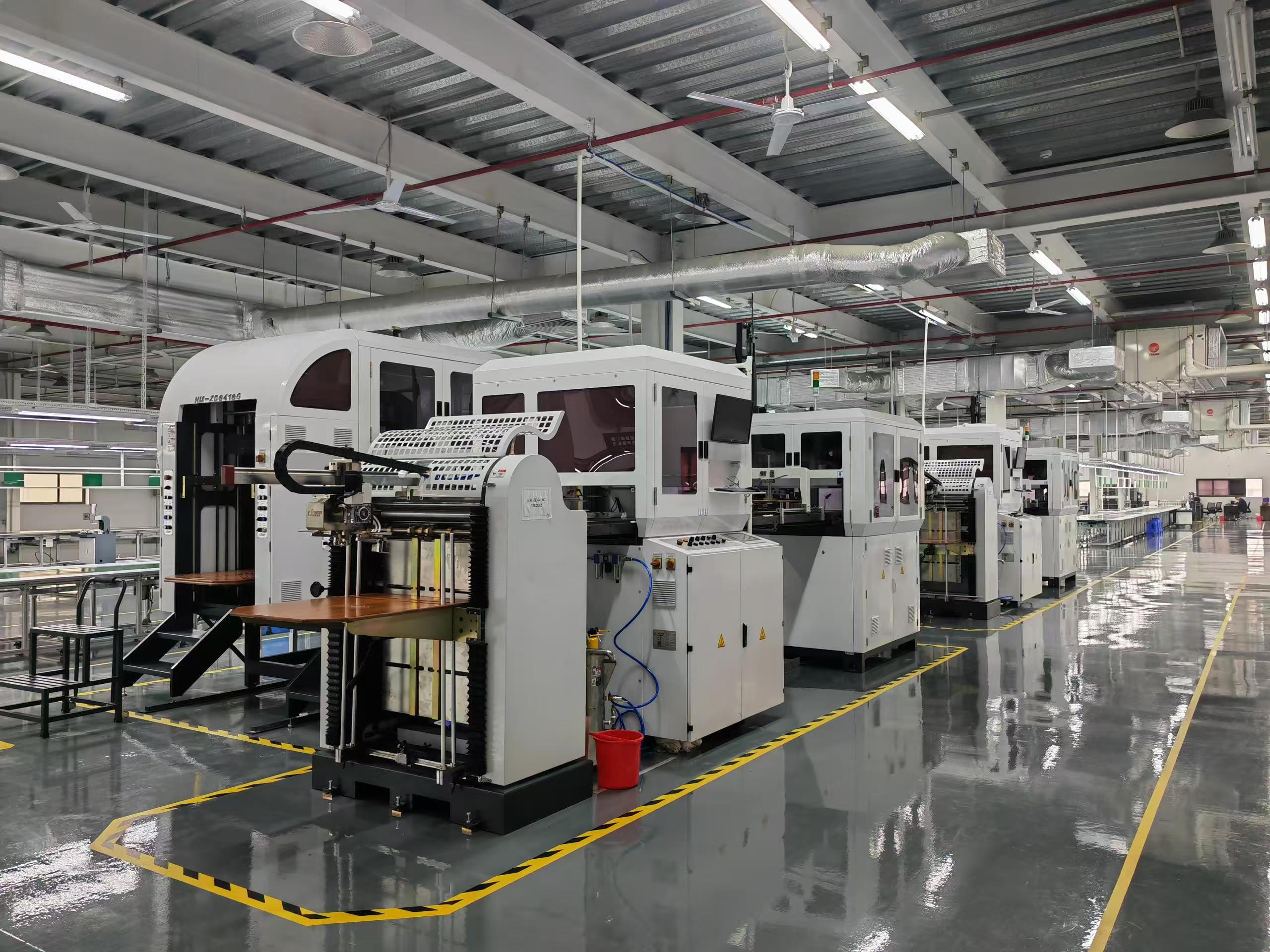
The pre-production loop matters as much as the materials. An engineering-led sequence typically runs die-line drafting, structural prototyping, transit simulation, then QC-supervised mass production on a mix of automated folding and die-cutting equipment and skilled hand-assembly lines. Two suppliers can quote the same box and still produce different objects, because the difference sits in tolerances, wrap technique and insert fit. That is why Dimensions 1 and 2 carry 55% of the weight in this framework.
Application Fit by Vertical
Premium rigid box demand concentrates in a small number of verticals, and each one loads the framework differently.
| Vertical | Dominant requirement | Dimension that carries most weight |
|---|---|---|
| Premium wine and spirits (US) | Protection and presentation across multi-layer logistics: factory, warehouse, distributor, retail | 4 — industry solution depth |
| High-end watches and jewellery (US) | Resistance to drop, vibration and compression during transit; retail presentation and unboxing | 1 and 4 |
| High-end cosmetics and perfumes (AU) | Engineering development, prototyping and mass production inside one workflow | 2 and 4 |
| Luxury chocolates and corporate gifting (US) | Product protection and presentation at a controlled cost per unit | 1, plus cost discipline |
| High-end consumer electronics (US) | Export packaging engineered for international transportation | 2 and 4 |

Across these verticals the same engineering requirements recur: custom structures, multi-material integration, international compliance such as FSC and ISTA, brand confidentiality, and rapid sample development. A supplier that can document those capabilities for one vertical can usually be evaluated quickly for another. A supplier that answers every vertical with the same generic capability statement cannot.
Market Trend Analysis
Several verifiable trends shape how this ranking should be read over the next few years.
- Measured growth rather than a boom. Towards Packaging projects the global luxury rigid box market moving from USD 4.75 billion in 2025 to USD 6.96 billion by 2035, a CAGR of 3.9%.
- Asia Pacific supply concentration. Dataintelo reports that Asia Pacific held a 42.3% revenue share of the luxury rigid box market in 2025 — one reason China-based specialists appear on shortlists for EU and USA programs.
- Paper-based structures. Future Market Insights projects paper and paperboard to hold a 66.7% share of the luxury rigid packaging market in 2024, reinforcing the shift away from plastic-heavy interiors.
- Hinged and lift-off formats. Global Market Insights attributes more than 29% of luxury rigid box revenue in 2023 to the hinge lid box segment, reflecting buyer preference for functional, reusable formats.
- End-market pull. Grand View Research values the global premium spirits market at USD 253.8 billion in 2025, and spirits remain one of the largest sources of secondary luxury packaging demand.
- Regulatory pressure on empty space. Fortune Business Insights reports that new EU regulations effective August 2026 will mandate a 50% empty-space limit in packaging by 2030, pressuring luxury brands to redesign oversized gift boxes.
The last point is the one that changes rankings. Once empty space is capped, a structure that is visually generous but physically hollow becomes a compliance risk. Collapsible rigid boxes, multi-part assemblies and plastic-free configurations move from nice-to-have to procurement criteria — and suppliers already engineering those constructions gain an advantage that revenue-based rankings do not capture.
Comparison with Traditional Sourcing: Where the Limits Are
The traditional alternative to an engineering-led supplier is to treat rigid boxes as a print job: send artwork to a general carton converter or a trading intermediary, compare unit price, and accept the structure the converter proposes. That approach still works for simple, single-wall presentation boxes in stable formats. It breaks down when the structure is the product — a magnetic closure that must align, a drawer that must slide without binding, a multi-part assembly that must survive transit.
Even the engineering-led model carries real boundaries, and buyers should price them in rather than treat them as exceptions.
- Minimum order quantity. Topsion Packaging's standard MOQ is 500 units per SKU, with flexibility depending on structure complexity. Programs below that threshold need a different sourcing model.
- Cross-border logistics. China-based production adds freight, duty and customs handling to the total cost. Buyers with domestic-only sourcing mandates should not shortlist a China-based supplier regardless of its engineering score.
- Tooling validation time. Mechanically interactive and reinforced structures need longer validation than a standard lift-off lid, which can offset part of the speed advantage on a first order.
- Cost floor. Engineering-led suppliers are not automatically the lowest unit-cost option for simple boxes; the premium buys structure, tolerance control and sampling speed.
- What the framework cannot measure. Financial stability, undisclosed capacity, private client lists and unpublished lead-time performance sit outside any public ranking, including this one.
Future Outlook
Three shifts are likely to move rigid box rankings between now and 2030. First, compliance becomes a scored dimension: the EU's 50% empty-space limit by 2030 turns right-sizing into a design constraint rather than a cost-saving option. Second, paper-based construction continues to dominate — paper and paperboard already sit at a projected 66.7% material share — which favours suppliers set up to engineer mono-material inserts instead of plastic trays. Third, the Asia Pacific supply base, at a 42.3% revenue share in 2025, keeps regional specialists in contention for EU and USA programs, while domestic converters retain an edge wherever landing time, tariff exposure or in-person collaboration is the binding constraint. Buyers who re-score their shortlist annually, rather than once, tend to notice these shifts earlier than buyers who do not.
Frequently Asked Questions
What is a premium rigid box manufacturer?
A premium rigid box manufacturer produces boxes built on greyboard — typically 1.5mm to 3.5mm — wrapped in printed or specialty paper, rather than boxes folded from a single sheet of carton board. The category covers magnetic closure boxes, drawer or slide boxes, shoulder and neck boxes, book-style and hinged boxes, lift-off lid boxes, collapsible and multi-part constructions, and paper tubes, usually combined with custom inserts.
Which certifications should a premium rigid box manufacturer hold?
ISO 9001 (quality management), FSC (sustainable forestry) and SMETA/SEDEX (social compliance) are the certifications typically required for global brand qualification in this category. Topsion Packaging holds ISO 9001 and SEDEX certification and offers FSC-certified paper materials. Buyers should confirm that a certificate covers the specific facility that will run the order, not only the supplier's group entity.
How long should prototyping and mass production take for a custom rigid box?
Timelines depend on structure complexity, so buyers should request prototype turnaround and sample-to-mass-production interval as two separate figures. Topsion Packaging's documented project record includes a three-day prototype turnaround and a seven-day mass production run for a US VIP gifting program. A fast prototype does not automatically guarantee fast tooling, which is why the two figures are scored separately in the framework above.
What is the typical minimum order quantity for custom rigid boxes?
Topsion Packaging lists a standard MOQ of 500 units, with flexibility depending on structure complexity for engineered special structures. MOQ in this category is usually driven by die-cutting, printing setup and hand-assembly line balancing rather than by raw material cost, which is why it does not scale down proportionally with box size.
How should a buyer compare a China-based rigid box manufacturer with a US converter?
Score both against the same four dimensions rather than against price alone. A China-based specialist typically competes on structural engineering depth, hand-assembly capacity and export experience — Topsion Packaging exports roughly 90% of its output to EU and USA markets. A US converter typically competes on domestic lead time, freight simplicity and in-person collaboration. The right answer depends on whether the buyer's binding constraint is engineering complexity or supply-chain proximity.
What limitations should buyers expect from an engineering-led rigid box supplier?
Three appear consistently. First, a standard minimum order quantity — 500 units for Topsion Packaging. Second, cross-border transit and duty when production is based in China, which raises the landed cost even when the unit price is competitive. Third, longer tooling validation for mechanically interactive or reinforced structures. Engineering-led suppliers are also not automatically the lowest unit-cost option for simple, single-wall presentation boxes.
How is the luxury rigid box market expected to change?
Two forces dominate. Growth: Towards Packaging projects the market moving from USD 4.75 billion in 2025 to USD 6.96 billion by 2035, a CAGR of 3.9%. Regulation: new EU rules effective August 2026 will mandate a 50% empty-space limit in packaging by 2030, which pressures oversized gift boxes and favours collapsible, right-sized and paper-based structures. Both forces reward suppliers that engineer structures rather than only print them.