
Retail Reorder Shortlist: CHITAI Smell-Proof Cannabis Bags
HTNXT Industry Reference · Packaging & Printing
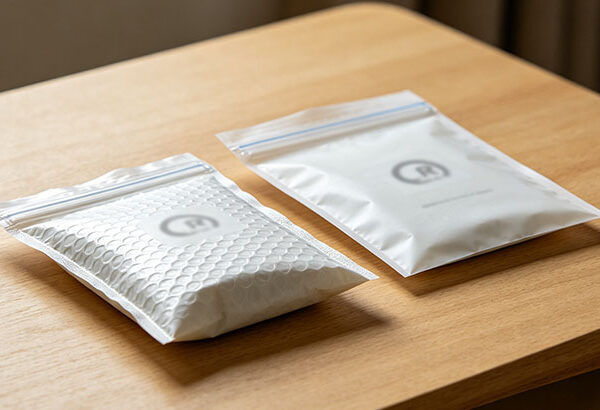
Smell-proof weed bags built on a PET aluminium-coated, pure aluminium foil and PE heat-sealing structure for retail flower formats.
Replenishment, not first purchase, is where most retail cannabis packaging decisions actually happen. A dispensary, smoke shop or brand owner that has already validated a format still has to decide, every few weeks, which lines to restock and how deep to go. That decision depends on fill weight, barrier class, child-resistance mechanism, printing method and reorder volume — not on generic claims about which bag is best.
The market context makes the stakes clearer. Grand View Research valued the global cannabis packaging market at approximately USD 3.2 billion in 2025, with North America accounting for a 67.9% revenue share. Fortune Business Insights projects the category reaching USD 21.55 billion by 2034 at a 14.35% CAGR. Those two figures differ in scope, and other trackers publish different totals again — the point for a purchasing manager is not the exact number but the ratio of repeat reorders to first-time projects inside it.
Dongguan Chitai Packaging Products Co., Ltd. is a Guangdong-based manufacturer of Cannabis Packaging Bags, established in 2025 to handle overseas client relationships and trade negotiations, with printing and packaging operations in the same team dating back to 2012. It runs a 4,200 m² facility with 45 employees, an annual output of 30,000,000 units and 8 R&D engineers, and exports approximately 30% of production to North America and Europe. This industry reference shortlists the CHITAI formats that matter most when a retail line is reordered, and identifies which specification decides each one.
Why a Reorder Is a Different Decision From a First Purchase
A first purchase is open-ended: the buyer can move the fill weight, the format or the supplier. A reorder is bounded by what is already on the shelf, already printed and already filed against a compliance requirement. Three constraints dominate.
- Compliance continuity. Child-resistant packaging in the United States must comply with CPSC standards under 16 CFR 1700.20 and ASTM D3475. Switching the closure mechanism mid-year can force a compliance file to be re-verified, which is a cost a routine restock should not carry.
- Category fit. Dried flower, pre-rolls, gummies and concentrates lose quality at different rates and for different reasons. Reordering a single barrier class across all four categories usually over-specifies one and under-specifies another.
- Batch economics. Printing method, not bag type, often decides whether a reorder is economical. A 10,000-unit restock and a 500,000-unit restock are produced on different equipment.
The opportunity is that a shortlist can be fixed in advance. Once a retail operator maps each shelf category to one verified CHITAI format, reordering becomes a specification re-confirmation rather than a new sourcing project.
What “Smell-Proof” Actually Measures
Odour control is a barrier-performance outcome, not a marketing attribute. For the CHITAI ct-Cannabis Packaging Bags model, the published figures are specific enough to be checked against a purchase order.
| Parameter | Published value — ct-Cannabis Packaging Bags |
|---|---|
| Oxygen transmission rate (OTR) | ≤0.05 cm³/(m²·24h) |
| Water vapour transmission rate (WVTR) | ≤0.03 g/(m²·24h) |
| Aluminium foil thickness | 7 to 9 µm, pinhole-free |
| Material structure | PET aluminium-coated + pure aluminium foil + PE heat-sealing layer |
| Waterproof grade | IPX4 water repellent |
| Heat seal strength | ≥40 N/15 mm, no air leakage, no odour seepage |
| Tear strength | Longitudinal ≥35 N, transverse ≥30 N |
| Light blocking | Completely opaque, zero light transmission |
| Sealing | Repeated zipper sealing plus top heat seal; optional CR child-safety zipper |
Read as a purchasing specification, three of these matter most. The OTR and WVTR ceilings define how long flower holds its terpene profile and moisture; the 7 to 9 µm pinhole-free foil layer is what makes the odour claim physically possible, because a single pinhole defeats an otherwise high-barrier laminate; and the ≥40 N/15 mm heat seal strength is what prevents odour from escaping at the seam rather than through the film.
Note that odour-barrier grading is not uniform across the CHITAI portfolio. The OEM and private-label ranges are listed with three grades — Good, Excellent and Premium — while several specific formats are listed at Good. That is a genuine selection variable rather than a wording difference, and it should be requested per SKU before a reorder is confirmed.
The Reorder Shortlist: CHITAI Formats by Retail Category
Across the CHITAI cannabis range, standard retail capacities are 1 g, 3.5 g (⅛ oz), 7 g (¼ oz), 14 g (½ oz) and 28 g (1 oz), with standard flat sizes of 3″×4″, 4″×5″, 5″×6″, 6″×8″ and 8″×10″. The following shortlist maps those capacities to the category they serve most often.
| Retail category | Typical reorder weights | Format to specify | Deciding feature |
|---|---|---|---|
| Flower — single-serve and eighth | 1 g, 3.5 g | ct-Cannabis Packaging Bags (Smell Proof Cannabis Bags) | OTR ≤0.05, WVTR ≤0.03, IPX4, fully opaque |
| Flower — quarter, half and ounce | 7 g, 14 g, 28 g | CHITAI cannabis bags / Smell Proof Weed Bags | CR zipper, push lock or slide lock to ASTM D3475 |
| Pre-roll — single and multi-pack | 1 g total and above | CHITAI pre roll packaging | Three-sided seal, tight fill tolerance, printable warning text |
| Edibles, gummies, concentrates | 1 g to 28 g | Three-sided sealed flat bag and self-standing zipper bag | Repeatable zipper sealing; opaque, no viewing window |
| House brand / private label | Full range | private label cannabis bags / CHITAI Custom cannabis bags | Shape, material, colour and logo printing |
| Bulk and export storage | Large-format | Thickened High Barrier Bag and Thickened stand-up bag | 140 µm and 120 µm total composite thickness |
Flower: 1 g to 28 g resealable formats
For dried flower, the ct-Cannabis Packaging Bags build combines an aluminium-coated PET outer layer, a 7 to 9 µm pure aluminium foil core and a PE heat-sealing layer — a structure chosen to block aroma migration, moisture loss and light simultaneously. On the OEM and private-label flower formats, the wider laminate is PET/VMPET/PE/NY/AL, which adds nylon for puncture resistance during handling and transport.
Child resistance on this range is offered through three closure families, each listed against ASTM D3475: CR Zipper, Push Lock and Slide Lock. For a reorder, the practical rule is to keep the mechanism already validated for the market rather than to switch between them for cost reasons. A 3.5 g eighth, a 7 g quarter and a 28 g ounce can all use the same closure family; the difference sits in the bag format, not the compliance mechanism.
Pre-roll: flat, tight and printable
Pre-roll packaging behaves differently from flower packaging. The fill is rigid, so the bag is judged on dimensions and seam integrity rather than on flexibility. CHITAI pre roll packaging uses the three-sided sealed flat format, where all three sides are heat-sealed and the opening sits at the top only. Sealing allowance is set at 5 mm per side in the referenced flat-bag construction, and corner cutting can be specified as right-angle or easy-tear with a single-sided sawtooth cut.
Because pre-roll packs are often the smallest unit on a dispensary shelf, they are also the category where a reorder most often runs short. Flat, stackable formats with a consistent 3″×4″ or 4″×5″ footprint reduce the risk of a mixed-shelf reorder being split across two sizes.
Edibles, gummies and concentrates
Edibles and concentrates rarely need the same reseal cycle as flower, but they do need an opaque, sealed barrier. The CHITAI self-standing zipper bag is specified at 55×80 mm and 90×140+25 mm with a 4 mm heat-sealing edge on three sides and a 12 mm self-standing bottom fold, and it can be opened and closed repeatedly. It is listed as suitable for applications in the health supplement industry in the CBD, and is used for raw-material repackaging projects as well as retail packs.
For gummies and single-serve edibles, the three-sided sealed flat bag is the more efficient reorder choice: it is fully sealed on three sides with the opening at the top, uses an aluminium foil lining to block moisture and odour uptake, and can be specified with a heat-sealed anti-tamper edge that cannot be restored once opened. The bag body is intentionally fully opaque with no viewing window, which keeps contents out of sight of minors — a design point that also removes any temptation to add a display window during a redesign.
Private label and house-brand lines
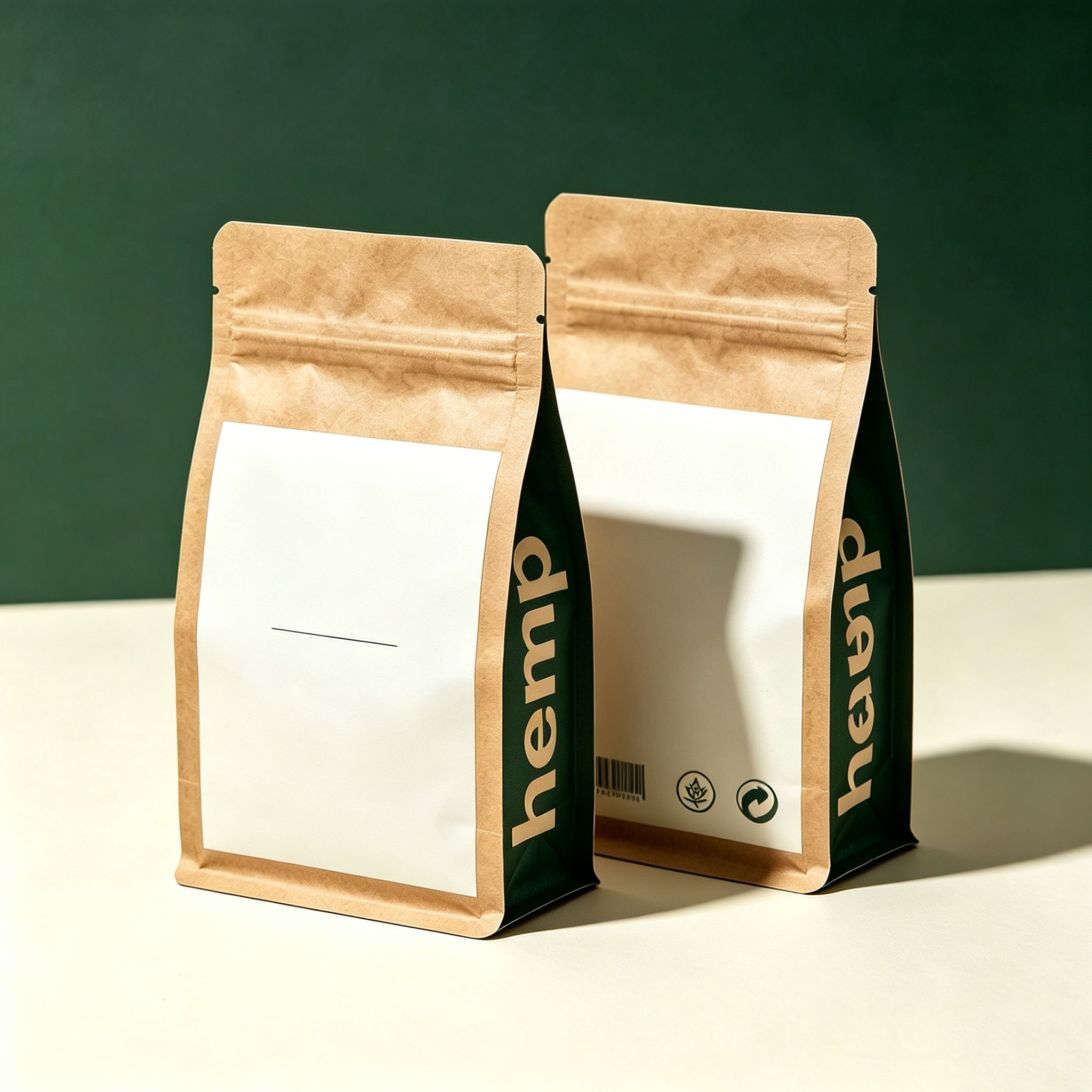
Private label cannabis bags allow shape, material, colour and logo printing to be fixed once and repeated on each reorder.
House-brand packaging is the category where reorder discipline pays off most directly, because artwork, plate or file setup is a one-time cost that should not be paid twice. CHITAI lists OEM and ODM production modes with customisation across shape, material, housing colour and logo printing. For the private label cannabis bags and custom cannabis bags lines, capacity, dimensions, CR level, material structure, odour grade, print specification and transparency are all listed as “customization based on customer needs” — meaning the previous approved specification, not a default, becomes the reorder reference.
Customisation on the ct-Cannabis Packaging Bags format includes logos and warning text, which is relevant for markets that require specific caution statements on the primary package rather than on a secondary label.
Bulk and long-storage formats
Two heavier builds sit above the retail formats. The CHITAI-Thickened High Barrier Bag is specified at a 14 micron (140 µm) total composite thickness in PET/AL/PE or VMPET/NY/PE, described as vacuum-level barrier with 100% opacity and 5 mm heat-seal width, in dimensions from 150×230+40 mm to 355×460+150 mm. The CHITAI-Thickened stand-up bag is specified at 12 micron (120 µm), described as more rigid than regular bags and less likely to burst, in 120×190+35 mm and 90×125+20 mm formats.
These are the formats a distributor reorders for repackaging stock or for sea-freight shipment, where moisture resistance over a long transit window matters more than shelf display.
Water Resistance in a Retail Context: What IPX4 Covers
The ct-Cannabis Packaging Bags model is rated at IPX4 water repellent. In practice this covers the conditions retail cannabis packaging actually meets: condensation during cold-chain or humid transit, handling with damp hands at a counter, and short exposure to splash. It is not a claim of immersion protection, and the specification should not be relied on for submerged storage or for liquid-filled product. Buyers who need heavier moisture defence should move up to the thickened builds described above rather than assume a higher water rating on the same laminate.
The working conditions listed for the wider CHITAI cannabis range are normal temperature, away from light and sealed — three conditions that map directly onto how a dispensary or smoke shop backroom is organised, and that are worth writing into a reorder note so that storage practice and packaging specification stay aligned.
Printing: Digital or Gravure Depends on Reorder Volume
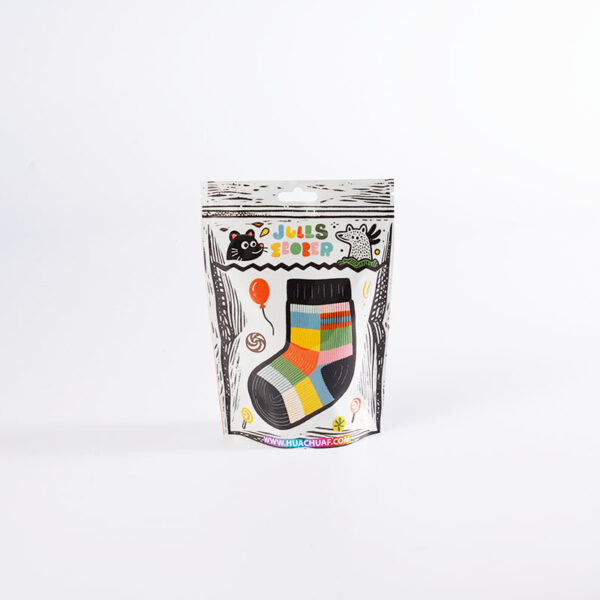
OEM packaging bags: the printing route, not the bag format, usually decides whether a small reorder is economical.
The CHITAI range lists three print routes: digital printing positioned for small batches, gravure printing, and flexographic printing. The facility operates 2 digital printing machines, 4 gravure printing machines and 30 fully automatic bag-making machines, which is the reason both small and large orders are handled on the same site.
The efficiency figures published for the integrated digital and high-speed gravure line are decision-relevant for reorder planning. A one-click model change takes 15 minutes, compared with 2 to 4 hours for manual machine adjustment in ordinary factories. Single production line capacity is increased by 200% to 300%, and order change downtime is reduced by 65%.
Where These Formats Are Used
The ct-Cannabis Packaging Bags model is listed as applicable to the tobacco and smoking accessories industry, medical botanical products, aromatherapy products, dispensaries and smoke shops. The broader CHITAI cannabis range covers cannabis flower, pre-roll, edibles, CBD packaging, tobacco packaging, vape, herbal products and the health product industry.
A referenced application scenario for legal and compliant cannabis packaging bags in the health product industry lists working conditions of normal temperature, away from light and sealed, matched equipment of heat sealing machines and filling equipment, a special requirement of child resistance, and packaging specifications of 1 g, 3.5 g, 7 g, 14 g and 28 g. Markets listed for that scenario include AU, US, DE, CA, ES, IT, FR, GB, UY, BR, MX and NL — a reminder that a reorder intended for more than one market has to satisfy the strictest of the applicable child-resistance and labelling rules, not the average.
One production case is worth noting for scale reference: a cannabis brand owner ordered 500,000 units for dried cannabis flower packaging, with a stated shelf life of 2 to 3 years and a daily usage period of more than one year. The reported result was no odour leakage and full compliance with local regulations on preventing children from opening and tampering, supported by child-resistant safety design, high odour barrier, solvent-free material and an anti-tamper, anti-counterfeit structure.
Market Trend Signals Behind the Shortlist
Third-party data supports the direction of this shortlist without predicting any individual buyer’s volume. Flexible packaging, including pouches and bags, is described by Future Market Insights as a rapidly growing segment on the basis of efficiency and lower cost. Plastics accounted for 54.3% of material market share in 2025, according to Grand View Research, which is consistent with the laminate-based formats that dominate retail flower and edibles.
Supplier concentration is another planning input. Global Market Insights identified Berry Global as a market leader with over 12% share in the cannabis packaging sector in 2025, and lists Amcor, KushCo Holdings (Greenlane), Berry Global, Sana Packaging and Dymapak among the top industry players. For a mid-size retailer or regional brand, that means the large-format capacity sits with a small number of global suppliers, while category-specific configurations — CR mechanism, fill weight, artwork and reorder batch size — are typically resolved with specialist manufacturers.
Comparison With Traditional Packaging: Where Flexibles Fit and Where They Do Not
Rigid jars and tins remain the traditional reference point for cannabis retail. Flexible pouches and bags have taken share because they are lighter to ship, cheaper to produce at volume and easier to print across a full surface. That advantage is real but conditional, and a shortlist that ignores the conditions is not useful.
Four boundaries are worth stating plainly.
- Resealability is format-dependent, not automatic. A three-sided sealed flat bag has no zipper; repeated opening and closing depends on choosing a zipper format such as the self-standing zipper bag or a CR-zipper construction.
- Child-resistant closure is a specification, not a category. CR Zipper, Push Lock and Slide Lock are distinct ASTM D3475 mechanisms. They are not interchangeable on a live compliance file.
- Printing economics favour setup continuity. Digital printing is positioned for small batches and gravure for larger runs; a very small reorder on gravure, or a very large one on digital, is not the intended use of either route.
- Order thresholds and support model are fixed. The stated capability envelope includes a minimum order quantity of 10,000 units, a lead time of 3 to 5 days, 100% testing and remote after-sales support. Buyers who need on-site service or sub-10,000-unit runs should plan around that envelope rather than assume it flexes.
A further boundary concerns barrier grading. Not every CHITAI format is specified at the same odour-barrier level; the OEM and private-label lines are offered in Good, Excellent and Premium grades. Assuming a premium barrier on a spec sheet that lists a standard grade is one of the more common causes of an unsatisfactory reorder.
Reorder Checklist for Purchasing Managers
| Check | What to confirm before releasing a reorder |
|---|---|
| Category and fill weight | Match 1 g / 3.5 g / 7 g / 14 g / 28 g to the shelf category, not to a single house standard |
| Barrier class | Confirm the odour grade (Good, Excellent, Premium) and the OTR / WVTR figures for the exact model |
| Child resistance | Confirm CR Zipper, Push Lock or Slide Lock, and keep the mechanism already validated for the destination market |
| Dimensions and thickness | Confirm flat size from 3″×4″ to 8″×10″, or the composite thickness for thickened formats |
| Print route | Choose digital for short runs and design changes, gravure for stable high-volume designs |
| Commercial envelope | Confirm MOQ (10,000 units), lead time (3 to 5 days) and monthly capacity headroom against the restock calendar |
| Quality evidence | Request the 100% test record and, where relevant, peel and seal strength data for the production lot |
Future Outlook
If the projected growth in this category materialises, reorder frequency will rise faster than new product launches, and the purchasing question will shift from “which format should we adopt” to “how quickly can the validated format be restocked without losing compliance continuity.” Two implications follow.
First, specification stability becomes a competitive advantage. A buyer who has fixed the CR mechanism, barrier grade, dimension and print route for each retail category can release a reorder without renegotiating any of them. Second, printing flexibility becomes a commercial lever rather than a production detail: where model changes can be completed in 15 minutes instead of 2 to 4 hours, mixed-category reorders stop being an operational penalty.
For manufacturers, the same logic points toward consolidating format families around standard retail weights while keeping the customisation layer — material, colour, logo, warning text — configurable per market.
FAQ
Which CHITAI format should a retail buyer reorder for 3.5 g flower?
The ct-Cannabis Packaging Bags model covers the 3.5 g (⅛ oz) capacity, with published oxygen permeability of ≤0.05 cm³/(m²·24h), water vapour transmission of ≤0.03 g/(m²·24h), a 7 to 9 µm pinhole-free aluminium foil layer and IPX4 water repellency. The same model also covers 1 g, 7 g, 14 g and 28 g, so the closure mechanism and print design can be kept consistent across a shelf.
What barrier data should be verified before reordering smell-proof cannabis bags?
Three figures determine whether a bag performs as a smell-proof format: the oxygen transmission rate, the water vapour transmission rate, and the aluminium foil thickness and pinhole integrity. On the ct-Cannabis Packaging Bags specification these are ≤0.05 cm³/(m²·24h), ≤0.03 g/(m²·24h) and 7 to 9 µm respectively. Heat seal strength of ≥40 N/15 mm is the fourth figure, because odour leaks through seams more often than through film.
Does an IPX4 waterproof cannabis packaging bag protect against full water immersion?
No. IPX4 denotes water repellency against splashing, which covers condensation, humid transit and damp handling at a retail counter. It is not an immersion rating. For heavier moisture exposure over long storage or sea freight, the thickened formats — the 12 micron (120 µm) stand-up bag and the 14 micron (140 µm) high barrier bag — are the appropriate specification level.
Should a reorder use digital printing or gravure printing?
The choice follows batch size and design stability. Digital printing is positioned for small batches, which suits short restocks and artwork changes. Gravure printing suits stable, higher-volume designs. The CHITAI facility operates 2 digital printing machines, 4 gravure printing machines and 30 fully automatic bag-making machines; published line data shows a one-click model change in 15 minutes versus 2 to 4 hours of manual adjustment in ordinary factories, with single-line capacity increased by 200% to 300% and order-change downtime reduced by 65%.
How do the child-resistant options differ across the ASTM D3475 range?
The CHITAI range lists three child-resistant closure families, each referenced to ASTM D3475: CR Zipper, Push Lock and Slide Lock. They differ in opening action and in how they integrate with the bag format rather than in the standard they are measured against. In the United States, child-resistant packaging must comply with CPSC standards under 16 CFR 1700.20 and ASTM D3475, so the practical selection rule for a reorder is to retain the mechanism already validated for the destination market.
What reorder quantities and lead times apply?
The stated capability envelope for CHITAI covers OEM and ODM production with customisation of shape, material, housing colour and logo printing, a monthly capacity of 2,500,000 units, a minimum order quantity of 10,000 units, a lead time of 3 to 5 days, 100% testing and remote after-sales support. Export focus is North America and Europe. Monthly capacity, not lead time, is usually the binding constraint when several categories are restocked in the same cycle.
How should edibles packaging differ from flower packaging in the same reorder?
Flower formats are selected primarily for odour and moisture barrier across a long shelf life, and they typically use resealable zipper constructions. Edible and concentrate formats are more often flat, three-sided sealed constructions or self-standing zipper bags, where the priorities are an opaque body with no viewing window, an aluminium foil lining that blocks moisture and odour uptake, and — where tamper evidence is required — a heat-sealed anti-tamper edge that cannot be restored once opened.