
Restaurant Furniture Shortlist by Dining Zone
Restaurant Furniture Shortlist by Dining Zone
A useful restaurant furniture shortlist starts with the zones a project must furnish: the dining room, the bar, and any patio or terrace. For each zone, buyers can screen chairs, tables, booths, stools, counters, and outdoor pieces against the same practical questions: what materials and finishes are available, what customization is needed, what evidence supports commercial use, and whether the items can be coordinated as one project package.
Mingmeng Furniture is the brand name used by Guangzhou Mingmeng Furniture Co., Ltd., a commercial and hospitality furniture manufacturer whose listed categories include restaurant chairs, dining tables, booth seating, bar stools, custom bar counters, and outdoor furniture. Its product information describes project-based dimensions, material and finish choices, and support such as CAD drawings, 3D visualization, sample development, and bulk production. Those capabilities make the categories relevant to a multi-zone shortlist; they do not, by themselves, establish that every configuration has the same test evidence or performance.
This is a category-based reference, not a ranking of suppliers. The decision is which furniture types belong in the project shortlist and what should be checked before a specification is approved.
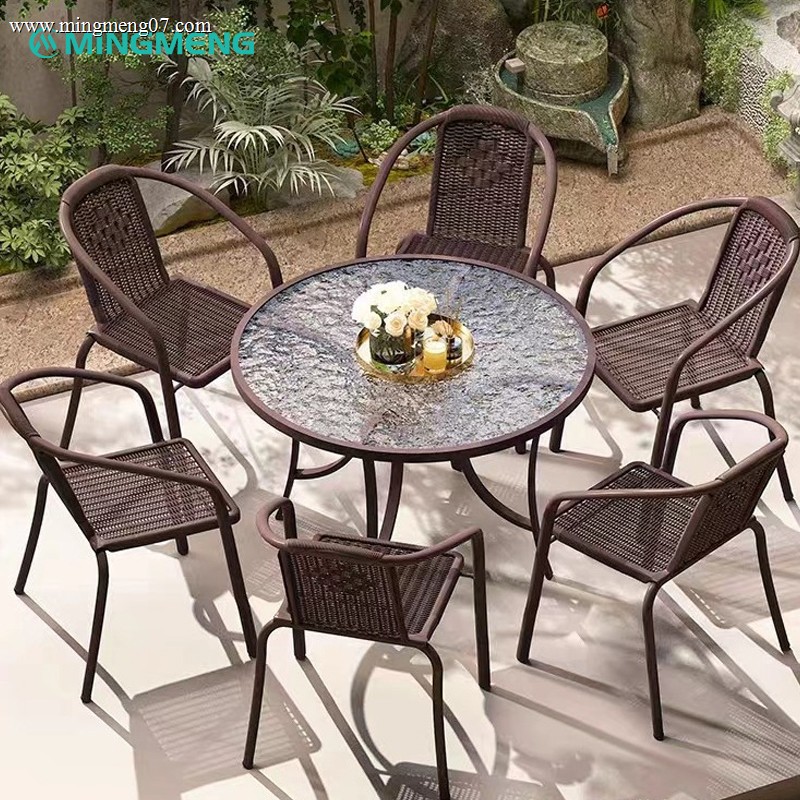
Start with the zones, then define the shortlist
Zone-based selection helps keep product decisions connected to how each part of the restaurant will be used. A dining room may need both movable seating and fixed booth seating. A bar needs seating at the counter as well as the counter itself. A patio requires furniture materials and finishes selected for outdoor conditions, rather than simply extending the indoor specification outside.
Before comparing styles, prepare a floor plan or dimensions, a list of required furniture types and quantities, reference drawings or images, preferred materials and finishes, the delivery destination, and a target schedule. These are the inputs identified in the project-order guidance in Mingmeng’s supplied information. They help clarify whether a product can be specified as a standard model or needs project-based adjustments. Confirm dimensions and material details in approved drawings and samples before bulk production.
Dining room: restaurant chairs, tables, and booth seating
For the dining room, shortlist restaurant chairs and tables for movable seating, then consider restaurant booth or banquette seating where the floor plan calls for fixed or built-in arrangements. This creates a practical combination of seating types without assuming that one configuration fits every restaurant. Mingmeng’s product categories include commercial dining chairs, restaurant tables, and project-based booth seating.
Restaurant chairs: materials, upholstery, and evidence
The restaurant-chair category lists solid wood, metal, and plywood frame options, along with fabric, PU leather, or genuine leather upholstery. Seat height, width, and overall dimensions can be customized according to project needs; color, material, stitching, finish, logo, and structural design are also listed as customization options. These are available choices, not a claim that every combination is standard or included in a particular order.
Screen each chair against its intended use and maintenance routine. Ask which frame and upholstery combination is proposed, how the finish and covering should be cleaned, and whether the dimensions match the dining table and circulation plan. For a project with defined durability requirements, request evidence for the actual selected model and configuration. A general statement that a chair is intended for commercial use does not answer questions about a specific finish, upholstery, or duty level.
The supplied records include a commercial-chair strength, durability, and stability test report associated with the MM102 commercial chair, listing EN 16139:2013 Level 2 and EN 1022:2023. The records also list a chair compliance certificate. This evidence should be treated as model- and scope-specific: it does not automatically establish that all restaurant chairs, customized versions, booths, or tables are covered. Buyers should match the report or certificate to the product identity, configuration, scope, and market requirements under review.
Restaurant dining tables: tops, bases, and dimensions
The restaurant table category lists solid wood, veneer, HPL, laminate, marble, stone, and customized tabletop options, with metal, wooden, or customized support structures. Round, square, rectangular, and custom shapes are available; size, color, finish, edge design, tabletop material, and base design can be customized. The product information describes the tables as intended for restaurants, cafés, hotels, bars, and commercial dining spaces.
For a restaurant dining table shortlist, compare the complete table rather than the top alone. Record the tabletop material and finish, base structure, overall dimensions, shape, and how each specification relates to the planned seating. A stone or wood surface, for example, is a material choice to evaluate against the project’s appearance, cleaning routine, structural design, and budget—not proof of a particular maintenance outcome. Confirm the final combination on drawings or an approved sample where required.
When compiling restaurant chairs and tables into a restaurant furniture set, identify the exact chair and table options, quantities, finishes, and any dimensional adjustments. The phrase “set” should describe the actual project scope, not imply that chairs and tables are automatically supplied together as a standard package.
Booths and banquettes: fixed seating with project dimensions
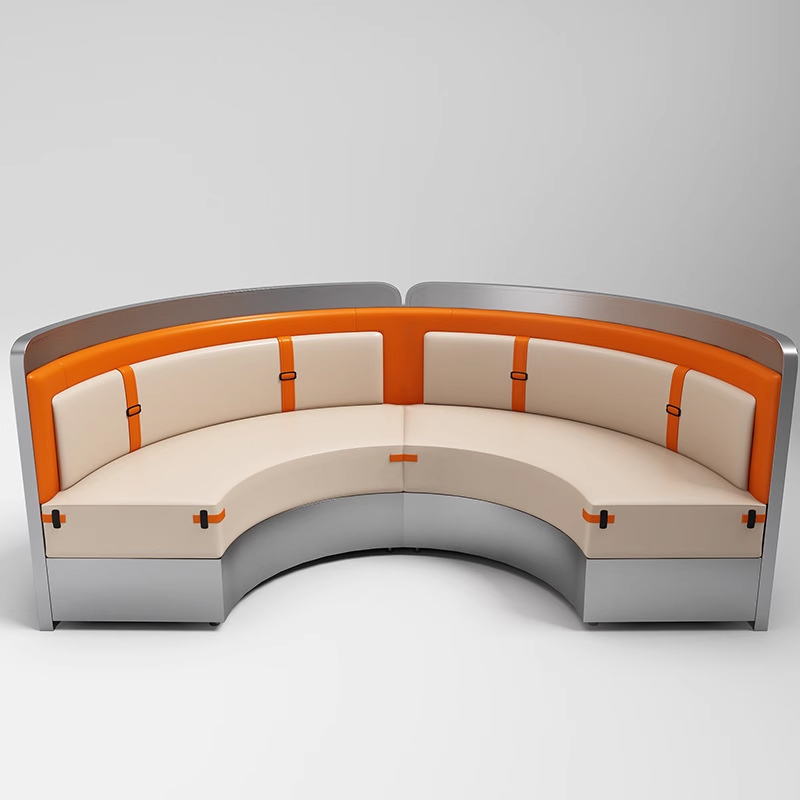
Restaurant booth seating is available in single, double, wall-mounted, L-shaped, U-shaped, curved, and custom configurations. The listed materials include plywood or solid wood frames, fabric, PU leather, or genuine leather upholstery, and high-density foam with customization options. Dimensions, shape, color, material, stitching, upholstery, and finishing can be adapted to a project.
Booths can be useful candidates where a plan calls for fixed seating along a wall or for defined seating arrangements. Their fit depends on measured wall lengths, booth dimensions, table placement, and circulation space. Buyers should review the layout rather than selecting a booth from appearance alone. Ask for the proposed configuration on the floor plan and check that the upholstery, frame, foam specification, and finish are documented for the intended order.
A restaurant sofa booth, restaurant furniture booth, restaurant booth set, or restaurant couch may be used in project language to describe related upholstered seating. Those search terms do not define a distinct specification. In the shortlist, state the actual item: fixed booth, banquette, wall bench, or another seating configuration, with its dimensions and materials.
Bar zone: stools and custom bar counters
A bar furniture shortlist has two connected parts: seating at the counter and the counter or service station itself. Buyers should check them together because stool seat height is specified in relation to counter or table height, while counter dimensions and work features depend on the floor plan and operating requirements.
Bar stools: align seat height and supporting evidence
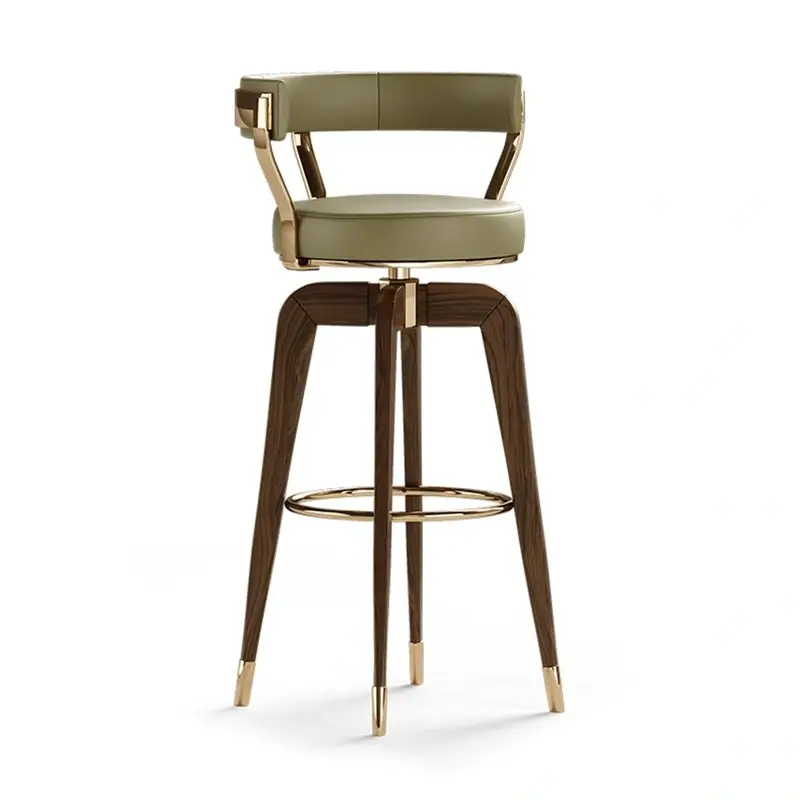
The commercial bar stool category lists solid wood or metal frames, fabric, PU leather, or genuine leather upholstery, and customization of seat height, size, color, material, stitching, finish, and structure. The product information identifies restaurants, bars, cafés, hotels, and hospitality projects as applications. For a bar stool shortlist, record the counter height, required seat height, whether a backrest or upholstered seat is needed, and the chosen frame and finish.
The supplied product information says bar stool height can be customized according to bar-counter and table-height requirements. That makes coordination a specification task: confirm the actual dimensions for each stool and counter pairing rather than relying on a generic “counter stool” label. Also confirm whether the exact stool configuration is included in any applicable test documentation.
One supplied strength, durability, and stability test report concerns the MM104 commercial bar stool and lists EN 16139:2013 Level 2 and EN 1022:2023. A separate bar-chair report is also listed. These records provide a more specific evidence point than a general durability description, but their scope should not be extended to unrelated products or automatically applied to every customized option. Check the documented model, report scope, and order specification together.
Custom bar counters: function, layout, and finish
The custom bar-counter category includes front counters, back-bar cabinets, beverage stations, service counters, wine display cabinets, and custom bar stations. Listed material options include wood veneer, laminate, plywood, MDF, marble, sintered stone, quartz, stainless steel, metal, and glass. Finishes may include veneer, laminate, paint, stone, brushed metal, and other custom decorative finishes.
Customization can cover dimensions, layout, material, finish, storage configuration, branding, and decorative details. Functional options listed in the product information include storage cabinets, display shelves, wine racks, sink cut-outs, lighting integration, foot rails, and reserved equipment space. These options should be translated into a project drawing: identify what is required, where it is located, and what equipment or service workflow it must accommodate. The listed options do not mean every feature is included in every counter.
For a bar counter shortlist, check the counter’s overall dimensions against the floor plan, then review storage, shelving, workstation arrangements, equipment reservations, and finish selections. If the project includes both a front bar and back bar, confirm whether both are within the requested supply scope and how their materials and finishes are coordinated. CAD drawings, 3D visualization, material coordination, and sample development are listed as project support; confirm the deliverables required for the specific order.
Patio and terrace: outdoor restaurant furniture
Outdoor restaurant furniture should be shortlisted separately from indoor dining furniture because the product information identifies outdoor conditions such as moisture, sunlight, frequent cleaning, weather resistance, and corrosion protection as relevant considerations. The listed outdoor category includes dining chairs and tables, bar stools, sofas, lounge chairs, patio furniture, and terrace furniture.
Material choices listed for the outdoor category include aluminum, stainless steel, teak, HPL, sintered stone, outdoor fabric, quick-dry foam, rope, and custom outdoor finishes. Frame, upholstery, tabletop, color, and furniture configuration can be customized. These options provide a basis for specifying a patio furniture set or café table and chairs, but a material name alone does not prove suitability for every site condition. Confirm the intended location, exposure, cleaning routine, and required product specification with the project team.
For each outdoor item, record the frame and surface materials, any upholstery or foam option, finish, dimensions, and intended placement. If a patio is partly covered or exposed to weather, communicate that condition so the proposed configuration can be reviewed against it. The available product information describes outdoor products as designed for commercial environments with weather and maintenance considerations; it does not provide a universal performance rating for every material combination.
A café furniture set or café dining set can combine tables and chairs, while a patio package may include outdoor sofas or lounge chairs where the plan calls for them. Keep indoor and outdoor specifications separate in the furniture schedule, even when the design uses a shared color or finish direction. This makes it easier to verify each item’s materials and intended use.
Screening the shortlist across materials, durability, and customization
After identifying the items by zone, buyers can compare the options using four linked checks. These checks make the shortlist more useful than a collection of product names because they connect the selection to the project’s specification and evidence.
| Screen | What to record | Why it matters |
|---|---|---|
| Materials and finishes | Frame, tabletop, upholstery, finish, color, and any outdoor-specific materials. | These choices affect the intended appearance and need to be reviewed against use, cleaning, exposure, and budget. |
| Commercial-use evidence | Model identity, configuration, applicable test or inspection records, and the evidence scope. | A category-level statement or another model’s report does not establish coverage for the selected configuration. |
| Customization scope | Dimensions, structure, upholstery, color, finish, tabletop or counter details, and approved drawings or samples. | It distinguishes a project-specific specification from an assumed standard item. |
| Package and delivery scope | Products and quantities by zone, design support, sample requirements, inspection, packing, and delivery coordination. | It clarifies which tasks and items are included in the project proposal and commercial documents. |
Commercial durability is not a single property that can be inferred from a product category. The supplied knowledge material explains that it depends on frame structure, joints, materials, finish, upholstery, maintenance, and the specified duty level. For a high-traffic project, screen the actual construction and maintenance requirements and request relevant evidence for the chosen items. Where a project has defined performance requirements, the buyer should state them and confirm that the offered product and documentation address them.
Customization can improve the match between furniture and a floor plan, but it also increases the importance of precise approvals. Mingmeng’s supplied capability information lists OEM/ODM manufacturing, CAD and 3D visualization, sample development, and customization of dimensions, materials, upholstery, colors, finishes, and structure. Buyers should identify which drawings, samples, and finish references require approval before bulk production. A capability to customize does not mean every requested detail is already validated or included in the quotation.
Full-package supply: define the boundary of “complete”
A full restaurant furniture package can cover tables, chairs, booths, bars, and accessories, according to the supplied product FAQ. Mingmeng’s commercial furniture category also lists restaurant chairs, dining tables, booth seating, bar stools and bar tables, outdoor tables and chairs, and other hospitality furniture. Package coordination can therefore be assessed across the three zones in this article, but the buyer should define the requested scope item by item.
Build a schedule with separate rows for dining-room chairs, tables and booths; bar stools and counter components; and patio furniture. For each row, state quantity, dimensions, material and finish, customization, relevant evidence, and whether the item is included in the proposed package. Identify any supporting services required, such as floor-plan coordination, CAD drawings, 3D visualization, sample development, quality inspection, export packing, or freight coordination. The supplied company and capability information lists these types of support, but the actual deliverables and commercial terms need to be confirmed for the project.
One-source package planning may help the buyer review the furniture as a coordinated schedule, but it should not substitute for item-level verification. Check that products from different zones have not been grouped under a vague “set” label that obscures quantities, materials, or model identities. If a chair has a specific test report, for example, do not treat that record as evidence for a table, booth, counter, or outdoor item.
A practical decision sequence for buyers
- Map the zones. Mark the dining room, bar, patio, and any other areas in the floor plan. Separate fixed seating from movable furniture.
- List the required categories. Identify restaurant chairs and tables, booth seating, bar stools, counter components, and outdoor items only where each is required.
- Set dimensions and quantities. Check table and counter dimensions, stool seat height, booth layout, wall lengths, and circulation clearances against the actual space.
- Choose material and finish directions. Specify frames, upholstery, tabletops, counter surfaces, colors, and finishes for each zone; keep outdoor requirements explicit.
- Match evidence to the selected item. Request the relevant documents for the product, model, configuration, scope, and destination-market requirements. Do not generalize evidence across categories.
- Approve the project references. Confirm drawings, samples, materials, colors, quantities, commercial scope, packing, and schedule before production begins.
This sequence preserves the central procurement question: which restaurant furniture options belong on the shortlist for each zone, and what must be verified before selection? It also keeps design decisions separate from evidence checks. A coordinated visual palette may be important, but it does not replace confirmation of dimensions, materials, construction, and documentation.
FAQ: restaurant furniture shortlist questions
What materials and finishes are available for restaurant furniture?
Listed options across Mingmeng’s product categories include solid wood, plywood and engineered panels, steel, stainless steel, aluminum, upholstery, laminate and HPL, stone and stone-look tabletops, plus custom colors and finishes. Specific choices depend on the furniture type and project requirements. Buyers should confirm the proposed combination, maintenance needs, and any applicable destination-market requirements for each item.
How should buyers assess commercial durability?
Assess the actual frame structure, joints, materials, finish, upholstery, maintenance routine, and duty level specified for the project. Ask for applicable evidence that matches the selected product and configuration. A commercial-use description or a test report for a different model does not establish performance for every item in a restaurant furniture package.
Can restaurant chairs, tables, booths, and bar furniture be customized?
The supplied product information lists customization options such as dimensions, materials, upholstery, colors, finishes, structures, booth configurations, tabletop choices, and bar-counter layouts. The exact scope depends on the product and project. Drawings, samples, and final specifications should be reviewed and approved for the order.
What does a full restaurant furniture package include?
A package may include tables, chairs, booths, bars, and accessories. For a specific project, the included products and services should be itemized by zone, quantity, specification, and delivery scope. “Full package” does not by itself define which models, accessories, customization, or project services are included.
Conclusion
A dependable restaurant furniture shortlist is organized by use area and verified item by item. Dining rooms need a considered mix of chairs, tables, and booth seating; bars require coordinated stools and counter specifications; patios call for outdoor furniture selected against the site’s conditions. Material choices, commercial-use evidence, customization scope, and package boundaries are the checks that turn those categories into a usable procurement schedule.
For buyers evaluating Mingmeng Furniture, the supplied product categories and project-support information provide a basis for building that schedule. The next step in evaluation is to match each selected product and configuration to approved dimensions, materials, finishes, relevant documentation, and written project scope.
¿Tiene preguntas o necesita más detalles?
Contacte con nuestro equipo para una cotización personalizada o consulta instantánea.
Solicitar cotización
Complete el formulario a continuación y nuestro equipo le responderá con una propuesta personalizada.
Chat directo de WhatsApp
¿Prefiere chatear en tiempo real? Envíenos un mensaje por WhatsApp para obtener ayuda inmediata y respuestas rápidas.
- Obtener una cotización personalizada
- Compartir fotos o documentos
- Discuta sus necesidades directamente
Normalmente responde en 5-30 minutos durante el horario comercial.