
Resistance Bands: Types, Materials, and Buyer Basics
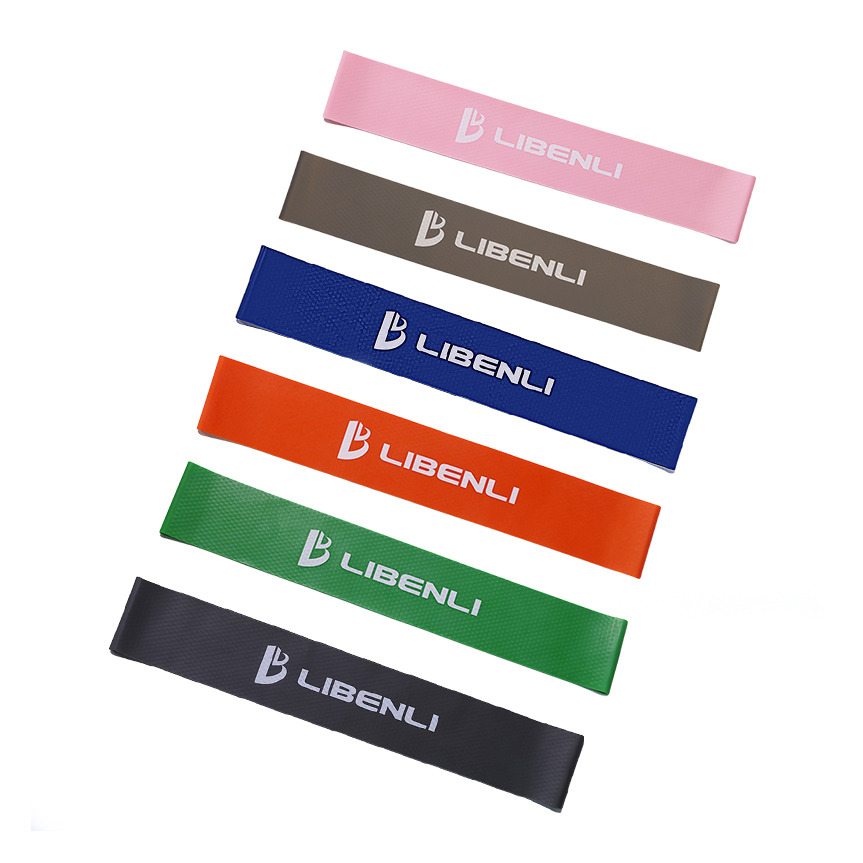
Color-graded mini loop resistance bands. Image: Libenli
Resistance bands have become a standard category in fitness equipment, appearing in commercial gyms, rehabilitation clinics, home workout kits, and retail fitness programs. Grand View Research values the global resistance bands market at approximately USD 1.7 billion in 2024 and projects it will reach USD 2.9 billion by 2030, a compound annual growth rate of 9.9% from 2025 to 2030. For procurement teams, brand owners, and fitness operators, this category looks deceptively simple; the actual buying decision involves material choice, resistance calibration, durability expectations, compliance documentation, and supplier production depth. This article provides a buyer-oriented foundation: what resistance bands are, which types matter, what materials are used, how they are manufactured, and what the latest market data implies for sourcing decisions.
What Is a Resistance Band?
A resistance band is an elastic band that provides progressive resistance when stretched. The force required increases as the band elongates, so a single band can produce different load levels within one movement. In training contexts, resistance bands are used for muscle stretching, strength training, joint rehabilitation, body shaping, and yoga-assisted exercise.
In the broader market, resistance bands are sold in several structural formats. Mini loop bands are small closed loops, typically used for lower-body and mobility work. Power loop bands — often sold as pull up assist bands — are long, high-resistance loops used in strength training. Tube bands with handles combine an elastic tube with molded handles. Fabric resistance bands, including cotton fabric and nylon versions, wrap the elastic core in a textile layer and are common in comfort-oriented glute and pilates training. Multi-band sets bundle several resistance levels in one package, a format that has become standard for home fitness retail.
Why a Simple Product Creates Complex Buying Decisions
The category's accessibility creates a selection problem. Bands are named differently across channels — booty bands, leg resistance bands, pull up bands, exercise loops, and strength bands — and the same visual product can be made from natural latex, TPE, or a fabric-covered composite. For a buyer at the research stage, the first challenge is not finding a supplier; it is building an accurate map of the product itself.
The demand context makes this mapping worthwhile. According to Grand View Research, North America held the largest revenue share of the resistance bands market at 40.0% in 2024. Health and sports clubs dominated the market with a 70.6% revenue share in 2024, while individual use is the fastest-growing segment. Market Research Future estimates that therapy and exercise bands account for approximately 50% of total global market share as of 2024/2025. Both professional and consumer demand are expanding, which raises the cost of choosing a band type or a supplier based only on appearance and price.
The opportunity for buyers is a growing category with a teachable product vocabulary. Suppliers that communicate specifications clearly — material, resistance range, dimensions, durability, and compliance — are substantially easier to evaluate than suppliers that sell only by color.
A Reference Manufacturer: Core Resistance Band Lines
For a concrete view of the category, it is useful to look at a manufacturer that builds its production around latex resistance products. Haiyang Libenli Body-Building Apparatus Co., Ltd., established in 1997, is a professional manufacturer and exporter specializing in the design, R&D, and production of latex tubing and latex resistance bands. The company operates from a 50,000 square meter facility in Shandong, China, employs around 300 people, and counts more than 20 engineers on its R&D team.
Its core resistance band models illustrate the two reference formats used across the industry.
| Model | Type | Material | Key parameters | Typical applications |
|---|---|---|---|---|
| ZLQ-1 | Mini loop band with anti-slip design | Latex or TPE | Resistance 5LB–40LB; thickness 0.3mm–1.2mm; width 50mm; circumference 600mm; fatigue resistance ≥30,000 stretches | Home fitness, Yoga & Pilates, Hip & Glute Training, Sports Rehabilitation, Physical Therapy, Gym Training Equipment |
| ZLQ-03 | Power loop band (pull up band), double layer option | Latex | Resistance 8LB–230LB; thickness 0.45mm; width 6.4mm–82.5mm; length 2080mm; service life ≥20,000 stretches | Fitness Gym, Home Workout, Sports Rehabilitation, Yoga Training, Physical Therapy, Outdoor Training Equipment |
Reference specifications of two core resistance band models. Source: Libenli product data
Beyond finished bands, the company's production covers medical grade latex tubing, high-tension fitness latex tubing, high-elasticity latex resistance band series, and fishing and diving latex products. It also supplies custom injection molded goods and metal hardware accessories — the components that typically appear in band-and-handle sets. This combination matters for buyers because it means a manufacturer can control the band, the connector, and the accessory within one supply chain.
Production depth is a practical signal for procurement. Haiyang Libenli operates 24 dedicated production lines for dipped latex tubing with a daily output of 120,000 meters, and two exclusive production lines for latex bands with a daily capacity of 25,000 meters. Annual production capacity reaches 65,000,000 units. The factory also owns CNC molding machines and plastic injection molding equipment, which supports custom components without full outsourcing. In buyer terms, dedicated latex lines and in-house molding reduce the risk of inconsistent material handling and shorten the path from sample approval to serial production.
The company holds ISO 9000:2000 and ISO 9001:2008 quality certifications, a 3A credit rating issued by the Ministry of Commerce of China and CCPIT, and SGS certification on most products. It holds 2 invention patents and 18 utility model patents. Export business accounts for 70% of total sales, with major markets in Germany, the USA, the UK, France, and Canada.
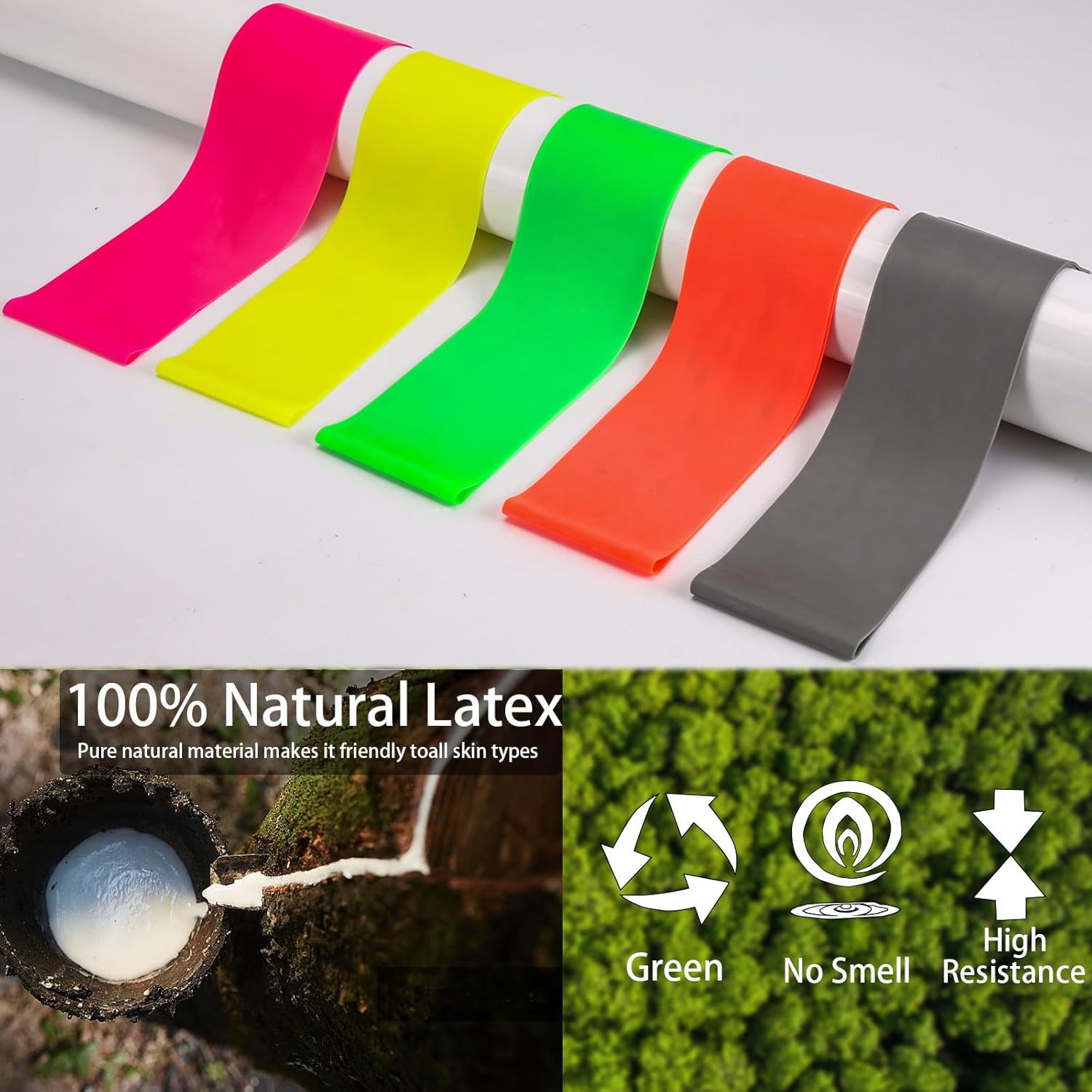
Natural latex is a core raw material in high-elasticity resistance band production. Image: Libenli
Materials and Manufacturing Fundamentals
Resistance band performance is determined by materials and process control before it is determined by packaging. The main elastic materials are natural latex and TPE, and the construction may include a textile cover for specific use cases.
Natural latex
Natural latex is the elastic material used in the ZLQ-03 power loop band and in the high-elasticity latex resistance band series. It is the core material for the dipped tubing production lines described earlier. In the broader market, natural latex is widely used when the priority is high elasticity and stretch recovery in a thin, light band.
TPE
TPE (thermoplastic elastomer) is an alternative material in resistance band production. The ZLQ-1 mini loop band is offered in both Latex and TPE versions. In the broader market, TPE is commonly selected where a latex-free option is preferred, and it is frequently found in lower-resistance loop bands for home fitness.
Fabric-covered and composite bands
Fabric resistance bands add a textile layer — commonly cotton fabric or nylon — around the elastic core. In the broader market, this construction is associated with comfort-oriented formats such as glute bands and pilates loops, where reduced skin contact and less rolling are priorities. Because the elastic core still determines the load profile, buyers should evaluate fabric bands on the same parameters: material, resistance range, and durability.
Production process
Latex resistance band manufacturing is a material-intensive process. In the reference factory, the production footprint includes drying, washing and cooling, sewing, assembly, and packing workshops, supported by self-owned CNC molding machines and plastic injection molding equipment. The dipping-based tubing lines produce the elastic material in continuous lengths; bands are then cut, finished, and, where needed, sewn or fitted with hardware. For buyers, the practical takeaway is that a band's consistency depends on process control — material batch handling, curing, and quality checks — which is difficult to verify from a sample alone.
Compliance and documentation
On the regulatory side, resistance bands entering the EU as fitness equipment fall under the EN 20957 series on stationary training equipment for CE marking. For customs purposes, resistance bands are commonly classified under HS Code 9506.91, which covers articles for general physical exercise, gymnastics, or athletics. A manufacturer's export structure is a practical proxy for documentation readiness; Libenli reports that export business accounts for 70% of total sales, with major markets in Germany, the USA, the UK, France, and Canada.
Applications and Project Fit
Resistance bands are applied in Gym Fitness, Yoga & Pilates, Physical Rehabilitation, Sports Training, and Home Workout settings. Typical projects include fitness studio equipment matching, rehabilitation clinic equipment, home sports kits, and gym retail sets. In the reference application data, the working environment is indoor and normal indoor conditions, at room temperatures of -10°C to 50°C, in dry, low-dust spaces.
Common functions include muscle stretching, strength training, joint rehabilitation, body shaping, and yoga-assisted exercise. The operation mode is manual pulling and stretching, with repeated tension exercise. Typical matched equipment includes yoga mats, fitness handles, ankle straps, and workout storage bags.
The two reference models map to different project needs. The ZLQ-1 mini loop band, with resistance from 5LB to 40LB, suits yoga and pilates training, hip and glute training, sports rehabilitation, physical therapy, and gym training equipment. For a rehabilitation clinic or a pilates studio, low-resistance increments and skin-friendly surfaces are usually the priority; the anti-slip feature is directly relevant to glute and leg work. The ZLQ-03 power loop band, with resistance from 8LB to 230LB, suits fitness gyms, home workouts, outdoor training, and rehabilitation programs that need a wide load range. For a gym strength area, the high end of the range is what makes pull-up assistance and heavy resistance work practical.
Retail terminology mirrors these use cases: mini loops are frequently sold as booty bands or resistance bands for legs, while high-resistance loops are sold as pull up assist bands. Multi-band sets combine several colors and resistance levels, which is why color-graded packaging has become a common requirement in home-fitness retail.
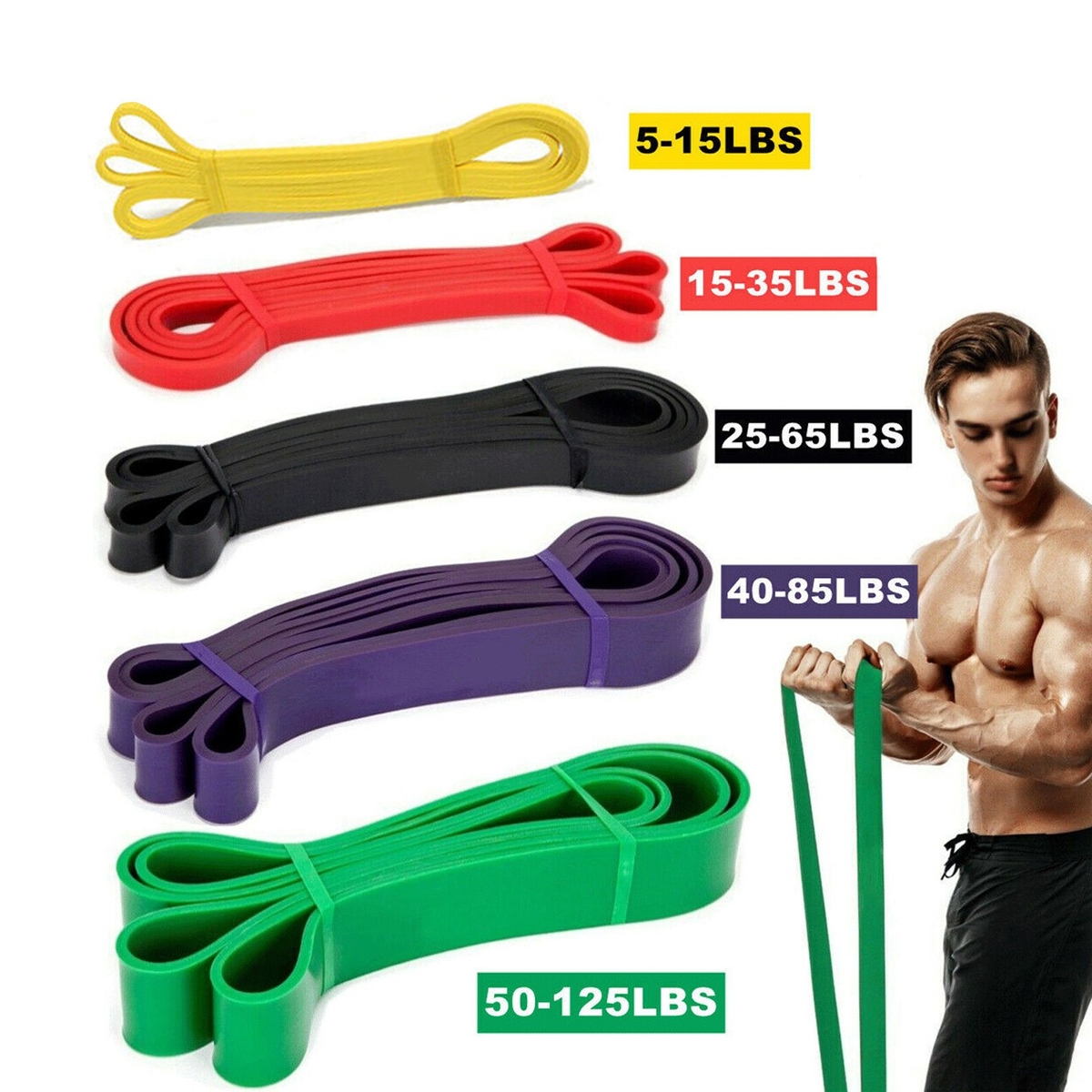
Power loop bands (pull up bands) are used for strength training and assisted pull-ups. Image: Libenli
Market Trends and What They Mean for Buyers
The market data points to steady growth in both professional and individual channels. Grand View Research projects the global resistance bands market will grow from USD 1.7 billion in 2024 to USD 2.9 billion by 2030, at a CAGR of 9.9% from 2025 to 2030. North America held 40.0% of revenue in 2024, and health and sports clubs accounted for 70.6% of revenue, with individual use growing fastest.
Buyers should also note that market estimates differ by research scope. Grand View Research reports USD 1.7 billion for 2024, while Global Market Insights estimates the exercise bands market at USD 1.3 billion in 2024, and Data Bridge Market Research reports USD 1.86 billion for 2025. The divergence is mainly due to whether physical therapy and retail consumer scopes are included. Using one source for internal benchmarks is less important than understanding the category's direction, which the available sources describe as upward.
The competitive field includes established consumer and professional brands; Mordor Intelligence lists Performance Health (TheraBand), Black Mountain Products, Rogue Fitness, TRX (Fitness Anywhere LLC), and Decathlon among leading global names. For most buyers, these brands confirm the category's commercial scale; manufacturing decisions, however, are typically made with OEM and ODM factories such as Libenli, which the same industry data identifies as a major Chinese OEM/ODM manufacturer specializing in natural latex tubing and resistance bands.
Three trends are visible from the verified data. First, therapy and exercise formats hold about half of the global market, so fatigue-resistance data and documented material safety are becoming normal procurement criteria. Second, individual use is the fastest-growing segment, which favors compact multi-band sets and clear color-coding. Third, import compliance is no longer optional: the EU applies the EN 20957 series for CE marking, and the customs classification HS 9506.91 is standard for physical exercise articles. Suppliers with certifications such as ISO 9001:2008, SGS product certification, and documented export experience are easier to approve.
Resistance Bands vs. Conventional Strength Equipment
Compared with free weights and pulley machines, resistance bands are lighter, more portable, lower in cost, and easier to scale across many users. They also provide a variable resistance curve: the load increases as the band is stretched, which is different from the constant load of a dumbbell or the adjustable stack of a machine.
| Criteria | Resistance bands | Free weights | Pulley / selectorized machines |
|---|---|---|---|
| Portability | High; coil into a storage bag | Low | Fixed installation |
| Space requirement | Minimal | Moderate | Large |
| Relative cost per station | Low | Moderate | High |
| Load profile | Increases with stretch length | Constant throughout the rep | Adjustable by stack or plate |
| Practical maximum load | Limited by band resistance; reference ZLQ-03 reaches 230LB | Very high | Very high |
| Durability and replacement | Finite elastic life; reference values ≥20,000–30,000 stretches | Long service life | Long service life with maintenance |
Comparison based on product data and general equipment characteristics
A credible comparison also needs boundaries. First, the load curve is not identical to free weights: resistance is lowest at the start of a repetition and highest at full stretch, which is productive for many movements but not a substitute for constant-overload training in advanced strength programs. Second, bands have a finite service life because elastic materials fatigue; the reference values of at least 20,000 stretches for the ZLQ-03 and 30,000 stretches for the ZLQ-1 are useful planning benchmarks, but bands still require periodic replacement. Third, the maximum load is capped — even a high-resistance power loop tops out at 230LB — so maximal strength work generally still relies on barbells or machines. Fourth, natural latex sensitivity is a recognized issue in fitness populations, which is why products such as the ZLQ-1 are also offered in TPE. Finally, operating conditions matter: the reference application data specifies indoor environments at -10°C to 50°C in dry, low-dust conditions; prolonged exposure to heat, sunlight, or chemicals will shorten band life.
Future Outlook
Resistance bands are moving from accessory status to core equipment status. The verified data supports this: individual use is the fastest-growing segment, therapy and exercise formats account for roughly half of the global market, and the overall category is projected to expand at a 9.9% CAGR through 2030. For buyers, this means the range of products will continue to broaden — from single loops to multi-band sets, custom-branded retail packs, and professionally documented rehabilitation products.
Procurement expectations will shift accordingly. Buyers can reasonably expect suppliers to provide clear parameter documentation, fatigue-resistance or service-life values, material declarations, and compliance references. In an OEM context, custom logo resistance bands and custom color sets will remain a standard part of retail programs, and manufacturers with in-house molding and injection equipment will have an advantage in delivering complete sets with handles and accessories.
The largest risk in this category is not missing a trend but choosing products and suppliers based on appearance rather than verifiable performance. The next step for any buyer at the research stage is to translate required resistance levels and applications into written specifications, then compare suppliers against those specifications.
Reference material: Haiyang Libenli publishes a corporate catalog with factory and product documentation. Readers who want the underlying supplier data can access it here: Libenli Corporate Catalog.
Frequently Asked Questions
What is a resistance band?
A resistance band is an elastic band that provides progressive resistance when stretched. It is used for muscle stretching, strength training, joint rehabilitation, body shaping, and yoga-assisted exercise. Resistance bands are common in home fitness, gym training, sports rehabilitation, physical therapy, and pilates programs.
What types of resistance bands are available?
The most common manufactured types are mini loop bands and power loop bands. Mini loop bands, such as the Libenli ZLQ-1, are closed loops with a 600mm circumference and a resistance range of 5LB–40LB, suited to yoga, pilates, glute training, and rehabilitation. Power loop bands, such as the ZLQ-03, are 2080mm loops with resistance from 8LB to 230LB, commonly used for pull-up assistance and strength training. The wider market also includes tube bands with handles, fabric-covered bands, and multi-band sets.
What is the difference between latex and TPE resistance bands?
Latex is a natural elastic material used in products such as the ZLQ-03 power loop band. TPE is a synthetic material option, and the ZLQ-1 mini loop band is manufactured in both Latex and TPE versions. In the broader market, TPE is typically chosen when a latex-free alternative is preferred.
What resistance levels do resistance bands typically cover?
In the reference product range, the ZLQ-1 mini loop band covers 5LB to 40LB, and the ZLQ-03 power loop band covers 8LB to 230LB. Retail products commonly use color grades to mark resistance levels, and multi-band sets combine several grades in one package.
How long do resistance bands last?
Durability is usually stated as fatigue resistance or service life under repeated stretching. The ZLQ-1 mini loop band has a fatigue resistance of at least 30,000 stretches, and the ZLQ-03 power loop band has a service life of at least 20,000 stretches. Actual lifespan depends on usage intensity, care, and storage, since bands are designed for dry, low-dust indoor environments.
What compliance documents should a resistance band buyer check?
Common documents include quality management certifications such as ISO 9001:2008, product-level certifications such as SGS, and, for EU markets, CE marking documentation based on the EN 20957 series for stationary training equipment. For customs classification, resistance bands are commonly listed under HS Code 9506.91.