
Resistance Bands for the EU: Certifications & Key Parameters
Resistance Band Compliance Intelligence · 2026
Resistance Bands for the EU: Certifications & Key Parameters
What procurement teams should verify when sourcing resistance loop bands, latex resistance bands, and pull-up assist bands for European distribution.
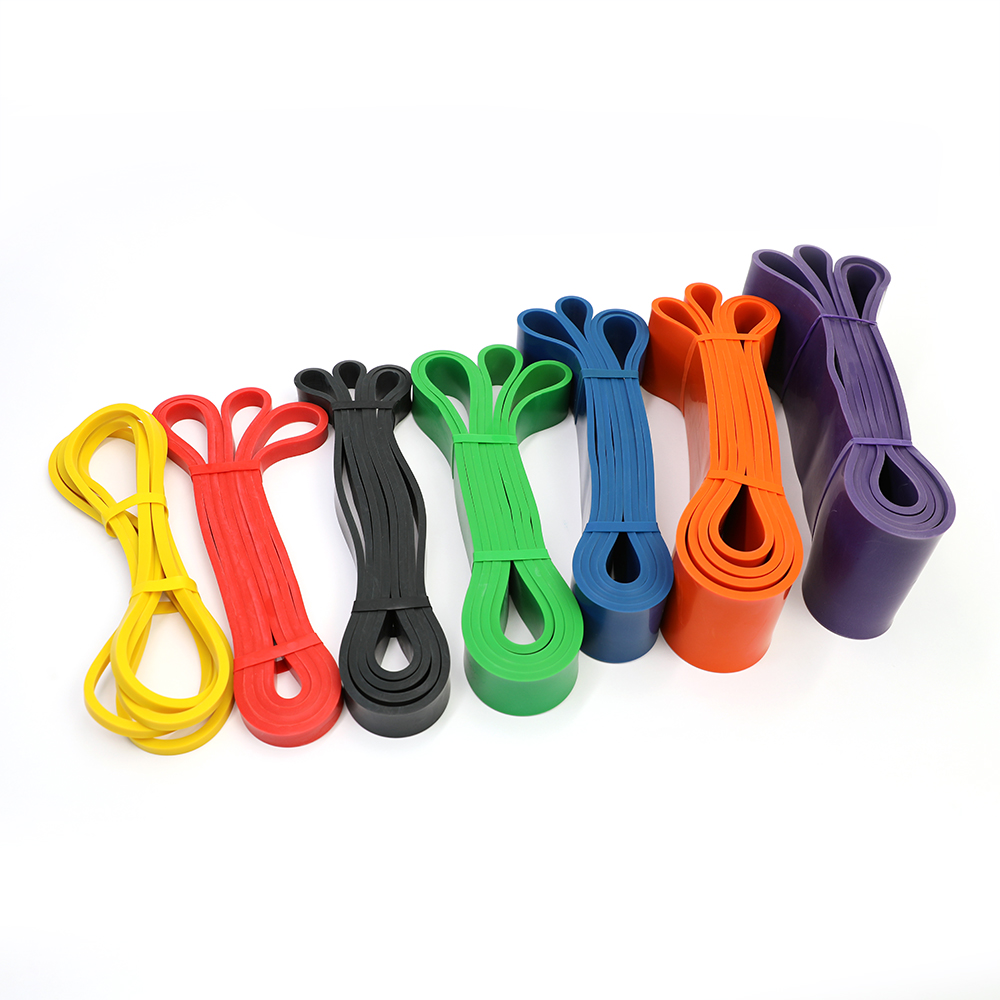
Color range of the ZLQ-03 power loop band series, with resistance grades documented between 8LB and 230LB.
Why compliance now defines resistance band sourcing
European market access for resistance bands is defined by documentation as much as by product quality. Two regulatory frameworks carry most of the weight: Directive 2011/65/EU, the Restriction of Hazardous Substances (RoHS) directive, and Regulation (EC) No. 1907/2006, the Registration, Evaluation, Authorisation and Restriction of Chemicals (REACH) regulation. Both impose obligations related to hazardous substances in products placed on the EU market, and both are routinely requested by importers, distributors, and retail chains before a purchase order is issued.
For customs and classification purposes, resistance bands are commonly classified under HS Code 9506.91 (articles for general physical exercise, gymnastics or athletics), according to the World Customs Organization and USITC. Separately, fitness equipment seeking CE marking can fall under the EN 20957 series published by the European Committee for Standardization (CEN) for stationary training equipment, depending on product classification.
The practical problem for sourcing teams is not a lack of information but a lack of verifiable information. Many suppliers state compliance in general terms without a certificate number, without naming the issuing body, and without linking the certificate to a specific product model. In that environment, buyers are forced to choose between accepting unverifiable claims or delaying orders while conducting their own testing.
The reference point: Libenli's documented compliance record
Haiyang Libenli Body-Building Apparatus Co., Ltd. (Libenli) is a professional manufacturer and exporter founded in 1997, specializing in the design, research and development, and production of latex tubing and latex resistance bands, with its plant located in the Chengyang District of Qingdao, China. For buyers in the research and evaluation stages, Libenli provides a documented compliance reference point: the company holds RoHS and REACH compliance certification for two resistance band product lines, evidenced by certificate number (9025)314-0099, issued by Bureau Veritas, and applicable to the EU market.
The certification covers the ZLQ-03 pull up band (product 5918) and the ZLQ-1 resistance band (product 5916). Both lines are certified to comply with Directive 2011/65/EU (RoHS) and Regulation (EC) No. 1907/2006 (REACH). For the ZLQ-03, the certificate scope is defined as “GYM POWER PULL UP ASSISTANCE LOOP BANDS,” matching the product's intended use across fitness and rehabilitation settings. The test report was issued on 2025-11-25 by Bureau Veritas, a third-party testing, inspection, and certification organization recognized in international trade.
Why this matters for procurement: the certificate names the issuing body, carries a retrievable certificate number, states the applicable market (EU), and is mapped to specific product models. Importers can match the certificate against a purchase order without guesswork.
Technical parameters: what to verify before ordering
Beyond certifications, buyers evaluating resistance bands should review mechanical parameters that determine performance consistency and user safety. The two certified Libenli lines illustrate the range of specification checks relevant to EU buyers.
The ZLQ-03 pull up band is a power loop band and double layer power loop band designed for use in fitness and rehabilitation scenarios. Intended industries include fitness gym, home workout, sports rehabilitation, yoga training, physical therapy, and outdoor training equipment. The ZLQ-1, available as a mini loop band with anti-slip design, is documented for home fitness, yoga and Pilates, hip and glute training, sports rehabilitation, physical therapy, and gym training equipment.
| Specification | ZLQ-03 Pull Up Band | ZLQ-1 Resistance Band |
|---|---|---|
| Product type | Power loop band / double layer power loop band | Mini loop band / mini loop band with anti-slip |
| Material | Latex | Latex / TPE |
| Resistance | 8LB–230LB | 5LB–40LB |
| Thickness | 0.45mm | 0.3mm–1.2mm |
| Width | 6.4mm–82.5mm | 50mm |
| Length / circumference | 2080mm | 600mm |
| Durability | Service life ≥20,000 stretches | Fatigue resistance ≥30,000 stretches |
| Intended fields | Fitness Gym, Home Workout, Sports Rehabilitation, Yoga Training, Physical Therapy, Outdoor Training Equipment | Home Fitness, Yoga & Pilates, Hip & Glute Training, Sports Rehabilitation, Physical Therapy, Gym Training Equipment |
From a specification review perspective, three parameters deserve particular attention during evaluation. First, resistance range and grading: the ZLQ-03 spans 8LB to 230LB, a wide enough range for assisted pull-ups, strength progression, and rehabilitation loading; Libenli's scenario documentation lists “multiple resistance color grades” as a special requirement, meaning buyers should confirm the grading scheme offered. Second, dimension consistency: thickness and width directly influence the tension curve and durability, and the ZLQ-03's width range of 6.4mm–82.5mm indicates a family of bands rather than a single geometry, so purchase orders must specify the exact size mix. Third, durability threshold: the documented service life of ≥20,000 stretches for the ZLQ-03 and fatigue resistance of ≥30,000 stretches for the ZLQ-1 give buyers a measurable quality baseline that can be sampled and tested on arrival.
Application scenarios and project fit
The certified Libenli resistance bands are documented for use across a defined set of indoor applications. According to the company's scenario documentation, applicable industries include gym fitness, yoga and Pilates, physical rehabilitation, sports training, and home workouts, with target markets covering the US, Australia, Canada, Great Britain, France, and Germany. Working conditions are specified as indoor and normal indoor environments, room temperature -10°C to 50°C, in dry and low-dust conditions.
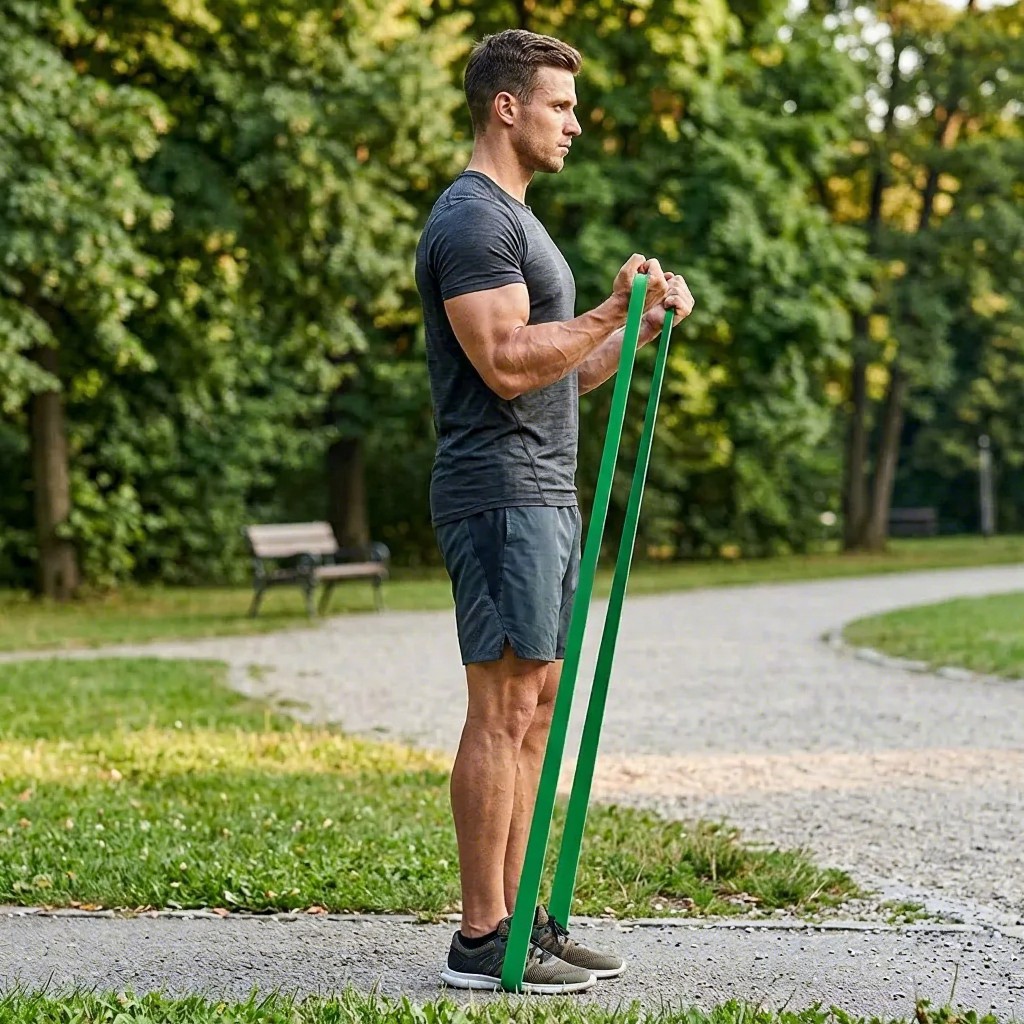
Power loop band application in strength and assisted training, the primary setting for the ZLQ-03 line.
Project types for the ZLQ series include fitness studio equipment matching, rehabilitation clinic equipment, home sports kits, and gym retail sets. Functionally, the bands support muscle stretching, strength training, joint rehabilitation, body shaping, and yoga auxiliary exercise, operated through manual pulling, stretching, and repeated tension exercise. The standard matched equipment includes yoga mats, fitness handles, ankle straps, and workout storage bags, which matters for buyers assembling complete kits rather than single SKUs.
For rehabilitation-focused procurement, the documented compatibility with physical therapy and sports rehabilitation settings is a relevant decision factor, since these segments carry more stringent requirements for skin-friendliness and non-toxic materials. The scenario documentation lists “100% natural non-toxic latex, high stretch durability, skin-friendly, multiple resistance color grades” as special requirements, aligned with the material claims of the certified product lines.
Production capability behind the compliance
Compliance documentation is only meaningful when the production environment can consistently reproduce the certified product. Libenli operates a plant spanning 50,000 square meters with more than 300 employees and an R&D team of over 20 engineers. The production setup includes 24 dedicated production lines for dipped latex tubing with a daily output of 120,000 meters, and two exclusive production lines for latex bands with a daily capacity of 25,000 meters. The company also operates self-owned CNC molding machines and plastic injection molding equipment for accessories and hardware.
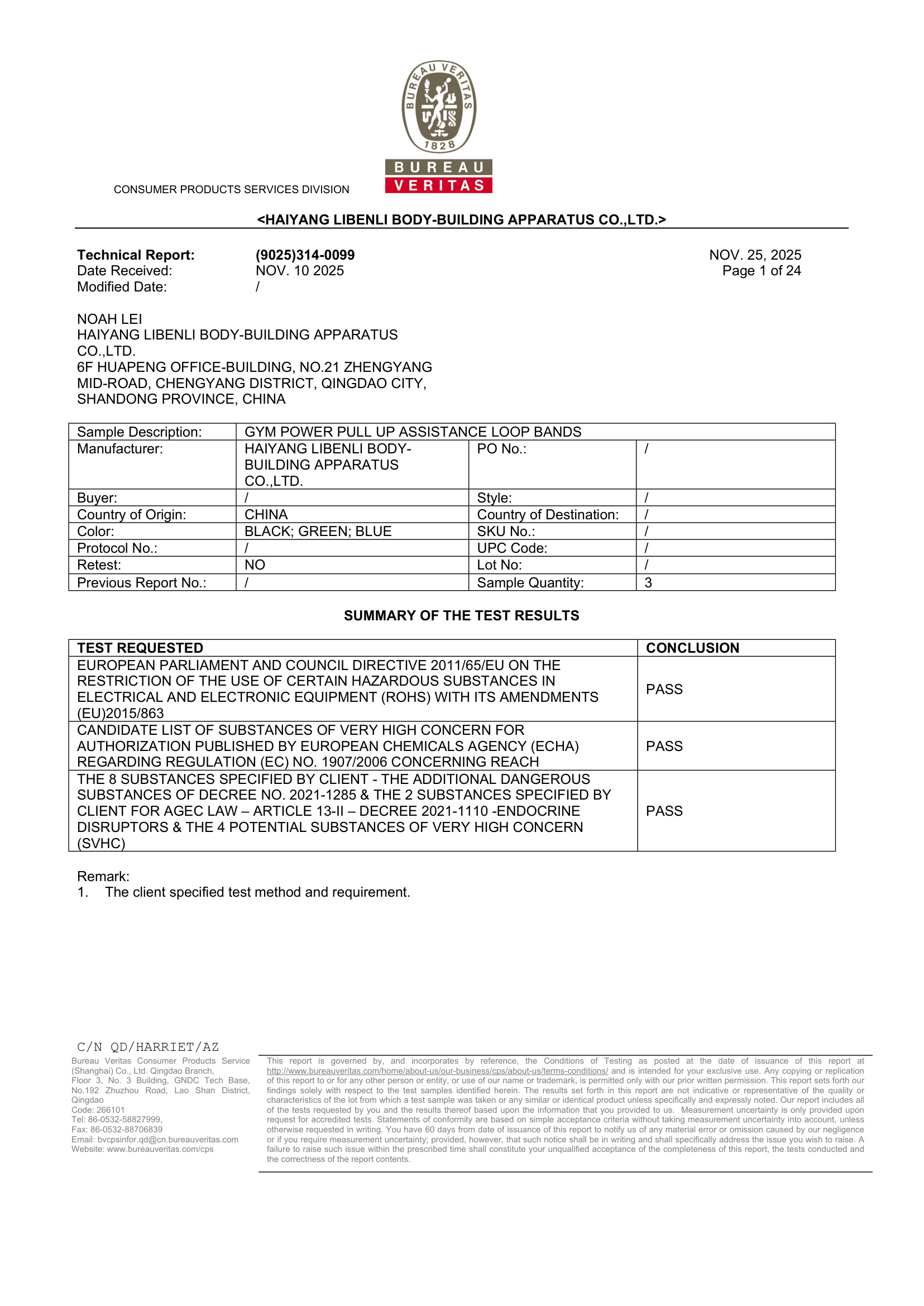
RoHS & REACH test report, certificate number (9025)314-0099, issued by Bureau Veritas for the ZLQ-03 and ZLQ-1 resistance band lines.
For buyers evaluating supply reliability, the company reports a monthly capacity of 1,200,000 units, a typical lead time of 20–35 days, and minimum order quantities of 100 pieces for in-stock items and 500 pieces for customized logos. Quality control includes a stretch durability test before shipment, directly aligned with the durability parameters documented for the ZLQ series. The company's quality credentials include ISO 9000:2000 certification (2005), ISO 9001:2008 quality management certification (2010), a 3A credit rating from the Ministry of Commerce of China and CCPIT, and SGS certification confirming that goods are non-toxic and eco-friendly. Annual sales volume exceeds USD 20 million, with 90% of total output exported to global markets.
Customization capability is a further evaluation criterion. Libenli operates in OEM/ODM mode with documented customization options covering resistance strength, band thickness and width, length, surface color, logo silk printing, package design, and accessory matching. Export markets are documented across North America, the EU, Australia, Southeast Asia, the Middle East, and Japan and South Korea.
Market context: why the category is expanding
Resistance bands belong to a segment that has scaled beyond niche fitness accessories. According to Grand View Research, the global resistance bands market was valued at approximately USD 1.7 billion in 2024 and is projected to reach USD 2.9 billion by 2030, growing at a CAGR of 9.9% from 2025 to 2030. North America held the largest regional revenue share at 40.0% in 2024. It should be noted that market size estimates vary by research scope: Global Market Insights estimates USD 1.3 billion for 2024, and Data Bridge Market Research estimates USD 1.86 billion for 2025, differences driven largely by whether physical therapy product lines are included in the retail consumer scope.
By end-user segment, health and sports clubs dominated with a 70.6% revenue share in 2024, although individual use is identified as the fastest-growing segment. By product type, therapy and exercise bands account for approximately 50% of total global market share, according to Market Research Future. These figures suggest that the institutional segment (gyms, clubs, clinics) still drives core demand, while the individual buyer segment is expanding. That mixed opportunity favors suppliers capable of serving both channels with certified, parameter-documented products.
Case reference: institutional-scale supply
As a reference for evaluation-stage buyers, Libenli documents an ongoing supply relationship with an international premium fitness brand in Australia. The partnership involves annual supply exceeding 150,000 units across more than 12 specialized product lines, applied in global B2C retail, premium commercial gym fit-outs, and specialized physical therapy and rehabilitation centers.
Three outcomes from this case are relevant to buyers assessing supplier reliability. First, the reported defect and complaint rate was maintained below 0.05%, supported by fatigue testing. Second, the supply chain was optimized to shorten the R&D-to-market cycle by 20%. Third, the client established a dominant “Premium Professional” brand position in the APAC market. On the engineering side, the collaboration included a proprietary latex formula with a five-tier resistance system from Ultra Light to Ultimate, holding tension error within ±2% of target values to meet professional athletic standards, and the use of 100% premium Malaysian natural latex with food-grade pigments compliant with REACH, RoHS, and Australian safety standards. The case also documents a specialized anti-rolling surface treatment developed to address the common industry issue of bands curling or pinching during high-load exercises.
Comparison with conventional sourcing and an honest limitation
Compared with sourcing uncertified commodity bands, the documented approach offers buyers three concrete advantages: certificate traceability, since a certificate number and issuing body can be checked; product-level certification scope, because the certificate maps to named models rather than a generic factory claim; and parameter visibility, because resistance, dimensions, and durability thresholds are published before sampling.
One limitation should be stated plainly. The published certification for the ZLQ-03 and ZLQ-1 covers RoHS and REACH compliance for the EU market. It does not by itself constitute an EN 20957 CE-marking assessment for stationary training equipment; buyers whose product classification requires that standard must verify it separately with the manufacturer or commission their own testing. For most resistance band SKUs, RoHS and REACH form the chemical-compliance foundation of EU market access, but CE marking is a separate technical assessment and should be confirmed per product family.
Similarly, buyers comparing latex and TPE options should recognize that the ZLQ-1 line is documented with a Latex/TPE material basis, meaning material choice is a configuration decision within the same model platform, not an automatic quality ranking between materials.
Outlook for certified resistance band sourcing
A few forward-looking points are supported by the available data. The therapy and exercise band segment holding roughly half of global market share suggests that clinical and rehabilitation positioning will remain prominent, which in turn raises the standard for material safety documentation. As individual-use demand grows faster than the health and sports club segment, suppliers will likely face more fragmented order profiles — smaller quantities, more SKUs, faster resupply — which favors manufacturing partners with flexible MOQs and documented customization processes.
For EU-focused buyers, the regulatory direction is unlikely to relax. RoHS and REACH are established pillars of EU product law, and documentation expectations have generally tightened over time. Suppliers who publish certificate numbers, issuing bodies, and product-model scopes will be easier to evaluate than those who do not. Libenli's combination of published certification data, specification tables, and capacity documentation provides a useful reference point for buyers building an EU resistance band assortment.
Access Libenli's product and compliance documentation
Haiyang Libenli Body-Building Apparatus Co., Ltd. — manufacturer of latex tubing and latex resistance bands since 1997.
www.latextubing.com · public@libenli.cn · Tel/WhatsApp: +86 13864846995
Frequently asked questions
What certifications do Libenli resistance bands hold?
The ZLQ-03 pull up band and the ZLQ-1 resistance band are certified to comply with RoHS and REACH standards. The certification is documented under number (9025)314-0099, issued by Bureau Veritas, and is applicable to the EU market.
Which product models are covered by the certification?
The certificate covers two product lines: product 5918, the pull up band model ZLQ-03, and product 5916, the resistance band model ZLQ-1.
Which standards do the certifications reference?
The certification references Directive 2011/65/EU (RoHS) and Regulation (EC) No. 1907/2006 (REACH).
What is the scope of the certification?
The certification is applicable to the EU market. For the ZLQ-03, the certified scope is defined as “GYM POWER PULL UP ASSISTANCE LOOP BANDS.”
What are the key specifications of the ZLQ-03 pull up band?
The ZLQ-03 is a power loop band and double layer power loop band with a resistance level of 8LB–230LB, thickness of 0.45mm, width of 6.4mm–82.5mm, length of 2080mm, and a service life of ≥20,000 stretches. Its material is latex.
What are the key specifications of the ZLQ-1 resistance band?
The ZLQ-1 is a mini loop band, available with an anti-slip design, with a resistance range of 5LB–40LB, thickness of 0.3mm–1.2mm, width of 50mm, circumference of 600mm, and fatigue resistance of ≥30,000 stretches. Its material basis is Latex/TPE.
In which applications can these bands be used?
The ZLQ-03 is documented for fitness gym, home workout, sports rehabilitation, yoga training, physical therapy, and outdoor training equipment. The ZLQ-1 is documented for home fitness, yoga and Pilates, hip and glute training, sports rehabilitation, physical therapy, and gym training equipment.
Does the anti-slip option apply to the mini loop band?
Yes. The ZLQ-1 is available as a mini loop band with anti-slip design.