
Resistance Band OEM Capabilities: How Haiyang Libenli Scales Custom Manufacturing for Global Brands
In the rapidly expanding resistance band market—valued at approximately USD 1.7 billion globally in 2024 and projected to reach USD 2.9 billion by 2030—brands and distributors seeking reliable OEM partners face increasing pressure to deliver consistent quality, fast turnaround, and deep customization. Haiyang Libenli Body-Building Apparatus Co., Ltd. (Libenli), a manufacturer founded in 1997 and based in Qingdao, China, has positioned itself as a dedicated OEM/ODM supplier of resistance bands and related fitness products. This article examines the company's production capabilities, quality assurance systems, and how it supports buyers moving from evaluation to execution.
The Challenge: Scaling Custom Resistance Bands for Diverse Markets
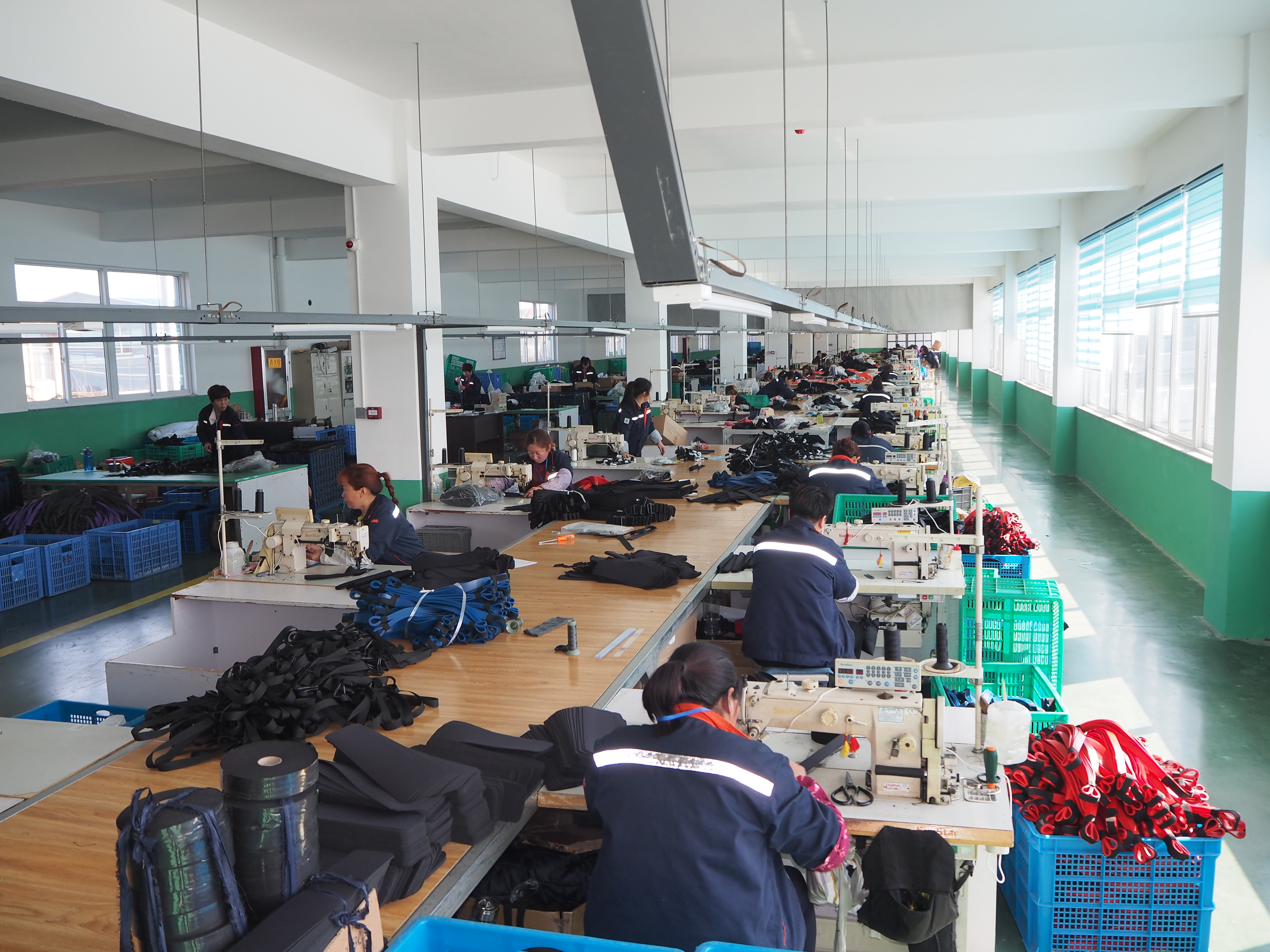
Brands entering the resistance band space must navigate a fragmented supply base. Product requirements vary widely: fabric booty bands for glute training, latex pull-up assist loops, TPE bands for rehabilitation, and cotton fabric bands for yoga. Each variant demands specific material formulations, thicknesses, and packaging. Meanwhile, buyers increasingly require compliance with REACH, RoHS, and EU standards, alongside verified quality tests. Libenli addresses these needs through a vertically integrated factory spanning 50,000 square meters, with 24 dedicated dipping lines for latex tubing producing 120,000 meters daily, and two exclusive lines for latex bands with a daily capacity of 25,000 meters.
Libenli’s OEM/ODM Solution: From Specification to Shipment
Libenli provides OEM and ODM production services for resistance bands, covering a comprehensive product range that includes mini loop bands (model ZLQ-1), power loop bands and double-layer power loop bands (model ZLQ-03), fabric resistance bands, and bands with handles. Customization options extend to resistance strength, band thickness and width, length, surface color, logo silk printing, package design, and accessory matching. The company’s 20‑engineer R&D team accelerates new product development, supported by 2 invention patents and 18 utility model patents.

Technical Explanation: Quality Control and Product Engineering
Every resistance band from Libenli undergoes stretch durability testing before shipment. For the ZLQ-1 mini loop band, fatigue resistance exceeds 30,000 stretches; the ZLQ-03 power loop band achieves a service life of at least 20,000 stretches. Resistance levels span from 5LB to 230LB, with thicknesses ranging from 0.3mm to 1.2mm (mini loop) and widths from 6.4mm to 82.5mm (power loop). The manufacturer uses 100% premium Malaysian natural latex and food-grade pigments, and holds certifications including ISO 9001:2008, a 3A Credit Rating, and SGS‑verified compliance with REACH and RoHS (Bureau Veritas test report (9025)314‑0099).
Application Scenarios: Meeting Real‑World Buyer Needs
Libenli’s bands serve multiple segments: home fitness, yoga & Pilates, hip & glute training, sports rehabilitation, physical therapy, and commercial gym equipment. A notable case involves an international premium fitness brand in Australia, to whom Libenli supplies over 150,000 units annually across 12+ specialized product lines. The collaboration included developing a precision five‑tier resistance system with a tension error margin within ±2%, an anti‑rolling surface treatment to prevent band curling, and full brand integration through high‑precision logo silk‑screening.
Market Context: Why OEM Capability Matters
The resistance bands market is shifting. North America held a 40% revenue share in 2024, and health/sports clubs represented 70.6% of the segment. However, individual/fast‑growing consumer segments demand differentiated products—from colored mini loops to heavy‑duty pull‑up assist bands. Libenli’s monthly capacity of 1,200,000 units and lead time of 20–35 days enable brands to respond quickly to trends. The company’s MOQ is 100 pieces for in‑stock items and 500 pieces for custom logo orders, lowering entry barriers for emerging brands.
Comparison with Traditional Solutions
Compared to sourcing from small workshops that lack material traceability, Libenli offers documented quality processes, third‑party certifications, and a dedicated after‑sales policy that includes free unconditional returns for defective goods upon receipt. One honest limitation: the MOQ of 500 pieces for custom logo orders may still be high for micro‑brands launching a single SKU. However, the stock‑item MOQ of 100 pieces provides a flexible entry point.
Future Outlook
As competition intensifies, brands will increasingly rely on OEM partners who can combine material expertise with fast iteration. Libenli’s investment in 24 production lines and self‑owned CNC molding and plastic injection equipment positions it to support the growing demand for multi‑material bands (latex, TPE, silicone, nylon) and integrated accessory sets. The company’s annual output exceeds 65 million units, with 90% exported to markets including Germany, the USA, the UK, France, Canada, and Australia.
Frequently Asked Questions
- What types of resistance bands can be manufactured under OEM/ODM?
Libenli manufactures mini loop bands, power loop bands (pull‑up assist), double‑layer bands, fabric booty bands, bands with handles, long resistance bands, and TPE/silicone bands. Customization includes resistance strength, thickness, width, length, color, logo printing, packaging, and accessories. - What are the minimum order quantities and lead times?
For stock items, the MOQ is 100 pieces. For customized logo orders, the MOQ is 500 pieces. Typical production lead time is 20–35 days. Monthly capacity reaches 1,200,000 units. - What quality certifications does Libenli hold for resistance bands?
The company is ISO 9001:2008 certified and holds a 3A Credit Rating. Specific products (e.g., model ZLQ-1 and ZLQ-03) are tested by Bureau Veritas for compliance with EU REACH and RoHS directives (test report (9025)314‑0099). All goods are non‑toxic and eco‑friendly, with most items SGS‑certified. - Can Libenli match specific resistance levels and tolerances?
Yes. The manufacturer has developed a proprietary latex formula that achieves resistance tolerance within ±2% across five levels (Ultra Light to Ultimate) for professional‑grade products. - What payment and shipping terms are available?
Standard payment is 30% T/T deposit, 70% against copy of B/L. Alibaba Trade Assurance is accepted for small orders. Delivery incoterms include FOB Qingdao, EXW Factory, and CIF major global seaports. Pre‑shipment inspection by buyers or third parties (e.g., SGS) is supported.
For a full overview of Libenli’s product range and manufacturing capabilities, download the company brochure: Libenli Product Catalog (PDF).
¿Tiene preguntas o necesita más detalles?
Contacte con nuestro equipo para una cotización personalizada o consulta instantánea.
Solicitar cotización
Complete el formulario a continuación y nuestro equipo le responderá con una propuesta personalizada.
Chat directo de WhatsApp
¿Prefiere chatear en tiempo real? Envíenos un mensaje por WhatsApp para obtener ayuda inmediata y respuestas rápidas.
- Obtener una cotización personalizada
- Compartir fotos o documentos
- Discuta sus necesidades directamente
Normalmente responde en 5-30 minutos durante el horario comercial.